HTML SitemapExplore
logo
Find Things to DoFind The Best Restaurants

Portrait of the Four Tetrarchs — Attraction in Venice

Name
Portrait of the Four Tetrarchs
Description
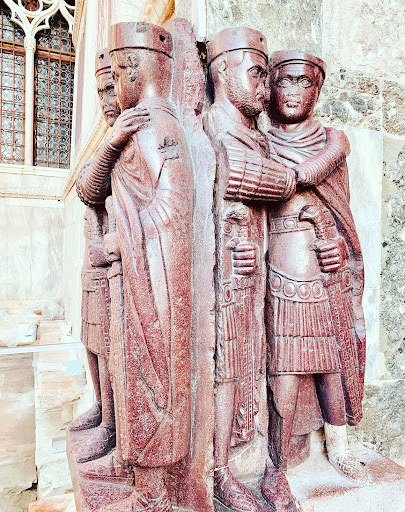
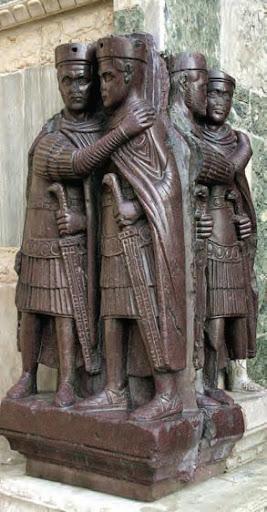
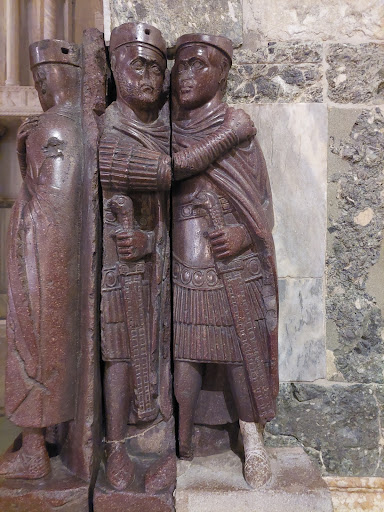
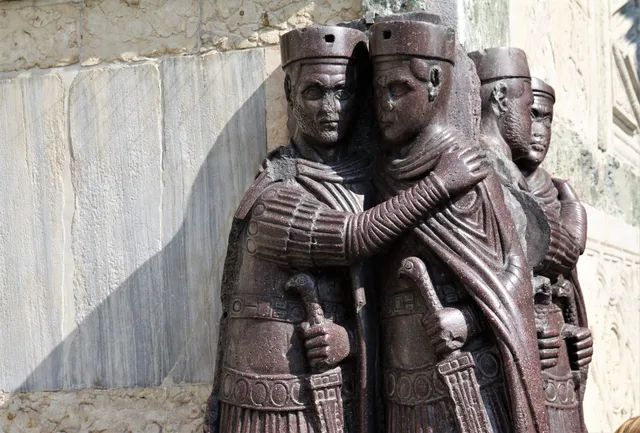
The Portrait of the Four Tetrarchs is a porphyry sculpture group of four Roman emperors dating from around 300 AD. The sculptural group has been fixed to a corner of the façade of St Mark's Basilica in Venice, Italy since the Middle Ages.
Nearby attractions
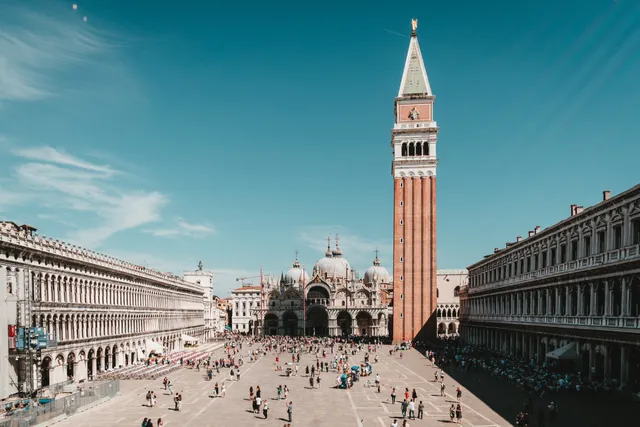
Piazza San Marco
P.za San Marco, 30100 Venezia VE, Italy
Saint Mark's Basilica
P.za San Marco, 328, 30100 Venezia VE, Italy
Doge's Palace
P.za San Marco, 1, 30124 Venezia VE, Italy
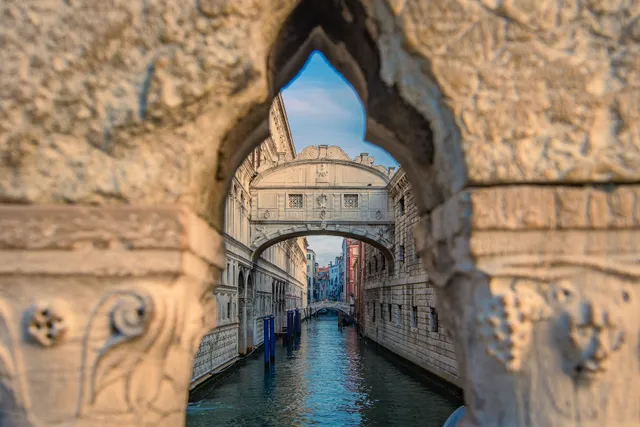
Bridge of Sighs
30124 Venice, Metropolitan City of Venice, Italy
St Mark's Campanile
P.za San Marco, 30124 Venezia VE, Italy
St. Mark’s Museum
P.za San Marco, 328, 30124 Venezia VE, Italy
Clock Tower
P.za San Marco, 30124 Venezia VE, Italy
Carta Gate
P.za San Marco, 1, 30124 Venezia VE, Italy
Giardini Reali
P.za San Marco, 30124 Venezia VE, Italy
Museo Correr
P.za San Marco, 52, 30124 Venezia VE, Italy
Nearby restaurants
Rossopomodoro San Marco
Calle Larga S. Marco, 404/408, 30124 Venezia VE, Italy
Trattoria Ai Leoncini
Calle Larga S. Marco, 371/372, 30124 Venezia VE, Italy
Ristorante Centrale Pizzeria
C. Specchieri, 425, 30124 Venezia VE, Italy
1000 Gourmet Venezia
C. Specchieri, 475, 30124 Venezia VE, Italy
Dal Moro's
Calle de la Casseleria, 5324, 30122 Venezia VE, Italy
La Piazza
S. Marco, 615, 30124 Venezia VE, Italy
Al Chianti
Calle Larga S. Marco, 655, 30124 Venezia VE, Italy
Beppino
Calle Larga S. Marco, 416, 30124 Venezia VE, Italy
Caffè Lavena
P.za San Marco, 133/134, 30124 Venezia VE, Italy
Ristorante Marciana
Calle Larga S. Marco, 367 A/B, 30124 Venezia VE, Italy
Related posts
Keywords
Portrait of the Four Tetrarchs tourism.Portrait of the Four Tetrarchs hotels.Portrait of the Four Tetrarchs bed and breakfast. flights to Portrait of the Four Tetrarchs.Portrait of the Four Tetrarchs attractions.Portrait of the Four Tetrarchs restaurants.Portrait of the Four Tetrarchs travel.Portrait of the Four Tetrarchs travel guide.Portrait of the Four Tetrarchs travel blog.Portrait of the Four Tetrarchs pictures.Portrait of the Four Tetrarchs photos.Portrait of the Four Tetrarchs travel tips.Portrait of the Four Tetrarchs maps.Portrait of the Four Tetrarchs things to do.
Portrait of the Four Tetrarchs things to do, attractions, restaurants, events info and trip planning
Portrait of the Four Tetrarchs
ItalyVenetoVenicePortrait of the Four Tetrarchs

Basic Info

Portrait of the Four Tetrarchs

P.za San Marco, 30124 Venezia VE, Italy
4.7(121)
Open until 12:00 AM
Save
spot

Ratings & Description

Info

The Portrait of the Four Tetrarchs is a porphyry sculpture group of four Roman emperors dating from around 300 AD. The sculptural group has been fixed to a corner of the façade of St Mark's Basilica in Venice, Italy since the Middle Ages.

Cultural
Scenic
Accessibility
attractions: Piazza San Marco, Saint Mark's Basilica, Doge's Palace, Bridge of Sighs, St Mark's Campanile, St. Mark’s Museum, Clock Tower, Carta Gate, Giardini Reali, Museo Correr, restaurants: Rossopomodoro San Marco, Trattoria Ai Leoncini, Ristorante Centrale Pizzeria, 1000 Gourmet Venezia, Dal Moro's, La Piazza, Al Chianti, Beppino, Caffè Lavena, Ristorante Marciana
logoLearn more insights from Wanderboat AI.
Phone
+39 041 270 8311
Website
basilicasanmarco.it
Open hoursSee all hours
FriOpen 24 hoursOpen

Plan your stay

hotel
Pet-friendly Hotels in Venice
Find a cozy hotel nearby and make it a full experience.

hotel
Affordable Hotels in Venice
Find a cozy hotel nearby and make it a full experience.

hotel
The Coolest Hotels You Haven't Heard Of (Yet)
Find a cozy hotel nearby and make it a full experience.

hotel
Trending Stays Worth the Hype in Venice
Find a cozy hotel nearby and make it a full experience.

Reviews

Nearby attractions of Portrait of the Four Tetrarchs

Piazza San Marco

Saint Mark's Basilica

Doge's Palace

Bridge of Sighs

St Mark's Campanile

St. Mark’s Museum

Clock Tower

Carta Gate

Giardini Reali

Museo Correr

Piazza San Marco

Piazza San Marco

4.7

(56.9K)

Open 24 hours
Click for details
Saint Mark's Basilica

Saint Mark's Basilica

4.7

(10K)

Open 24 hours
Click for details
Doge's Palace

Doge's Palace

4.7

(13.4K)

Open 24 hours
Click for details
Bridge of Sighs

Bridge of Sighs

4.6

(9.3K)

Open 24 hours
Click for details

Things to do nearby

Legends, Ghosts and Ghouls of Venice
Thu, Dec 4 • 9:00 PM
30121, Venice, Veneto, Italy
View details
Visit and learn about Murano glass
Thu, Dec 4 • 10:00 PM
30122, Venice, Veneto, Italy
View details
Explore the lagoon and secret islands by kayak
Fri, Dec 5 • 2:30 PM
30142, Venice, Veneto, Italy
View details

Nearby restaurants of Portrait of the Four Tetrarchs

Rossopomodoro San Marco

Trattoria Ai Leoncini

Ristorante Centrale Pizzeria

1000 Gourmet Venezia

Dal Moro's

La Piazza

Al Chianti

Beppino

Caffè Lavena

Ristorante Marciana

Rossopomodoro San Marco

Rossopomodoro San Marco

4.2

(4.3K)

Click for details
Trattoria Ai Leoncini

Trattoria Ai Leoncini

4.4

(1.1K)

Click for details
Ristorante Centrale Pizzeria

Ristorante Centrale Pizzeria

4.6

(1.3K)

Click for details
1000 Gourmet Venezia

1000 Gourmet Venezia

4.4

(2.4K)

Click for details
Get the Appoverlay
Get the AppOne tap to find yournext favorite spots!
Wanderboat LogoWanderboat

Your everyday Al companion for getaway ideas

CompanyAbout Us
InformationAI Trip PlannerSitemap
SocialXInstagramTiktokLinkedin
LegalTerms of ServicePrivacy Policy

Get the app

© 2025 Wanderboat. All rights reserved.
logo

Posts

Asiyah Noemi KosoAsiyah Noemi Koso
This interesting sculptural detail incorporated into a part of the magnificent Basilica of San Marco arouses our curiosity. Another hidden gem of Venice. The history and significance of this sculpture is extremely important. Porphyry sculpture portraying the four Tetrarchs (Diocletian, Maximianus, Galerius and Constantius Chlorus) embracing. The Tetrarchy was the system instituted by Roman Emperor Diocletian in 293 to govern the ancient Roman Empire by dividing it between two senior emperors, the augusti, and their juniors and designated successors, the caesares. The sculpture is dated to c. 300 CE and was sculpted in Asia Minor. It was initially part of the decorations of the Philadelphion (“place of brotherly love”), which was a public square located in Constantinople. The sculpture of Tetrarchs was plundered during the Fourth Crusade in 1204, brought to Venice, and incorporated here into the St Mark’s Basilica. Each tetrarch looks the same, without any individualized characteristics, except that two, probably representing the older augusti, have beards, and two do not who might have symbolized the Caesars. The group is divided into pairs, each embracing, which unites Augusti and Caesars together. The overall effect suggests unity and stability. The very choice of material, the durable porphyry (which came from Egypt), symbolizes a permanence and rigidity reminiscent of Egyptian statuary. Porphyry was rare and expensive, hard to obtain in sculptural quantities, and therefore limited to imperial honorands in statuary. Porphyry was the material of choice for the late Imperial Rome. The vividness of porphyry compared to other stones underscored that these figures had special status worthy of the respect they expected. The color itself would have caused the public to remember how they were to behave in the presence of the emperors who wore the purple of their office. The term porphyry is from Ancient Greek and means “purple.” Purple was the color of royalty, and the “imperial porphyry” was a deep purple igneous rock with large crystals of plagioclase.
I. MorganI. Morgan
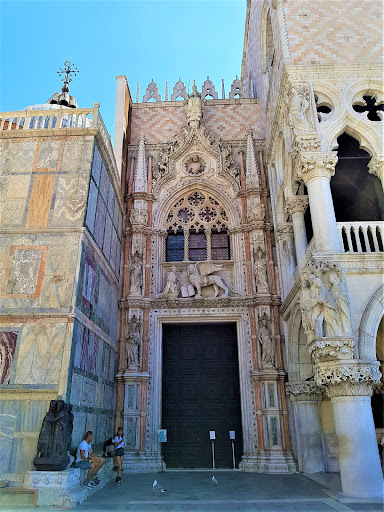
Tucked away in a corner of St. Mark’s Basilica, near the southern entrance, stands one of Venice’s most intriguing yet often-overlooked treasures: The Four Tetrarchs. This striking porphyry sculpture, dating back to the late Roman Empire (circa 300 AD), depicts four rulers—two senior emperors (Augusti) and their junior co-rulers (Caesars)—embracing in unity, symbolizing the power-sharing system established by Emperor Diocletian. The sculpture itself is a marvel of history and mystery. Crafted from deep red porphyry, a stone reserved for imperial use, it was likely looted from Constantinople during the Fourth Crusade (1204) and brought to Venice as spoils of war. One of the most fascinating details is that one of the tetrarchs is missing a foot—historians believe it was left behind in Constantinople, where a matching fragment was later discovered. A particularly interesting aspect is the tetrarchs’ staffs, which feature bird-like heads at the top. While their exact meaning remains debated, they may represent eagles, a symbol of imperial power, or stylized phoenixes, signifying renewal and the endurance of the empire. Though small in size, The Four Tetrarchs encapsulates Venice’s deep historical connections to the Byzantine world, offering visitors a glimpse into the city’s rich past. If you’re exploring St. Mark’s Basilica, take a moment to seek out this hidden gem—you’ll be standing before a relic that has traveled through centuries of history.
Lefteris StamatelatosLefteris Stamatelatos
IL MONUMENTO AI TETRARCHI Το σύμπλεγμα της Τετραρχίας (περ. 300 μ.Χ.). Απεικονίζει ανά δύο τους Τετράρχες: Διοκλητιανό-Μαξιμιανό, Γαλέριο-Κωνστάντιο Χλωρό. (Βενετία, Νότια γωνία Αγίου Μάρκου). Το σύμπλεγμα της τετραρχίας ή γλυπτό των τεσσάρων τετραρχών είναι γλυπτό των αρχών του 3ου αιώνα από πορφυρίτη το οποίο αναπαριστά τους τέσσερις Ρωμαίους συναυτοκράτορες κατά την εποχή της τετραρχίας. Η αρχική του θέση πιθανώς ήταν στο Φιλαδέλφειον της Κωνσταντινούπολης, από όπου αφαιρέθηκε το 1204 κατά την άλωση της Κωνσταντινούπολης ή σύντομα έπειτα από τους Βενετούς και μεταφέρθηκε στη βασιλική του Αγίου Μάρκου στη Βενετία, όπου βρίσκεται έως σήμερα. Οι μορφές του ολόγλυφου συμπλέγματος έχουν σωματώδη και χονδροειδή αναπαράσταση, τα πρόσωπα τους είναι παρόμοια και το βλέμμα γενικά απλανές με την όλη σύνθεση να είναι άκαμπτη σε αντίθεση με τον ρεαλισμό ή ιδεαλισμό της ελληνορωμαϊκής τέχνης. Φαίνεται πως στην καλλιτεχνική δημιουργία επικράτησε η ανάδειξη μιας περισσότερο δημώδους αισθητικής τεχνοτροπίας η οποία χρησιμοποιούνταν από τους λιγότερο εύπορους, ή υπήρξε εκδήλωση μιας ενεργούς αντίθεσης εναντίον σε ό,τι αντιπροσώπευαν τα γλυπτά της αρχαιότητας και η υποχώρηση προς απλοποιημένες και πιο αφαιρετικές παραστάσεις. Το μνημείο δεν τυγχάνει ιδιαίτερης προστασίας, αλλά είναι εκτεθειμένο όχι μόνο στις ακραίες καιρικές και κλιματολογικές συνθήκες της περιοχής, αλλά και στις διαθέσεις των χιλιάδων επισκεπτών της Βενετίας, που συχνά ξεκουράζονται δίπλα του ή απολαμβάνουν τις αγαπημένες τους γεύσεις στο σημείο εκείνο.
See more posts
See more posts
hotel
Find your stay

Pet-friendly Hotels in Venice

Find a cozy hotel nearby and make it a full experience.

This interesting sculptural detail incorporated into a part of the magnificent Basilica of San Marco arouses our curiosity. Another hidden gem of Venice. The history and significance of this sculpture is extremely important. Porphyry sculpture portraying the four Tetrarchs (Diocletian, Maximianus, Galerius and Constantius Chlorus) embracing. The Tetrarchy was the system instituted by Roman Emperor Diocletian in 293 to govern the ancient Roman Empire by dividing it between two senior emperors, the augusti, and their juniors and designated successors, the caesares. The sculpture is dated to c. 300 CE and was sculpted in Asia Minor. It was initially part of the decorations of the Philadelphion (“place of brotherly love”), which was a public square located in Constantinople. The sculpture of Tetrarchs was plundered during the Fourth Crusade in 1204, brought to Venice, and incorporated here into the St Mark’s Basilica. Each tetrarch looks the same, without any individualized characteristics, except that two, probably representing the older augusti, have beards, and two do not who might have symbolized the Caesars. The group is divided into pairs, each embracing, which unites Augusti and Caesars together. The overall effect suggests unity and stability. The very choice of material, the durable porphyry (which came from Egypt), symbolizes a permanence and rigidity reminiscent of Egyptian statuary. Porphyry was rare and expensive, hard to obtain in sculptural quantities, and therefore limited to imperial honorands in statuary. Porphyry was the material of choice for the late Imperial Rome. The vividness of porphyry compared to other stones underscored that these figures had special status worthy of the respect they expected. The color itself would have caused the public to remember how they were to behave in the presence of the emperors who wore the purple of their office. The term porphyry is from Ancient Greek and means “purple.” Purple was the color of royalty, and the “imperial porphyry” was a deep purple igneous rock with large crystals of plagioclase.
Asiyah Noemi Koso

Asiyah Noemi Koso

hotel
Find your stay

Affordable Hotels in Venice

Find a cozy hotel nearby and make it a full experience.

Get the Appoverlay
Get the AppOne tap to find yournext favorite spots!
Tucked away in a corner of St. Mark’s Basilica, near the southern entrance, stands one of Venice’s most intriguing yet often-overlooked treasures: The Four Tetrarchs. This striking porphyry sculpture, dating back to the late Roman Empire (circa 300 AD), depicts four rulers—two senior emperors (Augusti) and their junior co-rulers (Caesars)—embracing in unity, symbolizing the power-sharing system established by Emperor Diocletian. The sculpture itself is a marvel of history and mystery. Crafted from deep red porphyry, a stone reserved for imperial use, it was likely looted from Constantinople during the Fourth Crusade (1204) and brought to Venice as spoils of war. One of the most fascinating details is that one of the tetrarchs is missing a foot—historians believe it was left behind in Constantinople, where a matching fragment was later discovered. A particularly interesting aspect is the tetrarchs’ staffs, which feature bird-like heads at the top. While their exact meaning remains debated, they may represent eagles, a symbol of imperial power, or stylized phoenixes, signifying renewal and the endurance of the empire. Though small in size, The Four Tetrarchs encapsulates Venice’s deep historical connections to the Byzantine world, offering visitors a glimpse into the city’s rich past. If you’re exploring St. Mark’s Basilica, take a moment to seek out this hidden gem—you’ll be standing before a relic that has traveled through centuries of history.
I. Morgan

I. Morgan

hotel
Find your stay

The Coolest Hotels You Haven't Heard Of (Yet)

Find a cozy hotel nearby and make it a full experience.

hotel
Find your stay

Trending Stays Worth the Hype in Venice

Find a cozy hotel nearby and make it a full experience.

IL MONUMENTO AI TETRARCHI Το σύμπλεγμα της Τετραρχίας (περ. 300 μ.Χ.). Απεικονίζει ανά δύο τους Τετράρχες: Διοκλητιανό-Μαξιμιανό, Γαλέριο-Κωνστάντιο Χλωρό. (Βενετία, Νότια γωνία Αγίου Μάρκου). Το σύμπλεγμα της τετραρχίας ή γλυπτό των τεσσάρων τετραρχών είναι γλυπτό των αρχών του 3ου αιώνα από πορφυρίτη το οποίο αναπαριστά τους τέσσερις Ρωμαίους συναυτοκράτορες κατά την εποχή της τετραρχίας. Η αρχική του θέση πιθανώς ήταν στο Φιλαδέλφειον της Κωνσταντινούπολης, από όπου αφαιρέθηκε το 1204 κατά την άλωση της Κωνσταντινούπολης ή σύντομα έπειτα από τους Βενετούς και μεταφέρθηκε στη βασιλική του Αγίου Μάρκου στη Βενετία, όπου βρίσκεται έως σήμερα. Οι μορφές του ολόγλυφου συμπλέγματος έχουν σωματώδη και χονδροειδή αναπαράσταση, τα πρόσωπα τους είναι παρόμοια και το βλέμμα γενικά απλανές με την όλη σύνθεση να είναι άκαμπτη σε αντίθεση με τον ρεαλισμό ή ιδεαλισμό της ελληνορωμαϊκής τέχνης. Φαίνεται πως στην καλλιτεχνική δημιουργία επικράτησε η ανάδειξη μιας περισσότερο δημώδους αισθητικής τεχνοτροπίας η οποία χρησιμοποιούνταν από τους λιγότερο εύπορους, ή υπήρξε εκδήλωση μιας ενεργούς αντίθεσης εναντίον σε ό,τι αντιπροσώπευαν τα γλυπτά της αρχαιότητας και η υποχώρηση προς απλοποιημένες και πιο αφαιρετικές παραστάσεις. Το μνημείο δεν τυγχάνει ιδιαίτερης προστασίας, αλλά είναι εκτεθειμένο όχι μόνο στις ακραίες καιρικές και κλιματολογικές συνθήκες της περιοχής, αλλά και στις διαθέσεις των χιλιάδων επισκεπτών της Βενετίας, που συχνά ξεκουράζονται δίπλα του ή απολαμβάνουν τις αγαπημένες τους γεύσεις στο σημείο εκείνο.
Lefteris Stamatelatos

Lefteris Stamatelatos

See more posts
See more posts

Reviews of Portrait of the Four Tetrarchs

4.7
(121)
avatar
5.0
4y

This interesting sculptural detail incorporated into a part of the magnificent Basilica of San Marco arouses our curiosity. Another hidden gem of Venice. The history and significance of this sculpture is extremely important. Porphyry sculpture portraying the four Tetrarchs (Diocletian, Maximianus, Galerius and Constantius Chlorus) embracing. The Tetrarchy was the system instituted by Roman Emperor Diocletian in 293 to govern the ancient Roman Empire by dividing it between two senior emperors, the augusti, and their juniors and designated successors, the caesares. The sculpture is dated to c. 300 CE and was sculpted in Asia Minor. It was initially part of the decorations of the Philadelphion (“place of brotherly love”), which was a public square located in Constantinople. The sculpture of Tetrarchs was plundered during the Fourth Crusade in 1204, brought to Venice, and incorporated here into the St Mark’s Basilica. Each tetrarch looks the same, without any individualized characteristics, except that two, probably representing the older augusti, have beards, and two do not who might have symbolized the Caesars. The group is divided into pairs, each embracing, which unites Augusti and Caesars together. The overall effect suggests unity and stability. The very choice of material, the durable porphyry (which came from Egypt), symbolizes a permanence and rigidity reminiscent of Egyptian statuary. Porphyry was rare and expensive, hard to obtain in sculptural quantities, and therefore limited to imperial honorands in statuary. Porphyry was the material of choice for the late Imperial Rome. The vividness of porphyry compared to other stones underscored that these figures had special status worthy of the respect they expected. The color itself would have caused the public to remember how they were to behave in the presence of the emperors who wore the purple of their office. The term porphyry is from Ancient Greek and means “purple.” Purple was the color of royalty, and the “imperial porphyry” was a deep purple igneous rock with large crystals of...

   Read more
avatar
5.0
44w

Tucked away in a corner of St. Mark’s Basilica, near the southern entrance, stands one of Venice’s most intriguing yet often-overlooked treasures: The Four Tetrarchs. This striking porphyry sculpture, dating back to the late Roman Empire (circa 300 AD), depicts four rulers—two senior emperors (Augusti) and their junior co-rulers (Caesars)—embracing in unity, symbolizing the power-sharing system established by Emperor Diocletian.

The sculpture itself is a marvel of history and mystery. Crafted from deep red porphyry, a stone reserved for imperial use, it was likely looted from Constantinople during the Fourth Crusade (1204) and brought to Venice as spoils of war. One of the most fascinating details is that one of the tetrarchs is missing a foot—historians believe it was left behind in Constantinople, where a matching fragment was later discovered.

A particularly interesting aspect is the tetrarchs’ staffs, which feature bird-like heads at the top. While their exact meaning remains debated, they may represent eagles, a symbol of imperial power, or stylized phoenixes, signifying renewal and the endurance of the empire.

Though small in size, The Four Tetrarchs encapsulates Venice’s deep historical connections to the Byzantine world, offering visitors a glimpse into the city’s rich past. If you’re exploring St. Mark’s Basilica, take a moment to seek out this hidden gem—you’ll be standing before a relic that has traveled through...

   Read more
avatar
1.0
4y

What is with the big eyes? Why did roman sculptors suddenly decide to degrade their skills? Roman portraits went from verism (realistic-looking portraits with natural shapes and facial features, to Simple, boxy, big eyed horrors. I'm pretty sure those dominate era people were trying to sue the sculptors for doing such terrible work. The first emperor to have a low quality portrait on their coins was Gallienus. his bust portrait is fantastic, but his coin portrait's neck is boxy, and his head is to small. His successors had decent busts, but their coins look to similar. AURELIAN DID NOT LOOK...

   Read more
Page 1 of 7
Previous
Next