HTML SitemapExplore
Find Things to DoFind The Best Restaurants

Church of St. Casimir — Attraction in Vilnius

Name
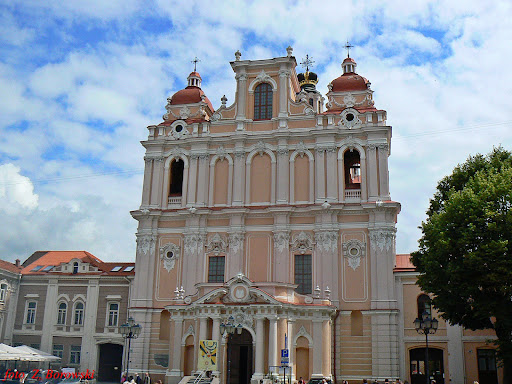
Church of St. Casimir
Description
The Chapel of Saint Casimir is a chapel dedicated to Saint Casimir in Vilnius Cathedral. The chapel was built in 1623–36 after Prince Casimir was canonized as saint.
Nearby attractions
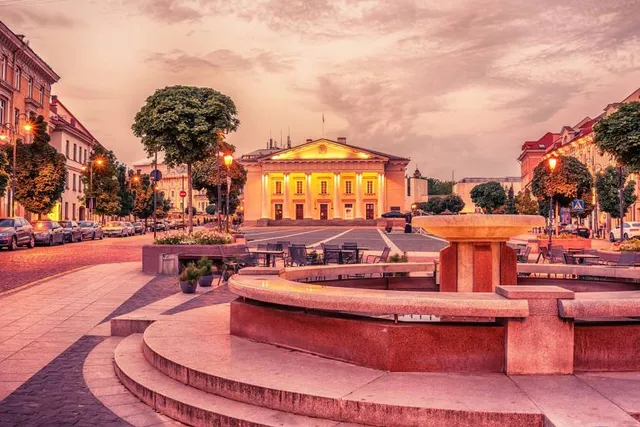
Town Hall Square
Rotušės a., Vilnius, 08107 Vilniaus m. sav., Lithuania
Vilnius Museum of Illusions
Vokiečių g. 8, Vilnius, 01130 Vilniaus m. sav., Lithuania
Kazys Varnelis House-Museum
Didžioji g. 26, Vilnius, 01128 Vilniaus m. sav., Lithuania
Contemporary Art Centre
Vokiečių g. 2, Vilnius, 01130 Vilniaus m. sav., Lithuania
Vilnius St. Virgin Maria 's Church
Savičiaus g. 15, 01127, Vilnius, 01127 Vilniaus m. sav., Lithuania
Bastion of the Vilnius Defensive Wall
Bokšto g. 20, Vilnius, 01126 Vilniaus m. sav., Lithuania
Gates of Dawn
Aušros Vartų g. 14, Vilnius, 01303 Vilniaus m. sav., Lithuania
Mikalojus Konstantinas Čiurlionis House
Savičiaus g. 11, Vilnius, 01127 Vilniaus m. sav., Lithuania
Orthodox Church of the Holy Spirit, Vilnius
Aušros Vartų g. 10, Vilnius, 01302 Vilniaus m. sav., Lithuania
Vilnius Picture Gallery
Didžioji g. 4, Vilnius, 01128 Vilniaus m. sav., Lithuania
Nearby restaurants
EtnoDvaras
Aušros Vartų g. 2, Vilnius, 01303 Vilniaus m. sav., Lithuania
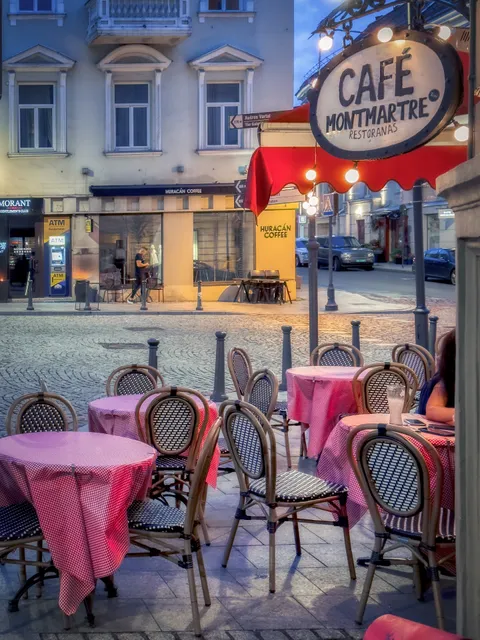
Café Montmartre
Didžioji g. 40, Vilnius, 01127 Vilniaus m. sav., Lithuania
BIX Baras
Etmonų g. 6, Vilnius, 01129 Vilniaus m. sav., Lithuania
Amatininkų Užeiga
Didžioji g. 19, Vilnius, 01128 Vilniaus m. sav., Lithuania
MOTÍF
Didžioji g. 30, Vilnius, 01128 Vilniaus m. sav., Lithuania
Balzac
Savičiaus g. 7, Vilnius, 01127 Vilniaus m. sav., Lithuania
Botanist
Didžioji g. 24, Didžioji g. 26, 01128 Vilnius, Lithuania
Monstro Pizza Bar
Arklių g. 6, Vilnius, 01305 Vilniaus m. sav., Lithuania
California Tapas & Wine Bar
Subačiaus g. 2, Vilnius, 01127 Vilniaus m. sav., Lithuania
Mason Restoranas
Savičiaus g. 3, Vilnius, 01128 Vilniaus m. sav., Lithuania
Nearby hotels
Radisson Collection Astorija Hotel, Vilnius
Didžioji g. 35-2, Vilnius, 01128 Vilniaus m. sav., Lithuania
Imperial Hotel & Restaurant
Subačiaus g. 2, Vilnius, 11302 Vilniaus m. sav., Lithuania
SAINT CASIMIR GUESTHOUSE
Didžioji g. 32A, Vilnius, 01128 Vilniaus m. sav., Lithuania
Jimmy Jumps House
Savičiaus g. 12, Vilnius, 01127 Vilniaus m. sav., Lithuania
Hotel PACAI
Didžioji g. 7, Vilnius, 01128 Vilniaus m. sav., Lithuania
St Palace hotel
Aušros Vartų g. 6, Vilnius, 01304 Vilniaus m. sav., Lithuania
Domus Maria Hotel
Aušros Vartų g. 12, Vilnius, 01303 Vilniaus m. sav., Lithuania
Grand Crown
Didžioji g. 32a, Vilnius, 01128 Vilniaus m. sav., Lithuania
Vilnius Apartments & Suites
Didžioji g. 39, Vilnius, 01127 Vilniaus m. sav., Lithuania
Baron Town Hall Apartments
Savičiaus g. 4-2, Vilnius, 01127 Vilniaus m. sav., Lithuania
Related posts
Keywords
Church of St. Casimir tourism.Church of St. Casimir hotels.Church of St. Casimir bed and breakfast. flights to Church of St. Casimir.Church of St. Casimir attractions.Church of St. Casimir restaurants.Church of St. Casimir travel.Church of St. Casimir travel guide.Church of St. Casimir travel blog.Church of St. Casimir pictures.Church of St. Casimir photos.Church of St. Casimir travel tips.Church of St. Casimir maps.Church of St. Casimir things to do.
Church of St. Casimir things to do, attractions, restaurants, events info and trip planning
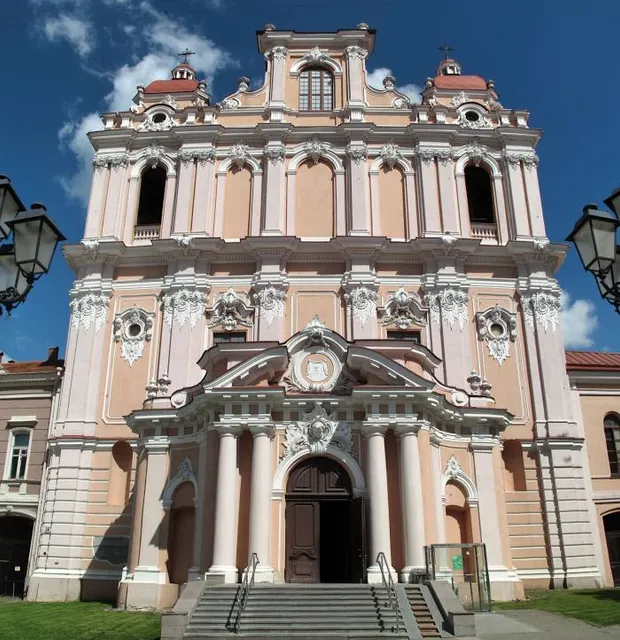
Church of St. Casimir
LithuaniaVilnius CountyVilniusChurch of St. Casimir

Basic Info

Church of St. Casimir

Didžioji g. 34, Vilnius, 01128 Vilniaus m. sav., Lithuania
4.7(549)
Open 24 hours
Save
spot

Ratings & Description

Info

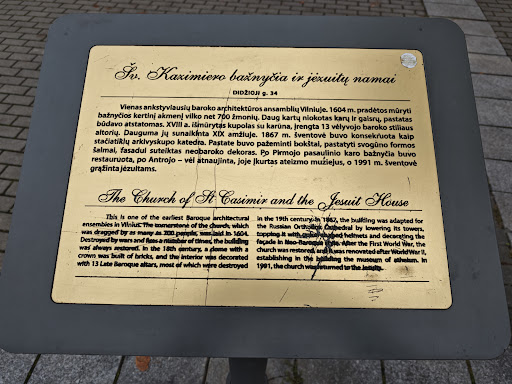
The Chapel of Saint Casimir is a chapel dedicated to Saint Casimir in Vilnius Cathedral. The chapel was built in 1623–36 after Prince Casimir was canonized as saint.

Cultural
Scenic
Family friendly
Accessibility
attractions: Town Hall Square, Vilnius Museum of Illusions, Kazys Varnelis House-Museum, Contemporary Art Centre, Vilnius St. Virgin Maria 's Church, Bastion of the Vilnius Defensive Wall, Gates of Dawn, Mikalojus Konstantinas Čiurlionis House, Orthodox Church of the Holy Spirit, Vilnius, Vilnius Picture Gallery, restaurants: EtnoDvaras, Café Montmartre, BIX Baras, Amatininkų Užeiga, MOTÍF, Balzac, Botanist, Monstro Pizza Bar, California Tapas & Wine Bar, Mason Restoranas
logoLearn more insights from Wanderboat AI.
Phone
+370 5 212 1715
Website
sites.google.com

Plan your stay

hotel
Pet-friendly Hotels in Vilnius
Find a cozy hotel nearby and make it a full experience.

hotel
Affordable Hotels in Vilnius
Find a cozy hotel nearby and make it a full experience.

hotel
The Coolest Hotels You Haven't Heard Of (Yet)
Find a cozy hotel nearby and make it a full experience.

hotel
Trending Stays Worth the Hype in Vilnius
Find a cozy hotel nearby and make it a full experience.

Reviews

Nearby attractions of Church of St. Casimir

Town Hall Square

Vilnius Museum of Illusions

Kazys Varnelis House-Museum

Contemporary Art Centre

Vilnius St. Virgin Maria 's Church

Bastion of the Vilnius Defensive Wall

Gates of Dawn

Mikalojus Konstantinas Čiurlionis House

Orthodox Church of the Holy Spirit, Vilnius

Vilnius Picture Gallery
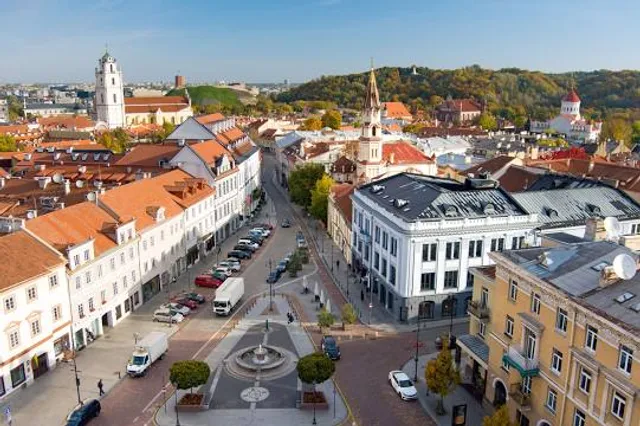
Town Hall Square

Town Hall Square

4.7

(1.5K)

Open 24 hours
Click for details
Vilnius Museum of Illusions

Vilnius Museum of Illusions

4.7

(2.1K)

Open 24 hours
Click for details
Kazys Varnelis House-Museum

Kazys Varnelis House-Museum

4.6

(124)

Open 24 hours
Click for details
Contemporary Art Centre

Contemporary Art Centre

4.4

(370)

Open 24 hours
Click for details

Things to do nearby

In-Person Street Wisdom Walkshop in Vilnius, Lithuania, Sunday December 28th 2025, 3pm EEST (2 hours)
Sun, Dec 28 • 1:00 PM
Paupio g. 26, 11341 Vilnius, Lithuania
View details

Nearby restaurants of Church of St. Casimir

EtnoDvaras

Café Montmartre

BIX Baras

Amatininkų Užeiga

MOTÍF

Balzac

Botanist

Monstro Pizza Bar

California Tapas & Wine Bar

Mason Restoranas

EtnoDvaras

EtnoDvaras

4.5

(1.3K)

Click for details
Café Montmartre

Café Montmartre

4.3

(690)

$$

Click for details
BIX Baras

BIX Baras

4.5

(1.3K)

Click for details
Amatininkų Užeiga

Amatininkų Užeiga

4.3

(1.3K)

$$

Click for details
Get the Appoverlay
Get the AppOne tap to find yournext favorite spots!
Wanderboat LogoWanderboat

Your everyday Al companion for getaway ideas

CompanyAbout Us
InformationAI Trip PlannerSitemap
SocialXInstagramTiktokLinkedin
LegalTerms of ServicePrivacy Policy

Get the app

© 2025 Wanderboat. All rights reserved.

Reviews of Church of St. Casimir

4.7
(549)
avatar
5.0
6y

Church of St. Kazimierz in Vilnius is the first baroque Catholic church in honor of St. Kazimierz Prince. It was built in 1604–1618 as a votive offering after the canonization of St. Kazimierz Jagiellończyk (1602). The initiator of the construction was King Zygmunt III Waza, and the church belonged to the Jesuits. In the years 1624–1630 preacher and confessor was here St. Andrzej Bobola. After the destruction in 1655 by the Moscow army, and after the fire of 1706, the church was renovated, and the interior received then a rococo decor. After the dissolution of the Jesuit order, in 1812 the French army destroyed the interior and turned the church into a grain warehouse and then a prison for Russian prisoners of war. As part of the tsarist repression after the November Uprising, the church was confiscated by Catholics, and after the January Uprising it was rebuilt into an Orthodox church. After World War II, until 1949 he belonged to the Jesuits, and then was confiscated again, this time by the Soviet authorities. In October 1988 the church was returned to Catholics, in 1990 it was taken over by Jesuits and restored to religious use. Kościół św. Kazimierza w Wilnie jest pierwszą barokową świątynią katolicką ku czci św. Kazimierza Królewicza. Został zbudowany w latach 1604–1618 jako wotum po kanonizacji św. Kazimierza Jagiellończyka (1602). Inicjatorem budowy był król Zygmunt III Waza, a kościół należał do Jezuitów. W latach 1624–1630 kaznodzieją i spowiednikiem był tutaj św. Andrzej Bobola. Po zniszczeniach w 1655 przez wojska moskiewskie, oraz po pożarze 1706 kościół został odnowiony, a wnętrze otrzymało wówczas wystrój rokokowy. Po kasacie zakonu jezuitów, w 1812 roku armia francuska zniszczyła wnętrze i zamieniła kościół na magazyn zboża, a następnie na więzienie dla jeńców rosyjskich. W ramach represji carskich po powstaniu listopadowym kościół został skonfiskowany katolikom, a po powstaniu styczniowym przebudowano go na cerkiew prawosławną. Po II wojnie światowej, do 1949 należał do jezuitów, a następnie został ponownie skonfiskowany, tym razem przez władze radzieckie. W październiku 1988 kościół zwrócono katolikom, w 1990 przejęli go jezuici przywracając do...

   Read more
avatar
5.0
7w

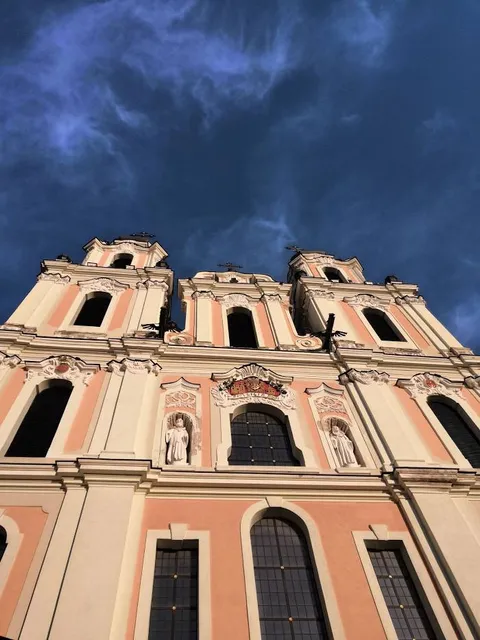
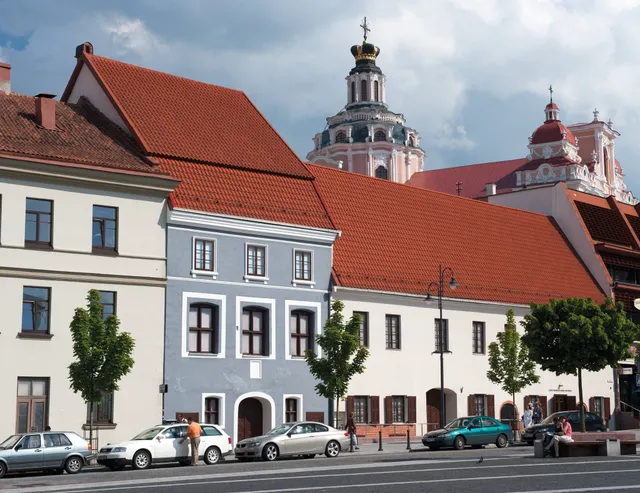
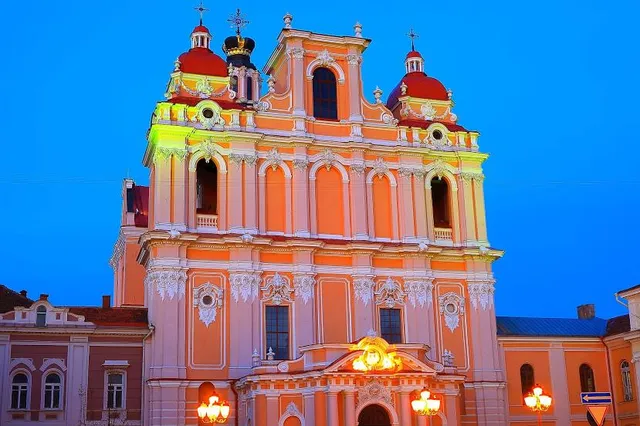
The Church of St. Casimir (Vilniaus Šv. Kazimiero bažnyčia) is a landmark of immense historical and architectural significance in Vilnius Old Town. 🌟 Key Facts First Baroque Church: It is the first and oldest Baroque church in Vilnius and the entire Grand Duchy of Lithuania. Patron Saint: The church is dedicated to Saint Casimir (Šv. Kazimieras), the Holy Prince and patron of Lithuania, who was canonized in 1602. Architecture: Construction began in 1604 by the Jesuit Order, modeled after the famous Church of the Gesù in Rome. Unique Dome: Its most distinctive feature is the majestic, stepped cupola crowned with a royal crown, which was added during an 18th-century reconstruction led by architect Thomas Zebrowski. This crown symbolizes Saint Casimir's rejection of a worldly crown for a heavenly one. Turbulent History: The church endured multiple fires and reconstructions, and was used as an Orthodox church under Tsarist rule. During the Soviet era, it was closed and infamously converted into a Museum of Atheism (1963–1988), with all its sacred interior destroyed. Present Day: It was returned to the Catholic community in 1988 and is once again run by the Jesuits. It is known for its beautiful interior, artificial marble altars, and frequently hosts organ concerts due to its...

   Read more
avatar
5.0
3y

Kościół został wzniesiony w latach 1604–1618 jako wotum po kanonizacji św. Kazimierza Jagiellończyka (1602). Inicjatorami budowy był spokrewniony ze świętym król Zygmunt III Waza oraz Lew Sapieha. Przy kościele rezydowali jezuici. Między innymi, w latach 1624–1630 kaznodzieją i spowiednikiem był tutaj św. Andrzej Bobola.

Architektami świątyni są Giovanni Maria Bernardoni (Jan Maria Bernardoni) i Jan Frankiewicz. Budowla wzorowana jest na rzymskim kościele Il Gesù, była to jednak twórcza adaptacja, a nie mechaniczne skopiowanie wzorca. Jest to budowla na planie krzyża łacińskiego, trójnawowa z transeptem. Na przecięciu nawy głównej i transeptu umieszczono kopułę z latarnią. Świątynia pierwotnie posiadała dwuwieżową fasadę[1]. Charakterystycznym elementem widocznym z zewnątrz jest mitra wielkoksiążęca wieńcząca latarnię – nawiązanie do urzędu piastowanego przez patrona kościoła. Do planu architektonicznego tej świątyni będzie później nawiązywać wiele barokowych kościołów Wilna i z terenu Wielkiego Księstwa.

Po zniszczeniach dokonanych w 1655 przez wojska moskiewskie, które zdewastowały i częściowo spaliły kościół oraz po pożarze 1706 kościół został odnowiony przez Jana Krzysztofa Glaubitza, najsłynniejszego architekta tzw. baroku wileńskiego. Jezuita Tomasz Żebrowski w 1749 wieku wzniósł monumentalną kopułę z wysoką latarnią, zwieńczoną mitrą wielkoksiążęcą. Wnętrze otrzymało wówczas wystrój rokokowy, dodano dziesięć ołtarzy, a ściany ozdobiono freskami przedstawiającymi sceny z życia św. Kazimierza[2].

Po kasacie zakonu jezuitów w 1773 świątynia została przejęta przez augustianów. W 1812 armia francuska zniszczyła wnętrze i zamieniła kościół na magazyn zboża, a następnie na więzienie dla jeńców rosyjskich, co przyczyniło się do jeszcze większej dewastacji wnętrza. W ramach represji carskich po powstaniu listopadowym kościół został skonfiskowany katolikom, a po powstaniu styczniowym z rozkazu generał-gubernatora Michaiła Murawiowa, architekt rosyjski Mikołaj Czagin przebudował go na cerkiew św. Mikołaja, znacznie zniekształcając jego architekturę m.in. obniżając wieże, zastępując znajdującą się na kopule mitrę wielkoksiążęcą prawosławną kopułką oraz skuwając rokokowe ozdoby. Dobudowano wówczas przedsionek, a we wnętrzu rozbito część barokowych nagrobków, zamalowano freski oraz rozebrano organy i ambonę. Podczas okupacji niemieckiej świątynię użytkowano jako protestancki kościół garnizonowy. W 1917 świątynia powróciła do katolików, w 1925 podczas remontu prowadzonego według projektu Jana Borowskiego usunięto znaczną część zniszczeń. 26 marca 1942 aresztowano wszystkich jezuitów i uwięziono ich na Łukiszkach[2]. W tym samym roku Jonas Mulokas doprowadził do zamiany hełmów na stylizowane korony Jagiellonów. W 1944 podczas walk o Wilno świątynia doznała rozległych zniszczeń, uszkodzono wieże i główną fasadę.

Po II wojnie światowej do 1949 należał do jezuitów, a następnie został ponownie skonfiskowany, tym razem przez władze radzieckie. Prace zabezpieczające i pierwsze restauracyjne przeprowadzono w 1955-1957 pod kierunkiem Sigitasa Benjaminasa Lasavickasa, kolejny remont obiektu miał miejsce w 1966, projekt Aldony Švabauskienės zakładał przebudowę wnętrz na potrzeby muzeum ateizmu. Doprowadzono wówczas do zatarcia śladów polskości (np. poprzez skuwanie inskrypcji), w miejscu głównego ołtarza umieszczono posąg Lenina. W październiku 1988 kościół został zwrócony katolikom, w 1990 przejęli go jezuici przywracając go w 1991 do użytku sakralnego. Z dawnego wystroju przetrwały malowidła na kopule, późnobarokowe ołtarze: główny i dwa boczne zamykające transepty, które są najcenniejszymi zabytkami zachowanymi we wnętrzu świątyni, zostały wykonane w latach 1749–1755 przez Tomasza Żebrowskiego[2].

Przy kościele znajduje się klasztor jezuitów wzniesiony w latach 1604-1615, mieszczący dawniej kolegium jezuickie, bibliotekę...

   Read more
Page 1 of 7
Previous
Next

Posts

Zygmunt BorowskiZygmunt Borowski
Church of St. Kazimierz in Vilnius is the first baroque Catholic church in honor of St. Kazimierz Prince. It was built in 1604–1618 as a votive offering after the canonization of St. Kazimierz Jagiellończyk (1602). The initiator of the construction was King Zygmunt III Waza, and the church belonged to the Jesuits. In the years 1624–1630 preacher and confessor was here St. Andrzej Bobola. After the destruction in 1655 by the Moscow army, and after the fire of 1706, the church was renovated, and the interior received then a rococo decor. After the dissolution of the Jesuit order, in 1812 the French army destroyed the interior and turned the church into a grain warehouse and then a prison for Russian prisoners of war. As part of the tsarist repression after the November Uprising, the church was confiscated by Catholics, and after the January Uprising it was rebuilt into an Orthodox church. After World War II, until 1949 he belonged to the Jesuits, and then was confiscated again, this time by the Soviet authorities. In October 1988 the church was returned to Catholics, in 1990 it was taken over by Jesuits and restored to religious use. - Kościół św. Kazimierza w Wilnie jest pierwszą barokową świątynią katolicką ku czci św. Kazimierza Królewicza. Został zbudowany w latach 1604–1618 jako wotum po kanonizacji św. Kazimierza Jagiellończyka (1602). Inicjatorem budowy był król Zygmunt III Waza, a kościół należał do Jezuitów. W latach 1624–1630 kaznodzieją i spowiednikiem był tutaj św. Andrzej Bobola. Po zniszczeniach w 1655 przez wojska moskiewskie, oraz po pożarze 1706 kościół został odnowiony, a wnętrze otrzymało wówczas wystrój rokokowy. Po kasacie zakonu jezuitów, w 1812 roku armia francuska zniszczyła wnętrze i zamieniła kościół na magazyn zboża, a następnie na więzienie dla jeńców rosyjskich. W ramach represji carskich po powstaniu listopadowym kościół został skonfiskowany katolikom, a po powstaniu styczniowym przebudowano go na cerkiew prawosławną. Po II wojnie światowej, do 1949 należał do jezuitów, a następnie został ponownie skonfiskowany, tym razem przez władze radzieckie. W październiku 1988 kościół zwrócono katolikom, w 1990 przejęli go jezuici przywracając do użytku sakralnego.
Paul TohPaul Toh
The Church of St. Casimir (Vilniaus Šv. Kazimiero bažnyčia) is a landmark of immense historical and architectural significance in Vilnius Old Town. 🌟 Key Facts * First Baroque Church: It is the first and oldest Baroque church in Vilnius and the entire Grand Duchy of Lithuania. * Patron Saint: The church is dedicated to Saint Casimir (Šv. Kazimieras), the Holy Prince and patron of Lithuania, who was canonized in 1602. * Architecture: Construction began in 1604 by the Jesuit Order, modeled after the famous Church of the Gesù in Rome. * Unique Dome: Its most distinctive feature is the majestic, stepped cupola crowned with a royal crown, which was added during an 18th-century reconstruction led by architect Thomas Zebrowski. This crown symbolizes Saint Casimir's rejection of a worldly crown for a heavenly one. * Turbulent History: The church endured multiple fires and reconstructions, and was used as an Orthodox church under Tsarist rule. During the Soviet era, it was closed and infamously converted into a Museum of Atheism (1963–1988), with all its sacred interior destroyed. * Present Day: It was returned to the Catholic community in 1988 and is once again run by the Jesuits. It is known for its beautiful interior, artificial marble altars, and frequently hosts organ concerts due to its excellent acoustics.
Natalia PirizhniakNatalia Pirizhniak
The Church of St. Casimir, located in Vilnius, Lithuania, is a significant example of Baroque architecture and is one of the few churches in the city built in this style. Completed in the 17th century, it was designed by the Italian architect Giovanni Battista Frediani. The church is dedicated to St. Casimir, the patron saint of Lithuania, and is known for its beautiful interior, which features ornate altars, intricate decorations, and impressive frescoes. It has served as a place of worship for both the Catholic Church and the Orthodox community over the years. The Church of St. Casimir is situated near the bustling Old Town area, making it a popular spot for both locals and tourists.
See more posts
See more posts
hotel
Find your stay

Pet-friendly Hotels in Vilnius

Find a cozy hotel nearby and make it a full experience.

Church of St. Kazimierz in Vilnius is the first baroque Catholic church in honor of St. Kazimierz Prince. It was built in 1604–1618 as a votive offering after the canonization of St. Kazimierz Jagiellończyk (1602). The initiator of the construction was King Zygmunt III Waza, and the church belonged to the Jesuits. In the years 1624–1630 preacher and confessor was here St. Andrzej Bobola. After the destruction in 1655 by the Moscow army, and after the fire of 1706, the church was renovated, and the interior received then a rococo decor. After the dissolution of the Jesuit order, in 1812 the French army destroyed the interior and turned the church into a grain warehouse and then a prison for Russian prisoners of war. As part of the tsarist repression after the November Uprising, the church was confiscated by Catholics, and after the January Uprising it was rebuilt into an Orthodox church. After World War II, until 1949 he belonged to the Jesuits, and then was confiscated again, this time by the Soviet authorities. In October 1988 the church was returned to Catholics, in 1990 it was taken over by Jesuits and restored to religious use. - Kościół św. Kazimierza w Wilnie jest pierwszą barokową świątynią katolicką ku czci św. Kazimierza Królewicza. Został zbudowany w latach 1604–1618 jako wotum po kanonizacji św. Kazimierza Jagiellończyka (1602). Inicjatorem budowy był król Zygmunt III Waza, a kościół należał do Jezuitów. W latach 1624–1630 kaznodzieją i spowiednikiem był tutaj św. Andrzej Bobola. Po zniszczeniach w 1655 przez wojska moskiewskie, oraz po pożarze 1706 kościół został odnowiony, a wnętrze otrzymało wówczas wystrój rokokowy. Po kasacie zakonu jezuitów, w 1812 roku armia francuska zniszczyła wnętrze i zamieniła kościół na magazyn zboża, a następnie na więzienie dla jeńców rosyjskich. W ramach represji carskich po powstaniu listopadowym kościół został skonfiskowany katolikom, a po powstaniu styczniowym przebudowano go na cerkiew prawosławną. Po II wojnie światowej, do 1949 należał do jezuitów, a następnie został ponownie skonfiskowany, tym razem przez władze radzieckie. W październiku 1988 kościół zwrócono katolikom, w 1990 przejęli go jezuici przywracając do użytku sakralnego.
Zygmunt Borowski

Zygmunt Borowski

hotel
Find your stay

Affordable Hotels in Vilnius

Find a cozy hotel nearby and make it a full experience.

Get the Appoverlay
Get the AppOne tap to find yournext favorite spots!
The Church of St. Casimir (Vilniaus Šv. Kazimiero bažnyčia) is a landmark of immense historical and architectural significance in Vilnius Old Town. 🌟 Key Facts * First Baroque Church: It is the first and oldest Baroque church in Vilnius and the entire Grand Duchy of Lithuania. * Patron Saint: The church is dedicated to Saint Casimir (Šv. Kazimieras), the Holy Prince and patron of Lithuania, who was canonized in 1602. * Architecture: Construction began in 1604 by the Jesuit Order, modeled after the famous Church of the Gesù in Rome. * Unique Dome: Its most distinctive feature is the majestic, stepped cupola crowned with a royal crown, which was added during an 18th-century reconstruction led by architect Thomas Zebrowski. This crown symbolizes Saint Casimir's rejection of a worldly crown for a heavenly one. * Turbulent History: The church endured multiple fires and reconstructions, and was used as an Orthodox church under Tsarist rule. During the Soviet era, it was closed and infamously converted into a Museum of Atheism (1963–1988), with all its sacred interior destroyed. * Present Day: It was returned to the Catholic community in 1988 and is once again run by the Jesuits. It is known for its beautiful interior, artificial marble altars, and frequently hosts organ concerts due to its excellent acoustics.
Paul Toh

Paul Toh

hotel
Find your stay

The Coolest Hotels You Haven't Heard Of (Yet)

Find a cozy hotel nearby and make it a full experience.

hotel
Find your stay

Trending Stays Worth the Hype in Vilnius

Find a cozy hotel nearby and make it a full experience.

The Church of St. Casimir, located in Vilnius, Lithuania, is a significant example of Baroque architecture and is one of the few churches in the city built in this style. Completed in the 17th century, it was designed by the Italian architect Giovanni Battista Frediani. The church is dedicated to St. Casimir, the patron saint of Lithuania, and is known for its beautiful interior, which features ornate altars, intricate decorations, and impressive frescoes. It has served as a place of worship for both the Catholic Church and the Orthodox community over the years. The Church of St. Casimir is situated near the bustling Old Town area, making it a popular spot for both locals and tourists.
Natalia Pirizhniak

Natalia Pirizhniak

See more posts
See more posts