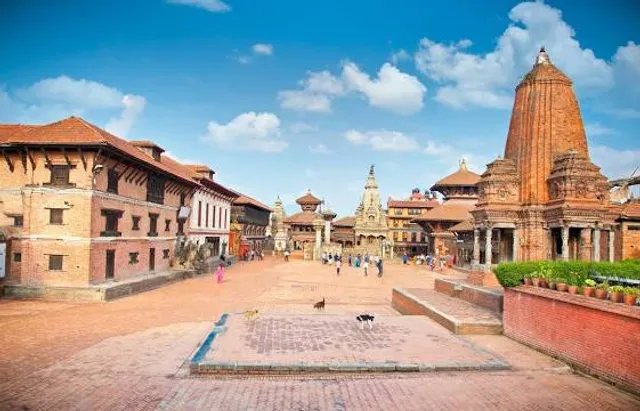
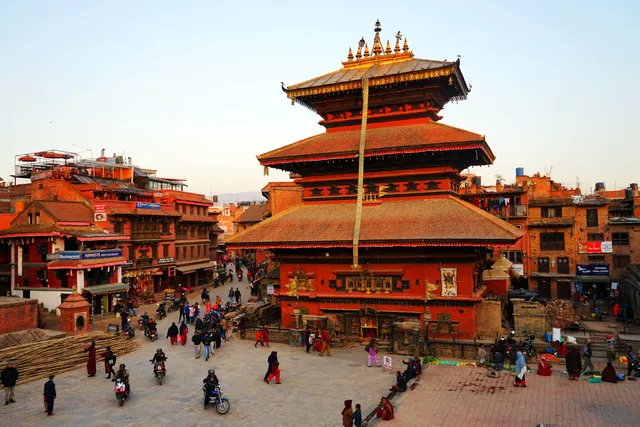
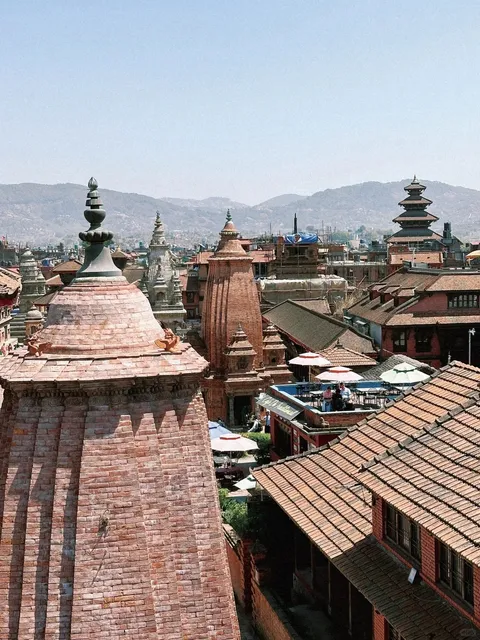
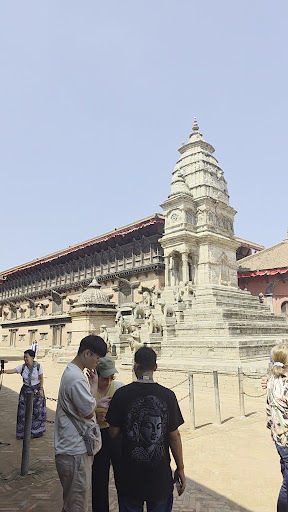
Bhaktapur is one of the three cities found in the Kathmandu Valley in Nepal not far from the capital city of Kathmandu. The name Bhaktapur means "City of Devotees". Today this ancient, medieval city, from the fifteenth century, is part of the UNESCO World Heritage site, which records buildings that are of cultural and natural value universally.
How it was builtEdit
It was built in only 17 months from the time it started. From King Bhupatindra Malla`s account book states the structure was built in only 7 months by the help of other neighboring communities like Challing, Jitpur, Bagshowari, Shakhu, Jhaukhel, Changu, Gokarna, and Paunati toname a few. His kingdom had a rivalry with western neighbors Kritipur and Kantipur, and so to show his power, he built the impressive building. It was built in a time when the Taj Mahal was under construction. He also stated that he had built 7 brick factory for bricks and all raw materials were brought in advance. The biggest challenge was to bring a huge stone from Challing which is almost 9 km from the temple. At last, he called for the feast to all citizen and neighbors kings to show. In that feast, about 23,000 people were there; four times the then population of Bhaktapur. It was written in a book which was discovered by Dr. Madan
The LegendEdit
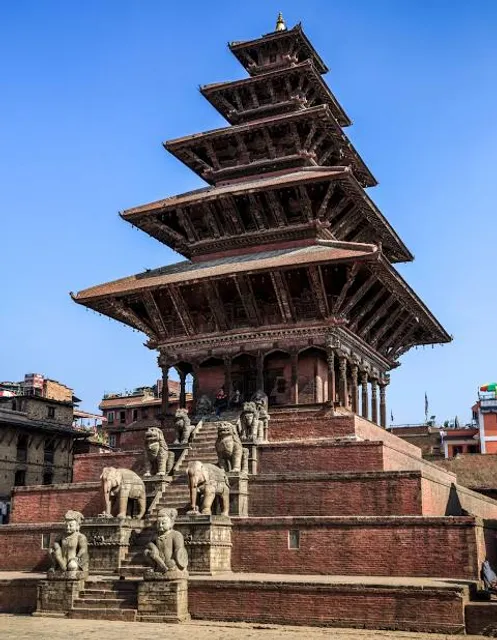
Legend tells of the days when the angry bird Bhairava was causing havoc in society (1078 AD). Bhairava’s temple stood in Taumadhi Square. To counteract his destructive behavior the king decided to call goddess parvati, then Parvati took the form of Siddhi Laxmi and then carried Bhairava in her hand and built a more powerful temple on the honor of Siddhi Laxmi (Parvati) right in front of the Bhairab Temple. To make the brick and wood temple strong and powerful, King Bhupatendra Malla ordered guardians be placed in pairs on each level of the base leading up to the Nyatapola Temple. On the first level is a pair of likenesses of Bhaktapur’s strongest man, Jaya mal Pata, a famous wrestler. Next, two elephants followed by two lions, two griffons and finally "Baghini" and "Singhini", the tiger and lion goddesses. After subduing Bhairaba, peace prevailed in the city. The Temple is the tallest temple in the Kathmandu Valley and stands 30 m high. It was so well designed that it withstood the 1934 Nepal–Bihar earthquake. The image of Siddhi Lakshmi is locked within the temple and only the priests are allowed to enter to worship her. The five-storeyed temple, locally known as Nyatapola, is an impressive and famous temple of Nepal, standing in the northern side of Taumadhi Square in Bhaktapur. This is the only temple that is named after the dimension of architecture rather than from the name of the deity residing inside. The temple was erected within a short period of fewer than five months by King Bhupatindra Malla in 1701/1702 A.D. Out of these six facsimile pages, Dr. Janak Lal Vaidya has published three folios (1, 2 and 4) without any transliteration and translation in Abhilekh No.8 published by the National Archives of Nepal. It is, however, necessary at least to give a full picture of the detailed records in those six important pages.The Bhairav kale survived the 2015 earthquake in spite of having the tallest shikhara in the valley. Many other temples were also damaged in the 2016 earthquake.2 It had also survived the 1934 Nepal–Bihar earthquake that had damaged many other temples.[4]
Historical Sources and recordsEdit

Bhupatindra Malla Statue near the temple on a column
These interesting details were found while going into the Siddhagni Kotyahuti Devala Pratistha manuscript.[5] From the start of digging the foundation to the completion of roofing, it took merely eighty-eight days. The excavation work for foundation lasted for seven days. Then was commenced construction of six plinths. That was accomplished in thirty-one days, and immediately after that started the erection of the superstructure. That was also completed within thirty-four days, after which...
Read moreNyatapola Temple, located in Bhaktapur Durbar Square in Nepal, is a towering testament to the architectural and cultural brilliance of the Newar civilization. Erected in 1702 during the reign of King Bhupatindra Malla, this five-story pagoda-style temple is dedicated to Siddhi Lakshmi, the goddess of prosperity and the fiercest manifestation of the Goddess Durga. Its name, "Nyatapola," translates to "five stories," symbolizing its grand structure and height, making it the tallest temple in Nepal.
The temple stands at an impressive 30 meters (98 feet) and is renowned for its symmetry and structural integrity. Each of its five tiers is adorned with pairs of stone guardians, starting with the famous wrestlers Jayamel and Phattu at the base, followed by elephants, lions, griffins, and deities, symbolizing increasing levels of strength. These statues not only enhance the temple's aesthetic appeal but also serve as protective elements for the shrine within.
One of the most remarkable aspects of Nyatapola Temple is its robust construction. Despite numerous earthquakes over the centuries, including the devastating 2015 Gorkha earthquake, the temple has remained largely intact. This resilience is attributed to the traditional building techniques employed by the Newar craftsmen, including the use of interlocking bricks and wooden beams, which allow the structure to absorb and dissipate seismic energy.
The temple's elevated position provides panoramic views of Bhaktapur and its surrounding landscapes. The climb to the top is an experience in itself, with each step offering closer views of the detailed wood carvings and intricate designs that adorn the temple. At the summit, visitors can witness the sanctum housing the idol of Siddhi Lakshmi, although access is traditionally restricted to Hindus.
Nyatapola Temple is not just an architectural marvel; it is a vibrant cultural hub. Throughout the year, the temple is the focal point of numerous festivals and religious ceremonies, where devotees throng to seek blessings and participate in rituals. The vibrant atmosphere during these events, accompanied by traditional music and dance, brings the temple and its surroundings to life, offering an immersive experience into the rich cultural tapestry of Nepal.
A visit to Nyatapola Temple is a journey through time, showcasing the ingenuity and spiritual devotion of the Newar people. It stands as a symbol of Bhaktapur's enduring heritage, captivating visitors with its grandeur, craftsmanship, and the timeless beauty...
Read moreRising proudly above Bhaktapur’s Taumadhi Square, the Nyatapola Temple stands as a timeless guardian of Nepal’s heritage. Its name, meaning “five stories” in the Newari language, perfectly describes its soaring structure — a five-tiered pagoda that has watched over the city since 1702 AD. Commissioned by King Bhupatindra Malla, the temple was miraculously completed in just a few months, a testament to the skill and devotion of Newar artisans. Dedicated to Siddhi Lakshmi, a powerful form of the goddess Parvati, it was built not merely as a shrine, but as a symbol of strength and balance in a world of divine forces.
Legend has it that the temple was erected to tame the fierce energy of Bhairava, the nearby deity known for his destructive power. To restore harmony, the king built this towering temple for Siddhi Lakshmi, whose spiritual might could keep Bhairava’s energy in check. Beyond the myth, historical records tell of an extraordinary communal effort — craftsmen, builders, and laborers from across the Malla kingdom working together to create what would become Nepal’s tallest and most enduring temple. Even nature’s fury has tested it: earthquakes in 1934 and 2015 shook the valley, yet Nyatapola stood firm, its foundation and design proving the brilliance of traditional Newari engineering.
When approaching the temple, we are immediately drawn to its grand staircase guarded by stone sentinels — wrestlers, elephants, lions, griffins, and deities — each pair ten times stronger than the one below. Climbing these steps rewards travelers with sweeping views of Taumadhi Square and the old city beyond, where terracotta roofs and bustling alleys tell stories centuries old. Though the inner sanctum is closed to the public and accessible only to priests, the temple’s exterior majesty is more than enough to inspire awe.
It's the crown jewel of Bhaktapur, elegance and resilience. It feels like stepping back into a living history — a city that breathes through its temples. The climb can be steep, and qe have seen other pagoda-style temples in the Kathmandu Valley and we find the architecture somewhat familiar. But still this Nyatapola’s towering grace and intricate symbolism make it anything less than extraordinary.
Today, the temple remains not just a monument, but a living emblem of Bhaktapur’s identity — a blend of faith, artistry, and endurance. Whether you come to admire its architecture, learn its legends, or simply stand in its shadow, Nyatapola Temple offers an unforgettable glimpse into the...
Read more