HTML SitemapExplore
logo
Find Things to DoFind The Best Restaurants

Ancient Macedonian Theatre of Ohrid — Attraction in Municipality of Ohrid

Name
Ancient Macedonian Theatre of Ohrid
Description
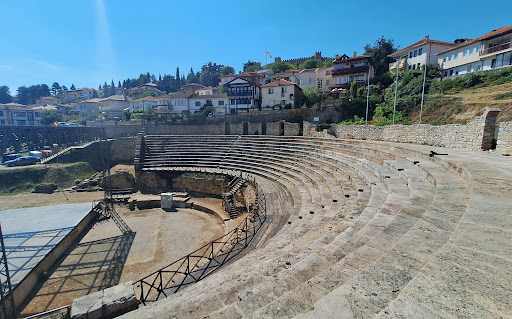
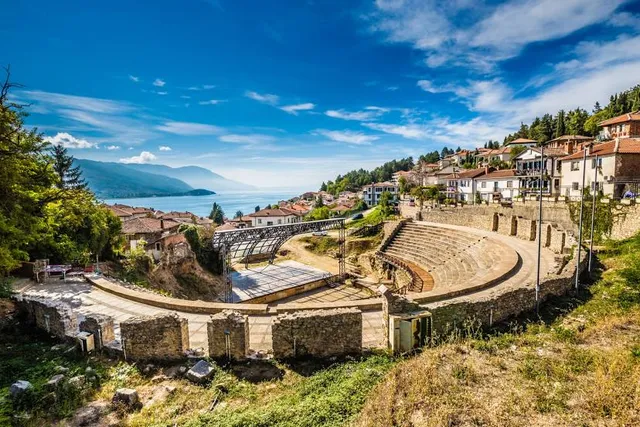
The Ancient theatre of Ohrid of the Hellenistic period is located in Ohrid, North Macedonia. It was built in 200 BC and is the only Hellenistic-type theatre in the country as the other three in Scupi, Stobi and Heraklea Lynkestis are from Roman times.
Nearby attractions
Church of the Virgin Mary Peribleptos
4Q7W+M5P, Clement's University, Ohrid 6000, North Macedonia
Upper Gate of the Fortress
4Q7V+XXR, Sts. Cyril and Methodius, Ohrid, North Macedonia
Varosh - Old Town of Ohrid
4Q7W+P2J, Ohrid, North Macedonia
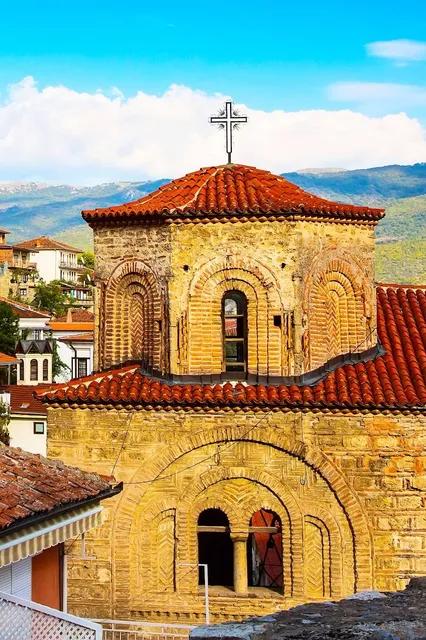
Church of Saint Sophia
Цар Самоил 88, Ohrid 6000, North Macedonia
Old City Park
4Q7R+F5X, Ohrid 6000, North Macedonia
Icon Gallery of Ohrid
4Q7W+P43, Clement's University, Ohrid, North Macedonia
Plaoshnik Archaeological park
4Q7R+483, Kaneo Plaosnik Pateka, Ohrid 6000, North Macedonia
Church of Saints Clement of Ohrid and Panteleimon
4Q7R+F5X, MK, Kuzman Kapidan, Ohrid 6000, North Macedonia
National Workshop For Handmade Paper Ljupcho Panevski
Car Samoil 72, Охрид 6000, Ohrid 6000, North Macedonia
Old Town View Point
Clement's University 87a, Ohrid 6000, North Macedonia
Nearby restaurants
Restaurant St. Sofija
Tsar Samoil 88, Ohrid 6000, North Macedonia
Restaurant Kajche
Ilindenska 22, Ohrid 6000, North Macedonia
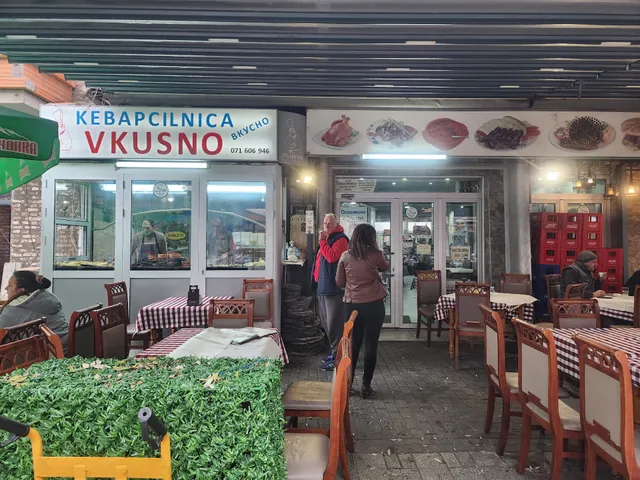
Vkusno Kebap Shop
4Q8X+PGW, Ohrid 6000, North Macedonia
Dalga
Kosta Abrash 3, Ohrid 6000, North Macedonia
Di Angolo Pizzeria
Petar Chaulev 31, Ohrid 6000, North Macedonia
Restaurant Antico
Tsar Samoil, Ohrid 6000, North Macedonia
Le Petit Bistro Lihnidos
Kosta Abras br.1, Ohrid 6000, North Macedonia
Pizza Nemo
MK, Tsar Samoil, Ohrid 6000, North Macedonia
Kaneo Restaurant & Letna Bavcha
Kocho Racin 43, Ohrid 6000, North Macedonia
Kaj Kanevche
Kocho Racin 39, Ohrid 6000, North Macedonia
Related posts
Keywords
Ancient Macedonian Theatre of Ohrid tourism.Ancient Macedonian Theatre of Ohrid hotels.Ancient Macedonian Theatre of Ohrid bed and breakfast. flights to Ancient Macedonian Theatre of Ohrid.Ancient Macedonian Theatre of Ohrid attractions.Ancient Macedonian Theatre of Ohrid restaurants.Ancient Macedonian Theatre of Ohrid travel.Ancient Macedonian Theatre of Ohrid travel guide.Ancient Macedonian Theatre of Ohrid travel blog.Ancient Macedonian Theatre of Ohrid pictures.Ancient Macedonian Theatre of Ohrid photos.Ancient Macedonian Theatre of Ohrid travel tips.Ancient Macedonian Theatre of Ohrid maps.Ancient Macedonian Theatre of Ohrid things to do.
Ancient Macedonian Theatre of Ohrid things to do, attractions, restaurants, events info and trip planning
Ancient Macedonian Theatre of Ohrid
North MacedoniaSouthwestern RegionMunicipality of OhridAncient Macedonian Theatre of Ohrid

Basic Info

Ancient Macedonian Theatre of Ohrid

Ilindenska, Ohrid 6000, North Macedonia
4.5(2K)
Open until 12:00 AM
Save
spot

Ratings & Description

Info

The Ancient theatre of Ohrid of the Hellenistic period is located in Ohrid, North Macedonia. It was built in 200 BC and is the only Hellenistic-type theatre in the country as the other three in Scupi, Stobi and Heraklea Lynkestis are from Roman times.

Cultural
Accessibility
attractions: Church of the Virgin Mary Peribleptos, Upper Gate of the Fortress, Varosh - Old Town of Ohrid, Church of Saint Sophia, Old City Park, Icon Gallery of Ohrid, Plaoshnik Archaeological park, Church of Saints Clement of Ohrid and Panteleimon, National Workshop For Handmade Paper Ljupcho Panevski, Old Town View Point, restaurants: Restaurant St. Sofija, Restaurant Kajche, Vkusno Kebap Shop, Dalga, Di Angolo Pizzeria, Restaurant Antico, Le Petit Bistro Lihnidos, Pizza Nemo, Kaneo Restaurant & Letna Bavcha, Kaj Kanevche
logoLearn more insights from Wanderboat AI.
Website
muzejohrid.mk
Open hoursSee all hours
FriOpen 24 hoursOpen

Plan your stay

hotel
Pet-friendly Hotels in Municipality of Ohrid
Find a cozy hotel nearby and make it a full experience.

hotel
Affordable Hotels in Municipality of Ohrid
Find a cozy hotel nearby and make it a full experience.

hotel
The Coolest Hotels You Haven't Heard Of (Yet)
Find a cozy hotel nearby and make it a full experience.

hotel
Trending Stays Worth the Hype in Municipality of Ohrid
Find a cozy hotel nearby and make it a full experience.

Reviews

Nearby attractions of Ancient Macedonian Theatre of Ohrid

Church of the Virgin Mary Peribleptos

Upper Gate of the Fortress

Varosh - Old Town of Ohrid

Church of Saint Sophia

Old City Park

Icon Gallery of Ohrid

Plaoshnik Archaeological park

Church of Saints Clement of Ohrid and Panteleimon

National Workshop For Handmade Paper Ljupcho Panevski

Old Town View Point
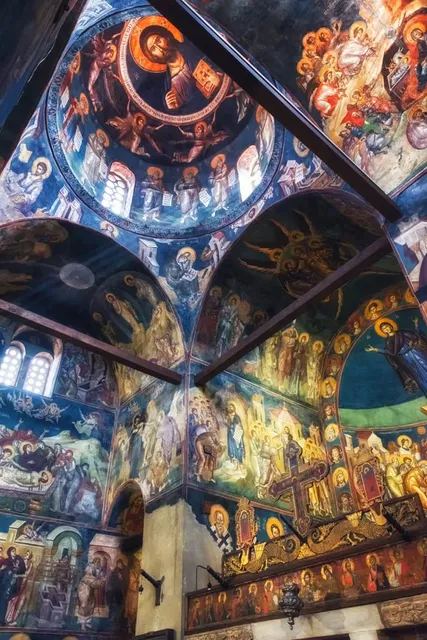
Church of the Virgin Mary Peribleptos

Church of the Virgin Mary Peribleptos

4.8

(284)

Closed
Click for details
Upper Gate of the Fortress

Upper Gate of the Fortress

4.6

(126)

Open 24 hours
Click for details
Varosh - Old Town of Ohrid

Varosh - Old Town of Ohrid

4.8

(115)

Open 24 hours
Click for details
Church of Saint Sophia

Church of Saint Sophia

4.7

(1.4K)

Open 24 hours
Click for details

Nearby restaurants of Ancient Macedonian Theatre of Ohrid

Restaurant St. Sofija

Restaurant Kajche

Vkusno Kebap Shop

Dalga

Di Angolo Pizzeria

Restaurant Antico

Le Petit Bistro Lihnidos

Pizza Nemo

Kaneo Restaurant & Letna Bavcha

Kaj Kanevche
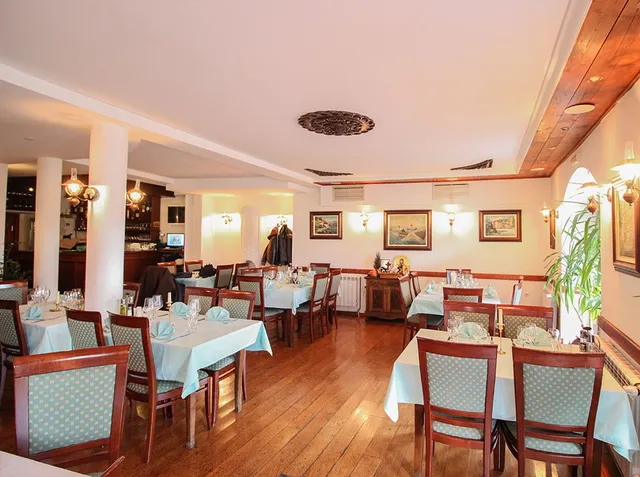
Restaurant St. Sofija

Restaurant St. Sofija

4.2

(592)

$$

Click for details
Restaurant Kajche

Restaurant Kajche

4.5

(794)

$$

Click for details
Vkusno Kebap Shop

Vkusno Kebap Shop

4.5

(1.5K)

$

Click for details
Dalga

Dalga

4.2

(689)

$$

Click for details
Get the Appoverlay
Get the AppOne tap to find yournext favorite spots!
Wanderboat LogoWanderboat

Your everyday Al companion for getaway ideas

CompanyAbout Us
InformationAI Trip PlannerSitemap
SocialXInstagramTiktokLinkedin
LegalTerms of ServicePrivacy Policy

Get the app

© 2025 Wanderboat. All rights reserved.
logo

Reviews of Ancient Macedonian Theatre of Ohrid

4.5
(1,992)
avatar
5.0
12w

The Ancient Theatre of Lychnidos, located in the city of Ohrid in present-day North Macedonia, is the only known Hellenistic-style theatre in the country. It was built around 200 BC, during the Hellenistic period, when Greek cultural influence was strong throughout the Balkans following the campaigns of Alexander the Great. The theatre reflects both the architectural style and cultural values of that era, characterized by open-air performances, strong acoustics, and integration into the natural landscape.

The exact identity of the builders is not recorded, but it is widely believed that the theatre was commissioned by the wealthy elite of Lychnidos, a flourishing city that served as a regional cultural and administrative center. Its placement between two hills—Gorni Saraj and Deboj—not only provided excellent acoustic conditions but also shielded the audience from strong winds. The theatre had a semi-circular orchestra and a tiered seating area, typical of Hellenistic design, with an estimated capacity for several thousand spectators.

Originally, the theatre was used for dramatic performances and other public gatherings rooted in Greek traditions. However, after the Roman conquest of the region in the 2nd century BC, its function changed. The Romans adapted the theatre for gladiator fights and public executions, typical of Roman-style entertainment. Modifications were made to accommodate these spectacles, including safety barriers and structural changes to the stage and orchestra area.

With the spread of Christianity in the 4th century AD, the theatre fell into disuse. As the new religion gained dominance, structures associated with pagan rituals or violent spectacles were abandoned or destroyed. Local residents began dismantling the theatre, using its stone blocks to build churches, basilicas, and other early Christian structures around Ohrid. Over time, the theatre was buried under layers of soil and debris and was eventually forgotten.

The site remained hidden for centuries until its rediscovery in the 20th century. In 1935, during construction work in the area, parts of the theatre were accidentally uncovered. Systematic archaeological excavations began in 1959 and continued through the 1970s and 1980s. These excavations revealed the lower seating areas, sections of the orchestra, and several inscriptions in ancient Greek. Notably, some of the discovered stone blocks contained the names of people condemned to die in Roman games, evidence of the theatre’s transformation under Roman rule.

In 2002, a major restoration effort was launched to stabilize the structure and make it suitable for public events. Today, the theatre is partially restored and serves as one of Ohrid’s most important cultural venues. It hosts performances during the annual Ohrid Summer Festival, including theatre, music, and dance, reconnecting the monument with its original artistic purpose.

The Ancient Theatre of Lychnidos stands as a rare and valuable example of Hellenistic architecture in the Balkans. Its history—from a Greek cultural center to a Roman arena, then a forgotten ruin, and finally a modern performance venue—mirrors the broader historical transformations of the region over more than...

   Read more
avatar
5.0
7y

The theater was built at the end of the 3rd or the beginning of the 2nd century, in the period of the late Hellenism, and was intended for displaying dramatic, musical and poetry performances by the lovers of theatrical art.

The theater was built in the reputation of the famous Greek stone buildings of this kind, with a rich architectural decoration, especially the theater building that was decorated with a frieze of bas-relief plates that included scenes from the lives of the gods. On two such marble plates, which are preserved at the Ohrid Museum today, the god Dionysus is presented in association with the Muses.

Some of the then city prefects had bought and own seats in the theater, such as Crisp and Topos as great fans of theatrical art because their names still stand engraved in the stone blocks of the seats. Immediately after the Roman conquests of these regions in 148 BC, the theater was probably for a very short time adjusted to the needs of the Roman way of life. The building was rearranged in a theater with an arena of gladiatorial struggles and wild beast fights, with several of the lower row seats being demolished and several cages for animals were built, and the orchestra with honorary seats was enclosed with a firewall. Later in the upper, outer zone was built an epitheterone, which increased the capacity of the theater to 5,000 spectators.

It is thought that with the euphoria that occurred at the beginning of the 4th century from the new era, when St. Erasmus Antiochus, the first Christian missionary who came to Ohrid, converted Christianity to 25,000 people, destroyed all pagan objects in the city. Probably in the destruction of the theater, and the material from its seats and other objects was later used to build early Christian basilicas and many other sacred and profane objects.

The first assumptions that there was a theater in the ancient Lychnidus (today's Ohrid) was given by the Russian art historian Nikodim Kondakov at the very beginning of the 20th century, and already during 1935, when the first archaeological excavations were carried out, these assumptions were confirmed and the theater was partially discovered. Later, during the excavations carried out in the period 1959-1960, the exact location and the size of the theater were determined.

With systematic excavations, started in 1977 and after a six-year interruption in 1984, the places where the entrances and the theater building, the orchestra with the honorable seats and the stretch of the arena are located, and nine rows of seats were discovered.

In 1999, the project for its complete discovery and putting into operation began, and since 2001 on the stage of the open reconstructed space of the ancient theater, after twenty centuries, drama performances, musical performances and various other manifestations are held like Gala Opening of Ohrid...

   Read more
avatar
5.0
4y

The Ancient theatre of Ohrid of the Hellenistic period is located in Ohrid, Macedonia. It was built in 200 BC and is the only Hellenistic-type theatre in Macedonia.

A beautiful 2000 year old amphitheatre in the heart of old city Ohrid, located just below Samuel's Fortress and free to enter.

The theatre was constructed between hills to protect it from winds and provide incredible acoustics. It is chosen as one of the main stages where the Ohrid Summer Festival takes place.

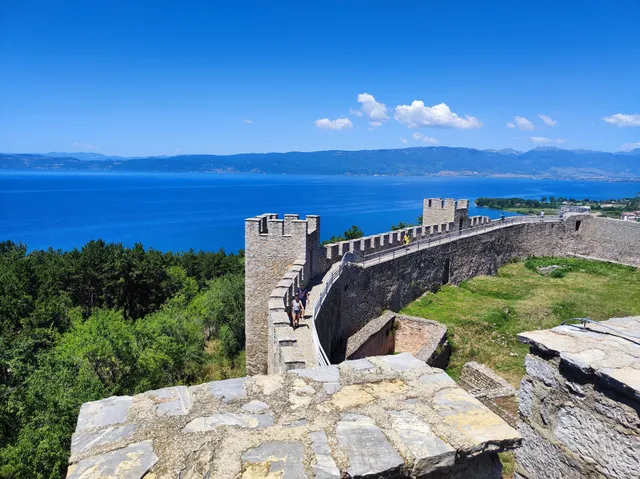
The theatre is very well maintained and perched up on a hill with breathtaking views overlooking Ohrid, the lake and the mountains.

World famous stars have performed here, one of the most famous is Jose Carreras (a Spanish operatic tenor who is particularly known for his performances in the operas of Donizetti, Verdi and Puccini), who performed here in 2005 in front of 3.500 people, the maximum capacity.

Be sure to include Samuel's Fortress and Church of Saints Clement and Panteleimon to your walking tour, as they are all 10 minutes from each other, and all have the most wonderful views of Ohrid and full of...

   Read more
Page 1 of 7
Previous
Next

Posts

Your browser does not support the video tag.
julialobashevajulialobasheva
Things to do ⬇️ in Ohrid: - Walk in the Ohrid Old Town - See the iconic Church of Saint John at Kaneo - Admire the stunning view from the Samuel’s Fortress - Be impressed with the ancient amphitheater - Visit Plaošnik - Walk along the Lake Ohrid. There is a boardwalk going towards the Church of Saint John at Kaneo - Go for a boat tour on Lake Ohrid (visit Saint Naum Monastery and Bay of Bones) - Relax at the beach and swim in the lake - Buy Ohrid pearls - Enjoy local food (my recommendation is Restaurant Kajče) . . . #ohrid #ohridlake #ohridcity #lakeohrid #macedonia #macedonia🇲🇰 #northmacedonia #macedonian #visitmacedonia #македония #охрид #traveltheglobe #travelinspiration #viralreels #travelblogger #bucketlistadventures #travelgram #uniqueplaces #exploreeurope #hiddenplaces #balkantrip #visitbalkan #europedestinations #europediscovery #europetravels #travellingthroughtheworld #travellingourplanet #reelsideas #templates
Antonios PetrakisAntonios Petrakis
The Ancient Theatre of Lychnidos, located in the city of Ohrid in present-day North Macedonia, is the only known Hellenistic-style theatre in the country. It was built around 200 BC, during the Hellenistic period, when Greek cultural influence was strong throughout the Balkans following the campaigns of Alexander the Great. The theatre reflects both the architectural style and cultural values of that era, characterized by open-air performances, strong acoustics, and integration into the natural landscape. The exact identity of the builders is not recorded, but it is widely believed that the theatre was commissioned by the wealthy elite of Lychnidos, a flourishing city that served as a regional cultural and administrative center. Its placement between two hills—Gorni Saraj and Deboj—not only provided excellent acoustic conditions but also shielded the audience from strong winds. The theatre had a semi-circular orchestra and a tiered seating area, typical of Hellenistic design, with an estimated capacity for several thousand spectators. Originally, the theatre was used for dramatic performances and other public gatherings rooted in Greek traditions. However, after the Roman conquest of the region in the 2nd century BC, its function changed. The Romans adapted the theatre for gladiator fights and public executions, typical of Roman-style entertainment. Modifications were made to accommodate these spectacles, including safety barriers and structural changes to the stage and orchestra area. With the spread of Christianity in the 4th century AD, the theatre fell into disuse. As the new religion gained dominance, structures associated with pagan rituals or violent spectacles were abandoned or destroyed. Local residents began dismantling the theatre, using its stone blocks to build churches, basilicas, and other early Christian structures around Ohrid. Over time, the theatre was buried under layers of soil and debris and was eventually forgotten. The site remained hidden for centuries until its rediscovery in the 20th century. In 1935, during construction work in the area, parts of the theatre were accidentally uncovered. Systematic archaeological excavations began in 1959 and continued through the 1970s and 1980s. These excavations revealed the lower seating areas, sections of the orchestra, and several inscriptions in ancient Greek. Notably, some of the discovered stone blocks contained the names of people condemned to die in Roman games, evidence of the theatre’s transformation under Roman rule. In 2002, a major restoration effort was launched to stabilize the structure and make it suitable for public events. Today, the theatre is partially restored and serves as one of Ohrid’s most important cultural venues. It hosts performances during the annual Ohrid Summer Festival, including theatre, music, and dance, reconnecting the monument with its original artistic purpose. The Ancient Theatre of Lychnidos stands as a rare and valuable example of Hellenistic architecture in the Balkans. Its history—from a Greek cultural center to a Roman arena, then a forgotten ruin, and finally a modern performance venue—mirrors the broader historical transformations of the region over more than two millennia.
Sal SchmidtSal Schmidt
The Ancient theatre of Ohrid of the Hellenistic period is located in Ohrid, Macedonia. It was built in 200 BC and is the only Hellenistic-type theatre in Macedonia. A beautiful 2000 year old amphitheatre in the heart of old city Ohrid, located just below Samuel's Fortress and free to enter. The theatre was constructed between hills to protect it from winds and provide incredible acoustics. It is chosen as one of the main stages where the Ohrid Summer Festival takes place. The theatre is very well maintained and perched up on a hill with breathtaking views overlooking Ohrid, the lake and the mountains. World famous stars have performed here, one of the most famous is Jose Carreras (a Spanish operatic tenor who is particularly known for his performances in the operas of Donizetti, Verdi and Puccini), who performed here in 2005 in front of 3.500 people, the maximum capacity. Be sure to include Samuel's Fortress and Church of Saints Clement and Panteleimon to your walking tour, as they are all 10 minutes from each other, and all have the most wonderful views of Ohrid and full of rich history.
See more posts
See more posts
hotel
Find your stay

Pet-friendly Hotels in Municipality of Ohrid

Find a cozy hotel nearby and make it a full experience.

Things to do ⬇️ in Ohrid: - Walk in the Ohrid Old Town - See the iconic Church of Saint John at Kaneo - Admire the stunning view from the Samuel’s Fortress - Be impressed with the ancient amphitheater - Visit Plaošnik - Walk along the Lake Ohrid. There is a boardwalk going towards the Church of Saint John at Kaneo - Go for a boat tour on Lake Ohrid (visit Saint Naum Monastery and Bay of Bones) - Relax at the beach and swim in the lake - Buy Ohrid pearls - Enjoy local food (my recommendation is Restaurant Kajče) . . . #ohrid #ohridlake #ohridcity #lakeohrid #macedonia #macedonia🇲🇰 #northmacedonia #macedonian #visitmacedonia #македония #охрид #traveltheglobe #travelinspiration #viralreels #travelblogger #bucketlistadventures #travelgram #uniqueplaces #exploreeurope #hiddenplaces #balkantrip #visitbalkan #europedestinations #europediscovery #europetravels #travellingthroughtheworld #travellingourplanet #reelsideas #templates
julialobasheva

julialobasheva

hotel
Find your stay

Affordable Hotels in Municipality of Ohrid

Find a cozy hotel nearby and make it a full experience.

Get the Appoverlay
Get the AppOne tap to find yournext favorite spots!
The Ancient Theatre of Lychnidos, located in the city of Ohrid in present-day North Macedonia, is the only known Hellenistic-style theatre in the country. It was built around 200 BC, during the Hellenistic period, when Greek cultural influence was strong throughout the Balkans following the campaigns of Alexander the Great. The theatre reflects both the architectural style and cultural values of that era, characterized by open-air performances, strong acoustics, and integration into the natural landscape. The exact identity of the builders is not recorded, but it is widely believed that the theatre was commissioned by the wealthy elite of Lychnidos, a flourishing city that served as a regional cultural and administrative center. Its placement between two hills—Gorni Saraj and Deboj—not only provided excellent acoustic conditions but also shielded the audience from strong winds. The theatre had a semi-circular orchestra and a tiered seating area, typical of Hellenistic design, with an estimated capacity for several thousand spectators. Originally, the theatre was used for dramatic performances and other public gatherings rooted in Greek traditions. However, after the Roman conquest of the region in the 2nd century BC, its function changed. The Romans adapted the theatre for gladiator fights and public executions, typical of Roman-style entertainment. Modifications were made to accommodate these spectacles, including safety barriers and structural changes to the stage and orchestra area. With the spread of Christianity in the 4th century AD, the theatre fell into disuse. As the new religion gained dominance, structures associated with pagan rituals or violent spectacles were abandoned or destroyed. Local residents began dismantling the theatre, using its stone blocks to build churches, basilicas, and other early Christian structures around Ohrid. Over time, the theatre was buried under layers of soil and debris and was eventually forgotten. The site remained hidden for centuries until its rediscovery in the 20th century. In 1935, during construction work in the area, parts of the theatre were accidentally uncovered. Systematic archaeological excavations began in 1959 and continued through the 1970s and 1980s. These excavations revealed the lower seating areas, sections of the orchestra, and several inscriptions in ancient Greek. Notably, some of the discovered stone blocks contained the names of people condemned to die in Roman games, evidence of the theatre’s transformation under Roman rule. In 2002, a major restoration effort was launched to stabilize the structure and make it suitable for public events. Today, the theatre is partially restored and serves as one of Ohrid’s most important cultural venues. It hosts performances during the annual Ohrid Summer Festival, including theatre, music, and dance, reconnecting the monument with its original artistic purpose. The Ancient Theatre of Lychnidos stands as a rare and valuable example of Hellenistic architecture in the Balkans. Its history—from a Greek cultural center to a Roman arena, then a forgotten ruin, and finally a modern performance venue—mirrors the broader historical transformations of the region over more than two millennia.
Antonios Petrakis

Antonios Petrakis

hotel
Find your stay

The Coolest Hotels You Haven't Heard Of (Yet)

Find a cozy hotel nearby and make it a full experience.

hotel
Find your stay

Trending Stays Worth the Hype in Municipality of Ohrid

Find a cozy hotel nearby and make it a full experience.

The Ancient theatre of Ohrid of the Hellenistic period is located in Ohrid, Macedonia. It was built in 200 BC and is the only Hellenistic-type theatre in Macedonia. A beautiful 2000 year old amphitheatre in the heart of old city Ohrid, located just below Samuel's Fortress and free to enter. The theatre was constructed between hills to protect it from winds and provide incredible acoustics. It is chosen as one of the main stages where the Ohrid Summer Festival takes place. The theatre is very well maintained and perched up on a hill with breathtaking views overlooking Ohrid, the lake and the mountains. World famous stars have performed here, one of the most famous is Jose Carreras (a Spanish operatic tenor who is particularly known for his performances in the operas of Donizetti, Verdi and Puccini), who performed here in 2005 in front of 3.500 people, the maximum capacity. Be sure to include Samuel's Fortress and Church of Saints Clement and Panteleimon to your walking tour, as they are all 10 minutes from each other, and all have the most wonderful views of Ohrid and full of rich history.
Sal Schmidt

Sal Schmidt

See more posts
See more posts