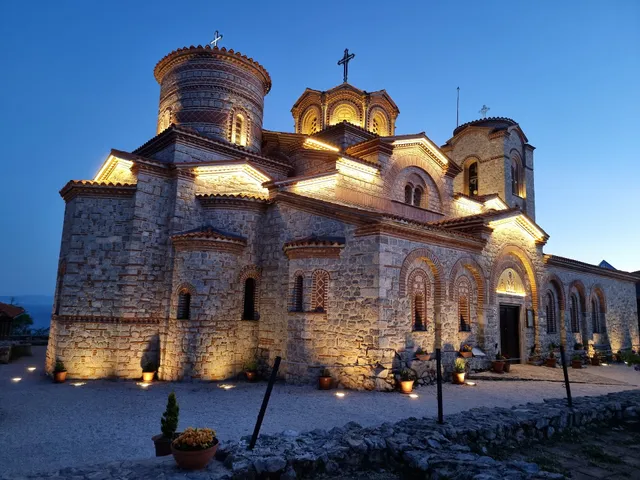
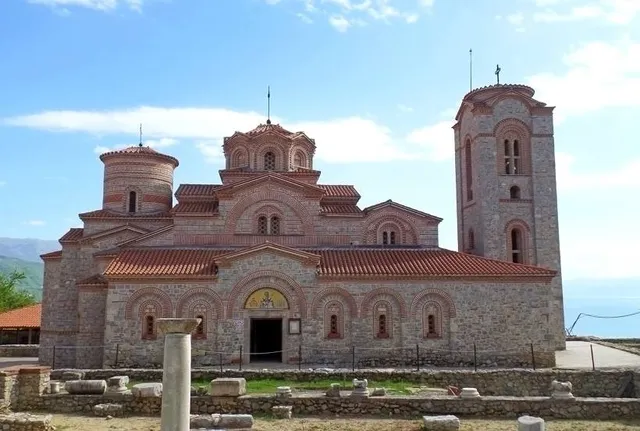
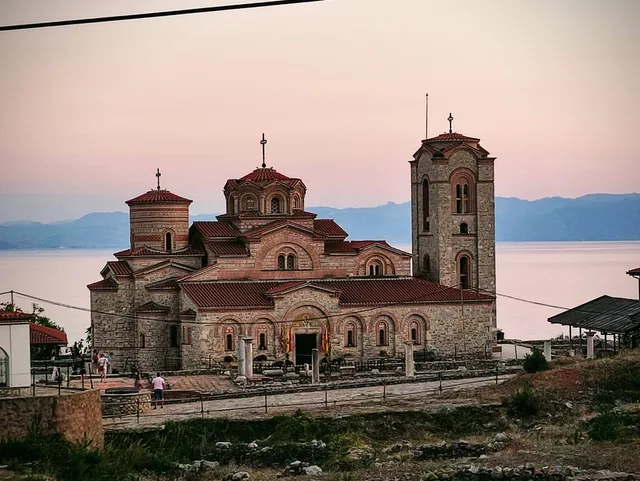
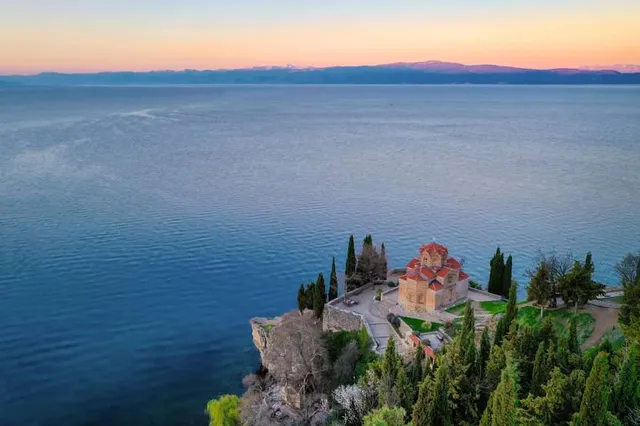
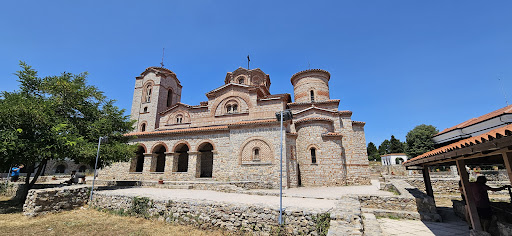
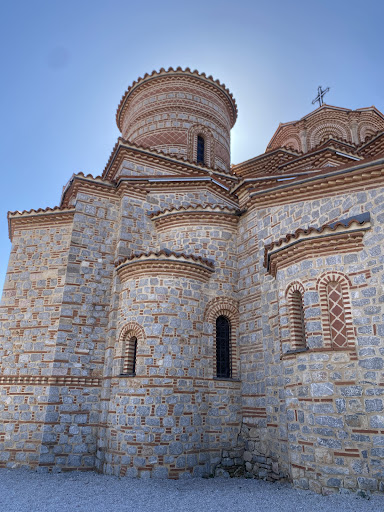
The Church of Saint Kliment and Panteleimon is located in the Plaoshnik locality in the old part of Ohrid in Macedonia. The Church of St. Kliment and Panteleimon is so named in honor of St. Kliment of Ohrid who originally built the church in this place and St. Panteleimon to whom it was originally dedicated.
The church of Saint Kliment and Panteleimon is a replica of the older church of Saint Panteleimon, which was built by Saint Kliment of Ohrid in 863 in the same place, on the foundations of a large five-aisled early Christian basilica. In 916, after his death, Saint Clement was buried in the floor of the church in a tomb that he supposedly prepared himself. The Church of Saint Panteleimon was rebuilt several times until the 15th century, when it was finally demolished by the Ottoman Turks. The entire region of Plaoshnik is rich in archaeological finds. The church of Saint Panteleimon itself was built in 863, over the foundations of a large five-aisled basilica whose remains are still visible around the church today.
The folk Macedonian tradition that Clement's church and his tomb exist in this place was confirmed after the first archaeological excavations in 1943, when prof. Dimce Kotso discovered the foundations of Clement's church and at the same time the tomb of St. Clement of Ohrid. On the foundations of the early Christian basilica, of which remains have been preserved, a church was built with a triconchal shape (clover leaf), architectural forms such as were cultivated in the 9th century in Byzantium. The church was restored in the 12th century, and then once again in the 13th century. Later, chapels were added to this church, and in the 14th century, a narthex and an outer narthex with a belfry. The frescoes from the original Clement's church from the 9th century have not been preserved. The fragments of the frescoes found, during the archaeological research, belong to three different periods of the renewal and expansion of the Clement's monastery.
In modern Macedonia, for the construction of the church according to the project of the architect Tanja Paskali Buntasheska, from the Ohrid Institute and Museum, in which about 200 experts and builders participated, several million euros were spent, mostly government funds. The foundation stone of the restored church was laid in 2000, and the restoration was supposed to be on the foundations of the old church, and the churches from Ohrid and its surroundings were taken as an example, which chronologically belong to certain phases of St. Panteleimon.
St. Clement's tomb in the new church is on the old burial structure, all under glass, and above it there is a marble sarcophagus in which the coffin with the relics of St. Clement is located. Icons of Saint Clement and Saint Panteleimon are placed on the southern side of the tomb. On the other side, in a niche, there is a wooden sculpture of Saint Clement from the 13th century found in the Church of the Holy Virgin Perivlepta. In and around the newly built church are glass floors to view the remains of the old temple.
The preserved frescoes, in the lower zones of the interior, are specially presented, because the temple is a Macedonian cultural monument. From the originals, the foundations of the pillars and one ossuary in the central part of the temple have been preserved. Thick glass is placed in these places, so that visitors can see the entire construction of the church.
The old parts of the preserved architecture are also separated with sheet metal - in the lower zones, just above the foundations. The bell weighs three tons and was made in a foundry in Verona, with 400 years of tradition. The bell has details with religious themes from the Old and New Testaments as well as data and figures of the...
Read moreThe Church of Saints Clement and Panteleimon is very nice and worth a visit. There are the relics of St. Kliment Ohridski - one of the first medieval Bulgarian saints, scholar, writer, and apostle to the Slavs. He was one of the most prominent disciples of Cyril and Methodius and is often associated with the creation of the Glagolitic and Cyrillic scripts. Worth a visit. It also has a nice view of Lake Ohrid. What spoils the Christian atmosphere there is the so-called Sasho the philosopher. Some unknown hipster proclaimed philosopher who at first glance you don't know if he follows the rule that after 10 am it's brandy time or if his green salad is made with the devil's lettuce. He comes to you and asks what you are like, because God forbid if you are Bulgarian you should pay the ticket, but other foreigners if he is in the mood he can chase them to pay the ticket or if he is not, he doesn't chase them. It is not a question of three euros, it is a matter of principle and not only Bulgarians should be charged but every foreigner. The other thing is that if you agree to him talking to you, he may not warn you that you have to tip him in the end. He didn't warn us. The story he told us wasn't worth two cents. The first thing is we know history. :) The second thing is that he for three minutes told us how there are two hills and four basilicas. And for that he wanted money. We gave him 10 dinars because he didn't want to go out and leave us alone. In conclusion, the church is wonderful, but Sasho the "philosopher" should either get out of the way or learn a real...
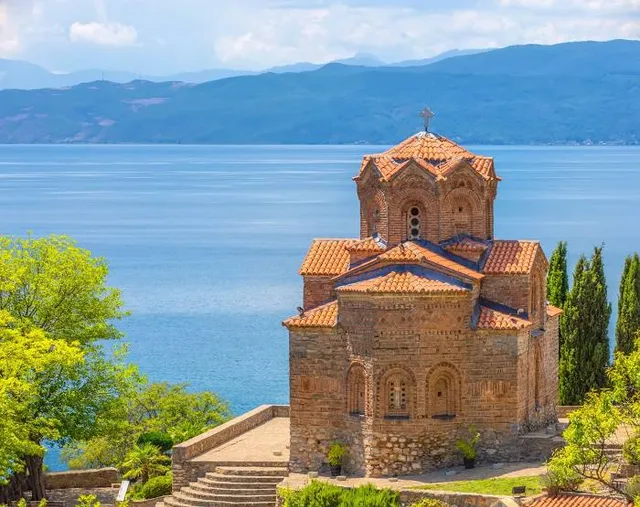
Read moreThe most peaceful outlook over Lake Ohrid, this beautiful Byzantine (Eastern Orthodox) church is perched up on the hill in Old City Park with magical views. Ohrid is a UNESCO World Heritage Site, so the church is also protected by UNESCO.
The church is a replica of the old church of St. Panteleimon, built by St. Clement of Ohrid in 863, demolished by the Ottomans. The construction of the present church was completed in 2002.
Archaeologists have come to believe that the church is located on the site where the first students of the Glagolitic alphabet (used to translate the Bible into Old Church Slavonic) were taught into the First Bulgarian Empire.
Only a short 10 minute walk from the old city, up a small hill, easily accessible for everyone to visit.
A small fee to enter, 100 denar (€1.60) each, local guides are available for a donation to soak up the knowledge of Ohrid and the history of the attraction. There is also a mosque on the site and a university being built.
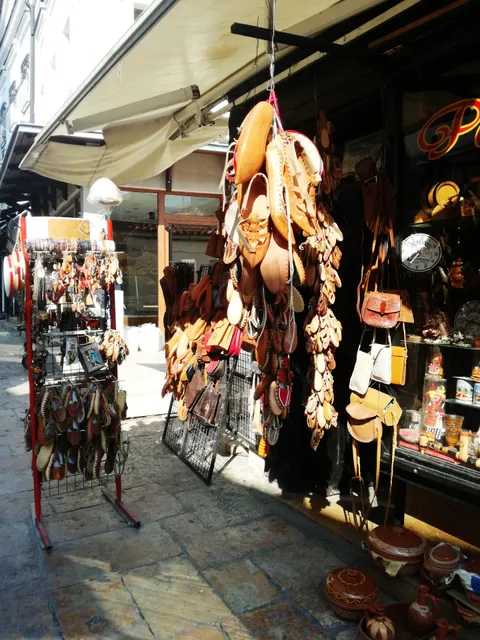
It is very calming and well maintained, and a perfect place to sit, relax and enjoy the view. You can also enter the church and there is a small gift shop inside to purchase souvenirs.
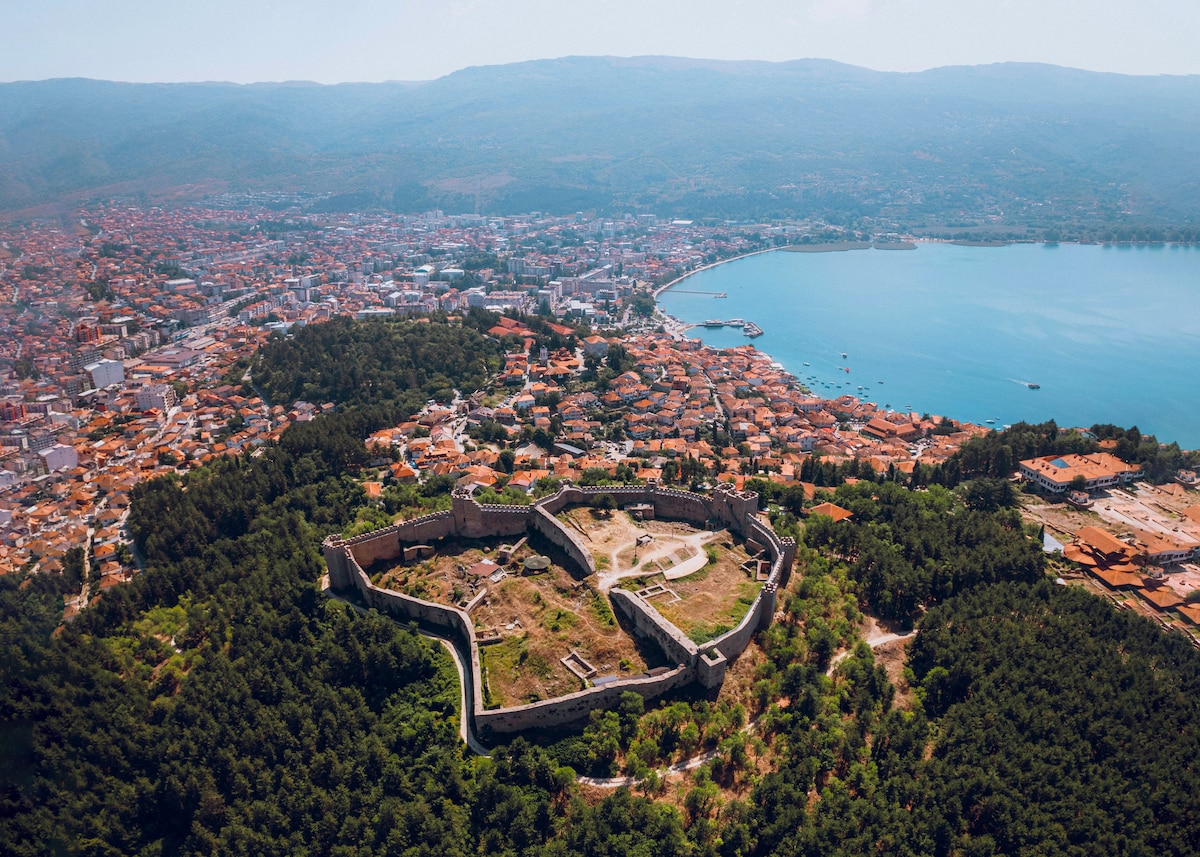
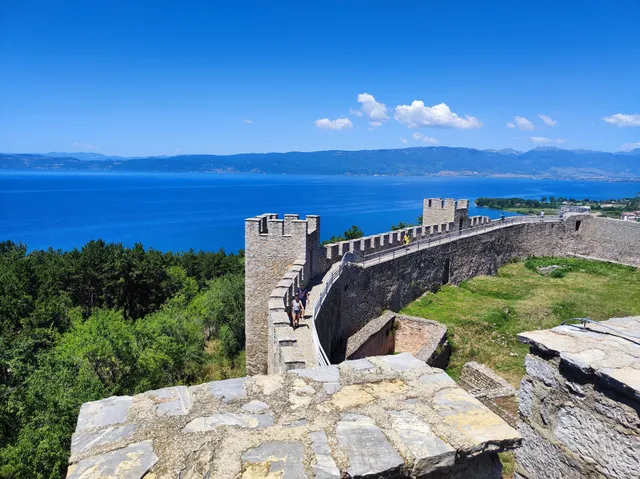
Best add the old ancient theatre and Samuel's Fortress to your walking tour, as they are all 10 minutes from each other, and all have the most wonderful views of Ohrid and full of...
Read more