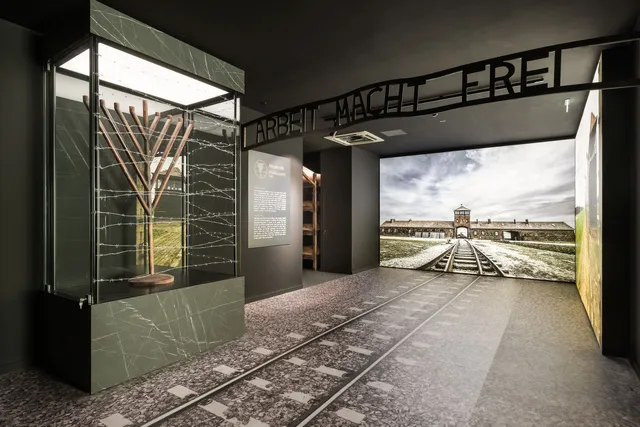
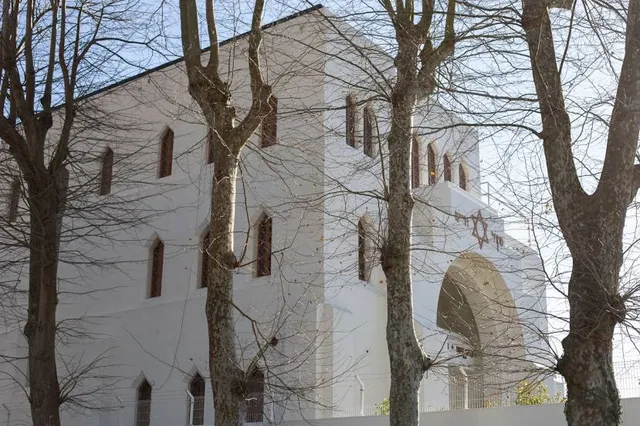
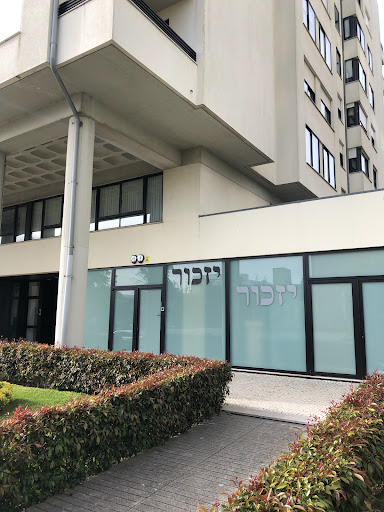
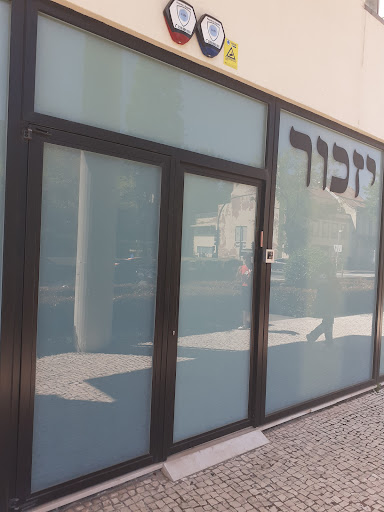
I would give this 2.5 stars if I could as I have an entirely mixed view of my visit. This is a small museum, when I visited today there was very significant security present: two police outside the building, two personnel inside, asking all belongings to be put in lockers with no photos allowed. The personnel informed me that the high security was “as demanded by the Portuguese law due to the war in the Middle East”. This was after attempting to visit the nearby Kadoorie Synangogue as a tourist, which was closed, with two police outside it and a member of the community advising tourists to visit this museum instead. I am not going to remark on whether or not this level of security is justified but for context, I saw a large swastika spray-painted on a building within 1km of these sites.
The museum begins with an excerpt from the 2020 film “A luz de juda”, detailing an episode relating to Porto’s intake of Jewish Holocaust refugees, and this appears to have been filmed on location at the Kadoorie Synagogue.
The stand-out exhibit is a multitude of visas granted to Jewish Holocaust refugees for entry to Portugal, which appear to have a number of different sources, with some in French and others in Portuguese. The signage in the museum did not explain why this took place in the context of Salazar’s dictatorship of Portugal. I am now searching Google for results regarding this and it appears to be a very interesting history, so it is a shame that there was not information regarding it.
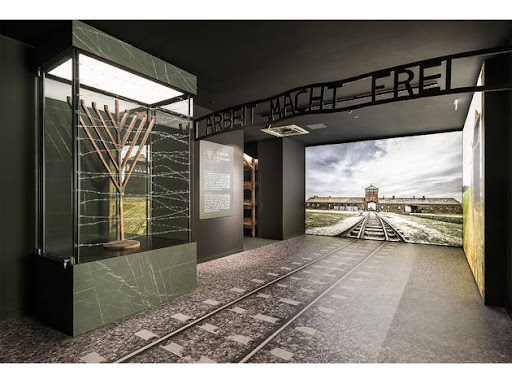
Aside from this, there were also displayed the films taken during the liberation of the concentration camps and some bunk beds designed to look like the beds used in the camps.
At the end there was an explanation of the establishment of the State of Israel in 1948 and the names of the six Portuguese gentiles who were awarded the Yad Vashem’s “Righteous Among the Nations” for saving Jews during the Holocaust. I am glad that the museum did not shy away from the topic of Holocaust survivors who sought refuge in Israel, which from the statistics displayed there was the vast majority of survivors. However, the brief history given of Israel was very staunchly pro-Israel, which I found struck a sour note at the end of this small museum. Of course, no brief history of something so complex will ever be uncontroversial. But in particular, I must highlight that in the English translation at least, this part of the museum regarding Israel referred to the loss of 1 million Jews from the Arab world post-Holocaust as “the Arab Holocaust”. Yes, this is a topic to which the world has not paid due attention. But for a Holocaust museum of all places to compare other events to the Holocaust was for me extremely disappointing. I would be equally offended by comparisons of the Nakba with the Holocaust, because I believed that part of the raison d’être of memorialising the Holocaust was precisely to highlight the almost unique scale and almost unique depravity of this tragedy in history. The phrase “Arab Holocaust” is not something that returns search results on Google, nor was it a phrase I had ever heard before.
Furthermore, upon looking at the images other reviews here, I am reminded of the rather out of the blue diatribe about the Boycott, Divestment and Sanctions (BDS) movement, which the museum describes as something like a particularly mainstream form of antisemitism today. I had overlooked how appropriate it was to include this message because I was quite emotional after seeing the rest of the museum. In hindsight, I think this is a completely inappropriate message to addend to the memory of the Holocaust, and makes me wonder if the museum were truly designed for the purpose of Holocaust education. To paraphrase a more succinct review here, it is rather like half the museum is an ad for Israel. There was a large school group present at the time of my visit so I did not read many of the signs after reaching the Israel propaganda section,...
Read moreI would not recommend this museum because I was the very first visitor when the institution opened for the public visiting. But for my surprise I was very bad received by the guard who was at front of the line, a portuguese man. He was very rude to me maybe because I am brazilian and I speak with brazilian accent. He said I wasn't welcome there cause I was wearing shorts. How come?! This protocol was not recommended by no media paper or even in TV when they were inviting people to visit. Besides there were many other people in shorts at the big line formed in front of the museum. I have visited many Holocaust museums before. So I was very interested in Porto one. My interested in visiting this museum was turn into shame because of a detail not shown even in website of the museum. I didn't know wear short is disrespectful in a jew museum. Because in these other museums didn't ask me that. Buenos Aires, Montreal, Brazil. This protocol is unknown. Im not jew and I would not disrespect the religion if I knew in advance the Porto museum forbids men wear shorts. If this was really the reason of blocking me... Which is very ironic, unfortunately, considering the message of tolerance hidden in a jew museum. Of course I argued with the body guard and I was allowed to visit at last. But this situation put me down and I really don't want to stay there never more in my entire...
Read moreIl Museo dell'Olocausto di Porto ( in portoghese : Museu de Holocausto do Porto ) è un museo dell'Olocausto fondato nel 2021. I temi principali trattati nel nuovo Museo sono la vita ebraica prima dell'Olocausto, il nazismo , l'espansione nazista in Europa, i ghetti, i rifugiati, i campi di concentramento, di lavoro e di sterminio, la soluzione finale, le marce della morte, la liberazione, la popolazione ebraica del dopoguerra, la fondazione dello Stato di Israele, vincere o morire di fame, i Giusti tra le nazioni. I visitatori del Museo vedranno una riproduzione dei dormitori di Auschwitz , una sala dei nomi, un memoriale delle fiamme, un cinema, una sala conferenze, un centro studi, corridoi con la narrazione completa e, a immagine del Museo dell'Olocausto di Washington, fotografie e schermi che mostrano filmati sul prima, durante e dopo la tragedia. Il Museo è gestito da membri della comunità ebraica di Porto. Luísa Finkelstein ricorda i membri della sua famiglia "che furono fucilati da plotoni di esecuzione dopo essere stati costretti a scavare una fossa comune". Deborah Walfrid racconta che i suoi nonni "furono giustiziati in Polonia, dopo che le loro teste furono rasate, i numeri furono tatuati sulle loro braccia e furono usati come schiavi". Eta Rabinowicz Pressman racconta come due generazioni della sua famiglia imprigionate nell'Europa orientale morirono: "In un caso, il portiere dell'edificio voleva salvare i bambini ma loro rifiutarono e dissero che volevano andare con i loro genitori. Morirono anche loro. L'unico fratello sopravvissuto fu imprigionato dai sovietici in un gulag in Siberia". Altri membri della comunità ebraica qui a Porto hanno storie da raccontare su parenti che riuscirono a fuggire da Treblinka o furono costretti a suonare il violino nel campo di propaganda di Theresienstadt e persino su patrioti tedeschi che furono accusati di essere alieni indesiderati e assassinati. Il Museo conserva anche la testimonianza di una vittima dell'" Angelo della Morte " di Auschwitz, Chaja Lassmann, madre di uno dei membri della Comunità Ebraica di Porto che gestisce il Museo dell'Olocausto della città. Chaja afferma di essere stupita di poter avere figli dopo le ripetute esperienze a cui è stata sottoposta. Il 20 maggio 2021, il sindaco di Porto ha parlato pubblicamente con i membri della comunità ebraica locale della grande importanza del Museo dell'Olocausto...
Read more