HTML SitemapExplore
logo
Find Things to DoFind The Best Restaurants

Goethe Monument — Attraction in Berlin

Name
Goethe Monument
Description
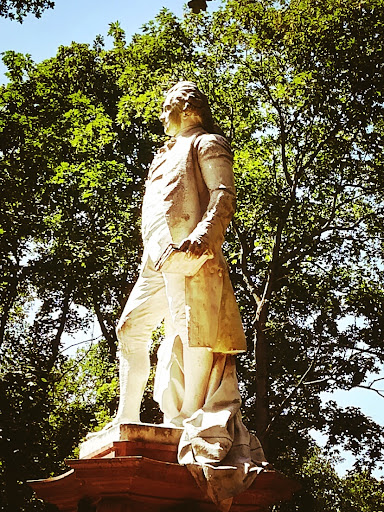
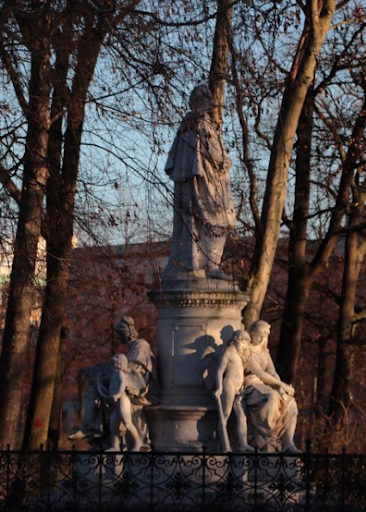
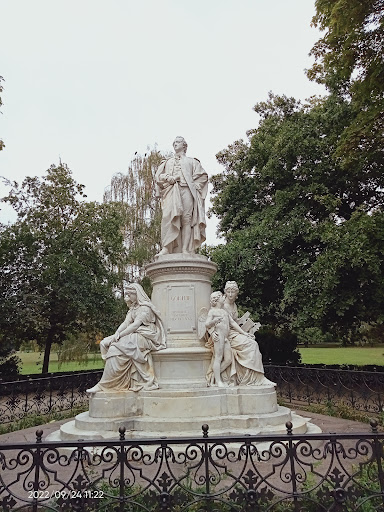
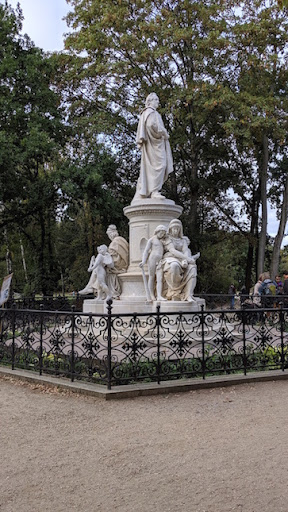
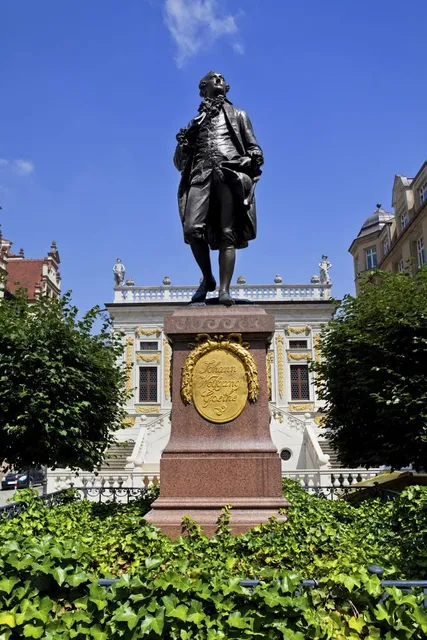
The Goethe Monument is an outdoor 1880 memorial to German writer and statesman Johann Wolfgang von Goethe by Fritz Schaper, located in Tiergarten in Berlin, Germany. The sculpture's base depicts the allegorical figures of Drama, Lyric Poetry, and Science.
Nearby attractions
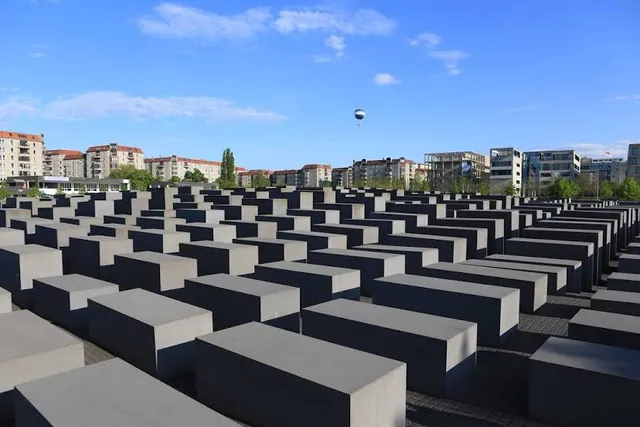
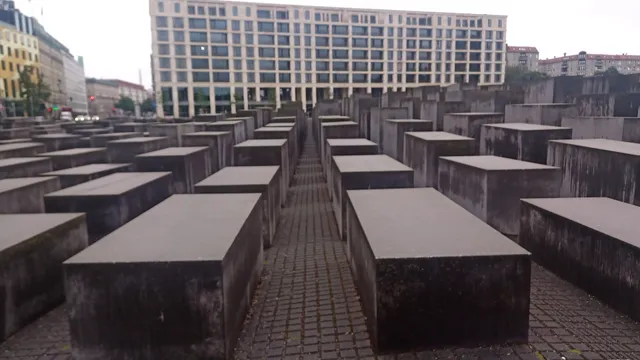
Memorial to the Murdered Jews of Europe
Cora-Berliner-Straße 1, 10117 Berlin, Germany
Brandenburg Gate
Pariser Platz, 10117 Berlin, Germany
Memorial to Homosexuals Persecuted Under Nazism
Ebertstraße, 10785 Berlin, Germany
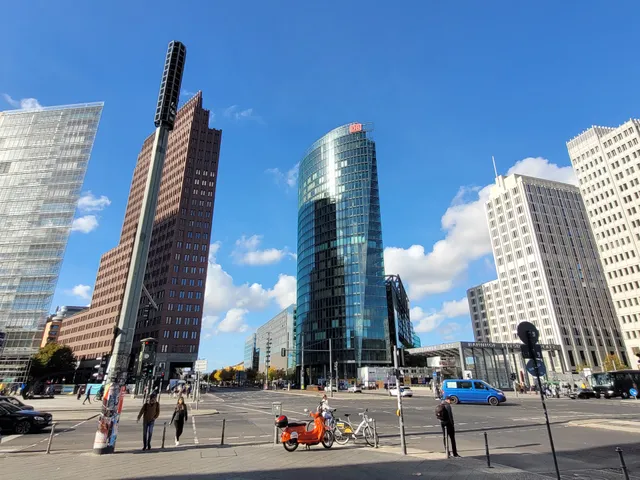
Potsdamer Platz
Potsdamer Platz, 10785 Berlin, Germany
Pariser Platz
Pariser Platz, 10117 Berlin, Germany
Academy of Arts
Pariser Platz 4, 10117 Berlin, Germany
Soviet War Memorial Tiergarten
Str. des 17. Juni 4, 10557 Berlin, Germany
Ministergärten
Ebertstraße 15, 10117 Berlin, Germany
Teil der Berliner Mauer
Potsdamer Platz 4, 10785 Berlin, Germany
German Spy Museum
Leipziger Pl. 9, 10117 Berlin, Germany
Nearby restaurants
Café LebensArt Potsdamer Platz
Lennéstraße 1, 10785 Berlin, Germany
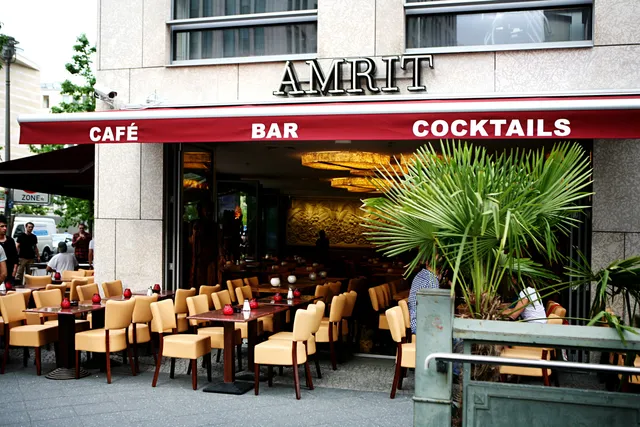
AMRIT
Ebertstraße 14, 10117 Berlin, Germany
India Club Berlin
Behrenstraße 72, 10117 Berlin, Germany
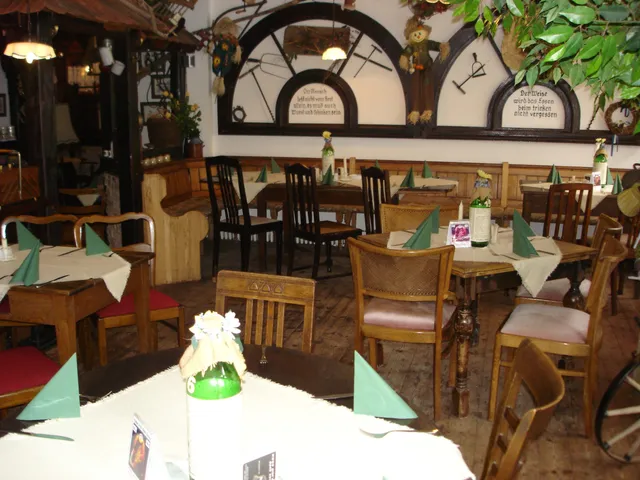
Bavaria Berlin
Hannah-Arendt-Straße 3, 10117 Berlin, Germany
Midtown Grill
Ebertstraße 3, 10117 Berlin, Germany
Rotes Kamel
Hannah-Arendt-Straße 4, 10117 Berlin, Germany
mama trattoria Berlin Mitte
Pariser Platz 6a, 10117 Berlin, Germany
China Club Berlin
Behrenstraße 72, 10117 Berlin, Germany
Shisomen Vegan Ramen & Cocktails
Gertrud-Kolmar-Straße 4, 10117 Berlin, Germany
Bombay Spice Indisches Cafe & Cocktail Bar
Wilhelmstraße 78, 10117 Berlin, Germany
Nearby hotels
Berlin Marriott Hotel
Inge-Beisheim-Platz 1, 10785 Berlin, Germany
Apartments at Brandenburg Gate
Behrenstraße 1C, 10117 Berlin, Germany
Hotel Adlon Kempinski Berlin
Unter den Linden 77, 10117 Berlin, Germany
The Ritz-Carlton, Berlin
Potsdamer Platz 3, 10785 Berlin, Germany
BLNCTY Hotel am Brandenburger Tor
Gertrud-Kolmar-Straße 5, 10117 Berlin, Germany
Hotel Motel One Berlin-Potsdamer Platz
Leipziger Str. 132, 10117 Berlin, Germany
The Mandala Hotel
Potsdamer Str. 3, 10785 Berlin, Germany
Grand Hyatt Berlin
Marlene-Dietrich-Platz 2, 10785 Berlin, Germany
Hotel NH Collection Berlin Mitte am Checkpoint Charlie
Leipziger Str. 106-111, 10117 Berlin, Germany
City Apartments Am Regierungsviertel
Anton-Wilhelm-Amo-Straße 68, 10117 Berlin, Germany
Related posts
Keywords
Goethe Monument tourism.Goethe Monument hotels.Goethe Monument bed and breakfast. flights to Goethe Monument.Goethe Monument attractions.Goethe Monument restaurants.Goethe Monument travel.Goethe Monument travel guide.Goethe Monument travel blog.Goethe Monument pictures.Goethe Monument photos.Goethe Monument travel tips.Goethe Monument maps.Goethe Monument things to do.
Goethe Monument things to do, attractions, restaurants, events info and trip planning
Goethe Monument
GermanyBerlinGoethe Monument

Basic Info

Goethe Monument

Ebertstraße 18, 10117 Berlin, Germany
4.7(77)
Open until 12:00 AM
Save
spot

Ratings & Description

Info

The Goethe Monument is an outdoor 1880 memorial to German writer and statesman Johann Wolfgang von Goethe by Fritz Schaper, located in Tiergarten in Berlin, Germany. The sculpture's base depicts the allegorical figures of Drama, Lyric Poetry, and Science.

Cultural
Scenic
attractions: Memorial to the Murdered Jews of Europe, Brandenburg Gate, Memorial to Homosexuals Persecuted Under Nazism, Potsdamer Platz, Pariser Platz, Academy of Arts, Soviet War Memorial Tiergarten, Ministergärten, Teil der Berliner Mauer, German Spy Museum, restaurants: Café LebensArt Potsdamer Platz, AMRIT, India Club Berlin, Bavaria Berlin, Midtown Grill, Rotes Kamel, mama trattoria Berlin Mitte, China Club Berlin, Shisomen Vegan Ramen & Cocktails, Bombay Spice Indisches Cafe & Cocktail Bar
logoLearn more insights from Wanderboat AI.
Open hoursSee all hours
SatOpen 24 hoursOpen

Plan your stay

hotel
Pet-friendly Hotels in Berlin
Find a cozy hotel nearby and make it a full experience.

hotel
Affordable Hotels in Berlin
Find a cozy hotel nearby and make it a full experience.

hotel
The Coolest Hotels You Haven't Heard Of (Yet)
Find a cozy hotel nearby and make it a full experience.

hotel
Trending Stays Worth the Hype in Berlin
Find a cozy hotel nearby and make it a full experience.

Reviews

Nearby attractions of Goethe Monument

Memorial to the Murdered Jews of Europe

Brandenburg Gate

Memorial to Homosexuals Persecuted Under Nazism

Potsdamer Platz

Pariser Platz

Academy of Arts

Soviet War Memorial Tiergarten

Ministergärten

Teil der Berliner Mauer

German Spy Museum

Memorial to the Murdered Jews of Europe

Memorial to the Murdered Jews of Europe

4.6

(18.2K)

Open 24 hours
Click for details
Brandenburg Gate

Brandenburg Gate

4.7

(58.5K)

Open 24 hours
Click for details
Memorial to Homosexuals Persecuted Under Nazism

Memorial to Homosexuals Persecuted Under Nazism

4.4

(169)

Open until 12:00 AM
Click for details
Potsdamer Platz

Potsdamer Platz

4.4

(23.7K)

Open 24 hours
Click for details

Things to do nearby

Rude Bastards Tour of® Berlin
Sat, Dec 6 • 10:00 AM
10785, Berlin, Germany
View details
Laughing Spree - English comedy show on a boat
Tue, Dec 9 • 7:45 PM
10243, Berlin, Germany
View details
Learn to DJ in Berlins Clubbing District
Sat, Dec 6 • 10:00 AM
12435, Berlin, Germany
View details

Nearby restaurants of Goethe Monument

Café LebensArt Potsdamer Platz

AMRIT

India Club Berlin

Bavaria Berlin

Midtown Grill

Rotes Kamel

mama trattoria Berlin Mitte

China Club Berlin

Shisomen Vegan Ramen & Cocktails

Bombay Spice Indisches Cafe & Cocktail Bar

Café LebensArt Potsdamer Platz

Café LebensArt Potsdamer Platz

3.8

(555)

Click for details
AMRIT

AMRIT

4.5

(3.5K)

$$

Closed
Click for details
India Club Berlin

India Club Berlin

4.5

(538)

$$$$

Click for details
Bavaria Berlin

Bavaria Berlin

4.4

(941)

Click for details
Get the Appoverlay
Get the AppOne tap to find yournext favorite spots!
Wanderboat LogoWanderboat

Your everyday Al companion for getaway ideas

CompanyAbout Us
InformationAI Trip PlannerSitemap
SocialXInstagramTiktokLinkedin
LegalTerms of ServicePrivacy Policy

Get the app

© 2025 Wanderboat. All rights reserved.
logo

Posts

Berlin ExcursionBerlin Excursion
The Goethe Monument in Tiergarten, Berlin: A Tribute to Literary Greatness In the heart of Berlin's sprawling Tiergarten Park stands a magnificent tribute to one of Germany's most revered literary figures, Johann Wolfgang von Goethe. The Goethe Monument, a striking bronze statue of the prolific writer, poet, and playwright, is a testament to his enduring influence on German literature and culture. Erected in 1880, this monument not only commemorates Goethe's immense contributions to the world of letters but also serves as a symbol of Germany's rich cultural heritage. The history of the Goethe Monument, its significance in the context of Berlin's cultural landscape, and the enduring legacy of Johann Wolfgang von Goethe. I. The Life and Legacy of Johann Wolfgang von Goethe Before delving into the monument itself, it is essential to understand the man it honors. Johann Wolfgang von Goethe (1749-1832) was a polymath of the highest order. Born in Frankfurt, Goethe was a prodigious talent who excelled in literature, science, philosophy, and the arts. His literary contributions, which include "Faust," "The Sorrows of Young Werther," and "Wilhelm Meister's Apprenticeship," continue to be celebrated worldwide. Goethe's influence extended beyond his written works. He made significant contributions to botany, anatomy, and optics, and his ideas on aesthetics and color theory profoundly impacted the fields of art and science. His broad interests and accomplishments earned him recognition as one of the leading figures of the German Enlightenment. II. The Creation of the Goethe Monument The idea for a monument to honor Goethe began circulating shortly after his death in 1832. However, it took nearly half a century for this vision to become a reality. In 1875, a committee was formed to raise funds for the monument's construction, with the support of German Emperor Wilhelm I. Sculptor Fritz Schaper was selected to design the monument. The Goethe Monument was unveiled with great pomp and ceremony on the 28th of August 1880, just eight years after the founding of the German Empire. It was a momentous occasion for the German people, as the monument symbolized not only their appreciation for Goethe's contributions but also their cultural unity as a nation. III. The Aesthetic Beauty of the Monument The Goethe Monument is a striking work of art in its own right. Standing at a height of 4.8 meters, it portrays Goethe in a regal pose, seated atop a stone pedestal adorned with bronze reliefs. In one hand, he holds a laurel wreath, a symbol of his literary achievements, while his other hand rests on a stack of books. The attention to detail in the sculpture, from the folds of his robe to the intricate patterns on the books, is a testament to Fritz Schaper's skill as a sculptor. Surrounding the statue are allegorical figures representing various facets of Goethe's work and personality. These figures include "Faust" and "Mephistopheles," symbolizing his famous drama, as well as figures representing poetry, science, and philosophy. These allegories serve as a visual reminder of Goethe's multidimensional genius. IV. The Significance of the Goethe Monument in Berlin The placement of the Goethe Monument in Tiergarten Park is of great significance. Tiergarten, Berlin's largest park, is a place of leisure and contemplation for both locals and visitors. Placing the monument here ensures that Goethe's legacy is not confined to the realm of academia but is accessible to the public at large. Usefull? Like Mike, Follow Mollow, Tour Mour with us:)
BradBrad
One of the interesting monuments that can be viewed in Tiergarten is that which pays tribute to 18th and early 19th century German writer and statesman Johann Wolfgang von Goethe. You can see this monument at the eastern end of Tiergarten facing Ebertstraße. The Goethe Monument was created by German sculptor Fritz Schaper in 1880. Here you see a standing and stately figure of Goethe, with right foot forward. He is holding a scroll in his right hand while his left remains behind his back. At the base of the statue and surrounding the pedestal are the allegorical figures representing Drama, Lyric, Poetry and Science. We enjoyed this monument even during the winter months when the trees are bare of leaves. The image of Goethe Monument against the dark complexion of tiergarten at this time of year is rather stark, makes him appear to be a rather serious individual.
C. Theile, BerlinC. Theile, Berlin
„Willst Du glücklich sein im Leben, trage bei zu andrer Glück; denn die Freude, die wir geben, kehrt ins eigne Herz zurück. “ Johann Wolfgang von Goethe Ihm verdanken wir aus den folgenden Jahren die Werke : 1767-1768 »Die Laune des Verliebten« (Schäferspiel, Gedichtsammlung) 1769 »Die Mitschuldigen« (Komödie) 1772 »Von deutscher Baukunst« 1773 »Götz von Berlichingen« (Schauspiel) 1774 »Prometheus« (Gedicht) 1774 »Götter, Helden und Wieland« (Farce) 1774 »Clavigo« (Trauerspiel) 1774 »Die Leiden des jungen Werther« (Briefroman) 1775 »Erwin und Elmire« (Schauspiel mit Gesang) 1776-1785 »Wilhelm Meisters theatralische Sendung« (Roman) 1776 »Stella. Ein Schauspiel für Liebende« 1779 »Iphigenie auf Tauris« (Drama) 1786 »Über den Zwischenkiefer der Menschen und der Tiere« 1788 »Egmont« (Trauerspiel) 1788 »Römischer Carneval« 1790 »Römische Elegien« (Gedichtzyklus) 1789 »Torquato Tasso« (Drama) 1790 »Venezianische Epigramme« 1790 »Faust. Ein Fragment« 1791 »Beiträge zur Optik« 1791 »Der Groß-Cophta« (Lustspiel) 1792 »Die Campagne in Frankreich« (Bericht) 1793 »Der Bürgergeneral« (Lustspiel) 1793 »Die Aufgeregten« Fragment 1794 »Reineke Fuchs« (Tierepos in Versen) 1794-1795 »Unterhaltungen deutscher Ausgewanderter« (Novellendichtung) 1795-1796 »Wilhelm Meisters Lehrjahre« 1797 »Faust. Eine Tragödie« 1797 »Das Leben des Benvenuto Cellini« (Übersetzung) 1797 »Novelle« 1797 »Hermann und Dorothea« (Hexameterepos) 1799 »Rinaldo Rinaldini« 1803 »Die natürliche Tochter« (Trauerspiel) 1805 »Winckelmann und sein Jahrhundert« 1807 »Wilhelm Meisters Wanderjahre« (Roman) 1807 »Pandora« (Festspiel) 1807 »Faust. Der Tragödie erster Teil« 1809 »Die Wahlverwandtschaften« 1810 »Zur Farbenlehre« 1811–33 »Aus meinem Leben. Dichtung und Wahrheit« 1816/17 »Italienische Reise« 1816–32 »Über Kunst und Alterthum« 1819 »West-östlicher Divan« (Gedichte) 1827 »Zahme Xenien« (Gedichte) 1827 »Faust. Der Tragödie zweiter Teil«
See more posts
See more posts
hotel
Find your stay

Pet-friendly Hotels in Berlin

Find a cozy hotel nearby and make it a full experience.

The Goethe Monument in Tiergarten, Berlin: A Tribute to Literary Greatness In the heart of Berlin's sprawling Tiergarten Park stands a magnificent tribute to one of Germany's most revered literary figures, Johann Wolfgang von Goethe. The Goethe Monument, a striking bronze statue of the prolific writer, poet, and playwright, is a testament to his enduring influence on German literature and culture. Erected in 1880, this monument not only commemorates Goethe's immense contributions to the world of letters but also serves as a symbol of Germany's rich cultural heritage. The history of the Goethe Monument, its significance in the context of Berlin's cultural landscape, and the enduring legacy of Johann Wolfgang von Goethe. I. The Life and Legacy of Johann Wolfgang von Goethe Before delving into the monument itself, it is essential to understand the man it honors. Johann Wolfgang von Goethe (1749-1832) was a polymath of the highest order. Born in Frankfurt, Goethe was a prodigious talent who excelled in literature, science, philosophy, and the arts. His literary contributions, which include "Faust," "The Sorrows of Young Werther," and "Wilhelm Meister's Apprenticeship," continue to be celebrated worldwide. Goethe's influence extended beyond his written works. He made significant contributions to botany, anatomy, and optics, and his ideas on aesthetics and color theory profoundly impacted the fields of art and science. His broad interests and accomplishments earned him recognition as one of the leading figures of the German Enlightenment. II. The Creation of the Goethe Monument The idea for a monument to honor Goethe began circulating shortly after his death in 1832. However, it took nearly half a century for this vision to become a reality. In 1875, a committee was formed to raise funds for the monument's construction, with the support of German Emperor Wilhelm I. Sculptor Fritz Schaper was selected to design the monument. The Goethe Monument was unveiled with great pomp and ceremony on the 28th of August 1880, just eight years after the founding of the German Empire. It was a momentous occasion for the German people, as the monument symbolized not only their appreciation for Goethe's contributions but also their cultural unity as a nation. III. The Aesthetic Beauty of the Monument The Goethe Monument is a striking work of art in its own right. Standing at a height of 4.8 meters, it portrays Goethe in a regal pose, seated atop a stone pedestal adorned with bronze reliefs. In one hand, he holds a laurel wreath, a symbol of his literary achievements, while his other hand rests on a stack of books. The attention to detail in the sculpture, from the folds of his robe to the intricate patterns on the books, is a testament to Fritz Schaper's skill as a sculptor. Surrounding the statue are allegorical figures representing various facets of Goethe's work and personality. These figures include "Faust" and "Mephistopheles," symbolizing his famous drama, as well as figures representing poetry, science, and philosophy. These allegories serve as a visual reminder of Goethe's multidimensional genius. IV. The Significance of the Goethe Monument in Berlin The placement of the Goethe Monument in Tiergarten Park is of great significance. Tiergarten, Berlin's largest park, is a place of leisure and contemplation for both locals and visitors. Placing the monument here ensures that Goethe's legacy is not confined to the realm of academia but is accessible to the public at large. Usefull? Like Mike, Follow Mollow, Tour Mour with us:)
Berlin Excursion

Berlin Excursion

hotel
Find your stay

Affordable Hotels in Berlin

Find a cozy hotel nearby and make it a full experience.

Get the Appoverlay
Get the AppOne tap to find yournext favorite spots!
One of the interesting monuments that can be viewed in Tiergarten is that which pays tribute to 18th and early 19th century German writer and statesman Johann Wolfgang von Goethe. You can see this monument at the eastern end of Tiergarten facing Ebertstraße. The Goethe Monument was created by German sculptor Fritz Schaper in 1880. Here you see a standing and stately figure of Goethe, with right foot forward. He is holding a scroll in his right hand while his left remains behind his back. At the base of the statue and surrounding the pedestal are the allegorical figures representing Drama, Lyric, Poetry and Science. We enjoyed this monument even during the winter months when the trees are bare of leaves. The image of Goethe Monument against the dark complexion of tiergarten at this time of year is rather stark, makes him appear to be a rather serious individual.
Brad

Brad

hotel
Find your stay

The Coolest Hotels You Haven't Heard Of (Yet)

Find a cozy hotel nearby and make it a full experience.

hotel
Find your stay

Trending Stays Worth the Hype in Berlin

Find a cozy hotel nearby and make it a full experience.

„Willst Du glücklich sein im Leben, trage bei zu andrer Glück; denn die Freude, die wir geben, kehrt ins eigne Herz zurück. “ Johann Wolfgang von Goethe Ihm verdanken wir aus den folgenden Jahren die Werke : 1767-1768 »Die Laune des Verliebten« (Schäferspiel, Gedichtsammlung) 1769 »Die Mitschuldigen« (Komödie) 1772 »Von deutscher Baukunst« 1773 »Götz von Berlichingen« (Schauspiel) 1774 »Prometheus« (Gedicht) 1774 »Götter, Helden und Wieland« (Farce) 1774 »Clavigo« (Trauerspiel) 1774 »Die Leiden des jungen Werther« (Briefroman) 1775 »Erwin und Elmire« (Schauspiel mit Gesang) 1776-1785 »Wilhelm Meisters theatralische Sendung« (Roman) 1776 »Stella. Ein Schauspiel für Liebende« 1779 »Iphigenie auf Tauris« (Drama) 1786 »Über den Zwischenkiefer der Menschen und der Tiere« 1788 »Egmont« (Trauerspiel) 1788 »Römischer Carneval« 1790 »Römische Elegien« (Gedichtzyklus) 1789 »Torquato Tasso« (Drama) 1790 »Venezianische Epigramme« 1790 »Faust. Ein Fragment« 1791 »Beiträge zur Optik« 1791 »Der Groß-Cophta« (Lustspiel) 1792 »Die Campagne in Frankreich« (Bericht) 1793 »Der Bürgergeneral« (Lustspiel) 1793 »Die Aufgeregten« Fragment 1794 »Reineke Fuchs« (Tierepos in Versen) 1794-1795 »Unterhaltungen deutscher Ausgewanderter« (Novellendichtung) 1795-1796 »Wilhelm Meisters Lehrjahre« 1797 »Faust. Eine Tragödie« 1797 »Das Leben des Benvenuto Cellini« (Übersetzung) 1797 »Novelle« 1797 »Hermann und Dorothea« (Hexameterepos) 1799 »Rinaldo Rinaldini« 1803 »Die natürliche Tochter« (Trauerspiel) 1805 »Winckelmann und sein Jahrhundert« 1807 »Wilhelm Meisters Wanderjahre« (Roman) 1807 »Pandora« (Festspiel) 1807 »Faust. Der Tragödie erster Teil« 1809 »Die Wahlverwandtschaften« 1810 »Zur Farbenlehre« 1811–33 »Aus meinem Leben. Dichtung und Wahrheit« 1816/17 »Italienische Reise« 1816–32 »Über Kunst und Alterthum« 1819 »West-östlicher Divan« (Gedichte) 1827 »Zahme Xenien« (Gedichte) 1827 »Faust. Der Tragödie zweiter Teil«
C. Theile, Berlin

C. Theile, Berlin

See more posts
See more posts

Reviews of Goethe Monument

4.7
(77)
avatar
5.0
2y

The Goethe Monument in Tiergarten, Berlin: A Tribute to Literary Greatness

In the heart of Berlin's sprawling Tiergarten Park stands a magnificent tribute to one of Germany's most revered literary figures, Johann Wolfgang von Goethe. The Goethe Monument, a striking bronze statue of the prolific writer, poet, and playwright, is a testament to his enduring influence on German literature and culture. Erected in 1880, this monument not only commemorates Goethe's immense contributions to the world of letters but also serves as a symbol of Germany's rich cultural heritage.

The history of the Goethe Monument, its significance in the context of Berlin's cultural landscape, and the enduring legacy of Johann Wolfgang von Goethe.

I. The Life and Legacy of Johann Wolfgang von Goethe

Before delving into the monument itself, it is essential to understand the man it honors. Johann Wolfgang von Goethe (1749-1832) was a polymath of the highest order. Born in Frankfurt, Goethe was a prodigious talent who excelled in literature, science, philosophy, and the arts. His literary contributions, which include "Faust," "The Sorrows of Young Werther," and "Wilhelm Meister's Apprenticeship," continue to be celebrated worldwide.

Goethe's influence extended beyond his written works. He made significant contributions to botany, anatomy, and optics, and his ideas on aesthetics and color theory profoundly impacted the fields of art and science. His broad interests and accomplishments earned him recognition as one of the leading figures of the German Enlightenment.

II. The Creation of the Goethe Monument

The idea for a monument to honor Goethe began circulating shortly after his death in 1832. However, it took nearly half a century for this vision to become a reality. In 1875, a committee was formed to raise funds for the monument's construction, with the support of German Emperor Wilhelm I. Sculptor Fritz Schaper was selected to design the monument.

The Goethe Monument was unveiled with great pomp and ceremony on the 28th of August 1880, just eight years after the founding of the German Empire. It was a momentous occasion for the German people, as the monument symbolized not only their appreciation for Goethe's contributions but also their cultural unity as a nation.

III. The Aesthetic Beauty of the Monument

The Goethe Monument is a striking work of art in its own right. Standing at a height of 4.8 meters, it portrays Goethe in a regal pose, seated atop a stone pedestal adorned with bronze reliefs. In one hand, he holds a laurel wreath, a symbol of his literary achievements, while his other hand rests on a stack of books. The attention to detail in the sculpture, from the folds of his robe to the intricate patterns on the books, is a testament to Fritz Schaper's skill as a sculptor.

Surrounding the statue are allegorical figures representing various facets of Goethe's work and personality. These figures include "Faust" and "Mephistopheles," symbolizing his famous drama, as well as figures representing poetry, science, and philosophy. These allegories serve as a visual reminder of Goethe's multidimensional genius.

IV. The Significance of the Goethe Monument in Berlin

The placement of the Goethe Monument in Tiergarten Park is of great significance. Tiergarten, Berlin's largest park, is a place of leisure and contemplation for both locals and visitors. Placing the monument here ensures that Goethe's legacy is not confined to the realm of academia but is accessible to the public at large.

Usefull? Like Mike, Follow Mollow, Tour...

   Read more
avatar
5.0
4y

Das Goethe-Denkmal im Berliner Großen Tiergarten ist eine Arbeit des Bildhauers Fritz Schaper (1841–1919), eines prominenten Vertreters der Berliner Bildhauerschule. Die Figurengruppe aus Carrara-Marmor wurde 1880 eingeweiht, gegen Ende des 20. Jahrhunderts zum Schutz vor schädlichen Witterungseinflüssen vorübergehend durch eine Kopie aus Betonguss ersetzt und 130 Jahre nach ihrer Einweihung an der ursprünglichen Stelle wieder aufgestellt.

Das Berliner Goethe-Komitee hatte schon 1860 für die Errichtung eines Goethedenkmals geworben, zunächst aber wenig Resonanz gefunden. So erbrachte beispielsweise ein Aufruf zur finanziellen Unterstützung des Vorhabens durch die Mitglieder der Preußischen Akademie der Wissenschaften im Januar 1861 nur den geringen Betrag von 26 Reichstalern.[1] Dennoch beschloss man 1861, Denkmäler für die Dichter Goethe, Schiller und Lessing zu errichten. Nachdem 1868/71 das Schillerdenkmal auf dem Gendarmenmarkt realisiert war, folgten 1880 das Goethe-Denkmal und 1890 das Lessing-Denkmal im Tiergarten.

Nach einem offiziellen Wettbewerb wurden im Mai 1872 fünfzig Entwürfe öffentlich vorgestellt und begutachtet. Der Entwurf von Fritz Schaper, der damals noch relativ unbekannt war, erhielt beim Publikum große Zustimmung. Das Denkmal-Komitee konnte sich jedoch nicht entscheiden, sondern empfahl die Überarbeitung der vier besten Entwürfe. 1873 erging dann der Auftrag an Schaper, die Ausführung erfolgte in den Jahren 1876 bis 1880. Der Bildhauer hatte zunächst einen jugendlichen Goethe modelliert, in der Endfassung zeigte er ihn in fortgeschrittenem Alter von etwa 40 Jahren. Am 2. Juni 1880 wurde die Enthüllung des Denkmals gefeiert, anwesend waren zahlreiche maßgebliche Persönlichkeiten aus Kultur und Politik.

Auf die Frage, ob ihm denn überhaupt noch etwas gefalle, erwähnte Theodor Fontane am Schluss eines Gedichtes auch das Goethe-Denkmal im Berliner Tiergarten: "... ein Spaziergang durch die Laesterallee, Paraden, der Schapersche Goethekopf und ein Backfisch mit einem Mozartzopf.

Das Denkmal steht an der Ebertstraße am östlichen Rand des Tiergartens, zwischen Brandenburger Tor und Lennéstraße, gegenüber dem Denkmal für die ermordeten Juden Europas. Es erreicht eine Höhe von insgesamt sechs Metern, das Standbild des Dichters auf rundem Sockel ist 2,72 Meter hoch. Auf dem abgestuften Unterbau sind drei allegorische Figurengruppen angeordnet: Für die lyrische Dichtkunst eine Muse mit Leier und einen Eros; für die dramatische Dichtkunst eine sitzende Frauengestalt mit Schreibwerkzeug, neben ihr ein Genius mit der abwärts gewandten Fackel des Todes; für die Forschung eine lesende weibliche Gestalt.

Im Zweiten Weltkrieg erlitt das Denkmal einige Schäden, aber keine schwerwiegenden Zerstörungen. 1959/60 wurde es erstmals restauriert. 1982 verbrachte man das Marmor-Original in das Lapidarium am Landwehrkanal, um es vor aggressiven Witterungsbedingungen zu schützen, 2009 wurde die dort verwahrte Sammlung in die Zitadelle Spandau umgelagert. Eine Kopie des Goethe-Denkmals, angefertigt von dem Bildhauer und Restaurator Harald Haacke (1924–2004), ersetzte 1987 das ausgelagerte Original. Diese Betonkopie befand sich mehr als 20 Jahre später durch Luftverschmutzung, Witterungseinflüsse und Materialfehler in stark angegriffenem Zustand. Daher wurde am 12. November 2010 das weitaus besser erhaltene Original wieder aufgestellt.[3] Möglich war das wegen der inzwischen stark verbesserten Qualität der Luft im Tiergarten; sie enthält zwar mehr Feinstaub und Stickoxide als zuvor, aber etwa 90 % weniger schwefelsaure Bestandteile, die für den besonders schädlichen sauren Regen verantwortlich waren und Marmore angriffen.[4]

Vor der Rückführung des Denkmals in den Tiergarten wurde es eingehend untersucht und restauriert. Dazu gehörten Ultraschallprüfungen zur Bestimmung des inneren Zustands der aus 60 Einzelteilen zusammengefügten Figuren und deren gründliche Reinigung mit heißem Dampf. Fehlende Teile ersetzte man anhand...

   Read more
avatar
3.0
7y

One of the interesting monuments that can be viewed in Tiergarten is that which pays tribute to 18th and early 19th century German writer and statesman Johann Wolfgang von Goethe. You can see this monument at the eastern end of Tiergarten facing Ebertstraße.

The Goethe Monument was created by German sculptor Fritz Schaper in 1880. Here you see a standing and stately figure of Goethe, with right foot forward. He is holding a scroll in his right hand while his left remains behind his back. At the base of the statue and surrounding the pedestal are the allegorical figures representing Drama, Lyric, Poetry and Science.

We enjoyed this monument even during the winter months when the trees are bare of leaves. The image of Goethe Monument against the dark complexion of tiergarten at this time of year is rather stark, makes him appear to be a rather...

   Read more
Page 1 of 7
Previous
Next