The Living Soul of Hampi and a Testament to Eternal Faith!
The Virupaksha Temple in Hampi is not just a monument — it’s a living, breathing symbol of devotion and the enduring legacy of India’s spiritual heritage. Standing tall amidst the ruins of the once-glorious Vijayanagara Empire, this temple continues to function as a place of active worship even today, making it one of the rare sites where history, divinity, and daily life coexist in perfect harmony.
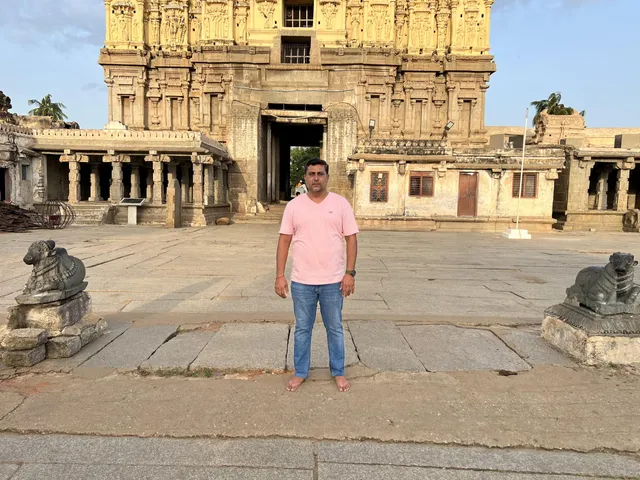
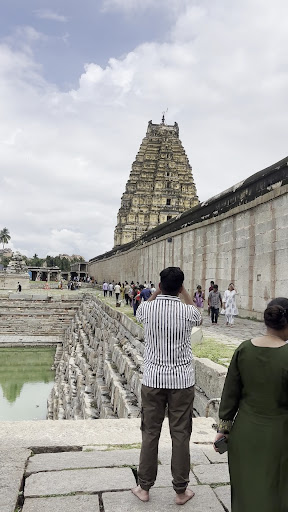
As you walk through the grand gopuram (tower) — which rises majestically against the backdrop of Hampi’s rocky landscape — you immediately feel a divine aura surround you. The carvings, the smell of incense, and the chants of the priests create an atmosphere that feels timeless. Dedicated to Lord Virupaksha (an incarnation of Lord Shiva), this temple has been a center of faith for over a thousand years, standing strong through wars, dynasties, and the passage of time.
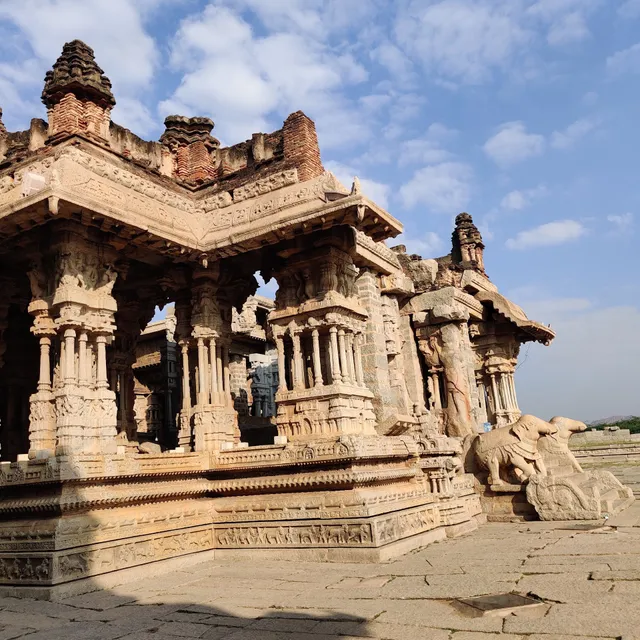
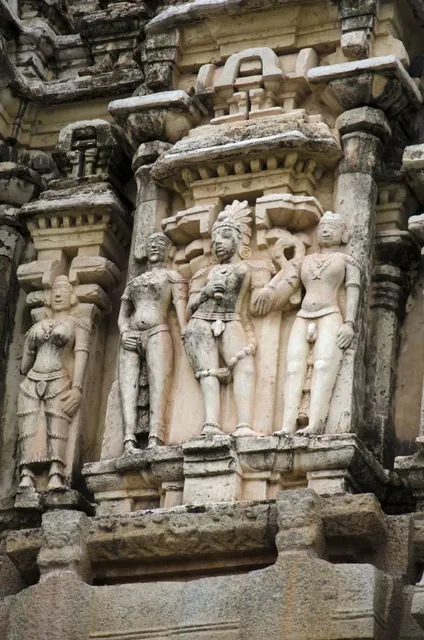
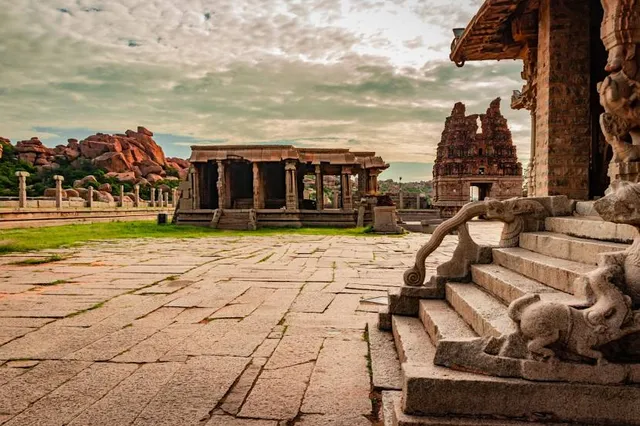
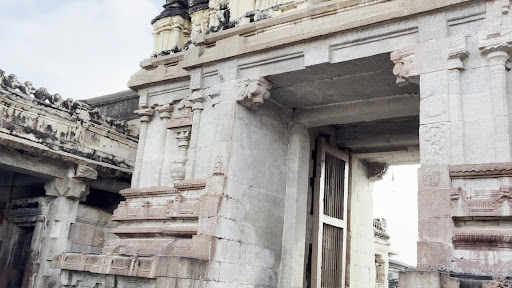
Every corner of the temple speaks of intricate Dravidian architectural excellence — from the detailed carvings on its pillars to the ceiling paintings that narrate mythological tales. The temple’s design showcases the brilliance of ancient Indian artisans, who perfectly blended art, science, and devotion into one divine masterpiece. The interior sanctum, with its flickering oil lamps and resonant chants, offers a sense of calm and connection that’s hard to describe.
A truly mesmerizing highlight here is the pinhole camera phenomenon, where sunlight passing through a small opening projects an inverted image of the main gopuram onto the inner wall — an ancient marvel of optical engineering that continues to amaze visitors.
What truly makes the Virupaksha Temple special, however, is the spiritual energy that lingers in the air. Watching pilgrims, locals, and travelers all bowing with reverence reminds you of India’s deep-rooted cultural and religious harmony.
If Hampi is a treasure chest of heritage, then Virupaksha Temple is its beating heart — a place where the past meets the present, and where devotion has stood unshaken for centuries. A must-visit, soul-touching experience that makes you feel grateful to witness India’s timeless divinity in its...
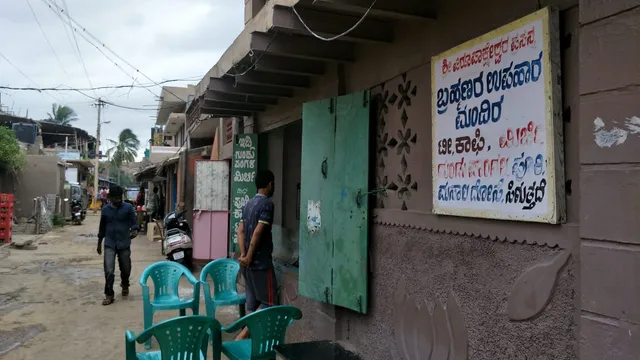
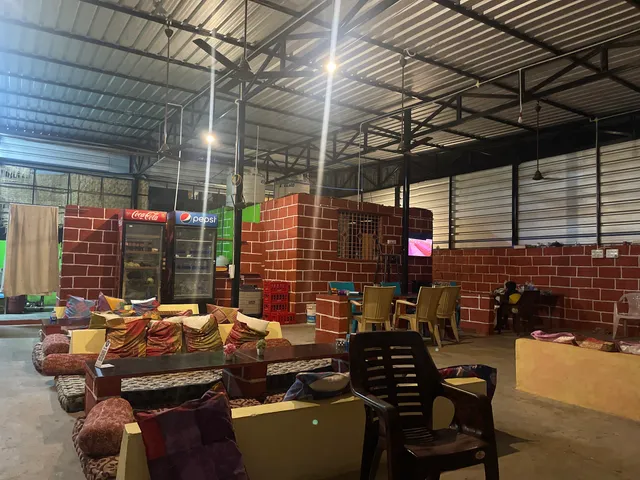
Read moreThis ancient temple, dating some 15 centuries back, is the main attraction of Hampi city of Karnataka and is the prime and one of the very few temples where pooja rituals are done daily and public worship is allowed. The others in the list include Veerabhadra temple nearby and Kothandarama, Ranganatha, Hanuman Temple et al on Tungabhadra bank. The others, bearing the name of temple, like Vijay Vittala Temple, hazara Rama Temple etc., are just empty structures maintained by ASI and standing as historical monuments to the architectural capabilities of the peak Vijayanagara empire period. The Vrupaksha temple, though belonging to 7th century, was greatly renovated and built by the Vijaynagar kings. It sports two Gopurams with quite a distance between each other, exactly in the Dravidian style of temple construction. It is one of the UNESCO heritage sites, like the other idol-less structures of Hampi. There is always a good flow of devotees and tourists and the best time would be early morning, before 9 am, to have a fulfilling darshan of the Lord. There is a car parking just before the entrance of the temple and there are also some tiffin shops offering breakfast like idli, dosa. The place is not very tidy, but good, hygienic hotels are quite rare in Hampi. Hampi, though a full fledged tourist centre, admeasuring only about say 10 - 15 Kms lengthwise, housing all the significant temples and historical monuments, sadly lacks in cleanliness and hyenine. In fact the whole of that part of Karnataka abounds with very narrow and broken roads with potholes making commuting very difficult and tiresome. The energy and enthusiasm you get by visiting the temples and historical monuments dies when you navigate through these hopeless streets. Sadly, it seems while the authorities seem to have turned a blind eye to the pathetic condition of the town and its infrastructure, the locals also have seem to have learnt to live that. High time authorities looked into it. Broadly the whole stretch from Raichur to Hampi is very exhausting and tiresome. If you are going by road, better try any alternate route...
Read moreVirupaksha Temple, Hampi - one of the most fascinating and spiritually active heritage sites in India, and a must-visit when in Hampi.
The massive temple complex was originally built by Lakkana Dandesha, a chieftain under King Deva Raya II of the Vijayanagara Empire. The architecture and craftsmanship here are breathtaking — a fine example of how art, devotion, and science blended seamlessly in ancient India.
The main temple consists of a sanctum, three ante chambers, a beautifully pillared hall, and an open mandapa, all surrounded by smaller shrines, courtyards, and gateways. The nine-tiered eastern gopuram, rising nearly 50 meters high, is the most striking feature. With a stone base and a brick superstructure, it dominates the skyline of Hampi and serves as the main entrance to the temple’s outer court filled with sub-shrines. A smaller eastern gateway leads to the inner court, while another northern gateway — the Kanakagiri Gopura — connects to the Tungabhadra River through a small enclosure of shrines.
A narrow channel from the river even flows along the temple terrace and down into the old temple kitchen — a clever example of ancient water management.
One of the most fascinating details is how the temple design incorporates mathematical concepts and fractal geometry. The triangular main structure and the repeating carved patterns on the towers demonstrate symmetry and self-repetition, almost like natural fractals — proof of how advanced and thoughtful ancient Indian architecture was.
Inside, you’ll also find the famous pinhole image effect — where sunlight passes through a small hole and projects an inverted image of the gopuram inside a dark chamber. Small wonders like this make the temple feel alive with ingenuity.
The temple is located at the end of Hampi Bazaar, right beside the Tungabhadra River, and the surroundings are vibrant with pilgrims, locals, and travelers. Early mornings and evenings are the best times to visit — the golden light against the sandstone and river backdrop is...
Read more