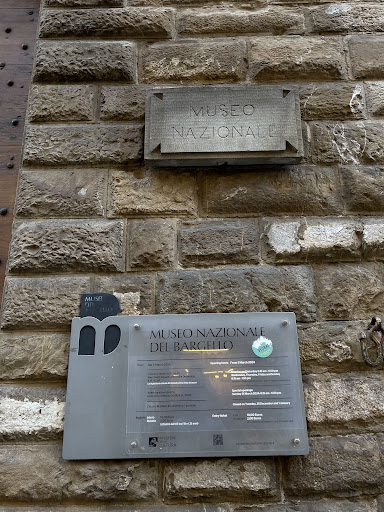
The Bargello, also known as the Palazzo del Bargello, Museo Nazionale del Bargello, or Palazzo del Popolo (Palace of the People), is a former barracks and prison, now an art museum, in Florence, Italy.
The word bargello appears to come from the late Latin bargillus (from Gothic bargi and German burg), meaning "castle" or "fortified tower". During the Italian Middle Ages it was the name given to a military captain in charge of keeping peace and justice (hence "Captain of justice") during riots and uproars. In Florence he was usually hired from a foreign city to prevent any appearance of favoritism on the part of the Captain. The position could be compared with that of a current Chief of police. The name Bargello was extended to the building which was the office of the captain.
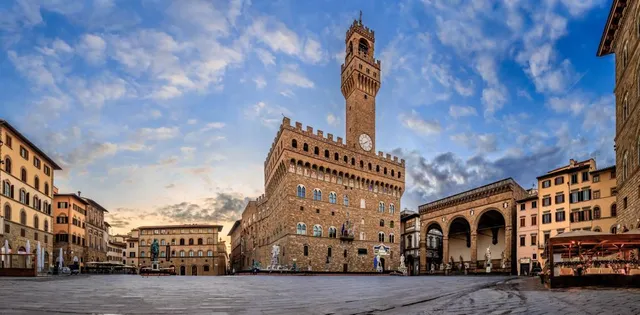
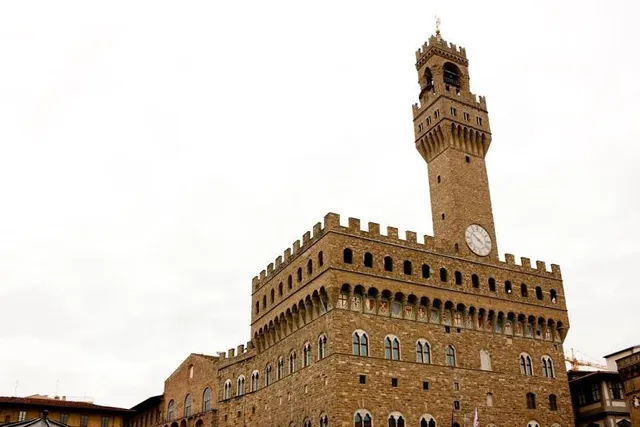
Construction began in 1255. The palace was built to house first the Capitano del Popolo and later, in 1261, the 'podestà', the highest magistrate of the Florence City Council. This Palazzo del Podestà, as it was originally called, is the oldest public building in Florence. This austere crenellated building served as model for the construction of the Palazzo Vecchio. In 1574, the Medici dispensed with the function of the Podestà and housed the bargello, the police chief of Florence, in this building, hence its name. It was employed as a prison; executions took place in the Bargello's yard until they were abolished by Grand Duke Peter Leopold in 1786, but it remained the headquarters of the Florentine police until 1859. When Leopold II, Holy Roman Emperor Peter Leopold was exiled, the makeshift Governor of Tuscany decided that the Bargello should no longer be a jail, and it then became a national museum.
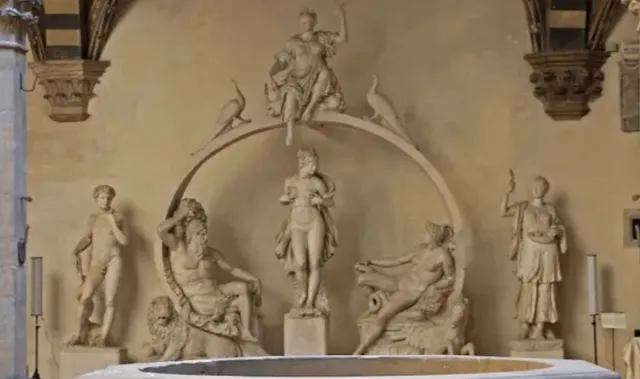
The original two-storey structure was built alongside the Volognana Tower in 1256. The third storey, which can be identified by the smaller blocks used to construct it, was added after the fire of 1323. The building is designed around an open courtyard with an external staircase leading to the second floor. An open well is found in the centre of the courtyard.
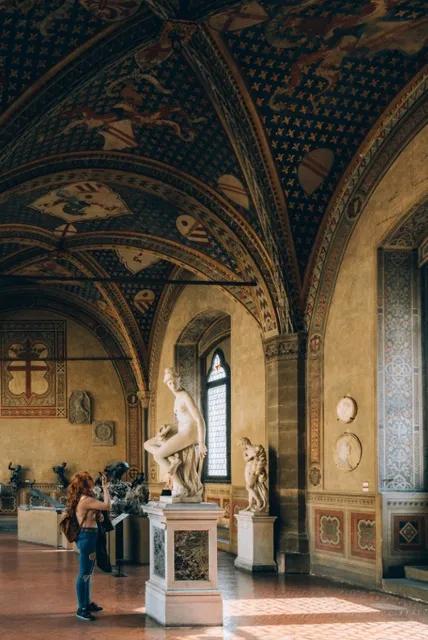
The Bargello opened as a national museum (Museo Nazionale del Bargello) in 1865, displaying the largest Italian collection of gothic and Renaissance sculptures (14–17th century).
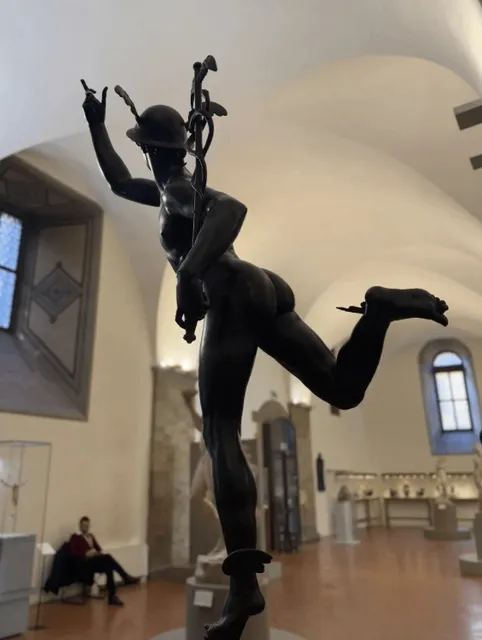
The museum houses masterpieces by Michelangelo, such as his Bacchus, Pitti Tondo (or Madonna and Child), Brutus and David-Apollo. Its collection includes Donatello's David and St. George Tabernacle , Vincenzo Gemito's Pescatore ("fisherboy"), Jacopo Sansovino's Bacchus, Giambologna's Architecture and his Mercury and many works from the Della Robbia family. Benvenuto Cellini is represented with his bronze bust of Cosimo I. There are a few works from the Baroque period, notably Gianlorenzo Bernini's 1636-7 Bust of Costanza Bonarelli.
The museum also has a fine collection of ceramics (maiolica), textile, tapestries, ivory, silver, armour and coins. The formerly lost right-hand panel of the Franks Casket is held by the museum. It also features the competing designs for The Sacrifice of Isaac (Sacrificio di Isacco) that were made by Lorenzo Ghiberti and Filippo Brunelleschi to win the contest for the second set of doors of the Florence Baptistery (1401).
Honolulu Hale's interior courtyard, staircase, and open ceiling were modeled after the Bargello.
The Islamic Hall at the Bargello was set up in 1982 by Marco Spallanzani and Giovanni Curatola at the direction of Paola Barocchi and Giovanna Gaeta Bertelà, then...
Read moreThe Bargello, officially known as the Museo Nazionale del Bargello (National Museum of the Bargello), is one of Florence's most important museums, renowned for its collection of Renaissance sculpture and decorative arts. Here is an overview of this significant cultural institution:
Museo Nazionale del Bargello
Location: Via del Proconsolo, Florence, Italy
Historical Background: The Bargello was originally built in 1255 as the Palazzo del Bargello, serving as the headquarters of the Capitano del Popolo (Captain of the People) and later as the residence of the Podestà, the chief magistrate of the city. In the 16th century, the building became a prison and the office of the city's police chief, known as the Bargello. It was converted into a national museum in 1865, becoming one of Italy's first public museums dedicated to sculpture and decorative arts.
Architecture: The building itself is a prime example of medieval architecture, with its sturdy stone walls, crenellated parapets, and a prominent courtyard. The courtyard features an open loggia with arches and a large staircase leading to the upper floors, typical of Florentine palaces from the period.
Collections: The Bargello's collection is vast and includes works from some of the greatest artists of the Renaissance and beyond. Sculpture:The museum is particularly famous for its Renaissance sculptures, including masterpieces by Donatello, Michelangelo, Cellini, Verrocchio, and Giambologna. Donatello: Notable works include his "David," the first known free-standing nude statue since antiquity, and "St. George." Michelangelo: The museum houses his early work "Bacchus" and the relief "Pitti Tondo." Giambologna: Known for "Mercury" and other dynamic bronze sculptures. Decorative Arts: The Bargello also has extensive collections of ceramics, textiles, tapestries, ivory, silver, and coins. Renaissance Bronzes: The museum holds one of the most important collections of Renaissance bronzes in the world, including pieces by renowned artists and lesser-known masters. Medieval and Renaissance Arms and Armor: The museum has a notable collection of arms and armor, showcasing the craftsmanship and military history of the periods.
Exhibitions and Programs: The Bargello regularly hosts special exhibitions, lectures, and educational programs aimed at promoting its collections and engaging with the public. These exhibitions often highlight specific themes, artists, or historical periods, providing deeper insights into the museum's holdings.
Visiting the Museum: The museum is open to the public, and visitors can explore its collections across multiple floors and rooms. The courtyard and loggia often serve as venues for temporary exhibits and special events.
Cultural Significance: The Museo Nazionale del Bargello plays a crucial role in preserving and showcasing the artistic heritage of Florence and Italy. It offers a unique glimpse into the development of sculpture and decorative arts from the Middle Ages through the Renaissance, highlighting the contributions of some of history's most celebrated artists.
The Bargello remains a must-visit destination for art enthusiasts and historians, offering an unparalleled collection in a historically rich and architecturally...
Read moreThe Bargello is a museum of Medieval and Renaissance art. The items have been collected from the Medici, convents and private collections. Most of the museums don't have brochures with floor plans so it is difficult to know how many rooms there are and how big they are. A quick walk through gave us an idea and helped to apportion our time.
We began with the the Michelangelo Room with sculptures by many artists including Cellini, Giambologna, and Ammannati. There was also the 22 year old Michelangelo's marble sculpture of "Bacchus". The Cardinal for whom it was created didn't appreciate the drunken gaze of Bacchus. Giambologna's most famous work, the delicate bronze sculpture of "Flying Mercury" (from before 1580) was also there.
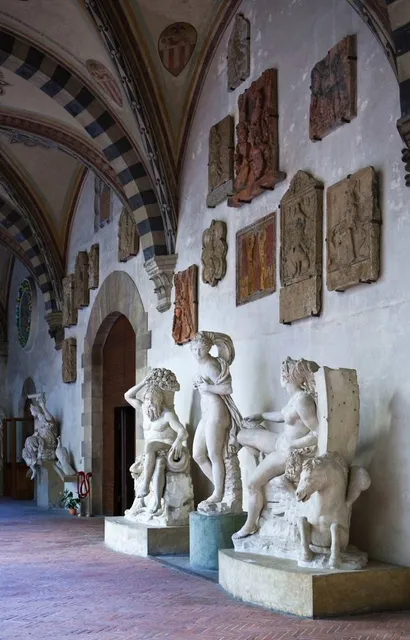
There are more sculptures in the courtyard, including Cosimo Cenni's bronze "St Paul Cannon" from 1638 which represented the high point of bronze casting in 17th century Florence. Two other highlights were Giambologna's largest marble sculpture "Oceanus" (1576) and Ammannati's "Fountain for the Sala Grande" (1561) for Cosimo I de' Medici that was to be placed in the Salone dei Cinquecento at the Palazzo Vecchio. It never made it indoors and ended up in a garden which was probably more appropriate.
Then there were two wonderful floors full of more sculptures, bronzes, majolica, glazed pottery, armour and weapons, ivory pieces, religious items, paintings, etc. Just a few of the things follow.
There were many works by (or attributed to) Donatello. His first work, from around 1408, was a marble statue of "David". Then there was his bronze "David" (circa 1440). It is his most famous piece and the first full-round nude statue made since antiquity. That was followed by Andrea del Verrocchio's bronze "David" (circa 1469). It was excellent to see all three together in the one room. Another marble sculpture by Andrea del Verrocchio was his 1480 "Woman with a Bouquet of Flowers".
A competition was held in 1401 for the design of the second set of doors for the Baptistery. It was won by the 23 year old Ghiberti. The entries by Ghiberti and Brunelleschi were on display. The competition called for a single gilded bronze panel on the theme of the sacrifice of Isaac. The complete set of panels took Ghiberti and his workshop 23 years to produce.
There were a couple of rooms devoted to the della Robbia family (father, son and others) with many glazed ceramic pieces. Almost all were on religious themes. Then there was a big room with display cases full of majolica (earthenware covered and decorated with an opaque tin glaze) from the 14th century onwards. The room of armour was fascinating with beautifully decorated shields, helmets and armour belonging...
Read more