HTML SitemapExplore
logo
Find Things to DoFind The Best Restaurants

Church of St Andrew on the Quirinal — Attraction in Rome

Name
Church of St Andrew on the Quirinal
Description
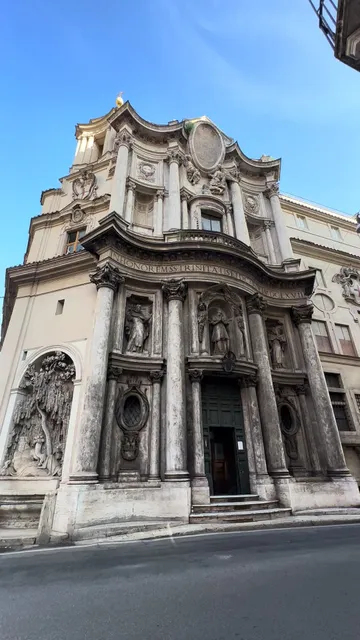
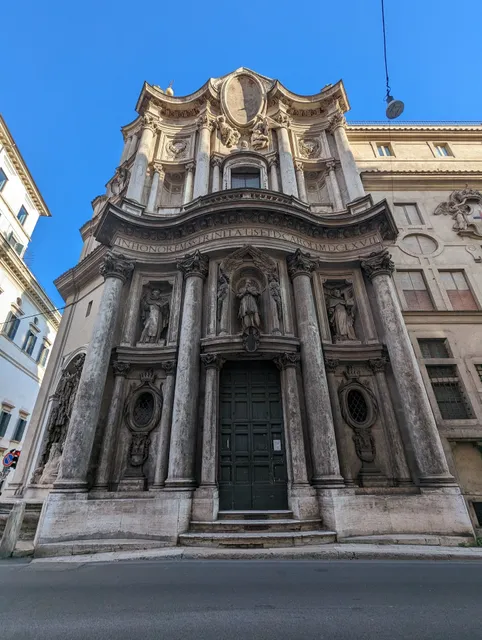
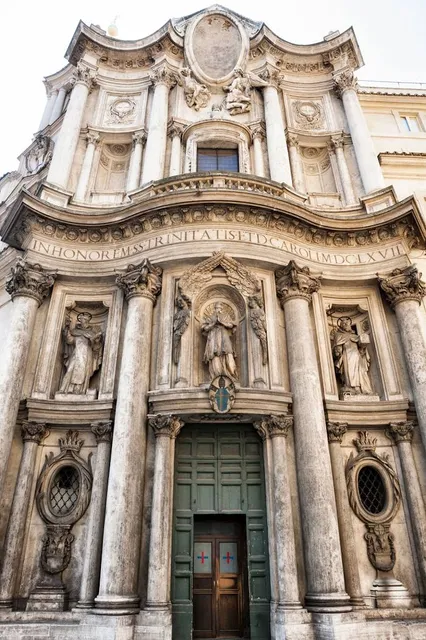
The Church of Saint Andrew on the Quirinal is a Roman Catholic titular church in Rome, Italy, built for the Jesuit seminary on the Quirinal Hill. The church of Sant'Andrea, an important example of Roman Baroque architecture, was designed by Gian Lorenzo Bernini with Giovanni de'Rossi.
Nearby attractions
Palazzo delle Esposizioni
Via Nazionale, 194, 00184 Roma RM, Italy
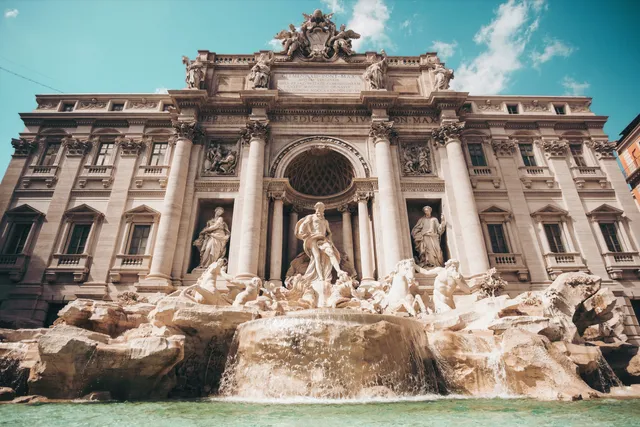
Trevi Fountain
Piazza di Trevi, 00187 Roma RM, Italy
Piazza Barberini
P.za Barberini, 23, 00187 Roma RM, Italy
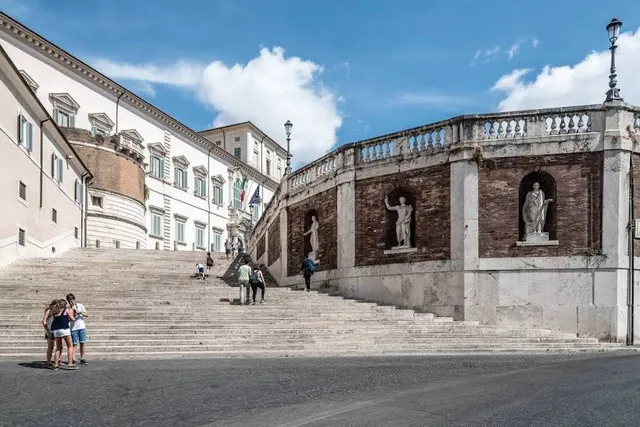
Quirinal Palace
P.za del Quirinale, 00187 Roma RM, Italy
National Gallery of Ancient Art in Barberini Palace
Via delle Quattro Fontane, 13, 00184 Roma RM, Italy
Four Fountains
Via delle Quattro Fontane, 00187 Roma RM, Italy
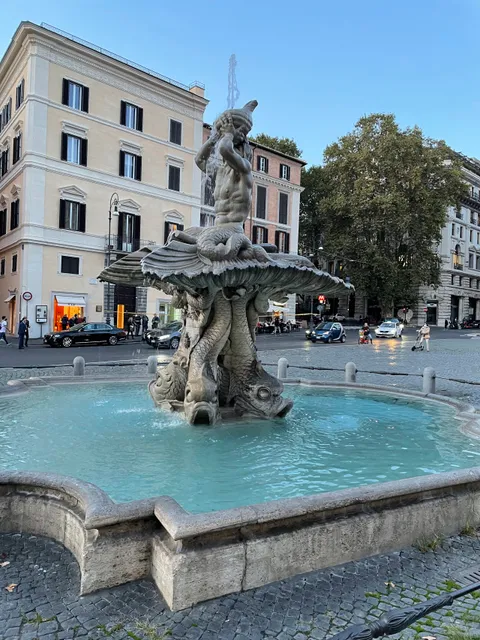
Fontana del Tritone
P.za Barberini, 00187 Roma RM, Italy
Scuderie del Quirinale
Via Ventiquattro Maggio, 16, 00186 Roma RM, Italy
Giardino di Sant'Andrea al Quirinale
Via del Quirinale, 26, 00184 Roma RM, Italy
Teatro Sistina
Via Sistina, 129, 00187 Roma RM, Italy
Nearby restaurants
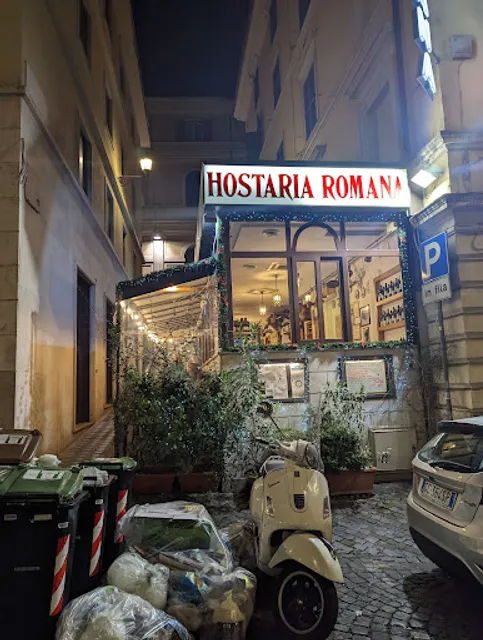
Hostaria Romana
Via del Boccaccio, 1, 00187 Roma RM, Italy
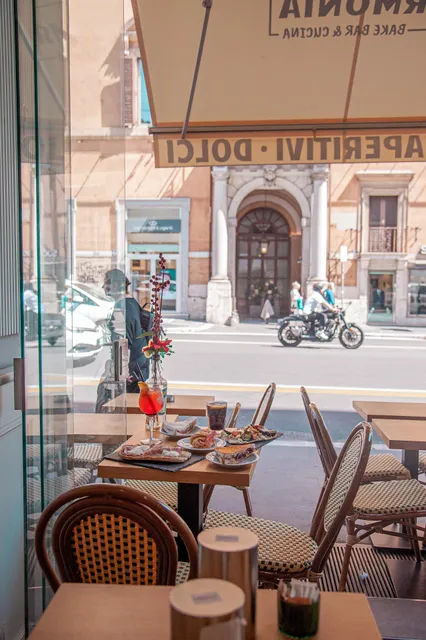
Armonia Bar & Cucina 1965
Via Nazionale, 188, 00184 Roma RM, Italy
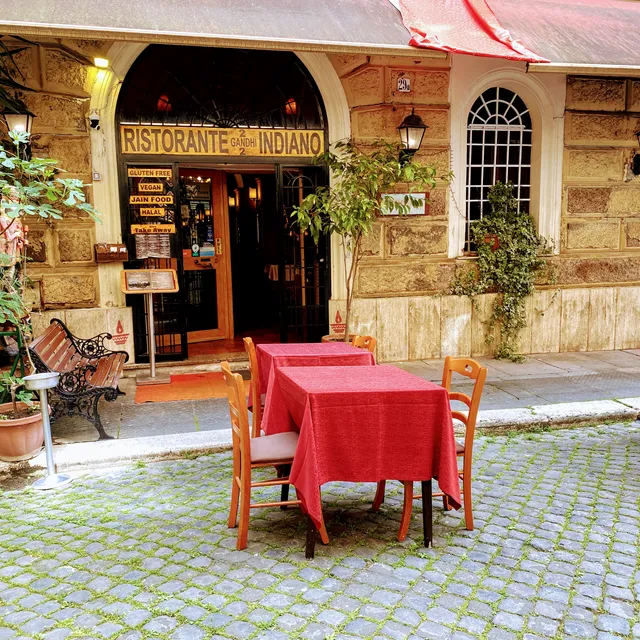
Gandhi 2 Indian Restaurant
Via Genova, 29/A, 00184 Roma RM, Italy
That's Amore Restaurant
Via in Arcione, 115, 00187 Roma RM, Italy
Doveralù Roma
Via Nazionale, 215, 00184 Roma RM, Italy
La Taverna Dei Monti
Via del Boschetto, 41, 00184 Roma RM, Italy
Ristorante Mazzè
Via Rasella, 34, 00187 Roma RM, Italy
Il Ristorante Rinaldi Al Quirinale
Via Parma, 11/A, 00184 Roma RM, Italy
Da Trani Restaurant
Via Genova, 20-22, 00184 Roma RM, Italy
HEspresso - The House of Meat
Via Genova, 16, 00184 Roma RM, Italy
Nearby hotels
Hotel Giolli Nazionale
Via Nazionale, 69, 00184 Roma RM, Italy
Hotel Barberini
Via Rasella, 3, 00187 Roma RM, Italy
EXE International Palace
Via Nazionale, 46, 00184 Roma RM, Italy
Rome Times Hotel
Via Milano, 42, 00184 Roma RM, Italy
Al Manthia Hotel
Via dei Giardini, 35B, 00184 Roma RM, Italy
B&B HOTEL Roma Italia Viminale
Via Venezia, 18, 00184 Roma RM, Italy
Villa Spalletti Trivelli Dimora d'Epoca
Via Piacenza, 4, 00184 Roma RM, Italy
JO&JOE Roma
Via delle Quattro Fontane, 113, 00184 Roma RM, Italy
Luxury Rooms H 2000 Roma
Via delle Quattro Fontane, 16, 00184 Roma RM, Italy
Hotel Virgilio
Via Palermo, 30, 00184 Roma RM, Italy
Related posts
Keywords
Church of St Andrew on the Quirinal tourism.Church of St Andrew on the Quirinal hotels.Church of St Andrew on the Quirinal bed and breakfast. flights to Church of St Andrew on the Quirinal.Church of St Andrew on the Quirinal attractions.Church of St Andrew on the Quirinal restaurants.Church of St Andrew on the Quirinal travel.Church of St Andrew on the Quirinal travel guide.Church of St Andrew on the Quirinal travel blog.Church of St Andrew on the Quirinal pictures.Church of St Andrew on the Quirinal photos.Church of St Andrew on the Quirinal travel tips.Church of St Andrew on the Quirinal maps.Church of St Andrew on the Quirinal things to do.
Church of St Andrew on the Quirinal things to do, attractions, restaurants, events info and trip planning
Church of St Andrew on the Quirinal
ItalyLazioRomeChurch of St Andrew on the Quirinal

Basic Info

Church of St Andrew on the Quirinal

Via del Quirinale, 30, 00187 Roma RM, Italy
4.6(495)
Open until 6:00 PM
Save
spot

Ratings & Description

Info

The Church of Saint Andrew on the Quirinal is a Roman Catholic titular church in Rome, Italy, built for the Jesuit seminary on the Quirinal Hill. The church of Sant'Andrea, an important example of Roman Baroque architecture, was designed by Gian Lorenzo Bernini with Giovanni de'Rossi.

Cultural
Scenic
Accessibility
Family friendly
attractions: Palazzo delle Esposizioni, Trevi Fountain, Piazza Barberini, Quirinal Palace, National Gallery of Ancient Art in Barberini Palace, Four Fountains, Fontana del Tritone, Scuderie del Quirinale, Giardino di Sant'Andrea al Quirinale, Teatro Sistina, restaurants: Hostaria Romana, Armonia Bar & Cucina 1965, Gandhi 2 Indian Restaurant, That's Amore Restaurant, Doveralù Roma, La Taverna Dei Monti, Ristorante Mazzè, Il Ristorante Rinaldi Al Quirinale, Da Trani Restaurant, HEspresso - The House of Meat
logoLearn more insights from Wanderboat AI.
Phone
+39 06 481 9399
Website
santandrea.gesuiti.it
Open hoursSee all hours
Fri9 AM - 12 PM, 3 - 6 PMOpen

Plan your stay

hotel
Pet-friendly Hotels in Rome
Find a cozy hotel nearby and make it a full experience.

hotel
Affordable Hotels in Rome
Find a cozy hotel nearby and make it a full experience.

hotel
The Coolest Hotels You Haven't Heard Of (Yet)
Find a cozy hotel nearby and make it a full experience.

hotel
Trending Stays Worth the Hype in Rome
Find a cozy hotel nearby and make it a full experience.

Reviews

Nearby attractions of Church of St Andrew on the Quirinal

Palazzo delle Esposizioni

Trevi Fountain

Piazza Barberini

Quirinal Palace

National Gallery of Ancient Art in Barberini Palace

Four Fountains

Fontana del Tritone

Scuderie del Quirinale

Giardino di Sant'Andrea al Quirinale

Teatro Sistina

Palazzo delle Esposizioni

Palazzo delle Esposizioni

4.5

(3.2K)

Open until 10:00 PM
Click for details
Trevi Fountain

Trevi Fountain

4.7

(135.3K)

Open 24 hours
Click for details
Piazza Barberini

Piazza Barberini

4.5

(10K)

Open 24 hours
Click for details
Quirinal Palace

Quirinal Palace

4.7

(2.3K)

Open 24 hours
Click for details

Things to do nearby

Catacombs: The Coolest Underground Tour in Rome
Fri, Dec 5 • 3:00 PM
00147, Rome, Lazio, Italy
View details
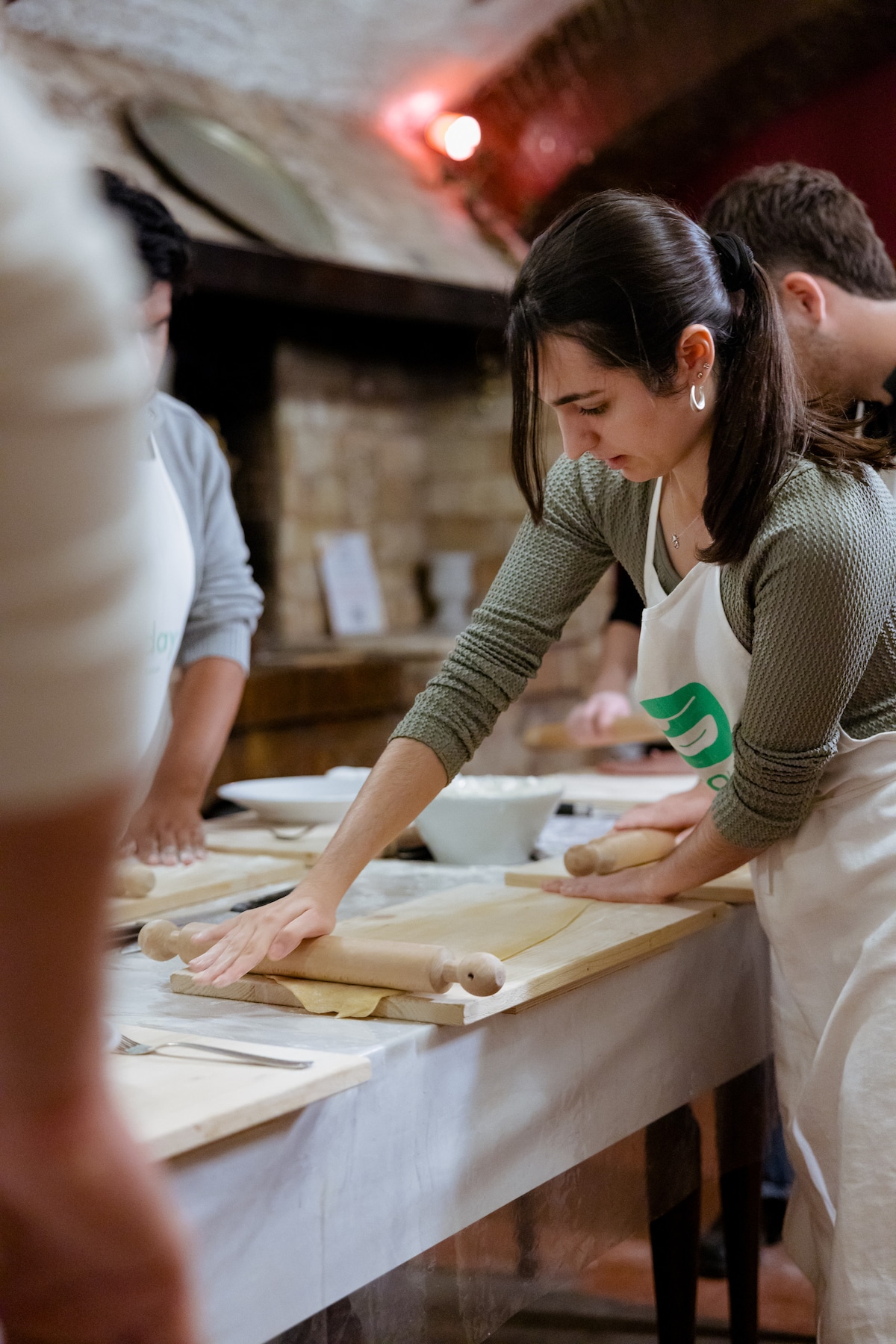
Pasta-making class, wine tasting and dinner
Fri, Dec 5 • 3:30 PM
00044, Frascati, Lazio, Italy
View details
Pasta and Pizza cooking class with wine and more
Sun, Dec 7 • 10:30 AM
00142, Rome, Lazio, Italy
View details

Nearby restaurants of Church of St Andrew on the Quirinal

Hostaria Romana

Armonia Bar & Cucina 1965

Gandhi 2 Indian Restaurant

That's Amore Restaurant

Doveralù Roma

La Taverna Dei Monti

Ristorante Mazzè

Il Ristorante Rinaldi Al Quirinale

Da Trani Restaurant

HEspresso - The House of Meat

Hostaria Romana

Hostaria Romana

4.5

(2K)

Click for details
Armonia Bar & Cucina 1965

Armonia Bar & Cucina 1965

4.7

(1.7K)

Click for details
Gandhi 2 Indian Restaurant

Gandhi 2 Indian Restaurant

4.7

(3.1K)

$$

Click for details
That's Amore Restaurant

That's Amore Restaurant

4.4

(3K)

Click for details
Get the Appoverlay
Get the AppOne tap to find yournext favorite spots!

The hit list

restaurant
Best 10 Restaurants to Visit in Rome
February 12 · 5 min read
attraction
Best 10 Attractions to Visit in Rome
February 12 · 5 min read
Rome

Plan your trip with Wanderboat

Welcome to Wanderboat AI, your AI search for local Eats and Fun, designed to help you explore your city and the world with ease.

Powered by Wanderboat AI trip planner.
Wanderboat LogoWanderboat

Your everyday Al companion for getaway ideas

CompanyAbout Us
InformationAI Trip PlannerSitemap
SocialXInstagramTiktokLinkedin
LegalTerms of ServicePrivacy Policy

Get the app

© 2025 Wanderboat. All rights reserved.
logo

Posts

Camilo A. PosadaCamilo A. Posada
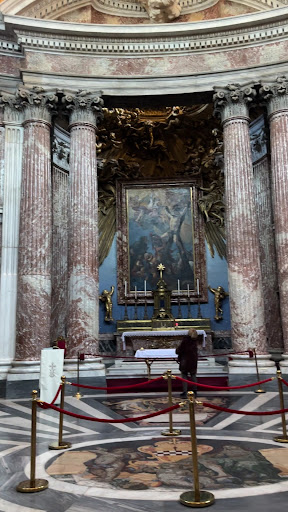
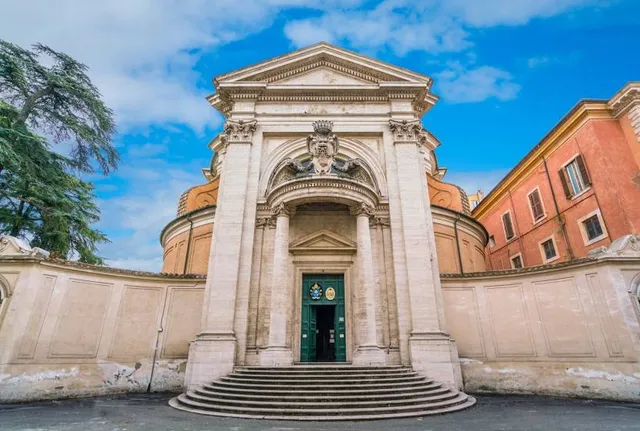
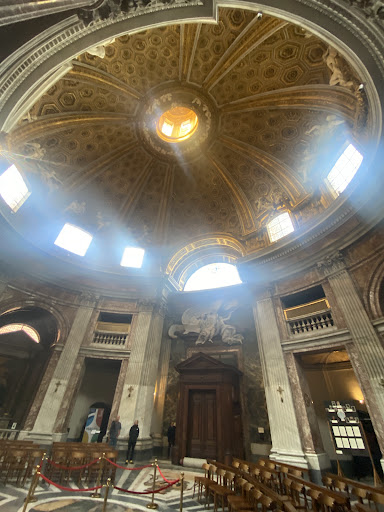
Sant’Andrea al Quirinale, located on Rome’s historic Quirinal Hill, is a stunning testament to the brilliance of Baroque architecture and the genius of Gian Lorenzo Bernini. Completed in 1670 in collaboration with Bernini’s pupil Antonio Raggi, the church is a masterpiece of design, blending grandeur with an intimate sense of devotion. The oval layout of Sant’Andrea al Quirinale is one of its most striking features, a hallmark of Bernini’s architectural innovation. The facade, framed by a grand portico with Corinthian columns and an elegant pediment, sets the tone for the experience inside. Its harmonious proportions invite visitors to pause and admire the balance of form and function, while the grand staircase leading up to the entrance amplifies the sense of majesty. The interior is quintessentially Baroque, featuring an interplay of marble, gilding, and dynamic light. The dome, adorned with stucco angels and golden rays, creates a celestial atmosphere, drawing the eye upward in awe. The main altar, centered on a dramatic painting of St. Andrew’s martyrdom, is framed by ornate sculptures that seem to come alive in Bernini’s characteristic style. Built for the Jesuits, the church reflects their values of devotion and splendor, yet its design remains deeply personal, inviting quiet meditation within its richly adorned walls. Bernini’s ability to merge architecture, sculpture, and painting into a unified experience is on full display, making Sant’Andrea al Quirinale one of the finest examples of Baroque religious art. Sant’Andrea al Quirinale is more than a church—it is an immersive work of art that encapsulates the power and beauty of Baroque Rome. For architecture enthusiasts, art lovers, or anyone seeking a serene yet dramatic spiritual space, this church offers an unforgettable experience. It’s a must-visit for anyone exploring the eternal city.
Stefano ManzoStefano Manzo
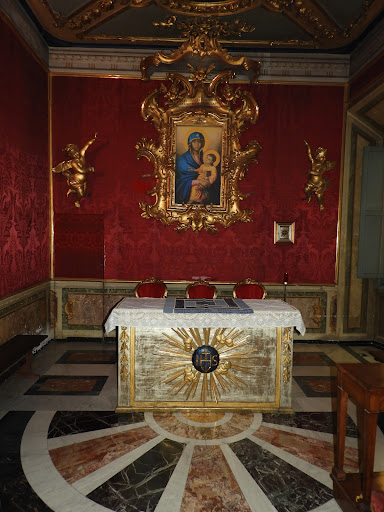
La Chiesa di Sant'Andrea al Quirinale è ubicata nel centro storico di Roma, Rione I (Monti), in Via del Quirinale n.29 in Roma. Si hanno notizie certe della chiesa con questa intitolazione dal XVI secolo, quando fu presa in gestione dalla compagnia del Gesù che la ricostruì con l’annesso Noviziato (frequentato fra gli altri dal giovane ragazzo polacco Stanislao Kostka), con il tempo sorsero sempre maggiori esigenze, per le quali fu deciso da parte del Cardinale Camillo Pamphili il rifacimento che fu affidato al grande architetto Gian Lorenzo Bernini (n.1598 m.1680) che ne fece uno dei più significativi esempi del barocco romano. Tanto bella che il figlio Domenico nella biografia del padre scrisse cosa ne pensava “Figlio, di questa sola opera di Architettura io sento qualche particolar compiacenza nel fondo del mio cuore e spesso per sollievo delle mie fatiche io qui mi porto a consolarmi del mio lavoro” L’esterno si presente con una scalinata semicircolare (10 gradini), che terminano con un piccolo sagrato. Già il protiro è del tutto particolare sia per la sua forma semicircolare sia per la sua costruzione con due grandi colonne con capitelli ionici che sorreggono un architrave sormontato da un frontone spezzato tramite volute con al centro un elaborato stemma araldico dei Pamphili. La Facciata inquadrata da maestose lesene con capitelli, ha al centro un grande portale ligneo incorniciato e architravato con frontone triangolare. Nella parte superiore si trova una grande finestra semicircolare vetrata. Il tutto sovrastato da un grande frontone triangolare. Entrando si rimane estasiati dalla particolare pianta a forma ellittica, lungo il perimetro oltre l’altare maggiore vi sono quattro aperture per le Cappelle e 4 piccoli ambienti per i confessionali. Ricchissimo l’altare maggiore, riquadrato da quattro colonne rigate in marmo rosa con capitelli e all’interno un largo uso di lapislazzuli e bronzo dorato. La pala dell’altare raffigura il Martirio di Sant’Andrea è del “Borgognone" (XVII secolo) e si trova fra un trionfo di Angeli in stucco dorato (di Antonio Raggi). Da segnalare due Cappelle: - Cappella Di Stanislao Kostka, come pala d'altare vi è il dipinto "Apparizione della Vergine a Stanislao" di Carlo Maratta (XVII secolo) e l'altare che funge anche da urna cineraria è una creazione in bronzo dorato e lapislazzuli. - Cappella dei Santi fondatori (dell'ordine dei Gesuiti) Sant'Ignazio di Loyola e Luigi Gonzaga e Federico Borgia. La pala d'Altare raffigura la Vergine Maria con i suddetti Santi La particolare cupola dorata a forma ellittica si divide in dieci spicchi con ornamenti esagonali con motivi floreali. Sulla base della cupola sono presenti diverse statue eseguite da Antonio Raggi Molto bello il Pavimento con Marmi policromi (XVII secolo), con tre grandi lastre tombali d'effetto con pregevoli intarsi, stemmi araldici e iscrizioni. Con un piccolo contributo si possono visitare: 1) Sacrestia: Anche questa progettata dal Bernini appare riccamente decorata e con ottimi dipinti, particolarmente bella la volta e il dipinto che rappresenta la Gloria di Sant’Andrea (XVII secolo), significativa la ricca mobilia in noce antico. 2) Le stanze di San Stanislao Si trovano al primo piano e pur trattandosi di una ricostruzione del XIX secolo sono molto suggestive e ricche di opere d’arte e di cimeli appartenuti al Santo. Di rilievo la terza stanza dove si trova una bellissima composizione policroma in marmo che rappresenta il Santo sul letto al momento della sua morte. Una visita sicuramente da fare, una chiesa bellissima.
Kent WangKent Wang
Gian Lorenzo Bernini is the father of Baroque sculpture and architecture. He considered this small oval church his most perfect work. Church of Saint Andrew on the Quirinal. Completed by Gian Lorenzo Bernini in 1670. Baroque architecture followed Renaissance. The classical columns and pediments were carried over from the Renaissance, but curves and domes gained favor. As a response to the Protestant Reformation, the Catholic church encouraged arts and architecture to communicate religious themes with grandeur and awe. Key differences with Renaissance include playful cherubs scattered all over the ceiling, illusionistic paintings of heaven , sunlight streaming in through the domes, and an overall increase in ornamentation. All of these combined give the viewer a dramatic glimpse of the glory of heaven.
See more posts
See more posts
hotel
Find your stay

Pet-friendly Hotels in Rome

Find a cozy hotel nearby and make it a full experience.

Sant’Andrea al Quirinale, located on Rome’s historic Quirinal Hill, is a stunning testament to the brilliance of Baroque architecture and the genius of Gian Lorenzo Bernini. Completed in 1670 in collaboration with Bernini’s pupil Antonio Raggi, the church is a masterpiece of design, blending grandeur with an intimate sense of devotion. The oval layout of Sant’Andrea al Quirinale is one of its most striking features, a hallmark of Bernini’s architectural innovation. The facade, framed by a grand portico with Corinthian columns and an elegant pediment, sets the tone for the experience inside. Its harmonious proportions invite visitors to pause and admire the balance of form and function, while the grand staircase leading up to the entrance amplifies the sense of majesty. The interior is quintessentially Baroque, featuring an interplay of marble, gilding, and dynamic light. The dome, adorned with stucco angels and golden rays, creates a celestial atmosphere, drawing the eye upward in awe. The main altar, centered on a dramatic painting of St. Andrew’s martyrdom, is framed by ornate sculptures that seem to come alive in Bernini’s characteristic style. Built for the Jesuits, the church reflects their values of devotion and splendor, yet its design remains deeply personal, inviting quiet meditation within its richly adorned walls. Bernini’s ability to merge architecture, sculpture, and painting into a unified experience is on full display, making Sant’Andrea al Quirinale one of the finest examples of Baroque religious art. Sant’Andrea al Quirinale is more than a church—it is an immersive work of art that encapsulates the power and beauty of Baroque Rome. For architecture enthusiasts, art lovers, or anyone seeking a serene yet dramatic spiritual space, this church offers an unforgettable experience. It’s a must-visit for anyone exploring the eternal city.
Camilo A. Posada

Camilo A. Posada

hotel
Find your stay

Affordable Hotels in Rome

Find a cozy hotel nearby and make it a full experience.

Get the Appoverlay
Get the AppOne tap to find yournext favorite spots!
La Chiesa di Sant'Andrea al Quirinale è ubicata nel centro storico di Roma, Rione I (Monti), in Via del Quirinale n.29 in Roma. Si hanno notizie certe della chiesa con questa intitolazione dal XVI secolo, quando fu presa in gestione dalla compagnia del Gesù che la ricostruì con l’annesso Noviziato (frequentato fra gli altri dal giovane ragazzo polacco Stanislao Kostka), con il tempo sorsero sempre maggiori esigenze, per le quali fu deciso da parte del Cardinale Camillo Pamphili il rifacimento che fu affidato al grande architetto Gian Lorenzo Bernini (n.1598 m.1680) che ne fece uno dei più significativi esempi del barocco romano. Tanto bella che il figlio Domenico nella biografia del padre scrisse cosa ne pensava “Figlio, di questa sola opera di Architettura io sento qualche particolar compiacenza nel fondo del mio cuore e spesso per sollievo delle mie fatiche io qui mi porto a consolarmi del mio lavoro” L’esterno si presente con una scalinata semicircolare (10 gradini), che terminano con un piccolo sagrato. Già il protiro è del tutto particolare sia per la sua forma semicircolare sia per la sua costruzione con due grandi colonne con capitelli ionici che sorreggono un architrave sormontato da un frontone spezzato tramite volute con al centro un elaborato stemma araldico dei Pamphili. La Facciata inquadrata da maestose lesene con capitelli, ha al centro un grande portale ligneo incorniciato e architravato con frontone triangolare. Nella parte superiore si trova una grande finestra semicircolare vetrata. Il tutto sovrastato da un grande frontone triangolare. Entrando si rimane estasiati dalla particolare pianta a forma ellittica, lungo il perimetro oltre l’altare maggiore vi sono quattro aperture per le Cappelle e 4 piccoli ambienti per i confessionali. Ricchissimo l’altare maggiore, riquadrato da quattro colonne rigate in marmo rosa con capitelli e all’interno un largo uso di lapislazzuli e bronzo dorato. La pala dell’altare raffigura il Martirio di Sant’Andrea è del “Borgognone" (XVII secolo) e si trova fra un trionfo di Angeli in stucco dorato (di Antonio Raggi). Da segnalare due Cappelle: - Cappella Di Stanislao Kostka, come pala d'altare vi è il dipinto "Apparizione della Vergine a Stanislao" di Carlo Maratta (XVII secolo) e l'altare che funge anche da urna cineraria è una creazione in bronzo dorato e lapislazzuli. - Cappella dei Santi fondatori (dell'ordine dei Gesuiti) Sant'Ignazio di Loyola e Luigi Gonzaga e Federico Borgia. La pala d'Altare raffigura la Vergine Maria con i suddetti Santi La particolare cupola dorata a forma ellittica si divide in dieci spicchi con ornamenti esagonali con motivi floreali. Sulla base della cupola sono presenti diverse statue eseguite da Antonio Raggi Molto bello il Pavimento con Marmi policromi (XVII secolo), con tre grandi lastre tombali d'effetto con pregevoli intarsi, stemmi araldici e iscrizioni. Con un piccolo contributo si possono visitare: 1) Sacrestia: Anche questa progettata dal Bernini appare riccamente decorata e con ottimi dipinti, particolarmente bella la volta e il dipinto che rappresenta la Gloria di Sant’Andrea (XVII secolo), significativa la ricca mobilia in noce antico. 2) Le stanze di San Stanislao Si trovano al primo piano e pur trattandosi di una ricostruzione del XIX secolo sono molto suggestive e ricche di opere d’arte e di cimeli appartenuti al Santo. Di rilievo la terza stanza dove si trova una bellissima composizione policroma in marmo che rappresenta il Santo sul letto al momento della sua morte. Una visita sicuramente da fare, una chiesa bellissima.
Stefano Manzo

Stefano Manzo

hotel
Find your stay

The Coolest Hotels You Haven't Heard Of (Yet)

Find a cozy hotel nearby and make it a full experience.

hotel
Find your stay

Trending Stays Worth the Hype in Rome

Find a cozy hotel nearby and make it a full experience.

Gian Lorenzo Bernini is the father of Baroque sculpture and architecture. He considered this small oval church his most perfect work. Church of Saint Andrew on the Quirinal. Completed by Gian Lorenzo Bernini in 1670. Baroque architecture followed Renaissance. The classical columns and pediments were carried over from the Renaissance, but curves and domes gained favor. As a response to the Protestant Reformation, the Catholic church encouraged arts and architecture to communicate religious themes with grandeur and awe. Key differences with Renaissance include playful cherubs scattered all over the ceiling, illusionistic paintings of heaven , sunlight streaming in through the domes, and an overall increase in ornamentation. All of these combined give the viewer a dramatic glimpse of the glory of heaven.
Kent Wang

Kent Wang

See more posts
See more posts

Reviews of Church of St Andrew on the Quirinal

4.6
(495)
avatar
5.0
8y

In a magical world, slightly better and wiser than this one, where everything is pretty much exactly the same as it is now, except I am quoted far more often, and maybe have a tad less back and sciatica pain, you would be acutely aware that my opinion of Bernini as an architect is a measured one. And there would be no doubt some pithy quote you could trot out to assert that in the irresistible battle between Borromini and Bernini I am ever favoring Borromini.

So what's all this five star hoo-ha around a quintessentially Bernini designed church?

I don't know. Everything is complicated. In the real world I am rarely quoted, my sciatica hurts, and Bernini is given a church to build and it's...

lovely.

And why not? Bernini was a genius, a sculptor on a level with Michelangelo even. So if he wants to set down his hammer and chisel for a bit in order to design buildings, or produce a few albums where he sings standards from the Great American Songbook, or interrupts his obscure blog of blazing visions in order to write 200 reviews of Rome, well, more power to him. Who knows what sort of magic might take place. A jewel box might explode, light could pour down from a half real sun, everything might radiate at a perfect equidistance, and you could see all the stars of the sky, in the middle of the day, unfettered by night.

I love this church. I love its roundness and its elegant stage set fronting onto the street. I love its feeling of completeness inside. Such a spinning kaleidoscope of wholeness, all colors and rich and dazzle and calm. Unlike some churches I might be giving five stars to, this isn't for some featured painting or for some famous statues by, perhaps, Bernini himself inside, it's just for the space, the perfect little building, the sense that every piece of it is taken care of and it all goes together.

The best teacher I ever had, Marc LeSeuer, who lit the first fires in me for the Roman Baroque, all like it was a cool thing no one had heard of for the last hundred years, and maybe they really hadn't heard then, showed us slides of Bernini's work in St. Peters to illustrate. But I think what Bernini was trying to do there is lost a little in so giant a space. Here at modest Sant'Andrea everything is under his command, no longer a stage set, but an environment, something less looked upon and instead more inhabited and felt. There are not so many places in the world like this, not so many people who can do this. Borromini does it twice, at least, and better; Bernini, here, this once.

But does everything have to be measured? Is beauty to be ranked and catalogued? Will every last mote in the Universe be ultimately reviewed on the Internet? Must it all be a contest?

Alas. Yes. And lovely Sant'Andrea al Quirinale comes in third. I'm fine with that. So, I'm sure, is Marc LeSeuer. Borromini would be okay with it too, though a bit touchy at the very mention of Bernini. Bernini himself, long entombed, would, at the hint of the word of third place, be promptly tearing out his hair over it. To which I can only say, with no likelihood of being quoted "Well Bernini, if you wanted it that much, you should have finished it off with some of your...

   Read more
avatar
5.0
12y

Sant'Andrea al Quirinale is a splendid Baroque church designed by Bernini in Rome. It is a tender scene to imagine: the great Baroque architect, Gian Lorenzo Bernini, in his last years, sitting for hours in this gem of a church, admiring the wondrous space he had created. A painter, sculptor, architect, playwright and stage designer, Bernini fashioned a visually integrated masterwork, which tells the story of Sant'Andrea's martyrdom and ascension into heaven.

The novel elliptical worship space, with the entry on the long side, thrusts one immediately into the action, and one can sit for hours admiring the church's spectacular features, from paintings to sculpture, from the rich coffered dome to the sumptuous pink marble columns. This church truly is a sight for sore eyes, and must have been even more so before our electronic age.

For Sant'Andrea, Bernini created one of the most unique façades in the city. First, he chose not to hide the elliptical shape of the church behind a large façade. Instead, he created a narrow but tall entrance, which he flanked with two huge pilasters (flattened columns) topped by Corinthian capitals.

Atop these, he placed a triangular pediment, and at the bottom, a semi-circular staircase that seems to cascade down from the entrance like flowing water. At the top of the stairs, Bernini created a semi-circular porch, using two Ionic columns, which he topped with the Pamphilij coat of arms, containing the family's symbol, the dove.

When you walk into Sant'Andrea al Quirinal, you can quickly see why Bernini considered this his most perfect work. It may take a moment to orient yourself, as you are immediately enveloped the curving walls and decorations that might make you feel like you're inside a gigantic Easter egg. Chapels sweep around you. Ornate, carved marble abounds. The inlaid mosaic on the floor mirrors elliptical dome overhead. Architectural molding running around inside wall divides the space into an upper and...

   Read more
avatar
5.0
50w

Sant’Andrea al Quirinale, located on Rome’s historic Quirinal Hill, is a stunning testament to the brilliance of Baroque architecture and the genius of Gian Lorenzo Bernini. Completed in 1670 in collaboration with Bernini’s pupil Antonio Raggi, the church is a masterpiece of design, blending grandeur with an intimate sense of devotion. The oval layout of Sant’Andrea al Quirinale is one of its most striking features, a hallmark of Bernini’s architectural innovation. The facade, framed by a grand portico with Corinthian columns and an elegant pediment, sets the tone for the experience inside. Its harmonious proportions invite visitors to pause and admire the balance of form and function, while the grand staircase leading up to the entrance amplifies the sense of majesty. The interior is quintessentially Baroque, featuring an interplay of marble, gilding, and dynamic light. The dome, adorned with stucco angels and golden rays, creates a celestial atmosphere, drawing the eye upward in awe. The main altar, centered on a dramatic painting of St. Andrew’s martyrdom, is framed by ornate sculptures that seem to come alive in Bernini’s characteristic style. Built for the Jesuits, the church reflects their values of devotion and splendor, yet its design remains deeply personal, inviting quiet meditation within its richly adorned walls. Bernini’s ability to merge architecture, sculpture, and painting into a unified experience is on full display, making Sant’Andrea al Quirinale one of the finest examples of Baroque religious art. Sant’Andrea al Quirinale is more than a church—it is an immersive work of art that encapsulates the power and beauty of Baroque Rome. For architecture enthusiasts, art lovers, or anyone seeking a serene yet dramatic spiritual space, this church offers an unforgettable experience. It’s a must-visit for anyone exploring the...

   Read more
Page 1 of 7
Previous
Next