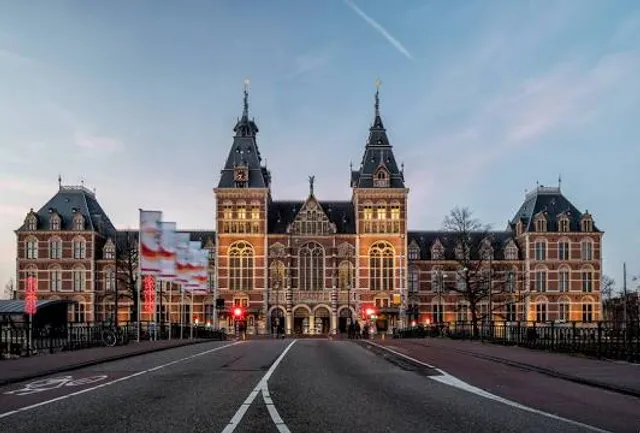
The Rijksmuseum, located in Amsterdam, Netherlands, is one of the most renowned art and history museums in the world. Established in 1798, the museum houses a vast collection of Dutch Golden Age paintings, sculptures, decorative arts, and historical artifacts, making it a cultural treasure of the Netherlands.
History
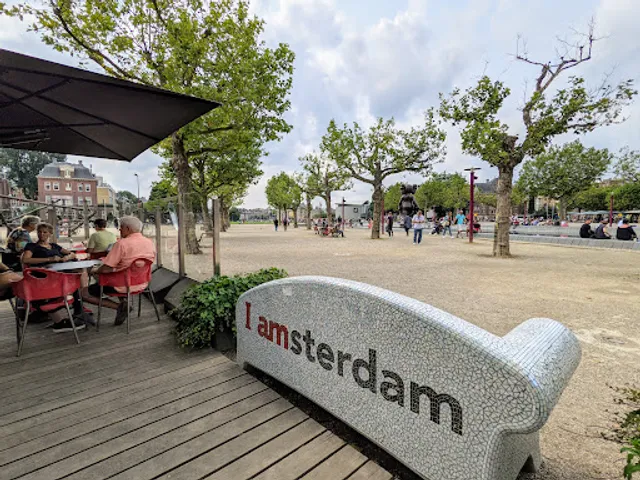
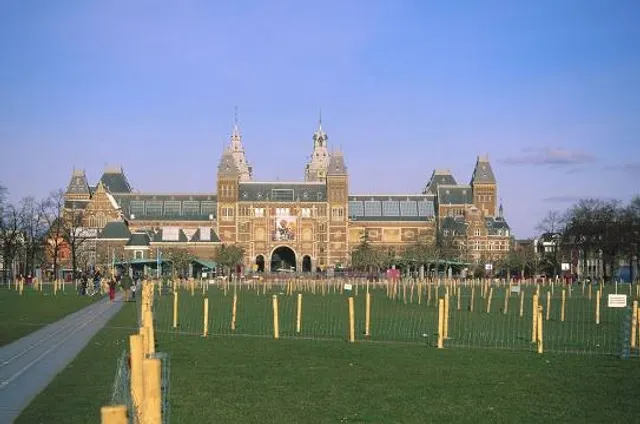
• Founding: The Rijksmuseum was founded in 1798, initially located in The Hague. It was established to showcase the art collections of the Dutch government, including those of the royal family. In 1808, it was moved to Amsterdam by King Louis Bonaparte, Napoleon’s brother, and was officially opened to the public in its current form in 1885. • Architectural Design: The museum building, designed by Dutch architect Pierre Cuypers, is a masterpiece in itself, blending Gothic and Renaissance architectural styles. The imposing structure features rich decorative elements and is set in the Museumplein (Museum Square), where it shares space with other iconic institutions like the Van Gogh Museum and the Stedelijk Museum.
Collections
The Rijksmuseum is best known for its incredible collection of Dutch Golden Age art, but its extensive holdings cover centuries of history and art from around the world.
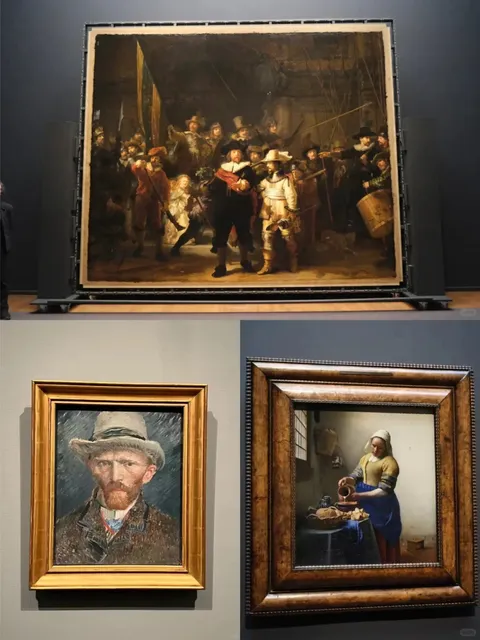
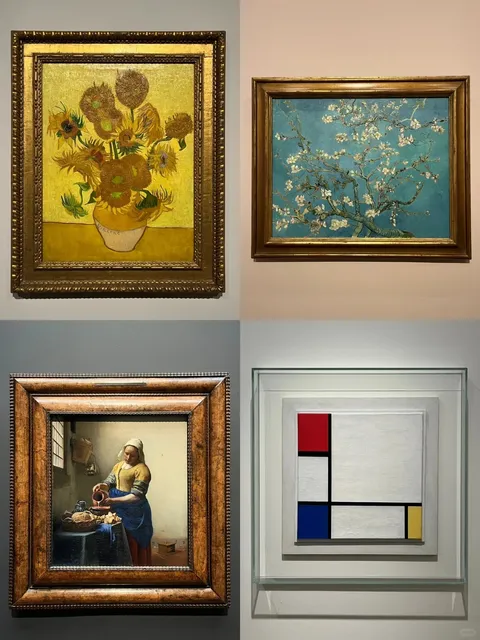
• Dutch Masters: The museum’s most famous works are by 17th-century Dutch artists. Notable masterpieces include: • Rembrandt’s “The Night Watch” (1642): This iconic painting is one of the museum’s main attractions. It depicts a dramatic scene of a militia company and is celebrated for its use of light and shadow. • Johannes Vermeer’s “The Milkmaid” (c. 1657-1658): This intimate domestic scene is one of Vermeer’s finest works and is beloved for its detail and serene atmosphere. • Frans Hals’s “The Merry Drinker” (1628-1630): A vivid portrayal of a joyful man raising his glass, embodying the lively spirit of Dutch portraiture. • Sculptures and Decorative Arts: In addition to paintings, the Rijksmuseum holds a diverse collection of sculptures, ceramics, furniture, and decorative objects from various historical periods. The collection includes items from the Middle Ages to the modern era. • Asian Art Collection: The museum has a notable collection of Asian art, with pieces from China, Japan, Indonesia, and India. These items range from intricate ceramics to ornate textiles and sculptures. • Ship Models and Historical Artifacts: The museum’s collection also includes an array of ship models and artifacts that reflect the Netherlands’ maritime history, particularly during the Dutch Golden Age when the country was a leading naval and trading power.
Renovations
• Modernization: The Rijksmuseum underwent a major renovation between 2003 and 2013, during which the entire building was modernized while maintaining its historical integrity. The renovation, led by Spanish architects Cruz y Ortiz, revitalized the museum’s galleries and improved visitor facilities, making it more accessible to the public. • Reopening: The museum reopened in 2013, with a reimagined layout and a focus on offering a narrative journey through Dutch and global history, from the Middle Ages to the 20th century. The redesign was highly praised and restored the Rijksmuseum’s status as one of the top cultural...
Read moreVisiting the Rijksmuseum during our holiday in Amsterdam was an unforgettable experience! As art enthusiasts from abroad, we were captivated by the museum’s stunning Gothic and Renaissance Revival architecture. The Great Hall’s soaring ceilings, vibrant murals, and stained-glass windows created a breathtaking first impression.
The collection of paintings was phenomenal. In the Gallery of Honour, Rembrandt’s The Night Watch was a highlight—its scale and dynamic energy were even more striking in person. Vermeer’s The Milkmaid felt intimate and luminous, while Frans Hals’ lively portraits seemed to sparkle with personality. The Dutch Golden Age collection was extraordinary, but we were thrilled to discover works by Vincent van Gogh and Claude Monet, adding a fresh perspective.
The Rijksmuseum’s three Van Gogh paintings, on loan from the P. and N. de Boer Foundation, were a treat. View of Amsterdam from Central Station (1885) captured the city with vivid charm, and knowing Van Gogh painted it during a visit to the museum felt special. Riverbank with Trees (1887) and Wheat Field (1888), displayed alongside the museum’s Self-portrait (1887) showcased his evolving style. Monet’s La Corniche near Monaco (1884), a vibrant Impressionist work donated in 1900, added a burst of color and contrasted beautifully with the Dutch classics.
As travelers from abroad, we were eager to explore the museum’s engagement with Dutch colonial history, and this exhibit delivered a thought-provoking look at the Netherlands’ colonial past (17th to 19th centuries) across Brazil, Suriname, the Caribbean, South Africa, Asia, and Indonesia.
The paintings in the exhibition were powerful and sobering. Dirk Valkenburg’s Plantation in Suriname (1707) stood out, vividly depicting enslaved individuals laboring on a plantation, a stark contrast to the opulence of the Dutch Golden Age. It brought the harsh realities of colonial life into focus. Equally compelling were Rembrandt’s portraits of Marten Soolmans and Oopjen Coppit (1634), which the exhibit contextualized by revealing their wealth’s ties to sugar refining and enslaved labor in Brazil. The museum’s updated labels, part of 77 new additions across the permanent collection, deepened this perspective, connecting colonial wealth to the art we see today. These works challenged us to reflect on the human cost behind the Netherlands’ prosperity, making the exhibition both educational and emotionally resonant.
Other exhibits were equally impressive. The Delftware collection, with its intricate blue-and-white ceramics, was stunning, and the 17th-century dollhouses were surprisingly detailed. The Asian art section, with serene Buddhas and lacquerware, highlighted Dutch global trade. The library was a personal favorite—a gorgeous, tranquil space that felt like stepping into history.
The museum is well-organized, with clear signage . Crowds around major works were manageable thanks to timed entry, and the €22.50 ticket felt like a great value. A must-visit for anyone exploring Amsterdam! Highly recommend the Van Gogh and Monet works alongside the Dutch...
Read moreI recently had the opportunity to visit the Rijksmuseum in Amsterdam, and I must say it was an incredible experience. The museum is home to an extensive collection of Dutch art and history, and it truly showcases the rich cultural heritage of the Netherlands.
The museum itself is housed in a stunning building, with a modern and spacious layout that allows for an enjoyable and immersive visit. The collection is incredibly diverse, spanning centuries of artistic and historical treasures. From iconic masterpieces such as Rembrandt's "The Night Watch" to intricate Delftware and historical artifacts, there is something for everyone to appreciate.
One of the things that impressed me the most about the Rijksmuseum is the way the artworks are displayed. Each piece is carefully curated and presented in a way that allows you to fully appreciate its beauty and significance. The museum also provides detailed information about each artwork, offering insights into the artist's life and the historical context in which it was created.
The Rijksmuseum also offers various interactive exhibits and multimedia installations, which add an extra layer of engagement to the visit. Whether it's virtual reality experiences or interactive displays, these innovative features enhance the overall museum experience and make it more accessible to a wider audience.
Another highlight of my visit was the Rijksmuseum's commitment to accessibility. The museum offers a range of services for visitors with disabilities, including wheelchair accessibility, audio guides, and tactile models. This inclusive approach ensures that everyone can enjoy and learn from the museum's collection.
Overall, my experience at the Rijksmuseum was truly memorable. The combination of breathtaking artworks, informative displays, and a welcoming atmosphere made for a fantastic visit. I highly recommend a visit to the Rijksmuseum for anyone interested in exploring Dutch art...
Read more