The Palau de la Música Catalana, built between 1905 and 1908, is the pinnacle of Catalan Modernism and Art Nouveau styles. Designed by the renowned architect Lluís Domènech i Montaner, it is a masterpiece of his legacy. Due to its contributions to architecture, music, and culture, along with Montaner's other work, the Hospital de Sant Pau, it was listed as a UNESCO World Heritage site. It is also the only concert hall in the world to be designated as such.
The Palau de la Música Catalana was funded by the Orfeó Català (Catalan Choral Society) and designed by Lluís Domènech i Montaner, one of the three great architects of Barcelona. Its design fully embodies the Catalan Modernist style, incorporating a wealth of colorful glass mosaics, ceramic mosaics, wrought iron art, and exquisite sculptures, while skillfully using natural light and natural motifs. In contrast to the more famous Antoni Gaudí, whose work emphasizes twisted and irregular lines, Montaner's style focuses more on mosaics rather than complex curves. The colors and decorations Montaner used are bright and vibrant, combining both decorative and structural elements in perfect harmony, with both practicality and aesthetic appeal.
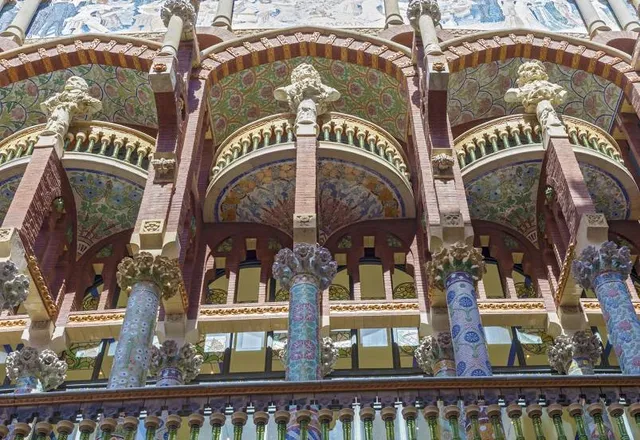
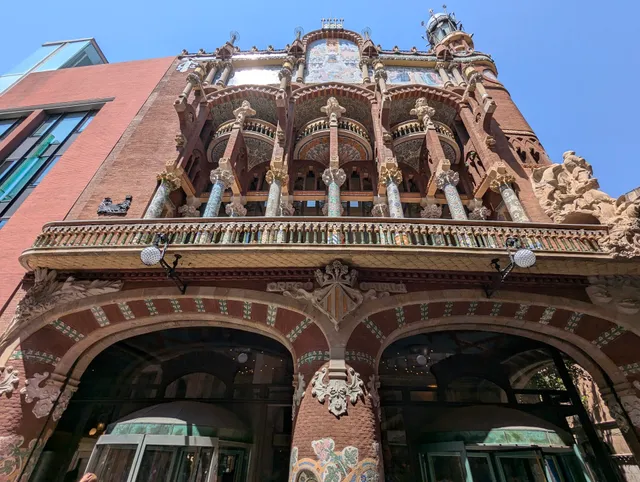
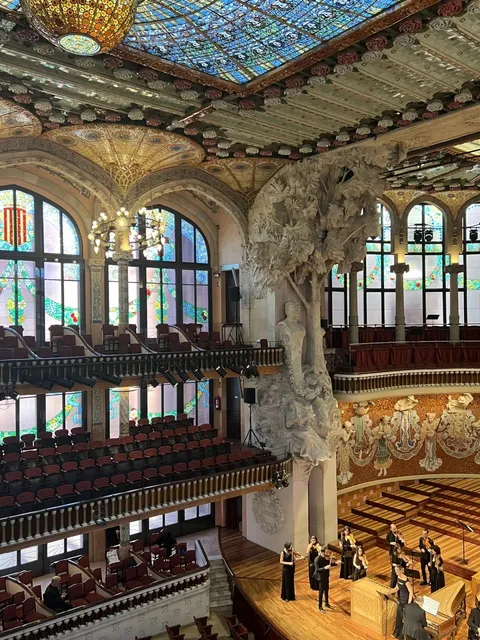
The exterior of the Palau is adorned with large, magnificent sculptures, and the columns on the balconies are decorated with ceramic mosaics depicting various flowers, showcasing the natural elements highly valued by Catalan Modernism. Inside, the spaces are filled with lavish sculptures, fine art glass, and metal decorations, reflecting the intricate style of Catalan Modernism.
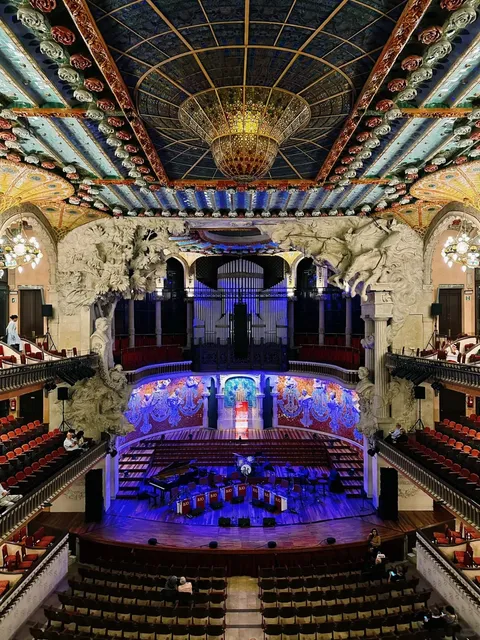
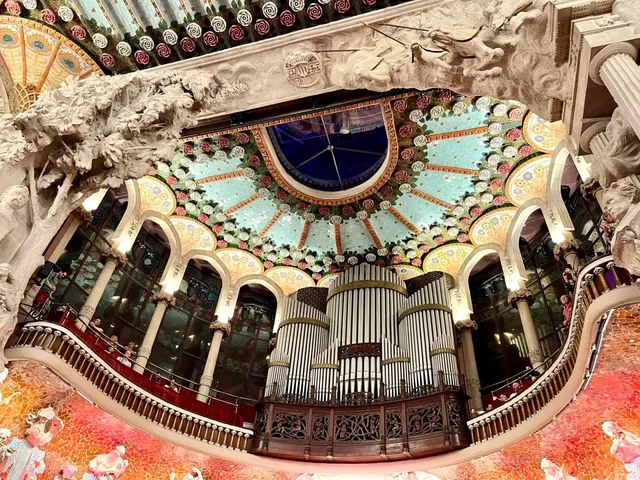
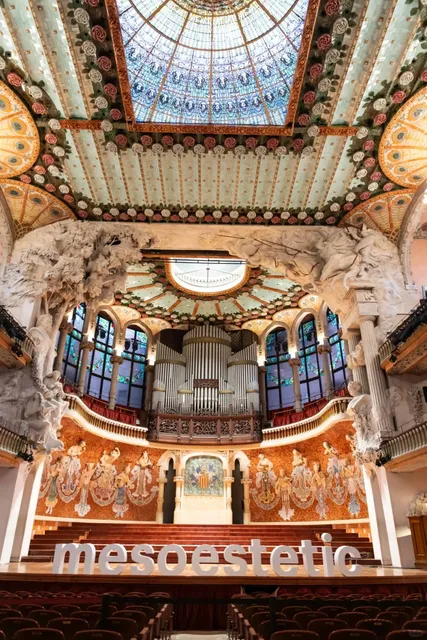
The most spectacular part of the entire building is the main hall, where the innovative and distinctive dome stands as the crown jewel of the structure. Made from colorful glass, it allows an abundance of natural light to flood the hall, creating the image of the sun beneath the blue sky. Through the use of multicolored glass and unique design, natural light is reflected and scattered within the concert hall. This makes the Palau one of the few concert halls in the world to be fully lit by natural light during the day, while also embodying the Catalan Modernist embrace of nature. The design ensures that music and nature harmoniously merge, maintaining a connection between the audience and the natural world. Additionally, the dome's unique shape enhances the acoustics, making the sound clearer, more even, and more rounded, contributing to the world-class acoustics of the hall and further exemplifying Montaner's focus on practical architecture.
The stage design is also remarkable, with large mosaic decorations on the walls. Eighteen three-dimensional statues of the Muses emerge from the wall, each playing a different instrument, symbolizing different forms of music. The lower half of their skirts blends into the mosaic background, creating a unique artistic effect. On either side of the stage are large sculptures: on the left, a statue of a Valkyrie from Wagner's Die Walküre, symbolizing the power and epic nature of European symphonic and Romantic music; and on the right, a performer dressed in traditional Catalan attire, symbolizing the vitality of Catalan folk music and the reverence for local musical traditions.
This site was actually unknown to me initially, and it is not considered one of Barcelona's major tourist attractions. However, I was quickly drawn in by photos on the internet, and the interior was even more stunning than the pictures. This trip made me realize that I deeply appreciate the Catalan Modernist style, with its unique use of light, shadow, and color, which I had never seen before—dazzling but not overwhelming. The dome of the Palau became my favorite and most memorable design of the entire trip. It is truly a beautiful sight that stays etched in my mind. I highly recommend this hidden gem in Barcelona to architecture...
Read morePalau de la Música Catalana – A Jewel of Modernisme in the Heart of Barcelona
The Palau de la Música Catalana is not just a concert hall—it’s a living masterpiece of Catalan Modernisme and one of Barcelona’s most dazzling architectural treasures. Designed by the visionary architect Lluís Domènech i Montaner and completed in 1908, the Palau is a UNESCO World Heritage site that continues to captivate visitors with its bold design, intricate detail, and radiant beauty.
From the moment you step inside, the Palau enchants. The interior is a riot of color and ornamentation, with stained glass, mosaics, sculptures, and wrought iron all combining to form an awe-inspiring space. The centerpiece is the stained-glass skylight in the main concert hall—a spectacular inverted dome that floods the room with natural light, giving performances a magical, almost celestial atmosphere. It's one of the few concert venues in the world where daylight plays such an integral role in the visual experience.
Beyond its beauty, the Palau is a dynamic hub of culture, hosting a wide range of performances from classical and opera to flamenco, jazz, and modern world music. The acoustics are excellent, and the seating feels intimate despite the grandeur of the space.
Guided tours are available for those who want to explore the building even without attending a performance, and they're highly recommended. You’ll get a close look at the lavish ornamentation, the stunning balcony with its famous mosaic columns, and the backstage areas that reveal the Palau’s rich history.
Located in the heart of the El Born district, the Palau de la Música Catalana is a must-see for lovers of architecture, music, and Catalan culture. It is not merely a concert venue—it is a breathtaking, soul-stirring celebration of art in...
Read moreOn December 20th, 2024, I bought a couple of tickets to attend to a Paco de Lucia´s homage. I used my Visa to pay the tickets and the cashier told me that it didn´t pass. It was quiet strange because I was using that card most of the time while traveling Europe. I trusted that person and it was my friend who used his own Mastercard and, after the cashier, it went through. While checking my VISA activity, I figured out that my card was debited with 189 Canadian dollars, as well as my friend´s card. I was still in Barcelona for one more day and we went to the ticket sales window to let them to know that they debited twice, from different credit cards, the adquisition of two tickets. They asked us to send a letter explaining everything and showing them all the evidence. They gave us an e-mail and the worker, a young lady, assured us that it never happened something like that and Palau de la Musica would address the problem. We send a PDF with all the evidence, tickets bought, credit card statements showing the money withdraw almos at the same time, their receipts, and so on. WE NEVER HEARD FROM THEM AND THEY CHARGED TWO TICKETS TWICE. THEY CHARGED 380 CANADIAN DOLLARS FOR TWO TICKETS THAT SHOULD HAVE COST 189 CANADIAN DOLLARS. If you buy tickets with your Visa or Mastercard, and you are toutist, make sure that if they tell you that your credit card did not go through, they show you the receipt saying that the card did not go through. To conclude, that Palace of Music will never return the money they stole from us no matter how much evidence...
Read more