HTML SitemapExplore
logo
Find Things to DoFind The Best Restaurants

Cathedral of Santiago de Compostela — Attraction in Santiago de Compostela

Name
Cathedral of Santiago de Compostela
Description
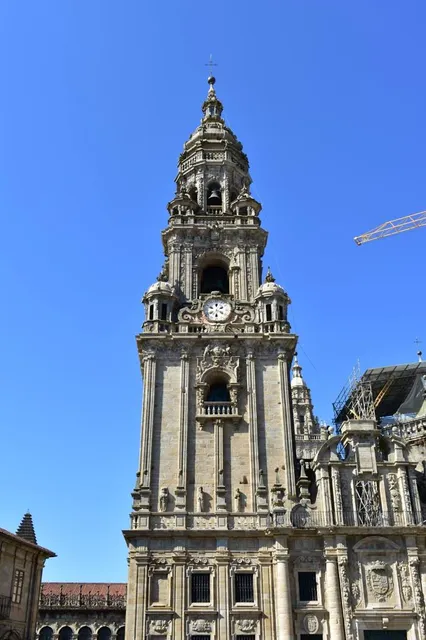
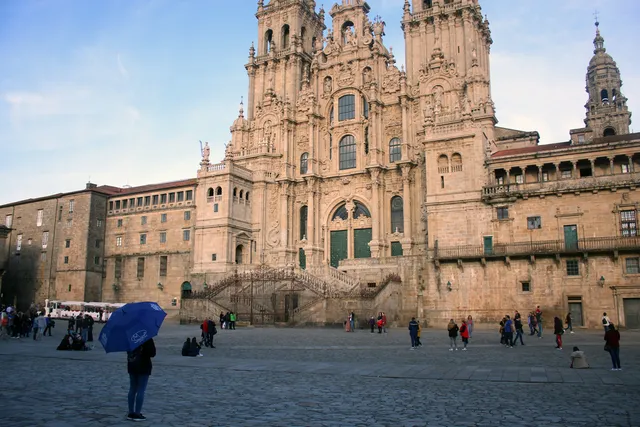
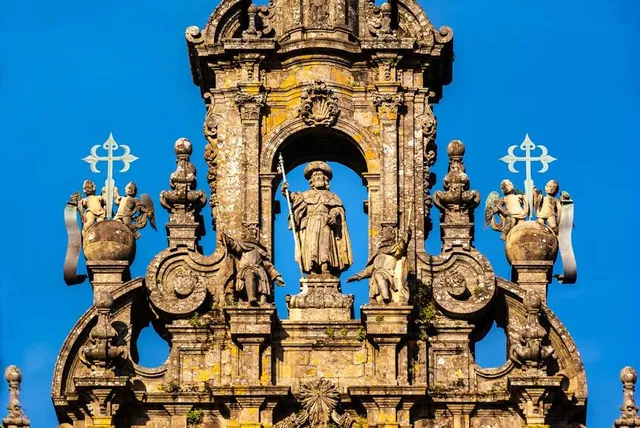
The Santiago de Compostela Archcathedral Basilica is part of the Metropolitan Archdiocese of Santiago de Compostela and is an integral component of the Santiago de Compostela World Heritage Site in Galicia, Spain. The cathedral is the reputed burial place of Saint James the Great, one of the apostles of Jesus Christ.
Nearby attractions
Porch of the Glory
Praza do Obradoiro, s/n, 15704 Santiago de Compostela, A Coruña, Spain
Cathedral Museum
Praza do Obradoiro, S/N, 15705 Santiago de Compostela, A Coruña, Spain
Obradoiro Square
Praza da Inmaculada, 2, 15704 Santiago de Compostela, A Coruña, Spain
Praza de Cervantes
Praza de Cervantes, 22, 15704 Santiago de Compostela, A Coruña, Spain
Museum of Pilgrimage
Praza das Praterías, 2, 15704 Santiago de Compostela, A Coruña, Spain
Museo da Maxia de Galicia
Praza de San Miguel dos Agros, 5, 15704 Santiago de Compostela, A Coruña, Spain
Palace of Fonseca
Rúa do Franco, s/n, 15704 Santiago de Compostela, A Coruña, Spain
Fountain of Horses
Praza das Praterías, 15704 Santiago de Compostela, A Coruña, Spain
O Peregrino Escondido
Praza do Obradoiro, s/n, 15704 Santiago de Compostela, A Coruña, Spain
Mosteiro de San Martiño Pinario
Pl. de San Martiño, S/N, 15704 Santiago de Compostela, A Coruña, Spain
Nearby restaurants
Restaurante San Jaime
Praza de Fonseca, 7, bajo, 15705 Santiago de Compostela, A Coruña, Spain
Cre·Cotte
Pr. da Quintana de Vivos, 1, 15704 Santiago de Compostela, A Coruña, Spain
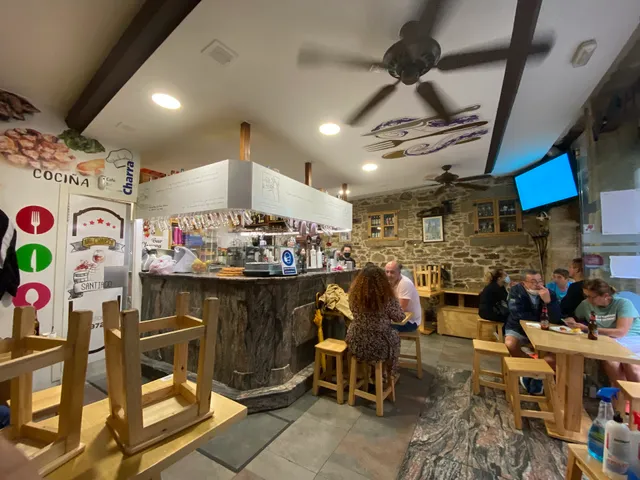
Bar Charra
Rúa da Raíña, 5, 15702 Santiago de Compostela, A Coruña, Spain
Restaurante Botafumeiro
Rúa da Acibechería, 16, 15704 Santiago de Compostela, A Coruña, Spain
Los Caracoles Restaurante
Rúa da Raíña, 14, 15705 Santiago de Compostela, A Coruña, Spain
Casa Manolo
Plaza de Cervantes, 15704 Santiago de Compostela, A Coruña, Spain
Restaurante La Piccola Italia scq Pizzeria
Praza de Fonseca, 1, 15706 Santiago de Compostela, A Coruña, Spain
A Curtidoría
Rúa da Conga, 2, 15704 Santiago de Compostela, A Coruña, Spain
Casa Marcelo
Rúa das Hortas, 1, 15705 Santiago de Compostela, A Coruña, Spain
Pedra. Restaurante en Santiago de Compostela
Rúa da Raíña, 7, 15702 Santiago de Compostela, A Coruña, Spain
Nearby hotels
Hospedaría San Martiño Pinario
Praza da Inmaculada, 3, 15704 Santiago de Compostela, A Coruña, Spain
Hotel Praza Quintana
Rúa da Conga, 9, 15704 Santiago de Compostela, A Coruña, Spain
Hotel Carris Casa De La Troya
Rúa da Acibechería, 14, 15704 Santiago de Compostela, A Coruña, Spain
Albergue Azabache
Rúa da Acibechería, 15, 15704 Santiago de Compostela, A Coruña, Spain
Hotel Rua Villar
Rúa do Vilar, 8, 10, 15705 Santiago de Compostela, A Coruña, Spain
Apartamentos Atia Catedral
Rúa da Raíña, 9, 15704 Santiago de Compostela, A Coruña, Spain
Hotel Campanas de San Juan
Calle Campanas de San Juan, 6, 15704 Santiago de Compostela, A Coruña, Spain
Hotel Montes
Rúa da Raíña, 11, 15704 Santiago de Compostela, A Coruña, Spain
Casa da Balconada
Rúa de Xelmírez, 9, 15704 Santiago de Compostela, A Coruña, Spain
Hotel Costa Vella
Rúa da Porta da Pena, 17, 15704 Santiago de Compostela, A Coruña, Spain
Related posts
Keywords
Cathedral of Santiago de Compostela tourism.Cathedral of Santiago de Compostela hotels.Cathedral of Santiago de Compostela bed and breakfast. flights to Cathedral of Santiago de Compostela.Cathedral of Santiago de Compostela attractions.Cathedral of Santiago de Compostela restaurants.Cathedral of Santiago de Compostela travel.Cathedral of Santiago de Compostela travel guide.Cathedral of Santiago de Compostela travel blog.Cathedral of Santiago de Compostela pictures.Cathedral of Santiago de Compostela photos.Cathedral of Santiago de Compostela travel tips.Cathedral of Santiago de Compostela maps.Cathedral of Santiago de Compostela things to do.
Cathedral of Santiago de Compostela things to do, attractions, restaurants, events info and trip planning
Cathedral of Santiago de Compostela
SpainGaliciaSantiago de CompostelaCathedral of Santiago de Compostela

Basic Info

Cathedral of Santiago de Compostela

Praza do Obradoiro, s/n, 15704 Santiago de Compostela, A Coruña, Spain
4.7(29.1K)
Open 24 hours
Save
spot

Ratings & Description

Info

The Santiago de Compostela Archcathedral Basilica is part of the Metropolitan Archdiocese of Santiago de Compostela and is an integral component of the Santiago de Compostela World Heritage Site in Galicia, Spain. The cathedral is the reputed burial place of Saint James the Great, one of the apostles of Jesus Christ.

Cultural
Accessibility
attractions: Porch of the Glory, Cathedral Museum, Obradoiro Square, Praza de Cervantes, Museum of Pilgrimage, Museo da Maxia de Galicia, Palace of Fonseca, Fountain of Horses, O Peregrino Escondido, Mosteiro de San Martiño Pinario, restaurants: Restaurante San Jaime, Cre·Cotte, Bar Charra, Restaurante Botafumeiro, Los Caracoles Restaurante, Casa Manolo, Restaurante La Piccola Italia scq Pizzeria, A Curtidoría, Casa Marcelo, Pedra. Restaurante en Santiago de Compostela
logoLearn more insights from Wanderboat AI.
Website
catedraldesantiago.es

Plan your stay

hotel
Pet-friendly Hotels in Santiago de Compostela
Find a cozy hotel nearby and make it a full experience.

hotel
Affordable Hotels in Santiago de Compostela
Find a cozy hotel nearby and make it a full experience.

hotel
The Coolest Hotels You Haven't Heard Of (Yet)
Find a cozy hotel nearby and make it a full experience.

hotel
Trending Stays Worth the Hype in Santiago de Compostela
Find a cozy hotel nearby and make it a full experience.

Reviews

Nearby attractions of Cathedral of Santiago de Compostela

Porch of the Glory

Cathedral Museum

Obradoiro Square

Praza de Cervantes

Museum of Pilgrimage

Museo da Maxia de Galicia

Palace of Fonseca

Fountain of Horses

O Peregrino Escondido

Mosteiro de San Martiño Pinario

Porch of the Glory

Porch of the Glory

4.6

(525)

Open 24 hours
Click for details
Cathedral Museum

Cathedral Museum

4.3

(316)

Open 24 hours
Click for details
Obradoiro Square

Obradoiro Square

4.9

(303)

Open until 12:00 AM
Click for details
Praza de Cervantes

Praza de Cervantes

4.6

(650)

Open 24 hours
Click for details

Things to do nearby

Candlelight: Las Cuatro Estaciones de Vivaldi
Sun, Dec 14 • 7:00 PM
Rúa da Carballeira de San Lourenzo, s/n, Santiago de Compostela, 15705
View details
Secrets of Compostela Night Tour
Mon, Dec 8 • 8:00 PM
15704, Santiago de Compostela, ES, Spain
View details
Santiago Cathedral: History and Unique Secrets
Tue, Dec 9 • 8:00 AM
15701, Santiago de Compostela, A Coruña, Spain
View details

Nearby restaurants of Cathedral of Santiago de Compostela

Restaurante San Jaime

Cre·Cotte

Bar Charra

Restaurante Botafumeiro

Los Caracoles Restaurante

Casa Manolo

Restaurante La Piccola Italia scq Pizzeria

A Curtidoría

Casa Marcelo

Pedra. Restaurante en Santiago de Compostela
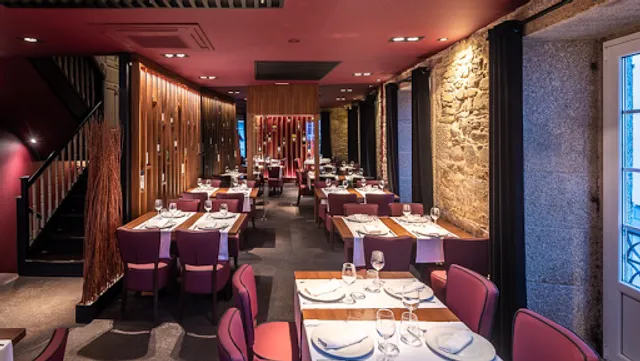
Restaurante San Jaime

Restaurante San Jaime

4.4

(1.1K)

$$

Click for details
Cre·Cotte

Cre·Cotte

4.4

(504)

$$

Click for details
Bar Charra

Bar Charra

3.6

(824)

Click for details
Restaurante Botafumeiro

Restaurante Botafumeiro

4.0

(381)

Click for details
Get the Appoverlay
Get the AppOne tap to find yournext favorite spots!
Wanderboat LogoWanderboat

Your everyday Al companion for getaway ideas

CompanyAbout Us
InformationAI Trip PlannerSitemap
SocialXInstagramTiktokLinkedin
LegalTerms of ServicePrivacy Policy

Get the app

© 2025 Wanderboat. All rights reserved.
logo

Reviews of Cathedral of Santiago de Compostela

4.7
(29,053)
avatar
5.0
1y

The Santiago de Compostela Cathedral, located in Galicia, is one of the most important pilgrimage destinations in the Christian world. It marks the traditional end of the Camino de Santiago (Way of St. James) pilgrimage route and is believed to house the relics of Saint James the Great, one of Jesus Christ's apostles.

The Santiago de Compostela Cathedral has been a major pilgrimage site for centuries, drawing millions of pilgrims from around the world. It is also a UNESCO World Heritage Site, recognized for its historical and architectural significance.

The initial church on the site was built in the 9th century, following the discovery of what were believed to be the remains of Saint James in the early 800s. King Alfonso II of Asturias commissioned the first church.

The current Romanesque cathedral was constructed starting in 1075 under the reign of Alfonso VI of León and Castile, with the main structure completed by 1211. It was consecrated in that year by King Alfonso IX of León.

Over the centuries, the cathedral underwent numerous additions and modifications, incorporating Gothic, Renaissance, Baroque, and Neoclassical elements.

The original design of the cathedral is predominantly Romanesque, characterized by its robust, heavy structure, rounded arches, and thick walls.

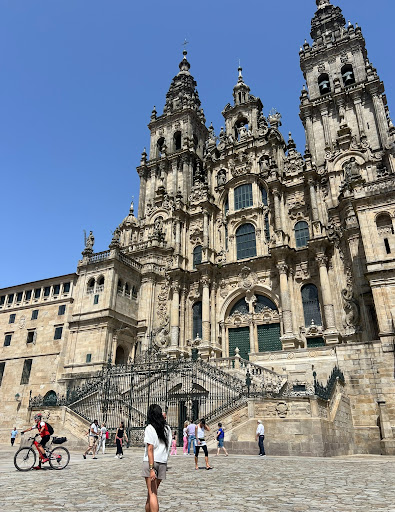
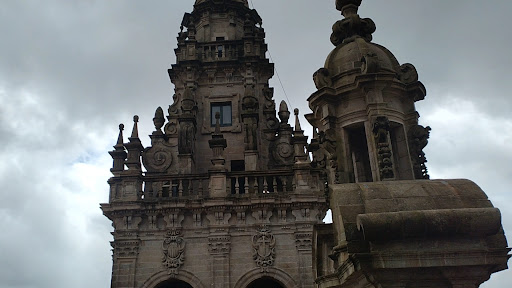
The Obradoiro façade, completed in the 18th century, is a masterpiece of Spanish Baroque architecture. Designed by Fernando de Casas Novoa, it features intricate stonework and dramatic ornamental elements.

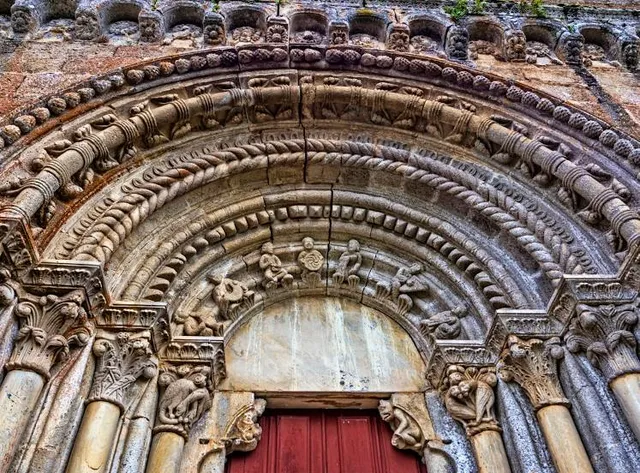
One of the cathedral's most celebrated features is the Portico of Glory (Pórtico de la Gloria), a Romanesque portico completed in 1188 by Master Mateo. It is renowned for its detailed and expressive sculptures, depicting Biblical scenes and figures, including a statue of Saint James.

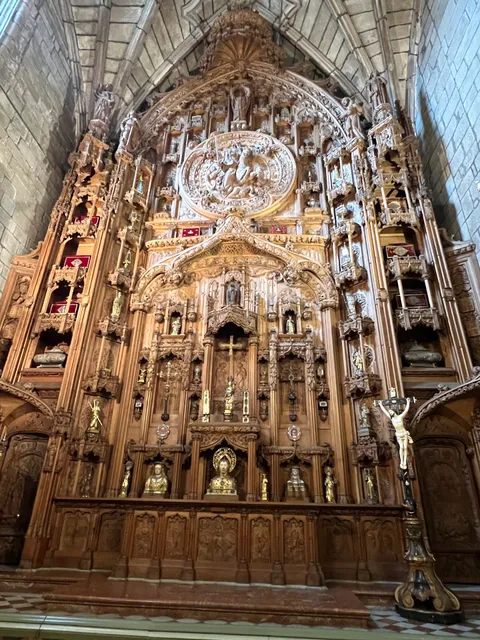
The interior of the cathedral is vast and awe-inspiring, with a high nave, impressive vaults, and richly decorated chapels. The high altar is particularly notable, featuring a Baroque baldachin and an elaborate statue of Saint James.

One of the cathedral's unique elements is the Botafumeiro, a giant thurible (incense burner) used during certain liturgical ceremonies. Suspended from the ceiling, it swings dramatically across the transept, filling the cathedral with incense.

The cathedral's crypt houses the silver reliquary allegedly containing the remains of Saint James. Pilgrims traditionally visit the crypt to pay their respects.

The cathedral complex includes beautiful cloisters and a museum that exhibits religious artifacts, artworks, and historical objects related to the pilgrimage and the...

   Read more
avatar
1.0
43w

Dream of a lifetime destroyed. I was enjoying the special pilgrim mass after completing the 100km camino, with blisters on my feet and my body aching, but my mind renewed. This enjoyment was torpedoed during the eucharist as the security officer suddenly reprimanded my partner who had just received the bread, then the PRIEST himself took it away from him, causing visible humiliation and distress, particularly as he did not speak Spanish. Out of respect, I approached the security woman after mass and asked why she and the priest had done this. She told me that he was supposed to eat it there and then, not take it to his seat. When I explained that he was autistic and very nervous to be among so many people, and was probably just a bit overwhelmed by the social situation, she smirked and said "A true Catholic would have behaved better". I told her none of what transpired was very Catholic, which elicited a rather lively reaction from a supposed Christian, then left before I said anything else. I immediately explained the situation to the staff at the pilgrim office round the corner, only to be informed by the staff there that she had already radioed them to alert them to the situation, and to bar us entry to further tourist points, as we were troublemakers (insane behaviour - truly nothing short of chilling...) The staff there listened to my explanation, then commented to each other in Gallego (thinking I could not understand their language) that I was "incapable of understanding". They became mildly sympathetic when I burst into tears at the whole hideous situation which was compounded by a complete absence of compassion, but told me in no uncertain terms that he should have simply hurried up and eaten the bread at the altar.

Let it be known - this pilgrimage for me was an homage to my Catholic faith which will now likely never recover. Shame on that priest who preaches love but practises hate. Shame on that security officer who bows before the altar but sneers at fellow Christians. Shame on the Catholic Church who empowers evil like them. Shame on the people who watched but said nothing. Shame on me for taking him to what was not a safe space. Shame on the Cathedral of Santiago.

Avoid this unholy place, and beware always of wolves in...

   Read more
avatar
2.0
1y

The cathedral is very beautiful. But what spoiled my impression was a security guy who was extremely rude. Together with the rest of the pilgrims I finished the Camino de Santiago and wanted to attend the mass. After 2 weeks of walking under a heavy train and later burning sun, that was supposed to be a highlight. There was a mass dedicated specifically to pilgrims. Though around 20% of people in the queue were locals, clearly not pilgrims. When we reached the door, the security guy closed it with around 30 pilgrims left outside and said that he would not let us in. People started complaining that the mass was for pilgrims and we didn't get a chance to get inside, while local people who can attend any mass on any day were let through. That security guy started very aggressively telling me that sports outfit doesn't mean that I'm a pilgrim, as well as my pilgrim passport. He was almost shouting at me that I'm not a real pilgrim. It was so aggressively and abusive that I spent a long time crying on the stairs. I could not believe that someone could tell that to me. This long and spiritual path ended with an employee of the cathedral demolishing that experience. And what is more important, the cathedral was not full. Not at all. My friend who got inside was messaging me that there is plenty of space and it could fit in many more dozens of people. Later on I attended another mass. And the same guy was acting very similar. He would come to a microphone saying, that now only Catholics are allowed to get the communion. If you're not Catholic, do not participate. He repeated it very aggressively that made me and other people not welcomed there. I never thought that a cathedral can be so unwelcoming. Other churches welcome other christians who are not Catholic, as well as people from other religions. Here it was a clear...

   Read more
Page 1 of 7
Previous
Next

Posts

BEATRIZ ZENOBEATRIZ ZENO
The Santiago de Compostela Cathedral, located in Galicia, is one of the most important pilgrimage destinations in the Christian world. It marks the traditional end of the Camino de Santiago (Way of St. James) pilgrimage route and is believed to house the relics of Saint James the Great, one of Jesus Christ's apostles. The Santiago de Compostela Cathedral has been a major pilgrimage site for centuries, drawing millions of pilgrims from around the world. It is also a UNESCO World Heritage Site, recognized for its historical and architectural significance. The initial church on the site was built in the 9th century, following the discovery of what were believed to be the remains of Saint James in the early 800s. King Alfonso II of Asturias commissioned the first church. The current Romanesque cathedral was constructed starting in 1075 under the reign of Alfonso VI of León and Castile, with the main structure completed by 1211. It was consecrated in that year by King Alfonso IX of León. Over the centuries, the cathedral underwent numerous additions and modifications, incorporating Gothic, Renaissance, Baroque, and Neoclassical elements. - The original design of the cathedral is predominantly Romanesque, characterized by its robust, heavy structure, rounded arches, and thick walls. - The Obradoiro façade, completed in the 18th century, is a masterpiece of Spanish Baroque architecture. Designed by Fernando de Casas Novoa, it features intricate stonework and dramatic ornamental elements. - One of the cathedral's most celebrated features is the Portico of Glory (Pórtico de la Gloria), a Romanesque portico completed in 1188 by Master Mateo. It is renowned for its detailed and expressive sculptures, depicting Biblical scenes and figures, including a statue of Saint James. - The interior of the cathedral is vast and awe-inspiring, with a high nave, impressive vaults, and richly decorated chapels. The high altar is particularly notable, featuring a Baroque baldachin and an elaborate statue of Saint James. - One of the cathedral's unique elements is the Botafumeiro, a giant thurible (incense burner) used during certain liturgical ceremonies. Suspended from the ceiling, it swings dramatically across the transept, filling the cathedral with incense. - The cathedral's crypt houses the silver reliquary allegedly containing the remains of Saint James. Pilgrims traditionally visit the crypt to pay their respects. - The cathedral complex includes beautiful cloisters and a museum that exhibits religious artifacts, artworks, and historical objects related to the pilgrimage and the cathedral itself.
Rhicke JenningsRhicke Jennings
It has taken me awhile to express my feelings for the Cathedral Santiago de Compostela as it was the end of my Caminho Português Costal Way and my spiritual journey. The Cathedral is an amazing work of art. It is stunning. I spent several days in Santiago and much of that time was exploring the cathedral from the remains of Saint James to the many chapels and the various stations, each and every one a work of art. Note large backpacks are not allowed inside. The cathedral has an amazing four story museum that easily takes a couple of hours if you want to read about some of the incredible history of the pieces. I recommend adding the roof tour, which is about a 45 minutes tour of the upper levels of the church and the roof itself. Also one of the bell towers so the views are incredible. Finally the tour of the portico, the main entrance to the cathedral which is only open the the public certain years. No photography is allowed in the portico because of the sensitivity of the sculptures to flash. The pilgrims masses are at 7, 9:30, noon and 19h30. They are in Spanish with a few words and blessings in English. There are confessions in Spanish and also at select times in English. There are English language masses in the Pilgrims office down the street as well as English language workshops to interpret your pilgrimage experience. I heard from a Dutch friend there are also Dutch language workshops. I was very inspired by my time in the cathedral and I loved the energy and my time there. I want to return soon.
Wilder FoersterWilder Foerster
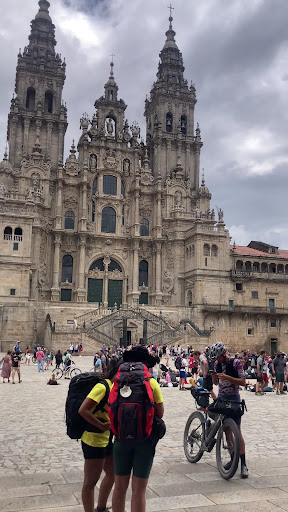
The Cathedral of Santiago de Compostela is one of the most iconic religious sites in Europe and the final destination of the Camino de Santiago. Its imposing Baroque façade, crowned by twin towers, dominates the city’s main square and creates a powerful first impression. Once inside, the cathedral reveals a rich blend of Romanesque roots, Gothic details, and Baroque grandeur, reflecting centuries of architectural evolution. At the heart of the cathedral lies the silver-plated main altar, an elaborate masterpiece that draws the eye upward with its golden angels and gleaming surfaces. Beneath it, pilgrims can visit the crypt of Saint James, the cathedral’s spiritual center. Another memorable tradition is the hug of the Apostle’s statue behind the altar—a moving moment for many after completing the Camino. The Pórtico de la Gloria, recently restored, is a Romanesque treasure, filled with expressive figures and intricate symbolism. The Botafumeiro, the massive incense thurible, is another highlight—when in use, it swings dramatically through the transept, filling the space with movement and scent. The adjacent museum offers insight into the cathedral’s history, with art, relics, and archaeological remains. More than a monument, this cathedral is a deeply spiritual and cultural landmark, alive with history and meaning.
See more posts
See more posts
hotel
Find your stay

Pet-friendly Hotels in Santiago de Compostela

Find a cozy hotel nearby and make it a full experience.

The Santiago de Compostela Cathedral, located in Galicia, is one of the most important pilgrimage destinations in the Christian world. It marks the traditional end of the Camino de Santiago (Way of St. James) pilgrimage route and is believed to house the relics of Saint James the Great, one of Jesus Christ's apostles. The Santiago de Compostela Cathedral has been a major pilgrimage site for centuries, drawing millions of pilgrims from around the world. It is also a UNESCO World Heritage Site, recognized for its historical and architectural significance. The initial church on the site was built in the 9th century, following the discovery of what were believed to be the remains of Saint James in the early 800s. King Alfonso II of Asturias commissioned the first church. The current Romanesque cathedral was constructed starting in 1075 under the reign of Alfonso VI of León and Castile, with the main structure completed by 1211. It was consecrated in that year by King Alfonso IX of León. Over the centuries, the cathedral underwent numerous additions and modifications, incorporating Gothic, Renaissance, Baroque, and Neoclassical elements. - The original design of the cathedral is predominantly Romanesque, characterized by its robust, heavy structure, rounded arches, and thick walls. - The Obradoiro façade, completed in the 18th century, is a masterpiece of Spanish Baroque architecture. Designed by Fernando de Casas Novoa, it features intricate stonework and dramatic ornamental elements. - One of the cathedral's most celebrated features is the Portico of Glory (Pórtico de la Gloria), a Romanesque portico completed in 1188 by Master Mateo. It is renowned for its detailed and expressive sculptures, depicting Biblical scenes and figures, including a statue of Saint James. - The interior of the cathedral is vast and awe-inspiring, with a high nave, impressive vaults, and richly decorated chapels. The high altar is particularly notable, featuring a Baroque baldachin and an elaborate statue of Saint James. - One of the cathedral's unique elements is the Botafumeiro, a giant thurible (incense burner) used during certain liturgical ceremonies. Suspended from the ceiling, it swings dramatically across the transept, filling the cathedral with incense. - The cathedral's crypt houses the silver reliquary allegedly containing the remains of Saint James. Pilgrims traditionally visit the crypt to pay their respects. - The cathedral complex includes beautiful cloisters and a museum that exhibits religious artifacts, artworks, and historical objects related to the pilgrimage and the cathedral itself.
BEATRIZ ZENO

BEATRIZ ZENO

hotel
Find your stay

Affordable Hotels in Santiago de Compostela

Find a cozy hotel nearby and make it a full experience.

Get the Appoverlay
Get the AppOne tap to find yournext favorite spots!
It has taken me awhile to express my feelings for the Cathedral Santiago de Compostela as it was the end of my Caminho Português Costal Way and my spiritual journey. The Cathedral is an amazing work of art. It is stunning. I spent several days in Santiago and much of that time was exploring the cathedral from the remains of Saint James to the many chapels and the various stations, each and every one a work of art. Note large backpacks are not allowed inside. The cathedral has an amazing four story museum that easily takes a couple of hours if you want to read about some of the incredible history of the pieces. I recommend adding the roof tour, which is about a 45 minutes tour of the upper levels of the church and the roof itself. Also one of the bell towers so the views are incredible. Finally the tour of the portico, the main entrance to the cathedral which is only open the the public certain years. No photography is allowed in the portico because of the sensitivity of the sculptures to flash. The pilgrims masses are at 7, 9:30, noon and 19h30. They are in Spanish with a few words and blessings in English. There are confessions in Spanish and also at select times in English. There are English language masses in the Pilgrims office down the street as well as English language workshops to interpret your pilgrimage experience. I heard from a Dutch friend there are also Dutch language workshops. I was very inspired by my time in the cathedral and I loved the energy and my time there. I want to return soon.
Rhicke Jennings

Rhicke Jennings

hotel
Find your stay

The Coolest Hotels You Haven't Heard Of (Yet)

Find a cozy hotel nearby and make it a full experience.

hotel
Find your stay

Trending Stays Worth the Hype in Santiago de Compostela

Find a cozy hotel nearby and make it a full experience.

The Cathedral of Santiago de Compostela is one of the most iconic religious sites in Europe and the final destination of the Camino de Santiago. Its imposing Baroque façade, crowned by twin towers, dominates the city’s main square and creates a powerful first impression. Once inside, the cathedral reveals a rich blend of Romanesque roots, Gothic details, and Baroque grandeur, reflecting centuries of architectural evolution. At the heart of the cathedral lies the silver-plated main altar, an elaborate masterpiece that draws the eye upward with its golden angels and gleaming surfaces. Beneath it, pilgrims can visit the crypt of Saint James, the cathedral’s spiritual center. Another memorable tradition is the hug of the Apostle’s statue behind the altar—a moving moment for many after completing the Camino. The Pórtico de la Gloria, recently restored, is a Romanesque treasure, filled with expressive figures and intricate symbolism. The Botafumeiro, the massive incense thurible, is another highlight—when in use, it swings dramatically through the transept, filling the space with movement and scent. The adjacent museum offers insight into the cathedral’s history, with art, relics, and archaeological remains. More than a monument, this cathedral is a deeply spiritual and cultural landmark, alive with history and meaning.
Wilder Foerster

Wilder Foerster

See more posts
See more posts