As the holiest month in the Islamic calendar Ramazan draws to an end next week, Kumudini Hettiarachchi visits Colombo’s 200-year-old Dewatagaha shrine
View(s):
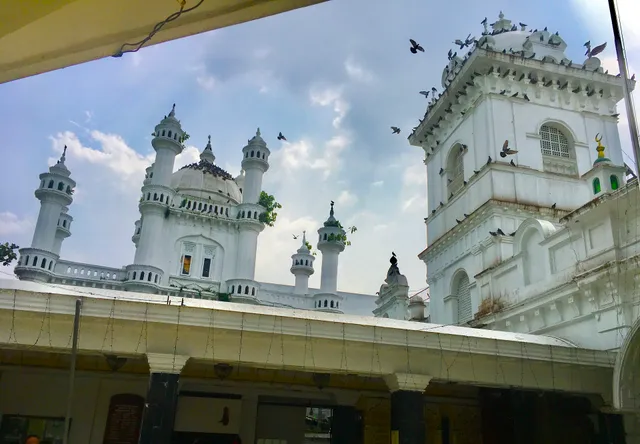
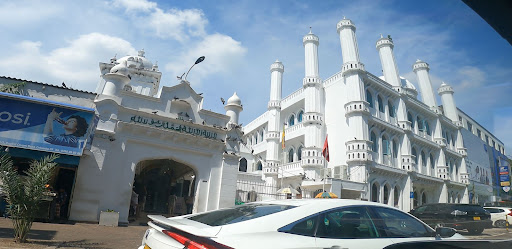
 The ancient Dewatagaha shrine mosque set in the heart of Cinnamon Gardens and below, a man in earnest supplication. Pix by M.A. Pushpa Kumara
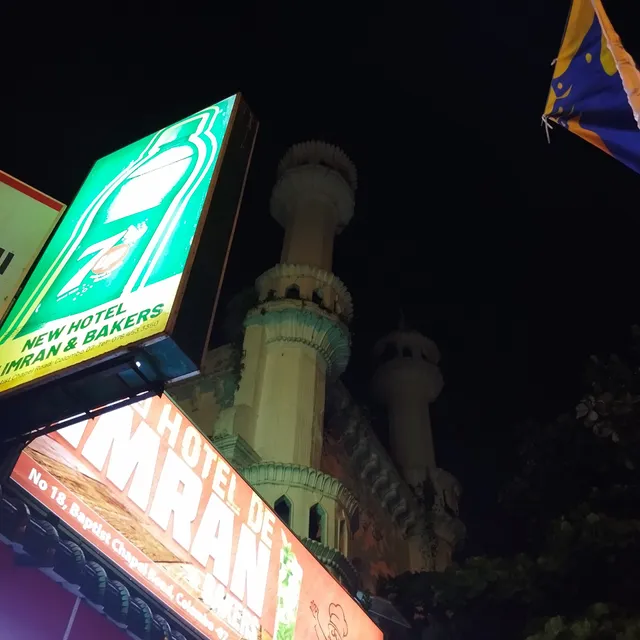
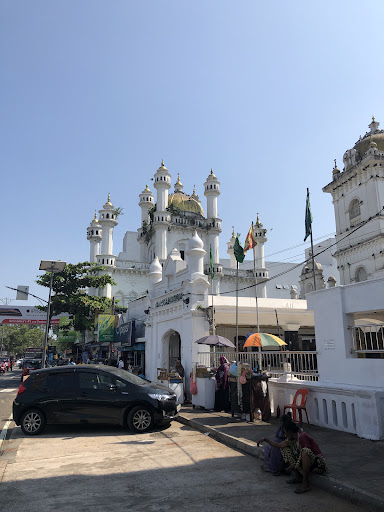
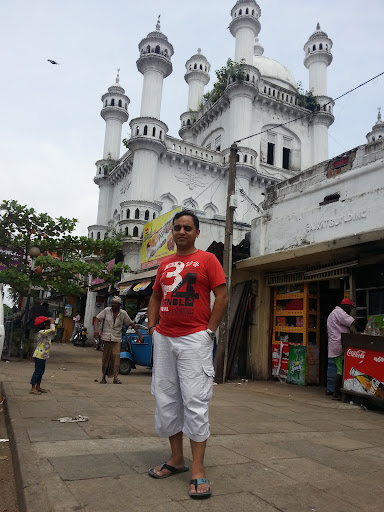
Standing tall amidst the hustle and bustle of Lipton’s Circus in the very heart of Cinnamon Gardens, the beautiful white and gold minarets of the Dewatagaha shrine and mosque gently rise towards the sky.
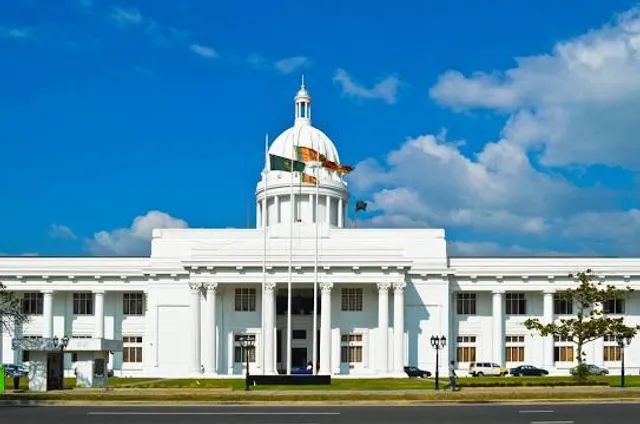
Blending in well with its neighbour, the majestic Town Hall, the muezzin’s call to prayer reverberates five times a day. There is speculation that the British may have built the Town Hall to reflect the dome of this Islamic place of worship said to be one of the oldest in the country. However, it is not only Muslims who are drawn to the Dewatagaha shrine and mosque believed to be more than 200 years old but also those of all faiths from across the country, for many will vouch about the miracles that occur at the shrine of the saint, Ash Sheik Usman Waliullah. It is on Tuesday in the Islamic holy month of Ramazan during which Muslims engage in fasting and prayer that the Sunday Times visits the Dewatagaha shrine and mosque. Ramazan concludes with Eid-ul-Fitr, on the sighting of the moon predicted for Saturday, June 16. While several men with and without their short, rounded skullcaps hold up their hands in supplication, in walk three women. Three sisters from Dehiwela, they are Sinhalese, and have come to call on the saint to deliver them and their children from the evil utterings of those who wish misfortune and doom on them. In their hands they carry padlocks with keys. They go to a moulana (priest) seated behind a curtain in the women’s section, adjacent to the shrine who listens to them intently and murmurs prayers after which the three sisters walk up to a railing close to a huge lamp which faces the shrine and lock their padlocks to big bundles already there. Above the padlocks are strips of green ribbons also tied to indicate favours asked through vows made at the shrine, green being the colour used by Prophet Muhammad, the Founder of Islam. “Ape pavul hathurangen pravesham karanna kiyala thama illanne,” says one sister, close to tears, explaining that they are seeking protection for their families from their enemies, as another explains that their children cannot hold down jobs and there is constant bickering and quarrelling among them. The third with a sweet-smelling bottle of oil in hand adds that evil is being cast on them by some of their own relatives, as another woman with head covered walks into the women’s section carrying joss-sticks and in a room demarcated by a tinted glass through which the shrine is visible, there is a woman in deep prayer. Another woman with a pottu stands before the shrine in fervour. Before the history of this place of worship flows forth from Religious Coordinator Mohamed Buhary Mohamed Farook — now 87, who has served here since the early 1980s and seen the solitary tall date-palm tree which is now no more like the Dewata-gaha which had been here earlier — we are shown offerings of gold and silver from those who have sought and been granted favours.
 M.B. M. Farook
A Sinhala soldier who had suffered severe gunshot wounds on his arm during the war and had been told that there was nothing except amputation, had walked in and placed a vow, relates Mr. Farook. There was no amputation and the arm healed and the ecstatic soldier donated a miniature arm made of gold, which is in a cushioned jewellery box alongside another arm of silver. Other gold miniatures include a Koran. But this is not all, says Mr. Farook walking us out of the office and onto the pavement very close to the busy Hospital Square including the National Hospital and the Eye Hospital, to point up towards some minarets, the symbol of spiritual illumination, glistening gold and white after a mild but sudden shower of rain. These had been built in thanksgiving by a Tamil who had lost a gem and having...
Read moreI recently had the pleasure of visiting the Dewatagaha Jumma Masjid in Colombo, Sri Lanka, and I must say that it exceeded all my expectations. This mosque truly deserves a 5-star rating for its historical significance, architectural beauty, and cultural importance.
Firstly, the Dewatagaha Jumma Masjid stands as a testament to the rich history of Islam in Sri Lanka. Built in the early 19th century, it holds a special place as one of the oldest and most important mosques in the country. Its founding by the esteemed Muslim saint, Usman Siddique, adds a sense of spirituality and reverence to the site.
The mosque's architecture is simply awe-inspiring. Its gleaming white exterior walls and twin minarets create a striking image against the skyline of Colombo. As I stepped inside, I was greeted by the intricate calligraphy adorning the walls and ceilings, showcasing the meticulous craftsmanship of the artisans who created this masterpiece.
One of the most fascinating aspects of the Dewatagaha Jumma Masjid is its connection to legends and miracles. It is believed to have been constructed on the site where a miracle occurred. The story of a woman in need, whose broken oil pot was miraculously refilled by a saint, serves as a source of inspiration and adds a touch of enchantment to the mosque's history.
The mosque also houses a remarkable collection of Islamic artifacts, including a copy of the Quran that is said to be over 500 years old. These treasures provide an invaluable glimpse into the rich heritage of Islam in Sri Lanka and are a testament to the mosque's cultural significance.
As a place of worship, the Dewatagaha Jumma Masjid holds great spiritual significance for the Muslim community in Colombo. Yet, it is also a welcoming space for visitors from all backgrounds. The mosque is open to tourists who wish to learn about the history and culture of Islam in Sri Lanka. The friendly staff and informative displays make it an educational and enriching experience for everyone.
In conclusion, the Dewatagaha Jumma Masjid is a true gem of Colombo. Its historical importance, architectural splendor, and cultural significance make it a must-visit destination for anyone interested in exploring the vibrant tapestry of Sri Lanka's Islamic heritage. I highly recommend a visit to this beautiful and historic mosque, and I guarantee that it will leave you with a profound appreciation for the beauty and diversity...
Read more“SHAIKH USMAN WALIYULLAH SHRINE” The Dewatagaha mosque is one of the more prominent mosques in Colombo – its lovely exterior is almost an iconic part of the architecture near Town Hall. It is also partly a shrine to a Saint from the 19th century – Shaikh Usman Waliyullah – and Muslims and non-Muslims alike visit to pay their respects. It’s beautiful to look at – huge and white, much like the ones in Galle and Beruwela which were set up around the same era. Green creepers have begun to grow around parts of the minarets (mosque towers) adding to the aesthetics. The premises don’t seem that large on entering it but from outside it spans quite the distance, and the Town Hall dome some distance behind looks like it’s part of the white structure. At the center are pigeons – loads of pigeons! They’re always there and visitors make a habit of feeding them; a friend of mine remembers visiting the mosque with her mother, paying respect to the shrine and feeding the pigeons as part of a regular ritual.
The backstory- The mosque is said to be about 200 years old. The devotees believe the Saint whose shrine this is was sent to Sri Lanka by the Prophet Muhamad from Arafat, Arabia. The legend behind the making of the mosque is one that pervades folklore – a Tamil woman or a Sinhala woman (different versions of the story) was apparently walking through the cinnamon jungle of Colombo in 1802, carrying coconut oil to her clients in Maradana. But she tripped on a cadju root and her oil pot was shattered. Sunken into despair because she was the sole wage earner of her family, she wept, but then she saw this old man in green garb with a long grey bear standing near the Dewata tree. He asked her not to cry, and asked her to bring a new pot and place it near – he pressed the ground there with his foot and oil sprang out. He asked her to tell all her Muslim customers about this magical incident and apparently she did and they arrived soon and were impressed, and a devotion to the Saint and his teachings soon began – resulting in the eventual building of his shrine...
Read more