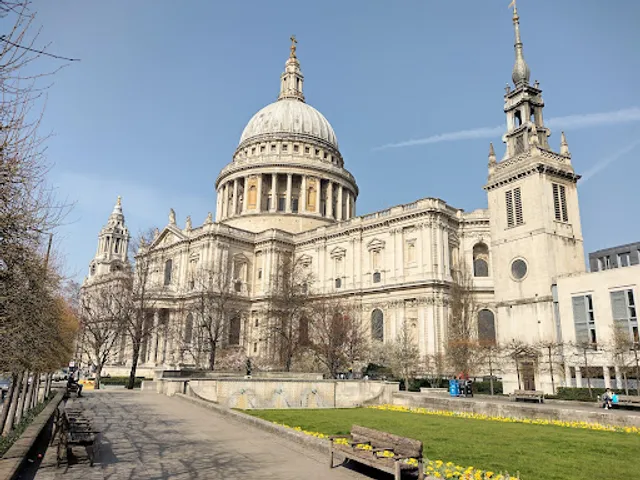
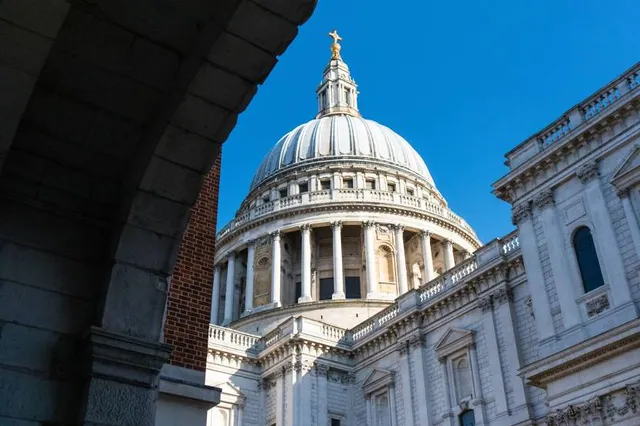
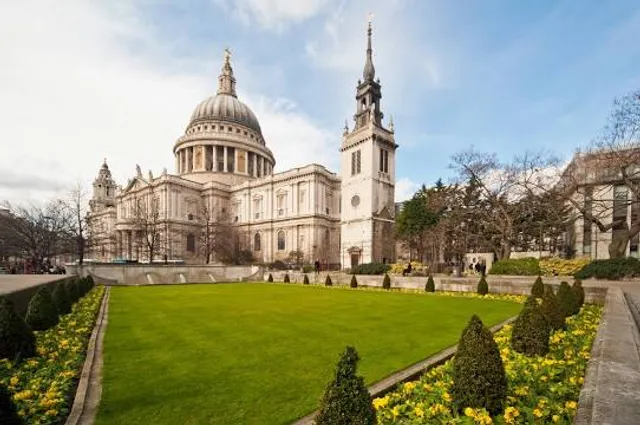
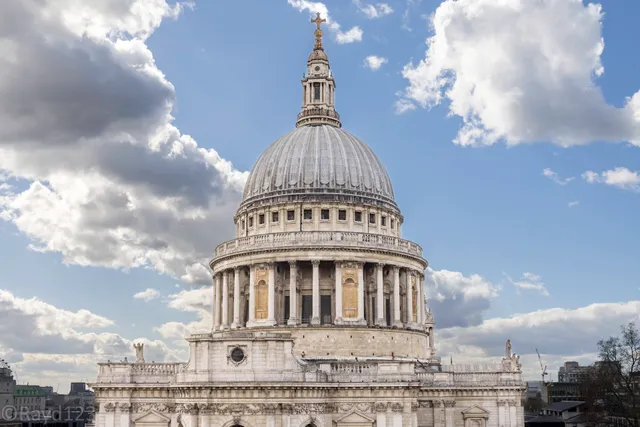
The place is, of course, absolutely stunning and as impressive as the Pyramids or Colosseum. I'm lucky in that I can see the dome from where I live (though the increasing height of and increasingly abhorrent London skyline has taken the tallest building for hundreds of years and made it almost invisible). I get to travel past it quite regularly and it's always the highlight of my journey.
But I rarely go in, and to not be able to go into the House of God when one wants - and it's open - is a sacrilege in my view.
A £25 entrance fee for an adult, especially for locals, is ridiculous. But when one multiplies that for a family, or for someone who wishes to visit regularly, it's simply OBSCENE. I fully appreciate the need to ask for money in order to support the upkeep of this magnificent building but it should be a minimal charge or better yet, donations, as every other small church, parish church, dinky chapel across the country asks for and survives on. Other great cathedrals survive without charging entrance fees (Southwark, just across the river, being a prime example).
And then there are the staff. Oi vey! Again, I understand tourists can sometimes be a handful but it's simply not Christian the way some of the church officials (not even the volunteers) speak to visitors. We were there for a service and one man was particularly rude with how he was talking to a woman. This is unacceptable. I know he's only human but manners and friendliness cost nothing and should be the bare minimum required from anybody working in such an establishment. And I do absolutely believe it was in part due to sexism as I definitely thought he wouldn't have spoken to a tall man the way he was speaking to this petite older female. But then there was an usher - a delightful female who was trying to answer questions even as they were trying to hurry everyone out of the building so it could be closed for the evening. She was friendly and with a wealth of information and I think it's a shame I didn't get to speak to her earlier in the day as I would have left with a much deeper appreciation for the building and it's historical objects, I'm sure.
We were not treated to music from the main organs, but from a smaller console that would still drown out stampeding elephants, and a choir was present which was also pleasant to hear - but yet again, a downside: that being the sexism of an all-boys choir (as a female chorister, I'm always deeply offended at this nonsensical notion that girls aren't good enough). The unfortunate acoustics of the cathedral mean that they are in many respects essential during any sung service as the repeated echoes (I think every sound echoes for about 7 seconds) would make it impossible for untrained singers to be able to sing with any confidence. The echo is also very evident during all spoken sections of a service so that should be kept in mind if planning on attending any smaller/less popular events if one has hearing issues. The echo is far less pronounced when the cathedral is packed with bodies to absorb the sound!
There are a great many historical items, with access to the crypt. I am unaware if there is still access to the roof - but in my youth I used to love climbing right to the top and seeing the view from atop the dome. I know the whispering gallery was closed for a while and assume this is still the case. Just another reason why the entrance fee is excessive.
Would I recommend it? Yes, just as I would recommend visiting any outstanding historical building. But I would suggest if one cannot afford the fee then the only option is to attend a service - get there an hour or so early to allow some time to explore beforehand. It won't be the best way to experience it, you won't have access to guides or audio guides, but you will at least be able to see some of it for free, and then experience a church service (which, as with all Anglican churches, is open to ALL people of ALL faiths. Everybody is welcome to attend and learn how things are done!).
For the disabled, there are...
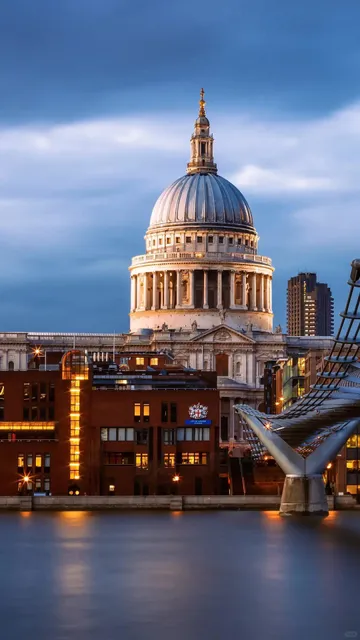
Read moreAs I approached St. Paul’s Cathedral for the first time, I was immediately struck by its majestic dome towering over the London skyline. The architecture is breathtaking, showcasing a stunning blend of Baroque and Gothic styles that reflects the vision of the legendary architect Sir Christopher Wren, who designed the cathedral after the Great Fire of London in 1666. Stepping closer, I could feel the weight of history enveloping me, a testament to the resilience and spirit of the city.
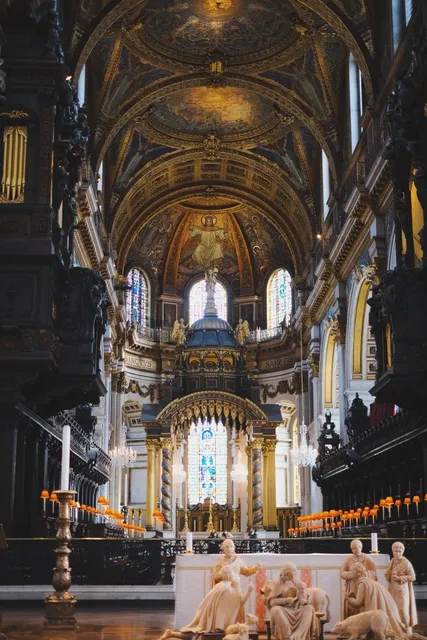
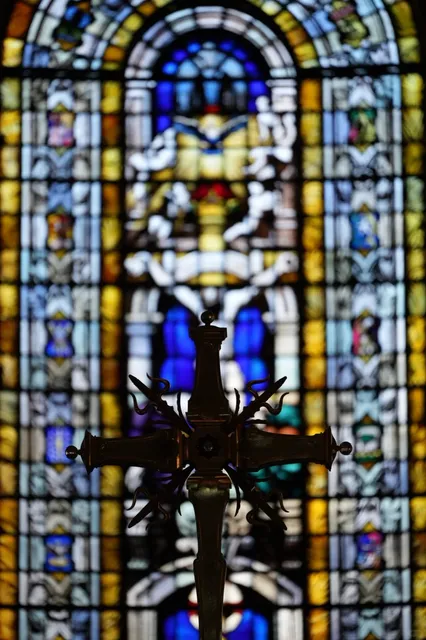
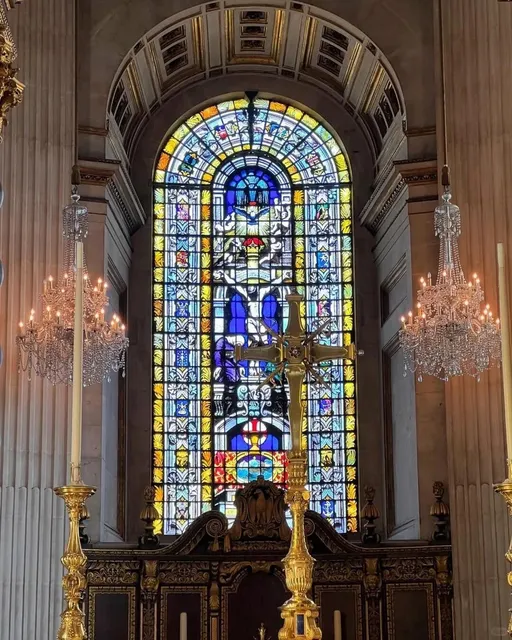
Entering St. Paul’s Cathedral was like stepping into another world. The high ceilings and intricate mosaics drew my gaze upward, and I was captivated by the sheer scale of the interior. The light streaming through the grand stained glass windows created a serene atmosphere that felt both sacred and welcoming. I marveled at the details of the architecture, from the beautifully carved stonework to the stunning altar, each element telling a story of faith, artistry, and endurance.
As I wandered through the nave, I couldn’t help but think of the countless significant events that have taken place within these walls. One moment that stood out vividly in my mind was the wedding of Diana, Princess of Wales, and Prince Charles in 1981. It was a momentous occasion not just for the couple but for the nation and the world. The grandeur of St. Paul’s served as the perfect backdrop for this royal wedding, watched by millions on television. I imagined the atmosphere that day—dresses, flowers, and the excitement that filled the cathedral as the world eagerly anticipated the union.
Diana’s wedding was marked by a sense of fairy-tale romance, and standing in the same space where she took her vows felt surreal. The grandeur of the cathedral added to the spectacle, with guests seated in the historic setting, and the iconic music echoing through the arches. It was a day that symbolized hope and new beginnings, despite the complexities that would later unfold in their lives.
Continuing my exploration, I decided to take on the challenge of climbing to the top of the dome. The ascent to the Whispering Gallery was an adventure in itself, with narrow staircases and winding paths that required a bit of stamina. The climb was quite strenuous but well worth the effort. Once I reached the Whispering Gallery, I was amazed by the acoustics; I could hear hushed conversations from across the gallery as if they were right beside me.
However, the real reward awaited me at the top. Climbing even higher to the Golden Gallery, I was treated to a breathtaking panoramic view of London. The city sprawled beneath me, a vibrant tapestry of history and modernity, with landmarks stretching as far as the eye could see. The feeling of standing atop such an iconic structure, looking out over the city that has witnessed centuries of history, was exhilarating.
As I descended back into the cathedral, I took a moment to reflect on its significance beyond royal weddings. St. Paul’s has played a pivotal role in British history, witnessing events such as the funerals of Lord Nelson and Sir Winston Churchill, and serving as a symbol of resilience during World War II. The image of the dome standing tall amidst the destruction of the Blitz became an enduring symbol of hope for Londoners.
In conclusion, my first visit to St. Paul’s Cathedral was a profound experience that intertwined beauty, history, and personal reflection. The stories embedded within its walls, including that of Diana’s wedding, enriched my appreciation for this iconic landmark. St. Paul’s is not just a place of worship; it is a monument to the enduring spirit of London and a witness to the moments that have shaped the nation. The climb to the top, although strenuous, provided a stunning perspective of the cityscape, making my visit even more memorable. Leaving the cathedral, I felt a deeper connection to the city and its history, eager to share the stories I had encountered within those...
Read more⭐️⭐️⭐️⭐️⭐️ 5/5
St. Paul’s Cathedral is an absolute masterpiece and a must-visit for anyone coming to London. This iconic landmark combines breathtaking architecture, rich history, and a sense of grandeur that leaves a lasting impression. From the exterior to the interior and the crypt below, every aspect of the cathedral is steeped in beauty and significance. The ease of ticketing and the helpful staff also make the experience seamless and enjoyable.
Exterior
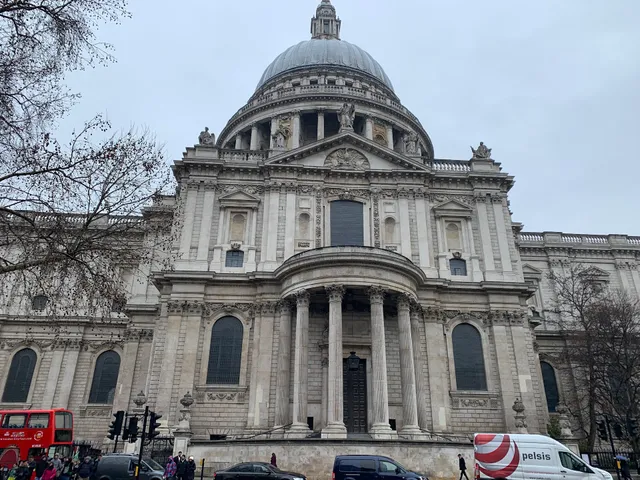
Approaching St. Paul’s Cathedral, you are immediately struck by its imposing presence and grandeur. Designed by Sir Christopher Wren and completed in 1710, the cathedral’s English Baroque style is both elegant and majestic. The massive dome, rising 365 feet, dominates the London skyline and is one of the most recognizable features of the city. The intricacy of the stonework, the columns, and the statues adorning the façade all demonstrate the extraordinary craftsmanship of the time.
The West Front, with its grand steps and stunning portico, is the perfect spot for photos. The twin bell towers add symmetry and grace to the structure, while the numerous carvings and statues invite you to pause and appreciate the details. Visiting during different times of day offers unique experiences — in the early morning light or illuminated at night, St. Paul’s is magnificent.
Interior
Once you step inside, the interior of St. Paul’s is nothing short of breathtaking. The soaring ceilings, intricate mosaics, and elaborate sculptures create a sense of awe. The sheer scale of the nave and the beauty of the high altar draw your eyes upward and make you appreciate the grandeur and precision of the design.
The Whispering Gallery is a highlight — a climb of 259 steps rewards you with incredible acoustics and a view of the inside of the dome. If you whisper along the walls, the sound travels clearly across the gallery. Climbing even higher to the Stone Gallery or the Golden Gallery offers stunning panoramic views of London, making the effort well worth it.
The Crypt
Beneath the cathedral lies the crypt, a fascinating part of the experience. It houses the final resting places of some of Britain’s greatest figures, including Sir Christopher Wren, Admiral Lord Nelson, and The Duke of Wellington. The crypt’s serene and contemplative atmosphere contrasts beautifully with the grandeur above. The inscriptions, memorials, and monuments make this a place to reflect on history and the lives of those who shaped it.
Ease of Ticketing and Facilities
Getting tickets to St. Paul’s Cathedral is straightforward and hassle-free. Tickets can be purchased online in advance, which I highly recommend to skip the queues. The staff are friendly, helpful, and knowledgeable, making the experience smooth from entry to exit. Audio guides and guided tours are available and provide valuable insights into the cathedral’s history and architecture.
Facilities are excellent — clean restrooms, a café serving refreshments, and a well-stocked gift shop offering souvenirs and books. The cathedral is also wheelchair-accessible, and there are staff on hand to assist with any special requirements.
Final Thoughts
St. Paul’s Cathedral offers an experience that is as enriching as it is awe-inspiring. From the majestic dome and intricate interior to the historic crypt, every part of this iconic structure tells a story of resilience, faith, and artistry. Whether you’re a history buff, an architecture enthusiast, or simply someone looking to appreciate one of London’s finest landmarks, St. Paul’s delivers in every way. A 5-star experience that should...
Read more