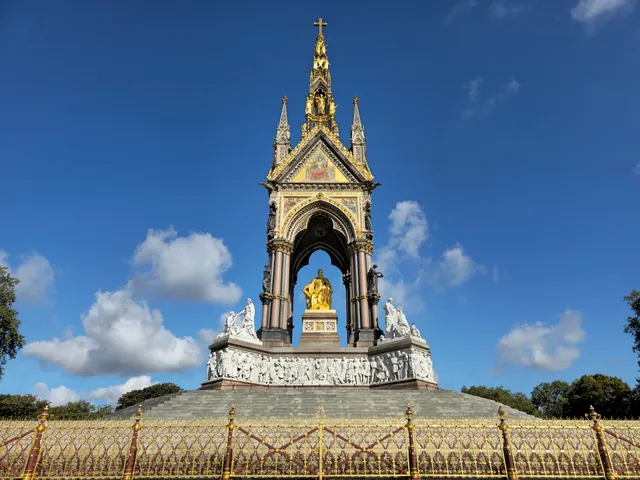
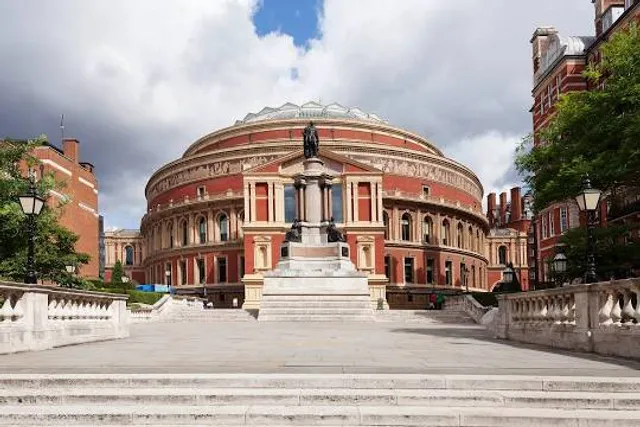
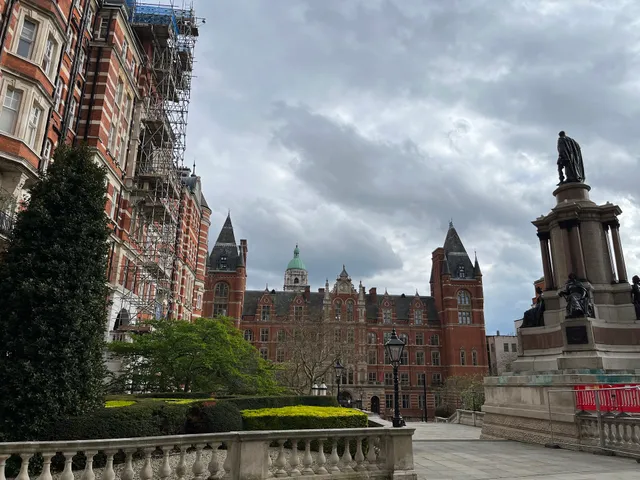
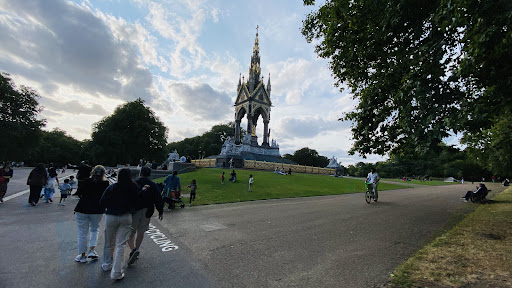
The Albert Memorial in Kensington Gardens is one of London’s most elaborate and iconic monuments, a testament to the deep love and respect Queen Victoria held for her husband, Prince Albert. Located in the Royal Borough of Kensington and Chelsea, directly opposite the Royal Albert Hall, the memorial stands as a stunning example of Victorian art and architecture, rich in symbolism and historical significance.
Commissioned by Queen Victoria after Prince Albert’s untimely death in 1861, the memorial was designed by Sir George Gilbert Scott, one of the leading architects of the time. The memorial was completed in 1875 and is an exemplary work of the Gothic Revival style. Standing at approximately 176 feet tall, it is a towering and ornate structure that dominates its surroundings, making it impossible to miss as you stroll through Kensington Gardens.
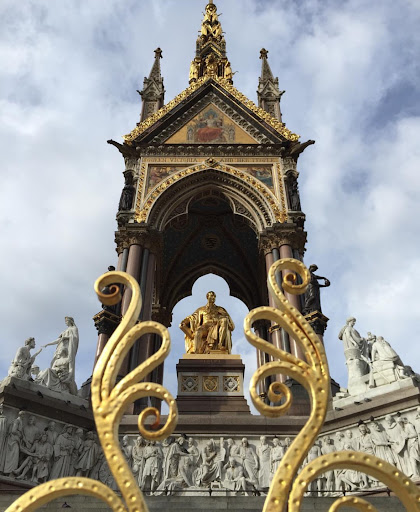
The memorial’s design is a blend of art, architecture, and symbolism, reflecting the grandeur of the Victorian era. It is constructed in the form of a Gothic ciborium, with a central canopy sheltering a statue of Prince Albert seated in a contemplative pose, holding the catalogue of the Great Exhibition of 1851, which he had helped to organize. This event was pivotal in showcasing the innovations of the Industrial Revolution and symbolized the height of Britain’s imperial power.
The Albert Memorial is rich with symbolism, much of it tied to Prince Albert’s interests and achievements. The central statue of Albert, crafted by sculptor John Henry Foley, is gilded in gold leaf, which was added later during restoration to emphasize the monument’s regal nature. His contemplative posture and the catalogue in his hand underline his role as a patron of the arts, sciences, and education.
Surrounding the base of the monument are four grand sculptures representing the continents of Europe, Asia, Africa, and the Americas. These groups of marble statues are highly detailed and represent the global reach of the British Empire during the 19th century. Each continent is symbolized by figures and animals associated with it: for example, Europe is depicted with a bull, symbolizing the myth of Europa, while Africa features a camel and an African warrior.
In addition to the continental sculptures, there are four more groups at the corners of the central area representing the arts and sciences: Agriculture, Commerce, Engineering, and Manufactures. These sculptures highlight the areas that were of significant importance to Albert and also reflect the Victorian belief in progress and human achievement.
The Frieze of Parnassus
One of the most intricate elements of the memorial is the Frieze of Parnassus, which runs around the base of the monument. This frieze features 169 life-sized figures of some of the greatest artists, poets, musicians, and architects from history, including Raphael, Michelangelo, Shakespeare, Beethoven, and many others. This inclusion further emphasizes the memorial’s celebration of culture and the arts, domains in which Prince Albert took a deep interest. Visiting the Albert Memorial is a visually and intellectually enriching experience. Its location in Kensington Gardens makes it easily accessible and offers a peaceful setting to appreciate the monument’s intricate details and the serene environment of the surrounding park. The memorial is often quieter than other London landmarks, allowing for a more contemplative experience.
The Albert Memorial is not just a tribute to Prince Albert, but a celebration of the arts, sciences, and the spirit of the Victorian age. Its grandeur, rich symbolism, and artistic detail make it one of London’s most remarkable monuments. Whether you are a history enthusiast, an art lover, or simply someone looking to explore the cultural heritage of London, the Albert Memorial offers a unique and enriching experience. It stands as a lasting symbol of love, loss, and the enduring legacy of one of the most influential figures of the...
Read moreSo imposing and beautiful!!!!The Albert Memorial is situated in Kensington Gardens,London, directly to the north of the Royal Albert Hall. It was commissioned by Queen Victoria in memory of her beloved husband Prince Albert, who died of typhoid in 1861. The memorial was designed by Sir Geoge Gilbert Scott in the Gothic revival style. Opened in July 1872 by Queen Victoria, with the statue of Albert ceremonially "seated" in 1876,the memorial consists of an ornate canopy or pavilion, in the style of a Gothic ciborium over the high altar of a church,containing a statue of the prince facing south. The memorial is 176 feet (54 m) tall, took over ten years to complete, and cost £120,000 (the equivalent of about £10,000,000 in 2010). The cost was met by public subscription.
At the corners of the central area, and at the corners of the outer area, there are two allegorical sculpture programs: four groups depicting Victorian industrial arts and sciences (agriculture, commerce, engineering and manufacturing), and four more groups representing Africa,the Americas,Asia and Europe at the four corners, each continent-group including several ethnographic figures and a large animal. (A camel for Africa, a bison for the Americas, an elephant for Asia and a bull for Europe.)
The memorial's canopy features several mosaics as external and internal decorative artworks. Each of the four external mosaics show a central allegorical figure of the four arts (poetry,painting,architecture and sculpture), supported by two historical figures either side. The historical figures are: King David and Homer (POESIS – poetry),Apelles and Raphael (painting), Solomon and Ictinus(architecture), and Phidias and Michelangelo(sculpture). Materials used in the mosaics include enamel,polishef stone,agate,onyx,jasper,cornelian,crystal,marble and granite.
Around the canopy, below its cornice, is a dedicatory legend split into four parts, one for each side. The legend reads: Queen Victoria And Her People • To The Memory Of Albert Prince Consort • As A Tribute Of Their Gratitude • For A Life Devoted to the Public Good.
The pillars and niches of the canopy feature eight statues representing the practical arts and sciences: Astronomy,Geology,Chemistry,Geometry(on the four pillars) and Rhetoric,Medicine,Philosophy and Physiology (in the four niches).
Near the top of the canopy's tower are eight statues of the moral and Christian virtues, including the four cardinal virtues and the three theological virtues.The virtues are: Faith,Hope,Charity and Humility, Fortitude,Prudence,Justice and Temperance. Humility is considered to be annexed to the virtue of temperance. Above these, towards the top of tower, are gilded angels raising their arms heavenwards. At the very top of the tower is...
Read moreWe visited the Albert Memorial in Hyde Park last year, and it was truly a memorable experience. Located just across from the Royal Albert Hall, the memorial stands as a magnificent tribute to Prince Albert, the beloved husband of Queen Victoria. The grandeur and detail of the memorial are truly breathtaking, and it’s one of London’s hidden gems, often overshadowed by other more famous landmarks.
The Memorial
The Albert Memorial is an impressive sight, with its towering central spire, which reaches 54 feet high. The golden statue of Prince Albert is at the top, surrounded by intricately designed sculptures representing various aspects of Prince Albert’s life and achievements. The four large corner statues representing Art, Science, Commerce, and Agriculture are particularly striking, each one beautifully crafted and full of symbolic meaning.
We were amazed by the rich details and the vibrant colors, especially the gold leaf and mosaics that decorate the memorial. The contrast of the golden statue against the surrounding stone and greenery makes it a remarkable sight.
The Surroundings
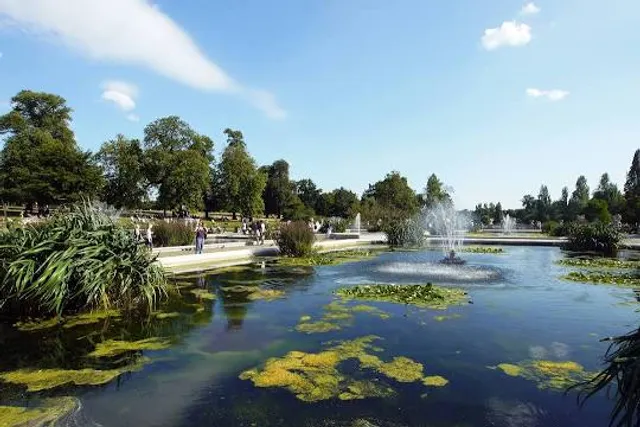
The memorial is located in the northern part of Hyde Park, and it’s a peaceful spot to sit and reflect. While it’s close to the hustle and bustle of central London, the area around the memorial is relatively quiet, with plenty of green space to enjoy. We took some time to sit on the benches nearby, enjoying the beautiful surroundings and soaking in the atmosphere.
The nearby Royal Albert Hall also adds to the grandeur of the area, and if you’re in the park, it’s well worth strolling around to see the entire surrounding area. The memorial is also a short walk from Kensington Gardens, making it a great starting point for exploring the royal parks.
Visitor Information • Opening Times: The memorial is open to the public at all times, as it’s an outdoor monument. It’s a great place to visit whether you’re passing through Hyde Park or looking for a spot to relax. • Location: The Albert Memorial is easily accessible, located near Hyde Park Corner and Kensington Gardens, just a short walk from Lancaster Gate or Hyde Park Corner Underground stations.
Overall, the Albert Memorial is a truly stunning monument and a peaceful spot to visit in Hyde Park. Its architectural beauty and historical significance make it a must-see for anyone exploring the area. It’s a place to sit back, reflect, and enjoy the quiet grandeur of one of London’s most...
Read more