The national design competition was managed by Thomas R. Kimball, a former president of the American Institute of Architects (AIA). After discord within the organization locally, the design contract was finally awarded to New York architect Harold Van Buren Magonigle. A disagreement between members of the Kansas City Chapter of AIA and Kimball over the rules, caused almost half of the local members to resign in April 1922. They immediately went on to form the Architectural League of Kansas City, which was merged back into the AIA in the early 1930s. Unlike the AIA at the time, the Architectural League of Kansas City provided membership to less experienced architects and draftsmen and provided social and educational opportunities. Regardless of the controversy, many local architects submitted entries including those who resigned from the AIA. The jury unanimously awarded the contract to Magonigle.
The groundbreaking ceremony on November 1, 1921, was attended by 200,000 people,[8] including Vice President Calvin Coolidge, Lieutenant General Baron Jacques of Belgium, Admiral of the Fleet Lord Beatty of Great Britain, General Armando Diaz of Italy, Marshal Ferdinand Foch of France, General of the Armies John J. Pershing of the United States, and 60,000 members of the American Legion. The local veteran chosen to present flags to the commanders was a Kansas City haberdasher, Harry S. Truman,[10] who would later serve as 33rd President of the United States from 1945 to 1953. The finished monument was dedicated on November 11, 1926, by 30th President Coolidge, in the presence of Queen Marie of Romania.[11] Coolidge announced that the memorial "...has not been raised to commemorate war and victory, but rather the results of war and victory which are embodied in peace and liberty ... Today I return in order that I may place the official sanction of the national government upon one of the most elaborate and impressive memorials that adorn our country. The magnitude of this memorial, and the broad base of popular support on which it rests, can scarcely fail to excite national wonder and admiration."
In 1961 the monument was rededicated by former President Harry S. Truman. The local effort to restore[14] the fading monument was headed by Armand Glenn, the local head of the central district legion. Local company Hallmark provided support, and on November 11, 1961, on its 40th anniversary, there was a large dedication ceremony on the memorial grounds. A crowd of 15,000 watched Truman preside over the service.
In 1981–1982, corresponding to its 60th anniversary, the building revealed new exhibits under improved lighting sources.[14]: 142
The memorial was closed in 1994 due to safety concerns, because aging had produced problems with drainage and the original construction. Local shopping malls voluntarily helped to put part of the museum collection on display while the memorial was unavailable. When the poor condition of the building became an embarrassment for the city,[8] Kansas City voters in 1998 passed a limited-run sales tax to support the restoration.[15] Plans were made to expand the site with a museum to accommodate the LMA's growing collection. Local, national, and international support provided US$102 million (equivalent to $170 million in 2021), ultimately revealed at its...
Read moreThe National WWI Museum and Memorial in Kansas City is undoubtedly one of the best museums I have visited, rivaling even the esteemed Winston Churchill Museum in London. My experience here was truly immersive, lasting close to three hours, but it felt like stepping back in time, effortlessly absorbing the profound history of World War I.
From the moment I entered, the museum’s thoughtful layout and organization struck me. Everything is designed to guide visitors through the complex history of the war without overwhelming them. The exhibits are meticulously curated, showcasing a vast array of artifacts, documents, and multimedia presentations that bring the Great War to life in a way that is both educational and deeply moving.
One of the unique aspects of this museum is the staff, primarily composed of older individuals who are not just guides but passionate storytellers. Their firsthand narratives and detailed explanations added a personal touch to the exhibits, enriching my understanding of the war’s events and its impact. Their knowledge and eagerness to share made the visit all the more engaging.
Another advantage is that there is no need to buy tickets in advance or hire a guide. The museum is set up in a way that allows you to explore at your own pace, with clear signage and interactive displays that answer most questions you might have about the war and its aftermath.
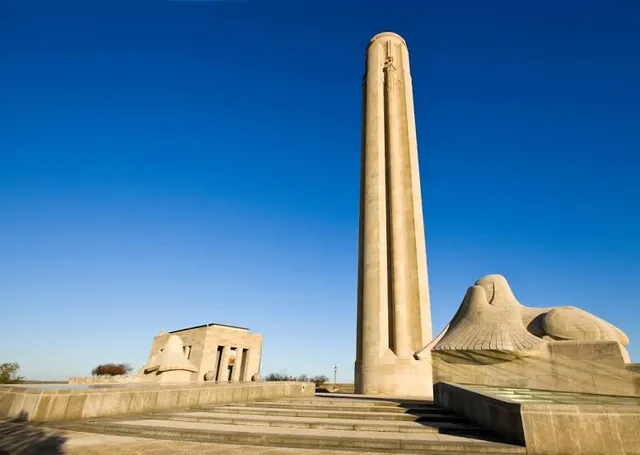
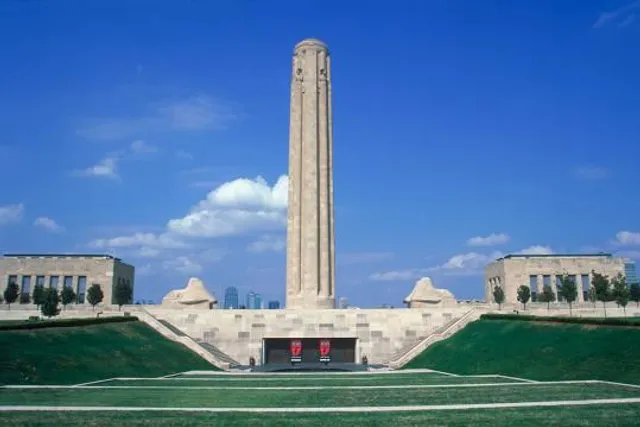
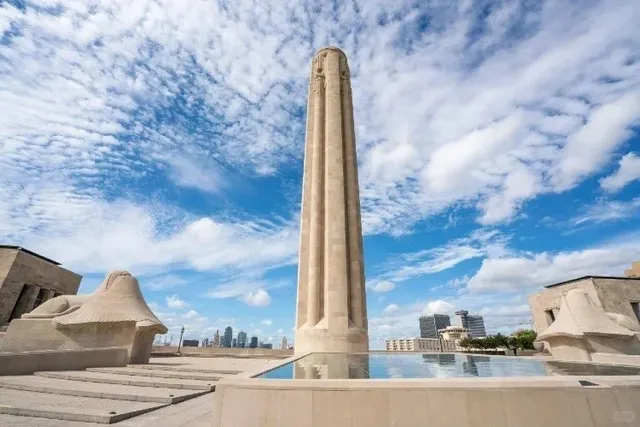
The museum also offers a reflective space, both indoors and through its impressive outdoor memorial. Standing outside, overlooking the Kansas City skyline with the imposing Liberty Memorial tower reaching towards the sky, I felt a solemn connection to the past, reflecting on the sacrifices made during the war.
My visit was not only educational but also emotionally impactful. The museum does an excellent job of conveying the gravity of World War I while also honoring those who served. It’s a place not just of history, but of remembrance.
In conclusion, the National WWI Museum and Memorial is a must-visit for anyone interested in history, military affairs, or seeking a deeper understanding of the global impact of World War I. Its comprehensive exhibits, knowledgeable staff, and the poignant atmosphere make it a standout museum experience. Whether you’re a history buff, a student, or just looking for an enlightening way to spend an afternoon, this museum offers a rich, accessible, and unforgettable journey through one of history’s most...
Read moreI'm very impressed by this history museum discussing the history and tactics used at the turn of the century.
This museum houses the most comprehensive collection of WW1 artifacts on the planet. It's the leading institution dedicated to remembering this terrible time. Dedicated in 1921 just a few years after the Great War, this museum does a great job of showing the difficulties and horrors of this conflict.
Despite its age, the museum has been and continues to be updated with interactive technologies and state of the art facilities to tell its tale. The Main Gallery holds the permanent exhibition, and walks you through the series of events that led the world towards cataclysmic disaster. It then takes you through the decision of the United States to enter the war and our participation in the events. There are plenty of interactive and hands on displays. there are audio guides that give additional insights to various periods of the times and people.
One of the more notable temporary exhibitions during my visit was The Little War which explores the lives of children during the war. War touches everybody differently, and its affects result in the direction of the future.
The museum has a cafe and a store. It allows photography, and there's plenty to note. Its grounds are beautifully maintained, inside and outside.
Above the museum is the memorial itself, which includes the Liberty Tower, the Memorial Courtyard (which overlooks the KC skyline), and the Exhibit and Memory Halls.
Again this museum is beautiful, and despite the sad topic, the museum does a great job of interpreting and remembering the Great War for the goods, the bads, and the ugly.
The museum commands respect, and I ask future visitors to remember to be humbled by the past, and...
Read more