In 1994, Santiago Calatrava actually withdrew from the Milwaukee Art Museum expansion competition, insecure about working in America. Museum officials had to coax the Spanish architect back—a fortunate intervention that would transform both a Midwestern city and an architect's career.
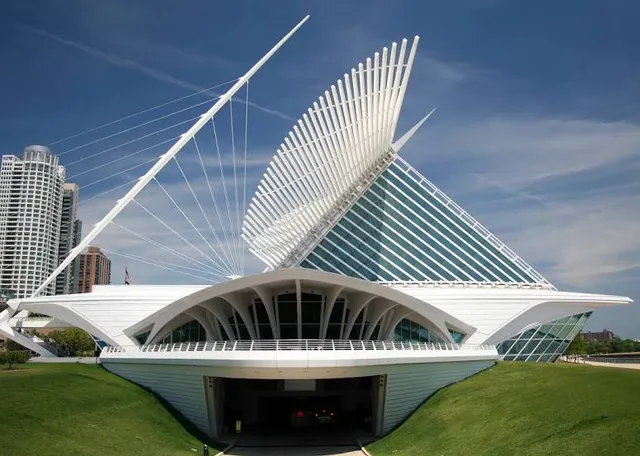
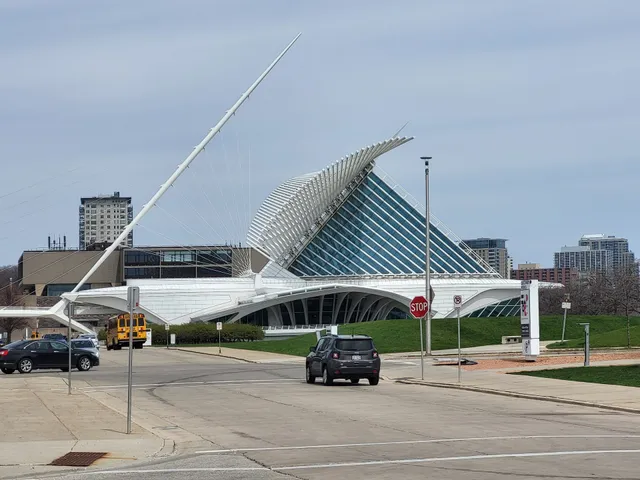
Twenty-four years later, the Quadracci Pavilion remains Calatrava's most beloved American building, a $121 million white concrete phoenix that literally breathes on Lake Michigan's shore. Locals simply call it "The Calatrava," rare architectural name recognition that speaks to the building's grip on Milwaukee's collective imagination.
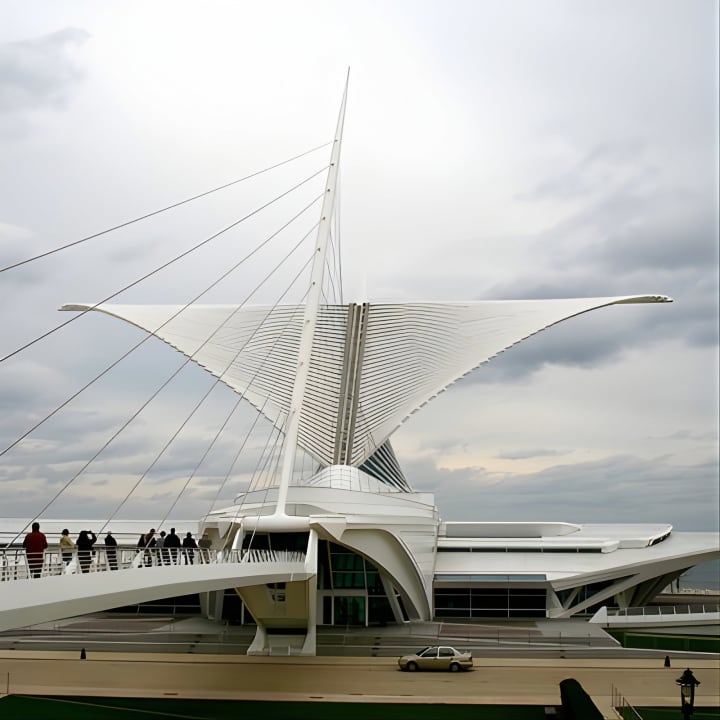
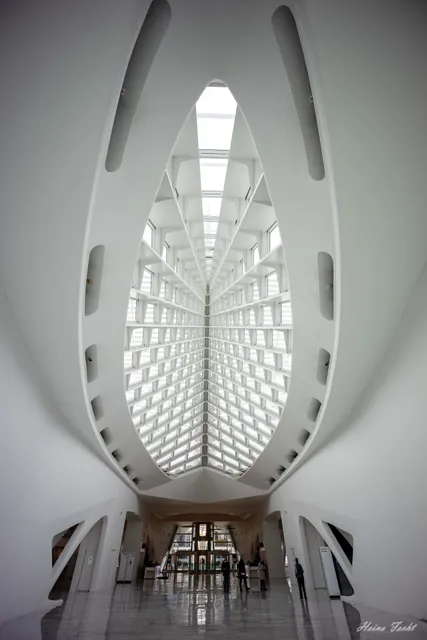
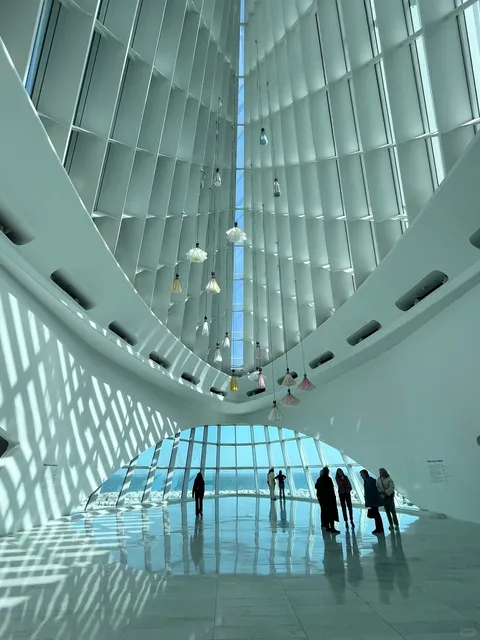
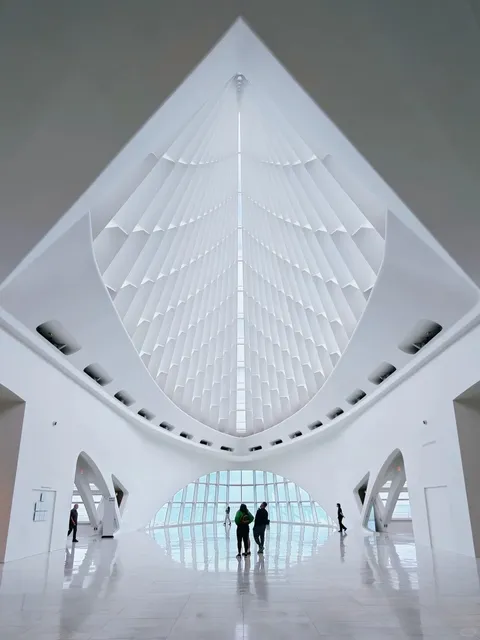
The approach via the cable-stayed Reiman Bridge creates theatrical anticipation before delivering the full architectural revelation. Inside Windhover Hall, Calatrava's interpretation of Gothic cathedral architecture soars ninety feet overhead, complete with flying buttresses and ribbed vaults rendered in pristine white concrete. Visitors instinctively whisper in this secular sanctuary, dwarfed by proportions that could contain a two-story house.
Above, the Burke Brise Soleil—72 steel fins ranging from 26 to 105 feet long—performs daily kinetic theater. The 90-ton structure opens at 10 AM, "flaps" at noon for visitor delight, then closes at sunset. Wind sensors automatically fold the wings if speeds exceed 23 mph, protecting the mechanism that cost more than many entire museum buildings.
But the architectural spectacle came at devastating cost. Originally budgeted at $38 million, expenses ballooned to $121 million as the museum added underground parking and elaborate landscaping. While attendance initially doubled to nearly 400,000 annually, recent years tell a darker story. Under former director Marcelle Polednik, who stepped down in July amid controversy, attendance plummeted to 200,000 while admission prices jumped 59% to $27.
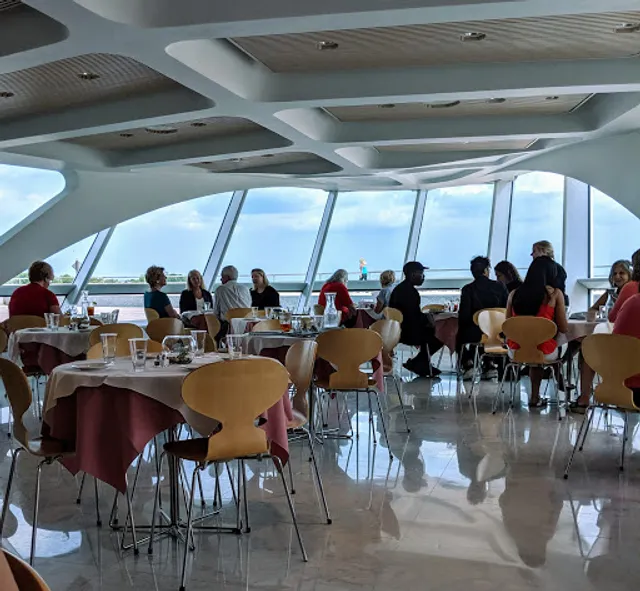
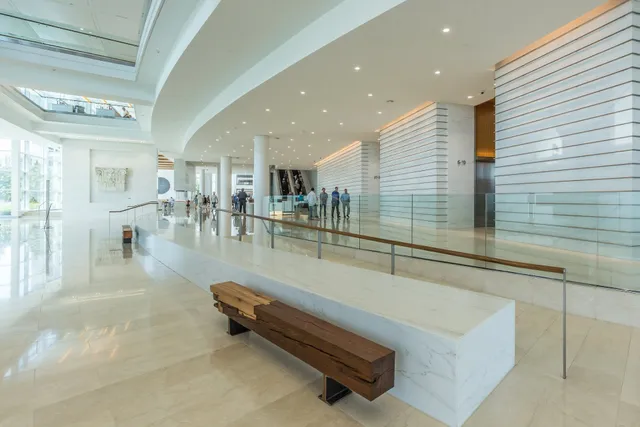
The building's revolutionary concrete construction—poured into custom wooden forms honoring Milwaukee's precision manufacturing heritage—created spaces that frame art beautifully without competing. In curved gallery corridors, ribbed white walls create intimate viewing alcoves, while the soaring reception hall provides dramatic entry sequences. Even utilitarian spaces like Café Calatrava showcase Calatrava's formal vocabulary through ribbed wooden ceiling panels.
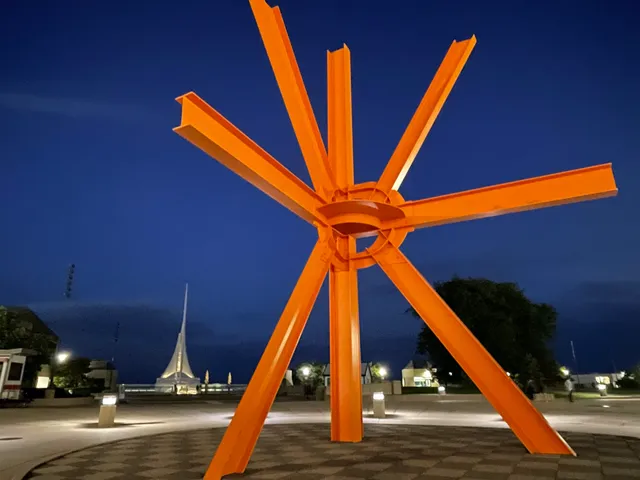
Hollywood noticed: the pavilion starred in "Transformers: Dark of the Moon" and "Bridesmaids," its distinctive silhouette becoming Milwaukee's unofficial logo. Visit Milwaukee adopted the building's profile as the city's brand, recognizing that Calatrava had achieved something nearly impossible—creating civic architecture that functions as both cultural destination and economic development tool.
The paradox persists: an architectural triumph that nearly bankrupted its institution, a sculptural masterpiece struggling with operational sustainability. Current leadership faces a $65 million endowment that covers only a fraction of the $15-16 million annual budget, legacy of a building that prioritized architectural ambition over financial prudence.
Yet walking through the museum today, the experiential impact remains undiminished. The play of light through the glass ceiling, the geometric shadow patterns migrating across terrazzo floors, the spacecraft-like corridors that feel both futuristic and timeless—these spaces force wonder even as they strain budgets.
Milwaukee's embrace of this magnificent folly represents American cultural ambition at its most admirable: the willingness to risk everything for transcendence. As the wings continue their daily dance above Lake Michigan, opening each morning with mechanical optimism, the Quadracci Pavilion stands as proof that some architectural gestures transcend their cost, transforming cities and lives in ways no budget analysis...
Read moreI like art museums in general. The Midwestern ones (where I live) never disappoint. With these cities having much power and money 50 to 100 years ago to create the best museums on earth. I was in Chicago and have seen their Art Institute a million times and thought let's try something new and took the train to Millawkee for a day.
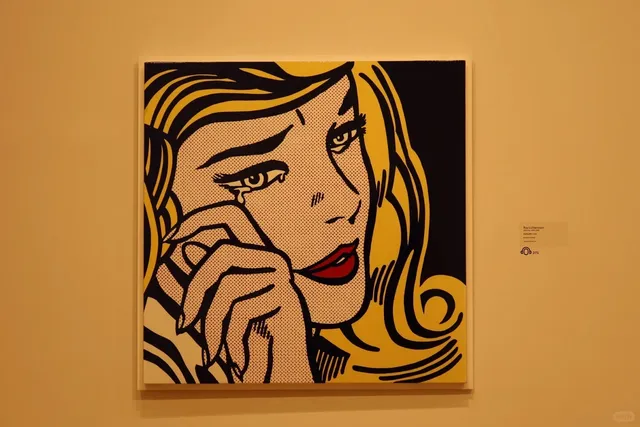
The ancient Egyptian and Greek Art filled only one room, but does the job with about 10 of the best prices a museum could want. The European Middle Ages Art has some in depth examples of the mostly religious art of this time - they explained religion ruled the arts back then.. But, shows to the 9, the beaty of this time period's art. I figured an old Midwestern cities art museum would have this as a strength and it is....... But, also showing a Christian altar triptych piece, with the Hebrews on the back panels being condemed and beaten down. This work is controversy all the way around. But, shows guts for a museum to show not the typical Madonna and Chid. The early American Art section has some amazing portraits (Gilbert Stewart) from America's colonial time and probably could do with less of the other early American Art and it's furniture. The modern art section (not counting the Bradley Collection - which is in another part of the museum) is about 1/3 worth a look. Much of what was cool in Modern in the 70"s and 80's that they acquired, just has not stood up to the test of time. Also, not much added to this space from modern artist of the last 25 years. The French Impressionist were only 3 paintings. But a good Monet painting and not the usual Renior. But, if you want French Impressionism , then visit Chicago. Some of the areas had good works (American Arts and Crafts furniture or old Dutch Masters) but, we're not laid out right or poor lighting. It was fun with the Dutch Masters were they cram about 15 of these works per wall section. Almost like the old European art salons. The guide books show Indian, Chinese and African Art. I saw none while here and did not see any signs saying a gallery was closed. If this is something you want to see call ahead.
The Bradley Collection, MY GOD..... Thank God for Allen Bradley Electronics. One of those past Midwestern industrial powerhouses in Milwaukee. The wife of one of the founders bought the best possible modern art from 1900 to 1970. The Rothko, Mirro or Kadinskey are as good as zl can get, even when compared NYC cultural elite institutes. I looked online and out of the best pieces she left to the museum, they only show about 25% of this. Hopefully they rotate some out. But, what is shown will leave you speechless. Mrs Bradley was suppose to have had a private apt. In the museum and would go out at night after everyone left to look at her gifts. She was also personal friends with Georgia O'Keefe which probably helped in getting some great O'k paintings for the Bradley Collection.
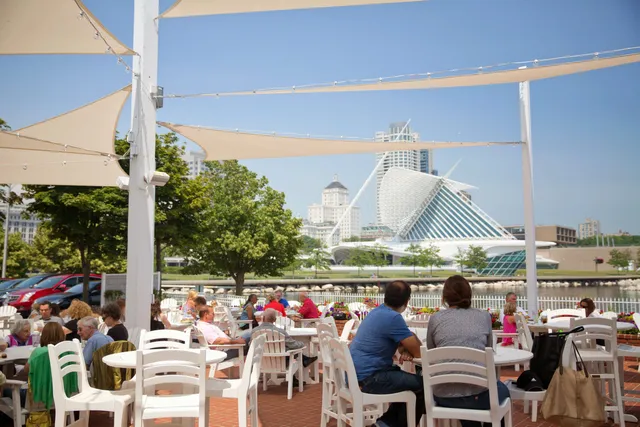
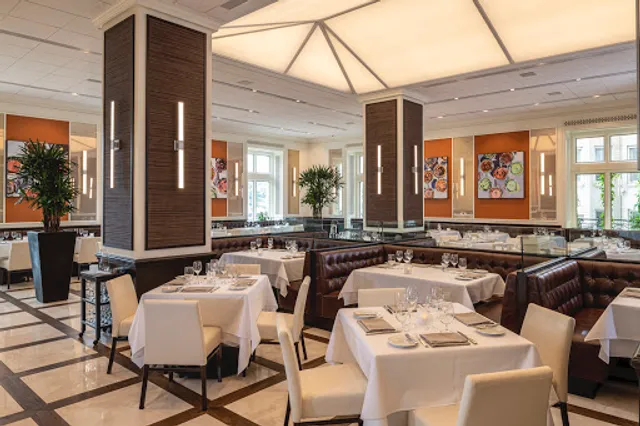
I could tell as I entered the museum the love and pride of the people donating time to this museum and all others involved with the place. A good vibe in this place, There are over 3 eating areas. With the most exclusive having chefs available for custom food orders. The views of Lake Michigan are spectacular!!!! Free coat check and lockers provided. Not sure how the parking works. But their is a convient garage right below the new wing. Of course I should have mentioned it first as it is the arrival point. Instead of last. But, the 90' s designed sail boat inspired entry building does the job. Light pouring in from all directions. A museum space right up there with the Guggenheum's inner rotunda. If you love art you have to pay this...
Read moreThe Milwaukee Art Museum is not only a cornucopia of masterpieces of art. The museum itself is a masterpiece of artwork, both the interior and the exterior. The world renowned mechanical wings, which spread out when the museum opens to the public and fold shut when the museum closes for the day (and light up at night), have made this building’s architecture world famous.
Most of the galleries in the museum are dedicated towards contemporary and modern art. I didn’t explore these galleries as much as the historic European and American art galleries, but I still found plenty of paintings and sculptures in the contemporary galleries intriguing to marvel at. The abstract images portrayed in those works leave you to make your own interpretation as to what exactly the artist is trying to convey.
I spent much more time in the historic European and American paintings galleries. These exhibits displayed a plethora of realism and impressionist masterpieces from a wide variety of artists, some famous and others lesser known. Most of the famous paintings and sketches were from the Dutch painter Rembrandt, but there was also a gallery dedicated to Paul Gauguin, and a couple of works from Claude Monet. These works further deepened my admiration for great art museums like this one.
This visit in January 2024 was actually my second visit to the Milwaukee Art Museum. My first one was in January 2018. During that time, there was a traveling exhibit featuring renowned masterpieces from artists such as Edgar Degas and Vincent Van Gogh. These exhibits are usually on display for a rather brief period of time, and whenever there is such an exhibition, you should definitely go to the art museum and see those famous pieces of art yourself. Even when there’s not any temporary exhibits featuring world famous priceless artwork, the museum still has a plethora to explore. This is after all, Milwaukee’s best tourist attraction and a must see in every...
Read more