HTML SitemapExplore
logo
Find Things to DoFind The Best Restaurants

Mir-i-Arab Madrasa — Attraction in Bukhara City

Name
Mir-i-Arab Madrasa
Description
Nearby attractions
Kalan Minaret
Khakikat St 9, Bukhara, Bukhara Region, Uzbekistan
Kalan Mosque
Kalyan Mosque, Po-i-Kalyan, Khodja Nurobobod St, Bukhara, Bukhara Region, Uzbekistan
Poyi Kalon
Strada, Khodja Nurobobod St, Bukhara, Bukhara Region, Uzbekistan
Ulugʻbek madrasasi
QCG8+PXH, Bukhara, Bukhara Region, Uzbekistan
Toqi Zargaron
QCG8+HM2, Bukhara, Bukhara Region, Uzbekistan
Old city of Bukhara
QCG7+HXV, Khodja Nurobobod St, Bukhara, Bukhara Region, Uzbekistan
Madrasah of Emir Alimkhan
QCG8+56W, Bukhara, Bukhara Region, Uzbekistan
Abdulaziz Khan Madrassah
QCG9+C37, Khodja Nurobobod St, Bukhara, Bukhara Region, Uzbekistan
Tim Abdulla Khan Trading Dome
QCG8+5RQ, Bukhara, Bukhara Region, Uzbekistan
Museum Of Wood Carving In The Abdulaziz Khan Madrassah
QCG8+FX7, Khodja Nurobobod St, Bukhara, Bukhara Region, Uzbekistan
Nearby restaurants
Zolotaya Buhara
Bukhara, Haqiqat, 171, 200119, Buxoro, Buxoro Viloyati, Uzbekistan
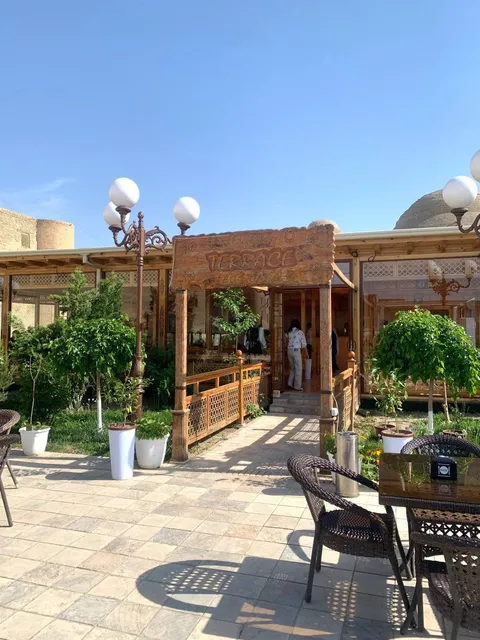
Terrace Bukhara ECO Cafe
Khakikat St 9, Bukhara, Bukhara Region, Uzbekistan
Old Bukhara
QCF9+JV4, Samarkand St, Bukhara, Bukhara Region, Uzbekistan
Abdulaxizxon Chayxana
QCG9+J63, Bukhara, Bukhara Region, Uzbekistan
AFRASIAB RESTAURANT
Samarkand St 10 Str, 200118, Bukhara, Bukhara Region, Uzbekistan
Joy chaikhana lounge
Сарафон2, Buxoro, Uzbekistan
Art
QCF9+5MJ, Uzbekistan St, Yangi Bozor, Bukhara Region, Uzbekistan
Ayvan
N. Husainova #7, 200100, Uzbekistan
Jam
QCFF+HMC улица Ходжа Кучкор дом, 4Бухара, Bukhara Region, Uzbekistan
AMULET restaurant
Ulitsa Bakhauddina Nakshbandi 152, 200118, Bukhara, Bukhara Region, Uzbekistan
Nearby hotels
Orom Hotel
Khakikat St 9, Bukhara, Bukhara Region, Uzbekistan
Omar Khayyam
Khakikat St 9, Bukhara, Bukhara Region, Uzbekistan
Minorai-Kalon Hotel
H, Ibodova Street 11, 100121, Bukhara, Bukhara Region, Uzbekistan
Nabibek Teracce
Khakikat St, Bukhara, Bukhara Region, Uzbekistan
Hotel Shahriston
Hakikat st 53, Bukhara, Bukhara Region, Uzbekistan
Hotel Old Bukhara Boutique
Choykhonai Kozi Kalon St 30, 200100, Bukhara, Bukhara Region, Uzbekistan
Zargaron
Haqiqat street 3, Bukhara, Bukhara Region, Uzbekistan
Hostel NAVO
QCG7+RW7, Khodja Nurobobod St, 200118, Bukhara, Bukhara Region, Uzbekistan
Hotel Golden Minaret
QCG7+4VM, Bukhara, Bukhara Region, Uzbekistan
Art Suzani Hotel
QCG7+4QQ, Bukhara, Bukhara Region, Uzbekistan
Related posts
Keywords
Mir-i-Arab Madrasa tourism.Mir-i-Arab Madrasa hotels.Mir-i-Arab Madrasa bed and breakfast. flights to Mir-i-Arab Madrasa.Mir-i-Arab Madrasa attractions.Mir-i-Arab Madrasa restaurants.Mir-i-Arab Madrasa travel.Mir-i-Arab Madrasa travel guide.Mir-i-Arab Madrasa travel blog.Mir-i-Arab Madrasa pictures.Mir-i-Arab Madrasa photos.Mir-i-Arab Madrasa travel tips.Mir-i-Arab Madrasa maps.Mir-i-Arab Madrasa things to do.
Mir-i-Arab Madrasa things to do, attractions, restaurants, events info and trip planning
Mir-i-Arab Madrasa
UzbekistanBukhara RegionBukhara CityMir-i-Arab Madrasa

Basic Info

Mir-i-Arab Madrasa

Khakikat St 9, Bukhara, Bukhara Region, Uzbekistan
4.8(251)
Open 24 hours
Save
spot

Ratings & Description

Info

Cultural
Scenic
Family friendly
Accessibility
attractions: Kalan Minaret, Kalan Mosque, Poyi Kalon, Ulugʻbek madrasasi, Toqi Zargaron, Old city of Bukhara, Madrasah of Emir Alimkhan, Abdulaziz Khan Madrassah, Tim Abdulla Khan Trading Dome, Museum Of Wood Carving In The Abdulaziz Khan Madrassah, restaurants: Zolotaya Buhara, Terrace Bukhara ECO Cafe, Old Bukhara, Abdulaxizxon Chayxana, AFRASIAB RESTAURANT, Joy chaikhana lounge, Art, Ayvan, Jam, AMULET restaurant
logoLearn more insights from Wanderboat AI.
Phone
+998 95 600 45 97
Website
mirarabmadrasa.uz

Plan your stay

hotel
Pet-friendly Hotels in Bukhara City
Find a cozy hotel nearby and make it a full experience.
hotel
Affordable Hotels in Bukhara City
Find a cozy hotel nearby and make it a full experience.
hotel
The Coolest Hotels You Haven't Heard Of (Yet)
Find a cozy hotel nearby and make it a full experience.
hotel
Trending Stays Worth the Hype in Bukhara City
Find a cozy hotel nearby and make it a full experience.

Reviews

Nearby attractions of Mir-i-Arab Madrasa

Kalan Minaret

Kalan Mosque

Poyi Kalon

Ulugʻbek madrasasi

Toqi Zargaron

Old city of Bukhara

Madrasah of Emir Alimkhan

Abdulaziz Khan Madrassah

Tim Abdulla Khan Trading Dome

Museum Of Wood Carving In The Abdulaziz Khan Madrassah

Kalan Minaret

Kalan Minaret

4.8

(818)

Open 24 hours
Click for details
Kalan Mosque

Kalan Mosque

4.8

(637)

Open 24 hours
Click for details
Poyi Kalon

Poyi Kalon

4.8

(76)

Open 24 hours
Click for details
Ulugʻbek madrasasi

Ulugʻbek madrasasi

4.6

(306)

Open 24 hours
Click for details

Things to do nearby

Make traditional Bukhara pilaf with my wife
Mon, Dec 8 • 4:00 PM
Bukhara, Bukhara Region, Uzbekistan
View details

Nearby restaurants of Mir-i-Arab Madrasa

Zolotaya Buhara

Terrace Bukhara ECO Cafe

Old Bukhara

Abdulaxizxon Chayxana

AFRASIAB RESTAURANT

Joy chaikhana lounge

Art

Ayvan

Jam

AMULET restaurant

Zolotaya Buhara

Zolotaya Buhara

4.7

(355)

Click for details
Terrace Bukhara ECO Cafe

Terrace Bukhara ECO Cafe

4.1

(134)

Click for details
Old Bukhara

Old Bukhara

4.0

(1.1K)

Click for details
Abdulaxizxon Chayxana

Abdulaxizxon Chayxana

4.0

(28)

Click for details
Get the Appoverlay
Get the AppOne tap to find yournext favorite spots!
Wanderboat LogoWanderboat

Your everyday Al companion for getaway ideas

CompanyAbout Us
InformationAI Trip PlannerSitemap
SocialXInstagramTiktokLinkedin
LegalTerms of ServicePrivacy Policy

Get the app

© 2025 Wanderboat. All rights reserved.
logo

Posts

Saurav DebnathSaurav Debnath
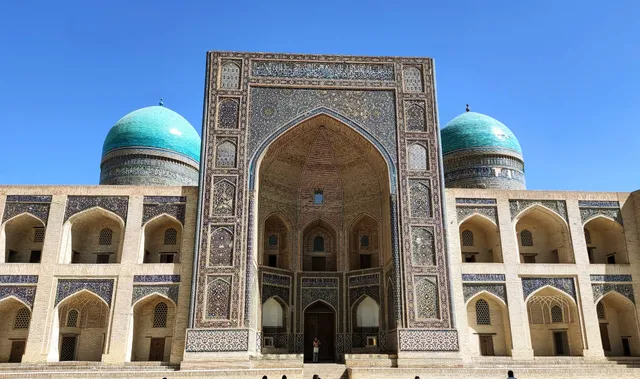
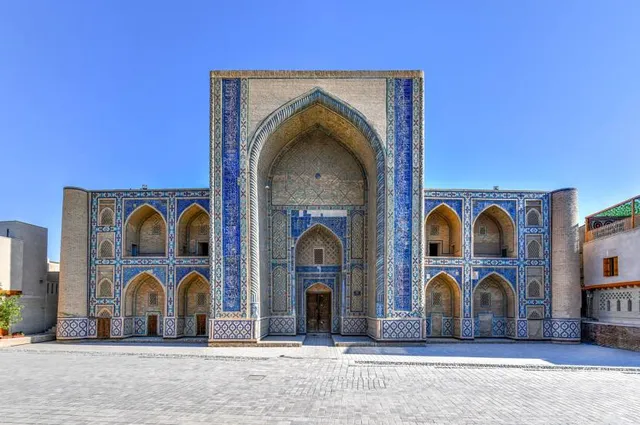
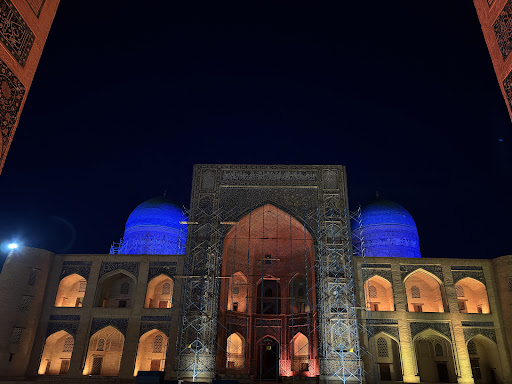
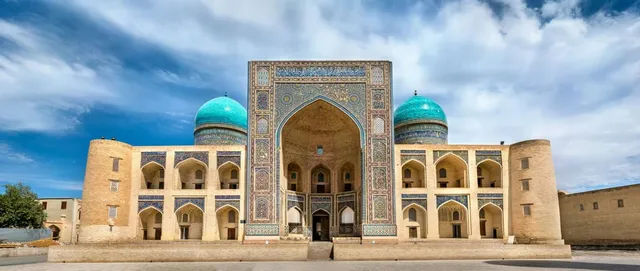
🕌 Mir-i-Arab Madrasa – A Living Legacy of Islamic Education in Bukhara 📍 Location: Opposite Kalyan Mosque, Po-i-Kalyan Complex, Bukhara, Uzbekistan 📅 Built: Circa 1535–1536 🔨 Commissioned by: Sheikh Abdullah Yamani of Yemen (Mir-i-Arab), financed by Ubaydullah Khan of the Shaybanid Dynasty ✨ Overview: The Mir-i-Arab Madrasa is one of Central Asia’s most revered Islamic institutions, renowned for its architectural grandeur, historical significance, and continuous use as a religious school for nearly 500 years. 🌟 Key Highlights: Architectural Masterpiece This iconic madrasa showcases stunning blue-tiled domes, intricate mosaic work, and a symmetrical facade typical of Timurid and Shaybanid-era design. The central portal is adorned with majestic calligraphy and glazed ceramic art. A Symbol of Revival Built during the rule of Ubaydullah Khan, the madrasa marked a cultural and religious renaissance in Bukhara following the Mongol invasions. It was established to promote Islamic learning and Sufism. Still Active Today Mir-i-Arab remains a functioning madrasa, training young men in Islamic theology, Arabic, and Qur’anic studies. It was one of the few Islamic institutions allowed to operate during the Soviet era, making it a symbol of religious resilience. Name Origin “Mir-i-Arab” means “Prince of the Arabs”, referring to Sheikh Abdullah Yamani, a revered Yemeni scholar who became spiritual advisor to Ubaydullah Khan and is buried in the madrasa. 🧭 What You’ll See: The two blue domes: one crowns the prayer hall, the other the burial chamber of Mir-i-Arab and Ubaydullah Khan. A vast central courtyard surrounded by two stories of hujras (student rooms). Beautiful mosaic tilework depicting floral and geometric patterns. 📷 Photography Tip: Capture the sunset glow on the madrasa’s façade while standing in Registan Square of Bukhara, with the Kalyan Minaret and Mosque in the background for a complete ensemble view.
Shavkat MirzalievShavkat Mirzaliev
Медресе Мири Араб (узб. Mir-i Arab mаdrаsasi, перс. مدرسهٔ میر عرب‎ Madrasa-ye mir-e arab) — исламское образовательное, духовно-просветительское и мемориально-культовое сооружение XVI века в Бухаре (Узбекистан). Часть архитектурного ансамбля Пои Калян. В 1993 году в числе других достопримечательностей Бухары внесено в Список Всемирного наследия ЮНЕСКО в Узбекистане.Медресе Мири-Араб, Бухара Религиозная школа эпохи Шейбанидов Медресе Мири-Араб, БухараВ самом центре Бухары над окружающими строениями возвышаются два больших голубых купола медресе Мири-Араб. Вместе с мечетью Калян и минаретом, религиозное учебное заведение составляет цельный архитектурный ансамбль Пои-Калян, который является духовным центром города. Строительство медресе Мири-Араб в 16 веке приписывается шейху Абдаллаху Йамани (из Йемена), духовному наставнику шейбанидов. Точная дата начала застройки до сих пор неизвестна. По одной из версий, ученые полагают, что здание возводилось в период с 1530 по 1535/1536 год. Другая версия утверждает, что медресе было построено в ознаменование победы армии шейбанидов над войсками сефевидского шаха Исмаила I в битве при Гиждуване, одержанной в 1512 году. Есть предположения, что заключительные строительные работы были произведены на деньги Убайдулла-хана, полученные им от продажи в рабство 3000 пленных иранцев. Это медресе является одним из интереснейших памятников Бухары, и по сей день остается действующим заведением, где обучаются будущие имамы и религиозные наставники. Для строения присуща традиционная национальная архитектура - квадратный двор, обведенный двумя этажами келий, два больших купольных зала в левом и правом углу. К главному фасаду в центре, подчеркнутому порталом, примыкают двухэтажные лоджии. Внутренний дворик украшен наборной резной мозаикой. В самом центре медресе находится усыпальница Убайдуллы - эмира Бухары, который правил городом в период с 1533 по 1540 год. В изголовье здания захоронен и духовный наставник хана - Мири Араб (шейх Абдаллаху Йамани), в честь которого названо здание. Там же погребен и старший преподаватель Убайдуллы - Мухаммад Касым. В декоре медресе Мири-Араб преобладают различные каменные мозаики утонченной работы с геометрическими, растительными и каллиграфическими надписями и узорами. Художественными работами украшены портал, тимпаны лоджии главного фасада, тимпаны арок худжр на внутренних фасадах и барабаны куполов. Купола снаружи покрыты скуфьей из голубых плиток. Во внутреннем убранстве здания особенно ярко оформлена гурхана (усыпальница). Ее панели и решетки декорированы резной мозаикой из цветного камня, а стены и плафон — резным ганчем (ганч – материал похожий на алибастр). Медресе Мири-Араб было единственным духовным учебным заведением в СССР, которое стало действовать после Второй мировой войны. Все главные имамы тех времен заканчивали именно этот религиозный центр. Декор и архитектура здания отмечены высочайшей культурой и тонким восточным вкусом. Памятник претерпел немало разрушений, но реставраторам удалось восстановить большую часть строения, вернув ему первозданный вид. Как и в древние времена, сегодня величественный фасад радует глаз превосходным художественным оформлением.
Santosh PingalaySantosh Pingalay
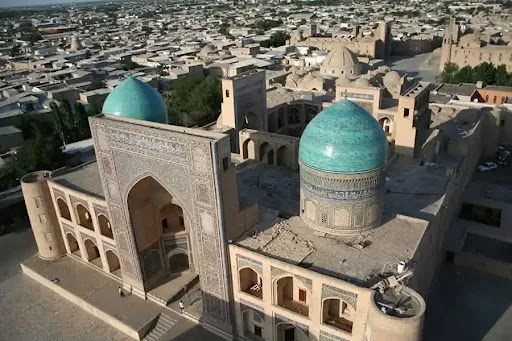
When we visited this the Madrassah was undergoing renovations and hence we could not a very good view of the interior of the building Directly facing Kalyan Mosque is Mir-i-Arab Madrasah, which was also built between 1535 and 1536 during the Khanate of Bukhara. The madrasah has two floors and is beautifully ornate with mosaics and colorful patterns. There’s also a mausoleum inside dedicated to Sheikh Abdullah Yamani of Yemen, who was the spiritual mentor of the Shaybanids. Today, the madrasah is still a functioning Islamic college, almost 500 years after it was built! This madrasah is considered one of the most interesting monuments of Bukhara, and is still an acting institution, where future imams and religious mentors receive their education There are two big blue domes of the Miri-Arab madrasah towering above the surrounding buildings in the center of Bukhara. Along with the Kalyan mosque and minaret, this religious educational establishment forms the whole ensemble Poi-Kalyan that is the spiritual center of the city.
See more posts
See more posts
hotel
Find your stay

Pet-friendly Hotels in Bukhara City

Find a cozy hotel nearby and make it a full experience.

🕌 Mir-i-Arab Madrasa – A Living Legacy of Islamic Education in Bukhara 📍 Location: Opposite Kalyan Mosque, Po-i-Kalyan Complex, Bukhara, Uzbekistan 📅 Built: Circa 1535–1536 🔨 Commissioned by: Sheikh Abdullah Yamani of Yemen (Mir-i-Arab), financed by Ubaydullah Khan of the Shaybanid Dynasty ✨ Overview: The Mir-i-Arab Madrasa is one of Central Asia’s most revered Islamic institutions, renowned for its architectural grandeur, historical significance, and continuous use as a religious school for nearly 500 years. 🌟 Key Highlights: Architectural Masterpiece This iconic madrasa showcases stunning blue-tiled domes, intricate mosaic work, and a symmetrical facade typical of Timurid and Shaybanid-era design. The central portal is adorned with majestic calligraphy and glazed ceramic art. A Symbol of Revival Built during the rule of Ubaydullah Khan, the madrasa marked a cultural and religious renaissance in Bukhara following the Mongol invasions. It was established to promote Islamic learning and Sufism. Still Active Today Mir-i-Arab remains a functioning madrasa, training young men in Islamic theology, Arabic, and Qur’anic studies. It was one of the few Islamic institutions allowed to operate during the Soviet era, making it a symbol of religious resilience. Name Origin “Mir-i-Arab” means “Prince of the Arabs”, referring to Sheikh Abdullah Yamani, a revered Yemeni scholar who became spiritual advisor to Ubaydullah Khan and is buried in the madrasa. 🧭 What You’ll See: The two blue domes: one crowns the prayer hall, the other the burial chamber of Mir-i-Arab and Ubaydullah Khan. A vast central courtyard surrounded by two stories of hujras (student rooms). Beautiful mosaic tilework depicting floral and geometric patterns. 📷 Photography Tip: Capture the sunset glow on the madrasa’s façade while standing in Registan Square of Bukhara, with the Kalyan Minaret and Mosque in the background for a complete ensemble view.
Saurav Debnath

Saurav Debnath

hotel
Find your stay

Affordable Hotels in Bukhara City

Find a cozy hotel nearby and make it a full experience.

Get the Appoverlay
Get the AppOne tap to find yournext favorite spots!
Медресе Мири Араб (узб. Mir-i Arab mаdrаsasi, перс. مدرسهٔ میر عرب‎ Madrasa-ye mir-e arab) — исламское образовательное, духовно-просветительское и мемориально-культовое сооружение XVI века в Бухаре (Узбекистан). Часть архитектурного ансамбля Пои Калян. В 1993 году в числе других достопримечательностей Бухары внесено в Список Всемирного наследия ЮНЕСКО в Узбекистане.Медресе Мири-Араб, Бухара Религиозная школа эпохи Шейбанидов Медресе Мири-Араб, БухараВ самом центре Бухары над окружающими строениями возвышаются два больших голубых купола медресе Мири-Араб. Вместе с мечетью Калян и минаретом, религиозное учебное заведение составляет цельный архитектурный ансамбль Пои-Калян, который является духовным центром города. Строительство медресе Мири-Араб в 16 веке приписывается шейху Абдаллаху Йамани (из Йемена), духовному наставнику шейбанидов. Точная дата начала застройки до сих пор неизвестна. По одной из версий, ученые полагают, что здание возводилось в период с 1530 по 1535/1536 год. Другая версия утверждает, что медресе было построено в ознаменование победы армии шейбанидов над войсками сефевидского шаха Исмаила I в битве при Гиждуване, одержанной в 1512 году. Есть предположения, что заключительные строительные работы были произведены на деньги Убайдулла-хана, полученные им от продажи в рабство 3000 пленных иранцев. Это медресе является одним из интереснейших памятников Бухары, и по сей день остается действующим заведением, где обучаются будущие имамы и религиозные наставники. Для строения присуща традиционная национальная архитектура - квадратный двор, обведенный двумя этажами келий, два больших купольных зала в левом и правом углу. К главному фасаду в центре, подчеркнутому порталом, примыкают двухэтажные лоджии. Внутренний дворик украшен наборной резной мозаикой. В самом центре медресе находится усыпальница Убайдуллы - эмира Бухары, который правил городом в период с 1533 по 1540 год. В изголовье здания захоронен и духовный наставник хана - Мири Араб (шейх Абдаллаху Йамани), в честь которого названо здание. Там же погребен и старший преподаватель Убайдуллы - Мухаммад Касым. В декоре медресе Мири-Араб преобладают различные каменные мозаики утонченной работы с геометрическими, растительными и каллиграфическими надписями и узорами. Художественными работами украшены портал, тимпаны лоджии главного фасада, тимпаны арок худжр на внутренних фасадах и барабаны куполов. Купола снаружи покрыты скуфьей из голубых плиток. Во внутреннем убранстве здания особенно ярко оформлена гурхана (усыпальница). Ее панели и решетки декорированы резной мозаикой из цветного камня, а стены и плафон — резным ганчем (ганч – материал похожий на алибастр). Медресе Мири-Араб было единственным духовным учебным заведением в СССР, которое стало действовать после Второй мировой войны. Все главные имамы тех времен заканчивали именно этот религиозный центр. Декор и архитектура здания отмечены высочайшей культурой и тонким восточным вкусом. Памятник претерпел немало разрушений, но реставраторам удалось восстановить большую часть строения, вернув ему первозданный вид. Как и в древние времена, сегодня величественный фасад радует глаз превосходным художественным оформлением.
Shavkat Mirzaliev

Shavkat Mirzaliev

hotel
Find your stay

The Coolest Hotels You Haven't Heard Of (Yet)

Find a cozy hotel nearby and make it a full experience.

hotel
Find your stay

Trending Stays Worth the Hype in Bukhara City

Find a cozy hotel nearby and make it a full experience.

When we visited this the Madrassah was undergoing renovations and hence we could not a very good view of the interior of the building Directly facing Kalyan Mosque is Mir-i-Arab Madrasah, which was also built between 1535 and 1536 during the Khanate of Bukhara. The madrasah has two floors and is beautifully ornate with mosaics and colorful patterns. There’s also a mausoleum inside dedicated to Sheikh Abdullah Yamani of Yemen, who was the spiritual mentor of the Shaybanids. Today, the madrasah is still a functioning Islamic college, almost 500 years after it was built! This madrasah is considered one of the most interesting monuments of Bukhara, and is still an acting institution, where future imams and religious mentors receive their education There are two big blue domes of the Miri-Arab madrasah towering above the surrounding buildings in the center of Bukhara. Along with the Kalyan mosque and minaret, this religious educational establishment forms the whole ensemble Poi-Kalyan that is the spiritual center of the city.
Santosh Pingalay

Santosh Pingalay

See more posts
See more posts

Reviews of Mir-i-Arab Madrasa

4.8
(251)
avatar
4.0
3y

In the world-famous Bukhara, there is another educational center that has its place in the Islamic world. It speaks of centuries...

It was during Ubaidullah Khan's time that Bukhara flourished and the city acquired its own architectural style. In 1514, the Kalam Jame Mosque was restored, it was built during the reign of Karakhani Arslan Khan (1102-1130), until 1404, one of the largest in Movarunnahr, Bibi Khanim Mosque, built by Temur's grandson in Samarkand, was completed by Ulugbek. By order of Ubaidullah Khan, the front part of the mosque was decorated with a large pediment and a new mihrab was installed.

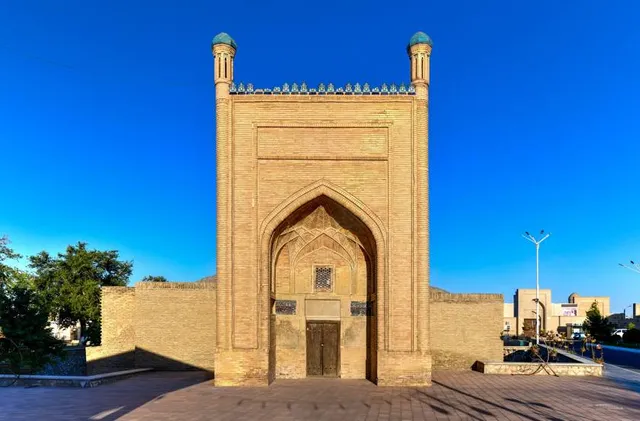
The Miri Arab Madrasa is a part of the Poyi-Kalon architectural ensemble, which today includes the Kalon Mosque and Tower and the Amir Olim Khan Madrasah. The front part of the madrasah faces the Kalon tower. The entrance to the madrasa is decorated with a grand and deeply decorated porch, with huge minarets in front of it.If you enter through the central entrance on the right, you can see the marble tomb of Sheikh Abdullah al-Yamani and the burial place of Ubaidullah Khan. The buildings are protected by two domes covered with blue tiles. In the courtyard, there are classrooms, rooms, and summer classrooms are made in the form of small verandas. The courtyard is surrounded by a two-story gallery, suitable for students. There are 111 cells. Summer auditoriums are prepared in the form of small verandas.

Mir Arab madrasah has always been considered a center of Islamic spiritual education; well-known spiritual figures and muftis of the entire Islamic world studied in its walls. The activity of the madrasa was stopped in 1920 when the Bukhara Emirate was captured by the Bolsheviks.

After the Second World War, the Soviet government changed its attitude towards religion and gradually started to open spiritual institutions. appointed. With the efforts of the sheikh, the Miri Arab Madrasa was restored in 1945 and received the status of an educational institution.

Famous spiritual and political leaders, muftis and even the leaders of some countries were graduates of the Mir Arab Madrasa at...

   Read more
avatar
5.0
34w

🕌 Mir-i-Arab Madrasa – A Living Legacy of Islamic Education in Bukhara 📍 Location: Opposite Kalyan Mosque, Po-i-Kalyan Complex, Bukhara, Uzbekistan 📅 Built: Circa 1535–1536 🔨 Commissioned by: Sheikh Abdullah Yamani of Yemen (Mir-i-Arab), financed by Ubaydullah Khan of the Shaybanid Dynasty

✨ Overview: The Mir-i-Arab Madrasa is one of Central Asia’s most revered Islamic institutions, renowned for its architectural grandeur, historical significance, and continuous use as a religious school for nearly 500 years.

🌟 Key Highlights: Architectural Masterpiece This iconic madrasa showcases stunning blue-tiled domes, intricate mosaic work, and a symmetrical facade typical of Timurid and Shaybanid-era design. The central portal is adorned with majestic calligraphy and glazed ceramic art.

A Symbol of Revival Built during the rule of Ubaydullah Khan, the madrasa marked a cultural and religious renaissance in Bukhara following the Mongol invasions. It was established to promote Islamic learning and Sufism.

Still Active Today Mir-i-Arab remains a functioning madrasa, training young men in Islamic theology, Arabic, and Qur’anic studies. It was one of the few Islamic institutions allowed to operate during the Soviet era, making it a symbol of religious resilience.

Name Origin “Mir-i-Arab” means “Prince of the Arabs”, referring to Sheikh Abdullah Yamani, a revered Yemeni scholar who became spiritual advisor to Ubaydullah Khan and is buried in the madrasa.

🧭 What You’ll See: The two blue domes: one crowns the prayer hall, the other the burial chamber of Mir-i-Arab and Ubaydullah Khan.

A vast central courtyard surrounded by two stories of hujras (student rooms).

Beautiful mosaic tilework depicting floral and geometric patterns.

📷 Photography Tip: Capture the sunset glow on the madrasa’s façade while standing in Registan Square of Bukhara, with the Kalyan Minaret and Mosque in the background for a complete...

   Read more
avatar
5.0
21w

The Mir-i-Arab Madrasa, officially known as "Mir Arab" O‘rta Maxsus Islom Ta’lim Muassasasi, is one of the most revered Islamic educational institutions in Uzbekistan and a masterpiece of Islamic architecture in Bukhara. Founded in the 16th century during the Shaybanid era, it continues to serve as a center for Islamic learning, giving the building a special sense of purpose and life beyond its beauty.

From the outside, the madrasa impresses with its grand portal, harmonious symmetry, and intricate tilework in shades of blue and turquoise. Inside, the courtyard is peaceful and beautifully maintained, with traditional student rooms and a calm, spiritual atmosphere that reflects its ongoing religious and educational role.

What makes Mir-i-Arab especially captivating is the fact that it’s not just a historical monument—it’s a living institution where students still study today. This blend of history, spirituality, and education creates a deeply authentic experience. Standing across from the Kalon Mosque, it forms part of a breathtaking architectural ensemble that’s hard to forget.

Whether you’re interested in architecture, history, or the Islamic tradition, a visit to Mir-i-Arab is both meaningful and inspiring. It’s a place that represents the heart of Bukhara’s scholarly and...

   Read more
Page 1 of 7
Previous
Next