3 YEAR UPDATE
After three years here, I would again emphasize to anyone who considers joining that this is a serious fight gym with rigorous training and very high standards. There are no promotion ceremonies, no water breaks, no music, no cussing, and no praise for mediocrity. Your skill level is the reward for your effort. If you do things right, it just means you're doing your job. If not, you will immediately recieve corrective feedback. Bottom line: Being here is very difficult and it will test your patience, grit, pain threshold, and emotional fortitude. But, you will be a tough and strategic fighter as a result of it.
2 YEAR UPDATE:
[What I wrote after 1 year: I can honestly say my skills as a fighter have improved 20-fold. From about age 10 to about age 20 I was a highly competitive wrestler. In that time, I was a multi-time state placer and OSAA runner up. I then went on to wrestle for an NAIA championship team. I am now 38 years old. And despite the age and fitness gap between then and now, I've never felt more confident in my grappling skills. Especially in terms of how those skills can apply to self defense. I'm fairly certain that the 38 year old me with 1 year of training at Radical could give a pretty good beating to the version of me at the height of that wrestling career]. The 39 year old me would wipe the floor with the 38 year old me.
After 2 years I'm starting to refine certain techniques, getting better at functional relaxation (relaxing has been a big focus of mine, but it's very difficult and will take years to become optimally relaxed while rolling), and I am much more systematic in my game. I really love training here. But, you should know...
...Radical is a serious place. Many people quit because they come in with the wrong idea about it. It isn't as hellish as a wrestling room, but you do get yelled at for executing techniques poorly if you should at your level know them well. The school trains BJJ with strikes and never uses techniques which can lead to one's vulnerability in a fight setting. Good technique is put above all else, here. And for good reason. There is a striking class, but you have to qualify to take it. To qualify you have to receive your first stripe. And that takes from six months up to over a year depending on how competent you become at the basic curriculum.
With that said, you will get out of this exactly what you put into it. It's a serious course of training, and the expectations and standards are extremely high; but, you will be amazed at the results if you show up consistently, accept feedback, and do your best. Being coachable is the overriding quality in those who succeed here—not athleticism or intensity, but the openness and humility to learn the system.
Two things you should know about the Radical MMA culture:
First, there are some aspects that are quite traditionalist, but they all have strong reasoning behind them. For example, we are required to greet and depart as well as answer in the affirmative by exclaiming the Japanese "Osu". The reason for this is to set and maintain a serious mindset to stay focused and persevere through discomfort. Furthermore, there is a culture of respect and professionalism that is a bit formal and slightly strict. For example, swearing as well as crossing your arms is not allowed as it is seen as conducive to an environment of disrespect. Additionally, any type of meat-head or inappropriate behavior can be met with expulsion from the gym. These social constraints and limitations are there to both maintain courtesy and keep people safe. As such, you will get along with everyone and you will have a lot of fun.
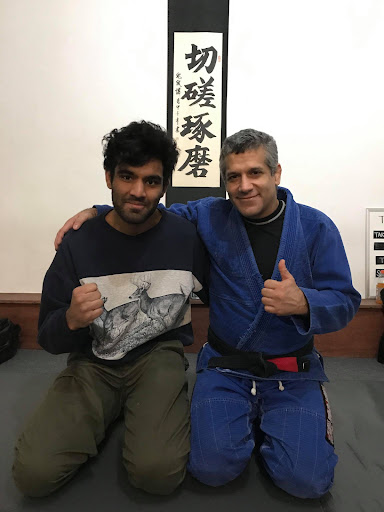
Second, the proprietor of Radical MMA, Rene Dreifuss, is an extremely dedicated coach. He wants the students to be the best representatives of his system as they can be. As such, students are provided with a lot of personalized feedback. Rene always works to improve his instruction and his relationships with the students. And, he is very conscious of everyone's...
Read morePart 1/2
After I started writing this review I've realized even more just how incredible of a place Radical MMA is. I will never be able to describe it as well as it deserves to be, so in case you have any questions or anything needs to be clarified, please don't hesitate to reach out.
I've trained at Radical MMA for over two years now and could not be more happy with my academy. I have trained at other schools before but nothing comes close to the value that Radical and coach Rene Dreifuss have to offer.
Here are my main reasons (unordered) to consider Radical as a top choice for anyone looking to join:
Vetting: Unlike other schools that let anyone in with no questions asked, coach Dreifuss makes sure to speak with every single person looking to train at Radical MMA. This accomplishes the following; 1. Ensures maximum safety for all 2. Makes sure the mentality of the person aligns with the ethics of Radical. You can rest assured that when you train at Radical there will never be a time you are at risk of getting hurt due to your training partners ego or bad intent. Those people simply do not get a chance to even step on the mat.
Safety: I have been to other schools where injuries were a normal part of training. And where your sparring partners do not hold your safety as their priority. This is never the case at Radical. Your number one priority is your partner's safety, and not feeding your own ego and making them tap at all cost. In addition, at Radical we put a ton of emphasis on the technique and smoothness of movement over power/explosiveness and yanking of your body parts from locked in positions. When I visited top schools of the world, located in NYC, I was surprised to see higher level belts being so spazzy it seemed like they've been electrocuted. There's a time and place for power and explosiveness but it should not be your first line of attack/defense. Needless to say this causes constant injuries, which keeps you away from training and in general instill poor fundamentals. I myself have been in this situation multiple times in my old academies, having to take off multiple weeks and even months to fix an injury. But never have there been a case where somebody tried to hurt me at Radical. During my two years at Radical I have only been injured due to my own mistake, such as jamming of a finger/toe, but never by my sparring partners.
Sparring Intensity: This might sound counterintuitive to my previous point but I can attest to the fact that the intensity level at Radical is unmatched, compared to anywhere else I've been, yet with no injuries at all. Excellent foundations + smoothness + healthy attitude + partner's safety as a priority = Intense training. My main reason for not joining a school that was related to jiu jitsu was the “softness” I've associated with the sport, i.e flowy, inverted guard pulling, colorful legging wearing athletes. I was surprised when I got destroyed by every single person in the gym, some of which were 50+ pounds lighter than me, and had to re-evaluate my stance. In between many drilling sessions we have, I spar 3 times a week, consistently, for over 2 years. I'm not killing myself or torturing my body. The sparring sessions are extremely (for me) cardio demanding/strenuous but are low in any damage that would keep one out of training. Therefore, I can get all of the benefits of hard sparring sessions minus setting myself back with any sort of injuries.
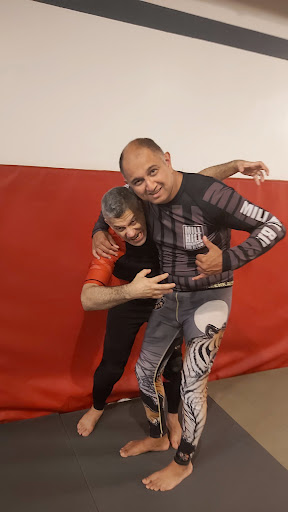
Diversity: Given that we’re located in NYC, diversity comes by default. But to reassure anyone reading this, we have great diversity on all spectrums; age, gender, weight, belts. We even have numerous people that truly do not speak a word of english but are able to train without restrictions due to the supportive environment of their teammates who are able to translate and offer help. There is absolutely no toxicity in the gym and I think people are made to feel welcomed as soon as they step...
Read moreRadical MMA is hands-down one of the best places I've ever visiting during my journey to safely and enjoyably learn street-applicable self-defense. The atmosphere is extremely friendly and welcoming. It feels less like you're walking into an MMA gym and more like you're walking into a zen garden where the teachers and students are welcoming, cleanliness is paramount, and the atmosphere is relaxed.
I had the pleasure of stopping by during my last trip to NYC and meeting Rene (the owner and operator). Even though we have mutual friends, this was our first meeting, and he treated me like a brother. Everyone else training in the gym was the same way. Not a person walked in that didn't promptly introduce themselves to the new face (me).
I was there for a Sunday open mat. Every round of sparring started with "Good training with you. Do you have any injuries? OK touch hands and begin." The atmosphere was one of mutual respect in which everyone is there to help everyone else learn, and in so doing, help themselves. There was a constant vigilance towards not injuring each other... yes we are training street self-defense, but if we can't do that safely, then how can we keep coming back to learn and practice more? I credit this safe and positive atmosphere to Rene, because the mentality of a martial arts dojo invariably starts at the top... the tone is set by the person in charge.
Rene has a very deep, interesting, and academic approach to the martial arts and he has been studying them for many, many years. And despite the countless hours he's spent immersed in study, it hasn't dulled his enthusiasm one bit (aside: a loss of instructor enthusiasm is present in a large percentage of schools I've visited in which the instructor is a life-long practitioner that has settled into the idea that martial arts is now just his day job... but that is not Rene, his enthusiasm outshines all others!). Rene and I waxed philosophical at length about the strategy and approaches that work best in MMA and self-defense. But make no mistake, this isn't just a philosophy class... Rene is a legitimate warrior with proven cage-worthy techniques.
Rene is a black belt in Brazilian Jiu-jitsu who really focuses on cage- and street-applicable techniques. If you are a BJJ practitioner you are no doubt aware of the ongoing sport jiu-jitsu vs self-defense jiu-jitsu debate, and you may have heard about Eddie Bravo's "recent" proposal to allow open-palm strikes in his BJJ tournaments. Well, Rene has been doing this forever. The light taps during rolling aren't intended to harm you, but to raise your awareness of any vulnerabilities to striking that your current position may have, which is in stark contrast to much of the sport jiu-jitsu technique that has been en vogue lately. Rene's approach is always logical, and he advocates maintaining safety from being hit while establishing positional dominance before then getting a submission.
And I would be sorely remiss if I didn't mention perhaps the most important part of Rene's approach to teaching: he is committed to the craft of teaching (because teaching itself is a skill that many experts neglect to learn, and I'm speaking from experience as I'm an academic and I'm in that world daily) and he is truly dedicated to his students. His coaching style is friendly but technical, demanding but encouraging, and he never stops wanting to help his students. After I'd been there for just one day, he took as much personal interest in my development as a student of the martial arts as any teacher I've had.
If you want a safe, respectful, welcoming environment where you can learn real self-defense-worthy martial art techniques, you owe it to yourself to swing by Radical MMA and check it out. There may...
Read more