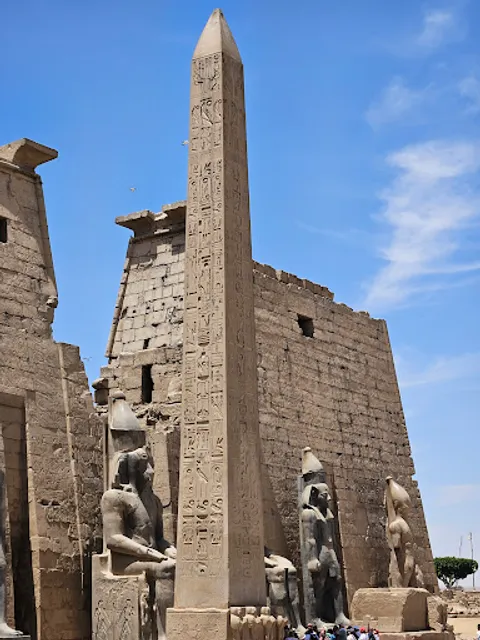
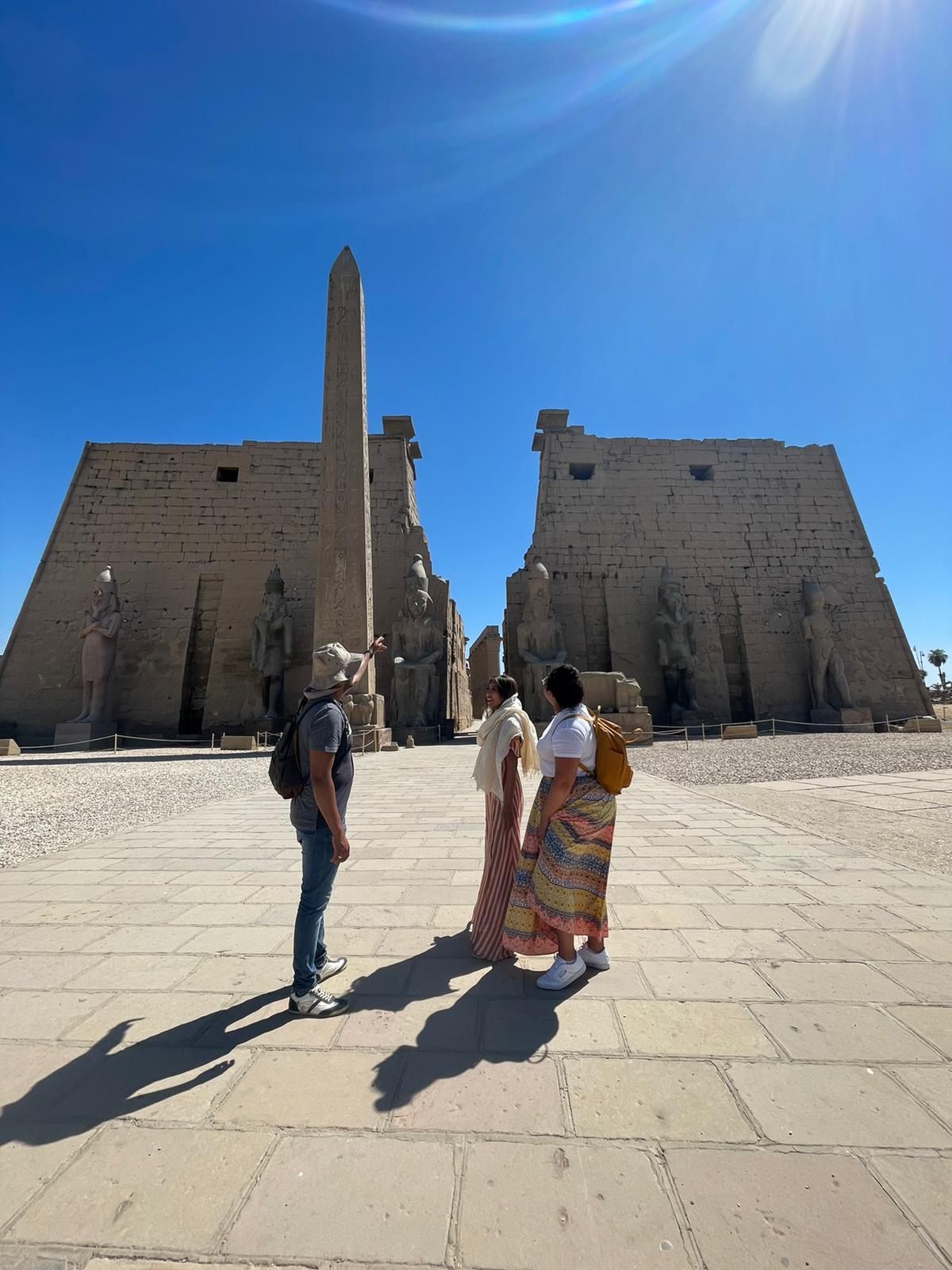
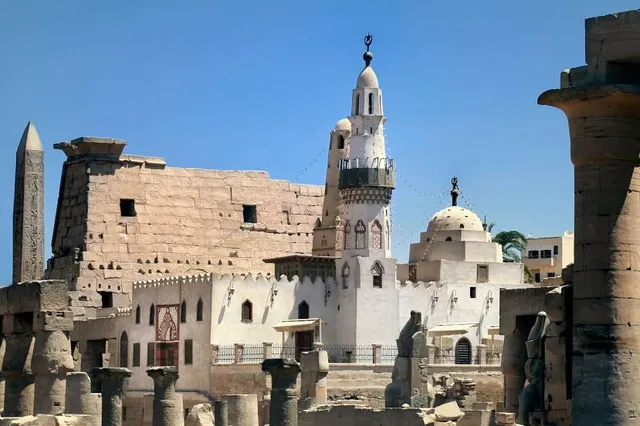
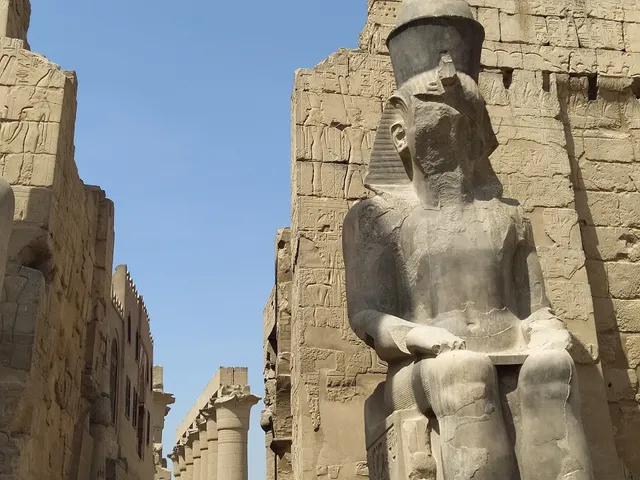
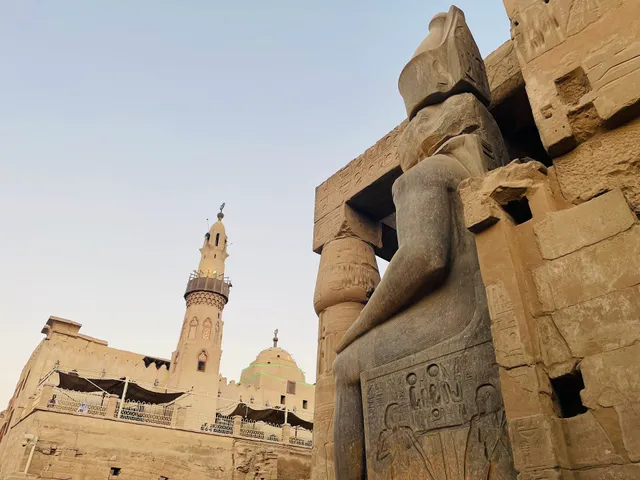
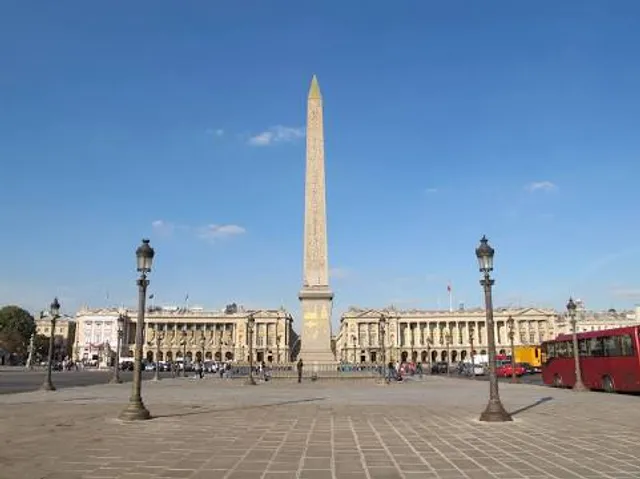
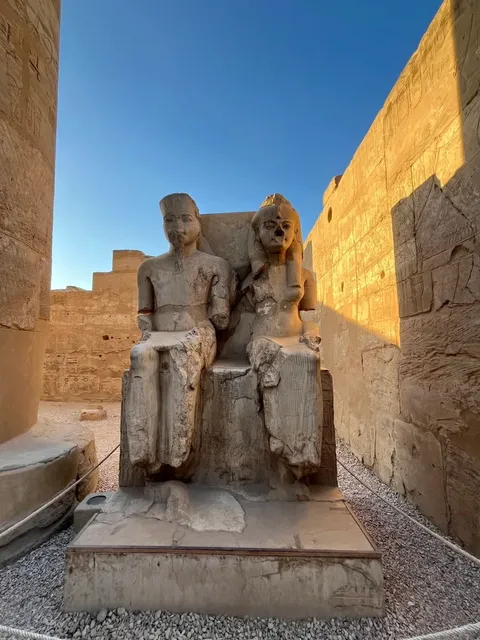
After Luxor was transformed into the capital of ancient Egypt, it had to be reconstructed because it is the seat of the new government, so the Pharaoh Amenhotep III ordered the ninth Pharaohs of the Eighteenth Dynasty to build a synagogue so that he would have the right to ascend to the throne, where it is from the royal laws that the throne be appointed as the legitimate crown prince of the pharaoh and his mother be a princess of a dynasty A monarchy, and if he should not marry the eldest daughter of the previous king, but Amenhotep the Third did not meet these conditions to ascend the throne, although he is attributed to Tuthmosis the Fourth but his mother is not of a royal lineage because she is not the legitimate wife of the pharaoh and the wife of Thutmose does not belong to the royal family and It is called (T), so He did not acquire the legitimacy necessary to ascend the throne, but preferred to prove his lineage to God Amon himself and to gain legitimacy from him, because God Amun is one of the main deities in Egyptian mythology but rather one of the most complex deities in his interpretation, he is the creator of the universe and life and his word Amun means hidden in his name and the hidden In his form, a person cannot perceive him, and when he united with the sun god’s revelation, he manifested himself to the creation, so he gathered himself in the hidden and apparent shape of the sun disk, and his wife was called the feminine of the female form of Amun, and their son is Khonsu (the moon) and he called them the Holy Trinity of Thebes. As for the era of the New Kingdom, Amon was ruling through the king, and it must have been Amenemhat the Third gains legitimacy from Amun. Amenhotep the Third appreciated the art and the huge architecture. Therefore, during his era, the architecture was distinguished by elegance and enormity, so he instructed his minister to build the Luxor Temple to worship the Holy Trinity of Thebes. Then, many additions and amendments were made to the temple to appear in its present form. When you go to visit the Luxor Temple, you will see at the first gate of the temple, 25 meters high, engraved with drawings of the victories of King Ramses II at the Battle of Kadesh, and the number of statues on the gate was 6 statues and only three of them remain, two representing him sitting and the third on the right side representing him while he is standing In addition to two obelisks, one of them is now in Paris and the other is still at the gate of the Luxor Temple. After crossing the gate you will go to the large courtyard, surrounded by two rows of columns in the form of a papyrus plant made of granite in addition to seven statues of Ramses II, and there is also a mosque located in the northern part of the large courtyard built in the Ayyubid era. Next, we turn the columns of Amenhotep III, which consists of 14 huge papyrus-shaped columns, seven columns on each side, and the inscriptions were painted during the reign of Tutankhamun, and Sethi I added some inscriptions as well. After that you see the courtyard of Amenhotep the Third open south of the lobby, this courtyard is surrounded by 46 columns in the form of a papyrus plant, and the inscriptions were added to it in different times that began during the reign of Amenhotep III until Alexander arrived in Egypt, the importance of this courtyard is due to the establishment of rituals of Opet in which each Year . There was a 32-pillar hall for the gods to evacuate. It was permitted to enter this hall until the end of the temple for the pharaoh and the priests, and it was forbidden to the common people. Then there is the hall of the sacrificial offering and decorated with reliefs of prominent Amenhotep the Third and he offers sacred offerings to the gods. The mother of the divine birth room Amenhotep the Third, where he claimed to be Ibn Amun, and decorated the room with prominent reliefs of his mother's marriage to Amun with the participation of the rest of the gods in the...
Read moreLuxor Temple is nothing short of breathtaking. Stepping through its monumental gates is like stepping back in time, offering a tangible connection to ancient Egypt's grandeur and power. Located on the east bank of the Nile in what was once Thebes, this temple complex is a testament to the ingenuity and artistry of the pharaohs.
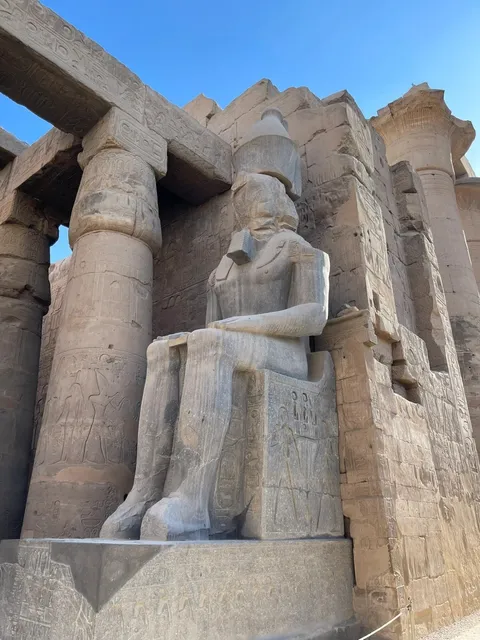
The sheer scale of the temple is immediately striking. The towering pylons, adorned with intricate hieroglyphics and reliefs depicting pharaohs in battle and making offerings to the gods, are a sight to behold. Walking through the Great Court of Ramesses II, surrounded by colossal statues, gives you a true sense of the temple's vastness.
The Avenue of Sphinxes, which once connected Luxor Temple to Karnak Temple (a journey now partially restored), is a powerful reminder of the interconnectedness of these sacred sites. Even the fragments that remain evoke a sense of the grand processions that once took place here.
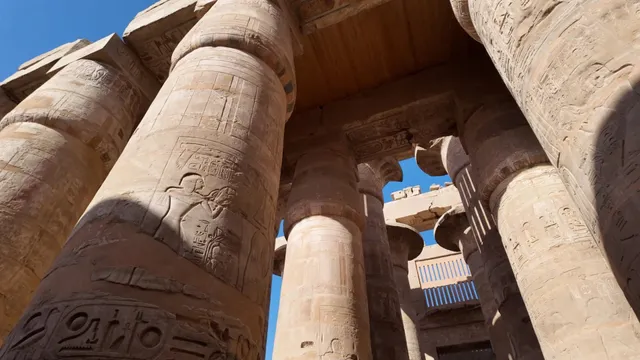
One of the most impressive areas within Luxor Temple is the Colonnade of Amenhotep III. The towering papyrus-shaped columns, with their delicate carvings, are a masterpiece of ancient Egyptian architecture. The play of light and shadow within this space is particularly magical, especially during sunrise and sunset.
The temple's history is layered, with additions and modifications made by various pharaohs over centuries. This layering is evident in the different architectural styles and inscriptions found throughout the complex, adding to its historical richness. The later use of the temple as a church and then a mosque further underscores its enduring significance.
Visiting Luxor Temple is an unforgettable experience. It's a place where you can truly appreciate the scale of ancient Egyptian civilization and marvel at the enduring legacy of its pharaohs. Whether you're a history buff or simply appreciate stunning architecture, Luxor Temple is a must-see destination. It's a powerful reminder of the past and a testament to the enduring power of...
Read moreThe Luxor Temple, situated in the heart of Luxor city on the east bank of the Nile, is a prominent symbol of ancient Egypt’s religious and cultural history. Constructed mainly during the reigns of Pharaohs Amenhotep III and Ramses II, the temple is dedicated to the Theban Triad of Amun, Mut, and Khonsu. Its grand architecture, including the impressive pylon, obelisks, and vast courtyards, reflects the glory and artistry of ancient Egyptian craftsmanship.
The temple was not only a place for worship but also served as a significant site for various religious festivals, particularly the Opet Festival, which celebrated the rejuvenation of the pharaoh’s power. Luxor Temple’s strategic location, directly linked to the Karnak Temple via the Avenue of Sphinxes, highlights its importance in the ancient capital of Thebes. The temple’s design, sculptures, and hieroglyphs offer insight into Egypt’s rich mythology and beliefs.
Many visitors arrive at Luxor Temple via Nile cruises, which stop directly in front of the temple, making it the first sight they see upon disembarking. Its location in the heart of Luxor city adds to its accessibility and appeal, blending the vibrant life of the city with the ancient echoes of Egypt’s past.
Today, Luxor Temple stands as a testament to the grandeur of ancient Egyptian civilization. It attracts countless visitors who marvel at its architectural beauty and historical significance, offering a glimpse into the life and traditions of ancient...
Read more