HTML SitemapExplore
logo
Find Things to DoFind The Best Restaurants

Augustus Bridge — Attraction in Dresden

Name
Augustus Bridge
Description
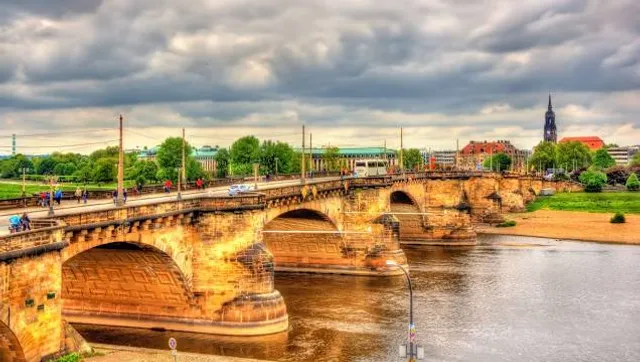
The Augustus Bridge is a bridge in the city of Dresden, in the state Saxony in Germany. Crossing the river Elbe, the road bridge connects the Innere Neustadt in the north with the historic city centre to the south. There has been a bridge at the same location since at least the 12th century.
Nearby attractions
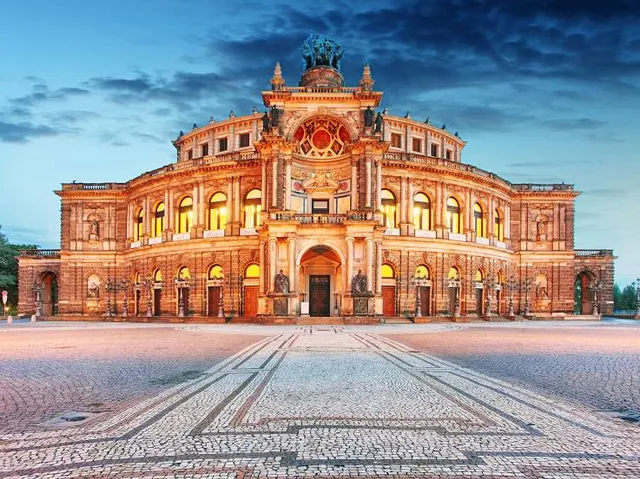
Semperoper Dresden
Theaterplatz 2, 01067 Dresden, Germany
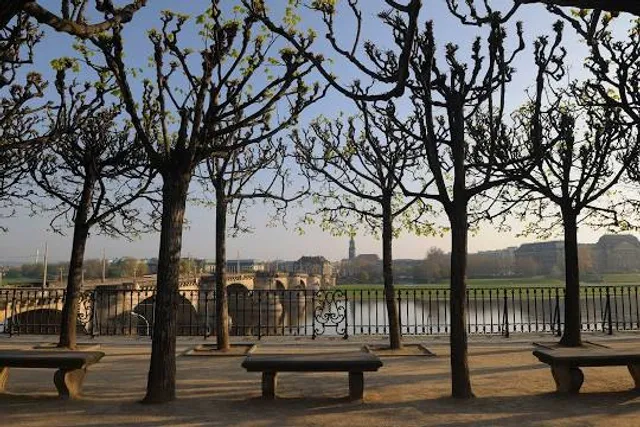
Brühl's Terrace
Georg-Treu-Platz 1, 01067 Dresden, Germany
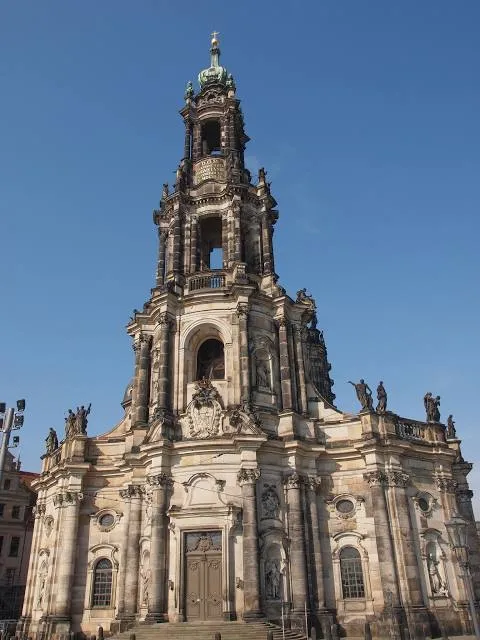
Kathedrale Sanctissimae Trinitatis
Schloßpl. 2, 01067 Dresden, Germany
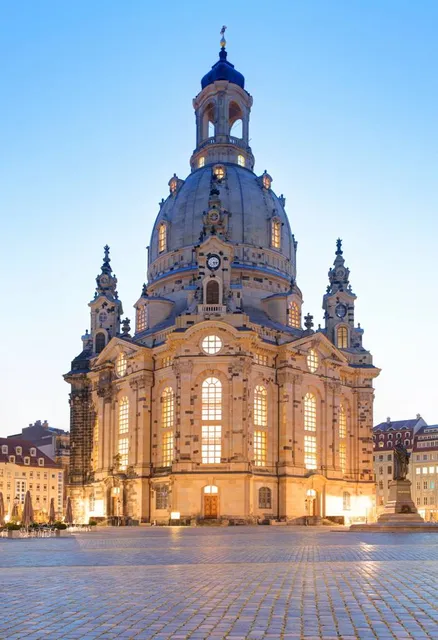
Frauenkirche Dresden
Neumarkt, 01067 Dresden, Germany
Golden Rider
Neustädter Markt 14, 01097 Dresden, Germany
Fürstenzug
Augustusstraße 1, 01067 Dresden, Germany
Dresden Castle
Taschenberg 2, 01067 Dresden, Germany
Schlossplatz
Schloßpl., 01067 Dresden, Germany
Zwinger
Sophienstraße, 01067 Dresden, Germany
Green Vault
Residenzschloss, Taschenberg 2, 01067 Dresden, Germany
Nearby restaurants
Ayers Rock
Münzgasse 8, 01067 Dresden, Germany
Kunst Café Antik
An d. Frauenkirche 5, 01067 Dresden, Germany
Kobalt - Club Royal - Dresden
Theaterplatz 3, 01067 Dresden, Germany
Bierhaus Dampfschiff
An d. Frauenkirche 5, 01067 Dresden, Germany
Las Tapas
Münzgasse 4, 01067 Dresden, Germany
Pulverturm
An d. Frauenkirche 12, 01067 Dresden, Germany
Watzke am Goldenen Reiter
Hauptstraße 1, 01097 Dresden, Germany
Café Vis-á-Vis
An d. Frauenkirche 5, 01067 Dresden, Germany
Ontario - Canadian Steakhouse
An d. Frauenkirche 2, 01067 Dresden, Germany
Coselpalais - Restaurant & Grand Café
An d. Frauenkirche 12, 01067 Dresden, Germany
Related posts
Keywords
Augustus Bridge tourism.Augustus Bridge hotels.Augustus Bridge bed and breakfast. flights to Augustus Bridge.Augustus Bridge attractions.Augustus Bridge restaurants.Augustus Bridge travel.Augustus Bridge travel guide.Augustus Bridge travel blog.Augustus Bridge pictures.Augustus Bridge photos.Augustus Bridge travel tips.Augustus Bridge maps.Augustus Bridge things to do.
Augustus Bridge things to do, attractions, restaurants, events info and trip planning
Augustus Bridge
GermanySaxonyDresdenAugustus Bridge

Basic Info

Augustus Bridge

01097 Dresden-Neustadt, Germany
4.5(1.1K)
Open until 12:00 AM
Save
spot

Ratings & Description

Info

The Augustus Bridge is a bridge in the city of Dresden, in the state Saxony in Germany. Crossing the river Elbe, the road bridge connects the Innere Neustadt in the north with the historic city centre to the south. There has been a bridge at the same location since at least the 12th century.

Cultural
Outdoor
Accessibility
attractions: Semperoper Dresden, Brühl's Terrace, Kathedrale Sanctissimae Trinitatis, Frauenkirche Dresden, Golden Rider, Fürstenzug, Dresden Castle, Schlossplatz, Zwinger, Green Vault, restaurants: Ayers Rock, Kunst Café Antik, Kobalt - Club Royal - Dresden, Bierhaus Dampfschiff, Las Tapas, Pulverturm, Watzke am Goldenen Reiter, Café Vis-á-Vis, Ontario - Canadian Steakhouse, Coselpalais - Restaurant & Grand Café
logoLearn more insights from Wanderboat AI.
Open hoursSee all hours
FriOpen 24 hoursOpen

Plan your stay

hotel
Pet-friendly Hotels in Dresden
Find a cozy hotel nearby and make it a full experience.

hotel
Affordable Hotels in Dresden
Find a cozy hotel nearby and make it a full experience.

hotel
The Coolest Hotels You Haven't Heard Of (Yet)
Find a cozy hotel nearby and make it a full experience.

hotel
Trending Stays Worth the Hype in Dresden
Find a cozy hotel nearby and make it a full experience.

Reviews

Nearby attractions of Augustus Bridge

Semperoper Dresden

Brühl's Terrace

Kathedrale Sanctissimae Trinitatis

Frauenkirche Dresden

Golden Rider

Fürstenzug

Dresden Castle

Schlossplatz

Zwinger

Green Vault

Semperoper Dresden

Semperoper Dresden

4.8

(6.3K)

Open 24 hours
Click for details
Brühl's Terrace

Brühl's Terrace

4.7

(5.5K)

Open until 12:00 AM
Click for details
Kathedrale Sanctissimae Trinitatis

Kathedrale Sanctissimae Trinitatis

4.8

(1.5K)

Open 24 hours
Click for details
Frauenkirche Dresden

Frauenkirche Dresden

4.8

(13.7K)

Open 24 hours
Click for details

Things to do nearby

Explore Dresdens highlights
Mon, Dec 8 • 10:30 AM
01067, Dresden, Germany
View details
Candlelight: Tribut an Hans Zimmer
Fri, Dec 5 • 8:30 PM
Tzschirnerpl. 3-5, Dresden, Germany, 01067
View details
Candlelight: Tribut an Phil Collins
Thu, Dec 11 • 8:30 PM
Bautzner Straße 130, Dresden-Loschwitz, 01099
View details

Nearby restaurants of Augustus Bridge

Ayers Rock

Kunst Café Antik

Kobalt - Club Royal - Dresden

Bierhaus Dampfschiff

Las Tapas

Pulverturm

Watzke am Goldenen Reiter
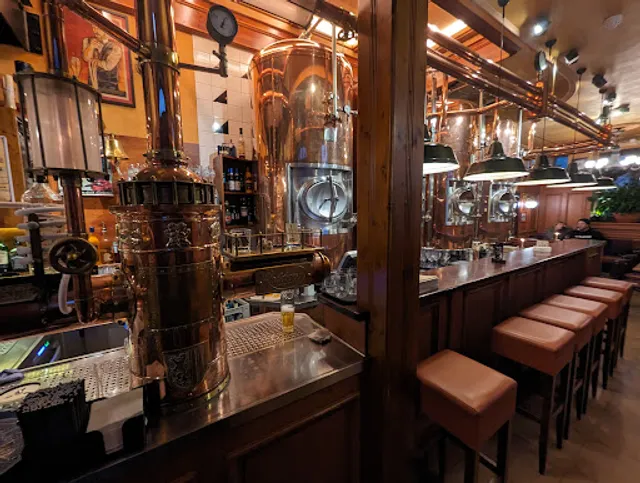
Café Vis-á-Vis

Ontario - Canadian Steakhouse

Coselpalais - Restaurant & Grand Café

Ayers Rock

Ayers Rock

4.5

(1.4K)

$$

Click for details
Kunst Café Antik

Kunst Café Antik

4.7

(789)

Click for details
Kobalt - Club Royal - Dresden

Kobalt - Club Royal - Dresden

4.7

(274)

$$

Click for details
Bierhaus Dampfschiff

Bierhaus Dampfschiff

4.2

(524)

$$

Click for details
Get the Appoverlay
Get the AppOne tap to find yournext favorite spots!
Wanderboat LogoWanderboat

Your everyday Al companion for getaway ideas

CompanyAbout Us
InformationAI Trip PlannerSitemap
SocialXInstagramTiktokLinkedin
LegalTerms of ServicePrivacy Policy

Get the app

© 2025 Wanderboat. All rights reserved.
logo

Reviews of Augustus Bridge

4.5
(1,116)
avatar
5.0
7y

Most Augusta (Augustusbrücke) to most w mieście Drezno, zbudowany w latach 1907-1910 przez rzekę Łabę. W tym miejscu, co najmniej od XII wieku znajdował się most łączący brzegi rzeki. Był on wielokrotnie uszkadzany przez powodzie i remontowany. Za panowania Augusta II Mocnego króla Polski i Saksonii, zbudowano w innym miejscu nowy most z piaskowca w latach 1727-1731, który miał wtedy 402 metrów długości i 17 łuków. Z powodu swej wielkości i przepustowości był budowłą imponującą, nazwano go "Augustusbrücke" na cześć króla. Został on zastąpiony przez obecny, również nazwany "Augustusbrücke" ze względu na rosnący ruch między starym a nowym, powiększającym się miastem. Został zbudowany również z piaskowca ale o 9 łukach celem poprawy żeglugi na rzece. Łączy historyczne centra starego miasta i nowego miasta , które do 16 wieku było niezależnym miastem Altendresden. Dzień przed końcem II wojny światowej 7 maja 1945, został wysadzony w powietrze przez wojsko niemieckie. Do 1949 roku most odbudowano w niemal niezmienionej postaci. Po ponownym otwarciu mostu 28 lipca 1949 most nazwano imieniem Georgi Dimitrow, a 30 września 1990 roku powrócił do historycznej nazwy Augustusbrücke. W czasie powodzi stulecia w 2002 był całkowicie zamknięty dla ruchu i pieszych, ale most nie uległ uszkodzeniu. The Augustus Bridge (Augustusbrücke) is a bridge in the city of Dresden, built between 1907-1910 by the river Elbe. In this place, at least from the 12th century, there was a bridge connecting the river banks. It was repeatedly damaged by floods and renovated. During the reign of August II the Strong King of Poland and Saxony, a new sandstone bridge was built in another place in 1727-1731, which was then 402 meters long and 17 arches. Because of its size and capacity it was an impressive building, it was called "Augustusbrücke" in honor of the king. It has been replaced by the current, also called "Augustusbrücke" due to the growing traffic between the old and the new, growing city. It was also built of sandstone but with 9 arches to improve navigation on the river. It connects the historical centers of the old town and the new city, which until the 16th century was the independent city of Altendresden. The day before the end of World War II on May 7, 1945, was blown up by the German army. Until 1949, the bridge was rebuilt in an almost unchanged form. After reopening the bridge on July 28, 1949, the bridge was named after Georgi Dimitrow, and on September 30, 1990, he returned to the historical name Augustusbrücke. During the flood of the century in 2002 it was completely closed to traffic and pedestrians, but the bridge was...

   Read more
avatar
5.0
6y

Die Augustusbrücke ist eine Straßenbrücke über die Elbe in Dresden. Sie verbindet die historischen Kerne der Altstadt und der Neustadt, die bis ins 16. Jahrhundert die selbständige Stadt Altendresden war. Von 1949 bis 1990 trug sie den Namen Georgij-Dimitroff-Brücke.

Erste Brücke

Das Bauwerk wird dem Baumeister Matthaeus Fociuszugeschrieben, für um 1230 ist die erste urkundliche Erwähnung unter den Burggrafen von Dohnanachweisbar. In gleicher Zeit wurden auch die Erzgebirgspässe südöstlich von Dresden besser passierbar, so dass sich das Handelsaufkommen zwischen Böhmen und Norddeutschland mehr und mehr erhöhte; dies ist auch den Silberfunden um Freiberg ab 1170 zuzuschreiben. Die Augustusbrücke war demzufolge wichtiger Bestandteil der Handelswege zwischen Prag und der Messestadt Leipzig, obwohl beide westlich der Elbe liegen. Da das Magdalenenhochwasser von 1342 und ein erneutes Hochwasser 1343 das Bauwerk erheblich beschädigten, wurde es repariert

Im Jahr 1287 wird erstmals eine Steinbogenbrücke mit 24 Pfeilern und 23 Bögen erwähnt. Die Brücke wies eine Breite von „15 Ellen“ und eine Gesamtlänge von „800 Schritten“ auf, also eine Breite von 7,20 Metern und eine Länge von 561 Metern. Mit diesen Abmessungen galt sie damals als die längste Gewölbebrücke Europas.2 Die Konstruktion hatte unter anderem in zwei Feldern jeweils eine Zugbrücke und eine mittlere Brückenöffnung bestand aus Holz, um diese zur Verteidigung Dresdens abbrennen zu können.

Unter Kurfürst Moritz wurden bei Umbauten der Befestigungsanlagen 1534 und 1547 fünf Pfeiler und vier Bögen zugeschüttet, die heute noch unterhalb des Georgentores erhalten sind, außerdem ein neues Brückentor, das Schöne Tor durch Melchior Trost über dem ersten Pfeiler am Altstädter Ufer errichtet. Im Jahre 1670 wurde auf dem dritten Brückenpfeiler ein 4,5 Meter hohes Kruzifix aufgestellt, es wog 3 Zentner.[2]

Augustusbrücke 1727–1907 Bearbeiten Unter August dem Starken baute der berühmte Barock-Baumeister Matthäus Daniel Pöppelmann gemeinsam mit dem Ratsbaumeister Johann Gottfried Fehre die Brücke 1727–1731 aufwendig um. Das Bauwerk war danach 402 Meter lang und besaß noch 17 Bögen. Bei einer Breite von 11,04 Meter zwischen den Brüstungen betrug die Fahrbahnbreite 6,8 Meter. Sie war für damalige Verhältnisse wegen ihrer Größe, insbesondere ihrer Fahrbahnbreite, besonders eindrucksvoll und wurde nach ihrem Bauherrn „Augustusbrücke“ genannt. Sie gehörte auch später zu den historischen Monumenten des...

   Read more
avatar
3.0
7y

Augustusbrucke (Augustus Bridge) is the main crossing over the Elbe River, linking the historic city centre (south) to Innere Neustadt (north). You can walk this bridge or take a tram conveniently while sightseeing in Dresden.

Historically, there seem to have been bridges located at this location since the 12th century. However, the present 9 arch sandstone bridge was constructed between 1907-1910. It is a simple and functional bridge, not a decorative structure like much of what you see in the buildings around Dresden.

In this manner, have a look at Augustusbrucke if you are particularly interested in bridges or simply make use when crossing the Elbe River. If walking, stop midway and admire the attractive Bruehl Terrace, Palace buildings and church domes of...

   Read more
Page 1 of 7
Previous
Next

Posts

Zygmunt BorowskiZygmunt Borowski
Most Augusta (Augustusbrücke) to most w mieście Drezno, zbudowany w latach 1907-1910 przez rzekę Łabę. W tym miejscu, co najmniej od XII wieku znajdował się most łączący brzegi rzeki. Był on wielokrotnie uszkadzany przez powodzie i remontowany. Za panowania Augusta II Mocnego króla Polski i Saksonii, zbudowano w innym miejscu nowy most z piaskowca w latach 1727-1731, który miał wtedy 402 metrów długości i 17 łuków. Z powodu swej wielkości i przepustowości był budowłą imponującą, nazwano go "Augustusbrücke" na cześć króla. Został on zastąpiony przez obecny, również nazwany "Augustusbrücke" ze względu na rosnący ruch między starym a nowym, powiększającym się miastem. Został zbudowany również z piaskowca ale o 9 łukach celem poprawy żeglugi na rzece. Łączy historyczne centra starego miasta i nowego miasta , które do 16 wieku było niezależnym miastem Altendresden. Dzień przed końcem II wojny światowej 7 maja 1945, został wysadzony w powietrze przez wojsko niemieckie. Do 1949 roku most odbudowano w niemal niezmienionej postaci. Po ponownym otwarciu mostu 28 lipca 1949 most nazwano imieniem Georgi Dimitrow, a 30 września 1990 roku powrócił do historycznej nazwy Augustusbrücke. W czasie powodzi stulecia w 2002 był całkowicie zamknięty dla ruchu i pieszych, ale most nie uległ uszkodzeniu. - The Augustus Bridge (Augustusbrücke) is a bridge in the city of Dresden, built between 1907-1910 by the river Elbe. In this place, at least from the 12th century, there was a bridge connecting the river banks. It was repeatedly damaged by floods and renovated. During the reign of August II the Strong King of Poland and Saxony, a new sandstone bridge was built in another place in 1727-1731, which was then 402 meters long and 17 arches. Because of its size and capacity it was an impressive building, it was called "Augustusbrücke" in honor of the king. It has been replaced by the current, also called "Augustusbrücke" due to the growing traffic between the old and the new, growing city. It was also built of sandstone but with 9 arches to improve navigation on the river. It connects the historical centers of the old town and the new city, which until the 16th century was the independent city of Altendresden. The day before the end of World War II on May 7, 1945, was blown up by the German army. Until 1949, the bridge was rebuilt in an almost unchanged form. After reopening the bridge on July 28, 1949, the bridge was named after Georgi Dimitrow, and on September 30, 1990, he returned to the historical name Augustusbrücke. During the flood of the century in 2002 it was completely closed to traffic and pedestrians, but the bridge was not damaged.
Kealoha Pua (AB)Kealoha Pua (AB)
Die Augustusbrücke ist eine Straßenbrücke über die Elbe in Dresden. Sie verbindet die historischen Kerne der Altstadt und der Neustadt, die bis ins 16. Jahrhundert die selbständige Stadt Altendresden war. Von 1949 bis 1990 trug sie den Namen Georgij-Dimitroff-Brücke. Erste Brücke Das Bauwerk wird dem Baumeister Matthaeus Fociuszugeschrieben, für um 1230 ist die erste urkundliche Erwähnung unter den Burggrafen von Dohnanachweisbar. In gleicher Zeit wurden auch die Erzgebirgspässe südöstlich von Dresden besser passierbar, so dass sich das Handelsaufkommen zwischen Böhmen und Norddeutschland mehr und mehr erhöhte; dies ist auch den Silberfunden um Freiberg ab 1170 zuzuschreiben. Die Augustusbrücke war demzufolge wichtiger Bestandteil der Handelswege zwischen Prag und der Messestadt Leipzig, obwohl beide westlich der Elbe liegen. Da das Magdalenenhochwasser von 1342 und ein erneutes Hochwasser 1343 das Bauwerk erheblich beschädigten, wurde es repariert Im Jahr 1287 wird erstmals eine Steinbogenbrücke mit 24 Pfeilern und 23 Bögen erwähnt. Die Brücke wies eine Breite von „15 Ellen“ und eine Gesamtlänge von „800 Schritten“ auf, also eine Breite von 7,20 Metern und eine Länge von 561 Metern. Mit diesen Abmessungen galt sie damals als die längste Gewölbebrücke Europas.[2][3] Die Konstruktion hatte unter anderem in zwei Feldern jeweils eine Zugbrücke und eine mittlere Brückenöffnung bestand aus Holz, um diese zur Verteidigung Dresdens abbrennen zu können. Unter Kurfürst Moritz wurden bei Umbauten der Befestigungsanlagen 1534 und 1547 fünf Pfeiler und vier Bögen zugeschüttet, die heute noch unterhalb des Georgentores erhalten sind, außerdem ein neues Brückentor, das Schöne Tor durch Melchior Trost über dem ersten Pfeiler am Altstädter Ufer errichtet. Im Jahre 1670 wurde auf dem dritten Brückenpfeiler ein 4,5 Meter hohes Kruzifix aufgestellt, es wog 3 Zentner.[2] Augustusbrücke 1727–1907 Bearbeiten Unter August dem Starken baute der berühmte Barock-Baumeister Matthäus Daniel Pöppelmann gemeinsam mit dem Ratsbaumeister Johann Gottfried Fehre die Brücke 1727–1731 aufwendig um. Das Bauwerk war danach 402 Meter lang und besaß noch 17 Bögen. Bei einer Breite von 11,04 Meter zwischen den Brüstungen betrug die Fahrbahnbreite 6,8 Meter. Sie war für damalige Verhältnisse wegen ihrer Größe, insbesondere ihrer Fahrbahnbreite, besonders eindrucksvoll und wurde nach ihrem Bauherrn „Augustusbrücke“ genannt. Sie gehörte auch später zu den historischen Monumenten des barocken Dresden
BradBrad
Augustusbrucke (Augustus Bridge) is the main crossing over the Elbe River, linking the historic city centre (south) to Innere Neustadt (north). You can walk this bridge or take a tram conveniently while sightseeing in Dresden. Historically, there seem to have been bridges located at this location since the 12th century. However, the present 9 arch sandstone bridge was constructed between 1907-1910. It is a simple and functional bridge, not a decorative structure like much of what you see in the buildings around Dresden. In this manner, have a look at Augustusbrucke if you are particularly interested in bridges or simply make use when crossing the Elbe River. If walking, stop midway and admire the attractive Bruehl Terrace, Palace buildings and church domes of the old city.
See more posts
See more posts
hotel
Find your stay

Pet-friendly Hotels in Dresden

Find a cozy hotel nearby and make it a full experience.

Most Augusta (Augustusbrücke) to most w mieście Drezno, zbudowany w latach 1907-1910 przez rzekę Łabę. W tym miejscu, co najmniej od XII wieku znajdował się most łączący brzegi rzeki. Był on wielokrotnie uszkadzany przez powodzie i remontowany. Za panowania Augusta II Mocnego króla Polski i Saksonii, zbudowano w innym miejscu nowy most z piaskowca w latach 1727-1731, który miał wtedy 402 metrów długości i 17 łuków. Z powodu swej wielkości i przepustowości był budowłą imponującą, nazwano go "Augustusbrücke" na cześć króla. Został on zastąpiony przez obecny, również nazwany "Augustusbrücke" ze względu na rosnący ruch między starym a nowym, powiększającym się miastem. Został zbudowany również z piaskowca ale o 9 łukach celem poprawy żeglugi na rzece. Łączy historyczne centra starego miasta i nowego miasta , które do 16 wieku było niezależnym miastem Altendresden. Dzień przed końcem II wojny światowej 7 maja 1945, został wysadzony w powietrze przez wojsko niemieckie. Do 1949 roku most odbudowano w niemal niezmienionej postaci. Po ponownym otwarciu mostu 28 lipca 1949 most nazwano imieniem Georgi Dimitrow, a 30 września 1990 roku powrócił do historycznej nazwy Augustusbrücke. W czasie powodzi stulecia w 2002 był całkowicie zamknięty dla ruchu i pieszych, ale most nie uległ uszkodzeniu. - The Augustus Bridge (Augustusbrücke) is a bridge in the city of Dresden, built between 1907-1910 by the river Elbe. In this place, at least from the 12th century, there was a bridge connecting the river banks. It was repeatedly damaged by floods and renovated. During the reign of August II the Strong King of Poland and Saxony, a new sandstone bridge was built in another place in 1727-1731, which was then 402 meters long and 17 arches. Because of its size and capacity it was an impressive building, it was called "Augustusbrücke" in honor of the king. It has been replaced by the current, also called "Augustusbrücke" due to the growing traffic between the old and the new, growing city. It was also built of sandstone but with 9 arches to improve navigation on the river. It connects the historical centers of the old town and the new city, which until the 16th century was the independent city of Altendresden. The day before the end of World War II on May 7, 1945, was blown up by the German army. Until 1949, the bridge was rebuilt in an almost unchanged form. After reopening the bridge on July 28, 1949, the bridge was named after Georgi Dimitrow, and on September 30, 1990, he returned to the historical name Augustusbrücke. During the flood of the century in 2002 it was completely closed to traffic and pedestrians, but the bridge was not damaged.
Zygmunt Borowski

Zygmunt Borowski

hotel
Find your stay

Affordable Hotels in Dresden

Find a cozy hotel nearby and make it a full experience.

Get the Appoverlay
Get the AppOne tap to find yournext favorite spots!
Die Augustusbrücke ist eine Straßenbrücke über die Elbe in Dresden. Sie verbindet die historischen Kerne der Altstadt und der Neustadt, die bis ins 16. Jahrhundert die selbständige Stadt Altendresden war. Von 1949 bis 1990 trug sie den Namen Georgij-Dimitroff-Brücke. Erste Brücke Das Bauwerk wird dem Baumeister Matthaeus Fociuszugeschrieben, für um 1230 ist die erste urkundliche Erwähnung unter den Burggrafen von Dohnanachweisbar. In gleicher Zeit wurden auch die Erzgebirgspässe südöstlich von Dresden besser passierbar, so dass sich das Handelsaufkommen zwischen Böhmen und Norddeutschland mehr und mehr erhöhte; dies ist auch den Silberfunden um Freiberg ab 1170 zuzuschreiben. Die Augustusbrücke war demzufolge wichtiger Bestandteil der Handelswege zwischen Prag und der Messestadt Leipzig, obwohl beide westlich der Elbe liegen. Da das Magdalenenhochwasser von 1342 und ein erneutes Hochwasser 1343 das Bauwerk erheblich beschädigten, wurde es repariert Im Jahr 1287 wird erstmals eine Steinbogenbrücke mit 24 Pfeilern und 23 Bögen erwähnt. Die Brücke wies eine Breite von „15 Ellen“ und eine Gesamtlänge von „800 Schritten“ auf, also eine Breite von 7,20 Metern und eine Länge von 561 Metern. Mit diesen Abmessungen galt sie damals als die längste Gewölbebrücke Europas.[2][3] Die Konstruktion hatte unter anderem in zwei Feldern jeweils eine Zugbrücke und eine mittlere Brückenöffnung bestand aus Holz, um diese zur Verteidigung Dresdens abbrennen zu können. Unter Kurfürst Moritz wurden bei Umbauten der Befestigungsanlagen 1534 und 1547 fünf Pfeiler und vier Bögen zugeschüttet, die heute noch unterhalb des Georgentores erhalten sind, außerdem ein neues Brückentor, das Schöne Tor durch Melchior Trost über dem ersten Pfeiler am Altstädter Ufer errichtet. Im Jahre 1670 wurde auf dem dritten Brückenpfeiler ein 4,5 Meter hohes Kruzifix aufgestellt, es wog 3 Zentner.[2] Augustusbrücke 1727–1907 Bearbeiten Unter August dem Starken baute der berühmte Barock-Baumeister Matthäus Daniel Pöppelmann gemeinsam mit dem Ratsbaumeister Johann Gottfried Fehre die Brücke 1727–1731 aufwendig um. Das Bauwerk war danach 402 Meter lang und besaß noch 17 Bögen. Bei einer Breite von 11,04 Meter zwischen den Brüstungen betrug die Fahrbahnbreite 6,8 Meter. Sie war für damalige Verhältnisse wegen ihrer Größe, insbesondere ihrer Fahrbahnbreite, besonders eindrucksvoll und wurde nach ihrem Bauherrn „Augustusbrücke“ genannt. Sie gehörte auch später zu den historischen Monumenten des barocken Dresden
Kealoha Pua (AB)

Kealoha Pua (AB)

hotel
Find your stay

The Coolest Hotels You Haven't Heard Of (Yet)

Find a cozy hotel nearby and make it a full experience.

hotel
Find your stay

Trending Stays Worth the Hype in Dresden

Find a cozy hotel nearby and make it a full experience.

Augustusbrucke (Augustus Bridge) is the main crossing over the Elbe River, linking the historic city centre (south) to Innere Neustadt (north). You can walk this bridge or take a tram conveniently while sightseeing in Dresden. Historically, there seem to have been bridges located at this location since the 12th century. However, the present 9 arch sandstone bridge was constructed between 1907-1910. It is a simple and functional bridge, not a decorative structure like much of what you see in the buildings around Dresden. In this manner, have a look at Augustusbrucke if you are particularly interested in bridges or simply make use when crossing the Elbe River. If walking, stop midway and admire the attractive Bruehl Terrace, Palace buildings and church domes of the old city.
Brad

Brad

See more posts
See more posts