HTML SitemapExplore
logo
Find Things to DoFind The Best Restaurants

Erechtheion — Attraction in Athens

Name
Erechtheion
Description
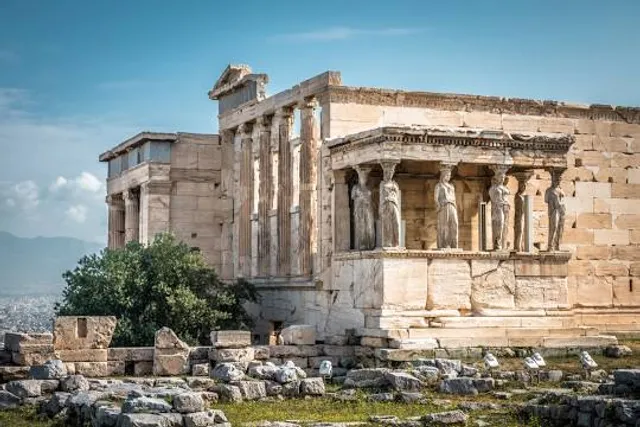
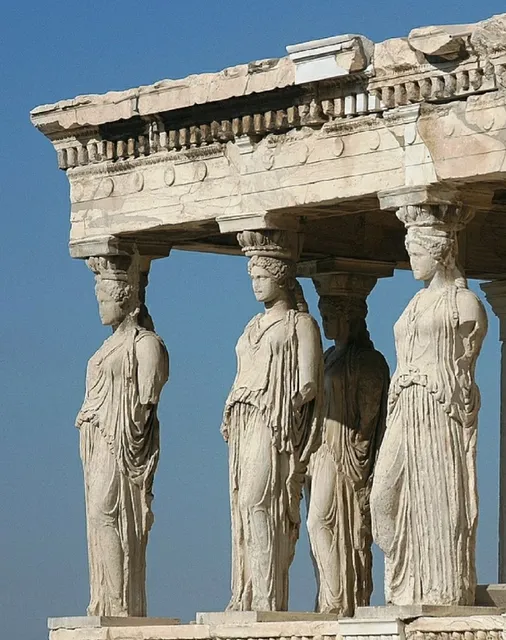
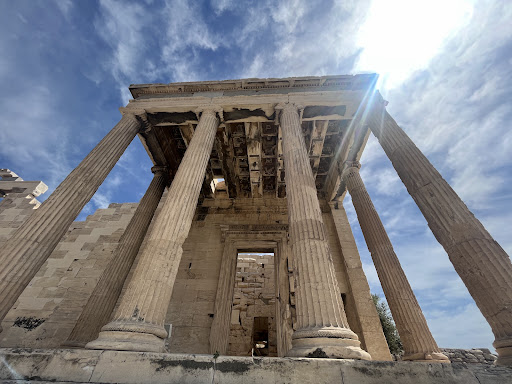
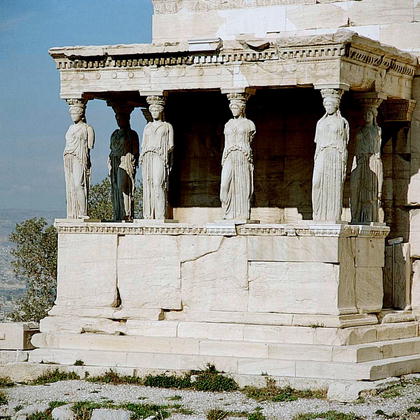
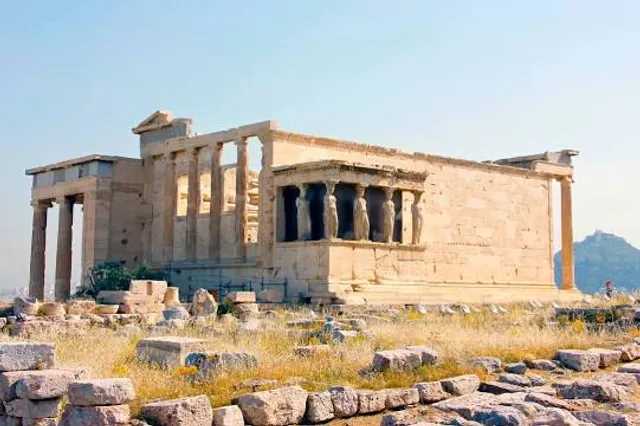
The Erechtheion or Temple of Athena Polias is an ancient Greek Ionic temple-telesterion on the north side of the Acropolis, Athens, which was primarily dedicated to the goddess Athena.
Nearby attractions
Acropolis of Athens
Athens 105 58, Greece
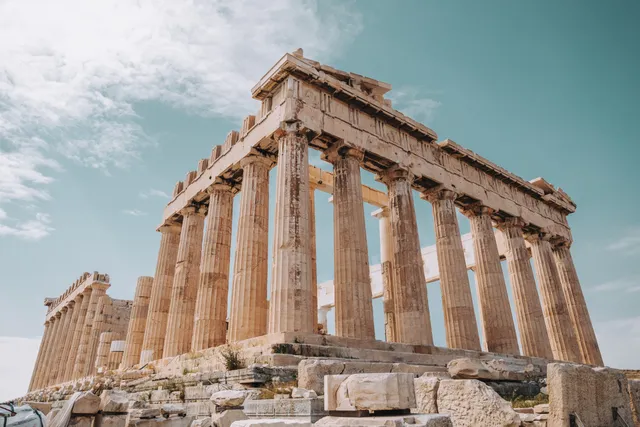
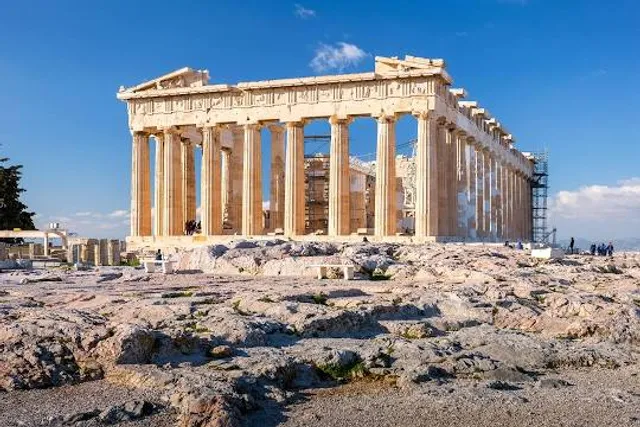
Parthenon
Athens 105 58, Greece
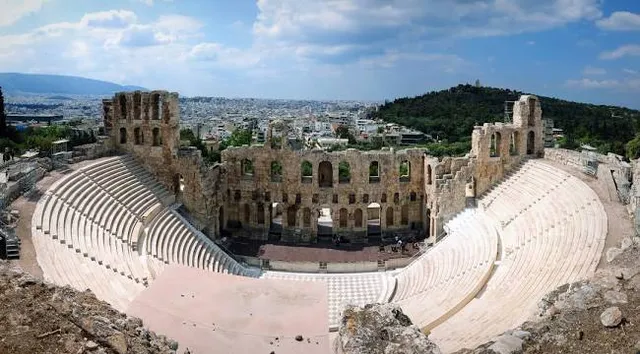
Odeon of Herodes Atticus
Dionysiou Areopagitou, Athina 105 55, Greece
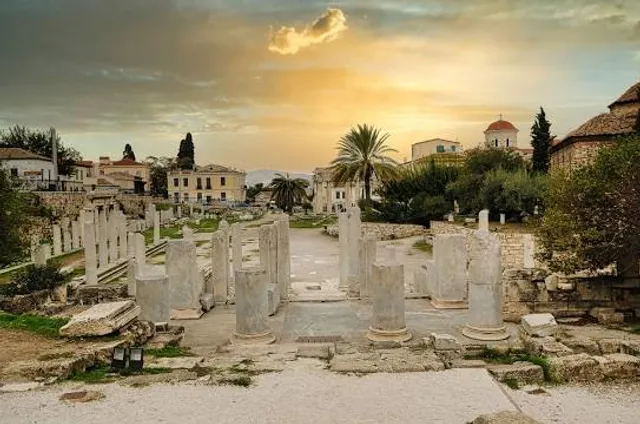
Roman Forum of Athens (Roman Agora)
Polignotou 3, Athina 105 55, Greece
The Porch of the Caryatids
Athens 105 58, Greece
Propylaea
Acropolis, Dionysiou Areopagitou, Athina 105 58, Greece
Theatre of Dionysus
Mitseon 25, Athina 117 42, Greece
Temple of Athena Nike
Acropolis, Dionysiou Areopagitou, Athina 105 58, Greece
Ancient Temple of Athena
Anafiotika 11, Athina 105 58, Greece
Areopagus Hill
Theorias 21, Athina 105 55, Greece
Nearby restaurants
Klepsydra
Klepsidras, Athina 105 56, Greece
Xenious Zeus
Mnisikleous 37, Athina 105 56, Greece
Dioskouroi
Dioskouron 13, Athina 105 55, Greece
Anafiotika Cafe - Restaurant
Mnisikleous 24β, Athina 105 56, Greece
Geros Tou Moria Restaurant
Mnisikleous 27, Athina 105 56, Greece
Lyra Restaurant Athens
Lisiou 12, Athina 105 56, Greece
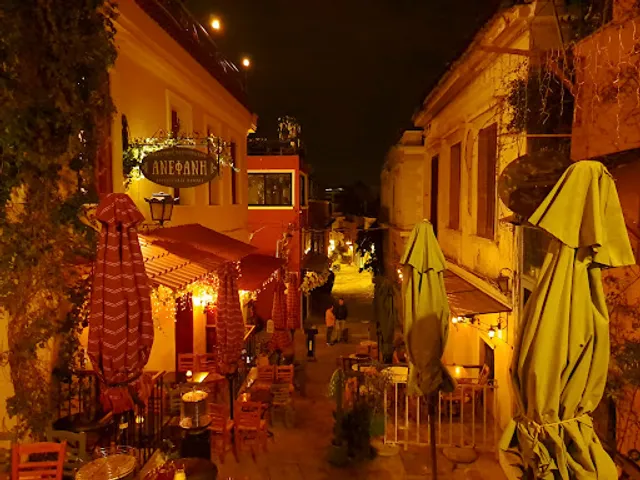
Anefani
Mnisikleous 24, Athina 105 56, Greece
Melina Mercouri Café
Lisiou 22, Athina 105 56, Greece
Psaras Tavern
Erotokritou &, Erechtheos 16, Athina 105 56, Greece
Restaurant Scholarhio
Tripodon 14, Athina 105 58, Greece
Nearby hotels
At the Acropolis' fence.
Theorias 8, Athina 105 55, Greece
Hotel Adrian
Adrianou 74, Athina 105 56, Greece
Herodion Hotel
Rovertou Galli 4, Athina 117 42, Greece
Mythodea Athens Suites
Adrianou 72, Athina 105 56, Greece
Hotel Plaka
Kapnikareas 7, Athina 105 56, Greece
A for Athens
Miaouli 2-4, Athina 105 54, Greece
Acropolis View Hotel
Wemster 10, Athina 117 42, Greece
Electra Palace Athens
Navarchou Nikodimou 18-20, Athina 105 57, Greece
Byron Hotel
Vyronos 19, Athina 105 58, Greece
Hotel Phaedra
Cherefontos 16, Athina 105 58, Greece
Related posts
The Erechtheion: Athens' ArchitecturalMarvel with the Famous Caryatids
Keywords
Erechtheion tourism.Erechtheion hotels.Erechtheion bed and breakfast. flights to Erechtheion.Erechtheion attractions.Erechtheion restaurants.Erechtheion travel.Erechtheion travel guide.Erechtheion travel blog.Erechtheion pictures.Erechtheion photos.Erechtheion travel tips.Erechtheion maps.Erechtheion things to do.
Erechtheion things to do, attractions, restaurants, events info and trip planning
Erechtheion
GreeceAtticaAthensErechtheion

Basic Info

Erechtheion

Athens 105 58, Greece
4.8(1.1K)
Open 24 hours
Save
spot

Ratings & Description

Info

The Erechtheion or Temple of Athena Polias is an ancient Greek Ionic temple-telesterion on the north side of the Acropolis, Athens, which was primarily dedicated to the goddess Athena.

Cultural
Accessibility
attractions: Acropolis of Athens, Parthenon, Odeon of Herodes Atticus, Roman Forum of Athens (Roman Agora), The Porch of the Caryatids, Propylaea, Theatre of Dionysus, Temple of Athena Nike, Ancient Temple of Athena, Areopagus Hill, restaurants: Klepsydra, Xenious Zeus, Dioskouroi, Anafiotika Cafe - Restaurant, Geros Tou Moria Restaurant, Lyra Restaurant Athens, Anefani, Melina Mercouri Café, Psaras Tavern, Restaurant Scholarhio
logoLearn more insights from Wanderboat AI.
Phone
+30 21 0923 8747
Website
odysseus.culture.gr

Plan your stay

hotel
Pet-friendly Hotels in Athens
Find a cozy hotel nearby and make it a full experience.

hotel
Affordable Hotels in Athens
Find a cozy hotel nearby and make it a full experience.

hotel
The Coolest Hotels You Haven't Heard Of (Yet)
Find a cozy hotel nearby and make it a full experience.

hotel
Trending Stays Worth the Hype in Athens
Find a cozy hotel nearby and make it a full experience.

Reviews

Nearby attractions of Erechtheion

Acropolis of Athens

Parthenon

Odeon of Herodes Atticus

Roman Forum of Athens (Roman Agora)

The Porch of the Caryatids

Propylaea

Theatre of Dionysus

Temple of Athena Nike

Ancient Temple of Athena

Areopagus Hill

Acropolis of Athens

Acropolis of Athens

4.8

(44.2K)

Open 24 hours
Click for details
Parthenon

Parthenon

4.8

(27.3K)

Open 24 hours
Click for details
Odeon of Herodes Atticus

Odeon of Herodes Atticus

4.9

(6.8K)

Open 24 hours
Click for details
Roman Forum of Athens (Roman Agora)

Roman Forum of Athens (Roman Agora)

4.5

(5.6K)

Open 24 hours
Click for details

Things to do nearby

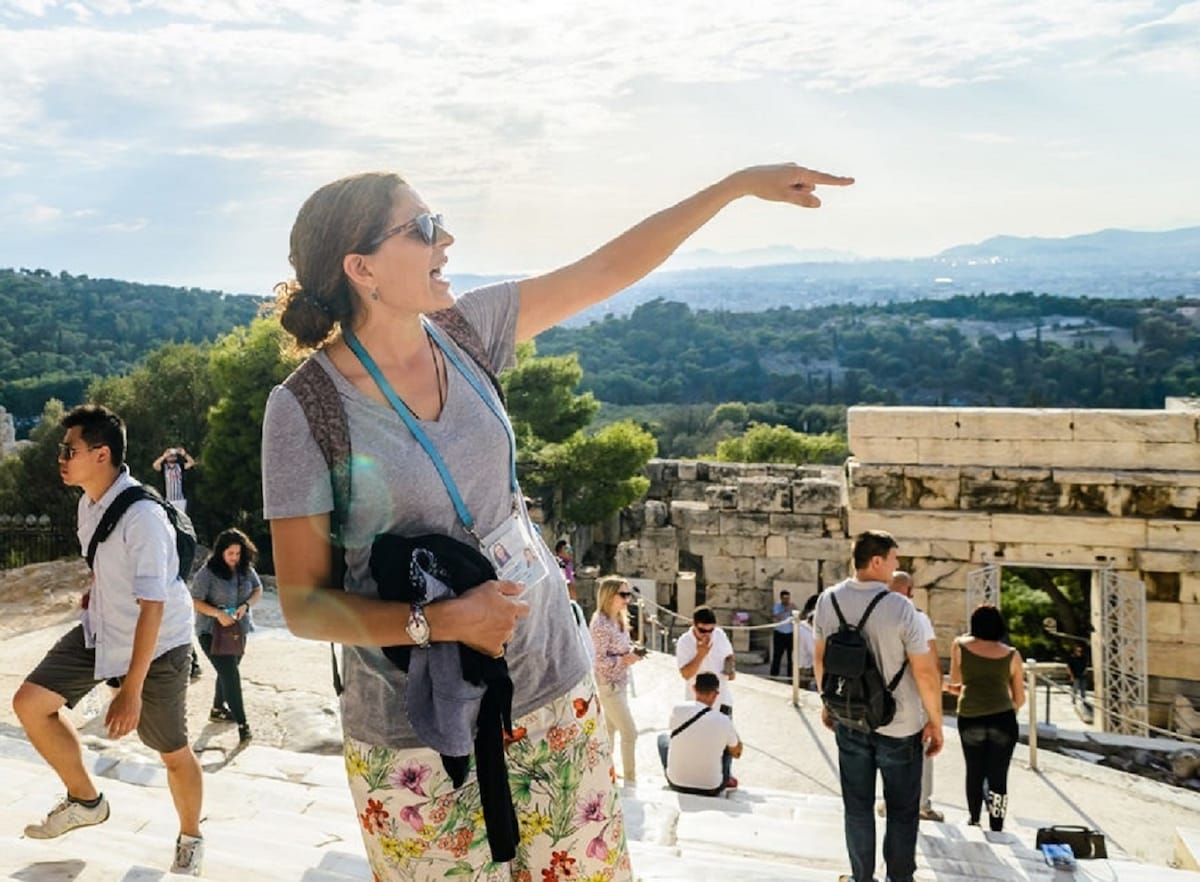
See the Acropolis with a licensed guide
Wed, Dec 10 • 10:30 AM
117 42, Athens, Greece
View details
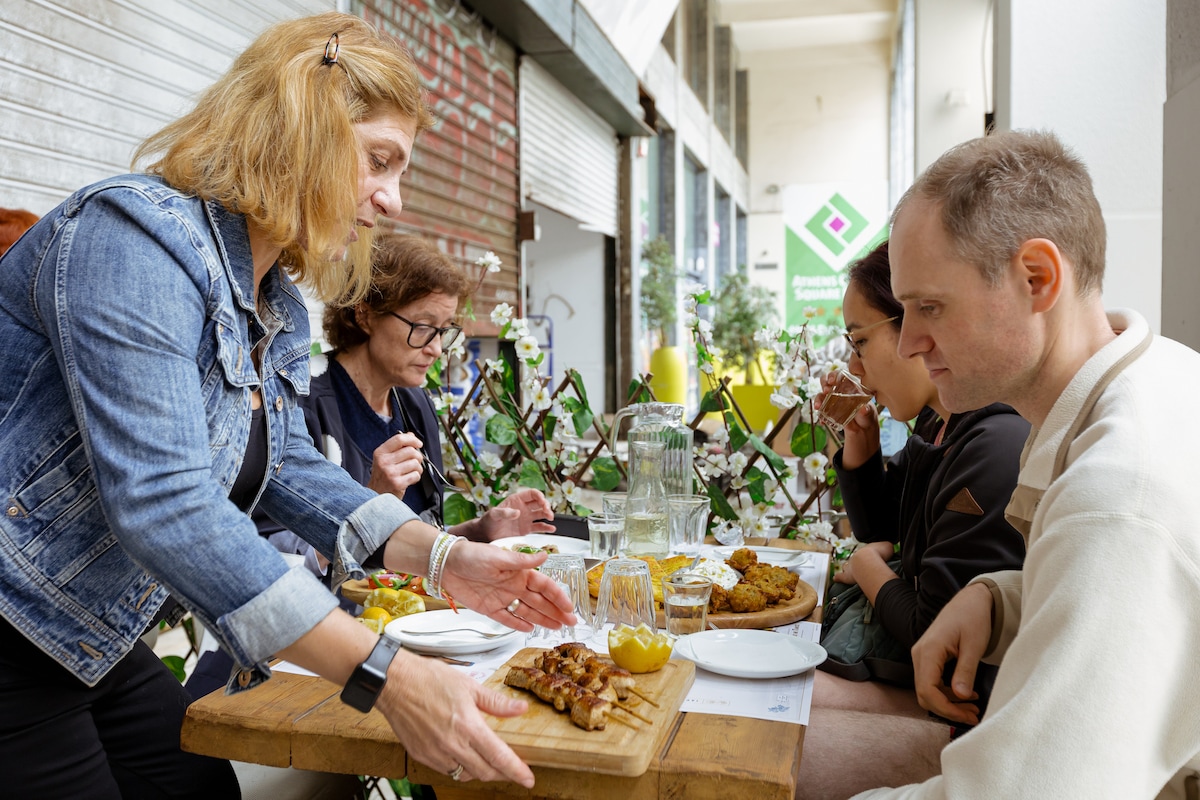
Explore Sounio Temple of Poseidon &Athens Riviera
Sat, Dec 13 • 8:00 AM
105 58, Athens, Greece
View details
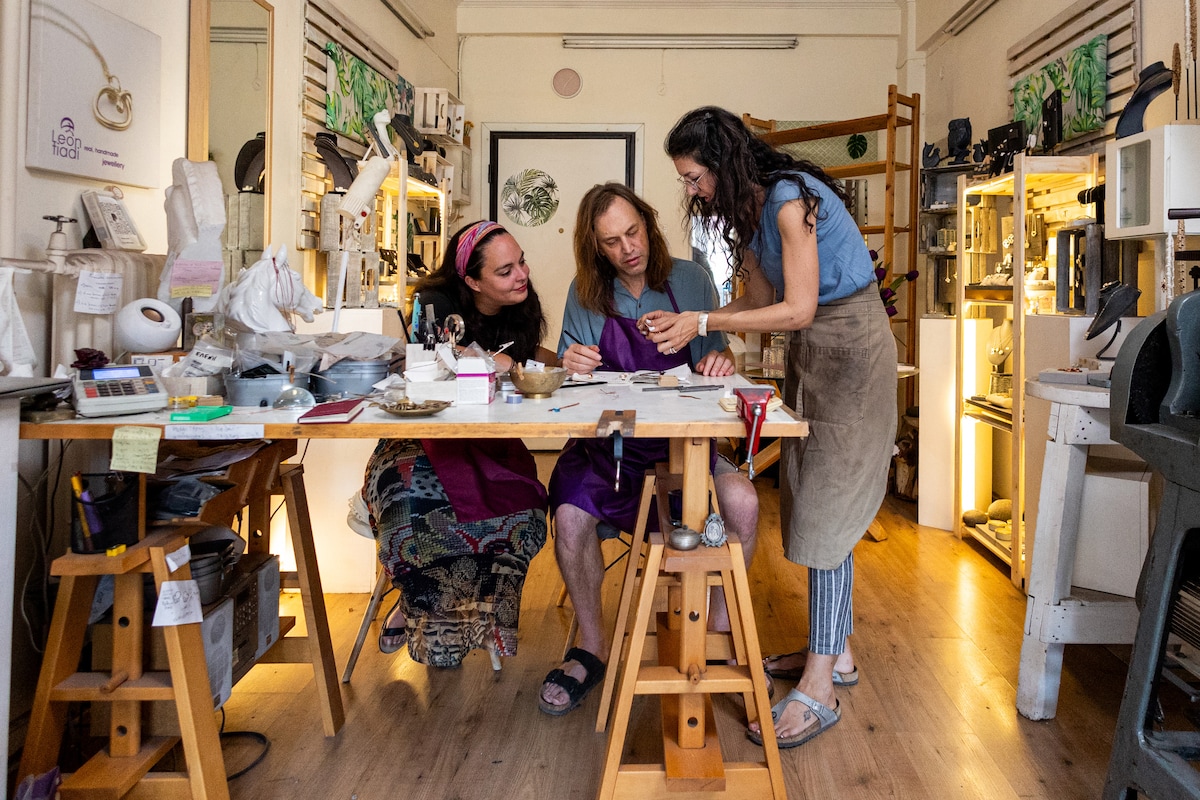
Design and fashion jewelry with a Silversmith
Wed, Dec 10 • 2:00 PM
105 63, Athens, Greece
View details

Nearby restaurants of Erechtheion

Klepsydra

Xenious Zeus

Dioskouroi

Anafiotika Cafe - Restaurant

Geros Tou Moria Restaurant

Lyra Restaurant Athens

Anefani

Melina Mercouri Café

Psaras Tavern

Restaurant Scholarhio

Klepsydra

Klepsydra

4.4

(2K)

Click for details
Xenious Zeus

Xenious Zeus

4.5

(1.1K)

Click for details
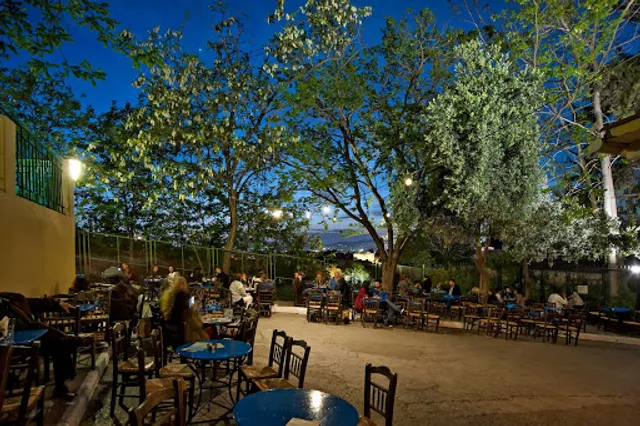
Dioskouroi

Dioskouroi

4.2

(1.6K)

$$

Click for details
Anafiotika Cafe - Restaurant

Anafiotika Cafe - Restaurant

4.2

(1.3K)

$$

Click for details
Get the Appoverlay
Get the AppOne tap to find yournext favorite spots!
Wanderboat LogoWanderboat

Your everyday Al companion for getaway ideas

CompanyAbout Us
InformationAI Trip PlannerSitemap
SocialXInstagramTiktokLinkedin
LegalTerms of ServicePrivacy Policy

Get the app

© 2025 Wanderboat. All rights reserved.
logo

Posts

The Erechtheion: Athens' ArchitecturalMarvel with the Famous Caryatids
Olivia MaeOlivia Mae
The Erechtheion: Athens' ArchitecturalMarvel with the Famous Caryatids
L CL C
This elegant building of the lonic order is called, according to later literary sources, Erechtheion from the name of Erechtheus, the mythical king of Athens. The construc- tion started before the outbreak of the Peloponnesian War (431 B.C.) or after the conclusion of the "peace of Nikias" (421 B.C.) and was finished in 406 B.C., after the interruption of the works because of the war. The peculiar plan of the building is due to the natural irregularity of the ground and the need to house the ancient sacred spots: the salt spring, which appeared when Po- seidon struck the rock with his trident during the contest with Athena over the pa- tronage of the city, the trident marks and the tombs of the Athenian kings Kekrops and Erechtheus. The Erechtheion consists of a rectangular cella divided by an interior wall forming two sections. The eastern section, which was at a level at least 3 m. higher than that of the western, was dedicated to Athena Polis and housed the xoanon, the ancient wooden cult statue of the goddess. The western section was divided into three parts and was dedicated to the cult of Poseidon-Erechtheus, Hephaistus and the hero Boutes. At the north side of the cella there is a magnificent porch with 6 lonic columns. The bases and capitals along with the frame of the doorway leading to the interior of the cella, have elaborate relief decoration, while the ceiling coffers were painted. The famous Porch of the Maidens (Korai) or Caryatids dominates the south side of the building: six statues of young women, standing on a podium 1.77 m. high, support the roof of the porch, which was the part of Kekrops' tomb above the ground. At the upper part of the building is a frieze of grey Eleusinian stone to which relief fig- res of white Parian marble were attached. Today they are exhibited in the Acropolis Museum. Around the end of the Ist century B.C. the Erechcheion was repaired after a fire. During the Christian period it was transformed into a church, while in the Ottoman period it was used as a house. In the first years of the 19th century Lord Elgin carried off the third Caryatid from the west (Kore C) and the column of the northeast corner of the building. Today they have been replaced by copies, as well as the rest of the Caryatids.
ΝεκτάριοςΝεκτάριος
Erechtheion (or Erechtheion) is an ancient temple on the north side of the Acropolis in Athens. The temple is dedicated to Athena and Poseidon. The present form of the church dates from 421 to 406 BC. His architect was probably Minniskles, and the building owes its name to an altar dedicated to the legendary hero Erichthon. The sculptor of the building was Phidias, who had been appointed by Pericles to adorn Erechtheion and the Parthenon. There are some who argue that the temple was built in honor of King Erechtheus, who is believed to have been buried nearby. Erechtheus refers to the Iliad of Homer as a great king and ruler of Athens during the Archaic Period and often Erechtheus and Erichon were identified. It is believed that the temple replaced the Sanctuary of the Athenian Poliades, which was built on Pisistratids and destroyed by the Persians in 480 BC.The need to preserve many objects related to sacred rituals explains the complex design. The main building consists of four parts. The largest of these is the eastern nave, with an arc of Ionic style as a propylon at its eastern end. Other modern views consider that the entire interior at the lower NW level and the east propylon was used for access to the altar of Athena Poliada by propyl and stairs, as well as a public viewing platform. The entire temple is built on a slope, so the northwest side is about 3 meters lower than the southeast side. It was built exclusively of Pentelic marble, with black limestone friezes from Eleusis, bearing white marble relief sculptures. It had elaborately carved windows and doors and the columns were elaborately decorated (more than it looks today). They were painted, gold-plated and accented with gold-plated brass and inlaid multicolored beads. The building is known for its early examples of "egg and arrow" and "guilloche" decorative waves. Erechtheion is one of the most famous monuments of the Acropolis of Athens and is identified with the Caryatids. The area in which it is built is considered the most sacred on the hill of the Acropolis.
See more posts
See more posts
hotel
Find your stay

Pet-friendly Hotels in Athens

Find a cozy hotel nearby and make it a full experience.

The Erechtheion: Athens' ArchitecturalMarvel with the Famous Caryatids
Olivia Mae

Olivia Mae

hotel
Find your stay

Affordable Hotels in Athens

Find a cozy hotel nearby and make it a full experience.

Get the Appoverlay
Get the AppOne tap to find yournext favorite spots!
This elegant building of the lonic order is called, according to later literary sources, Erechtheion from the name of Erechtheus, the mythical king of Athens. The construc- tion started before the outbreak of the Peloponnesian War (431 B.C.) or after the conclusion of the "peace of Nikias" (421 B.C.) and was finished in 406 B.C., after the interruption of the works because of the war. The peculiar plan of the building is due to the natural irregularity of the ground and the need to house the ancient sacred spots: the salt spring, which appeared when Po- seidon struck the rock with his trident during the contest with Athena over the pa- tronage of the city, the trident marks and the tombs of the Athenian kings Kekrops and Erechtheus. The Erechtheion consists of a rectangular cella divided by an interior wall forming two sections. The eastern section, which was at a level at least 3 m. higher than that of the western, was dedicated to Athena Polis and housed the xoanon, the ancient wooden cult statue of the goddess. The western section was divided into three parts and was dedicated to the cult of Poseidon-Erechtheus, Hephaistus and the hero Boutes. At the north side of the cella there is a magnificent porch with 6 lonic columns. The bases and capitals along with the frame of the doorway leading to the interior of the cella, have elaborate relief decoration, while the ceiling coffers were painted. The famous Porch of the Maidens (Korai) or Caryatids dominates the south side of the building: six statues of young women, standing on a podium 1.77 m. high, support the roof of the porch, which was the part of Kekrops' tomb above the ground. At the upper part of the building is a frieze of grey Eleusinian stone to which relief fig- res of white Parian marble were attached. Today they are exhibited in the Acropolis Museum. Around the end of the Ist century B.C. the Erechcheion was repaired after a fire. During the Christian period it was transformed into a church, while in the Ottoman period it was used as a house. In the first years of the 19th century Lord Elgin carried off the third Caryatid from the west (Kore C) and the column of the northeast corner of the building. Today they have been replaced by copies, as well as the rest of the Caryatids.
L C

L C

hotel
Find your stay

The Coolest Hotels You Haven't Heard Of (Yet)

Find a cozy hotel nearby and make it a full experience.

hotel
Find your stay

Trending Stays Worth the Hype in Athens

Find a cozy hotel nearby and make it a full experience.

Erechtheion (or Erechtheion) is an ancient temple on the north side of the Acropolis in Athens. The temple is dedicated to Athena and Poseidon. The present form of the church dates from 421 to 406 BC. His architect was probably Minniskles, and the building owes its name to an altar dedicated to the legendary hero Erichthon. The sculptor of the building was Phidias, who had been appointed by Pericles to adorn Erechtheion and the Parthenon. There are some who argue that the temple was built in honor of King Erechtheus, who is believed to have been buried nearby. Erechtheus refers to the Iliad of Homer as a great king and ruler of Athens during the Archaic Period and often Erechtheus and Erichon were identified. It is believed that the temple replaced the Sanctuary of the Athenian Poliades, which was built on Pisistratids and destroyed by the Persians in 480 BC.The need to preserve many objects related to sacred rituals explains the complex design. The main building consists of four parts. The largest of these is the eastern nave, with an arc of Ionic style as a propylon at its eastern end. Other modern views consider that the entire interior at the lower NW level and the east propylon was used for access to the altar of Athena Poliada by propyl and stairs, as well as a public viewing platform. The entire temple is built on a slope, so the northwest side is about 3 meters lower than the southeast side. It was built exclusively of Pentelic marble, with black limestone friezes from Eleusis, bearing white marble relief sculptures. It had elaborately carved windows and doors and the columns were elaborately decorated (more than it looks today). They were painted, gold-plated and accented with gold-plated brass and inlaid multicolored beads. The building is known for its early examples of "egg and arrow" and "guilloche" decorative waves. Erechtheion is one of the most famous monuments of the Acropolis of Athens and is identified with the Caryatids. The area in which it is built is considered the most sacred on the hill of the Acropolis.
Νεκτάριος

Νεκτάριος

See more posts
See more posts

Reviews of Erechtheion

4.8
(1,107)
avatar
5.0
2y

The Erechtheion2 or Temple of Athena Polias[3] is an ancient Greek Ionic temple-telesterion[4] on the north side of the Acropolis, Athens, which was primarily dedicated to the goddess Athena. The building, made to house the statue of Athena Polias, has in modern scholarship been called the Erechtheion (the sanctuary of Erechtheus or Poseidon) in the belief that Pausanias' description of the Erechtheion applies to this building.[5] However, whether the Erechtheion referred to by Pausanias is indeed the Ionic temple or an entirely different building has become a point of contention in recent decades.[6]

In the official decrees the building is referred to as “... το͂ νεὸ το͂ ἐμ πόλει ἐν ο͂ι τὸ ἀρχαῖον ἄγαλμα” (the temple on the Acropolis within which is the ancient statue).[7] In other instances it is referred to as the Temple of the Polias.[8] The joint cult of Athena and Poseidon-Erechtheus appears to have been established on the Acropolis at a very early period, and they were even worshipped in the same temple as may, according to the traditional view, be inferred from two passages in Homer and also from later Greek texts.[9] The extant building is the successor of several temples and buildings on the site. Its precise date of construction is unknown; it has traditionally been thought to have been built from circa 421–406 BC, but more recent scholarship favours a date in the 430s, when it could have been part of the programme of works instigated by Pericles.[10]

The Erechtheion is unique in the corpus of Greek temples in that its asymmetrical composition doesn’t conform to the canon of Greek classical architecture. This is attributed either to the irregularity of the site,[11] or to the evolving and complex nature of the cults which the building housed,[12] or it is conjectured to be the incomplete part of a larger symmetrical building.[13] Additionally, its post-classical history of change of use, damage and spoliation has made it one of the more problematic sites in classical archaeology. The precise nature and location of the various religious and architectural elements within the building remain the subject of debate. The temple was nonetheless a seminal example of the classical Ionic style, and was highly influential on later Hellenistic,[14] Roman[15] and Greek Revival[16]...

   Read more
avatar
5.0
3y

This elegant building of the lonic order is called, according to later literary sources, Erechtheion from the name of Erechtheus, the mythical king of Athens. The construc- tion started before the outbreak of the Peloponnesian War (431 B.C.) or after the conclusion of the "peace of Nikias" (421 B.C.) and was finished in 406 B.C., after the interruption of the works because of the war. The peculiar plan of the building is due to the natural irregularity of the ground and the need to house the ancient sacred spots: the salt spring, which appeared when Po- seidon struck the rock with his trident during the contest with Athena over the pa- tronage of the city, the trident marks and the tombs of the Athenian kings Kekrops and Erechtheus. The Erechtheion consists of a rectangular cella divided by an interior wall forming two sections. The eastern section, which was at a level at least 3 m. higher than that of the western, was dedicated to Athena Polis and housed the xoanon, the ancient wooden cult statue of the goddess. The western section was divided into three parts and was dedicated to the cult of Poseidon-Erechtheus, Hephaistus and the hero Boutes. At the north side of the cella there is a magnificent porch with 6 lonic columns. The bases and capitals along with the frame of the doorway leading to the interior of the cella, have elaborate relief decoration, while the ceiling coffers were painted. The famous Porch of the Maidens (Korai) or Caryatids dominates the south side of the building: six statues of young women, standing on a podium 1.77 m. high, support the roof of the porch, which was the part of Kekrops' tomb above the ground. At the upper part of the building is a frieze of grey Eleusinian stone to which relief fig- res of white Parian marble were attached. Today they are exhibited in the Acropolis Museum. Around the end of the Ist century B.C. the Erechcheion was repaired after a fire. During the Christian period it was transformed into a church, while in the Ottoman period it was used as a house. In the first years of the 19th century Lord Elgin carried off the third Caryatid from the west (Kore C) and the column of the northeast corner of the building. Today they have been replaced by copies, as well as the rest...

   Read more
avatar
5.0
6y

Erechtheion (or Erechtheion) is an ancient temple on the north side of the Acropolis in Athens. The temple is dedicated to Athena and Poseidon. The present form of the church dates from 421 to 406 BC. His architect was probably Minniskles, and the building owes its name to an altar dedicated to the legendary hero Erichthon. The sculptor of the building was Phidias, who had been appointed by Pericles to adorn Erechtheion and the Parthenon. There are some who argue that the temple was built in honor of King Erechtheus, who is believed to have been buried nearby. Erechtheus refers to the Iliad of Homer as a great king and ruler of Athens during the Archaic Period and often Erechtheus and Erichon were identified. It is believed that the temple replaced the Sanctuary of the Athenian Poliades, which was built on Pisistratids and destroyed by the Persians in 480 BC.The need to preserve many objects related to sacred rituals explains the complex design. The main building consists of four parts. The largest of these is the eastern nave, with an arc of Ionic style as a propylon at its eastern end. Other modern views consider that the entire interior at the lower NW level and the east propylon was used for access to the altar of Athena Poliada by propyl and stairs, as well as a public viewing platform. The entire temple is built on a slope, so the northwest side is about 3 meters lower than the southeast side. It was built exclusively of Pentelic marble, with black limestone friezes from Eleusis, bearing white marble relief sculptures. It had elaborately carved windows and doors and the columns were elaborately decorated (more than it looks today). They were painted, gold-plated and accented with gold-plated brass and inlaid multicolored beads. The building is known for its early examples of "egg and arrow" and "guilloche" decorative waves. Erechtheion is one of the most famous monuments of the Acropolis of Athens and is identified with the Caryatids. The area in which it is built is considered the most sacred on the hill of...

   Read more
Page 1 of 7
Previous
Next