HTML SitemapExplore
logo
Find Things to DoFind The Best Restaurants

Trajan's Column — Attraction in Rome

Name
Trajan's Column
Description
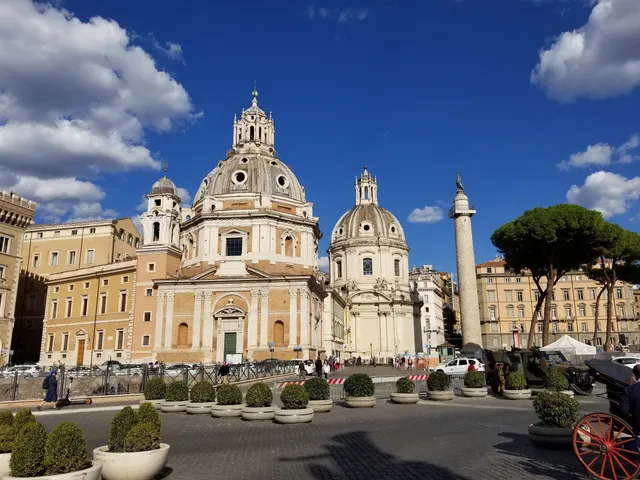
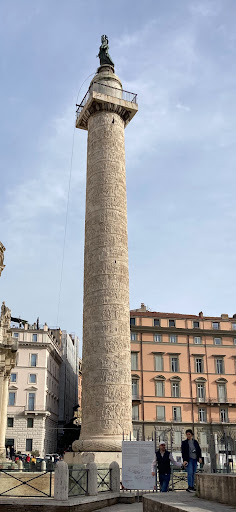
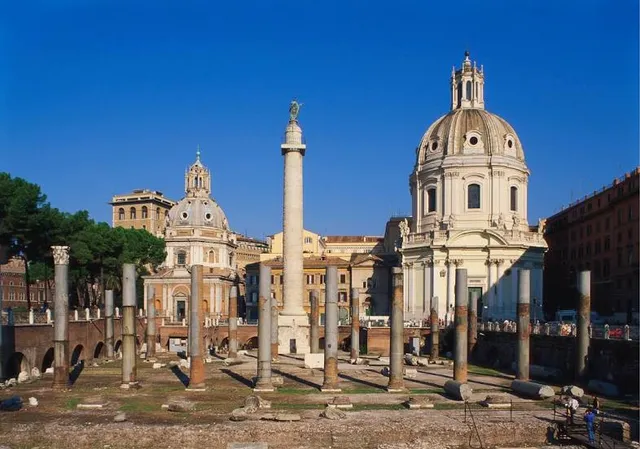
Trajan's Column is a Roman triumphal column in Rome, Italy, that commemorates Roman emperor Trajan's victory in the Dacian Wars. It was probably constructed under the supervision of the architect Apollodorus of Damascus at the order of the Roman Senate. It is located in Trajan's Forum, north of the Roman Forum.
Nearby attractions
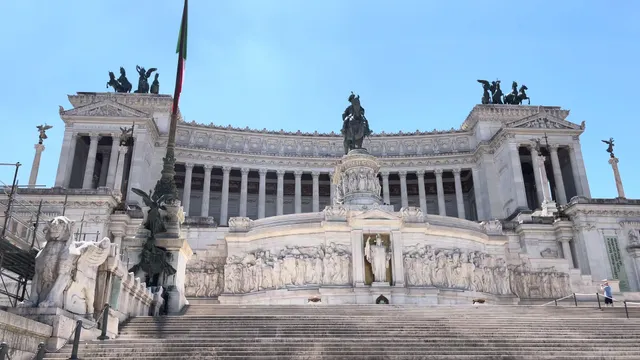
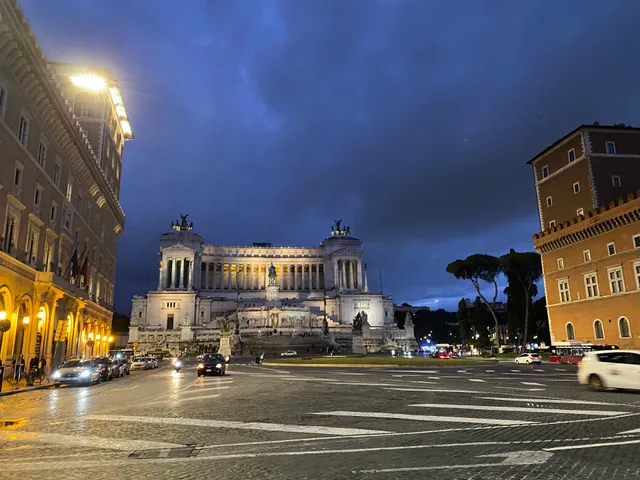
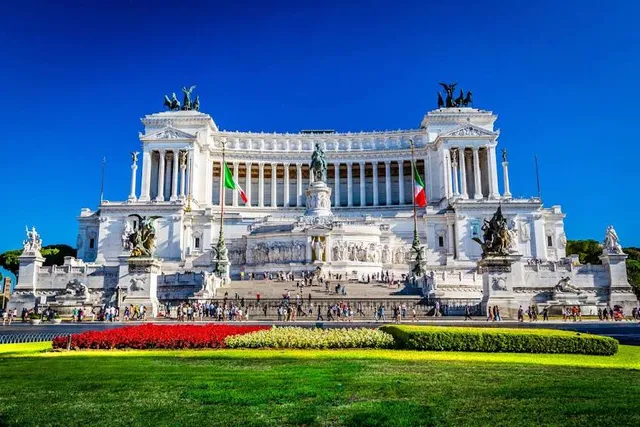
Monument to Victor Emmanuel II
Piazza Venezia, 00186 Roma RM, Italy
Piazza Venezia
Piazza Venezia, 00187 Roma RM, Italy
Le Domus Romane di Palazzo Valentini
Foro Traiano, 85, 00186 Roma RM, Italy
Trajan Forum
Via dei Fori Imperiali, 00186 Roma RM, Italy
Imperial Fora
Via dei Fori Imperiali, 00187 Roma RM, Italy
Mercati di Traiano Museo dei Fori Imperiali
Via Quattro Novembre, 94, 00187 Roma RM, Italy
Altar of the Fatherland
Piazza Venezia, 00186 Roma RM, Italy
Piazza del Campidoglio
Piazza del Campidoglio, 00186 Roma RM, Italy
Palazzo Bonaparte
Piazza Venezia, 5, 00186 Roma RM, Italy
Museo delle Cere
P.za dei Santi Apostoli, 68/A, 00187 Roma RM, Italy
Nearby restaurants
Oro Bistrot
Via di S. Eufemia, 19, 00187 Roma RM, Italy
Nonno Melo
Via Magnanapoli, 6, 00187 Roma RM, Italy
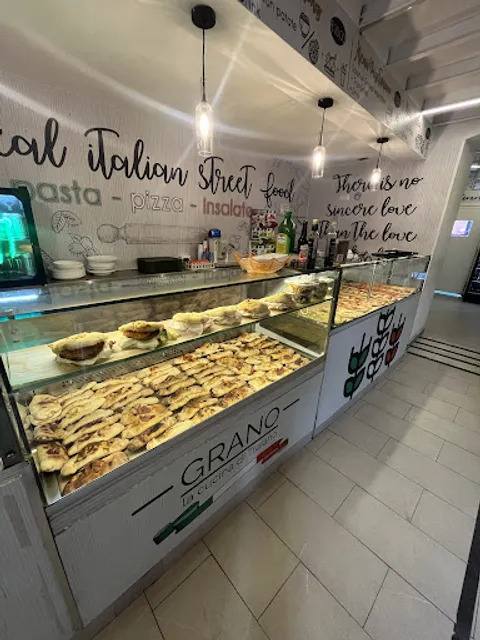
Grano la cucina di Traiano
Via Magnanapoli, 9, 00187 Roma RM, Italy
Nag's Head Scottish Pub Roma
Via Quattro Novembre, 138 B, 00187 Roma RM, Italy
Ristorante Terre & Domus
Le Domus Romane di Palazzo Valentini, Foro Traiano, 82, 00187 Roma RM, Italy
Ristorante Pizzeria Forno A Legna 12 Apostoli
P.za dei Santi Apostoli, 52, 00187 Roma RM, Italy
Antico Caffè Castellino
Via Cesare Battisti, 135, 00187 Roma RM, Italy
Caffè Roma Antica Enoteca
Via di S. Eufemia, 5, 00187 Roma RM, Italy
Taverna Ulpia
Foro Traiano, 1b, 00187 Roma RM, Italy
Le Lanterne
Palazzo Colonna, Via della Pilotta, 21A, 00187 Roma RM, Italy
Nearby hotels
Hotel NH Collection Roma Fori Imperiali
Via di S. Eufemia, 19, 00187 Roma RM, Italy
H10 Palazzo Galla
Via Quattro Novembre, 102, 00187 Roma RM, Italy
Cosmopolita Hotel Rome, Tapestry Collection by Hilton
Via di S. Eufemia, 5, 00187 Roma RM, Italy
Hotel Pace Helvezia
Via Quattro Novembre, 104, 00187 Roma RM, Italy
Hotel Traiano
Via Quattro Novembre, 154, 00187 Roma RM, Italy
Hotel Hiberia Rome
Via Ventiquattro Maggio, 8, 00187 Roma RM, Italy
Residenza Torre Colonna
Via delle Tre Cannelle, 18, 00187 Roma RM, Italy
Comfort Hotel Bolivar
Via della Cordonata, 6, 00187 Roma RM, Italy
Roma Luxus Hotel
Largo Angelicum, 4, 00184 Roma RM, Italy
Hotel Castellino Roma
Via Cesare Battisti, 133, 00187 Roma RM, Italy
Related posts
Keywords
Trajan's Column tourism.Trajan's Column hotels.Trajan's Column bed and breakfast. flights to Trajan's Column.Trajan's Column attractions.Trajan's Column restaurants.Trajan's Column travel.Trajan's Column travel guide.Trajan's Column travel blog.Trajan's Column pictures.Trajan's Column photos.Trajan's Column travel tips.Trajan's Column maps.Trajan's Column things to do.
Trajan's Column things to do, attractions, restaurants, events info and trip planning
Trajan's Column
ItalyLazioRomeTrajan's Column

Basic Info

Trajan's Column

Via dei Fori Imperiali, 00187 Roma RM, Italy
4.8(2K)
Open 24 hours
Save
spot

Ratings & Description

Info

Trajan's Column is a Roman triumphal column in Rome, Italy, that commemorates Roman emperor Trajan's victory in the Dacian Wars. It was probably constructed under the supervision of the architect Apollodorus of Damascus at the order of the Roman Senate. It is located in Trajan's Forum, north of the Roman Forum.

Cultural
Accessibility
attractions: Monument to Victor Emmanuel II, Piazza Venezia, Le Domus Romane di Palazzo Valentini, Trajan Forum, Imperial Fora, Mercati di Traiano Museo dei Fori Imperiali, Altar of the Fatherland, Piazza del Campidoglio, Palazzo Bonaparte, Museo delle Cere, restaurants: Oro Bistrot, Nonno Melo, Grano la cucina di Traiano, Nag's Head Scottish Pub Roma, Ristorante Terre & Domus, Ristorante Pizzeria Forno A Legna 12 Apostoli, Antico Caffè Castellino, Caffè Roma Antica Enoteca, Taverna Ulpia, Le Lanterne
logoLearn more insights from Wanderboat AI.
Website
colosseo.it

Plan your stay

hotel
Pet-friendly Hotels in Rome
Find a cozy hotel nearby and make it a full experience.

hotel
Affordable Hotels in Rome
Find a cozy hotel nearby and make it a full experience.

hotel
The Coolest Hotels You Haven't Heard Of (Yet)
Find a cozy hotel nearby and make it a full experience.

hotel
Trending Stays Worth the Hype in Rome
Find a cozy hotel nearby and make it a full experience.

Reviews

Nearby attractions of Trajan's Column

Monument to Victor Emmanuel II

Piazza Venezia

Le Domus Romane di Palazzo Valentini

Trajan Forum

Imperial Fora

Mercati di Traiano Museo dei Fori Imperiali

Altar of the Fatherland

Piazza del Campidoglio

Palazzo Bonaparte

Museo delle Cere

Monument to Victor Emmanuel II

Monument to Victor Emmanuel II

4.8

(23.9K)

Open 24 hours
Click for details
Piazza Venezia

Piazza Venezia

4.7

(20.7K)

Open 24 hours
Click for details
Le Domus Romane di Palazzo Valentini

Le Domus Romane di Palazzo Valentini

4.7

(909)

Open until 7:00 PM
Click for details
Trajan Forum

Trajan Forum

4.7

(3.9K)

Open 24 hours
Click for details

Things to do nearby

Catacombs: The Coolest Underground Tour in Rome
Fri, Dec 5 • 3:00 PM
00147, Rome, Lazio, Italy
View details
Pasta-making class, wine tasting and dinner
Fri, Dec 5 • 10:30 AM
00044, Frascati, Lazio, Italy
View details
Pasta and Pizza cooking class with wine and more
Sun, Dec 7 • 10:30 AM
00142, Rome, Lazio, Italy
View details

Nearby restaurants of Trajan's Column

Oro Bistrot

Nonno Melo

Grano la cucina di Traiano

Nag's Head Scottish Pub Roma

Ristorante Terre & Domus

Ristorante Pizzeria Forno A Legna 12 Apostoli

Antico Caffè Castellino

Caffè Roma Antica Enoteca

Taverna Ulpia

Le Lanterne

Oro Bistrot

Oro Bistrot

4.4

(909)

$$$$

Click for details
Nonno Melo

Nonno Melo

4.4

(739)

Click for details
Grano la cucina di Traiano

Grano la cucina di Traiano

4.7

(1.4K)

Click for details
Nag's Head Scottish Pub Roma

Nag's Head Scottish Pub Roma

4.0

(1.3K)

$

Click for details
Get the Appoverlay
Get the AppOne tap to find yournext favorite spots!

The hit list

restaurant
Best 10 Restaurants to Visit in Rome
February 12 · 5 min read
attraction
Best 10 Attractions to Visit in Rome
February 12 · 5 min read
Rome

Plan your trip with Wanderboat

Welcome to Wanderboat AI, your AI search for local Eats and Fun, designed to help you explore your city and the world with ease.

Powered by Wanderboat AI trip planner.
Wanderboat LogoWanderboat

Your everyday Al companion for getaway ideas

CompanyAbout Us
InformationAI Trip PlannerSitemap
SocialXInstagramTiktokLinkedin
LegalTerms of ServicePrivacy Policy

Get the app

© 2025 Wanderboat. All rights reserved.
logo

Reviews of Trajan's Column

4.8
(2,042)
avatar
2.0
2y

Trajan’s Column, monument that was erected in 106–113 CE by the Roman emperor Trajan and survives intact in the ruins of Trajan’s Forum in Rome. The marble column is of the Roman Doric order, and it measures 125 feet (38 metres) high together with the pedestal, or base, which contains a chamber that served as Trajan’s tomb. Originally the column stood in the middle of a courtyard surrounded by galleries from which one could view at various levels the spiral band (over 800 feet [240 metres] long and about 4 feet [1.2 metres] wide) covered with low-relief sculpture that forms a continuous narrative of the emperor’s two campaigns in Dacia. A spiral staircase is contained within the shaft’s interior, which measures 12 feet 2 inches (3.7 metres) in diameter. At first a bronze eagle had been placed on top of the column and then after Trajan’s death a bronze statue of the deceased emperor, which was replaced in 1588 by a statue of St. Peter. bas-relief, also called low relief or basso-relievo, in sculpture, any work where the projection from a supporting background is shallow. Bas-relief contrasts with high relief (alto-relievo), another type of relief sculpture in which projections are deep and may in parts be completely disengaged from the ground, thus approximating sculpture in the round. The bas-relief technique can be used on its own or with high relief and middle relief (mezzo-relievo) to create different effects. Relief sculpture is a complex art form that combines many features of the two-dimensional pictorial arts and the three-dimensional sculptural arts. Similar to a painting or drawing, a relief is dependent on a supporting surface, and the composition must be extended in a plane in order to be visible. Yet its three-dimensional properties do not have to be suggested but are in some degree actual, like those of fully developed sculpture. Among the various types of relief, bas-relief is perhaps the one that approaches most closely the pictorial arts. It requires the artist to translate the three-dimensional world into a two-dimensional one using systems of conventions or illusions.

One of the most difficult tasks in carving any relief sculpture is to depict within the limits of a slab of wood or stone the relationship between forms occupying a deep space. Sculptors can solve the problem mainly by paying attention to the planes, or imaginary layers, of the relief. In a carved relief the highest, or front, plane is defined by the original surface of the material. Many sculptors respect this front plane by keeping their highest projections at that level. The back plane is the deepest level from which the forms project. The space between these two planes can be thought of as divided into a series of planes, one behind the other. The relationship of forms in deep space can then be thought of as the relationship between forms lying in different planes.

Technically, the simplest kind of low relief is the two-plane relief. For this, the sculptor draws an outline and then cuts away the surrounding surface, leaving the figure raised as a flat silhouette above the background plane. This procedure is often used for the first stages of a full relief carving, in which case the sculptor will proceed to carve into the raised silhouette, rounding the forms and giving an impression of three-dimensional structure. In a two-plane relief, however, the silhouette is left flat and substantially unaltered except for the addition of surface detail. Assyrian sculptors used this method of relief carving to create bold figurative and abstract reliefs.

The forms of low relief usually make contact with the background all around their contours. If there is a slight amount of undercutting, its purpose is to give emphasis, by means of cast shadow, to a contour rather than to give any impression that the forms are independent of their background. Donatello used this technique in his marble sculpture Madonna of the Clouds (c. 1425–35). The deep carving around Mary’s profile is used to draw the viewer’s eyes to her face, rather...

   Read more
avatar
5.0
51w

The Column of Trajan, one of the most iconic monuments of ancient Rome, stands as a testament to the achievements of Emperor Trajan and the grandeur of the Roman Empire. Built in 113 AD, it commemorates Trajan’s victories in the Dacian Wars (101–102 AD and 105–106 AD), which were critical to expanding the empire’s reach into modern-day Romania.

Design and Construction

The column, crafted from Carrara marble, rises to a height of 38 meters (125 feet), including its pedestal and the statue on top. Designed by Apollodorus of Damascus, Trajan’s favorite architect, it originally supported a statue of the emperor. However, during the 16th century, Pope Sixtus V replaced the statue with one of Saint Peter, which remains there today.

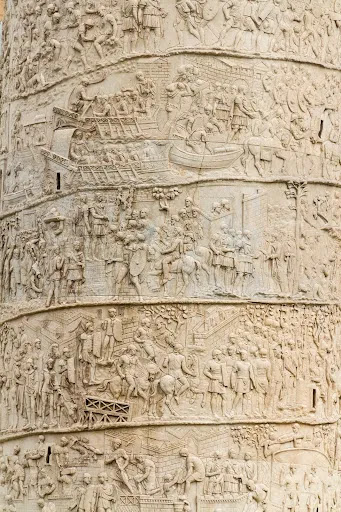
The structure is remarkable for its spiral bas-relief, which winds 23 times around the shaft. This intricate relief contains 200 meters of carvings depicting over 2,500 figures in a narrative sequence. The scenes illustrate the story of the Dacian campaigns in great detail, from the preparation of the Roman army to battles, sacrifices, and the eventual Roman victory. Notably, the images highlight the discipline and ingenuity of the Roman military while portraying the Dacians as formidable adversaries.

Historical Purpose

More than a simple war monument, Trajan’s Column was a propaganda tool. It celebrated Trajan’s leadership, the superiority of Roman engineering and organization, and the spoils of war, which helped fund public works like Trajan’s Forum and the adjacent markets. The column also served as Trajan’s tomb, with his ashes interred in a chamber at its base.

Artistic Significance

The column’s frieze is a masterpiece of Roman art. While the figures are not to scale, their narrative power is unmatched, showcasing the Roman army constructing bridges, negotiating with Dacians, and fighting in battle. The column was not merely decorative—it communicated the emperor’s triumphs to a largely illiterate population.

Legacy

Trajan’s Column influenced many later monuments, such as Napoleon’s Vendôme Column in Paris. It also became a source of inspiration for historians and archaeologists, providing insight into Roman military practices, architecture, and daily life.

Even today, the column stands as a reminder of Rome’s imperial might and Trajan’s enduring legacy. Though it has weathered nearly two millennia, its carvings remain remarkably well-preserved, offering a vivid window into...

   Read more
avatar
5.0
7y

Trajan's Column (Italian: Colonna Traiana, Latin: COLVMNA·TRAIANI) is a Roman triumphal column in Rome, Italy, that commemorates Roman emperor Trajan's victory in the Dacian Wars. It was probably constructed under the supervision of the architect Apollodorus of Damascus at the order of the Roman Senate. It is located in Trajan's Forum, built near the Quirinal Hill, north of the Roman Forum. Completed in AD 113, the freestanding column is most famous for its spiral bas relief, which artistically describes the epic wars between the Romans and Dacians (101–102 and 105–106). Its design has inspired numerous victory columns, both ancient and modern.

The structure is about 30 metres (98 feet) in height, 35 metres (115 feet) including its large pedestal. The shaft is made from a series of 20 colossal Carrara marble[a] drums, each weighing about 32 tons, with a diameter of 3.7 metres (12.1 feet). The 190-metre (620-foot) frieze winds around the shaft 23 times. Inside the shaft, a spiral staircase of 185 steps provides access to a viewing platform at the top. The capital block of Trajan's Column weighs 53.3 tons, which had to be lifted to a height of c. 34 metres (112 feet).

Ancient coins indicate preliminary plans to top the column with a statue of a bird, probably an eagle, but after construction, a statue of Trajan was put in place; this statue disappeared in the Middle Ages. On December 4, 1587, the top was crowned by Pope Sixtus V with a bronze figure of St. Peter, which remains to this day.The column was originally flanked by two libraries, which may have contained Trajan's scroll-written despatches from his Roman-Dacian Wars. Filippo Coarelli suggests that such scrolls are the basis both of the column's design and its spiraling, sculpted narrative. The column shows 2,662 figures, and 155 scenes; Trajan himself appears on the...

   Read more
Page 1 of 7
Previous
Next

Posts

Mr. Victorious Jaffar WattooMr. Victorious Jaffar Wattoo
Trajan’s Column, monument that was erected in 106–113 CE by the Roman emperor Trajan and survives intact in the ruins of Trajan’s Forum in Rome. The marble column is of the Roman Doric order, and it measures 125 feet (38 metres) high together with the pedestal, or base, which contains a chamber that served as Trajan’s tomb. Originally the column stood in the middle of a courtyard surrounded by galleries from which one could view at various levels the spiral band (over 800 feet [240 metres] long and about 4 feet [1.2 metres] wide) covered with low-relief sculpture that forms a continuous narrative of the emperor’s two campaigns in Dacia. A spiral staircase is contained within the shaft’s interior, which measures 12 feet 2 inches (3.7 metres) in diameter. At first a bronze eagle had been placed on top of the column and then after Trajan’s death a bronze statue of the deceased emperor, which was replaced in 1588 by a statue of St. Peter. bas-relief, also called low relief or basso-relievo, in sculpture, any work where the projection from a supporting background is shallow. Bas-relief contrasts with high relief (alto-relievo), another type of relief sculpture in which projections are deep and may in parts be completely disengaged from the ground, thus approximating sculpture in the round. The bas-relief technique can be used on its own or with high relief and middle relief (mezzo-relievo) to create different effects. Relief sculpture is a complex art form that combines many features of the two-dimensional pictorial arts and the three-dimensional sculptural arts. Similar to a painting or drawing, a relief is dependent on a supporting surface, and the composition must be extended in a plane in order to be visible. Yet its three-dimensional properties do not have to be suggested but are in some degree actual, like those of fully developed sculpture. Among the various types of relief, bas-relief is perhaps the one that approaches most closely the pictorial arts. It requires the artist to translate the three-dimensional world into a two-dimensional one using systems of conventions or illusions. One of the most difficult tasks in carving any relief sculpture is to depict within the limits of a slab of wood or stone the relationship between forms occupying a deep space. Sculptors can solve the problem mainly by paying attention to the planes, or imaginary layers, of the relief. In a carved relief the highest, or front, plane is defined by the original surface of the material. Many sculptors respect this front plane by keeping their highest projections at that level. The back plane is the deepest level from which the forms project. The space between these two planes can be thought of as divided into a series of planes, one behind the other. The relationship of forms in deep space can then be thought of as the relationship between forms lying in different planes. Technically, the simplest kind of low relief is the two-plane relief. For this, the sculptor draws an outline and then cuts away the surrounding surface, leaving the figure raised as a flat silhouette above the background plane. This procedure is often used for the first stages of a full relief carving, in which case the sculptor will proceed to carve into the raised silhouette, rounding the forms and giving an impression of three-dimensional structure. In a two-plane relief, however, the silhouette is left flat and substantially unaltered except for the addition of surface detail. Assyrian sculptors used this method of relief carving to create bold figurative and abstract reliefs. The forms of low relief usually make contact with the background all around their contours. If there is a slight amount of undercutting, its purpose is to give emphasis, by means of cast shadow, to a contour rather than to give any impression that the forms are independent of their background. Donatello used this technique in his marble sculpture Madonna of the Clouds (c. 1425–35). The deep carving around Mary’s profile is used to draw the viewer’s eyes to her face, rather than to suggest
Camilo A. PosadaCamilo A. Posada
The Column of Trajan, one of the most iconic monuments of ancient Rome, stands as a testament to the achievements of Emperor Trajan and the grandeur of the Roman Empire. Built in 113 AD, it commemorates Trajan’s victories in the Dacian Wars (101–102 AD and 105–106 AD), which were critical to expanding the empire’s reach into modern-day Romania. Design and Construction The column, crafted from Carrara marble, rises to a height of 38 meters (125 feet), including its pedestal and the statue on top. Designed by Apollodorus of Damascus, Trajan’s favorite architect, it originally supported a statue of the emperor. However, during the 16th century, Pope Sixtus V replaced the statue with one of Saint Peter, which remains there today. The structure is remarkable for its spiral bas-relief, which winds 23 times around the shaft. This intricate relief contains 200 meters of carvings depicting over 2,500 figures in a narrative sequence. The scenes illustrate the story of the Dacian campaigns in great detail, from the preparation of the Roman army to battles, sacrifices, and the eventual Roman victory. Notably, the images highlight the discipline and ingenuity of the Roman military while portraying the Dacians as formidable adversaries. Historical Purpose More than a simple war monument, Trajan’s Column was a propaganda tool. It celebrated Trajan’s leadership, the superiority of Roman engineering and organization, and the spoils of war, which helped fund public works like Trajan’s Forum and the adjacent markets. The column also served as Trajan’s tomb, with his ashes interred in a chamber at its base. Artistic Significance The column’s frieze is a masterpiece of Roman art. While the figures are not to scale, their narrative power is unmatched, showcasing the Roman army constructing bridges, negotiating with Dacians, and fighting in battle. The column was not merely decorative—it communicated the emperor’s triumphs to a largely illiterate population. Legacy Trajan’s Column influenced many later monuments, such as Napoleon’s Vendôme Column in Paris. It also became a source of inspiration for historians and archaeologists, providing insight into Roman military practices, architecture, and daily life. Even today, the column stands as a reminder of Rome’s imperial might and Trajan’s enduring legacy. Though it has weathered nearly two millennia, its carvings remain remarkably well-preserved, offering a vivid window into Rome’s golden age.
Misiu martinoMisiu martino
Erected in 113 A.D. to celebrate the deeds of emperor Trajan in Dacia, the Trajan's Column was the first triumphal one- with decorations that spiral along the shaft - ever raised.Probably designed by Apollodorus of Damascus on the impulse of Trajan himself, the monument reaches almost 40 meters in height, including the base. It is the only monument which has come down to us practically intact, among those of the Forum of Trajan.The Trajan's Column consists of 17 colossal rocks - cylindrical-shaped monolithic elements - with a diameter of about 4 meters. These wrap around the pillar 23 times and are decorated with astonishing reliefs: almost 200 meters of precious white marble that could be unrolled like a film. A film that tells of the victorious military campaigns conducted by Trajan against the Dacians to secure the borders of the Empire on the Danube. Inside it, a spiral staircase of 185 steps leads to the top.The characters depicted are about 2,500. Among them, emperor Trajan is portrayed 59 times. As we have seen, the Column celebrated the conquest of Dacia but also had another function, that of a monument-mausoleum of Trajan: in fact, in the base was placed the golden urn with the ashes of the emperor, who died on 8 August 117, and on the top was placed a statue of him in gilded bronze which was probably lost during the Middle Ages. In 1587, it was replaced by Pope Sixtus V (1585-1590) with a new statue of St. Peter.The Museo della Civiltà Romana (Museum of Roman Culture) boasts a collection of plaster casts of the relief of the Trajan's Column, which, aligned in four parallel rows placed at eye level, were made between 1861 and 1862 at the behest of Napoleon III.
See more posts
See more posts
hotel
Find your stay

Pet-friendly Hotels in Rome

Find a cozy hotel nearby and make it a full experience.

Trajan’s Column, monument that was erected in 106–113 CE by the Roman emperor Trajan and survives intact in the ruins of Trajan’s Forum in Rome. The marble column is of the Roman Doric order, and it measures 125 feet (38 metres) high together with the pedestal, or base, which contains a chamber that served as Trajan’s tomb. Originally the column stood in the middle of a courtyard surrounded by galleries from which one could view at various levels the spiral band (over 800 feet [240 metres] long and about 4 feet [1.2 metres] wide) covered with low-relief sculpture that forms a continuous narrative of the emperor’s two campaigns in Dacia. A spiral staircase is contained within the shaft’s interior, which measures 12 feet 2 inches (3.7 metres) in diameter. At first a bronze eagle had been placed on top of the column and then after Trajan’s death a bronze statue of the deceased emperor, which was replaced in 1588 by a statue of St. Peter. bas-relief, also called low relief or basso-relievo, in sculpture, any work where the projection from a supporting background is shallow. Bas-relief contrasts with high relief (alto-relievo), another type of relief sculpture in which projections are deep and may in parts be completely disengaged from the ground, thus approximating sculpture in the round. The bas-relief technique can be used on its own or with high relief and middle relief (mezzo-relievo) to create different effects. Relief sculpture is a complex art form that combines many features of the two-dimensional pictorial arts and the three-dimensional sculptural arts. Similar to a painting or drawing, a relief is dependent on a supporting surface, and the composition must be extended in a plane in order to be visible. Yet its three-dimensional properties do not have to be suggested but are in some degree actual, like those of fully developed sculpture. Among the various types of relief, bas-relief is perhaps the one that approaches most closely the pictorial arts. It requires the artist to translate the three-dimensional world into a two-dimensional one using systems of conventions or illusions. One of the most difficult tasks in carving any relief sculpture is to depict within the limits of a slab of wood or stone the relationship between forms occupying a deep space. Sculptors can solve the problem mainly by paying attention to the planes, or imaginary layers, of the relief. In a carved relief the highest, or front, plane is defined by the original surface of the material. Many sculptors respect this front plane by keeping their highest projections at that level. The back plane is the deepest level from which the forms project. The space between these two planes can be thought of as divided into a series of planes, one behind the other. The relationship of forms in deep space can then be thought of as the relationship between forms lying in different planes. Technically, the simplest kind of low relief is the two-plane relief. For this, the sculptor draws an outline and then cuts away the surrounding surface, leaving the figure raised as a flat silhouette above the background plane. This procedure is often used for the first stages of a full relief carving, in which case the sculptor will proceed to carve into the raised silhouette, rounding the forms and giving an impression of three-dimensional structure. In a two-plane relief, however, the silhouette is left flat and substantially unaltered except for the addition of surface detail. Assyrian sculptors used this method of relief carving to create bold figurative and abstract reliefs. The forms of low relief usually make contact with the background all around their contours. If there is a slight amount of undercutting, its purpose is to give emphasis, by means of cast shadow, to a contour rather than to give any impression that the forms are independent of their background. Donatello used this technique in his marble sculpture Madonna of the Clouds (c. 1425–35). The deep carving around Mary’s profile is used to draw the viewer’s eyes to her face, rather than to suggest
Mr. Victorious Jaffar Wattoo

Mr. Victorious Jaffar Wattoo

hotel
Find your stay

Affordable Hotels in Rome

Find a cozy hotel nearby and make it a full experience.

Get the Appoverlay
Get the AppOne tap to find yournext favorite spots!
The Column of Trajan, one of the most iconic monuments of ancient Rome, stands as a testament to the achievements of Emperor Trajan and the grandeur of the Roman Empire. Built in 113 AD, it commemorates Trajan’s victories in the Dacian Wars (101–102 AD and 105–106 AD), which were critical to expanding the empire’s reach into modern-day Romania. Design and Construction The column, crafted from Carrara marble, rises to a height of 38 meters (125 feet), including its pedestal and the statue on top. Designed by Apollodorus of Damascus, Trajan’s favorite architect, it originally supported a statue of the emperor. However, during the 16th century, Pope Sixtus V replaced the statue with one of Saint Peter, which remains there today. The structure is remarkable for its spiral bas-relief, which winds 23 times around the shaft. This intricate relief contains 200 meters of carvings depicting over 2,500 figures in a narrative sequence. The scenes illustrate the story of the Dacian campaigns in great detail, from the preparation of the Roman army to battles, sacrifices, and the eventual Roman victory. Notably, the images highlight the discipline and ingenuity of the Roman military while portraying the Dacians as formidable adversaries. Historical Purpose More than a simple war monument, Trajan’s Column was a propaganda tool. It celebrated Trajan’s leadership, the superiority of Roman engineering and organization, and the spoils of war, which helped fund public works like Trajan’s Forum and the adjacent markets. The column also served as Trajan’s tomb, with his ashes interred in a chamber at its base. Artistic Significance The column’s frieze is a masterpiece of Roman art. While the figures are not to scale, their narrative power is unmatched, showcasing the Roman army constructing bridges, negotiating with Dacians, and fighting in battle. The column was not merely decorative—it communicated the emperor’s triumphs to a largely illiterate population. Legacy Trajan’s Column influenced many later monuments, such as Napoleon’s Vendôme Column in Paris. It also became a source of inspiration for historians and archaeologists, providing insight into Roman military practices, architecture, and daily life. Even today, the column stands as a reminder of Rome’s imperial might and Trajan’s enduring legacy. Though it has weathered nearly two millennia, its carvings remain remarkably well-preserved, offering a vivid window into Rome’s golden age.
Camilo A. Posada

Camilo A. Posada

hotel
Find your stay

The Coolest Hotels You Haven't Heard Of (Yet)

Find a cozy hotel nearby and make it a full experience.

hotel
Find your stay

Trending Stays Worth the Hype in Rome

Find a cozy hotel nearby and make it a full experience.

Erected in 113 A.D. to celebrate the deeds of emperor Trajan in Dacia, the Trajan's Column was the first triumphal one- with decorations that spiral along the shaft - ever raised.Probably designed by Apollodorus of Damascus on the impulse of Trajan himself, the monument reaches almost 40 meters in height, including the base. It is the only monument which has come down to us practically intact, among those of the Forum of Trajan.The Trajan's Column consists of 17 colossal rocks - cylindrical-shaped monolithic elements - with a diameter of about 4 meters. These wrap around the pillar 23 times and are decorated with astonishing reliefs: almost 200 meters of precious white marble that could be unrolled like a film. A film that tells of the victorious military campaigns conducted by Trajan against the Dacians to secure the borders of the Empire on the Danube. Inside it, a spiral staircase of 185 steps leads to the top.The characters depicted are about 2,500. Among them, emperor Trajan is portrayed 59 times. As we have seen, the Column celebrated the conquest of Dacia but also had another function, that of a monument-mausoleum of Trajan: in fact, in the base was placed the golden urn with the ashes of the emperor, who died on 8 August 117, and on the top was placed a statue of him in gilded bronze which was probably lost during the Middle Ages. In 1587, it was replaced by Pope Sixtus V (1585-1590) with a new statue of St. Peter.The Museo della Civiltà Romana (Museum of Roman Culture) boasts a collection of plaster casts of the relief of the Trajan's Column, which, aligned in four parallel rows placed at eye level, were made between 1861 and 1862 at the behest of Napoleon III.
Misiu martino

Misiu martino

See more posts
See more posts