The Badshahi Mosque and Lahore Fort, both located in the historic city of Lahore, Pakistan, are two remarkable cultural and architectural gems that offer a captivating journey into the rich tapestry of Mughal history and heritage. These iconic landmarks have stood the test of time, bearing witness to centuries of Lahore's evolution, and continue to be a source of pride for Pakistanis and a point of fascination for tourists from around the world.
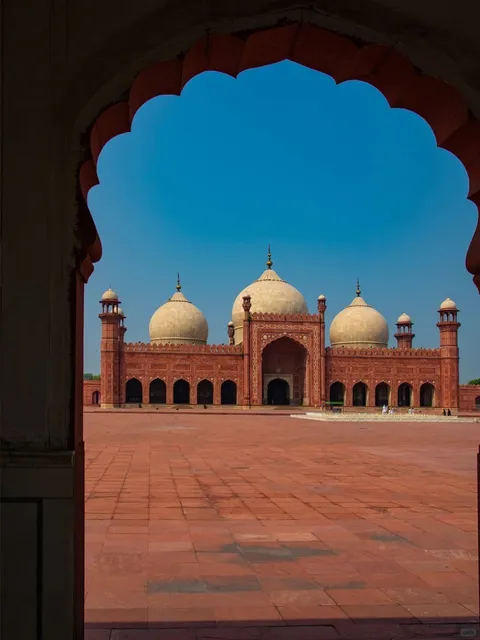
Badshahi Mosque The Badshahi Mosque, which translates to the "Imperial Mosque," is an epitome of Mughal grandeur and architectural brilliance. This majestic mosque was commissioned by the sixth Mughal Emperor, Aurangzeb, in 1671, and its construction was completed in 1673. The mosque is a testament to the zenith of Mughal architecture during the late 17th century and showcases the empire's remarkable fusion of Persian, Central Asian, and Indian architectural elements.
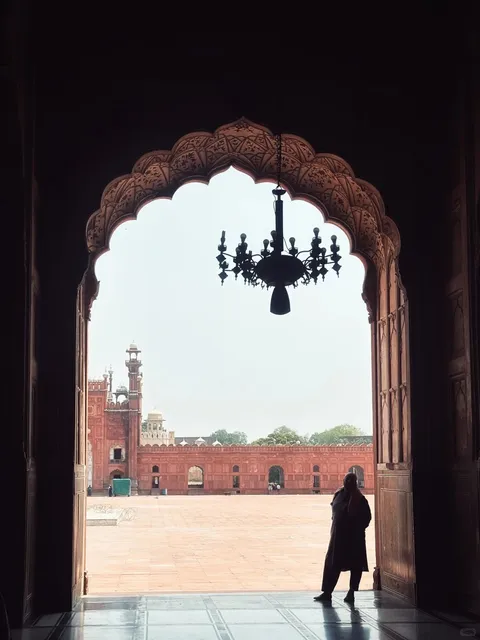
One of the most striking features of the Badshahi Mosque is its immense courtyard, which can accommodate tens of thousands of worshippers, reflecting the grand scale of Mughal ambition. The mosque's exterior is characterized by the use of red sandstone, which gives it a warm and regal appearance. However, it is the interior of the mosque that truly captivates visitors with its intricate and exquisite decoration. The prayer hall is adorned with white marble, and the arches and domes are adorned with delicate calligraphy and stunning tile work that bears testament to the incredible craftsmanship of the artisans of the time.
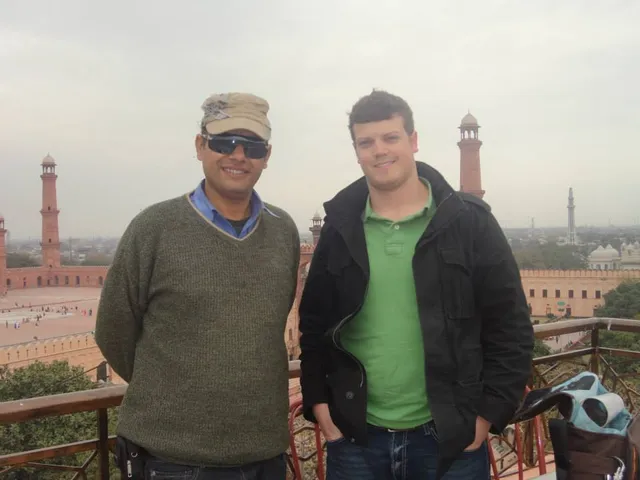
The Badshahi Mosque's central dome is the largest of its kind in the world at the time of its construction, and it remains an architectural marvel. Its symmetrical beauty is a tribute to the skill and precision of Mughal architects. The minarets that flank the mosque are equally impressive, with a height of over 54 meters (177 feet) each. Climbing one of these minarets provides an awe-inspiring panoramic view of the Lahore cityscape, allowing visitors to appreciate the mosque's grandeur in its entirety.
The mosque's interior is equally breathtaking, with a large prayer hall featuring a high central chamber adorned with beautiful chandeliers. The marble mihrab (prayer niche) and pulpit are intricately designed, adding to the mosque's overall splendor. Worshippers and tourists alike can't help but be enchanted by the spiritual and artistic ambiance that permeates every corner of this sacred space.
Beyond its architectural magnificence, the Badshahi Mosque also holds historical significance. It has played a central role in various eras of Lahore's history and has been the site of important events, including the declaration of the First War of Indian Independence by the Mughal Emperor Bahadur Shah Zafar in 1857. Over the years, the mosque has been lovingly preserved and restored, maintaining its pristine appearance for generations to come.
_Lahore Fort (Shahi Qila) _ The Lahore Fort, known as the Shahi Qila in Urdu, stands as a majestic sentinel overlooking the Badshahi Mosque. This historic fort is another jewel in Lahore's architectural crown, with its roots dating back to the Mughal period and possibly even earlier. The fort has witnessed the rise and fall of empires, serving as a symbol of power and a testament to the artistic and cultural achievements of the Mughals.
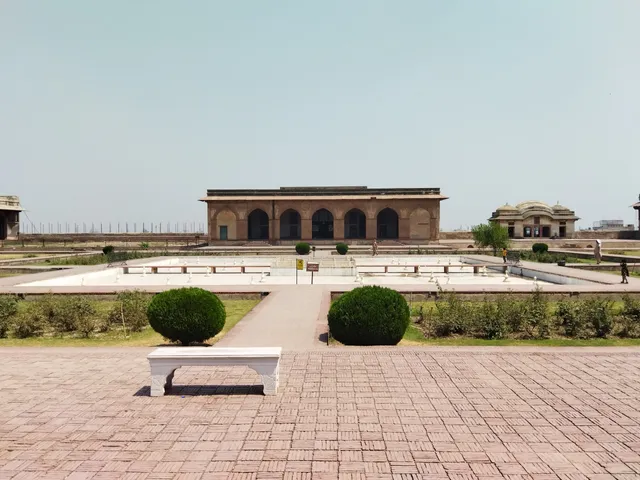
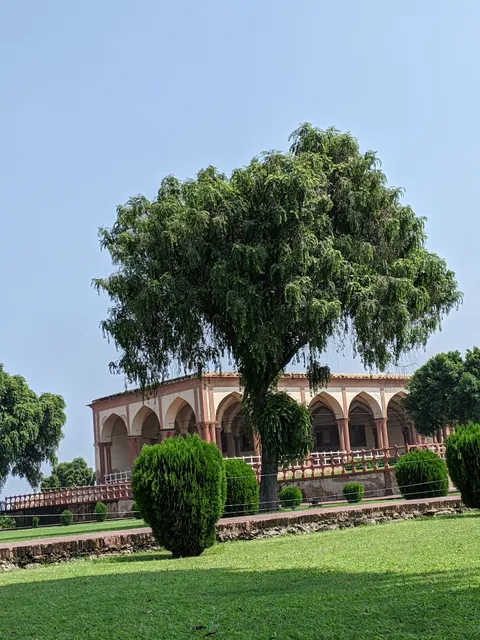
One of the most remarkable aspects of the Lahore Fort is its sheer size and complexity. The fort covers an extensive area, encompassing numerous structures, gardens, and courtyards. It is surrounded by massive fortified walls that once provided protection against invaders. The entrance to the fort, known as the Alamgiri Gate, is a splendid example of Mughal architecture, featuring intricate embellishments and a grand design.
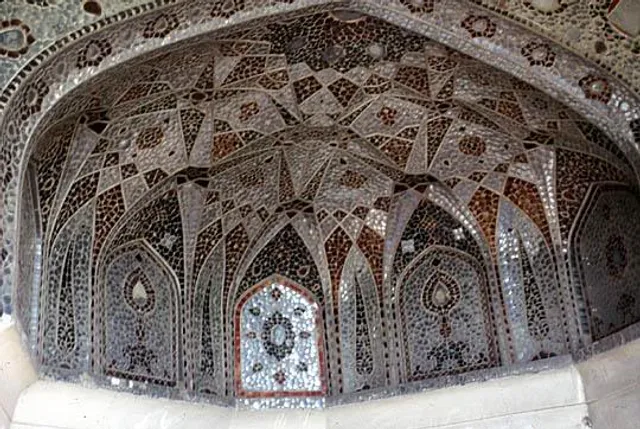
Inside the Lahore Fort, visitors are treated to a treasure trove of historical and architectural wonders. One of the most renowned structures within the fort is the Sheesh Mahal, or the Palace of Mirrors. This exquisite palace is a testament to the Mughal fascination with...
Read moreLahore Fort is a historical monument located in the heart of Lahore, Pakistan. It is one of the most visited tourist attractions in the city, and for good reason. The fort is a testament to the rich history and culture of Lahore, and it provides visitors with a glimpse into the past.
As a frequent visitor to Lahore Fort, I can confidently say that it is a must-visit attraction for anyone visiting Lahore. The fort is located in the Walled City of Lahore, which is an old and historic part of the city. The fort was originally built in the 11th century but was destroyed and rebuilt several times over the centuries.
One of the things that I love about Lahore Fort is its stunning architecture. The fort is a beautiful blend of Islamic, Persian, and Mughal architecture, which makes it a unique and impressive sight to behold. The intricate details and designs on the walls, gates, and buildings are truly breathtaking, and they provide a glimpse into the artistic talent of the craftsmen who built the fort.
Another thing that I love about Lahore Fort is the rich history and culture that it embodies. The fort has been the site of many significant events throughout the centuries, and it has been occupied by various rulers and dynasties. As a result, the fort has a rich and diverse cultural heritage that is evident in its architecture, artwork, and artifacts.
One of the highlights of visiting Lahore Fort is the Sheesh Mahal, which is a beautiful palace that is entirely made of glass. The palace was built in the 17th century by Mughal Emperor Shah Jahan, and it is a testament to the artistic and architectural brilliance of the Mughal era. The palace is decorated with thousands of pieces of glass, and it is truly a sight to behold.
Visitors to Lahore Fort can also explore the various buildings and structures within the fort, including the Alamgiri Gate, the Akbari Gate, the Diwan-e-Aam, and the Diwan-e-Khas. Each of these structures has its unique history and significance, and they provide visitors with a glimpse into the past.
One of the things that I appreciate about Lahore Fort is the effort that has been made to preserve and maintain it over the years. The fort has undergone extensive restoration and renovation work, which has helped to ensure that it remains in good condition for future generations to enjoy.
In terms of amenities, Lahore Fort offers visitors a range of facilities, including restrooms, shops, and cafes. The staff are friendly and helpful, and they are always happy to provide visitors with information and guidance.
Overall, I would highly recommend a visit to Lahore Fort to anyone visiting Lahore. It is a beautiful and historic site that provides visitors with a glimpse into the rich cultural heritage of Lahore. The architecture, artwork, and artifacts within the fort are truly breathtaking, and they offer a unique insight into the artistic talent and architectural brilliance of the craftsmen who built the fort. Additionally, the efforts to preserve and maintain the fort make it a testament to the importance of cultural heritage preservation.
One thing to note is that the fort can get quite crowded, especially during peak tourist season. However, I would still encourage visitors to make the effort to visit the fort, as the experience is well worth it.
To get to Lahore Fort, visitors can use Google Maps to navigate to the Walled City of Lahore. Once there, they can follow the signs to the fort, which is located in the northern part of the walled city. Parking is available near the fort, although it can be limited during peak hours.
In conclusion, Lahore Fort is a must-visit attraction for anyone visiting Lahore. Its stunning architecture, rich history and culture, and impressive collection of artifacts make it a unique and...
Read moreThe current form of the Lahore Fort was given by Emperor Akbar,in 1566 when he made Lahore the capital of his rule. The fort was modified by Jehangir in 1618 and later damaged by the Sikhs and the British, although it has now been partially restored. Within it is a succession of stately palaces, halls and gardens built by Mughal emperors Akbar, Jehangir, Shah Jahan and Aurangzeb, comparable to and contemporary with the other great Mughal forts at Delhi and Agra in India. It's believed that the site conceals some of Lahore's most ancient remains.
The fort has an appealing 'abandoned' atmosphere (unless it's packed with visitors) and although it's not as elaborate as most of India's premier forts, it's still a fabulous place to simply wander around.
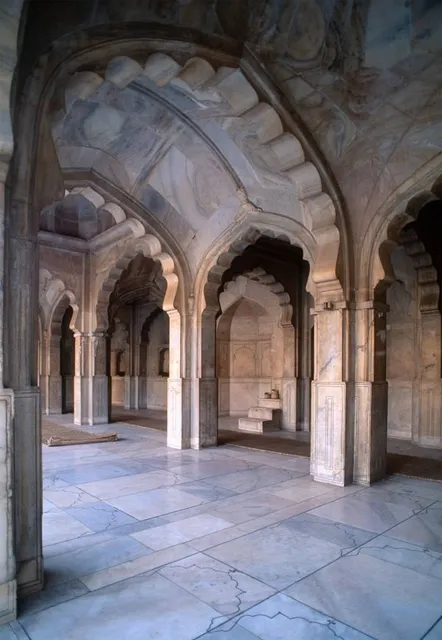
The fort is entered on its western side through the colossal Alamgiri Gate, built by Aurangzeb in 1674 as a private entrance to the royal quarters. It was large enough to allow several elephants carrying members of the royal household to enter at one time. The small Moti Masjid (Pearl Mosque) was built by Shah Jahan in 1644 for the private use of the ladies of the royal household and was restored to its original delicacy in 1904.
The Diwan-i-Aam (Hall of Public Audience) was built by Shah Jahan in 1631, with an upper balcony added by Akbar. It's where the emperor would make a daily public appearance, receive official visitors and review parades.
Khawabgarh-i-Jehangir (Jehangir's Sleeping Quarters), a pavilion on the north side of his quadrangle, now houses a small museum of Mughal antiquities. One charming story about Jehangir is that he had a chain suspended outside the fort, which anyone unable to obtain justice through the usual channels could pull. A bell would ring in his private chambers and the petition would receive his personal attention.
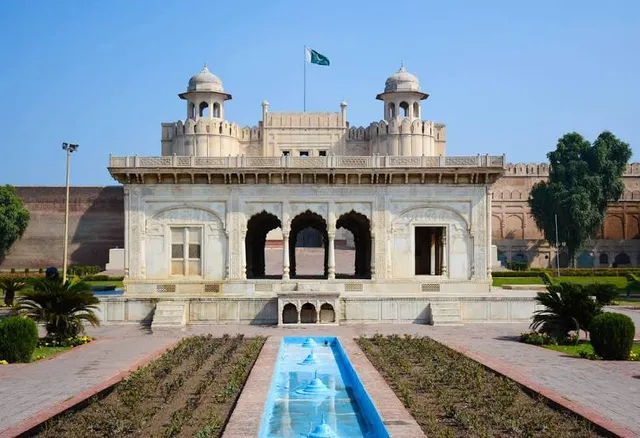
Moving west, another graceful pavilion, the Diwan-i-Khas (Hall of Private Audience), was built by Shah Jahan for receiving guests.
The Shish Mahal (Palace of Mirrors), built by Shah Jahan in 1631, was closed for renovation at the time of research, but should be open by the time you read this. Decorated with glass mirrors set into the stucco interior, it was built for the empress and her court and installed with screens to conceal them from prying eyes. The walls were rebuilt in the Sikh period, but the original marble tracery screens and pietra dura (inlay work) are in remarkable condition. The view from here over the rest of the fort and Badshahi Mosque is rewarding.
Naulakha is the marble pavilion on the west side of the quadrangle, lavishly decorated with pietra dura - studded with tiny jewels in intricate floral motifs. It was erected in 1631 and its name, meaning nine lakh (900,000), refers either to the price to build it or the number of semiprecious stones used in its construction.
You can exit the fort from here, down the Hathi Paer (Elephant Path) and through Shah Burj Gate; if you do, look behind to see the fine painted tilework of the outer wall.
There are three small museums on site (photography prohibited): the Armoury Gallery exhibits various arms including pistols, swords, daggers, spears and arrows; the Sikh Gallery predominantly houses rare oil paintings; and the Mughal Gallery includes among its exhibits old manuscripts, calligraphy, coins and miniature paintings, as well as an ivory miniature model of India's Taj Mahal.
To better understand the fort's history you can hire a guide for Rs 150. In addition, Lahore Fort, Pakistan's Glorious Heritage, a colour booklet by Muhammad Ilyas Bhatti, sells here for Rs 150.
An autorickshaw/taxi from The Mall to Lahore Fort should cost...
Read more