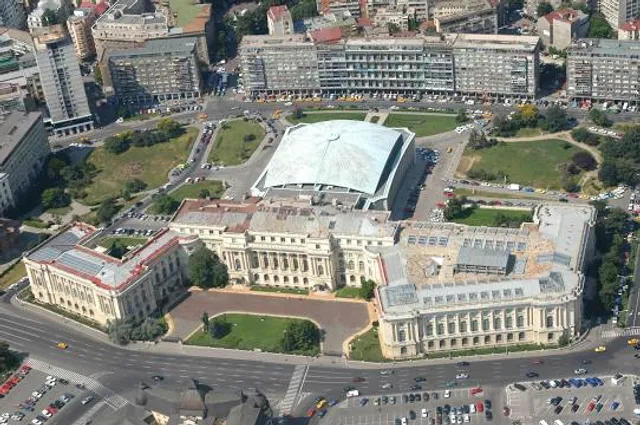
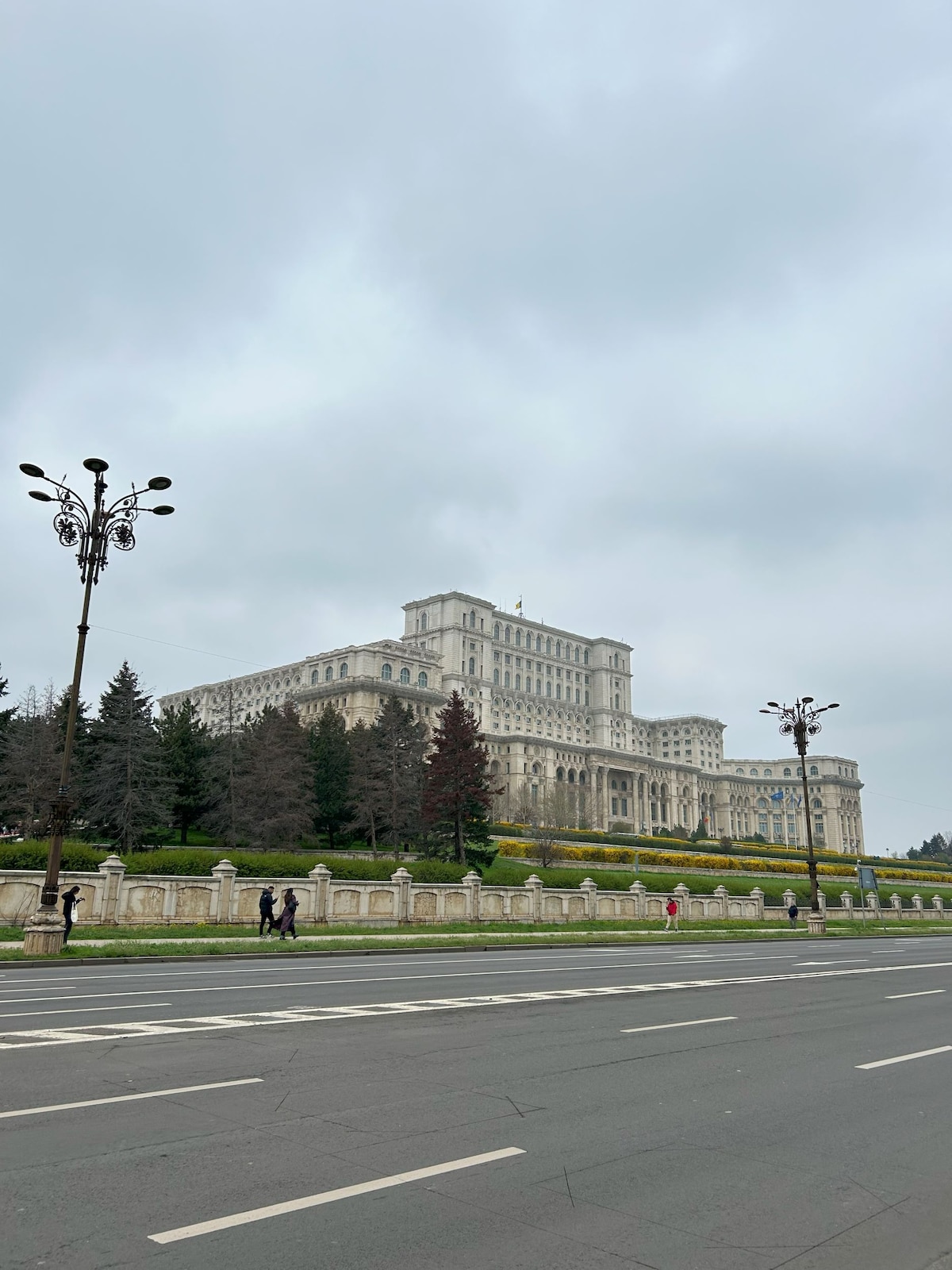
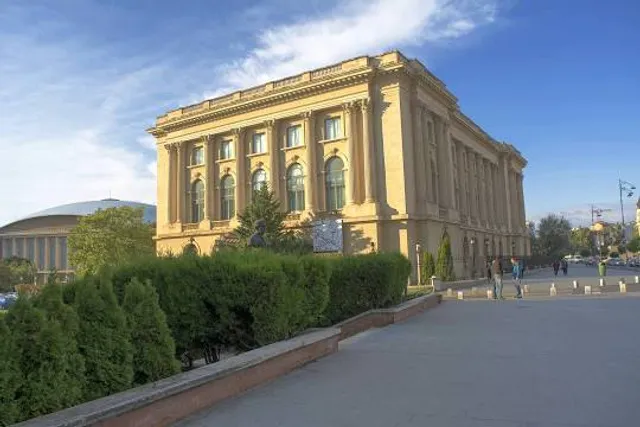
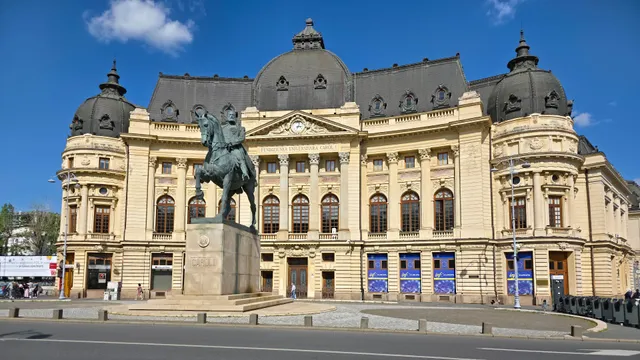
The Royal Palace — today home to Muzeul Național de Artă al României (MNAR) — is not only one of the architectural jewels of Bucharest, but also one of the country’s most important cultural institutions. Standing proudly on Calea Victoriei, the palace itself carries within its walls echoes of Romanian royal history, political transformations, and the unbroken ambition of a nation to define its own cultural voice.
Originally constructed in the early 19th century, and extensively remodeled under the reign of King Carol II, the Royal Palace served as the official residence of Romania's monarchs until the fall of the monarchy in 1947. Its stately neoclassical façade and grand interior spaces, once hosting receptions, state visits, and royal ceremonies, now serve a higher purpose: housing one of the finest art collections in Eastern Europe.
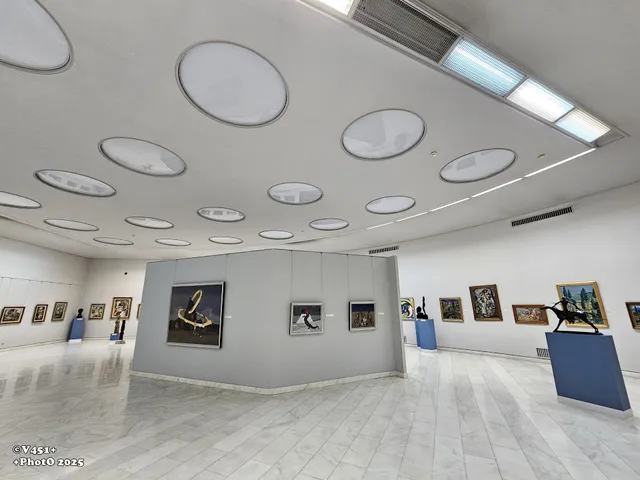
The Romanian Art Gallery within MNAR is, in my view, one of the most outstanding curatorial achievements in the country. It is a cumulative effort that brings together the very soul of Romanian art, brilliantly structured across centuries of creativity, struggle, identity, and transformation.
The exhibition starts with the deeply spiritual, church-related art — a powerful testimony to Romania’s Byzantine and Orthodox roots. These works, with their icons, fresco fragments, and ecclesiastical objects, reflect a time when art was inseparable from faith, and where the sacred defined the limits and aspirations of artistic expression.
From there, the display skillfully walks the visitor through the evolution of Romanian art — from the rigid and highly symbolic canon of religious works, through the gradual embrace of Renaissance and Baroque influences, to the flowering of the 19th and early 20th centuries, when Romanian painters emerged confidently on the European stage. The narrative is both chronological and philosophical, showing not just the works themselves, but the cultural and existential transitions behind them.
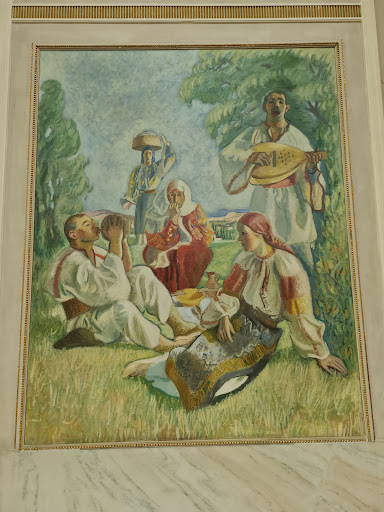
The masters of Romanian painting — Nicolae Grigorescu, Theodor Aman, Ștefan Luchian, Nicolae Tonitza, and Ion Andreescu — are presented with care and reverence, revealing their contribution to shaping a national visual language that blends Romanian traditions with broader European currents. Their works still resonate today, reflecting both local specificity and universal emotion.
Particularly impressive are the sculptures of Dimitrie Paciurea. His works transcend prior boundaries of Romanian art — his fantastic, almost metaphysical Himere series opens a window into a completely different realm of creative vision. Paciurea's sculptures do not merely depict form — they provoke thought, emotion, and awe, standing as silent guardians of Romanian modernism.
What I find most fascinating is how the museum manages to subtly illustrate the progressive distancing of Romanian art from its original ecclesiastical framework, as modern and contemporary works take root in new directions — abstract, social, sometimes provocative — yet often still carrying echoes of the old symbols and myths. There is a constant dialogue between the past and present, a cultural DNA that continues to evolve, yet remembers where it came from.
Beyond the national gallery, the European Art Gallery also presents remarkable works from Western masters, enriching the experience with cross-cultural dialogue. The palace itself adds another layer — walking through its halls, one can almost sense both the lost grandeur of the monarchy and the resilience of Romanian identity, still very much alive.
In conclusion, MNAR is a living testimony to the Romanian spirit. Whether you are a tourist or a local, an art lover or simply a curious visitor, you will leave the Royal Palace enriched, inspired, and with a deeper understanding of how this nation has expressed itself...
Read moreVechiul Palat Regal
Pe locul actualului Palat Regal s-a ridicat, începând cu anul 1812, Casa Golescu.
Casa Golescu a fost construită între anii 1812 și 1815, în stil neoclasic, cu un etaj, și avea 25 de odăi, un număr impresionant pentru o locuință în Bucureștii acelei epoci[1]. În 1837, casa somptuoasă a stolnicului Dinicu Golescu devine Curtea Domnească a lui Alexandru Dimitrie Ghica. Din 1859 până în 1866 aici a locuit domnitorul Principatelor Unite, Alexandru Ioan Cuza. Din 10 mai 1866 casa devine locuința domnitorului Carol I.[2]
După incendiul petrecut în noaptea de 7/8 decembrie 1926, care a distrus corpul central, devine necesară repararea clădirii. În 1927, Regele Ferdinand decide repararea Palatului, iar lucrările sunt încredințate arhitectului ceh Karel Líman, arhitect al Casei Regale.[3]
În 1935–1936 vechiul Palat este complet demolat.
Palatul Regal nou (1937)modificare
Palatul nou, cel actual, a fost construit după planurile arhitectului Nicolae Nenciulescu și terminat în anul 1937. Sub domnia Regelui Carol al II-lea, planurile generale ale clădirii și decorarea s-au făcut prin efortul direct al Reginei Maria a României, care a condus îndeaproape echipa de arhitecți și constructori.
La 6 septembrie 1940, după abdicarea Regelui Carol al II-lea, în Sala Tronului a avut loc ceremonia de depunere a jurământului de către Majestatea Sa Regele Mihai, în prezența generalului Ion Antonescu, a patriarhului Nicodim Munteanu și a președintelui Curții de Casație, Dimitrie Lupu.[4]
În timpul celui de-al Doilea Război Mondial, s-a plănuit și o refacere completă a Pieței Palatului, pentru a pune în valoarea clădirea Palatului, însă acest proiect nu s-a mai materializat.
La 24 august 1944, a doua zi după ce Regele Mihai și colaboratorii săi au înlăturat brusc de la putere guvernul condus de Mareșalul Ion Antonescu, Palatul a fost grav avariat de bombardamentul Luftwaffe, survenit ca represalii. Clădirea a devenit nelocuibilă, iar vila aflată în spatele Palatului, Casa Nouă (care era, de fapt, locuința Familiei Regale) a fost distrusă în întregime. Pentru că cealaltă reședință regală din București, Palatul Cotroceni, fusese, și ea, grav avariată de cutremurul din noiembrie 1940, Regele a fost silit să ceară mătușii sale, Principesa Elisabeta, permisiunea de a folosi casa ei („vila din Kiseleff”, cunoscută azi ca Palatul Elisabeta, deși nu a fost destinată niciodată activităților oficiale), atât pentru activitatea Curții, cât și pentru locuit.
La 19 iulie 1945 a avut loc în Sala Tronului o ceremonie prin care Regelui Mihai i-a fost înmânat Ordinul Victoriei („Pobeda”), cea mai înaltă decorație militară sovietică. În acest scop, au fost reparate în grabă Sala Tronului și câteva alte încăperi.[5]
Sursă...
Read moreWe can visit the Historic Places of the Royal Palace due to a little trick. Most of the museums in Bucharest does not accept card payments so as we are interested in the historical spaces together with the National Art Museum, we were to the ticket office and we don't have cash.
The woman working there ask us for buying the ticket for the Srt museum online, and she gave us the ticket for the Historical Spaces for free.
The question is, is it a worthy place to pay for? The answer is no. It should be included in the ticket price for the other exhibitions as you will only see the Dinner room, as it is completely empty, the stairs, which are really beautiful, and the Throne Hall which is empty as well.
The rooms are quite interesting but they should be...
Read more