HTML SitemapExplore
logo
Find Things to DoFind The Best Restaurants

National Museum of Serbia — Attraction in City of Belgrade

Name
National Museum of Serbia
Description
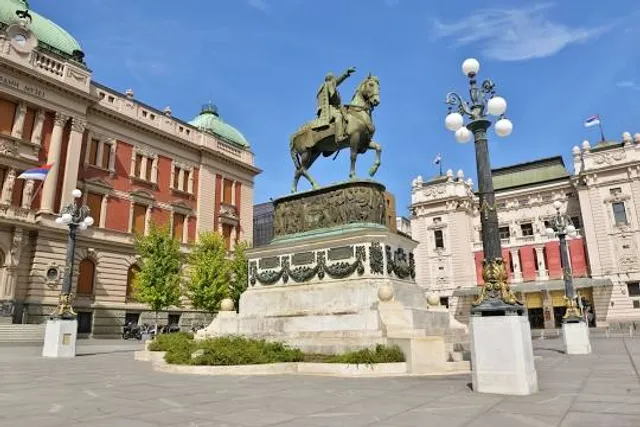
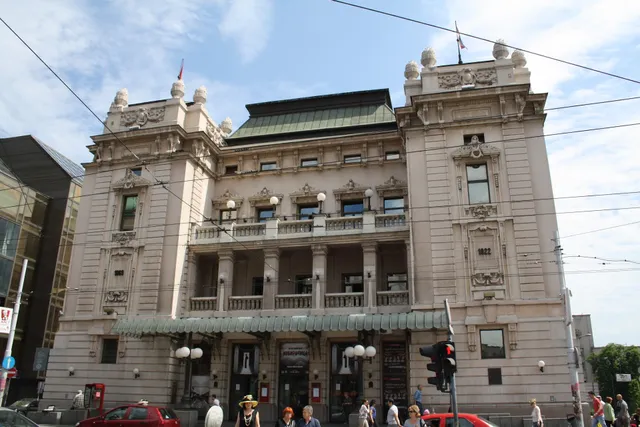
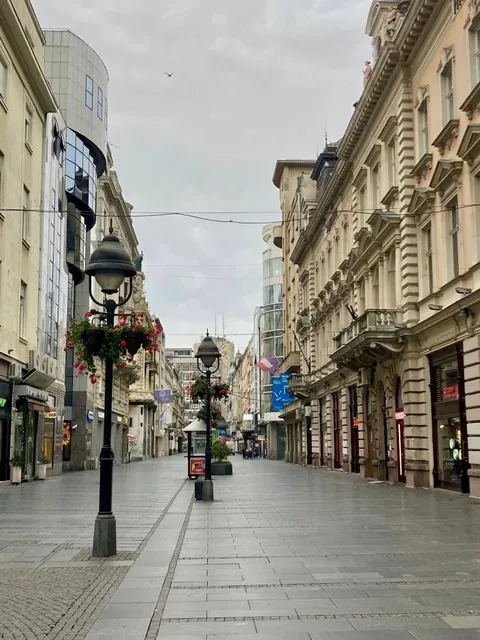
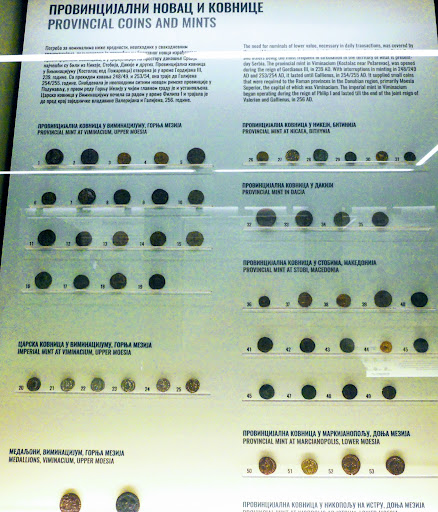
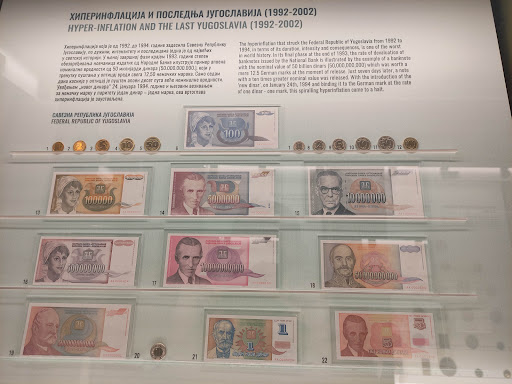
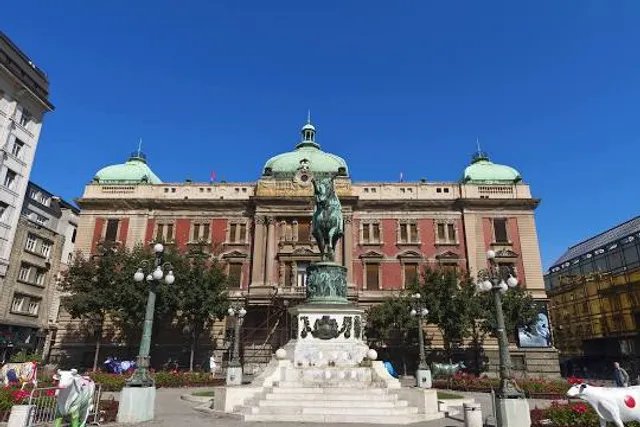
The National Museum of Serbia is the largest and oldest museum in Belgrade, Serbia. It is located in the central zone of Belgrade on a square plot between the Republic Square, formerly Theatre Square, and three streets: Čika Ljubina, Vasina and Laze Pačua.
Nearby attractions
Republic Square
Trg republike 3, Beograd, Serbia
National Theatre in Belgrade
Francuska 3, Beograd 11000, Serbia
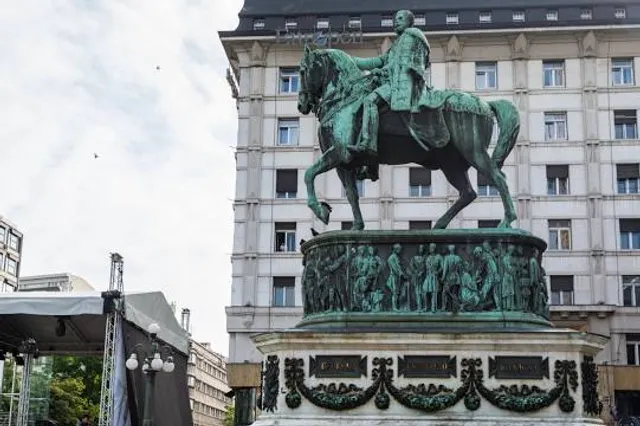
Prince Mihailo Monument
Trg republike, Beograd 11000, Serbia
Pozorište Boško Buha
Bulevar kralja Aleksandra 77a, Beograd, Serbia
Museum of Illusions
Nušićeva 11, Beograd 11000, Serbia
Delijska Česma
Belgrade, Serbia
Studentski Park
Studentski trg 16, Beograd 11000, Serbia
Kapetan Mišino zdanje
Studentski trg 1, Beograd, Serbia
Museum of the National Theater
Dositejeva 2, Beograd, Serbia
Terazije Theatre
Terazije 29, Beograd 11000, Serbia
Nearby restaurants
Boutique #1
Trg republike 3, Beograd, Serbia
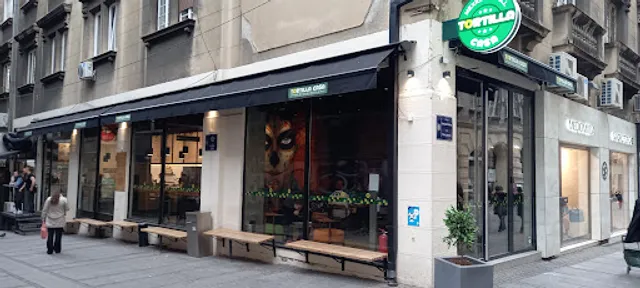
Tortilla Casa
Čika-Ljubina 6, Beograd 11000, Serbia
Jazz Restaurant
19 OBILIĆEV VENAC, 11102, Obilićev venac 17, Beograd 11000, Serbia
Restoran Mihailo
Obilićev venac 16, Beograd 11000, Serbia
Biryani Central
Vase Čarapića 5, Beograd, Serbia
Hari's Creperie Belgrade
Obilićev venac 18, Beograd 11000, Serbia
Drama ćevapi
Dositejeva 7, Beograd 11000, Serbia
Restoran PLATO
Čika-Ljubina 18-20, Beograd 11000, Serbia
Klub književnika
Francuska 7, Beograd 11000, Serbia
CREDO at Marriott
Belgrade, Serbia
Related posts
National Museum of Serbia
Keywords
National Museum of Serbia tourism.National Museum of Serbia hotels.National Museum of Serbia bed and breakfast. flights to National Museum of Serbia.National Museum of Serbia attractions.National Museum of Serbia restaurants.National Museum of Serbia travel.National Museum of Serbia travel guide.National Museum of Serbia travel blog.National Museum of Serbia pictures.National Museum of Serbia photos.National Museum of Serbia travel tips.National Museum of Serbia maps.National Museum of Serbia things to do.
National Museum of Serbia things to do, attractions, restaurants, events info and trip planning
National Museum of Serbia
SerbiaCentral SerbiaCity of BelgradeNational Museum of Serbia

Basic Info

National Museum of Serbia

Trg republike 1а, Beograd 104303, Serbia
4.7(3.4K)
Open 24 hours
Save
spot

Ratings & Description

Info

The National Museum of Serbia is the largest and oldest museum in Belgrade, Serbia. It is located in the central zone of Belgrade on a square plot between the Republic Square, formerly Theatre Square, and three streets: Čika Ljubina, Vasina and Laze Pačua.

Cultural
Accessibility
attractions: Republic Square, National Theatre in Belgrade, Prince Mihailo Monument, Pozorište Boško Buha, Museum of Illusions, Delijska Česma, Studentski Park, Kapetan Mišino zdanje, Museum of the National Theater, Terazije Theatre, restaurants: Boutique #1, Tortilla Casa, Jazz Restaurant, Restoran Mihailo, Biryani Central, Hari's Creperie Belgrade, Drama ćevapi, Restoran PLATO, Klub književnika, CREDO at Marriott
logoLearn more insights from Wanderboat AI.
Phone
+381 60 8075020
Website
narodnimuzej.rs

Plan your stay

hotel
Pet-friendly Hotels in City of Belgrade
Find a cozy hotel nearby and make it a full experience.
hotel
Affordable Hotels in City of Belgrade
Find a cozy hotel nearby and make it a full experience.
hotel
The Coolest Hotels You Haven't Heard Of (Yet)
Find a cozy hotel nearby and make it a full experience.
hotel
Trending Stays Worth the Hype in City of Belgrade
Find a cozy hotel nearby and make it a full experience.

Reviews

Nearby attractions of National Museum of Serbia

Republic Square

National Theatre in Belgrade

Prince Mihailo Monument

Pozorište Boško Buha

Museum of Illusions

Delijska Česma

Studentski Park

Kapetan Mišino zdanje

Museum of the National Theater

Terazije Theatre

Republic Square

Republic Square

4.4

(14.2K)

Open 24 hours
Click for details
National Theatre in Belgrade

National Theatre in Belgrade

4.8

(2.2K)

Open 24 hours
Click for details
Prince Mihailo Monument

Prince Mihailo Monument

4.7

(842)

Open 24 hours
Click for details
Pozorište Boško Buha

Pozorište Boško Buha

4.7

(106)

Open 24 hours
Click for details

Things to do nearby

Explore Belgrades past and culture with a guide
Thu, Dec 4 • 1:30 PM
Belgrade, RS 11102, Serbia
View details
Belgrade Street Food and drinks, Eat like a local
Fri, Dec 5 • 10:45 AM
Belgrade, RS 11000, Serbia
View details
Cruise Belgrades rivers with a boat captain
Fri, Dec 5 • 2:00 PM
Belgrade, RS 11210, Serbia
View details

Nearby restaurants of National Museum of Serbia

Boutique #1

Tortilla Casa

Jazz Restaurant

Restoran Mihailo

Biryani Central

Hari's Creperie Belgrade

Drama ćevapi

Restoran PLATO

Klub književnika

CREDO at Marriott

Boutique #1

Boutique #1

4.1

(2.1K)

$$$

Click for details
Tortilla Casa

Tortilla Casa

4.0

(939)

Click for details
Jazz Restaurant

Jazz Restaurant

4.5

(2.6K)

$$

Click for details
Restoran Mihailo

Restoran Mihailo

4.7

(1.6K)

$$

Click for details
Get the Appoverlay
Get the AppOne tap to find yournext favorite spots!
Wanderboat LogoWanderboat

Your everyday Al companion for getaway ideas

CompanyAbout Us
InformationAI Trip PlannerSitemap
SocialXInstagramTiktokLinkedin
LegalTerms of ServicePrivacy Policy

Get the app

© 2025 Wanderboat. All rights reserved.
logo

Reviews of National Museum of Serbia

4.7
(3,363)
avatar
5.0
7y

National Museum оf Serbia in Belgrade: May 10, 1844 - June 28, 2018

History Building of Fund Management, State Mortgage Bank, now the building of the National Museum. Postcard from before the First World War. On the 10th of May 1844, the National Museum under the name Muzeum srpski was founded by the Minister of Education, Jovan Sterija Popović. Prior to its raising at this place was the famous Belgrade cafe "Dardaneli" in which the cultural and artistic elites of that time stayed. At the same time, the transformation of the Republic Square was initiated by the demolition of old taverns. The present museum building was erected in 1903 for the Fund Management, which was later moved by Hipotekarna banka, one of the oldest banking institutions in Belgrade. This building, from 1952, is the house of the National Museum in Belgrade. It was realized according to the project of architects Andre Stevanovic and Nikola Nestorovic after the competition where they received the first prize. On this building, a certain form of reinforced concrete was used for the foundation of the foundation. In fact, during the first works, various pits, wells and basements were encountered due to the proximity of the former Stambol Gate. The newly built two-storey building represented the real palace of its time, according to the conception of volume designed in the form of a long massive block with domes over central and lateral rationality, as well as an academic facade solution based on the principles of non-resonance with elements of neo-baroque on domes. The greatest attention in the building was dedicated to the monumental staircase, while the counter of the hall, as the basic space of a bank, was given secondary importance. Less than three decades later, with the development of Hipotekarna banka, there was a need for a fundamental reconstruction of the building. The upgrade was carried out without a tender according to the project of architect Vojin Petrovic, which added the wing and atrium to the street of Laze Pachu. As the new part contained the same elements as the old object, two monumental stairways and two counters appeared on the floor, while only on the first floor were the rooms united in the form of an uninterrupted number of passage offices. During World War II, Hipotekarna banka building was bombed when its central part with the dome collapsed. After the war, the building got a completely new purpose when one of the most important state cultural institutions moved into it.

Since its foundation during the time of the Constitutional Court until the end of the Second World War, the National Museum has moved several times. He was originally in the Captain Mishin Building (1863) and was moved to neighboring two buildings that were demolished in the First World War, and the collection was confiscated and robbed by the occupiers. In the interwar period, he did not get his own building but for his own needs, a private house in Kneza Miloša Street 58 was rented, until 1935, when the Museum of Prince Pavle [3] opened in the building of the New Palace, which was created by merging the Historical Museum and the Museum of Contemporary Art . When the Novi dvor was adapted for the needs of the Assembly of Serbia, in 1948 the Museum was transferred to the building of the former Stock Exchange at Studentski trg, and partly to the Konak knot Ljubice where the Appellate Court was temporarily placed. The first competition for the Museum building, planned to be in Tashmajdan, was announced next year. The project was made by architect Miladin Prljević, but Kominform's decision was abandoned by this idea, and the Museum was again relocated, this time to the Hipotekarna banka building on Trg Republike where it officially took its central place and the bank...

   Read more
avatar
1.0
3y

Oh, this poor museum. It seems to think that better presentation (and more English) than other museums in the former Yugoslavia is the only key to success. Unfortunately, the visitor experience matters quite a lot, as professional museums know. Being shouted at about the time from the moment I enter until the moment I leave, being trailed by security in every gallery I enter, having the lights off in the entire archaeology section...this is not a good reflection on Serbia, which is generally a lovely place with good people who care.

This museum has an interesting collection, but is more inhospitable and unpleasant than any other museum in Serbia. If you go here, rememeber that you sacrifice your adulthood -- you will be treated as someone who cannot manage their time, who will start touching the Monet, and who doesn't know or care about history.

Most importantly, this museum does not close at 6, it closes at 5:40, and the shouting and random closures start at 5:30. For a very small museum, this is ridiculous, and leaves a group of various tourists bonding outside over what a bad experience it was, when we easily could have wrapped up our visit if we had not been hounded for 10 minutes and then kicked out 20 minutes early. Especially since it is the only museum in Serbia like this, of the 10+ museums I have visited in Belgrade and in Vojvodina. The other museums have good collections, helpful and kind staff, and open and close to visitors exactly when they say they do. Exactly. If this museum wants to close at 5:30, say that. Easy.

The museums in Novi Sad, for example, may not be as well presented or have as much information in English, but the one or two people who work there are absolute fonts of information -- ask any historical question and you will get a long reasoned answer from a very knowledgeable person who is happy to share. A much, much better way to experience Serbian art, culture, and history than this.

It always makes me sad to see an otherwise decent institution fail their visitors in this way. The quality of a collection and its presentation, and the connection with the people who visit it are not separate things -- only together do they make a...

   Read more
avatar
5.0
2y

The National Museum is enormous, in fact quite easy to spend an entire day in without having seen even part of what one would have liked, and reasonably priced (free of charge on Sundays, and about 250 Serbian dinars, which amounts to slightly over €2 and slightly under £2 otherwise). It houses a particularly impressive collection of, on the one hand, South-Eastern European artefacts (although these are rarely explicitly framed as such on their respective plaques, there are some incredibly rare, unusually well-preserved neolithic, antique and mediaeval pieces, such as most of the constituent parts of a Roman chariot and hydraulic pipe organ) and, on the other hand, European art from the fourteenth through to the twenty-first century (as an indication, the French art collection alone includes the entire estate of Ambroise Vollard's protégé Paul Karađorđević, including numerous pieces by Degas, Gauguin, Renoir, Pissarro, Matisse, Corot and others, while the Italian, Dutch, Flemish, German, Austrian, English, Russian and Serbian art collections are not far behind, with the Serbian collection also encompassing a broader and rather distinct, unusually dimensional approach to mediaeval art).

The plaques placed all around are relatively accessible to an international audience (the Serbian is usually accompanied by at least English, although the latter can occasionally be stilted and of questionable accuracy, as in the case of a piece by the Serbian artist Siniša Vuković, which in its translation from the Serbian 'Соба особа без лица'/'Soba osoba bez lica', into the English 'Room without a Face' acquired an entirely novel dimension of...

   Read more
Page 1 of 7
Previous
Next

Posts

National Museum of Serbia
LucasLucas
National Museum of Serbia
Predrag PopovicPredrag Popovic
National Museum оf Serbia in Belgrade: May 10, 1844 - June 28, 2018 History Building of Fund Management, State Mortgage Bank, now the building of the National Museum. Postcard from before the First World War. On the 10th of May 1844, the National Museum under the name Muzeum srpski was founded by the Minister of Education, Jovan Sterija Popović. Prior to its raising at this place was the famous Belgrade cafe "Dardaneli" in which the cultural and artistic elites of that time stayed. At the same time, the transformation of the Republic Square was initiated by the demolition of old taverns. The present museum building was erected in 1903 for the Fund Management, which was later moved by Hipotekarna banka, one of the oldest banking institutions in Belgrade. This building, from 1952, is the house of the National Museum in Belgrade. It was realized according to the project of architects Andre Stevanovic and Nikola Nestorovic after the competition where they received the first prize. On this building, a certain form of reinforced concrete was used for the foundation of the foundation. In fact, during the first works, various pits, wells and basements were encountered due to the proximity of the former Stambol Gate. The newly built two-storey building represented the real palace of its time, according to the conception of volume designed in the form of a long massive block with domes over central and lateral rationality, as well as an academic facade solution based on the principles of non-resonance with elements of neo-baroque on domes. The greatest attention in the building was dedicated to the monumental staircase, while the counter of the hall, as the basic space of a bank, was given secondary importance. Less than three decades later, with the development of Hipotekarna banka, there was a need for a fundamental reconstruction of the building. The upgrade was carried out without a tender according to the project of architect Vojin Petrovic, which added the wing and atrium to the street of Laze Pachu. As the new part contained the same elements as the old object, two monumental stairways and two counters appeared on the floor, while only on the first floor were the rooms united in the form of an uninterrupted number of passage offices. During World War II, Hipotekarna banka building was bombed when its central part with the dome collapsed. After the war, the building got a completely new purpose when one of the most important state cultural institutions moved into it. Since its foundation during the time of the Constitutional Court until the end of the Second World War, the National Museum has moved several times. He was originally in the Captain Mishin Building (1863) and was moved to neighboring two buildings that were demolished in the First World War, and the collection was confiscated and robbed by the occupiers. In the interwar period, he did not get his own building but for his own needs, a private house in Kneza Miloša Street 58 was rented, until 1935, when the Museum of Prince Pavle [3] opened in the building of the New Palace, which was created by merging the Historical Museum and the Museum of Contemporary Art . When the Novi dvor was adapted for the needs of the Assembly of Serbia, in 1948 the Museum was transferred to the building of the former Stock Exchange at Studentski trg, and partly to the Konak knot Ljubice where the Appellate Court was temporarily placed. The first competition for the Museum building, planned to be in Tashmajdan, was announced next year. The project was made by architect Miladin Prljević, but Kominform's decision was abandoned by this idea, and the Museum was again relocated, this time to the Hipotekarna banka building on Trg Republike where it officially took its central place and the bank was evicted.
U. M.U. M.
I visited this museum last week, so here are my comments on; First, once you start your tour you will see a storyboard. They have started to tell from the beginning of mankind yet you immediately realize there is a huge time gap between start and second chapter, which is around 2.1 million years. Second, while you follow the storyboard there will be pieces behind represents that era, however it doesn't match with the story. there are big time gaps even era gaps between findings. Third, I believe not all the timestamps and findings match. I don't think they put enough efford to curate the museum better. Fourth, since its Serbian museum its completely understandable that they have mainly focused around history around their country yet in such geography you can't unsee history around while everything is connected. Because of this it's got some "missing" feeling. Other than that, if you are a experienced museum visitor not a lot of wow factor pieces in there. You may learn some of Serbian (also Yugoslavian) art spread through years, but that's all you got. Also I think their 65+ senior so called "security" seriously needs training. They have no idea how to be a museum personnel. Ever moment their eyes will be on you. This is not a police business, so its very disturbing. Last, while normal visitor ticket is 300RSD, if you wish to see, for permanent exhibition they charge another 300. It was just a bit of storytelling and few pieces of Roman empire horsecars. Not worth it at all.
See more posts
See more posts
hotel
Find your stay

Pet-friendly Hotels in City of Belgrade

Find a cozy hotel nearby and make it a full experience.

National Museum of Serbia
Lucas

Lucas

hotel
Find your stay

Affordable Hotels in City of Belgrade

Find a cozy hotel nearby and make it a full experience.

Get the Appoverlay
Get the AppOne tap to find yournext favorite spots!
National Museum оf Serbia in Belgrade: May 10, 1844 - June 28, 2018 History Building of Fund Management, State Mortgage Bank, now the building of the National Museum. Postcard from before the First World War. On the 10th of May 1844, the National Museum under the name Muzeum srpski was founded by the Minister of Education, Jovan Sterija Popović. Prior to its raising at this place was the famous Belgrade cafe "Dardaneli" in which the cultural and artistic elites of that time stayed. At the same time, the transformation of the Republic Square was initiated by the demolition of old taverns. The present museum building was erected in 1903 for the Fund Management, which was later moved by Hipotekarna banka, one of the oldest banking institutions in Belgrade. This building, from 1952, is the house of the National Museum in Belgrade. It was realized according to the project of architects Andre Stevanovic and Nikola Nestorovic after the competition where they received the first prize. On this building, a certain form of reinforced concrete was used for the foundation of the foundation. In fact, during the first works, various pits, wells and basements were encountered due to the proximity of the former Stambol Gate. The newly built two-storey building represented the real palace of its time, according to the conception of volume designed in the form of a long massive block with domes over central and lateral rationality, as well as an academic facade solution based on the principles of non-resonance with elements of neo-baroque on domes. The greatest attention in the building was dedicated to the monumental staircase, while the counter of the hall, as the basic space of a bank, was given secondary importance. Less than three decades later, with the development of Hipotekarna banka, there was a need for a fundamental reconstruction of the building. The upgrade was carried out without a tender according to the project of architect Vojin Petrovic, which added the wing and atrium to the street of Laze Pachu. As the new part contained the same elements as the old object, two monumental stairways and two counters appeared on the floor, while only on the first floor were the rooms united in the form of an uninterrupted number of passage offices. During World War II, Hipotekarna banka building was bombed when its central part with the dome collapsed. After the war, the building got a completely new purpose when one of the most important state cultural institutions moved into it. Since its foundation during the time of the Constitutional Court until the end of the Second World War, the National Museum has moved several times. He was originally in the Captain Mishin Building (1863) and was moved to neighboring two buildings that were demolished in the First World War, and the collection was confiscated and robbed by the occupiers. In the interwar period, he did not get his own building but for his own needs, a private house in Kneza Miloša Street 58 was rented, until 1935, when the Museum of Prince Pavle [3] opened in the building of the New Palace, which was created by merging the Historical Museum and the Museum of Contemporary Art . When the Novi dvor was adapted for the needs of the Assembly of Serbia, in 1948 the Museum was transferred to the building of the former Stock Exchange at Studentski trg, and partly to the Konak knot Ljubice where the Appellate Court was temporarily placed. The first competition for the Museum building, planned to be in Tashmajdan, was announced next year. The project was made by architect Miladin Prljević, but Kominform's decision was abandoned by this idea, and the Museum was again relocated, this time to the Hipotekarna banka building on Trg Republike where it officially took its central place and the bank was evicted.
Predrag Popovic

Predrag Popovic

hotel
Find your stay

The Coolest Hotels You Haven't Heard Of (Yet)

Find a cozy hotel nearby and make it a full experience.

hotel
Find your stay

Trending Stays Worth the Hype in City of Belgrade

Find a cozy hotel nearby and make it a full experience.

I visited this museum last week, so here are my comments on; First, once you start your tour you will see a storyboard. They have started to tell from the beginning of mankind yet you immediately realize there is a huge time gap between start and second chapter, which is around 2.1 million years. Second, while you follow the storyboard there will be pieces behind represents that era, however it doesn't match with the story. there are big time gaps even era gaps between findings. Third, I believe not all the timestamps and findings match. I don't think they put enough efford to curate the museum better. Fourth, since its Serbian museum its completely understandable that they have mainly focused around history around their country yet in such geography you can't unsee history around while everything is connected. Because of this it's got some "missing" feeling. Other than that, if you are a experienced museum visitor not a lot of wow factor pieces in there. You may learn some of Serbian (also Yugoslavian) art spread through years, but that's all you got. Also I think their 65+ senior so called "security" seriously needs training. They have no idea how to be a museum personnel. Ever moment their eyes will be on you. This is not a police business, so its very disturbing. Last, while normal visitor ticket is 300RSD, if you wish to see, for permanent exhibition they charge another 300. It was just a bit of storytelling and few pieces of Roman empire horsecars. Not worth it at all.
U. M.

U. M.

See more posts
See more posts