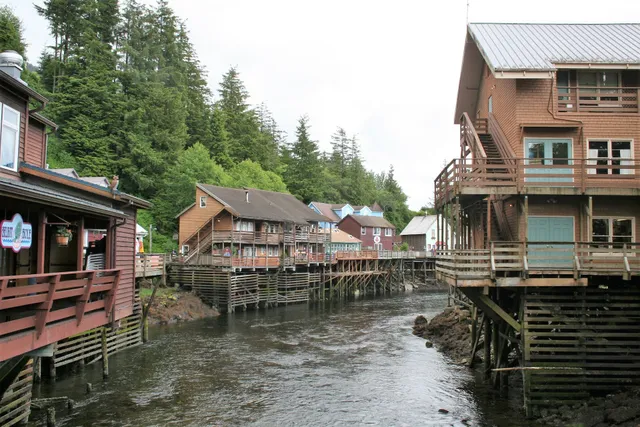
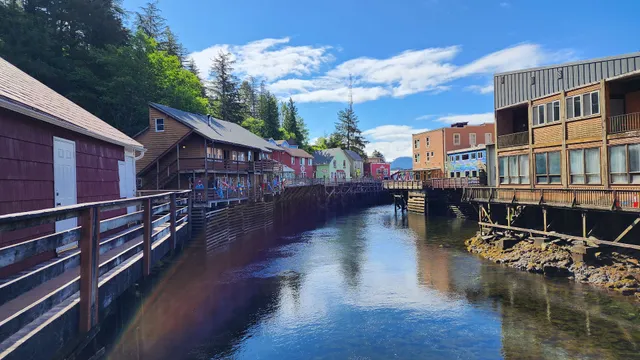
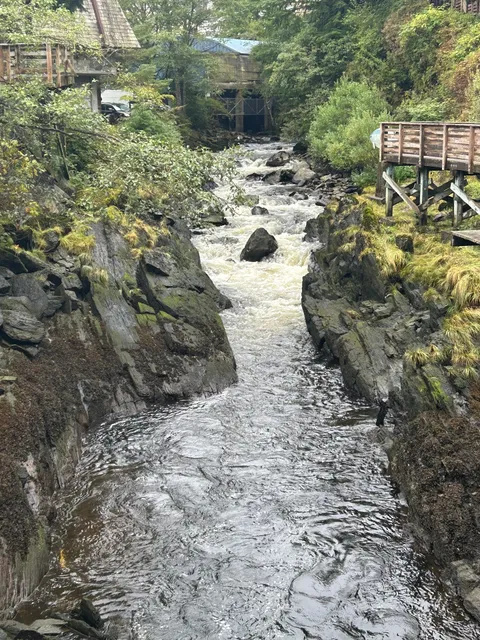
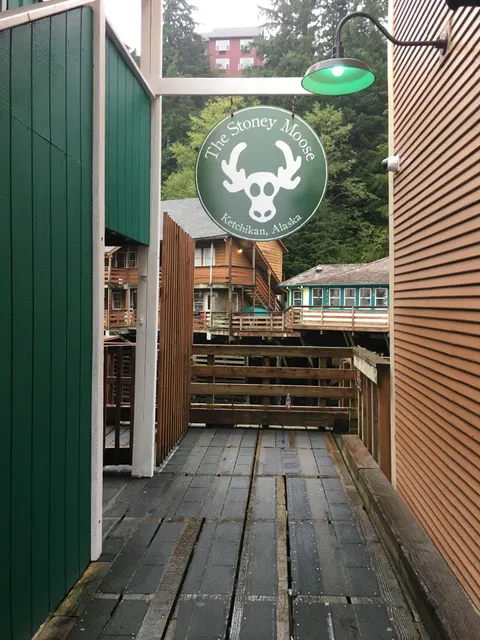
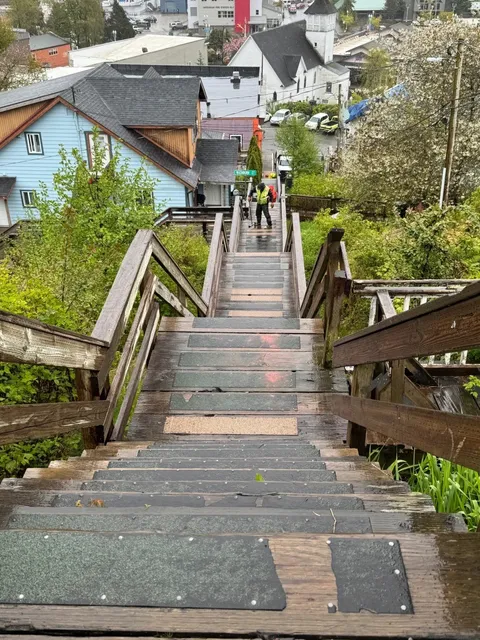
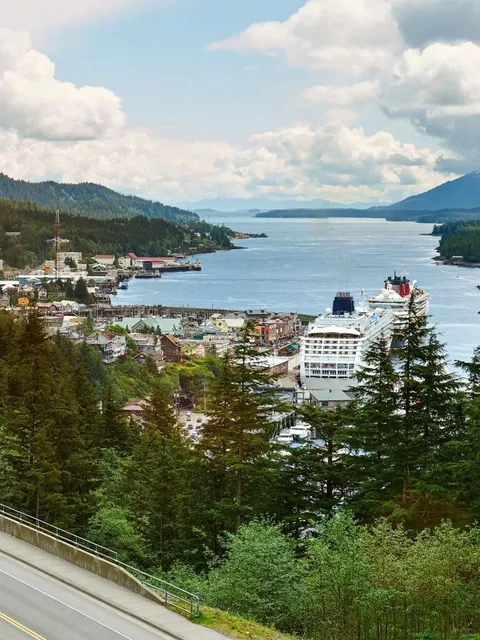
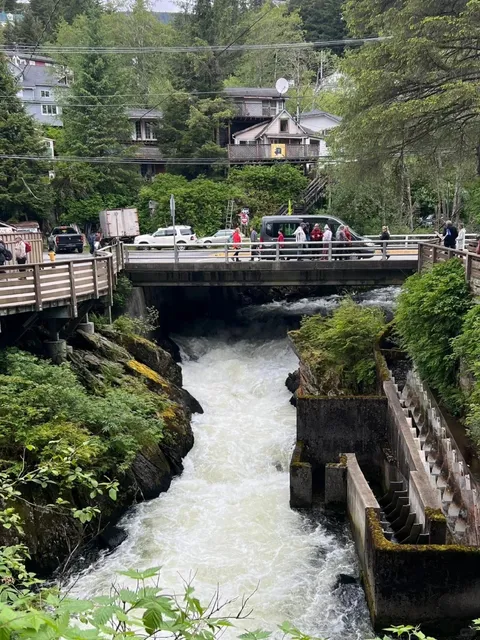
As I meander along Creek Street in Ketchikan, Alaska, I'm enveloped by the rich tapestry of history and culture that clings to the wooden pilings of this storied boardwalk. It's a place where the architectural echoes of the ancient Phoenix city in China resonate through the stilt-supported structures that line the mountainous backdrop. The rush of the creek's rapids below harmonizes with the soft patter of rain, adding a serene soundtrack to my stroll. Here, amidst the verdant embrace of the Southeast Alaskan rainforest, the rain is not a deterrent but a collaborator, enhancing the vivid hues captured in my panoramic photographs.
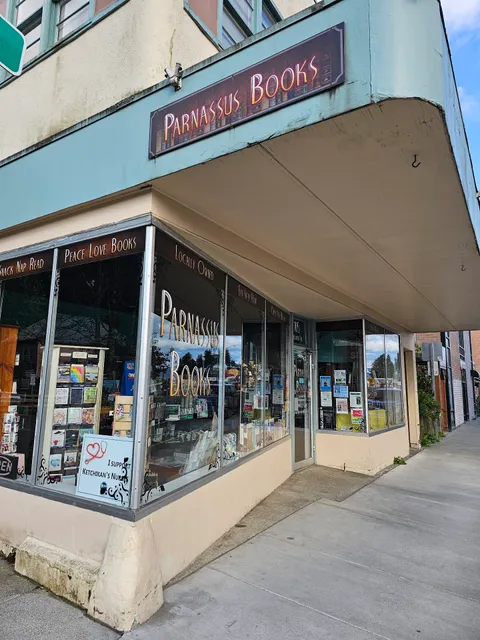
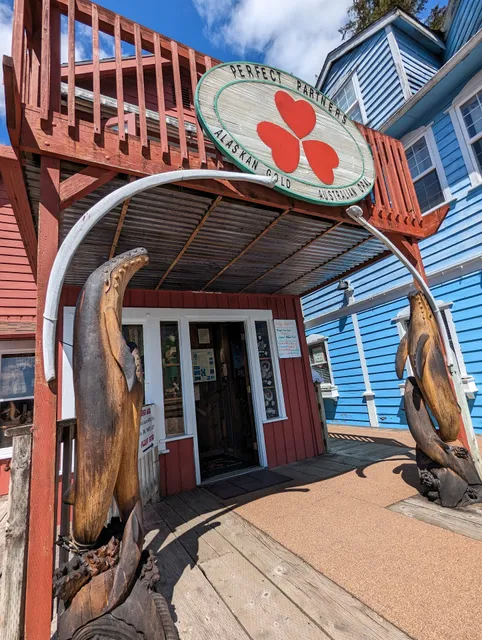
The street is alive with the spirit of commerce, where each shop and gallery is a portal into the Native Alaskan heritage. Artworks, clothing, and goods, unique to the indigenous cultures, are displayed with pride, offering a glimpse into the artistry and traditions that have been woven into the fabric of this community. As I explore, the light rain casts a gossamer veil over the scene, lending an ethereal quality to the already vibrant tableau.
In this moment, I am both a spectator and a participant in the ongoing narrative of Creek Street. Once a red-light district, it has transformed into a bustling hub of activity, where the past and present converge. The historical significance of this place is not lost on me; it's a testament to the resilience and adaptability of those who have made their lives here. The frontier spirit of Alaska is palpable in the air, as tangible as the mist that clings to my skin.
As I pause to take in the view, I reflect on the human desire to build and live in harmony with nature. The use of local materials, the adaptation to the environment, and the integration of cultural identity into the architecture around me speak of a deep understanding of place. Creek Street is not just a destination; it's a living, breathing entity that continues to evolve, yet remains rooted in the legacy of its origins.
With each step, I feel a connection to the generations that have walked these boards before me. The stories they could tell, the lives they lived, all seem to whisper in the wind that snakes through the wooden pillars. And as I capture another photograph, I know that I'm not just taking a snapshot of a place, but of a moment in time, where the essence of Creek Street is immortalized through my lens. It's a place where every raindrop, every creak of wood, every echo of footsteps tells a story of survival, of beauty, and of the enduring...
Read more"Creek Street" in Ketchikan, Alaska, is not just a place; it's an experience that transports visitors back in time to the heyday of the city's historic red-light district. Nestled along the shores of Ketchikan Creek, this charming boardwalk, built on stilts over the water, has evolved from a rowdy brothel hub to a lively tourist destination.
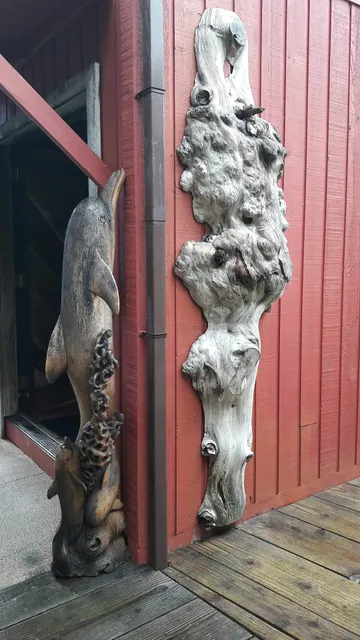
The heart of Creek Street is a vibrant mix of quirky shops, art galleries, and boutiques that showcase local crafts and Alaskan culture. It's a haven for souvenir hunters, offering everything from handcrafted jewelry to intricate wood carvings. The Creek Street Market is a highlight, where you can find unique treasures while soaking in the picturesque surroundings.
One of the most iconic features of Creek Street is its wooden buildings that line the boardwalk. The "Dolly's House Museum" is a must-visit, preserving the ambiance of the area's colorful past. You can step into the life of Dolly Arthur, a famous madam, and gain insight into the history of this once-illicit district.
Wildlife enthusiasts will delight in the opportunity to spot salmon swimming upstream in Ketchikan Creek. During the salmon run, Creek Street becomes a natural spectacle as the fish navigate their way through the clear waters, attracting bald eagles and black bears looking for a meal.
Creek Street is not just about history and shopping; it's also a place to savor fresh Alaskan seafood. Many restaurants along the boardwalk offer mouthwatering dishes featuring salmon, halibut, and king crab. Enjoying a meal while overlooking the creek's serene waters is an unforgettable experience.
In conclusion, Creek Street in Ketchikan is a captivating blend of history, culture, and natural beauty. Whether you're a history buff, a shopper, or simply seeking a taste of authentic Alaska, this charming boardwalk has something to offer everyone. It's a must-visit destination that allows you to step back in time and immerse yourself in the unique charm of Ketchikan's past...
Read moreWith the help of AI Overview, pretty accurate:
Creek Street in Ketchikan, Alaska is a historic boardwalk district that was once the town's red-light district. Today, it's a popular tourist attraction known for its unique shops, art galleries, and waterfront views. The street is actually built on stilts over Ketchikan Creek.
Here's a more detailed look at Creek Street:
History:
Creek Street's origins are rooted in Ketchikan's early history as a mining and fishing town. It became the town's red-light district, with numerous brothels lining the creek. Prohibition even led to some houses becoming speakeasies, with liquor being smuggled in by boat. Prostitution was eventually outlawed in 1953, and the area transitioned to a mixed residential and commercial area.
Current Attraction:
Now, Creek Street is a vibrant area with shops, art galleries, and restaurants. It's a popular spot for tourists, offering a glimpse into Ketchikan's past while showcasing local culture and art.
Unique Feature:
The street's most notable feature is its elevated boardwalk, built on wooden pilings over Ketchikan Creek. This structure reflects the historical legal requirement that brothel business be conducted above the creek.
Recognition:
Creek Street was added to the National Register of Historic Places in 2014, recognizing its historical...
Read more