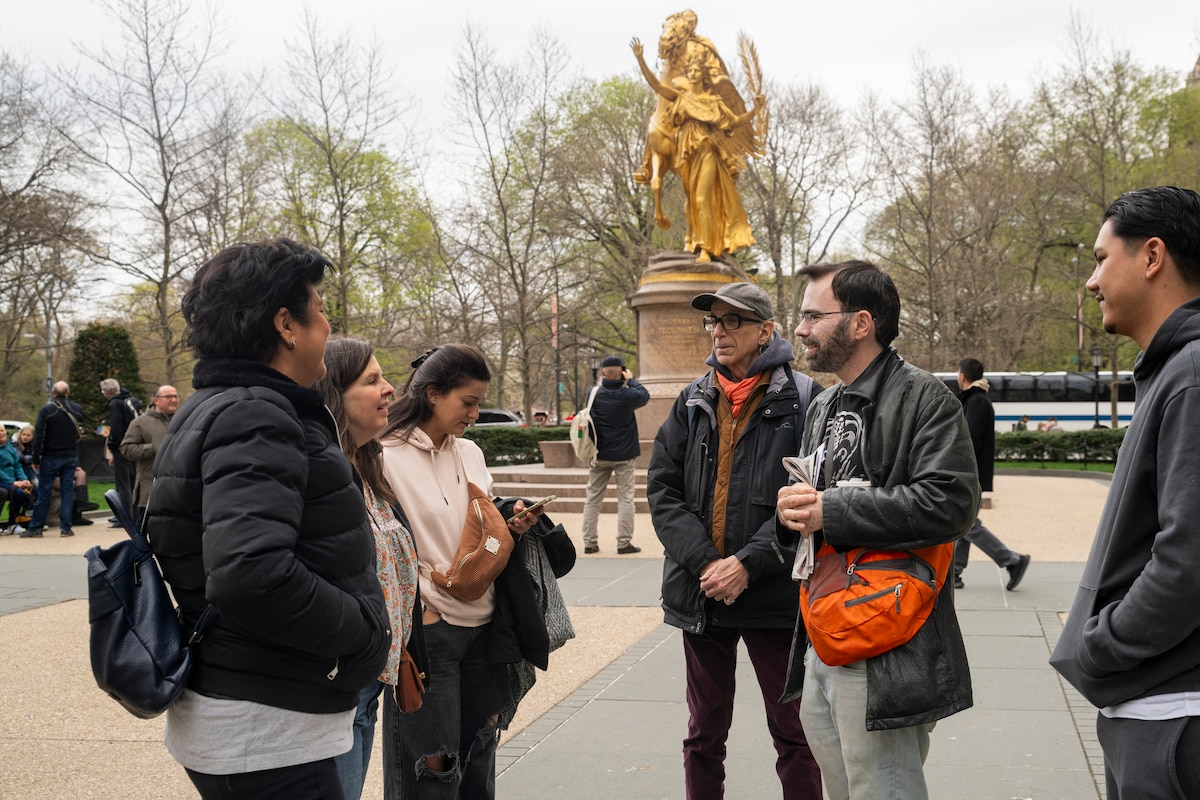
As a math teacher, I wanted to enjoy this museum more than I did. Visiting NYC from 6 hours away with a group of Black, Latino, African, and Arab high school boys (and yes, this is important), I wanted to do something different than your typical art or cultural museum. I inquired if the museum would keep the interest of high schoolers. I was given the typical line, "It is great for all ages." Unfortunately, for most of the boys, the museum did not hold their interest for very long...maybe an hour...for a variety of reasons.
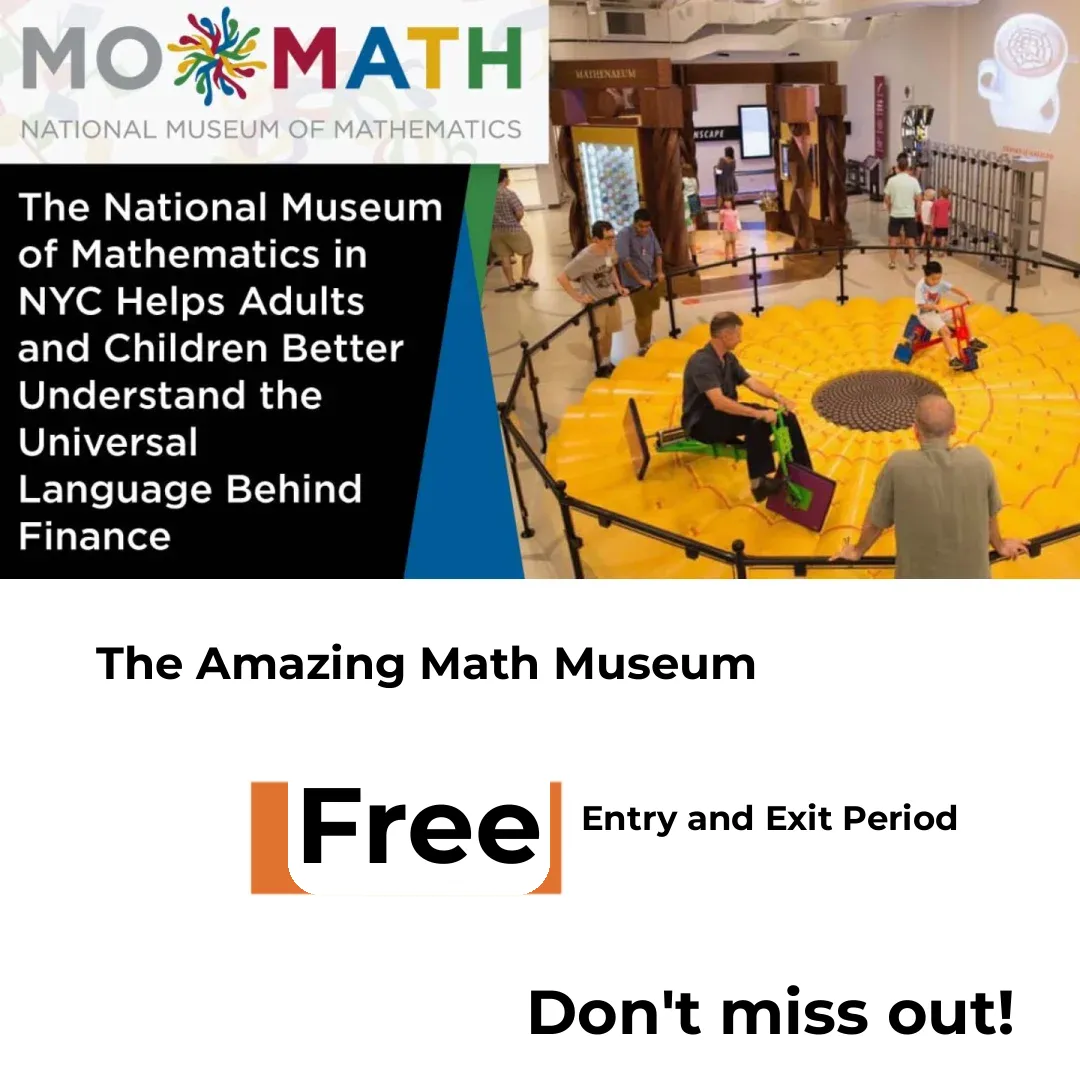
With the word "National" in front of it, you expect a big museum but the museum space is small; and upon arrival, it looked more like an indoor educational play area filled with mainly much younger children; so not an inviting first impression for high schoolers. Many of the exhibits were not well explained and it was not intuitive how to interact with them. I thought the staff would be more engaging with our students. The staff was more stand-offish with our group and we had to make the extra effort to engage them instead of the other way around you expect from a docent or with in-tune customer service. Additionally, some of the exhibits were broken and time was wasted trying to figure them out just to realize that whatever was supposed to be happening doesn't work.
The admission fee is overpriced for this museum experience; especially, when you can go to far bigger museums in NYC for less and with better pricing for groups and families. Even the chaperones had to pay full price. If we had done the group rate with a 45-minute class session, it would have actually cost us nearly twice as much. I am glad we didn't sacrifice more than we already had at ~$450 for 15 boys with the chaperones for the 75-90 minutes we stayed. The pricing also doesn't make the museum as accessible to lower-income people.
Finally, I could not help but notice there were no Black, Latino, African, or Arab people on staff like the make-up of our group. That can be perceived, especially by young people, in many ways -- none of which are positive. Representation and relatability really does matter!
And it doesn't only hurt the typically marginalized children. As an example, two of our coordinators were in the bathroom and overhead a young Asian Indian boy who appeared to be about 5 years old talking to his mother and complaining about "those Black teenagers" and saying it over and over without saying anything about what his problem was with the Black teenagers. Sadly his mother did nothing to correct or guide his thoughts in any anti-racist manner. It appears he simply had a problem with their presence; and at his young age, the world & his parent(s) have already ingrained in him that Black teens, in this case, aren't expect to be present, or don't belong, or aren't welcomed in that kind of space. Intentional staffing to include those from more marginalized communities -- Black, Latino, African -- can help challenge that kind of subtle...
Read moreLike the person below me, I would absolutely give The National Museum of Mathematics 0 stars if it were possible. I am the person mentioned in the previous review.
Here’s the rundown of the situation and why you should AVOID this museum at all costs. It is definitely NOT worth the money and you may experience discriminatory and rude behavior from this museum’s CEO (Cindy Lawrence) if she happens to be there during your visit! (Just like a previous review below stated, I am sorry for you if she is there trying to suck up to donors during your visit.)
Here is the formal complaint I emailed to probably unattended email addresses that this museum has on their website:
“ I have a complaint about your CEO Cindy Lawrence who physically harassed me and attempted to put her hands on me during my visit at the National Museum of Mathematics in New York City.
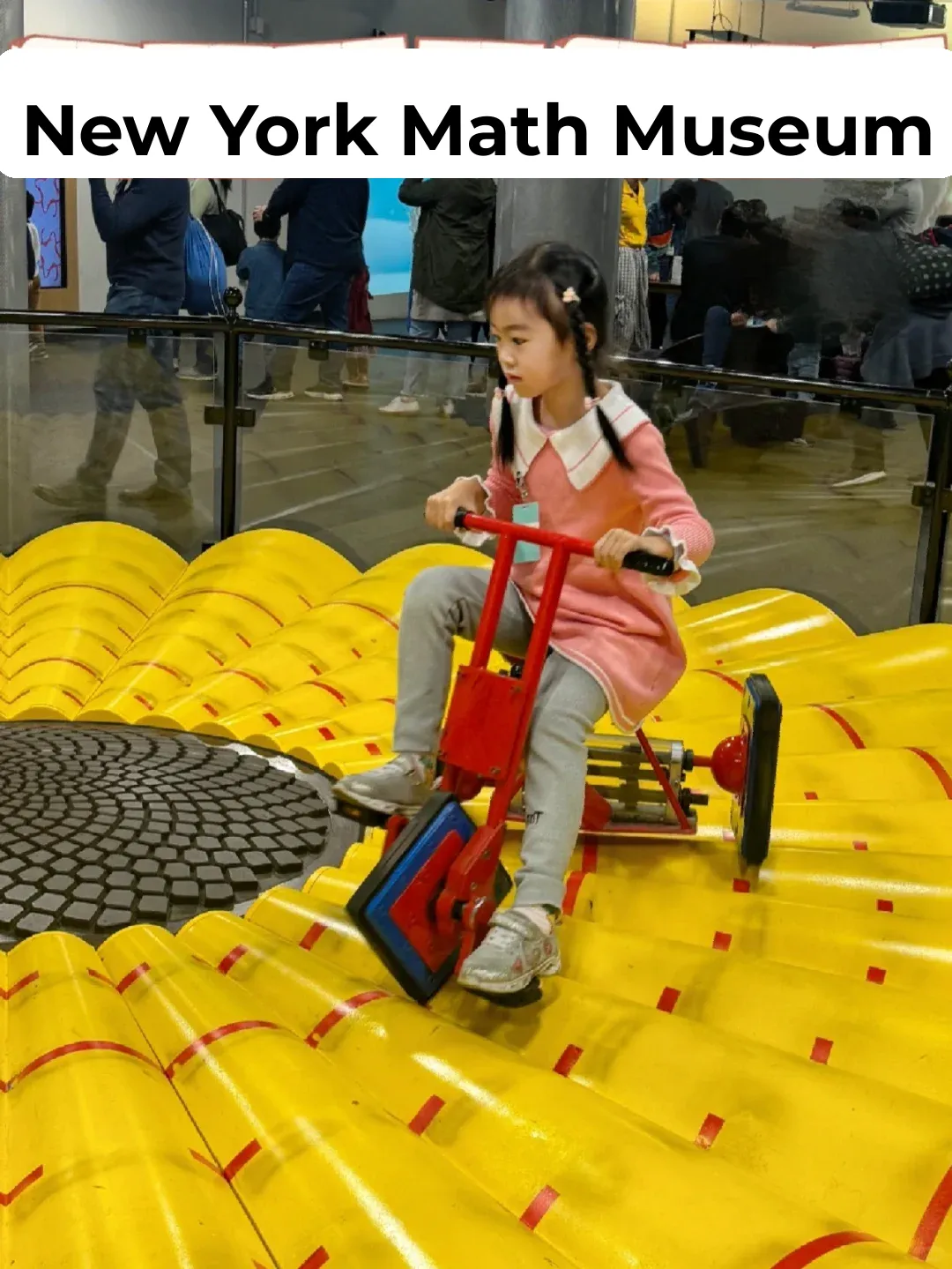
I was at the Twist and Roll exhibit when she 1) grabbed a toy off the table I wasn’t done playing with yet 2) stepped right in front of me when I was enjoying the exhibit, blocked my view of the exhibit, basically pushed me out of the way and said “I’m going to step right in front of you” and 3) ATTEMPTED to grab one of the exhibit toys RIGHT OUT OF MY HANDS when SHE KNEW I was holding it, looking at it, and interacting with it. I come to the museum and pay my hard earned money to enjoy the exhibit and NOT to have things taken RIGHT OUT OF MY HANDS!
How rude and inconsiderate. I expect that this audacious, rude, inconsiderate woman (Cindy Lawrence) write me a full, formal apology letter. I expect that your CEO, Cindy Lawrence, is racist and homophobic, as I am a male who was with my boyfriend at the time. Please tell her that she needs to treat ALL guests with respect and learn to practice common decency and manners that her mother should have taught her. It also wouldn’t hurt for her to show some grace. It would probably even be best if she isn’t in the museum at all, if this is how she treats all of her guests. Please get back to me as soon as possible with your thoughts. I will continue defending myself and advocating for my safety in museums like this, against all discriminatory people whether they be janitors or CEOs!!!! “
Once again, do not waste your money here. They refuse to give refunds and you’re gonna need one after the horrible experience. On top of all this, the exhibits are boring, have nothing to do with math, are mostly out of order, and have no educational value. The place is basically a...
Read moreDespite their numerous positive contributions to math outreach and communication, the physical Museum of Mathematics at Fifth is the archetype of the failures of modern math education.
A glorified, expensive children's play place, the museum fails to communicate even the most basic of mathematical ideas through its exhibits. Between an art exhibit that hardly surpasses the artistic merits of Julia sets being pretty, and a room full of mundane geometric amusements, the museum does nothing to teach even the most basic math to a lay-audience.
To exemplify this, at one point I was attempting a puzzle involving tying a rope around two posts. An employee came up to me and said that the problem was meant to "teach people about a free group with two elements". To anyone with expertise in algebra, this is a realization which trivializes the problem once you figure out the group elements. However, the exhibit does nothing to teach the lay-viewer this concept, does nothing to communicate that the idea of a free group will be useful, and fails to communicate how math involves itself with the winding of ropes at all.
This anecdote could've been about any of the exhibits in the museum. They were all equally interesting, equally able to speak for themselves, and equally banal. As someone who is passionate about math communication and education, this tiny excuse for a one-room museum was a slap-in-the-face reminder of the absolutely dismal state of math communication, and highlights a desperation to communicate that 'math is cool and fun!' at the expense of educational substance to an audience who was already willing to voluntarily subject themselves to math at their...
Read more