The idea of veterans leaving VA (Veterans Affairs) healthcare facilities in sanctuary cities to teach the federal government a lesson is a complex and provocative proposition. While it is essential to recognize the value of standing up for one’s rights and holding institutions accountable, there are several considerations that need to be taken into account when discussing this issue.
Understanding Sanctuary Cities and VA Healthcare
Sanctuary cities are municipalities that limit their cooperation with federal immigration authorities, often as a means to protect undocumented immigrants. VA healthcare, on the other hand, provides critical medical services to veterans who have served in the armed forces. The VA system is designed to cater to the unique healthcare needs of veterans, including mental health care, rehabilitation, and treatments for conditions resulting from military service.
The idea of veterans leaving VA healthcare in sanctuary cities suggests a protest against the federal government’s policies, particularly immigration-related policies. Advocates might argue that sanctuary cities prioritize the needs of undocumented immigrants over those of veterans or that the federal government should be more focused on supporting its military veterans.
Reasons for the Proposal
Protesting Federal Priorities: Some veterans may feel that the federal government is prioritizing issues such as immigration over the well-being of its veterans. They may view this as a signal to the government that it is neglecting those who have served the country, leaving them without the care and services they deserve. If veterans were to leave VA healthcare in protest, it could act as a statement to push the government to focus on the needs of veterans more intensely.
Shifting Focus Toward Veterans' Needs: Supporters of this idea might argue that by withdrawing from VA services in sanctuary cities, veterans could force policymakers to pay more attention to the challenges they face, such as PTSD, homelessness, and lack of access to proper healthcare. In their view, this action could serve as a wake-up call to lawmakers to prioritize the needs of veterans rather than focusing resources elsewhere.
Highlighting Injustice: For some, the idea of leaving VA healthcare might symbolize the sense of abandonment that some veterans feel. They might see the sanctuary city policies, which cater to immigrants, as representing a system that prioritizes non-citizens over those who have sacrificed for their country. The protest could be seen as a way to highlight perceived injustices in the allocation of public resources.
Potential Consequences and Challenges
While the sentiment behind such an action may stem from frustration, there are significant risks and challenges that veterans would face if they followed through with this protest:
Loss of Critical Healthcare: The VA provides specialized healthcare for veterans, including treatment for conditions such as service-related disabilities, PTSD, and chronic physical injuries. Leaving the VA system would leave many veterans without access to this crucial care, putting their health and well-being at significant risk. Potential Harm to Vulnerable Veterans: Veterans, especially those with severe mental health issues, disabilities, or chronic conditions, are some of the most vulnerable members of society. The idea of leaving the VA system could exacerbate their physical and mental health issues, particularly if alternative healthcare options are limited or unavailable. Unintended Consequences: The move might not lead to the desired outcome of influencing federal policy. Instead, it could be interpreted as abandoning the very system that was put in place to care for veterans. The federal government may not respond to such protests as anticipated, and veterans may find themselves further marginalized in the broader...
Read moreDo not leave your loved one here alone. This is the worst hospital, the worst place, I have ever been to on the planet. Dangerous. They will expedite your death. And they'll make your last weeks hell.
Rude and unprofessional. Can't even muster a bit of decency, much less kindness, to speak to ailing inpatients with respect. Filthy. Unsanitary.
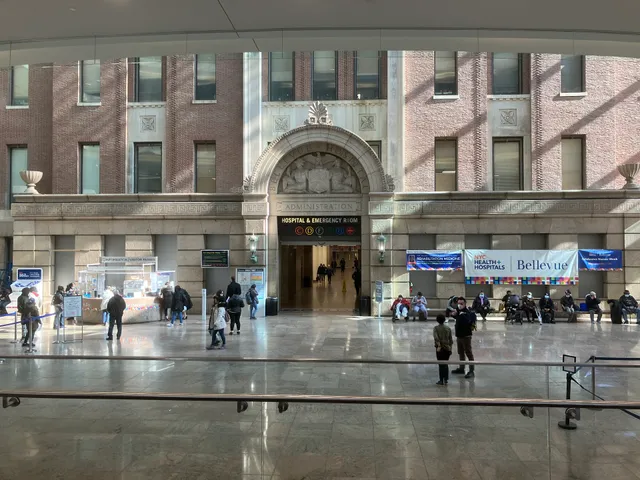
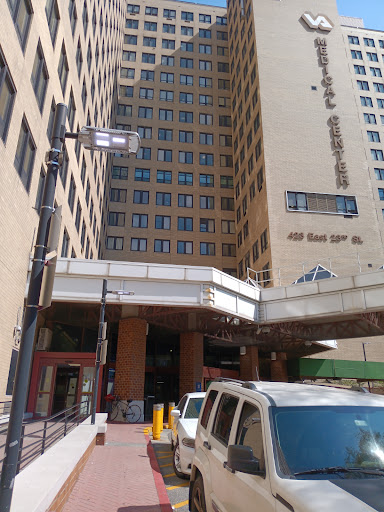
The lobby tells a big part of the story. Segregated entrance -- one for staff, one for patients. Patients have to stand in line at a TSA-style security checkpoint, remove shoes and belts, scan bags, metal detector, the whole nine. Oh, and visitors have to go through the patient line. So there ain't many visitors for the inpatients.
Once inside, don't expect someone to greet you, ask you what's wrong with you, perform oh, i don't know, triage, or acknowledge that you just walked into a hospital. You'd better know where you're going. There ain't a map.
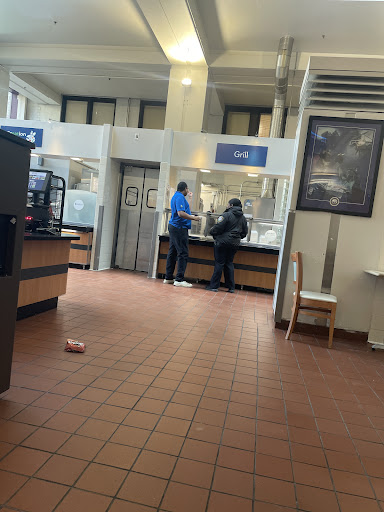
You'll notice a pharmacy area with people crowded around in various states of discomfort or outright suffering, with no one attending to them. This pharmacy wait area, God forbid you ever be stuck there, is hell.
Upstairs in the inpatient areas, the nurses actually removed the Patients Rights and Responsibilities document from the wall when I requested to see a copy. Not to give to me, but to throw away. Behind closed doors upstairs, ALL patients are treated like they are in a prison or a high security drug rehab center, without exception, even if they are there for a colonoscopy or kidney stones. If you complain to nurses, they will walk out and send police officers in -- to a hospital bed. To an immobile patient. And if you try to check out before they say, a team of six officers, armed and apparently ready to shoot, will physically stop you.
I wish I was exaggerating. But I am not. And anyone, anyone who wrote a positive review of this place has never been an inpatient and is probably an employee.
You'll need counseling if and when you survive this place. It should be raided and the management should...
Read moreI came here March 4th, 2022. I escaped March 25th, 2022. There are some great doctors and caring nurses here, but there are also some bad ones who work here. Watch out for them. Some of the nurses will "slip you a mickey" by giving you the WRONG MEDICATION! I had been here for twenty days when I suddenly developed diarrhea. Turns out a nurse deliberately gave me a laxative through my IV to mess with me because I reprimanded her for mistreating another patient who was paralyzed and could not move nor speak. She had been asked to hand feed him, and she hated it. I was told to "mind my business!" Then she turned on the t v real loud to drown me out. That afternoon, I had a bad bout of diarrhea. They moved me to another floor where I didn't know the doctors or nurses that night. The next day I had diarrhea again! Guess who shows her face on that floor? The abusive nurse! She saw me and ran out the room. My wife was there and tried to talk to her. The nurse was asking for the police. That night, around 1 AM, after a shot at 10 PM, I again experienced diarrhea. I had been symptom free from six am to one am the next day! I immediately refused all medications oral or otherwise. I requested to be discharged to my local hospital with my PCP. It took a day, but I escaped that horror movie disguised as a hospital! Also, I was getting drained of blood three to four times a day, three vials each time! This was for twenty days straight! One nurse (Arien) had me bleeding out after. I called a doctor because there was so much blood! I had a towel under my gown which also had alot of blood on it. The food was good,but that was just a palliative! Question every procedure. Document everything or have your family do it. The doctors are test happy. There was always "one more test which will give us more info" whenever I requested to be released. Up untill the last minute of the last day, the doctors were still debating on whether it would be in my best interests to be discharged. The ambuluance said they were waitng for hours to...
Read more