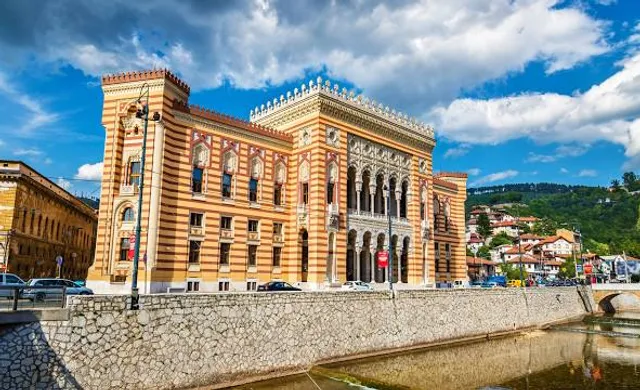
Sarajevo (/ˌsærəˈjeɪvoʊ/; Cyrillic: Сарајево, pronounced sǎrajeʋo]; see names in other languages) is the capital[5] and largest city of Bosnia and Herzegovina, with a population of 275,524 in its administrative limits.[4 The Sarajevo metropolitan area, including Sarajevo Canton, East Sarajevo and nearby municipalities, is home to 555,210 inhabitants.a7] Nestled within the greater Sarajevo valley of Bosnia, it is surrounded by the Dinaric Alps and situated along the Miljacka River in the heart of the Balkans.
Sarajevo is the political, financial, social and cultural center of Bosnia and Herzegovina, a prominent center of culture in the Balkans, with its region-wide influence in entertainment, media, fashion, and the arts.[8
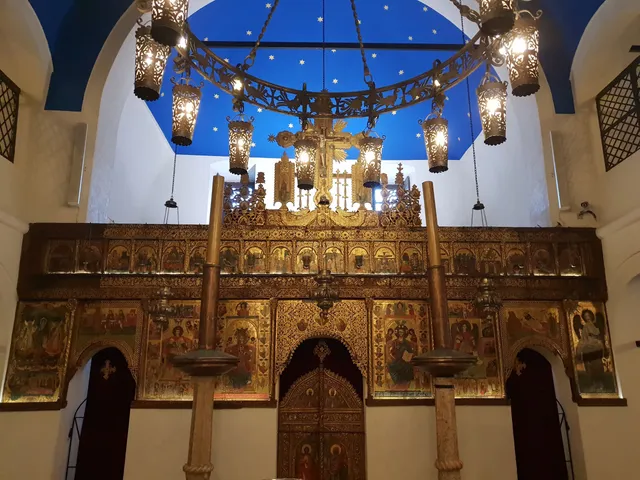
Due to its long and rich history of religious and cultural diversity, Sarajevo is sometimes called the "Jerusalem of Europe"1] or "Jerusalem of the Balkans".[2] It is one of only a few major European cities which have a mosque, Catholic church, Orthodox church and synagogue in the same neighborhood.[10] A regional center in education, the city is home to the Balkans first institution of tertiary education in the form of an Islamic polytechnic called the Saraybosna Osmanlı Medrese, today part of the University of Sarajevo.[11
Although settlement in the area stretches back to prehistoric times, the modern city arose as an Ottoman stronghold in the 15th century.13] Sarajevo has attracted international attention several times throughout its history. In 1885, Sarajevo was the first city in Europe and the second city in the world to have a full-time electric tram network running through the city, following San Francisco.[14] In 1914, it was the site of the assassination of Archduke Franz Ferdinand of Austria by local Young Bosnia activist Gavrilo Princip that sparked World War I, which also ended Austro-Hungarian rule in Bosnia and resulted in the creation of the Kingdom of Yugoslavia. Later, after World War II, the establishment of the Socialist Republic of Bosnia and Herzegovina within the Second Yugoslavia led to a massive expansion of Sarajevo, the constituent republic's capital, which culminated with the hosting of the 1984 Winter Olympics marking a prosperous era for the city. However, after the start of the Yugoslav Wars, for 1,425 days, from April 1992 to February 1996, the city suffered the longest siege of a capital city in the history of modern warfare, during the Bosnian War and the breakup of Yugoslavia.[15]
Sarajevo has been undergoing post-war reconstruction, and is the fastest growing city in Bosnia and Herzegovina.[16] The travel guide series Lonely Planet has named Sarajevo as the 43rd best city in the world,[17] and in December 2009 listed Sarajevo as one of the top ten cities to visit in 2010.[18] In 2011, Sarajevo was nominated to be the European Capital of Culture in 2014, and has recently hosted the European Youth Olympic Festival in 2019.[19 Sarajevo is near the geometric center of the triangular-shaped Bosnia-Herzegovina and within the historical region of Bosnia proper. It is situated 518 meters (1,699 ft) above sea level and lies in the Sarajevo valley, in the middle of the Dinaric Alps.[26] The valley itself once formed a vast expanse of greenery, but gave way to urban expansion and development in the post-World War II era. The city is surrounded by heavily forested hills and five major mountains. The highest of the surrounding peaks is Treskavica at 2,088 meters (6,850 ft), then Bjelašnica mountain at 2,067 meters (6,781 ft), Jahorina at 1,913 meters (6,276 ft), Trebević at 1,627 meters (5,338 ft), with 1,502 meters (4,928 ft) Igman being the shortest. The last four are also known as the Olympic Mountains of Sarajevo (see also 1984 Winter Olympics). The city itself has its fair share of hilly terrain, as evidenced by the many steeply inclined streets and residences seemingly perched on the...
Read moreI recently had the pleasure of exploring the magnificent Bascarsija in Sarajevo, and I can confidently say it is an absolute gem! This historic district is a vibrant melting pot of culture, history, and delicious food that left me enchanted and yearning for more.
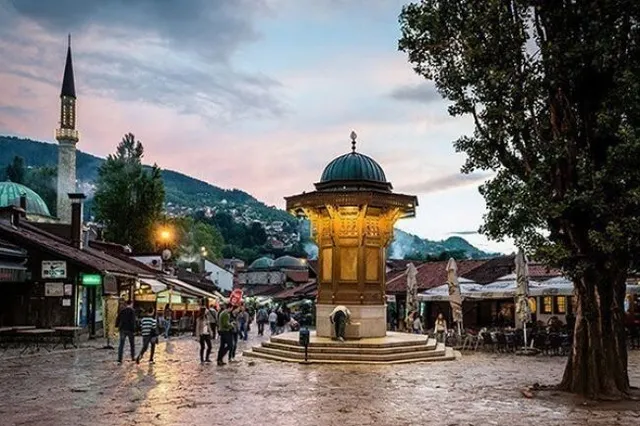
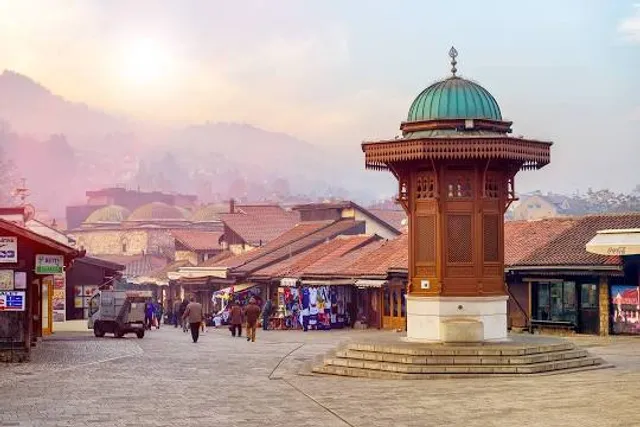
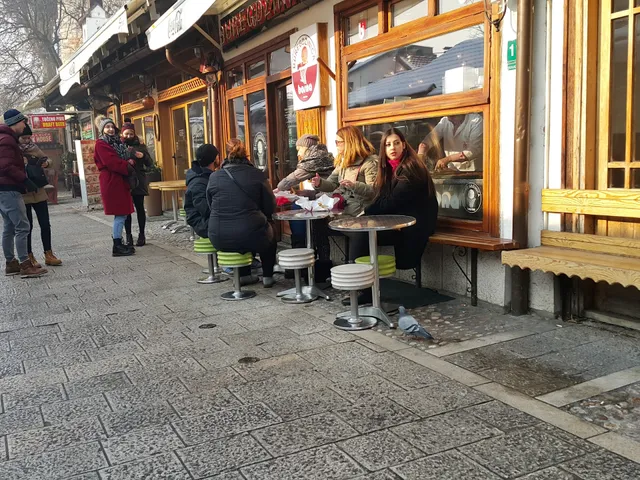
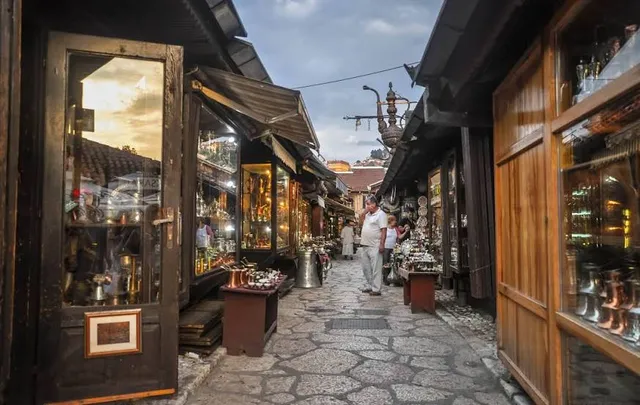
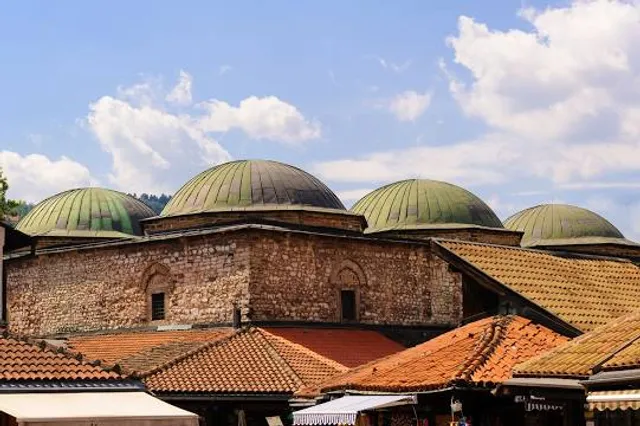
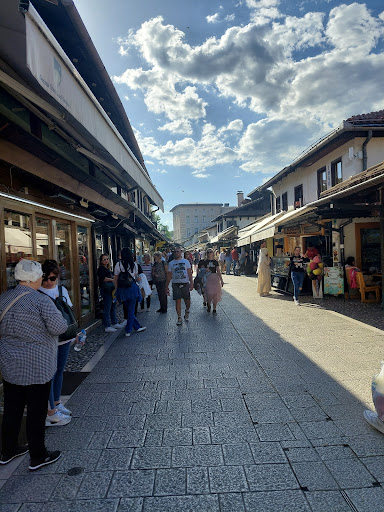
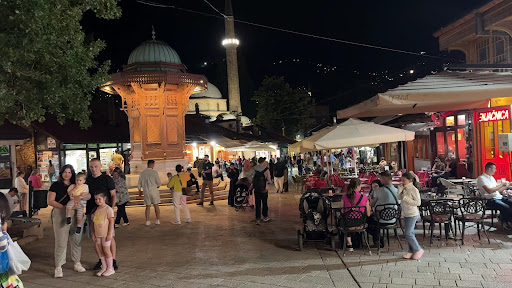
From the moment I stepped into Bascarsija, I was captivated by its unique atmosphere. The cobblestone streets lined with traditional Ottoman-style buildings and bustling markets instantly transported me to another era. It felt like a journey through time, where the rich heritage of Sarajevo came alive.
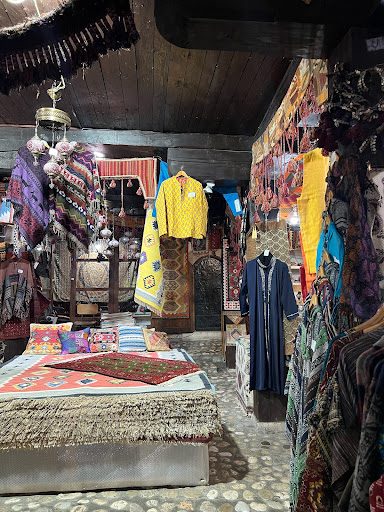
The highlight of my visit was undoubtedly the diverse range of shops and bazaars offering an incredible selection of authentic Bosnian handicrafts, traditional textiles, pottery, and jewelry. Exploring these markets was like stepping into an Aladdin's cave filled with treasures, and I found myself unable to resist taking home a few souvenirs.
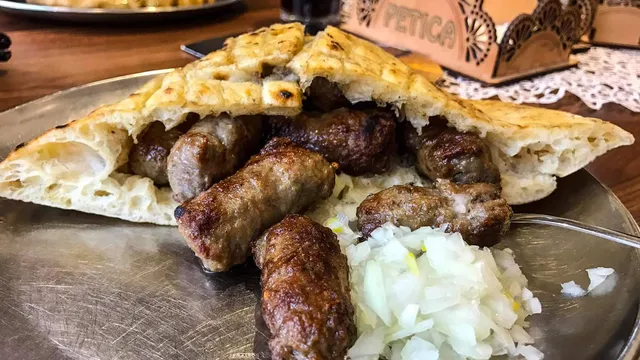
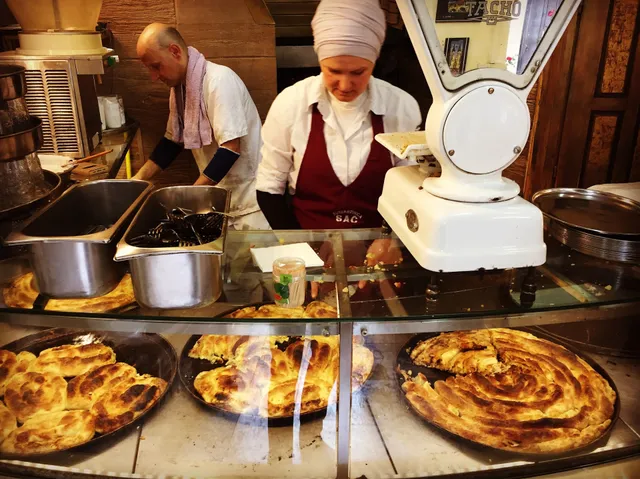
The local cuisine is another aspect that makes Bascarsija truly exceptional. The tantalizing aromas of cevapi, burek, and other traditional Bosnian dishes wafting through the air left me with a permanent appetite. I highly recommend indulging in the culinary delights of Bascarsija by visiting one of the cozy restaurants or trying the street food from the numerous stalls. Don't miss sipping on a cup of fragrant Bosnian coffee—it's a sensory experience in itself!
The hospitality and warmth of the people in Bascarsija deserve special mention. The shopkeepers, artisans, and restaurant owners were incredibly friendly, always ready to share stories and recommendations about their beloved city. Their genuine passion for preserving and sharing their culture is truly inspiring.
Whether you're a history buff, a food lover, or simply seeking a unique and immersive experience, Bascarsija is an absolute must-visit in Sarajevo. The combination of its historical significance, the bustling markets, and the mouthwatering cuisine make it a place you'll fall in love with instantly.
I cannot recommend Bascarsija enough. It captures the essence of Sarajevo and provides an unforgettable journey into the heart of Bosnian culture. My visit left me with cherished memories and a desire to return to this captivating district...
Read moreBaščaršija is the beating heart of Sarajevo — a place where history breathes, culture thrives, and the spirit of the city is most alive. Far more than just a marketplace, it is a living piece of Ottoman heritage, preserved not as a relic but as a part of daily life. The cobblestone alleys, artisan workshops, coffeehouses, mosques, and fountains form a vibrant, timeless setting that has gracefully endured for centuries.
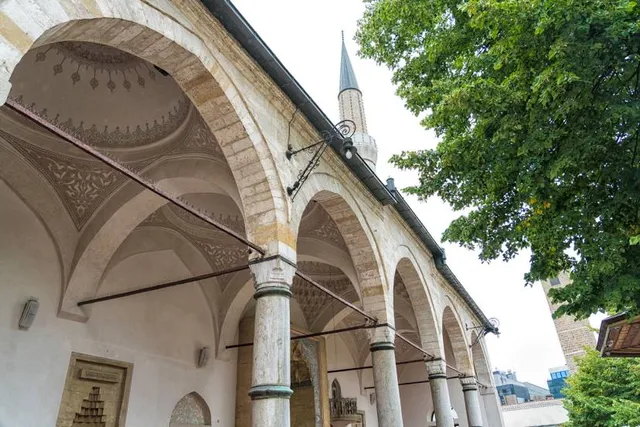
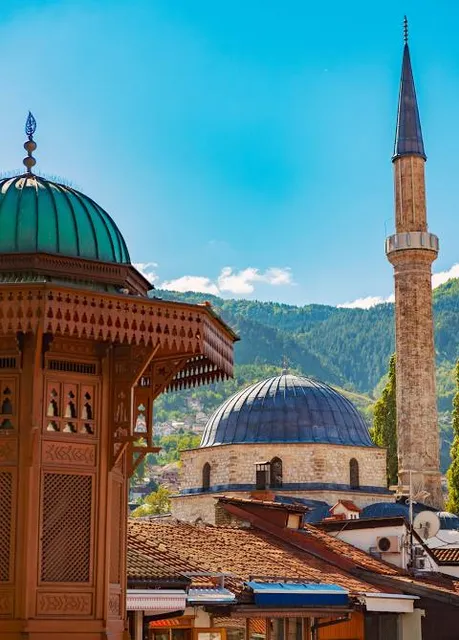
This is not a place to rush. Take your time. Wander through the narrow streets, especially the Coppersmiths’ Street (Kazandžiluk), where the sound of hammering metal still echoes as craftsmen shape copper by hand. Visit the Gazi Husrev Bey Mosque, a magnificent 16th-century structure that anchors the spiritual and architectural heart of the bazaar. Nearby, the Sahat Kula (clock tower) stands tall — one of the few towers in the world that keeps time according to the lunar calendar for prayer calls.
Don’t miss the chance to sit and enjoy a traditional Bosnian coffee, served in a džezva with a piece of rahat lokum. This simple ritual speaks volumes about the culture and hospitality here. And of course, the Sebilj Fountain in the central square is a must-see and a great photo spot — always surrounded by pigeons and passersby.
What makes Baščaršija truly special is that it hasn’t lost its soul. It has been lovingly preserved, not overly sanitized or turned into a tourist façade. It’s still part of daily life for locals. This is a bazaar to experience — not just to see, but to feel. If you want to understand Sarajevo, spend time here. The stories of a city begin in its marketplace — and Baščaršija has...
Read more