After a peaceful rest at Square du Vert-Galant, my wife and I continued our walk towards the Palais Royal, a landmark deeply intertwined with French history. Crossing Pont Neuf, we admired the Seine flowing beneath us, with the timeless Parisian skyline framing our path. As we made our way through the historic streets, we reached Place Colette, a lively square near the Comédie-Française, one of the oldest active theatres in the world, founded in 1680. Here, the modern Kiosque des Noctambules metro entrance, with its colourful glass spheres, contrasted sharply with the classical surroundings, offering a striking visual mix of past and present.
Stepping into the Palais Royal, we found ourselves in a place once at the heart of political and cultural life in France. Originally built in 1639 as Cardinal Richelieu’s residence, it later became the royal home of Louis XIV before he moved to Versailles. In the 18th century, its arcades were transformed into lively shopping galleries, filled with cafés, bookshops, and theatres, making it a hub for intellectuals and revolutionaries alike.
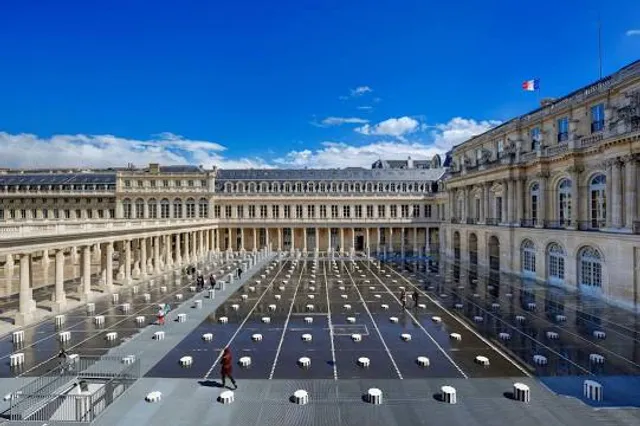
The first striking sight was the Colonnes de Buren (Les Deux Plateaux), a bold modern art installation of black-and-white striped columns by Daniel Buren, which has sparked both admiration and controversy since its unveiling in 1986. The area was bustling with visitors capturing creative photos, adding to the dynamic atmosphere that blends contemporary art with historical grandeur.
Continuing into the courtyard, we reached the Fontaines Sphérades, a stunning arrangement of polished steel spheres resting on water, designed by Pol Bury. Their reflective surfaces captured the surrounding architecture, light, and movement, creating a hypnotic effect. This area was much quieter, allowing us a moment to fully appreciate the artistic harmony between modern design and classical elegance.
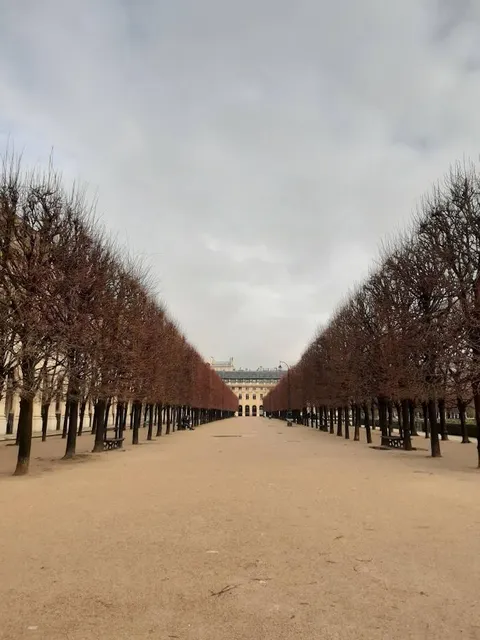
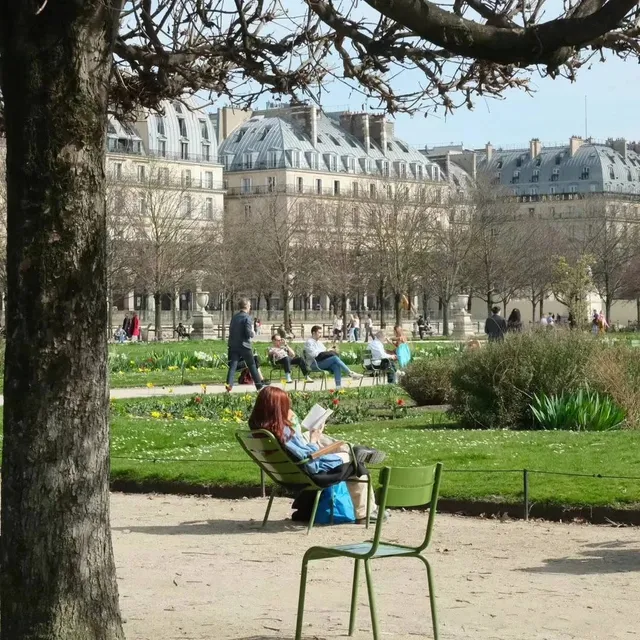
Moving further inside, we entered the Palais Royal Gardens, a perfectly manicured space that once served as the private retreat of French nobility. The symmetrical hedges, grand fountains, and tree-lined paths provided a serene escape from the city’s energy. Unlike the bustling Colonnes de Buren, the gardens were noticeably calmer, and after a short wait, we managed to secure a bench—just before a group of girls had the same idea. It was the perfect place to relax and absorb the refined beauty of our surroundings.
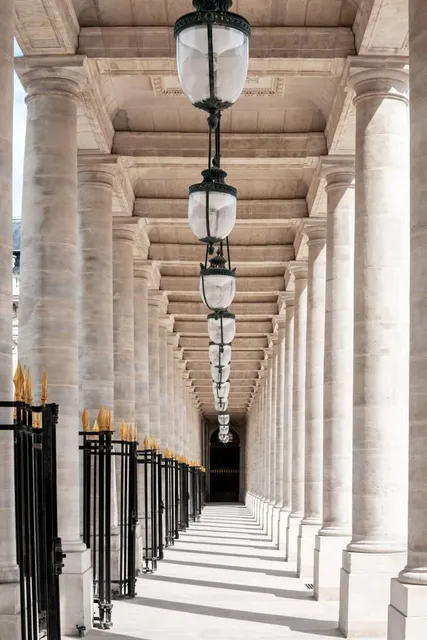
Walking through the gardens, it was easy to imagine the atmosphere of 18th-century Paris, when the Galeries du Palais-Royal housed the city’s most fashionable boutiques, and figures like Danton and Camille Desmoulins gave revolutionary speeches under its arcades. Even today, remnants of that past remain, with the covered walkways still hosting small shops, art galleries, and cafés.
The Palais Royal is a unique blend of history, art, and nature, offering visitors a glimpse into the grandeur of France’s royal past, the creativity of its artists, and the tranquillity of its hidden gardens. Whether you visit to admire its architecture, engage with contemporary art, or simply find a quiet spot in the heart of Paris, it is a place that effortlessly bridges centuries of history with modern-day...
Read moreThe Domaine National du Palais-Royal, located in the heart of Paris, is a historic and elegant complex that encompasses the Palais-Royal, the surrounding gardens, and the galleries known as the Galeries du Palais-Royal. This iconic site holds a significant place in French history and culture, combining architectural splendor, refined gardens, and a vibrant atmosphere.
The Palais-Royal itself is a former royal palace that has witnessed centuries of political and social transformations. Built in the 17th century, it has been the residence of kings, a center of power, and a hub for cultural activities. Today, it houses various government institutions and the prestigious Council of State. The architectural design of the Palais-Royal showcases classical elements and intricate details, while its rich historical significance adds to its allure.
The gardens of the Palais-Royal are a tranquil oasis in the heart of the bustling city. Designed by André Le Nôtre, the renowned landscape architect of the Palace of Versailles, the gardens offer a peaceful retreat with neatly manicured lawns, elegant pathways, and rows of trees. Visitors can stroll through the gardens, find a shady spot to relax, or admire the artistic installations and sculptures scattered throughout.
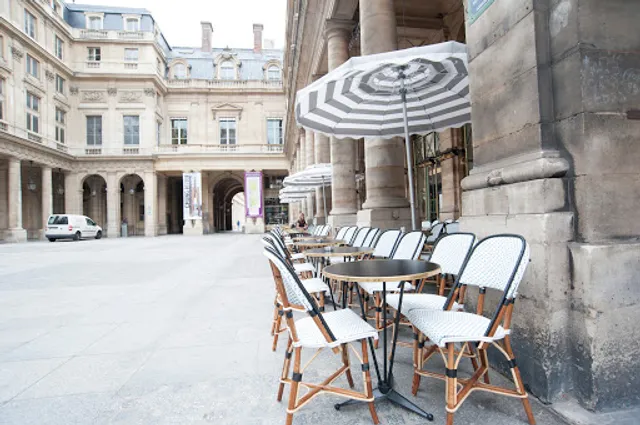
The Galeries du Palais-Royal are a collection of covered arcades that surround the gardens. These arcades house a diverse array of boutiques, art galleries, antique shops, cafes, and restaurants. It is a vibrant hub for shopping, art, and culinary experiences, where visitors can browse for unique items, appreciate contemporary art, or savor delicious cuisine in charming surroundings.
The Domaine National du Palais-Royal is not only a place of architectural and historical significance but also a cultural center. It hosts art exhibitions, theatrical performances, and cultural events that contribute to the artistic and intellectual vibrancy of Paris. The combination of the Palais-Royal, the gardens, and the galleries creates a harmonious ensemble that encapsulates the grandeur and cultural richness of the city.
Visiting the Domaine National du Palais-Royal allows you to immerse yourself in French history, admire architectural beauty, and experience the refined atmosphere of one of Paris' most captivating sites. Whether you're interested in history, art, shopping, or simply seeking a peaceful moment amidst the bustling city, the Palais-Royal complex offers a multifaceted experience that delights visitors of...
Read moreThe Domaine National du Palais-Royal, or simply Palais-Royal, is a historic palace and cultural complex located in the 1st arrondissement of Paris, France. It was originally built for Cardinal Richelieu in the 17th century and later became the residence of the French royal family.
The Palais-Royal is known for its beautiful architecture, lush gardens, and its rich history. The palace itself is an architectural masterpiece, featuring a grand facade with elegant colonnades and a central courtyard. The surrounding gardens are meticulously landscaped and provide a peaceful oasis in the heart of Paris.
The Palais-Royal has been a center of cultural and political activity throughout its history. It was the site of important events during the French Revolution and has housed various government offices over the years. Today, it is home to the French Ministry of Culture and the Constitutional Council.
In addition to its governmental functions, the Palais-Royal is also a vibrant cultural complex. It houses several theaters, art galleries, and boutiques, making it a hub for artistic and creative activities. The gardens are open to the public and provide a tranquil space for relaxation and leisurely walks.
One of the notable features of the Palais-Royal is the Galerie de Montpensier, a covered arcade lined with luxury shops, cafes, and restaurants. This arcade, along with the surrounding gardens, attracts both locals and tourists who come to enjoy the atmosphere and explore the various establishments.
Visitors to the Palais-Royal can also explore the palace itself, although some parts remain closed to the public due to their governmental use. However, the gardens and the Galerie de Montpensier are accessible to all and offer a unique experience in the heart of Paris.
If you plan to visit the Palais-Royal, it is recommended to check the opening hours and any specific guidelines or restrictions beforehand. The complex is easily accessible by public transportation and is located near other major attractions in central Paris.
Please let me know if there's anything else I can assist you with regarding the Domaine National du...
Read more