HTML SitemapExplore
logo
Find Things to DoFind The Best Restaurants

Santa Maria in Montesanto Basilica — Attraction in Rome

Name
Santa Maria in Montesanto Basilica
Description
Nearby attractions
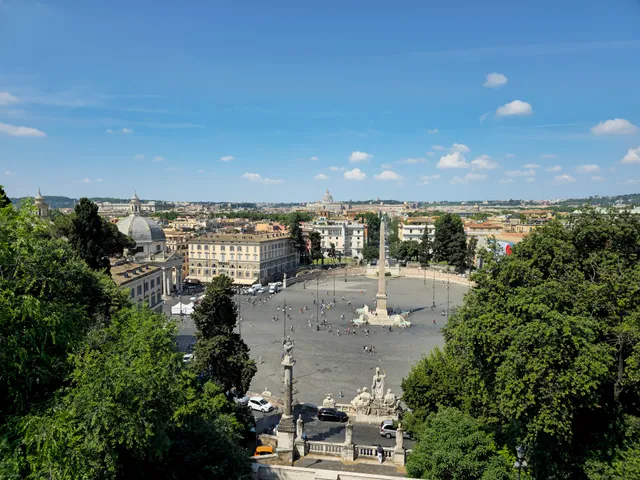
Piazza del Popolo
Piazza del Popolo, 00187 Roma RM, Italy
Chiesa Santa Maria dei Miracoli
Via del Corso, 528, 00186 Roma RM, Italy
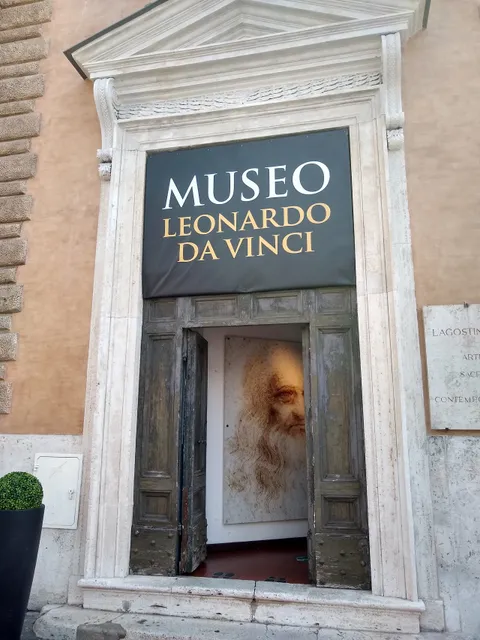
Museo Leonardo da Vinci
Piazza del Popolo, 12, 00187 Roma RM, Italy
Terrazza del Pincio
Piazza del Popolo, 19, 00187 Roma RM, Italy
Fontana dei Leoni
Piazza del Popolo, 00187 Roma RM, Italy
Passeggiata del Pincio
Viale Gabriele D'Annunzio, 00197 Roma RM, Italy
Porta del Popolo
Piazzale Flaminio, 00187 Roma RM, Italy
Goethe House
Via del Corso, 18, 00186 Roma RM, Italy
Cappella Chigi
Piazza del Popolo, 12, 00187 Roma RM, Italy
Terrazza del Belvedere
00197 Rome, Metropolitan City of Rome Capital, Italy
Nearby restaurants
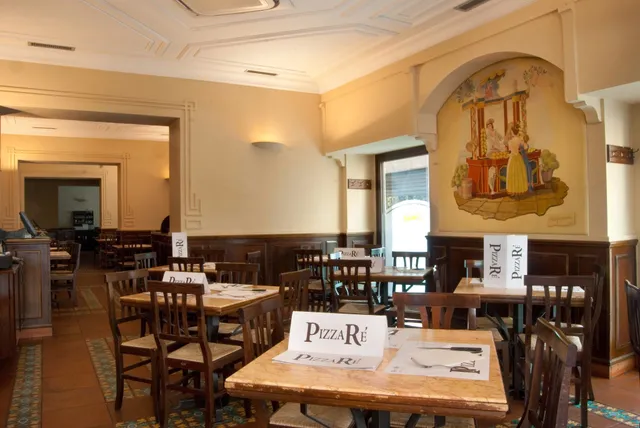
PizzaRé
Via di Ripetta, 14, 00186 Roma RM, Italy
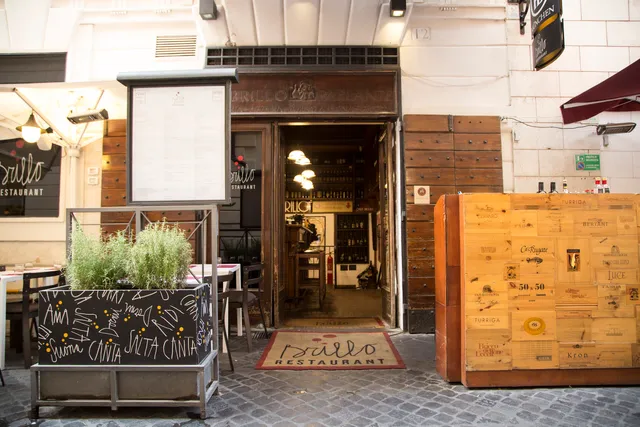
Brillo Restaurant
Via della Fontanella 12, Via del Corso, 11/13, 00187 Roma RM, Italy
Canova Piazza del Popolo
Piazza del Popolo, 16, 00187 Roma RM, Italy
Dal Pollarolo 1936
Via di Ripetta, 4, 00186 Roma RM, Italy
Osteria del Tempo Perso Oca
Via dell'Oca, 43, 00186 Roma RM, Italy
Dal Bolognese Roma
Piazza del Popolo, 1, 00187 Roma RM, Italy
Rosati
Piazza del Popolo, 5A, 00187 Roma RM, Italy
Il Margutta
Via Margutta, 118, 00187 Roma RM, Italy
Negresco Ristorante Pizzeria
Via della Penna, 52, 00186 Roma RM, Italy
Babette
Via Margutta, 1d, 00187 Roma RM, Italy
Nearby hotels
Hotel Valadier
Via della Fontanella, 15, 00187 Roma RM, Italy
Palazzo Nainer
Via del Babuino, 196, 00187 Roma RM, Italy
Hotel Locarno
Via della Penna, 22, 00186 Roma RM, Italy
Tridente Suites
Via del Corso, 4, 00186 Roma RM, Italy
Ripetta Relais
Via di Ripetta, 9, 00186 Roma RM, Italy
Babuino 181 Luxury Suites
Via del Babuino, 181, 00187 Roma RM, Italy
Palazzo Ripetta
Via di Ripetta, 231, 00186 Roma RM, Italy
Gcf Luxury Suites
Via del Corso, 12, 00186 Roma RM, Italy
The First Roma Arte
Via del Vantaggio, 14, 00186 Roma RM, Italy
La Maison Del Corso
Via del Corso, 18, 00186 Roma RM, Italy
Related posts
Keywords
Santa Maria in Montesanto Basilica tourism.Santa Maria in Montesanto Basilica hotels.Santa Maria in Montesanto Basilica bed and breakfast. flights to Santa Maria in Montesanto Basilica.Santa Maria in Montesanto Basilica attractions.Santa Maria in Montesanto Basilica restaurants.Santa Maria in Montesanto Basilica travel.Santa Maria in Montesanto Basilica travel guide.Santa Maria in Montesanto Basilica travel blog.Santa Maria in Montesanto Basilica pictures.Santa Maria in Montesanto Basilica photos.Santa Maria in Montesanto Basilica travel tips.Santa Maria in Montesanto Basilica maps.Santa Maria in Montesanto Basilica things to do.
Santa Maria in Montesanto Basilica things to do, attractions, restaurants, events info and trip planning
Santa Maria in Montesanto Basilica
ItalyLazioRomeSanta Maria in Montesanto Basilica

Basic Info

Santa Maria in Montesanto Basilica

Piazza del Popolo, 18, 00187 Roma RM, Italy
4.7(341)
Closed
Save
spot

Ratings & Description

Info

Cultural
Scenic
Accessibility
attractions: Piazza del Popolo, Chiesa Santa Maria dei Miracoli, Museo Leonardo da Vinci, Terrazza del Pincio, Fontana dei Leoni, Passeggiata del Pincio, Porta del Popolo, Goethe House, Cappella Chigi, Terrazza del Belvedere, restaurants: PizzaRé, Brillo Restaurant, Canova Piazza del Popolo, Dal Pollarolo 1936, Osteria del Tempo Perso Oca, Dal Bolognese Roma, Rosati, Il Margutta, Negresco Ristorante Pizzeria, Babette
logoLearn more insights from Wanderboat AI.
Phone
+39 06 361 0594
Website
chiesadegliartisti.it
Open hoursSee all hours
SatClosedClosed

Plan your stay

hotel
Pet-friendly Hotels in Rome
Find a cozy hotel nearby and make it a full experience.

hotel
Affordable Hotels in Rome
Find a cozy hotel nearby and make it a full experience.

hotel
The Coolest Hotels You Haven't Heard Of (Yet)
Find a cozy hotel nearby and make it a full experience.

hotel
Trending Stays Worth the Hype in Rome
Find a cozy hotel nearby and make it a full experience.

Reviews

Nearby attractions of Santa Maria in Montesanto Basilica

Piazza del Popolo

Chiesa Santa Maria dei Miracoli

Museo Leonardo da Vinci

Terrazza del Pincio

Fontana dei Leoni

Passeggiata del Pincio

Porta del Popolo

Goethe House

Cappella Chigi

Terrazza del Belvedere

Piazza del Popolo

Piazza del Popolo

4.7

(39.1K)

Open 24 hours
Click for details
Chiesa Santa Maria dei Miracoli

Chiesa Santa Maria dei Miracoli

4.6

(319)

Closed
Click for details
Museo Leonardo da Vinci

Museo Leonardo da Vinci

4.2

(1.1K)

Open 24 hours
Click for details
Terrazza del Pincio

Terrazza del Pincio

4.8

(639)

Open 24 hours
Click for details

Things to do nearby

Catacombs: The Coolest Underground Tour in Rome
Sat, Dec 6 • 3:00 PM
00147, Rome, Lazio, Italy
View details
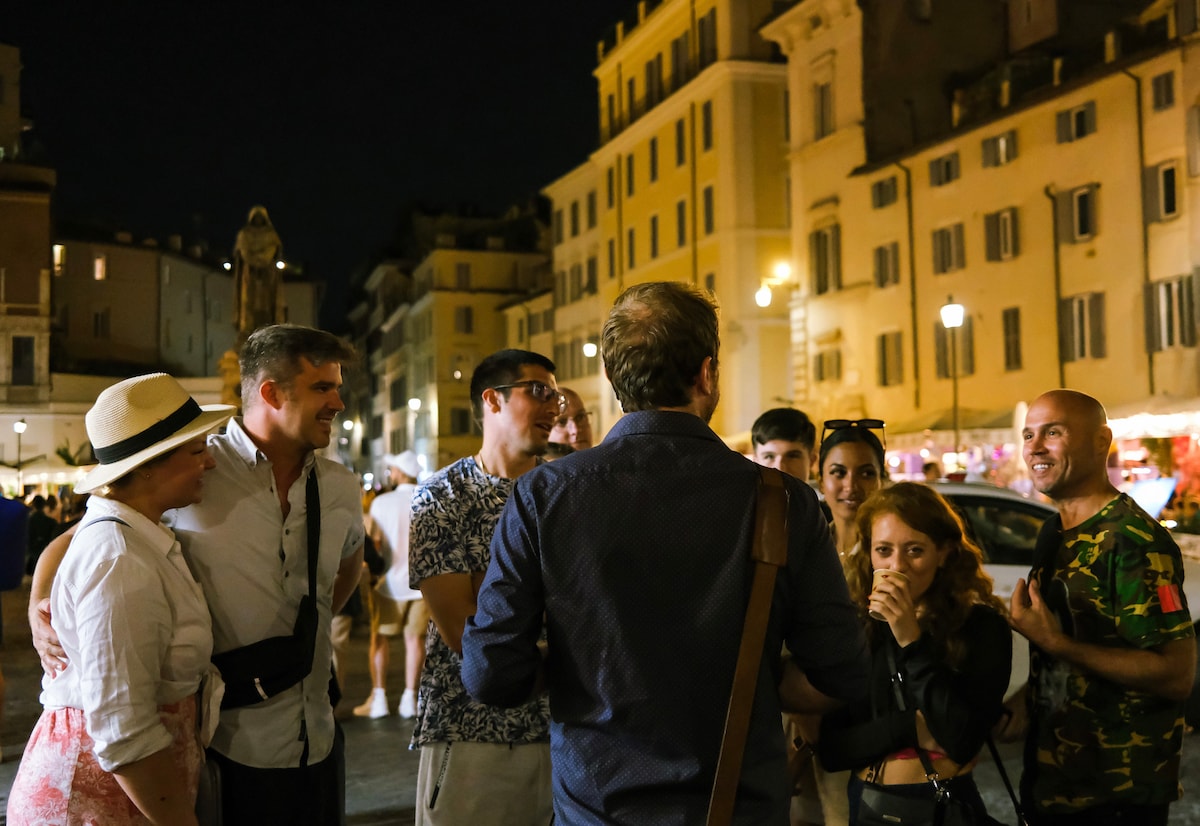
Pasta-making class, wine tasting and dinner
Sat, Dec 6 • 2:30 PM
00044, Frascati, Lazio, Italy
View details
Pasta and Pizza cooking class with wine and more
Sun, Dec 7 • 10:30 AM
00142, Rome, Lazio, Italy
View details

Nearby restaurants of Santa Maria in Montesanto Basilica

PizzaRé

Brillo Restaurant

Canova Piazza del Popolo

Dal Pollarolo 1936

Osteria del Tempo Perso Oca

Dal Bolognese Roma

Rosati

Il Margutta

Negresco Ristorante Pizzeria

Babette

PizzaRé

PizzaRé

4.3

(2.6K)

Click for details
Brillo Restaurant

Brillo Restaurant

4.1

(1.5K)

Click for details
Canova Piazza del Popolo

Canova Piazza del Popolo

2.3

(855)

$$

Click for details
Dal Pollarolo 1936

Dal Pollarolo 1936

4.0

(782)

Click for details
Get the Appoverlay
Get the AppOne tap to find yournext favorite spots!

The hit list

restaurant
Best 10 Restaurants to Visit in Rome
February 12 · 5 min read
attraction
Best 10 Attractions to Visit in Rome
February 12 · 5 min read
Rome

Plan your trip with Wanderboat

Welcome to Wanderboat AI, your AI search for local Eats and Fun, designed to help you explore your city and the world with ease.

Powered by Wanderboat AI trip planner.
Wanderboat LogoWanderboat

Your everyday Al companion for getaway ideas

CompanyAbout Us
InformationAI Trip PlannerSitemap
SocialXInstagramTiktokLinkedin
LegalTerms of ServicePrivacy Policy

Get the app

© 2025 Wanderboat. All rights reserved.
logo

Posts

Evren UysalEvren Uysal
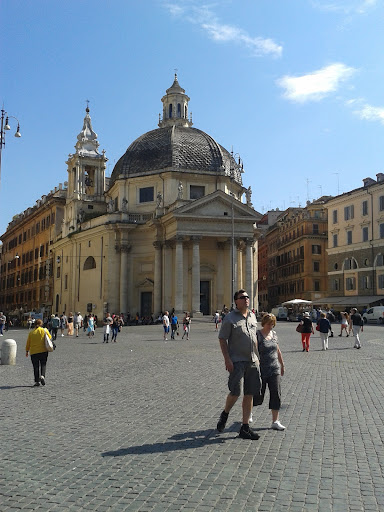
⛪ Nice architecture. The name of the church derives from the fact that it replaced a smaller one, that belonged to the Carmelites of the Province of Monte Santo in Sicily. It was built in 1662, on the initiative of Pope Alexander VII, by Cardinal Girolamo Gastaldi, who was later buried there. The original design was the work of Carlo Rainaldi. The works were interrupted on the dead of the Pontiff in 1667, then resumed in 1673 under the supervision of Gian Lorenzo Bernini and the cooperation of Carlo Fontana and finished in 1679, except for a belfry that was added in the 18th Century. In July 1825 Pope Leo XII elevated the church to the dignity of Minor basilica.[1] In this church, on 10 August 1904, Angelo Roncalli, the future Pope John XXIII, was ordained a priest; the event is remembered by a plaque affixed during his pontificate. Since 1953 the church has become the seat of the "Mass of the artists", a singular initiative conceived in 1941 by presbyter and art historian Ennio Francia; after changing several places for worship, the liturgical event took place in the church in Piazza del Popolo, where every Sunday, for over sixty years, this Eucharistic celebration has been celebrated with representatives of the world of culture and art. It is also in this church that the funeral of people linked to the world of culture and television is often celebrated. For these reasons, it is also known as "Church of the artists". 🏛 Mimarisi hoştu.
VANGELIS PELEKISVANGELIS PELEKIS
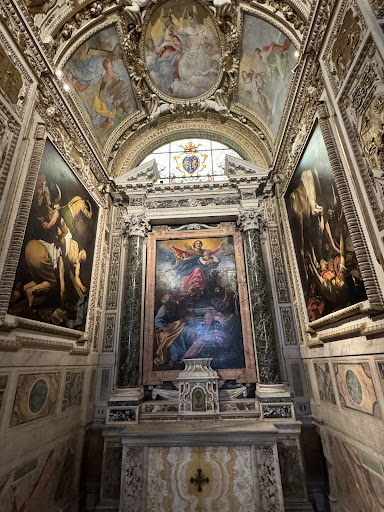
A Sacred Space for Art and Spirit – Santa Maria in Montesanto, the Church of the Artists Standing gracefully at the edge of Piazza del Popolo, the Basilica di Santa Maria in Montesanto—affectionately known as the Church of the Artists—is more than just an architectural gem of the Roman Baroque. It is a sanctuary where faith, creativity, and history converge. For decades, this church has served as a spiritual home for Rome’s artistic community. From painters and sculptors to actors and writers, generations of artists have gathered here to reflect, celebrate, and mourn. Its atmosphere is charged with quiet reverence, but also with a unique energy—one that honors the sacred bond between art and the divine. Among its most significant treasures is the deep connection to Caravaggio, whose groundbreaking naturalism and dramatic chiaroscuro changed the course of art history. His legacy echoes through the church’s very identity: a place that embraces bold vision, raw emotion, and a relentless pursuit of truth. While Caravaggio’s original works are not housed here, his spirit looms large—especially in a church dedicated to those who, like him, lived and created with intensity and defiance. Visiting Santa Maria in Montesanto is not just an encounter with beauty—it is a quiet dialogue with the soul of Rome’s artistic past and present. A timeless tribute to the creators who shape our world.
Simone PorrelliSimone Porrelli
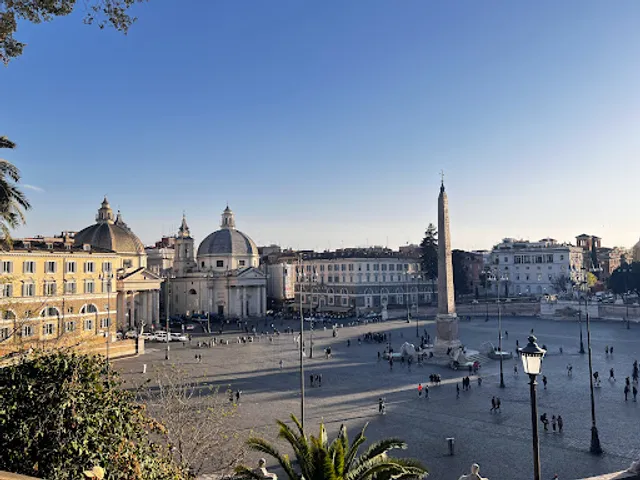
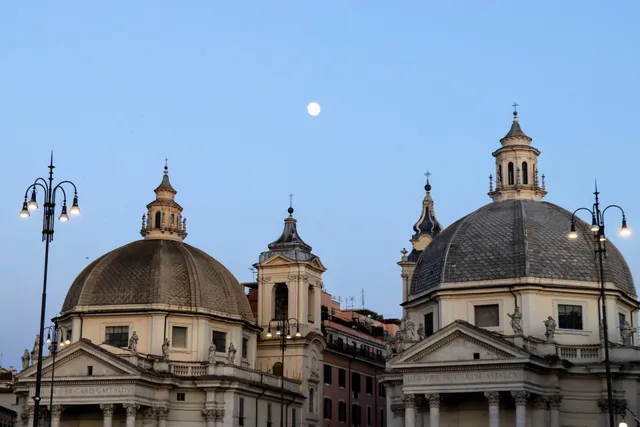
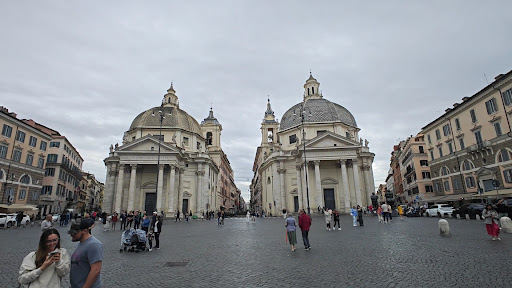
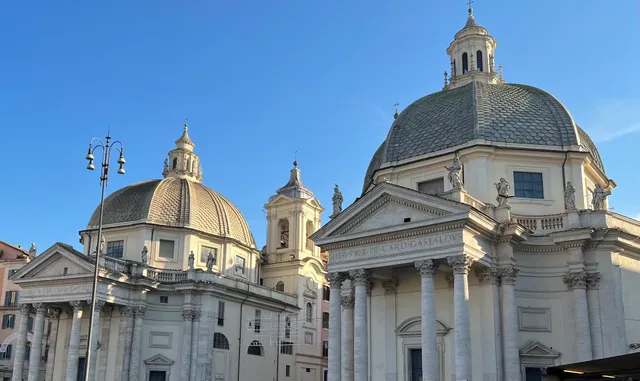
E' situata a termine del famoso tridente via del Babuino - via del Corso - via di Ripetta e insieme alla chiesa di Santa Maria dei Miracoli, sua chiesa "gemella", formano il terminale del tridente stesso, per volere di una ristrutturazione urbanistica avvenuta per volere di papa Alessandro VII. La Basilica (chiamata anche Chiesa degli Artisti) sarà terminata nel 1675 e la chiesa dei Miracoli nel 1678, qualche anno dopo la morte del papa (1667). La Basilica deve il suo nome dalla chiesa precedente dedicata alla Vergine. Il progetto della nuova costruzione è su progetto di Carlo Rainaldi, con la supervisione ai lavori di Gian Lorenzo Bernini. L'inizio dei lavori risale al 1662, con una piccola interruzione avvenuta proprio nell'anno della morte del papa (1667). Le due chiese sono note come "chiese gemelle" perché Rainaldi volle fare due costruzioni simmetriche ma per problemi di spazio optò per due piante diverse e anche cupole diverse anche se dalla piazza, grazie ad un effetto ottico, appaiono identiche. La firma del Bernini già si può notare dalla pianta, che scelse di farla di forma ellittica (rispetto alla pianta del Rainaldi) per far adattare meglio la costruzione all'area di progetto. La cupola è dodecagonale e il campanile è settecentesco. L'interno è costituito principalmente da stupendi stucchi bianchi e vi sono 3 cappelle per lato, tutto eseguito per rispettare una rigorosa simmetria che risalta all'occhio. L'altare maggiore custodisce una icona, la "Madonna del Carmine di Montesanto": la leggenda narra che fu miracolosamente completata dopo che una bambina si addormentò proprio mentre eseguiva il volto della Vergine e, al suo risveglio, la ritrovò miracolosamente completata. Fino al 1825 fu affidata ai Carmelitani, anno in cui papa Leone XII volle effettuare dei restauri e scelse di elevarla al titolo di Basilica Minore. Nel 1953 viene istituita la Chiesa come sede della Messa degli Artisti. L'ultima foto raffigura "Cena in Emmaus" di Riccardo Ferroni. ENGLISH: It is located at the end of the famous trident via del Babuino - via del Corso - via di Ripetta and together with the church of Santa Maria dei Miracoli, its "twin" church, form the terminal of the trident itself, at the behest of an urban restructuring that took place at the behest of Pope Alexander VII. The Basilica (also called the Church of the Artists) was finished in 1675 and the Church of the Miracles in 1678, a few years after the Pope's death (1667). The Basilica owes its name to the previous church dedicated to the Virgin. The project of the new building is based on a design by Carlo Rainaldi, with the supervision of the works by Gian Lorenzo Bernini. The beginning of the works dates back to 1662, with a small interruption which took place in the year of the pope's death (1667). The two churches are known as "twin churches" because Rainaldi wanted to make two symmetrical constructions but for space problems he opted for two different plants and also different domes even if from the square, thanks to an optical effect, they appear identical. Bernini's signature can already be seen from the plan, who chose to make it elliptical (compared to Rainaldi's plan) to better adapt the building to the project area. The dome is twelve-sided and the bell tower is from the eighteenth century. The interior is mainly made up of beautiful white stuccoes and there are 3 chapels on each side, all done to respect a rigorous symmetry that stands out to the eye. The main altar houses an icon, the "Madonna del Carmine di Montesanto": legend has it that it was miraculously completed after a little girl fell asleep just as she was performing the face of the Virgin and, when she awoke, she found it miraculously completed. Until 1825 it was entrusted to the Carmelites, the year in which Pope Leo XII wanted to carry out restorations and chose to elevate it to the title of Minor Basilica. In 1953 the Church was established as the seat of the Artists' Mass. The last photo depicts "Cena in Emmaus" by Riccardo Ferroni.
See more posts
See more posts
hotel
Find your stay

Pet-friendly Hotels in Rome

Find a cozy hotel nearby and make it a full experience.

⛪ Nice architecture. The name of the church derives from the fact that it replaced a smaller one, that belonged to the Carmelites of the Province of Monte Santo in Sicily. It was built in 1662, on the initiative of Pope Alexander VII, by Cardinal Girolamo Gastaldi, who was later buried there. The original design was the work of Carlo Rainaldi. The works were interrupted on the dead of the Pontiff in 1667, then resumed in 1673 under the supervision of Gian Lorenzo Bernini and the cooperation of Carlo Fontana and finished in 1679, except for a belfry that was added in the 18th Century. In July 1825 Pope Leo XII elevated the church to the dignity of Minor basilica.[1] In this church, on 10 August 1904, Angelo Roncalli, the future Pope John XXIII, was ordained a priest; the event is remembered by a plaque affixed during his pontificate. Since 1953 the church has become the seat of the "Mass of the artists", a singular initiative conceived in 1941 by presbyter and art historian Ennio Francia; after changing several places for worship, the liturgical event took place in the church in Piazza del Popolo, where every Sunday, for over sixty years, this Eucharistic celebration has been celebrated with representatives of the world of culture and art. It is also in this church that the funeral of people linked to the world of culture and television is often celebrated. For these reasons, it is also known as "Church of the artists". 🏛 Mimarisi hoştu.
Evren Uysal

Evren Uysal

hotel
Find your stay

Affordable Hotels in Rome

Find a cozy hotel nearby and make it a full experience.

Get the Appoverlay
Get the AppOne tap to find yournext favorite spots!
A Sacred Space for Art and Spirit – Santa Maria in Montesanto, the Church of the Artists Standing gracefully at the edge of Piazza del Popolo, the Basilica di Santa Maria in Montesanto—affectionately known as the Church of the Artists—is more than just an architectural gem of the Roman Baroque. It is a sanctuary where faith, creativity, and history converge. For decades, this church has served as a spiritual home for Rome’s artistic community. From painters and sculptors to actors and writers, generations of artists have gathered here to reflect, celebrate, and mourn. Its atmosphere is charged with quiet reverence, but also with a unique energy—one that honors the sacred bond between art and the divine. Among its most significant treasures is the deep connection to Caravaggio, whose groundbreaking naturalism and dramatic chiaroscuro changed the course of art history. His legacy echoes through the church’s very identity: a place that embraces bold vision, raw emotion, and a relentless pursuit of truth. While Caravaggio’s original works are not housed here, his spirit looms large—especially in a church dedicated to those who, like him, lived and created with intensity and defiance. Visiting Santa Maria in Montesanto is not just an encounter with beauty—it is a quiet dialogue with the soul of Rome’s artistic past and present. A timeless tribute to the creators who shape our world.
VANGELIS PELEKIS

VANGELIS PELEKIS

hotel
Find your stay

The Coolest Hotels You Haven't Heard Of (Yet)

Find a cozy hotel nearby and make it a full experience.

hotel
Find your stay

Trending Stays Worth the Hype in Rome

Find a cozy hotel nearby and make it a full experience.

E' situata a termine del famoso tridente via del Babuino - via del Corso - via di Ripetta e insieme alla chiesa di Santa Maria dei Miracoli, sua chiesa "gemella", formano il terminale del tridente stesso, per volere di una ristrutturazione urbanistica avvenuta per volere di papa Alessandro VII. La Basilica (chiamata anche Chiesa degli Artisti) sarà terminata nel 1675 e la chiesa dei Miracoli nel 1678, qualche anno dopo la morte del papa (1667). La Basilica deve il suo nome dalla chiesa precedente dedicata alla Vergine. Il progetto della nuova costruzione è su progetto di Carlo Rainaldi, con la supervisione ai lavori di Gian Lorenzo Bernini. L'inizio dei lavori risale al 1662, con una piccola interruzione avvenuta proprio nell'anno della morte del papa (1667). Le due chiese sono note come "chiese gemelle" perché Rainaldi volle fare due costruzioni simmetriche ma per problemi di spazio optò per due piante diverse e anche cupole diverse anche se dalla piazza, grazie ad un effetto ottico, appaiono identiche. La firma del Bernini già si può notare dalla pianta, che scelse di farla di forma ellittica (rispetto alla pianta del Rainaldi) per far adattare meglio la costruzione all'area di progetto. La cupola è dodecagonale e il campanile è settecentesco. L'interno è costituito principalmente da stupendi stucchi bianchi e vi sono 3 cappelle per lato, tutto eseguito per rispettare una rigorosa simmetria che risalta all'occhio. L'altare maggiore custodisce una icona, la "Madonna del Carmine di Montesanto": la leggenda narra che fu miracolosamente completata dopo che una bambina si addormentò proprio mentre eseguiva il volto della Vergine e, al suo risveglio, la ritrovò miracolosamente completata. Fino al 1825 fu affidata ai Carmelitani, anno in cui papa Leone XII volle effettuare dei restauri e scelse di elevarla al titolo di Basilica Minore. Nel 1953 viene istituita la Chiesa come sede della Messa degli Artisti. L'ultima foto raffigura "Cena in Emmaus" di Riccardo Ferroni. ENGLISH: It is located at the end of the famous trident via del Babuino - via del Corso - via di Ripetta and together with the church of Santa Maria dei Miracoli, its "twin" church, form the terminal of the trident itself, at the behest of an urban restructuring that took place at the behest of Pope Alexander VII. The Basilica (also called the Church of the Artists) was finished in 1675 and the Church of the Miracles in 1678, a few years after the Pope's death (1667). The Basilica owes its name to the previous church dedicated to the Virgin. The project of the new building is based on a design by Carlo Rainaldi, with the supervision of the works by Gian Lorenzo Bernini. The beginning of the works dates back to 1662, with a small interruption which took place in the year of the pope's death (1667). The two churches are known as "twin churches" because Rainaldi wanted to make two symmetrical constructions but for space problems he opted for two different plants and also different domes even if from the square, thanks to an optical effect, they appear identical. Bernini's signature can already be seen from the plan, who chose to make it elliptical (compared to Rainaldi's plan) to better adapt the building to the project area. The dome is twelve-sided and the bell tower is from the eighteenth century. The interior is mainly made up of beautiful white stuccoes and there are 3 chapels on each side, all done to respect a rigorous symmetry that stands out to the eye. The main altar houses an icon, the "Madonna del Carmine di Montesanto": legend has it that it was miraculously completed after a little girl fell asleep just as she was performing the face of the Virgin and, when she awoke, she found it miraculously completed. Until 1825 it was entrusted to the Carmelites, the year in which Pope Leo XII wanted to carry out restorations and chose to elevate it to the title of Minor Basilica. In 1953 the Church was established as the seat of the Artists' Mass. The last photo depicts "Cena in Emmaus" by Riccardo Ferroni.
Simone Porrelli

Simone Porrelli

See more posts
See more posts

Reviews of Santa Maria in Montesanto Basilica

4.7
(341)
avatar
5.0
4y

⛪ Nice architecture. The name of the church derives from the fact that it replaced a smaller one, that belonged to the Carmelites of the Province of Monte Santo in Sicily. It was built in 1662, on the initiative of Pope Alexander VII, by Cardinal Girolamo Gastaldi, who was later buried there. The original design was the work of Carlo Rainaldi.

The works were interrupted on the dead of the Pontiff in 1667, then resumed in 1673 under the supervision of Gian Lorenzo Bernini and the cooperation of Carlo Fontana and finished in 1679, except for a belfry that was added in the 18th Century.

In July 1825 Pope Leo XII elevated the church to the dignity of Minor basilica.[1]

In this church, on 10 August 1904, Angelo Roncalli, the future Pope John XXIII, was ordained a priest; the event is remembered by a plaque affixed during his pontificate.

Since 1953 the church has become the seat of the "Mass of the artists", a singular initiative conceived in 1941 by presbyter and art historian Ennio Francia; after changing several places for worship, the liturgical event took place in the church in Piazza del Popolo, where every Sunday, for over sixty years, this Eucharistic celebration has been celebrated with representatives of the world of culture and art. It is also in this church that the funeral of people linked to the world of culture and television is often celebrated. For these reasons, it is also known as "Church of the artists". 🏛...

   Read more
avatar
5.0
22w

A Sacred Space for Art and Spirit – Santa Maria in Montesanto, the Church of the Artists

Standing gracefully at the edge of Piazza del Popolo, the Basilica di Santa Maria in Montesanto—affectionately known as the Church of the Artists—is more than just an architectural gem of the Roman Baroque. It is a sanctuary where faith, creativity, and history converge.

For decades, this church has served as a spiritual home for Rome’s artistic community. From painters and sculptors to actors and writers, generations of artists have gathered here to reflect, celebrate, and mourn. Its atmosphere is charged with quiet reverence, but also with a unique energy—one that honors the sacred bond between art and the divine.

Among its most significant treasures is the deep connection to Caravaggio, whose groundbreaking naturalism and dramatic chiaroscuro changed the course of art history. His legacy echoes through the church’s very identity: a place that embraces bold vision, raw emotion, and a relentless pursuit of truth. While Caravaggio’s original works are not housed here, his spirit looms large—especially in a church dedicated to those who, like him, lived and created with intensity and defiance.

Visiting Santa Maria in Montesanto is not just an encounter with beauty—it is a quiet dialogue with the soul of Rome’s artistic past and present. A timeless tribute to the creators who...

   Read more
avatar
5.0
4y

E' situata a termine del famoso tridente via del Babuino - via del Corso via di Ripetta e insieme alla chiesa di Santa Maria dei Miracoli, sua chiesa "gemella", formano il terminale del tridente stesso, per volere di una ristrutturazione urbanistica avvenuta per volere di papa Alessandro VII. La Basilica (chiamata anche Chiesa degli Artisti) sarà terminata nel 1675 e la chiesa dei Miracoli nel 1678, qualche anno dopo la morte del papa (1667).

La Basilica deve il suo nome dalla chiesa precedente dedicata alla Vergine. Il progetto della nuova costruzione è su progetto di Carlo Rainaldi, con la supervisione ai lavori di Gian Lorenzo Bernini. L'inizio dei lavori risale al 1662, con una piccola interruzione avvenuta proprio nell'anno della morte del papa (1667). Le due chiese sono note come "chiese gemelle" perché Rainaldi volle fare due costruzioni simmetriche ma per problemi di spazio optò per due piante diverse e anche cupole diverse anche se dalla piazza, grazie ad un effetto ottico, appaiono identiche.

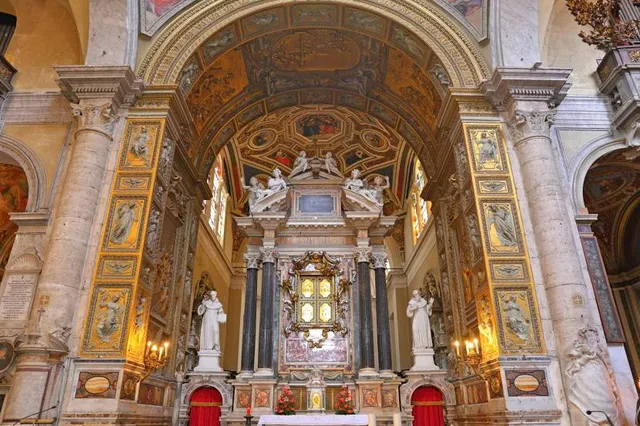
La firma del Bernini già si può notare dalla pianta, che scelse di farla di forma ellittica (rispetto alla pianta del Rainaldi) per far adattare meglio la costruzione all'area di progetto. La cupola è dodecagonale e il campanile è settecentesco. L'interno è costituito principalmente da stupendi stucchi bianchi e vi sono 3 cappelle per lato, tutto eseguito per rispettare una rigorosa simmetria che risalta all'occhio. L'altare maggiore custodisce una icona, la "Madonna del Carmine di Montesanto": la leggenda narra che fu miracolosamente completata dopo che una bambina si addormentò proprio mentre eseguiva il volto della Vergine e, al suo risveglio, la ritrovò miracolosamente completata.

Fino al 1825 fu affidata ai Carmelitani, anno in cui papa Leone XII volle effettuare dei restauri e scelse di elevarla al titolo di Basilica Minore. Nel 1953 viene istituita la Chiesa come sede della Messa degli Artisti. L'ultima foto raffigura "Cena in Emmaus" di Riccardo Ferroni.

ENGLISH: It is located at the end of the famous trident via del Babuino - via del Corso - via di Ripetta and together with the church of Santa Maria dei Miracoli, its "twin" church, form the terminal of the trident itself, at the behest of an urban restructuring that took place at the behest of Pope Alexander VII. The Basilica (also called the Church of the Artists) was finished in 1675 and the Church of the Miracles in 1678, a few years after the Pope's death (1667).

The Basilica owes its name to the previous church dedicated to the Virgin. The project of the new building is based on a design by Carlo Rainaldi, with the supervision of the works by Gian Lorenzo Bernini. The beginning of the works dates back to 1662, with a small interruption which took place in the year of the pope's death (1667). The two churches are known as "twin churches" because Rainaldi wanted to make two symmetrical constructions but for space problems he opted for two different plants and also different domes even if from the square, thanks to an optical effect, they appear identical.

Bernini's signature can already be seen from the plan, who chose to make it elliptical (compared to Rainaldi's plan) to better adapt the building to the project area. The dome is twelve-sided and the bell tower is from the eighteenth century. The interior is mainly made up of beautiful white stuccoes and there are 3 chapels on each side, all done to respect a rigorous symmetry that stands out to the eye. The main altar houses an icon, the "Madonna del Carmine di Montesanto": legend has it that it was miraculously completed after a little girl fell asleep just as she was performing the face of the Virgin and, when she awoke, she found it miraculously completed.

Until 1825 it was entrusted to the Carmelites, the year in which Pope Leo XII wanted to carry out restorations and chose to elevate it to the title of Minor Basilica. In 1953 the Church was established as the seat of the Artists' Mass. The last photo depicts "Cena in Emmaus" by...

   Read more
Page 1 of 7
Previous
Next