Minar-e-Pakistan
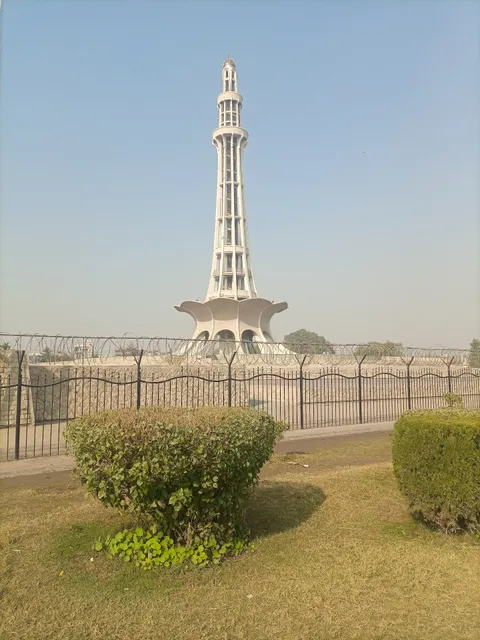
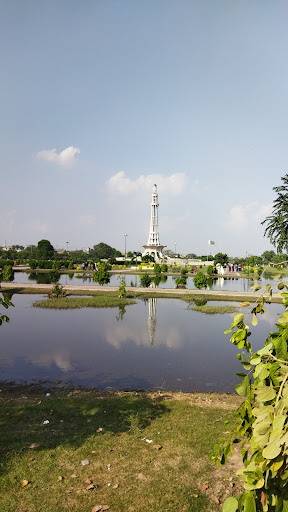
Minar-e-Pakistan (Pakistan Day Memorial) is a minarĀ which wasĀ builtĀ to commemorate the day when the Pakistan resolution was passed on March 23, 1940. The main tower of this memorial was completed on March 22, 1968.Ā ļæ¼The location was originally known as Minto Park. It was here that the historic session of the All-India Muslim League was held on March 23, 1940.
In 1960 the Muslim League leaders impressed upon the local authorities the need for building a memorial. The governor of West Pakistan, Akhtar Hussain, issued an appeal to the public for contributions for constructing the memorial. He also constituted a memorial committee and a memorial fund for collecting donations from philanthropists. Murat Khan, a Turkish architect, designed the memorial. The governor laid the foundation stone of the memorial on March 23, 1960.Ā The tower took about eight years to complete, at an estimated cost of Rs. 500,000.
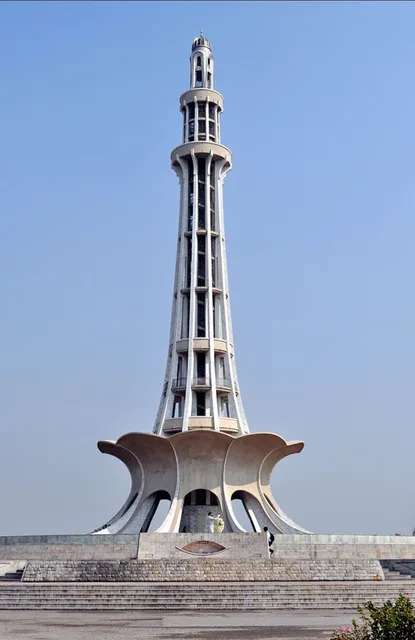
The tower rises above a platform shaped like a five-pointed star. The terrace is three feet from ground level, the platform's height is about six feet, and the star platform is about 12 feet high. It is surrounded by two crescent-shaped pools, four feet deep and lined with green and red marble. The tower has a spring shaped hall spanned by arches. The rostrum facing Badshahi Mosque is a quadrant constructed with Mughal patterned tiles. The circular diameter of the tower is 320 feet. The petals, 30 feet high, look like a blooming flower. The total height of the structure is 203 feet from ground level. On the marble slabs of the central shaft are inscribed a brief history of the Pakistan Resolution in English, Urdu and Bengali, the 99 names of God and poetic verses from Allama Iqbal. The tower has 10 vertical covering slabs interlaced with flower petals and glazed cement domes, with a sightseeing platform and a central spiral staircase.
The design of the base and the first four platforms depict the history of the Pakistan Movement through architectural symbols. Rough stones and cement have been haphazardly laid representing the chaotic conditions and the lack of direction in the early stages of the freedom movement of the Indian Muslims. The stones used for the first platform are rough Taxila stones. Hammer-dressed stones are used on the second platform. On the third platform are laid chiseled stones, while the fourth and final platform is of highly polished marble, symbolizing the ultimate success of the freedom movement.
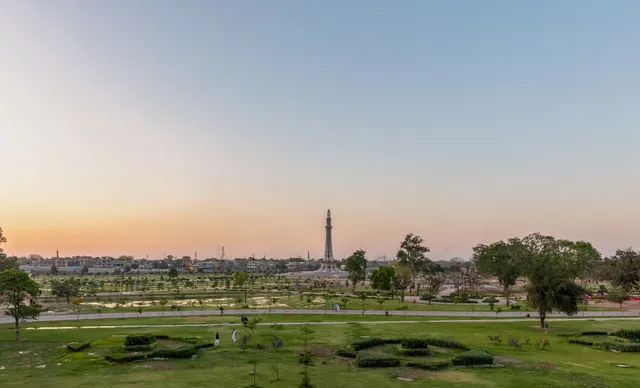
The dome is of stainless steel inlaid with fine glass pieces. Up to the dome there are four stages spread over 162 stairs.Ā The best and encompassing panoramic view of Lahore and the citadel is obtained by using the elevator which takes you all the way up to the top of the tower. The park is a popular recreational spot for Lahorites who congregate there in large numbers. It is often used for holding large public meetings. The locality of the memorial has been highlighted with well planned parks. Eight marble fountains on the main access add to the beauty of the memorial, emitting watery rainbows with the help of...
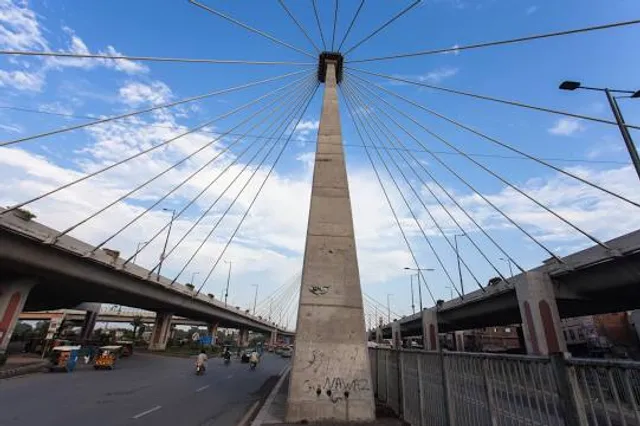
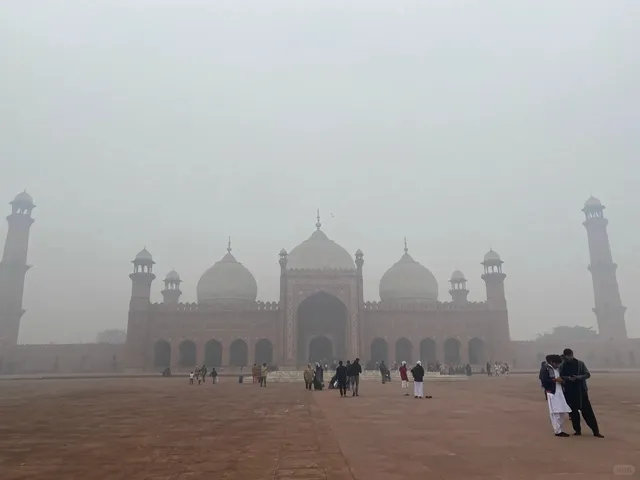
Ā Ā Ā Read moreMinto Park Where in 1940 A Resolution was passed in the open Meeting of All India Muslim League for the creation of another country namely Pakistan. After seven year struggle Pakistan came into being as an independent and sovereign state on the map of the world. To pay a tribute to the leaders who passed pakistan resolution here a Monument was Constructed with the name of Minar e Pakistan and the Name of Park was changed from Minto park to Iqbal Park. Its a historical place regarded with high esteem in the politics of sub continent. Later on in the year 2017 a road which devide Iqbal Park and Antique Statdium ( guddi ground) having Pehlwans Akhaaras and Deras of Bhangies adjacent to Shahi Qila and Badshahi Masjid. An over fly contructed in Azadi Chowk and road Azadi chowk to Badami Bagh was demolished and the area included in the Park. A road constructed on the western side of Minar e Pakistan Iqbal Park which divides Iqbal Park and Qila Lachhman Singh and connects Ravi Road to Badami Bagh road and then Circular Road. Hence Iqbal Park, the area of Minar e Pakistan, Guddi Ground adjacent to Fort and Antique Stadium adjacent to Badshahi Masjid including road divide the area developed into a big park with the name of Greater Iqbal Park. Now dancing fountains gym tuck shops Minar Pakistan Nishter indoor stadium and much more attractions have been added to the Park. 4 entry and exit gates installed with a spacious parking facility. A masjid and a shrine which are of historic back ground have also become the part of Park. Now the main entry to Fort and Badshahi Masjid also from the Park and this park is surrounded by one side Badshahi Masjid Hazori Bagh Roshnai gate Smadhi Raja Ranjeet Singh and shahi fort the other side Azadi Chowk Fly over and Ravi Road whereas on the North circular road Badami Bagh and west a road constructed as alternative to the road demolished and included in the park and beyond this road Qila Lachhman singh and Timber Market areas. However its a biggest park of Lahore with a...
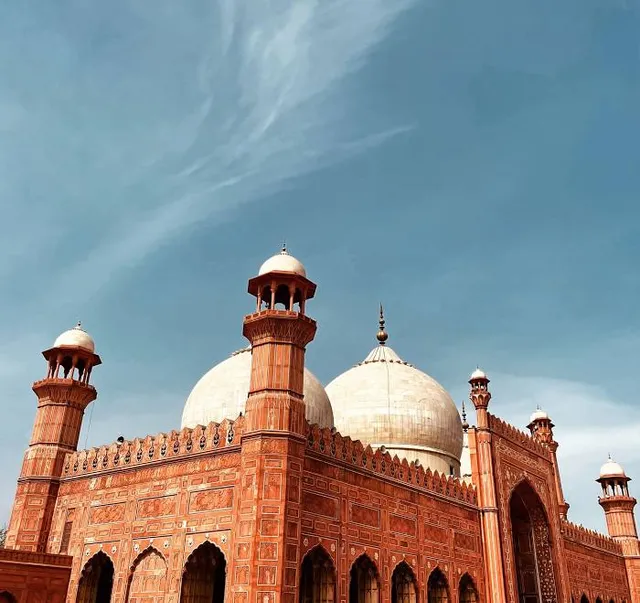
Ā Ā Ā Read moreGreater Iqbal ParkĀ (formerly known as Minto Park)Ā is the hallowed ground where the Pakistan Resolution was passed, in the summer of 1940. The park lies surrounded by the 13 historical gates of the city.Ā The park is located at the fringes of Lahore Fort and Badshahi Mosque, houses the famous Minar-e-Pakistan, and holds some serious historical value. After its recent expansion, the park now spreads over an area of 125 acres and includes a lake, library, food court, an open-air gym, and an 800-feet high musical fountain.
Ambiance at Greater Iqbal Park
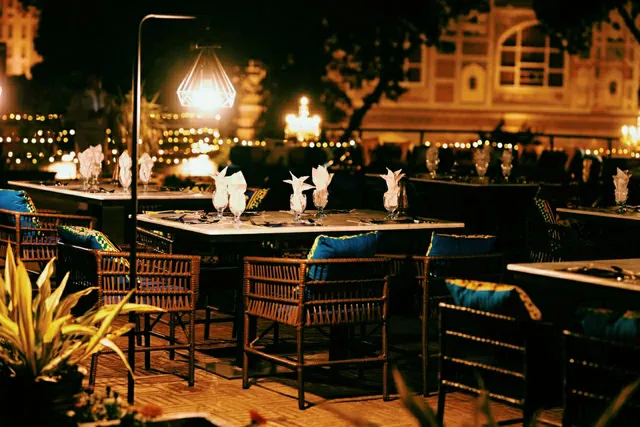
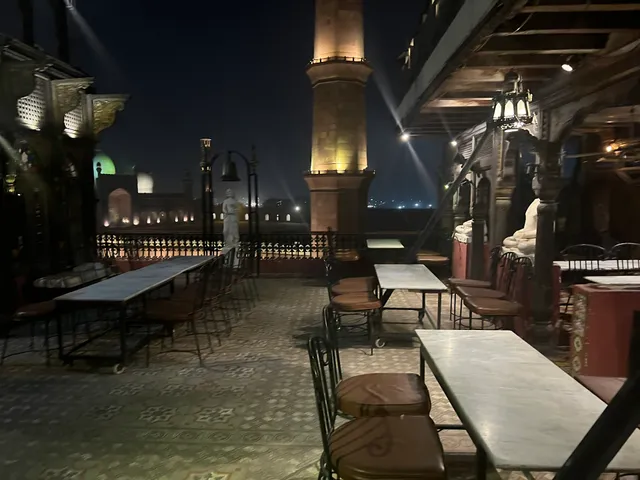
As you enter the park, Ā the unmistakable sound of dhol outside a shrine in the park may grab your attention. The dancing fountains are exceptional, sitting in front of them is just as soothing as the breath of spring. There are golf cart rides, a Pakistan History museum, and massive gardens for families to just sit and unwind while they enjoy their picnics. Despite, numerous attractions most people who go there today are people inspired by the freedom movement and anti-colonial struggle and who wish to see the actual historical locale and follow the details and displays shown in the tower. You can also climb up if you feel up to it, to get a scenic view. There is also a plaque there to commemorate this event and a list of the actual 21 signatories, including all the famous political figures. The Greater Iqbal Park also features ample seating and artistic food courts like āThe Poetā and shopping kiosks for visitors.
The park and monument are situated in rather crowded and insalubrious surroundings but those who are truly dedicated and keen on going there, as a form of 'historical pilgrimage' still get there. It is one of the greatest parks of history and serves as the perfect place for visitors to take a breather and hold picnics, enjoy the majestic fountain...
Ā Ā Ā Read more