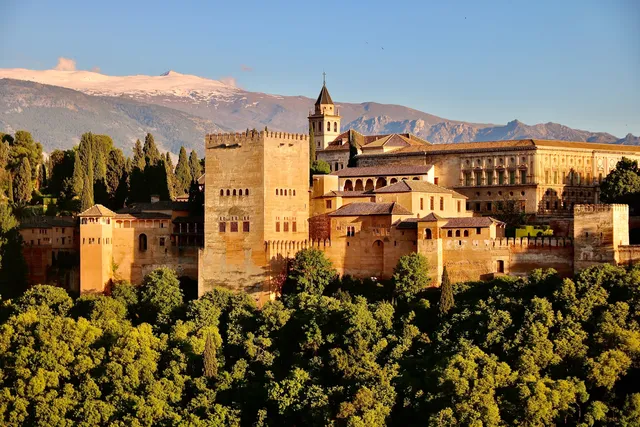
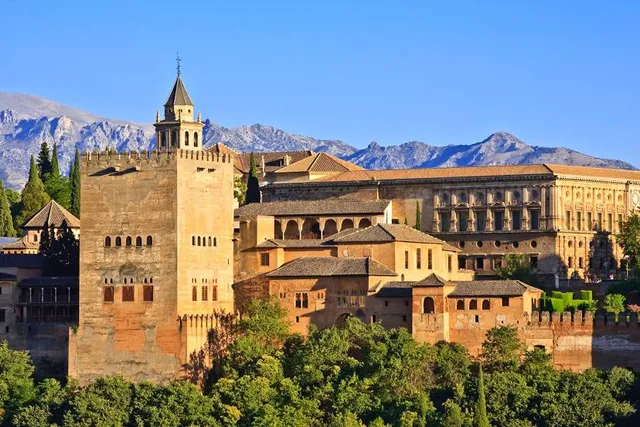
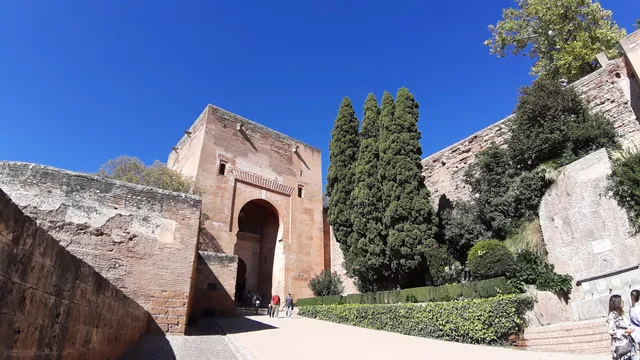
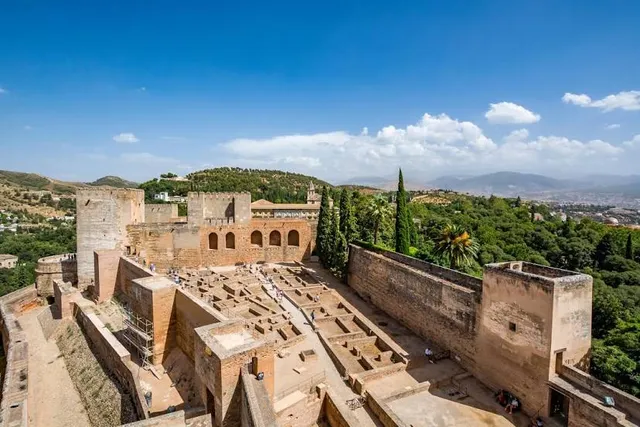
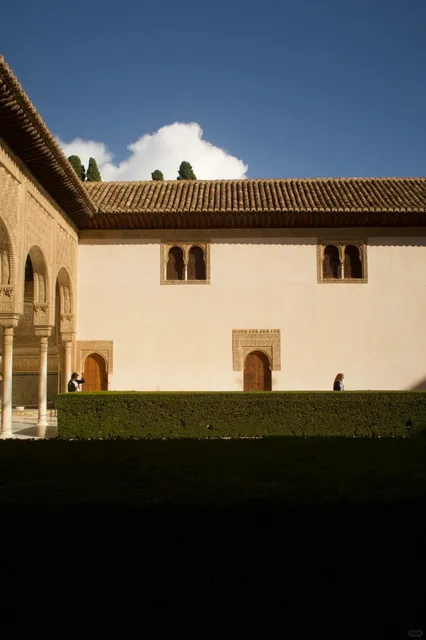
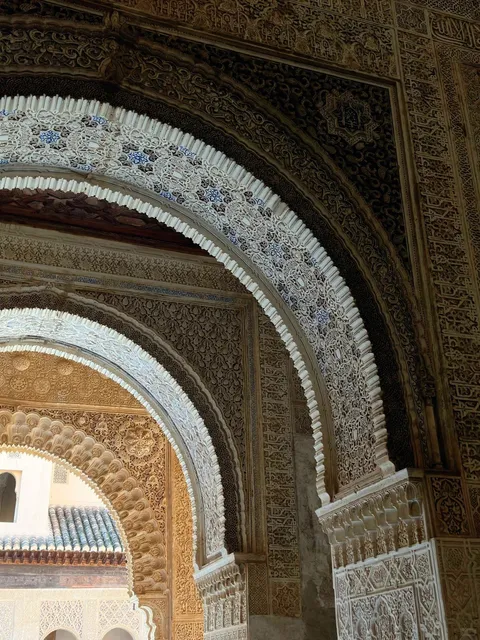
The Alhambra is a hilltop palace and fortress located in Granada, in southern Spain. It is one of the most important examples of Islamic Architecture in Europe and a stunning experience to visit. It is a must for anyone thinking of planning a Spain itinerary!
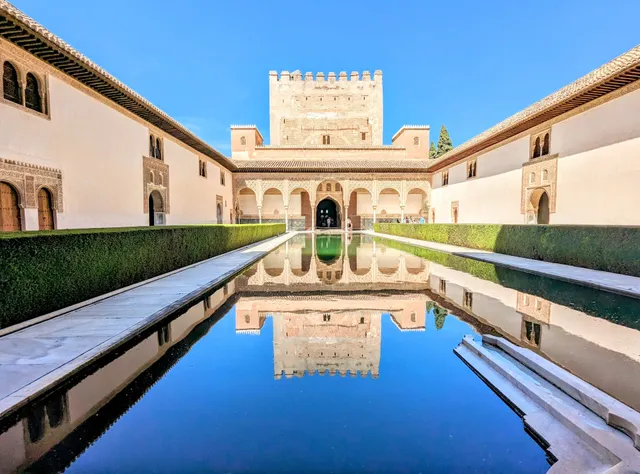
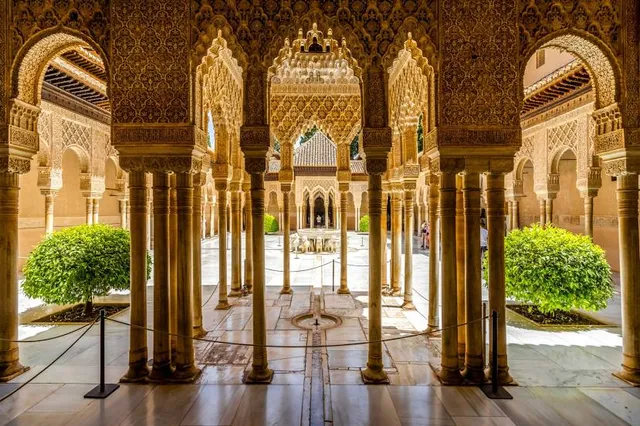
HISTORY: The site for the Alhambra was first used as a fortress in Muslim rule during the 9th century. However, it was not until during the final era of Muslim rule from the 13th to late 15th century that the Alhambra would receive much of its original development. This was when Muhammad I established the Alhambra a royal residence, with the complex largely expanded under his successors with new features added such as the Patio of the Lions.
In 1492 Granada was captured by the Catholic Monarchs: Isabella and Ferdinard, marking the end of Muslim rule in the Iberian Peninsula. After the conquest, the royal couple did live in the complex for several short periods and met with Christopher Columbus in the complex during 1492.
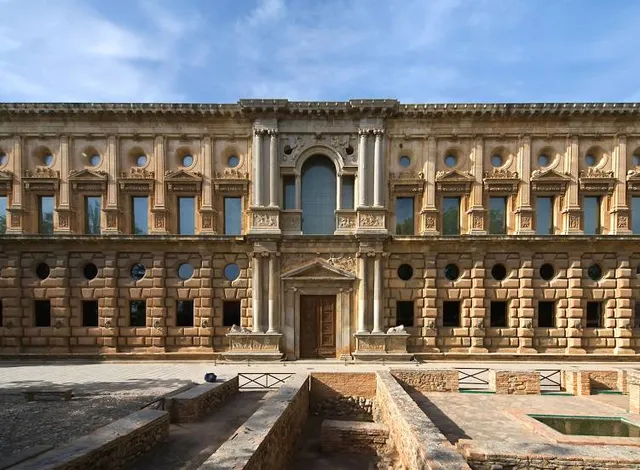
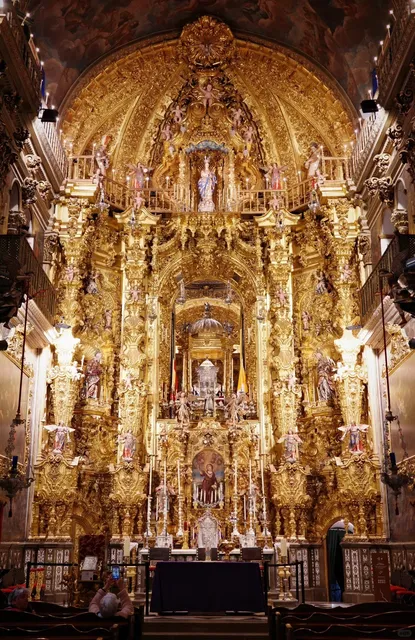
While many of the original Arabic elements of buildings remained after the Reconquista, several notable additions were made after this time including the Palacio de Carlos V with (construction commencing in 1527 but left partially unfinished until 1957) and the Church of Santa Maria de la Alhambria which was built over the site of a former mosque in the complex (constructed between 1581 and 1618).
After this point however, the royal court departed to other cities and the Alhambra gradually moved into a state of decay, later suffering from earthquakes, looting and even from Napoleonic troops using the fort as a barricade.
In 1832 American writer Washington Irvine visited the ruined castle and wrote his book: Tales of the Alhambra, the book was a success and even helped renew international consciousness of the Alhambra and it's rich historical significance.
The Alhambra and Generalife would be declared a UNESCO World Heritage Site in 1984, and the site is currently one of the most visited sites in Spain, attracting over 2.5 million visitors each year.
TRAVEL RECOMMENDATIONS:
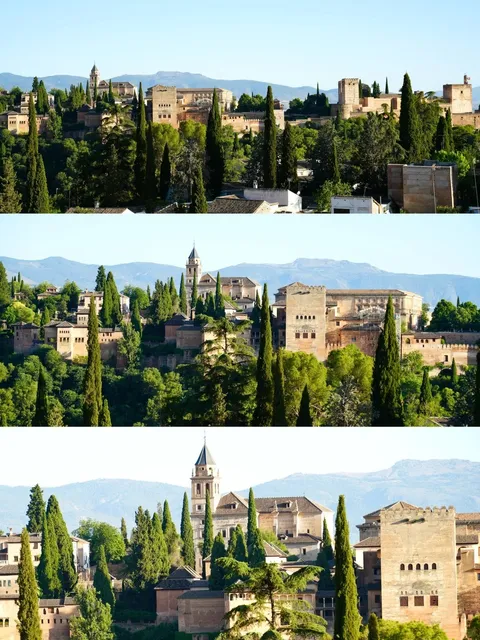
It is a wonderful experience visiting the Alhambra. It is great to walk around the gardens and experience all of the old buildings and the incredible views over to the Albaicin on the other side of the valley and to the rest of Granada. I would suggest arriving at the site early and aiming to spend at least half a day there to make the most of the experience.
It is important for visitors who wish to make the most of their trip to buy a timed ticket to the Nazrid Palace. These tickets need to be bought in advance as there is a limited capacity and not all Alhambra tickets include this section. This is important as this is the best preserved section of the original complex and can’t be missed. My recommendation would be to try to visit the Nazrid palaces first during the days visit as this is the only section in the Alhambra that requires a timed entry and will mean you can explore the castle at your own pace during the rest of the day.
Also, it is important to note that for some reason it is important to bring your passport or at least an image of your passport as guards will ask to see it upon entry.
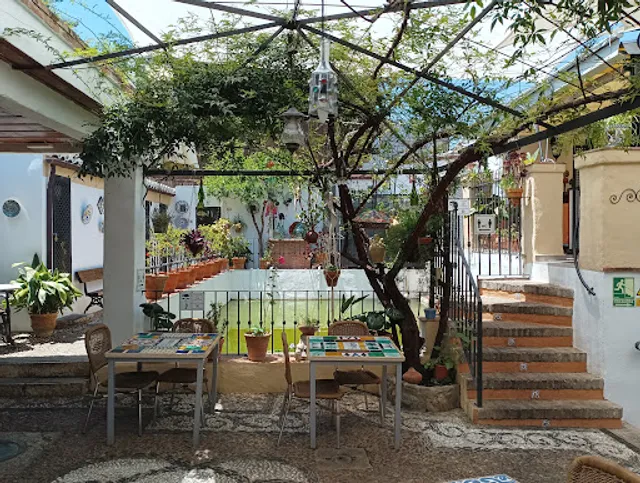
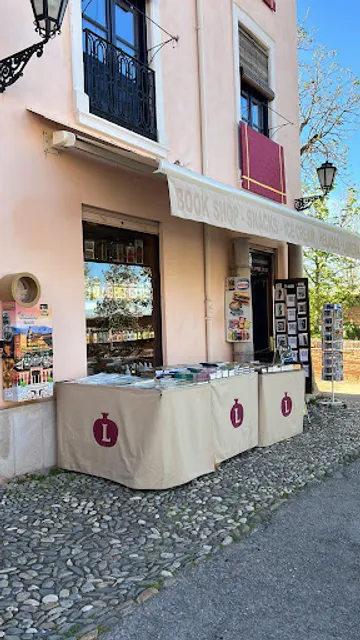
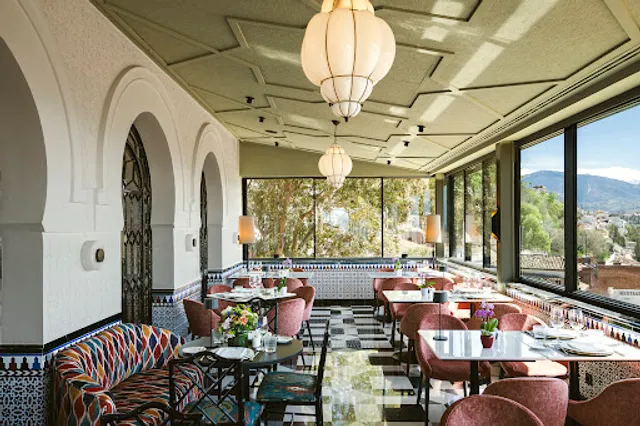
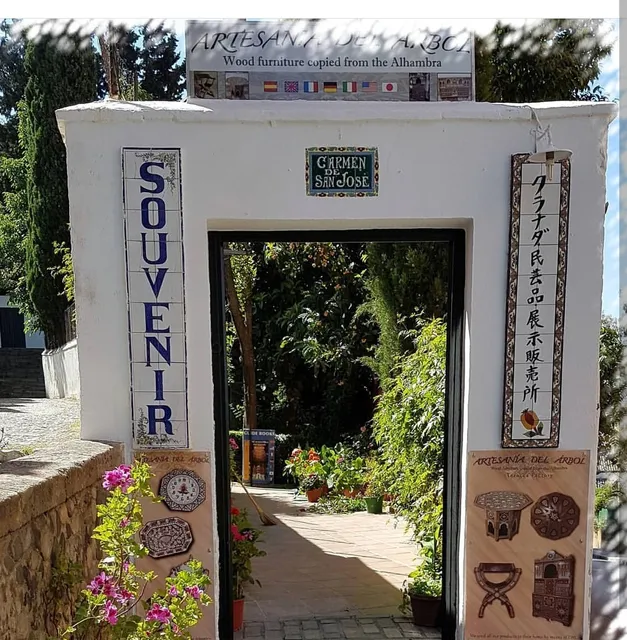
There is a nice café in the centrally located Plaza de Los Aljibes which was reasonably priced with a nice vantage point which is great for relaxing. The various gift shops around the area are well stocked with some pretty interesting historical books and other assorted souvenirs too.
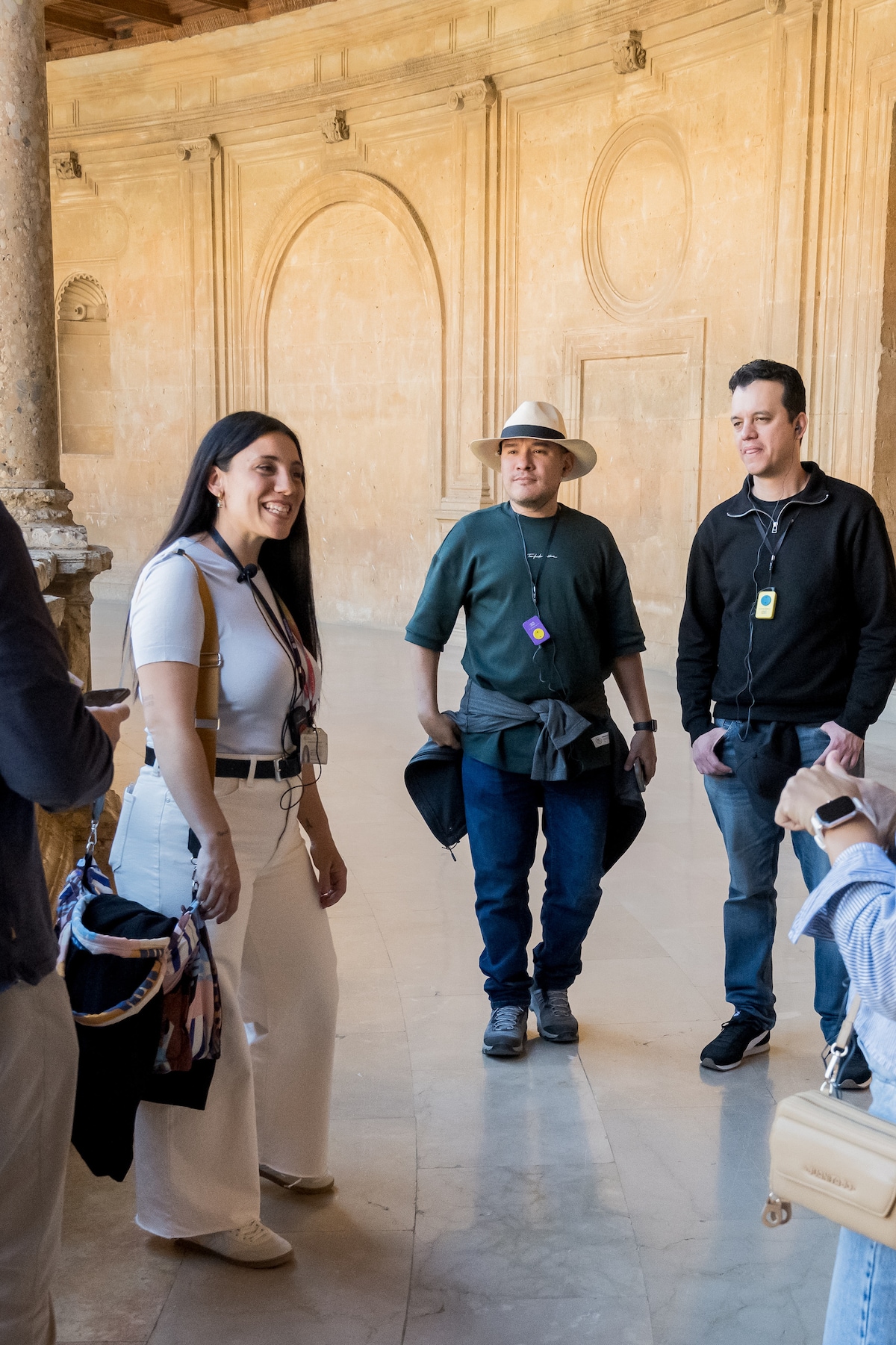
Make sure to visit the Alhambra Museum located within the Palacio de Carlos V (the big building with the round courtyard inside), the museum is free and filled with a large array of artworks, sculptures and other historic fragments. The staff inside were super friendly with an English speaking guide roaming the area and answering questions about many of the...
Read moreI am sad to admit that my wife and I encountered arbitrary behavior from the staff at the Alhambra. We bought tickets online in advance and showed up at the main entrance to this architectural complex exactly at the appointed time. The territory of the Alhambra is large, so when we showed the tickets to the controllers at the entrance, we specifically asked them if there was any order for visiting the sights. They answered that there was no such order: the main thing is to enter the territory of the Alhambra at the specified time, and then you can stay there until the evening. We walked from park to park, from palace to palace, and finally reached the so-called Nasrid Palace. And there we were stopped by an employee who said that we were two hours late, so he refused to let us in. I explained that exactly two hours ago we had passed through ticket control, we were on the Alhambra grounds in time, and then we walked around its vast grounds. I asked to speak to the senior manager to resolve this issue, but the staff laughed and said that the senior manager "is now with his family in his big house." Honestly, I'm not joking. I received exactly this - arrogant and vile - answer. I asked, what about money? I paid for entry and if I am not allowed in, I would like to get money for the service not rendered. The staff laughed again and said that I can complain anywhere. I did write several complaints - to Spanish and Catalan authorities - but I received no response. The issue, of course, is not about money: firstly, the amount is not that big, and secondly, my wife and I did visit the Nasrid Palace - the day before the described conflict - during the so-called night excursion (oh yes, this is such a plot twist in my story=)). The problem is that the Alhambra staff seem to have become so closely associated with the attraction they serve that they imagine themselves to be medieval emirs, owners of palaces and complete tyrants. The Alhambra is very beautiful - its architecture, its gardens, its fountains. It was built, supplemented and rebuilt by generations of talented and inspired people. It is a great pity that some of their successors dressed in the uniform of museum workers are now desecrating their memory by engaging in arbitrary acts and, in essence,...
Read moreVisited in August 2024 This is a phenomenal site and has been in many different movies and tv series over the years because of it’s beauty and very unique design and botanical beauty. Be sure to get your tickets a day or two early to ensure you can get to see everything. Not to be missed
The Alhambra is a palace and fortress complex located in Granada, Andalusia, Spain. It is one of the most famous monuments of Islamic architecture and one of the best-preserved palaces of the historic Islamic world, in addition to containing notable examples of Spanish Renaissance architecture.
The complex was begun in 1238 by Muhammad I Ibn al-Ahmar, the first Nasrid emir and founder of the Emirate of Granada, the last Muslim state of Al-Andalus. It was built on the Sabika hill, an outcrop of the Sierra Nevada which had been the site of earlier fortresses and of the 11th-century palace of Samuel ibn Naghrillah. Later Nasrid rulers continuously modified the site. The most significant construction campaigns, which gave the royal palaces much of their defining character, took place in the 14th century during the reigns of Yusuf I and Muhammad V.
After the conclusion of the Christian Reconquista in 1492, the site became the Royal Court of Ferdinand and Isabella (where Christopher Columbus received royal endorsement for his expedition), and the palaces were partially altered. In 1526, Charles V commissioned a new Renaissance-style palace in direct juxtaposition with the Nasrid palaces, but it was left uncompleted in the early 17th century. The site fell into disrepair over the following centuries, with its buildings occupied by squatters. The troops of Napoleon destroyed parts of it in 1812. After this, the Alhambra became an attaction for British, American, and other European Romantic travellers. The most influential of them was Washington Irving, whose Tales of the Alhambra (1832) brought international attention to the site. The Alhambra was one of the first Islamic monuments to become the object of modern scientific study and has been the subject of numerous restorations since the 19th century.9 It is now one of Spain's major tourist attractions and a UNESCO World...
Read more