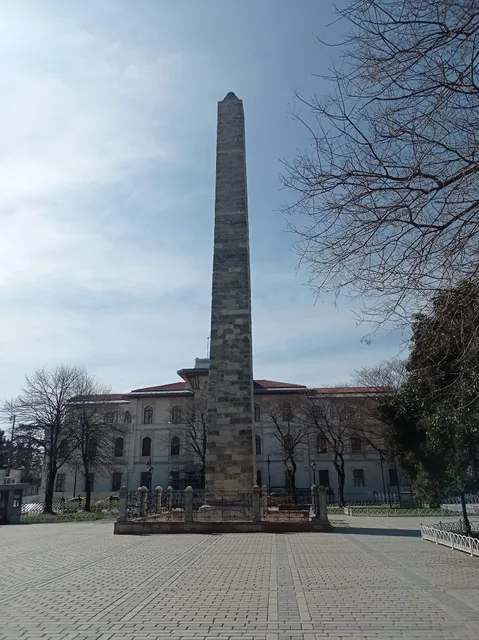
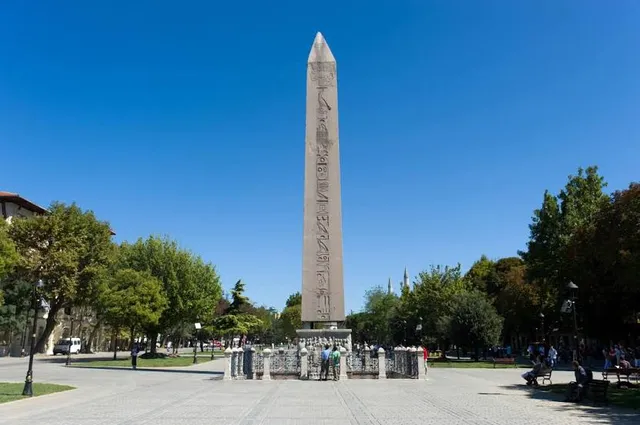
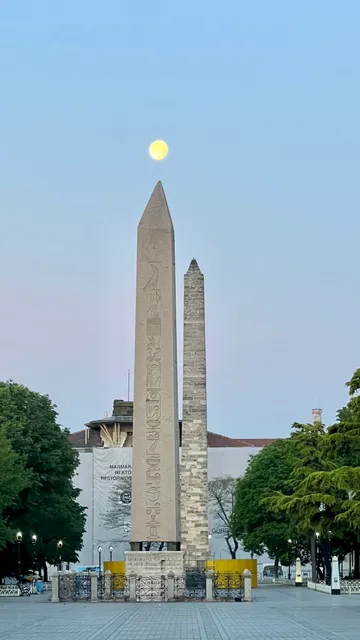
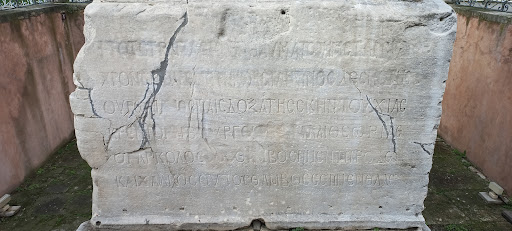
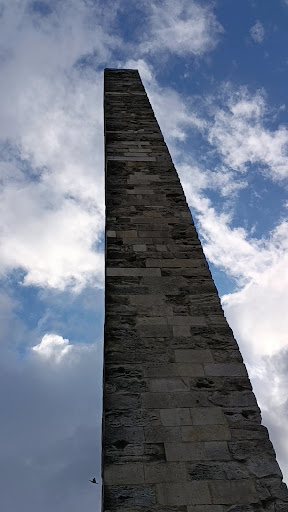
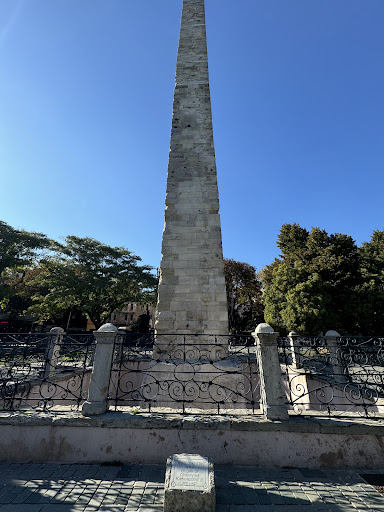
WALLED OBELISK Walled Column also known as Walled Obelisk is one of three ancient monuments, which, has survived to the present day. In the middle of the Hippodrome, there was a set that bisects race space and called as "spina" in Roman period where car racings of Constantinople were made. On this set, monumental buildings having moved here from various places were located and at the end of this spina, there was this column as last monument. Columns are formed by hewn stones in different sizes by walled up. On one side of the marble pedestal, a six verses Greek inscription was treated. Here, "This four-cornered majestic and wonderful monument was ruined, was optimized with respect to the previous image by the Emperor Constantine and by his son Romanos the glory of the state, Rhodes colos was marvelous; this bronze monument creates the fascination ". Kolos mentioned herein was a considerably Apollo statue located at the harbor of Rhodes and considered one of the Seven Wonders of the World in the first era. As it is understood from the text of the inscription, it was restored by the Emperor Constantine and his son Romanos. According to the inscription; this structure of earlier period was ruined in the 4th or 5th century and was repaired by Emperor Constantine VII and his son Romanos II, During the Ottoman period in the 16th zentury Pierre Gilles has done quite fully depiction of Örme Column. Evliya Çelebi discloses that the monument is one of the city's charms. Due to the ground-level rise of At meydani, while the base of the monument is embedded, was surrounded by railings around by opening the base surroundings with the permission given by Charles Newton in 1856 during the Crimean War. In photographs takeri in the 19th century, a result of falling of the stones of monument in the middle part, there seems to be a drain. In the repairs, the gaps were filled and the demolition of the monument was prevented. Monument is 32 feet tall and marble pedestal at the base comes after three digits. The body is built of many non-uniform chiselled stone. In the central section, more uniform filler with respect to the top and bottom bears the traces of repairs performed in the last years of the...
Read moreİstanbul'un Sultanahmet Meydanı'nda yer alan tarihi bir anıttır. Aynı zamanda "The Obelisk of Theodosius" olarak da bilinir. Mısır'dan getirilen granit bir dikilitaşı temsil eder. M.Ö. 15. yüzyıla tarihlenen bu dikilitaş, antik Mısır'da III. Thutmose döneminde dikilmiştir. Daha sonra M.S. 390 yılında Roma İmparatoru II. Theodosius tarafından İstanbul'a getirilmiştir. Örme Dikilitaş, sadece biri ayakta diğer ikisi kaybolmuş üç taş parçasından oluşur ve üzerindeki Mısır hiyeroglifleri ve kabartmalarıyla dikkat çeker. Bu tarihi anıt, İstanbul'un tarihini yansıtan önemli bir simge olarak Sultanahmet Meydanı'nda ziyaretçileri ağırlar..... İkinci Ders وَاُزْلِفَتِ الْجَنَّةُ لِلْمُتَّق۪ينَ ٭ وَبُرِّزَتِ الْجَح۪يمُ لِلْغَاو۪ينَ Ey insan-ı gafil! Ey dünya için dinini ihmal eden! Şu temsilî bir hikâyeyi dinle. Tâ dinsiz dünyanın hakikatını göresin. Eski zamanda iki kardeş vardı. Bu iki kardeş seyahata çıktılar. Gitgide tâ yol ikileşti. O iki yolun başında bir adamı gördüler. O adam onlara dedi ki: -Sağ yolda kanun ve nizama tebaiyet var. Ve o tebaiyet külfeti içinde, bir emniyet ve saadet var. Sol yolda ise, bir serbestiyet ve bir hürriyet var. Ve o serbestiyet ve hürriyet içinde bir tehlike ve şekavet var. İstediğiniz yola gidebilirsiniz. Güzel huylu kardeş sağ yola تَوَكَّلْتُ عَلَى اللّٰهِ deyip gitti. Ve o hafif külfeti ve nizam ve kanunu kabul etti. Sû'-i hulk sahibi, âzade-ser kardeş, serbestlik için sol yolu tercih etti. Zahiren hafif, manen gayet ağır bir vaziyette gitti. Biz de hayalen bunu takib ediyoruz. İşte dağ ve sahradan gide gide, tâ hâlî bir sahraya dâhil oldu. Birden müdhiş bir sadâ işitti. Baktı ki; dehşetli bir arslan meşelikten çıkıp, kendisine hücum etti. O da kaçıp, altmış arşın derinliğinde susuz bir kuyuya rastgeldi. Havfından kendini içine attı. Yarısına kadar inmekle kuyunun duvarında göğermiş bir ağaca rastgeldi. O ağacı tuttu. Gördü ki: O ağacın iki kökü var. Biri siyah renkte, diğeri beyaz renkte iki fare, o iki köke musallat olup kesiyorlar. Yukarı baktı, arslan kuyunun başında nöbetçi gibi bekliyor. Aşağıya baktı, dehşetli bir ejderha kuyunun içindedir. Başını kaldırmış, otuz arşın yukarıda ayağının yakınına kadar gelmiş. Ağzının genişliği ise bi'rin yani kuyunun ağzına benzer. Kuyunun duvarına bakar. Isırıcı, muzır haşerat etrafını sarmışlar. Ağacın başına baktı gördü ki, incir ağacıdır. Lâkin hârikadan olarak, cevizden nara kadar çok muhtelif ağaçların meyveleri ve yemişleri var. Sû'-i fehminden ve sû'-i tali'inden bu dehşetli hâlâtın âdi ve kendi kendine olmuş bir şey olmadığını anlamadı. Ve bu ince iş içinde iş olduğuna intikal etmedi. Kalb ve ruhu ve akıl ve letaifi bu elîm ve dehşetli vaziyetten feryad u figan ederken, nefs-i emmaresi tegafül ile tecahül etti. Kalb ve ruhun âh u enîn ve fîzârından kulağını kapayıp, kendi kendini aldatarak bir bostanda bulunuyor gibi o meyveleri yemeğe başladı. Fakat o meyvelerin bir kısmı zehirli ve muzır idi. Bir hadîs-i kudsîde Cenab-ı Hak buyurdu ki: اَنَا عِنْدَ ظَنِّ عَبْد۪ى ب۪ى yani "Kulum beni nasıl tanırsa, ona öyle muamele ederim." Şu bedbaht adam da sû'-i zannıyla gördüğünü hakikat telakki etti. Öyle muamele gördü ve görüyor. Ne ölür ki kurtulsun ve ne de elemsiz kalır ki yaşasın. Şu miskin ahmak fehmetmedi ki, bu tılsımlı ve acib işlerde tesadüf mümkün olmaz. Biz de şu meş'umu şu azabda bırakıp döneceğiz. Mübarek ve yümünlü diğer kardeşin arkasından gideriz. İşte şu zât, hüsn-ü sîretinden naşi, hüsn-ü zannı ile ünsiyet ederek yolunda gidiyor. Bak, nasıl hüsn-ü nazarıyla kardeşinin mahrum kaldığı bostandan istifade ediyor. Şu bostanda çiçek ve yemişlerle beraber, murdar ve müstakzer şeyler de bulunur. Bu kardeş ise, bu güzel şeylerden istifade etti. Mülevvesata bakmadı. İstirahat etti. Evvelki meş'um kardeşi ise, murdar şeylerle meşgul oldu. Midesini bulandırdı. Sonra bu güzel huylu arkadaş da, gitgide öteki kardeşi gibi bir sahra-yı azîme dâhil oldu. Birden hücum eden bir arslanın sesini işitti, korktu; lâkin.. Devamı için Risale-i Nur...
Read moreThe Knitted Column, which is 32 meters high, was made in a form that tapers towards the top. Normally, there was an obelisk in the middle of the hippodromes built during the Roman period. However, similar to the Circus Maximus hippodrome in Rome, which has two obelisks, a second obelisk was erected at the hippodrome in Istanbul to glorify the city.
It is unknown who erected the Knitted Column, which is thought to have been erected in the fourth century AD. The inscription on the marble pedestal under the column facing the Blue Mosque reads, "This high four-faced monument, eroded over time, was transformed into a better form than we saw before by Emperor Constantine, the pride of the Empire." Colossus of Rhodes surprised; This bronze-covered column aroused admiration.”
From this information, the column was built by Constantine VII. It is understood that it was repaired during the time of Porpyrogennetos (913-959). During this repair, the body of the Knitted Column and three sides of its footing were decorated with gilded bronze plates. During the crusades in 1204, people from Western Europe plundered the city and took away the brass around the column, thinking...
Read more