HTML SitemapExplore
Find Things to DoFind The Best Restaurants

Serpent Column — Attraction in Fatih

Name
Serpent Column
Description
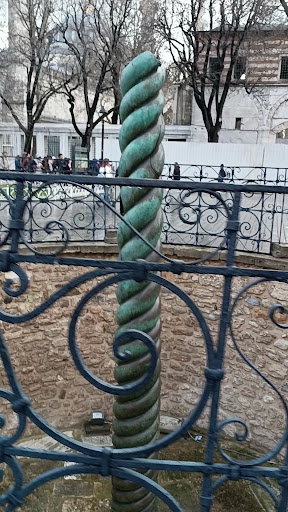
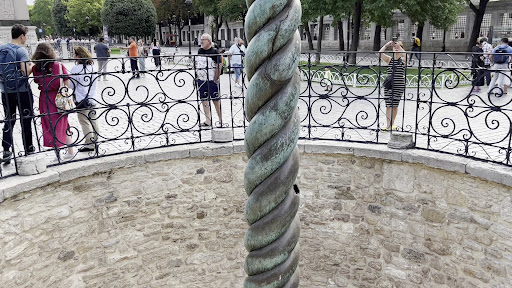
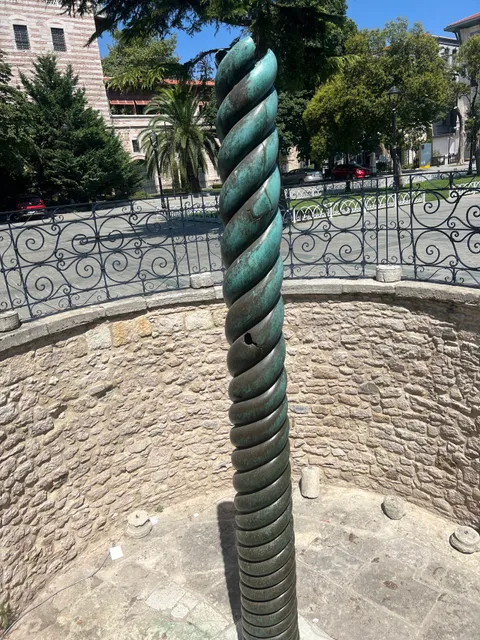
The Serpent Column, also known as the Serpentine Column, Plataean Tripod or Delphi Tripod, is an ancient bronze column at the Hippodrome of Constantinople in what is now Istanbul, Turkey.
Nearby attractions
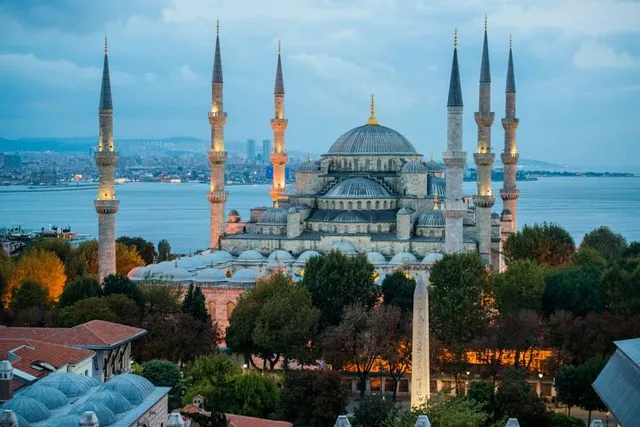
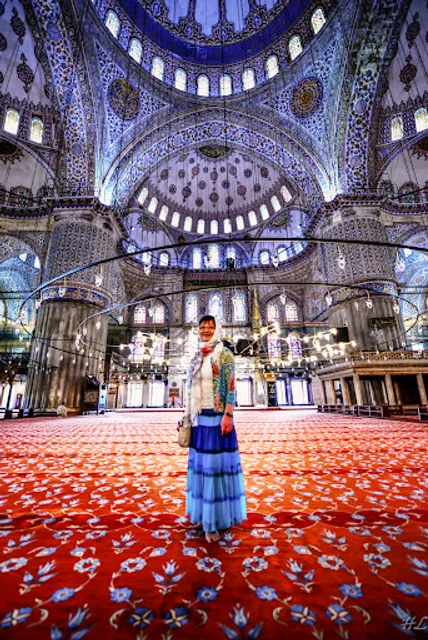
The Blue Mosque
Cankurtaran, At Meydanı Cd No:7, 34122 Fatih/İstanbul, Türkiye
Sultanahmet Square
Binbirdirek, Sultan Ahmet Parkı No:2, 34122 Fatih/İstanbul, Türkiye
Turkish and Islamic Arts Museum
Binbirdirek, At Meydanı Cd No:12, 34122 Fatih/İstanbul, Türkiye
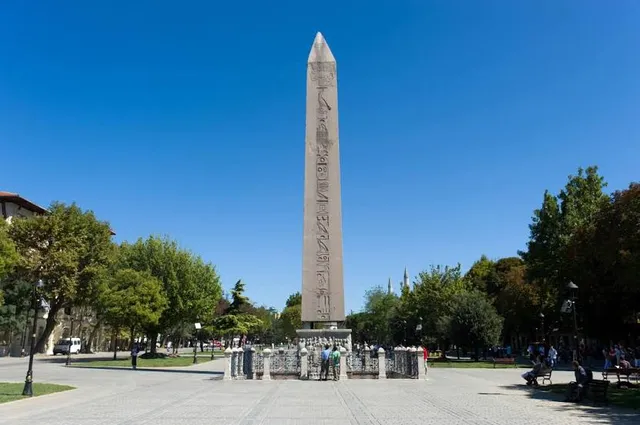
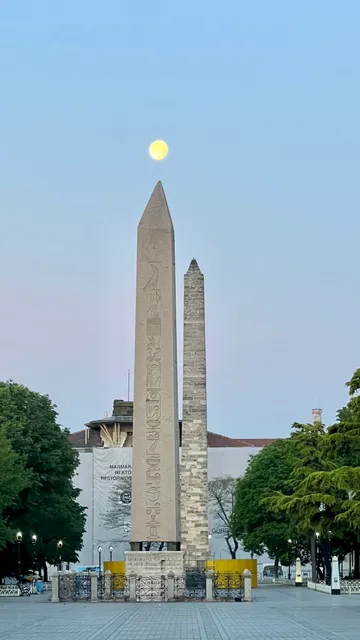
Obelisk of Theodosius
Sultanahmet, Binbirdirek, 34122 Fatih/İstanbul, Türkiye
Örme Dikilitaş
Binbirdirek, Sultan Ahmet Parkı No:5, 34122 Fatih/İstanbul, Türkiye
Basilica Cistern
Alemdar, Yerebatan Cd. 1/3, 34110 Fatih/İstanbul, Türkiye
Hagia Sophia History and Experience Museum
Binbirdirek, At Meydanı Cd No:10, 34122 Fatih/İstanbul, Türkiye
Hippodrome of Constantinople
Binbirdirek, At Meydanı Cd No:53 D:68, 34122 Fatih/İstanbul, Türkiye
Ibrahim Pasha Palace
Binbirdirek, At Meydanı Cd No:44, 34122 Fatih/İstanbul, Türkiye
Cistern of Theodosius
Binbirdirek, Piyer Loti Cd. No:2/1, 34122 Fatih/İstanbul, Türkiye
Nearby restaurants
GRACE Rooftop Restaurant
Binbirdirek, Terzihane Sk. No:15, 34122 Fatih/İstanbul, Türkiye
Hidden Garden Restaurant Sultanahmet
Binbirdirek, Peykhane Cd. No: 14/A, 34122 Fatih/İstanbul, Türkiye
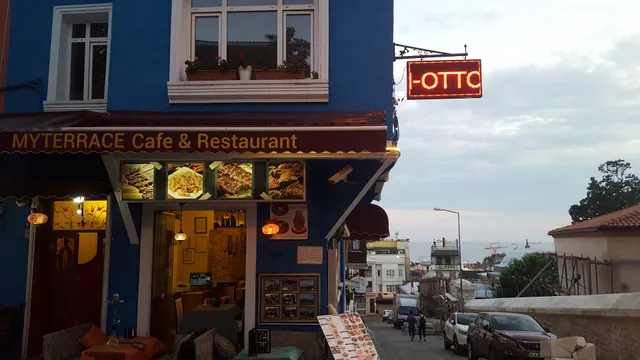
My Terrace Cafe & Restaurant
Küçük Ayasofya, Şht. Mehmet Paşa Sk. No:9, 34122 Fatih/İstanbul, Türkiye
Ozi Pizza and Pasta
Binbirdirek, Su Terazisi Sk. No:9, 34122 Fatih/İstanbul, Türkiye
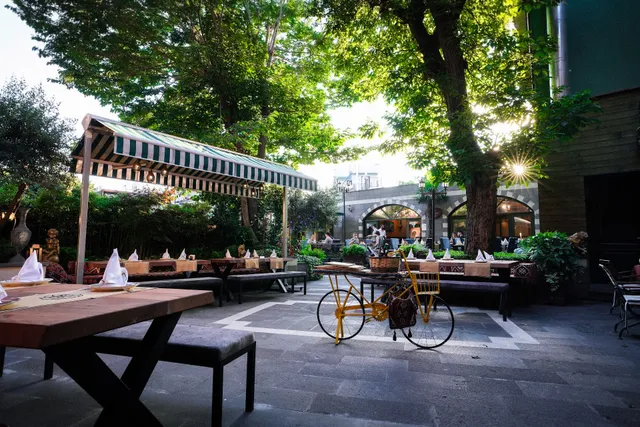
Garden 1897 Restaurant
Inside of Garden House Hotel, Küçük Ayasofya, Şht. Mehmet Paşa Sk. No5, 34122 Fatih/İstanbul, Türkiye
Erhan Restaurant
Binbirdirek, Klodfarer Cd. Servet Han No:29 D:29/E, 34122 Fatih/İstanbul, Türkiye
Buhara 93 Restaurant
Sultan Ahmet, Nakilbent Sk. No:13 A 15, 34122 Fatih/İstanbul, Türkiye
Food Palace 1981 Anatolian Restaurant
Binbirdirek, Peykhane Cd. No: 18, 34122 Fatih/İstanbul, Türkiye
Hafız Mustafa
Binbirdirek, Divan Yolu Cd. No:14, 34110 Fatih/İstanbul, Türkiye
Changcheng Restaurant
46/1, Binbirdirek, Peykhane Cd., 34122 Fatih/İstanbul, Türkiye
Nearby hotels
Hotel Ibrahim Pasha
Binbirdirek, Terzihane Sk. No:7, 34122 Fatih/İstanbul, Türkiye
Lady Diana Hotel
Binbirdirek, Terzihane Sk. No:15, 34122 Fatih/İstanbul, Türkiye
Hotel Fehmi Bey
Binbirdirek, Üçler Sk. No:15, 34122 Fatih/İstanbul, Türkiye
HaciBayramHotel
Binbirdirek, Asmalı Çeşme Sk. No:4, 34122 Fatih/İstanbul, Türkiye
Hotel Spectra
Binbirdirek, Şht. Mehmetpaşa Ykş. No:2, 34122 Fatih/İstanbul, Türkiye
Hotel Saba, İstanbul
Binbirdirek, Şht. Mehmetpaşa Ykş. No:6, 34122 Fatih/İstanbul, Türkiye
Optimist Hotel
Binbirdirek, At Meydanı Cd No:16, 34000 Fatih/İstanbul, Türkiye
Hotel Arcadia Blue
No:, İmran Öktem Cd., 34440 Fatih/İstanbul, Türkiye
Hotel SultanHill
Sultan Ahmet, Tavukhane Sk. No:15, 34122 Fatih/İstanbul, Türkiye
Hotel Turkoman
Binbirdirek, Asmalı Çeşme Sk. No:2, 34400 Fatih/İstanbul, Türkiye
Related posts
Keywords
Serpent Column tourism.Serpent Column hotels.Serpent Column bed and breakfast. flights to Serpent Column.Serpent Column attractions.Serpent Column restaurants.Serpent Column travel.Serpent Column travel guide.Serpent Column travel blog.Serpent Column pictures.Serpent Column photos.Serpent Column travel tips.Serpent Column maps.Serpent Column things to do.
Serpent Column things to do, attractions, restaurants, events info and trip planning
Serpent Column
TurkeyIstanbulFatihSerpent Column

Basic Info

Serpent Column

Binbirdirek, At Meydanı Cd No:53, 34122 Fatih/İstanbul, Türkiye
4.6(478)
Open until 12:00 AM
Save
spot

Ratings & Description

Info

The Serpent Column, also known as the Serpentine Column, Plataean Tripod or Delphi Tripod, is an ancient bronze column at the Hippodrome of Constantinople in what is now Istanbul, Turkey.

Cultural
Scenic
attractions: The Blue Mosque, Sultanahmet Square, Turkish and Islamic Arts Museum, Obelisk of Theodosius, Örme Dikilitaş, Basilica Cistern, Hagia Sophia History and Experience Museum, Hippodrome of Constantinople, Ibrahim Pasha Palace, Cistern of Theodosius, restaurants: GRACE Rooftop Restaurant, Hidden Garden Restaurant Sultanahmet, My Terrace Cafe & Restaurant, Ozi Pizza and Pasta, Garden 1897 Restaurant, Erhan Restaurant, Buhara 93 Restaurant, Food Palace 1981 Anatolian Restaurant, Hafız Mustafa, Changcheng Restaurant
logoLearn more insights from Wanderboat AI.
Website
thebyzantinelegacy.com
Open hoursSee all hours
ThuOpen 24 hoursOpen

Plan your stay

hotel
Pet-friendly Hotels in Fatih
Find a cozy hotel nearby and make it a full experience.

hotel
Affordable Hotels in Fatih
Find a cozy hotel nearby and make it a full experience.

hotel
The Coolest Hotels You Haven't Heard Of (Yet)
Find a cozy hotel nearby and make it a full experience.

hotel
Trending Stays Worth the Hype in Fatih
Find a cozy hotel nearby and make it a full experience.

Reviews

Nearby attractions of Serpent Column

The Blue Mosque

Sultanahmet Square

Turkish and Islamic Arts Museum

Obelisk of Theodosius

Örme Dikilitaş

Basilica Cistern

Hagia Sophia History and Experience Museum

Hippodrome of Constantinople

Ibrahim Pasha Palace

Cistern of Theodosius

The Blue Mosque

The Blue Mosque

4.7

(38.6K)

Open 24 hours
Click for details
Sultanahmet Square

Sultanahmet Square

4.7

(13.4K)

Open 24 hours
Click for details
Turkish and Islamic Arts Museum

Turkish and Islamic Arts Museum

4.6

(2.1K)

Open 24 hours
Click for details
Obelisk of Theodosius

Obelisk of Theodosius

4.7

(1.3K)

Open 24 hours
Click for details

Things to do nearby

Aerial Yoga With a Certified Instructor
Fri, Dec 26 • 7:00 AM
34427, Beyoğlu, İstanbul, Turkey
View details
Must-See Sights and Hidden Gems of Old City
Sun, Dec 28 • 9:30 AM
34126, Fatih, İstanbul, Turkey
View details
Authentic Turkish cooking in a local Istanbul home
Fri, Dec 26 • 5:00 PM
34353, Beşiktaş, İstanbul, Turkey
View details

Nearby restaurants of Serpent Column

GRACE Rooftop Restaurant

Hidden Garden Restaurant Sultanahmet

My Terrace Cafe & Restaurant

Ozi Pizza and Pasta

Garden 1897 Restaurant

Erhan Restaurant

Buhara 93 Restaurant

Food Palace 1981 Anatolian Restaurant

Hafız Mustafa

Changcheng Restaurant
GRACE Rooftop Restaurant

GRACE Rooftop Restaurant

4.7

(2.1K)

Click for details
Hidden Garden Restaurant Sultanahmet

Hidden Garden Restaurant Sultanahmet

4.9

(7.1K)

Click for details
My Terrace Cafe & Restaurant

My Terrace Cafe & Restaurant

4.7

(2.3K)

Click for details
Ozi Pizza and Pasta

Ozi Pizza and Pasta

4.6

(981)

$$

Click for details
Get the Appoverlay
Get the AppOne tap to find yournext favorite spots!
Wanderboat LogoWanderboat

Your everyday Al companion for getaway ideas

CompanyAbout Us
InformationAI Trip PlannerSitemap
SocialXInstagramTiktokLinkedin
LegalTerms of ServicePrivacy Policy

Get the app

© 2025 Wanderboat. All rights reserved.

Reviews of Serpent Column

4.6
(478)
avatar
5.0
1y

Serpent Column is an Ancient Greek monument made of bronze depicting three entwined python snakes, remaining from the Hippodrome in Sultanahmet Square. Today, two of the snake heads from this column are missing, and the third is exhibited in the Istanbul Archaeological Museums.

The Serpent Column was first built in Delphi in 478 BC in the name of the god Apollo.

The Serpent Column is one of the oldest large-scale monuments that have survived from the Classical period of Istanbul. The monument, which commemorates the victory of the Greek city states united against the Persian army in 479 BC, was first erected in the temple of Apollo in Delphi. It was later brought to Istanbul by Emperor Constantine in 324.

It was a part of the "three-legged cauldron" presented to the god Apollo at Delphi with the spoils obtained by the Greeks after their victory against the Persians in Platea. The names of the 31 Greek city-states that participated in the war were written on the column shaped like three intertwined snake bodies. It is thought that the Serpent Column was brought to Istanbul when the capital was being established.

(Istanbul's Tenth Island Submerged in the Sea by the 1010 Earthquake: Vordonisi)

Before the pillar was damaged, it depicted three snakes tightly entwined with each other. The heads of these three snakes carried a golden cauldron and formed the trivet of the cauldron. The trivet was later melted down by the Phocaeans to cover war expenses.

In the original version of the column, the names of the Greek city-states that participated in the war were also engraved on the spirals of the column. But these have worn away over time and are no longer visible. According to the ancient writer Herodotus, this column was built with Persian war spoils.

According to the ancient writer Herodotus, this column was built with Persian war spoils.

In the 4th century AD, the column was moved to Constantinople (Istanbul) by Emperor Constantine and started to be exhibited by erecting it in the middle of the Hippodrome, where it still stands today. Also, according to a rumor, it was believed to have magical powers to protect the city against insects and reptiles.

Disappearing snake heads

In the 18th century, two of the three snake heads broke off and disappeared. The third was found during the Hagia Sophia excavations in 1848 and is currently exhibited in the Istanbul Archaeological Museums.

Serpent Column; It last appeared with three snake heads in an engraving by European traveler A. De la Motraye dated 1699. The Serpent Column, which also found a place in Ottoman miniatures, was known for its eight-meter height until the 17th century.

Silahdar Mehmed Ağa, the palace historian in the Ottoman Empire, said that on October 21, 1700, during the evening prayer time, a sound like a tree was breaking was heard and the three snake heads on the column were found fallen to the ground, it was impossible for a person to break them and no one was seen around.

One of the snake heads of the Serpent Column in Sultanahmet Square.

Archaeologist Ord. Prof. Dr. Arif Müfid Mansel makes the following evaluation:

“In our opinion, deep cracks and holes occurred as a result of the penetration of bronze rust into the structure of the column in the upper parts of the column, where the weather affected the most, mostly in the snake necks and the points where they meet the body, and continuous rains and large temperature changes caused these cracks to grow and, in fact, quite heavy It caused the large heads and thick necks to separate from their bodies and once the balance was disturbed, they all fell to...

   Read more
avatar
5.0
2y

Yılanlı Sütun, İstanbul'un tarihi yarımadasında bulunan Sultanahmet Meydanı'nda yer alan antik bir anıttır. Aynı zamanda "Serpent Column" olarak da bilinir. M.Ö. 479-470 yıllarına tarihlenen bu sütun, Antik Delfoi kentindeki Apollon Tapınağı'ndan getirilmiştir. Üzerinde üç yılanın sarmaladığı bir bronz plaka bulunurdu, ancak bu plaka zamanla kaybolmuştur. Sütun, İstanbul'un farklı dönemlerinde farklı yerlerde bulunmuş, son olarak 324 yılında Konstantinopolis'e getirilmiştir. Bugün, Sultanahmet Meydanı'nda dikili olan bu antik sütun, şehrin tarihi ve kültürel mirasının bir parçası olarak önemli bir simgedir... Birinci Ders اِنَّ اللّٰهَ اشْتَرٰى مِنَ الْمُؤْمِن۪ينَ اَنْفُسَهُمْ وَاَمْوَالَهُمْ بِاَنَّ لَهُمُ الْجَنَّةَ Ey insan! Nedendir ki şu azîm ticarete girmiyorsun? Rabb-i Kerîm, senin yanında emaneten koyduğu mülkünü senden satın almak istiyor. Tâ ki zayi' olmaktan muhafaza etsin. Hem bin derece kıymeti yükselsin. Hem bedeline büyük bir fiat veriyor. Hem istifaden için senin elinde bırakıyor. Hem külfet-i idaresini kendisi deruhde ediyor. İşte sana beş mertebe kâr içinde kâr! Halbuki ey gafil! Ona satmadığından, emanette hıyanet ettin. Hem bütün bütün kıymetten düşürttün. Hem bilâ-faide senin elinde zayi' olacak. Hem o yüksek fiat elinden gidecek. Hem senin zimmetinde, günahı ile tekâlif-i idaresi ve âlâmı ile zahmet-i muhafazası kalacak. İşte beş müdhiş derecede hasaret içinde hasaret. Şu muameledeki vaziyetin ile öyle miskin bir adama benzersin ki; o adam bir dağda bulunur. O dağda öyle bir zelzele var ki, bütün emsalini sıra ile derin derelere atıp, ellerinde olan herşeyi parça parça ediyor. Nöbet, o adama gelmek üzeredir. Halbuki o adamın elinde bir emanet var. O emanet, öyle bir makine-i murassaa-i acibedir ki, o makine içindeki hesabsız mizanlar ve âletlerle, nihayetsiz faideler ve semereler verebilir. O elîm halette iken gördü ki, makinenin hakikî mâliki tarafından gelen bir adam der ki: Seyyidim, senden bu emaneti satın almak ister. Tâ ki bu dereye sukutun ile faidesiz kırılmasın, muhafaza etsin. Ve sen dereden çıktıktan sonra, kırılmayacak bir surette yine sana teslim edecek. Hem o âletleri ve mizanları, geniş bostanlarında ve kıymetdar maden ve hazinelerinde istimal edeceği için, o âletler ve o mizanlar gayet kıymetdar neticeler ve çok ücret ve semereler verirler ki, bütün o kârı sen alırsın. Şayet satmazsan, kıymetsiz ve âdi birer âlet olarak kalacak. O acib ve nazik âletleri gayet daracık evinde ve küçücük haşin tarlanda istimal edip kıracaksın, ateşe atacaksın. Hem sana büyük bir fiat verecek. Hem dağda bulundukça senin elinde kalacaktır. Yalnız yukarı kulpunu, yukarıdan indirdiği bir zincir ile bağlamak ister. Tâ ki sıkletini senden alıp, sana ağırlık vermesin. Külfeti seni taciz etmesin. Eğer bey'i kabul edersen, Seyyidimin hesabıyla, onun namıyla ve onun izni dairesinde güzelce tasarruf et. Ne hüzün çek ve ne de havf et. Nasıl bir nefer atını devlete satar, kendi de asker olur. Atının üzerine biner. Masarifi devlete ait. Keyf ü safasını o nefer çeker. Eğer ölse, devletimin canı sağ olsun der. Şayet bu beş derece kârlı bey'i kabul etmezsen, beş derece hasaret içinde emanete hıyanet edeceksin; zayi' olunca, mes'uliyeti kazanacaksın. İşte temsili anladın. Şimdi hakikata bak. Evet o dağ, arzdır. Miskin adam da, fakir insandır. Zelzele de, zeval ve firaktır. Dere de kabir ile âlem-i berzahtır. O makine (havâs ve cihazat ve letaif âletleriyle mücehhez) senin vücud-u hayatdarındır. Görüyorsun ki bunlar bozuluyorlar, faidesiz gidiyorlar. Satın almak isteyen, senin Hâlıkındır. O Hâlıkın, Resulü vasıtasıyla der ki: "Şu emanetimi güya senin malın imiş gibi bana sat, tâ zayi' olmasın. Hem zararlı bir surette fena bulmasın. Sen bâki ve meyvedar bir surette o malına tekrar kavuşabilesin. Hem o hayat içindeki cihazat ve letaif benim namım ve hesabımla istimal edildiği vakit, nihayetsiz kıymetdar ve hadsiz semerat-ı bâkiye verecek." İşte o mizanlar ve âletler ise, letaif ve havâss-ı insaniyedir. Meselâ: Göz, Allah hesabına istimal edilse, Nurun İlk Kapısı - 8 bkz...

   Read more
avatar
5.0
3y

Чтоб интереснее было рассматривать этот позеленевший кусок металла, вспомним историю.

479 г до н э. В битве при Платеях во время греко-персидской войны победу одерживает объединённое греческие войско во главе со спартанским полководцем Павсанием. В результате Эллада была спасена, а Павсаний превратился в настоящего национального героя. В честь этой победы в Дельфах (Греция) в дар богу Аполлону была отлита бронзовая Змеиная колонна.

Из описания Геродота мы можем представить, как она выглядела. Это была 8-метровая бронзовая колонна в виде трёх сплетённых между собой змей с открытыми пастями, смотревшими в разные стороны. На головах змей располагался треножник с золотой чашей. Это был не только религиозный жертвенник в дар богу Аполлону, но ещё и памятник героям, павшим в войне.

По всей видимости, у Павсания случился приступ «звёздной болезни». На постаменте колонны он повелел высечь только своё имя, как единственного победителя над персами. Конечно, это страшно обидело греков.

А Павсаний отправляется на освобождение Византия. Освободив город, Павсаний действительно полюбил его, окунувшись в не свойственные для спартанцев роскошь и распутство, что закончилось для него плохо. Его обвинили в связях с персами, отправили домой в Спарту, где он и умер в 467 г до н э.

Но на этом история не заканчивается.

После позора Павсания спартанцы соскоблили первоначальную надпись на Змеиной колонне, а вместо неё поместили двустишие знаменитого греческого поэта Симонида:

«Это подарок спасителей обширной Эллады, воздвигнутый здесь, Избавивших её государства от цепей позорного рабства».

На нижних змеиных кольцах были нанесены названия 31 греческого города-государства, объединившихся для противостояния персам.

Прошло 800 лет. На дворе - 324 г уже нашей эры. Император Константин принимает решение перенести столицу Римской империи в Византий. Городской Ипподром, существовавший здесь с 203 г н э, значительно расширяется, а его центральную разделительную линию украшают памятниками, привезёнными с разных концов Империи, среди которых и Змеиная колонна. И вот уже 1700 лет она стоит на том самом месте, где её и установили.

Правда, оригинальную золотую чашу, которая первоначально лежала на головах змей, расплавили в 350-х гг н э. А колонну использовали как фонтан (археологи нашли остатки труб). Самой же колонне уже византийцы приписывали магическую силу - считалось, что она отгоняет от города змей. Возможно это поверье, сохранившееся кстати и в турецкие время, спасло колонну в 1204 г, когда крестоносцы всё металлическое отправили в переплавку, а этот памятник не тронули. Головы же змей пропали уже во времена Османской империи. Причём на Османской гравюре 1582 года (хранится в Музее дворца Топкапы) у колонны всё ещё три головы. Пропажу одной из голов приписывают султану Селиму II (сыну султана Сулеймана Великолепного и Хюррем-султан (общеизвестной Роксоланы)). Согласно османской легенде, «однажды султан Селим Пьяница, проезжая на коне, ударил дубиной по изображению дракона и, угодив в обращённую к западу голову, отшиб её. Тогда появились змеи в западной части Стамбула». Про другую голову точно известно, что её срубил шашкой польский посол Станислав Лещиньский в ночь на 21 октября 1700 г. В 1848 г во время археологических раскопок часть одной из голов нашёл археолог Фоссати - ныне она хранится в Археологическом музее Стамбула.

Теперь же колонна высотой 5,5 метров представляет собой позеленевшую спираль с отломанной верхушкой, так себе достопримечательность. Но если знать историю Павсания, то невольно поражаешься иронии судьбы, по которой в самом центре города, так любимого Павсанием 2500 лет назад, уже 1700 лет стоит та самая колонна, но которой он приказал высечь своё имя, и которая является немым свидетелем его непомерного эго, в результате погубившего его.

Кстати, точную копию сохранившейся части Змеиной колонны в 2015 г установили в Археологическом заповеднике Дельфы при входе в храм Аполлона (Греция), там, где 2500 лет назад она была воздвигнута в память о победе при Платеях, как о Дне...

   Read more
Page 1 of 7
Previous
Next

Posts

Olcay ÖzfıratOlcay Özfırat
Serpent Column is an Ancient Greek monument made of bronze depicting three entwined python snakes, remaining from the Hippodrome in Sultanahmet Square. Today, two of the snake heads from this column are missing, and the third is exhibited in the Istanbul Archaeological Museums. The Serpent Column was first built in Delphi in 478 BC in the name of the god Apollo. The Serpent Column is one of the oldest large-scale monuments that have survived from the Classical period of Istanbul. The monument, which commemorates the victory of the Greek city states united against the Persian army in 479 BC, was first erected in the temple of Apollo in Delphi. It was later brought to Istanbul by Emperor Constantine in 324. It was a part of the "three-legged cauldron" presented to the god Apollo at Delphi with the spoils obtained by the Greeks after their victory against the Persians in Platea. The names of the 31 Greek city-states that participated in the war were written on the column shaped like three intertwined snake bodies. It is thought that the Serpent Column was brought to Istanbul when the capital was being established. (Istanbul's Tenth Island Submerged in the Sea by the 1010 Earthquake: Vordonisi) Before the pillar was damaged, it depicted three snakes tightly entwined with each other. The heads of these three snakes carried a golden cauldron and formed the trivet of the cauldron. The trivet was later melted down by the Phocaeans to cover war expenses. In the original version of the column, the names of the Greek city-states that participated in the war were also engraved on the spirals of the column. But these have worn away over time and are no longer visible. According to the ancient writer Herodotus, this column was built with Persian war spoils. According to the ancient writer Herodotus, this column was built with Persian war spoils. In the 4th century AD, the column was moved to Constantinople (Istanbul) by Emperor Constantine and started to be exhibited by erecting it in the middle of the Hippodrome, where it still stands today. Also, according to a rumor, it was believed to have magical powers to protect the city against insects and reptiles. Disappearing snake heads In the 18th century, two of the three snake heads broke off and disappeared. The third was found during the Hagia Sophia excavations in 1848 and is currently exhibited in the Istanbul Archaeological Museums. Serpent Column; It last appeared with three snake heads in an engraving by European traveler A. De la Motraye dated 1699. The Serpent Column, which also found a place in Ottoman miniatures, was known for its eight-meter height until the 17th century. Silahdar Mehmed Ağa, the palace historian in the Ottoman Empire, said that on October 21, 1700, during the evening prayer time, a sound like a tree was breaking was heard and the three snake heads on the column were found fallen to the ground, it was impossible for a person to break them and no one was seen around. One of the snake heads of the Serpent Column in Sultanahmet Square. Archaeologist Ord. Prof. Dr. Arif Müfid Mansel makes the following evaluation: “In our opinion, deep cracks and holes occurred as a result of the penetration of bronze rust into the structure of the column in the upper parts of the column, where the weather affected the most, mostly in the snake necks and the points where they meet the body, and continuous rains and large temperature changes caused these cracks to grow and, in fact, quite heavy It caused the large heads and thick necks to separate from their bodies and once the balance was disturbed, they all fell to the ground.”
Olesia KuchynaOlesia Kuchyna
Чтоб интереснее было рассматривать этот позеленевший кусок металла, вспомним историю. 479 г до н э. В битве при Платеях во время греко-персидской войны победу одерживает объединённое греческие войско во главе со спартанским полководцем Павсанием. В результате Эллада была спасена, а Павсаний превратился в настоящего национального героя. В честь этой победы в Дельфах (Греция) в дар богу Аполлону была отлита бронзовая Змеиная колонна. Из описания Геродота мы можем представить, как она выглядела. Это была 8-метровая бронзовая колонна в виде трёх сплетённых между собой змей с открытыми пастями, смотревшими в разные стороны. На головах змей располагался треножник с золотой чашей. Это был не только религиозный жертвенник в дар богу Аполлону, но ещё и памятник героям, павшим в войне. По всей видимости, у Павсания случился приступ «звёздной болезни». На постаменте колонны он повелел высечь только своё имя, как единственного победителя над персами. Конечно, это страшно обидело греков. А Павсаний отправляется на освобождение Византия. Освободив город, Павсаний действительно полюбил его, окунувшись в не свойственные для спартанцев роскошь и распутство, что закончилось для него плохо. Его обвинили в связях с персами, отправили домой в Спарту, где он и умер в 467 г до н э. Но на этом история не заканчивается. После позора Павсания спартанцы соскоблили первоначальную надпись на Змеиной колонне, а вместо неё поместили двустишие знаменитого греческого поэта Симонида: «Это подарок спасителей обширной Эллады, воздвигнутый здесь, Избавивших её государства от цепей позорного рабства». На нижних змеиных кольцах были нанесены названия 31 греческого города-государства, объединившихся для противостояния персам. Прошло 800 лет. На дворе - 324 г уже нашей эры. Император Константин принимает решение перенести столицу Римской империи в Византий. Городской Ипподром, существовавший здесь с 203 г н э, значительно расширяется, а его центральную разделительную линию украшают памятниками, привезёнными с разных концов Империи, среди которых и Змеиная колонна. И вот уже 1700 лет она стоит на том самом месте, где её и установили. Правда, оригинальную золотую чашу, которая первоначально лежала на головах змей, расплавили в 350-х гг н э. А колонну использовали как фонтан (археологи нашли остатки труб). Самой же колонне уже византийцы приписывали магическую силу - считалось, что она отгоняет от города змей. Возможно это поверье, сохранившееся кстати и в турецкие время, спасло колонну в 1204 г, когда крестоносцы всё металлическое отправили в переплавку, а этот памятник не тронули. Головы же змей пропали уже во времена Османской империи. Причём на Османской гравюре 1582 года (хранится в Музее дворца Топкапы) у колонны всё ещё три головы. Пропажу одной из голов приписывают султану Селиму II (сыну султана Сулеймана Великолепного и Хюррем-султан (общеизвестной Роксоланы)). Согласно османской легенде, «однажды султан Селим Пьяница, проезжая на коне, ударил дубиной по изображению дракона и, угодив в обращённую к западу голову, отшиб её. Тогда появились змеи в западной части Стамбула». Про другую голову точно известно, что её срубил шашкой польский посол Станислав Лещиньский в ночь на 21 октября 1700 г. В 1848 г во время археологических раскопок часть одной из голов нашёл археолог Фоссати - ныне она хранится в Археологическом музее Стамбула. Теперь же колонна высотой 5,5 метров представляет собой позеленевшую спираль с отломанной верхушкой, так себе достопримечательность. Но если знать историю Павсания, то невольно поражаешься иронии судьбы, по которой в самом центре города, так любимого Павсанием 2500 лет назад, уже 1700 лет стоит та самая колонна, но которой он приказал высечь своё имя, и которая является немым свидетелем его непомерного эго, в результате погубившего его. Кстати, точную копию сохранившейся части Змеиной колонны в 2015 г установили в Археологическом заповеднике Дельфы при входе в храм Аполлона (Греция), там, где 2500 лет назад она была воздвигнута в память о победе при Платеях, как о Дне спасения Эллады.
Dave TDave T
The Serpent Column was originally part of a victory tripod, which was dedicated to the Sanctuary of Apollo in Delphi by the Greeks after their victory over the Persians in the Battle of Plataea in 479 BC. This bronze monument consists of three snakes twisting around each other to form the column shaft. Originally, three heads branched out from the top of the intertwined snakes of the column, but they were all knocked off by 1700. The headless and neckless column now has a height of 3.53 meters. It was probably brought to the Hippodrome during the reign of Constantine (306-337 AD), though it is possible it was moved to its current location at a later date in the Byzantine era. The upper jaw of one heads - now at the Istanbul Archaeological Museum. Excavations at the Hippodrome in 1855-1856 and in 1927 uncovered numerous water channels. Traces of lead piping were also found underneath the Serpent Column and the nearby Masonry Obelisk, indicating both monuments once served as fountains. It was probably its use as a fountain that saved it from being melted down or looted by the crusaders in 1204 – as was done to other bronzes in the Hippodrome. Interestingly, just before the Ottoman Conquest, there was a report that water, wine, and milk flowed out of each head.
See more posts
See more posts
hotel
Find your stay

Pet-friendly Hotels in Fatih

Find a cozy hotel nearby and make it a full experience.

Serpent Column is an Ancient Greek monument made of bronze depicting three entwined python snakes, remaining from the Hippodrome in Sultanahmet Square. Today, two of the snake heads from this column are missing, and the third is exhibited in the Istanbul Archaeological Museums. The Serpent Column was first built in Delphi in 478 BC in the name of the god Apollo. The Serpent Column is one of the oldest large-scale monuments that have survived from the Classical period of Istanbul. The monument, which commemorates the victory of the Greek city states united against the Persian army in 479 BC, was first erected in the temple of Apollo in Delphi. It was later brought to Istanbul by Emperor Constantine in 324. It was a part of the "three-legged cauldron" presented to the god Apollo at Delphi with the spoils obtained by the Greeks after their victory against the Persians in Platea. The names of the 31 Greek city-states that participated in the war were written on the column shaped like three intertwined snake bodies. It is thought that the Serpent Column was brought to Istanbul when the capital was being established. (Istanbul's Tenth Island Submerged in the Sea by the 1010 Earthquake: Vordonisi) Before the pillar was damaged, it depicted three snakes tightly entwined with each other. The heads of these three snakes carried a golden cauldron and formed the trivet of the cauldron. The trivet was later melted down by the Phocaeans to cover war expenses. In the original version of the column, the names of the Greek city-states that participated in the war were also engraved on the spirals of the column. But these have worn away over time and are no longer visible. According to the ancient writer Herodotus, this column was built with Persian war spoils. According to the ancient writer Herodotus, this column was built with Persian war spoils. In the 4th century AD, the column was moved to Constantinople (Istanbul) by Emperor Constantine and started to be exhibited by erecting it in the middle of the Hippodrome, where it still stands today. Also, according to a rumor, it was believed to have magical powers to protect the city against insects and reptiles. Disappearing snake heads In the 18th century, two of the three snake heads broke off and disappeared. The third was found during the Hagia Sophia excavations in 1848 and is currently exhibited in the Istanbul Archaeological Museums. Serpent Column; It last appeared with three snake heads in an engraving by European traveler A. De la Motraye dated 1699. The Serpent Column, which also found a place in Ottoman miniatures, was known for its eight-meter height until the 17th century. Silahdar Mehmed Ağa, the palace historian in the Ottoman Empire, said that on October 21, 1700, during the evening prayer time, a sound like a tree was breaking was heard and the three snake heads on the column were found fallen to the ground, it was impossible for a person to break them and no one was seen around. One of the snake heads of the Serpent Column in Sultanahmet Square. Archaeologist Ord. Prof. Dr. Arif Müfid Mansel makes the following evaluation: “In our opinion, deep cracks and holes occurred as a result of the penetration of bronze rust into the structure of the column in the upper parts of the column, where the weather affected the most, mostly in the snake necks and the points where they meet the body, and continuous rains and large temperature changes caused these cracks to grow and, in fact, quite heavy It caused the large heads and thick necks to separate from their bodies and once the balance was disturbed, they all fell to the ground.”
Olcay Özfırat

Olcay Özfırat

hotel
Find your stay

Affordable Hotels in Fatih

Find a cozy hotel nearby and make it a full experience.

Get the Appoverlay
Get the AppOne tap to find yournext favorite spots!
Чтоб интереснее было рассматривать этот позеленевший кусок металла, вспомним историю. 479 г до н э. В битве при Платеях во время греко-персидской войны победу одерживает объединённое греческие войско во главе со спартанским полководцем Павсанием. В результате Эллада была спасена, а Павсаний превратился в настоящего национального героя. В честь этой победы в Дельфах (Греция) в дар богу Аполлону была отлита бронзовая Змеиная колонна. Из описания Геродота мы можем представить, как она выглядела. Это была 8-метровая бронзовая колонна в виде трёх сплетённых между собой змей с открытыми пастями, смотревшими в разные стороны. На головах змей располагался треножник с золотой чашей. Это был не только религиозный жертвенник в дар богу Аполлону, но ещё и памятник героям, павшим в войне. По всей видимости, у Павсания случился приступ «звёздной болезни». На постаменте колонны он повелел высечь только своё имя, как единственного победителя над персами. Конечно, это страшно обидело греков. А Павсаний отправляется на освобождение Византия. Освободив город, Павсаний действительно полюбил его, окунувшись в не свойственные для спартанцев роскошь и распутство, что закончилось для него плохо. Его обвинили в связях с персами, отправили домой в Спарту, где он и умер в 467 г до н э. Но на этом история не заканчивается. После позора Павсания спартанцы соскоблили первоначальную надпись на Змеиной колонне, а вместо неё поместили двустишие знаменитого греческого поэта Симонида: «Это подарок спасителей обширной Эллады, воздвигнутый здесь, Избавивших её государства от цепей позорного рабства». На нижних змеиных кольцах были нанесены названия 31 греческого города-государства, объединившихся для противостояния персам. Прошло 800 лет. На дворе - 324 г уже нашей эры. Император Константин принимает решение перенести столицу Римской империи в Византий. Городской Ипподром, существовавший здесь с 203 г н э, значительно расширяется, а его центральную разделительную линию украшают памятниками, привезёнными с разных концов Империи, среди которых и Змеиная колонна. И вот уже 1700 лет она стоит на том самом месте, где её и установили. Правда, оригинальную золотую чашу, которая первоначально лежала на головах змей, расплавили в 350-х гг н э. А колонну использовали как фонтан (археологи нашли остатки труб). Самой же колонне уже византийцы приписывали магическую силу - считалось, что она отгоняет от города змей. Возможно это поверье, сохранившееся кстати и в турецкие время, спасло колонну в 1204 г, когда крестоносцы всё металлическое отправили в переплавку, а этот памятник не тронули. Головы же змей пропали уже во времена Османской империи. Причём на Османской гравюре 1582 года (хранится в Музее дворца Топкапы) у колонны всё ещё три головы. Пропажу одной из голов приписывают султану Селиму II (сыну султана Сулеймана Великолепного и Хюррем-султан (общеизвестной Роксоланы)). Согласно османской легенде, «однажды султан Селим Пьяница, проезжая на коне, ударил дубиной по изображению дракона и, угодив в обращённую к западу голову, отшиб её. Тогда появились змеи в западной части Стамбула». Про другую голову точно известно, что её срубил шашкой польский посол Станислав Лещиньский в ночь на 21 октября 1700 г. В 1848 г во время археологических раскопок часть одной из голов нашёл археолог Фоссати - ныне она хранится в Археологическом музее Стамбула. Теперь же колонна высотой 5,5 метров представляет собой позеленевшую спираль с отломанной верхушкой, так себе достопримечательность. Но если знать историю Павсания, то невольно поражаешься иронии судьбы, по которой в самом центре города, так любимого Павсанием 2500 лет назад, уже 1700 лет стоит та самая колонна, но которой он приказал высечь своё имя, и которая является немым свидетелем его непомерного эго, в результате погубившего его. Кстати, точную копию сохранившейся части Змеиной колонны в 2015 г установили в Археологическом заповеднике Дельфы при входе в храм Аполлона (Греция), там, где 2500 лет назад она была воздвигнута в память о победе при Платеях, как о Дне спасения Эллады.
Olesia Kuchyna

Olesia Kuchyna

hotel
Find your stay

The Coolest Hotels You Haven't Heard Of (Yet)

Find a cozy hotel nearby and make it a full experience.

hotel
Find your stay

Trending Stays Worth the Hype in Fatih

Find a cozy hotel nearby and make it a full experience.

The Serpent Column was originally part of a victory tripod, which was dedicated to the Sanctuary of Apollo in Delphi by the Greeks after their victory over the Persians in the Battle of Plataea in 479 BC. This bronze monument consists of three snakes twisting around each other to form the column shaft. Originally, three heads branched out from the top of the intertwined snakes of the column, but they were all knocked off by 1700. The headless and neckless column now has a height of 3.53 meters. It was probably brought to the Hippodrome during the reign of Constantine (306-337 AD), though it is possible it was moved to its current location at a later date in the Byzantine era. The upper jaw of one heads - now at the Istanbul Archaeological Museum. Excavations at the Hippodrome in 1855-1856 and in 1927 uncovered numerous water channels. Traces of lead piping were also found underneath the Serpent Column and the nearby Masonry Obelisk, indicating both monuments once served as fountains. It was probably its use as a fountain that saved it from being melted down or looted by the crusaders in 1204 – as was done to other bronzes in the Hippodrome. Interestingly, just before the Ottoman Conquest, there was a report that water, wine, and milk flowed out of each head.
Dave T

Dave T

See more posts
See more posts