In April 1986, workers temporarily closed the Manhattan-bound roadway on the upper level in order to repair the deck there.[44] The north-side subway tracks, underneath the Manhattan-bound roadway, were also closed during this time.[45] In December 1987, inspectors also shut one lane of the lower level due to a crack in the deck.[46] The New York City Department of Transportation published a list of 17 structurally deficient bridges in the city. Among them was the Manhattan Bridge, which needed $166 million in repairs to fix "cable anchors and torsion of steel members as subways cross".[47] Repairs on the northern side of the Manhattan Bridge were complete by the end of 1988,[43] and the subway tracks on the north side were reopened. Simultaneous with the reopening of the north side, the south-side tracks were closed.[48] In 1991, trucks were banned from the lower level because they were too heavy for the decaying bridge.[49]
"Major" repair work on the southern side began in 1992.[43] The Yonkers Construction Company was awarded a $97.8 million contract for the repair project in August 1992.[50] City Comptroller Elizabeth Holtzman originally denied the contract to the company because of concerns about corruption,[51] but she was overridden by Mayor David Dinkins, who wanted to complete repairs quickly.[50] At the same time, the NYCDOT increased the frequency of maintenance inspections for the bridge, after inspectors found holes in beams that had been deemed structurally sound during previous inspections.[52] The Brooklyn-bound roadway on the upper level was closed from 1993 to 1996 so that side of the bridge could be repaired.[53] The bridge repairs were repeatedly delayed as the renovation process uncovered more serious structural problems underlying the bridge. The original plans had been to complete the renovations by 1995 for $150 million, but by 1996, the renovation was slated to be complete in 2003 at a cost of $452 million.[41] By 2001, it was estimated that the total cost of the renovations had reached half a billion dollars, including $260 million for the south side and another $175 million for the north side. At the time, the NYCDOT had set a January 2004 deadline for the renovation.[54]
The original pedestrian walkway on the south side of the bridge was reopened after forty years in June 2001.[55] It was shared with bicycles until late summer 2004, when a dedicated bicycle path was opened on the north side of the bridge. The northern bridge bike path is notable for poor signage that leads to cyclist and pedestrian conflicts.[56] By the time work on the bridge was completed in 2004, the final cost of the renovation totaled $800 million.[23]
To celebrate the bridge's centennial anniversary, a series of events and exhibits were organized by the New York City Bridge Centennial Commission in October 2009. These included a ceremonial parade across the Manhattan Bridge on the morning of October 4 and a fireworks display in the evening.[57] In 2009, the bridge was designated as a National Historic Civil Engineering Landmark by the American Society of...
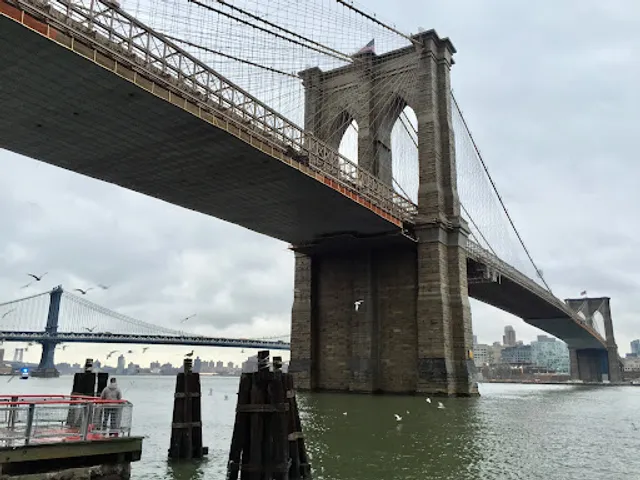
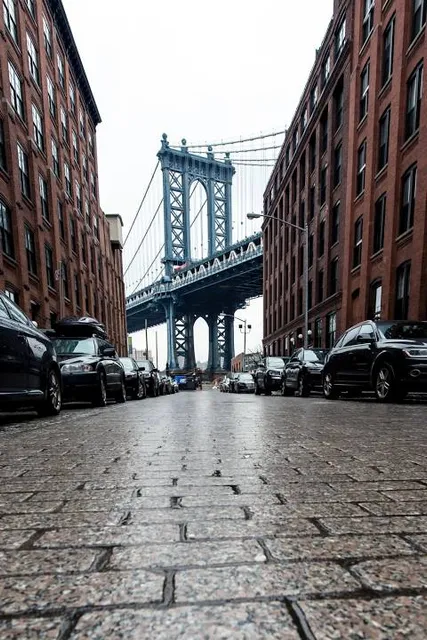
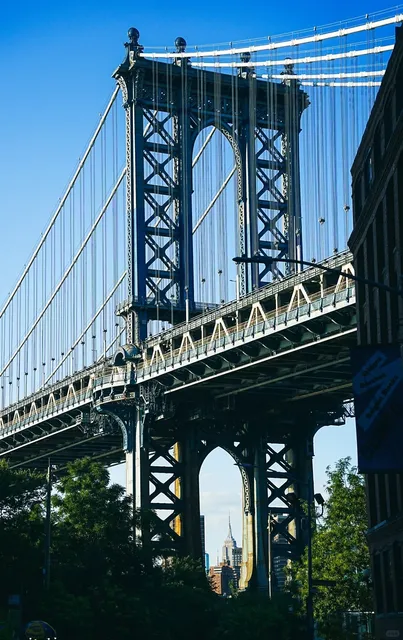
Read moreEager to start my day off in the bustling heart of downtown Manhattan, I embarked on a morning walk that led me underneath the iconic Manhattan Bridge.
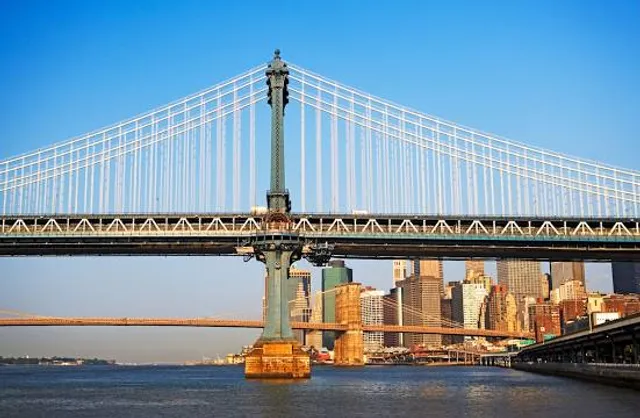
The Manhattan Bridge is a stunning masterpiece of architectural brilliance that stands proudly in the heart of New York City. Built over a century ago, its enduring grace and engineering excellence make it a true symbol of the city's grandeur.
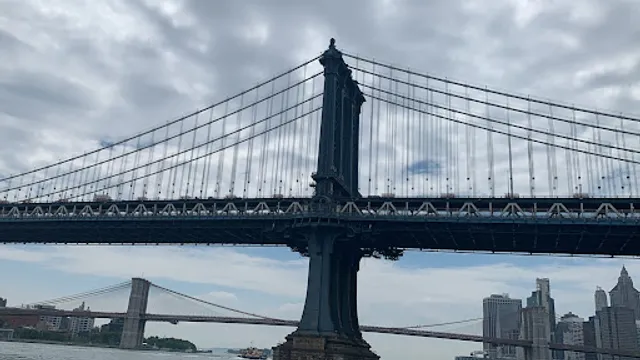
What sets this suspension bridge apart from others is its remarkable "H"-shaped towers that loom above, casting an enchanting silhouette against the city skyline. The sight of the Manhattan Bridge evokes a sense of awe and wonder, it's as if you're stepping into a living art exhibit.
But the Manhattan Bridge isn't just about its aesthetic appeal. It seamlessly merges form and function, serving as a vital transportation artery for both vehicular and subway traffic. Its design showcases the perfect balance between elegance and purpose, a testament to the ingenuity of its creators.
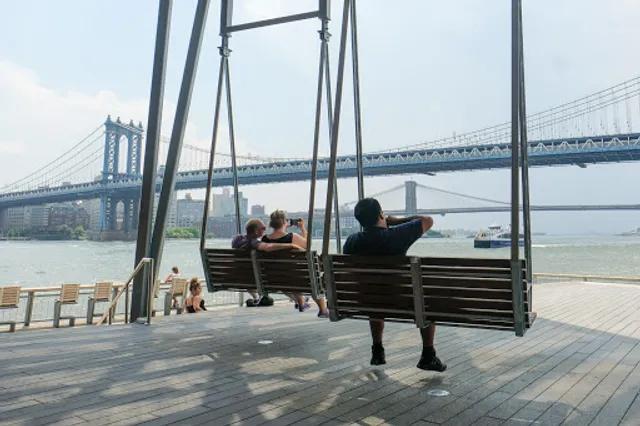
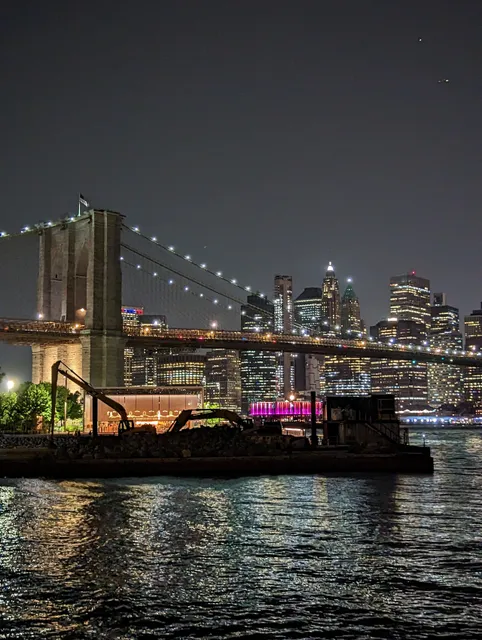
However, it's not only the commuters who benefit from this majestic structure. The pedestrian walkway provides a unique opportunity for visitors to experience panoramic views of the bustling urban landscape. Strolling along, you can marvel at the city lights, the iconic skyscrapers, and the breathtaking river views that unfold before your eyes.
Even if you can't physically be there, Google Maps offers an opportunity to embark on a virtual tour of the Manhattan Bridge. Explore every intricate detail of this captivating landmark and indulge in its rich history, truly bringing the essence of the bridge to life.
The Manhattan Bridge serves as a gateway between boroughs, connecting communities and fostering a sense of unity. It encapsulates the vibrant energy of New York City, a dynamic and diverse metropolis bustling with life. Its timeless allure will leave an indelible mark on your memory, reminding you of the remarkable wonders this city holds.
The Manhattan Bridge is a must-see for locals and tourists alike. Its architectural beauty, functional significance, and panoramic views make it an absolute gem. Immerse yourself in the splendor of this historic landmark and let it take you on a captivating journey through the heart of...
Read moreIt's an ok Bridge but after walking over Brooklyn Bridge, Manhattan Bridge feels so-so.
The Manhattan Bridge is a suspension bridge that crosses the East River in New York City, connecting Lower Manhattan at Canal Street with Downtown Brooklyn at the Flatbush Avenue Extension. Designed by Leon Moisseiff, the bridge has a total length of 6,855 ft (2,089 m). The bridge is one of four vehicular bridges directly connecting Manhattan Island and Long Island; the nearby Brooklyn Bridge is just slightly farther west, while the Queensboro and Williamsburg bridges are to the north.
The bridge was proposed in 1898 and was originally called "Bridge No. 3" before being renamed the Manhattan Bridge in 1902. Foundations for the bridge's suspension towers were completed in 1904, followed by the anchorages in 1907 and the towers in 1908. The Manhattan Bridge opened to traffic on December 31, 1909, and began carrying streetcars in 1912 and New York City Subway trains in 1915. The eastern upper-deck roadway was installed in 1922. After streetcars stopped running in 1929, the western upper roadway was finished two years later. The uneven weight of subway trains crossing the Manhattan Bridge caused it to tilt to one side, necessitating an extensive reconstruction between 1982 and 2004.
The Manhattan Bridge was the first suspension bridge to use a Warren truss in its design. It has a main span of 1,480 ft (451 m) between two 350-foot (110 m) suspension towers. The deck carries seven vehicular lanes, four on an upper level and three on a lower level, as well as four subway tracks, two each flanking the lower-level roadway. The span is carried by four main cables, which travel between masonry anchorages at either side of the bridge, and 1,400 vertical suspender cables. Carrère and Hastings designed ornamental plazas at both ends of the bridge, including an arch and colonnade in Manhattan that is a New York City designated landmark. The bridge's use of light trusses influenced the design of other long suspension bridges in the early...
Read more