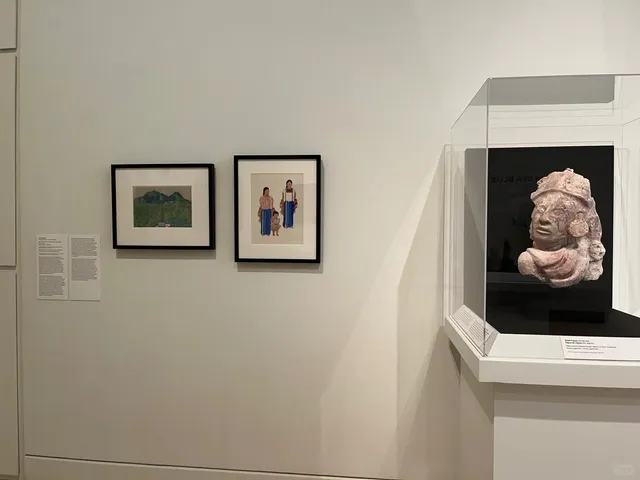
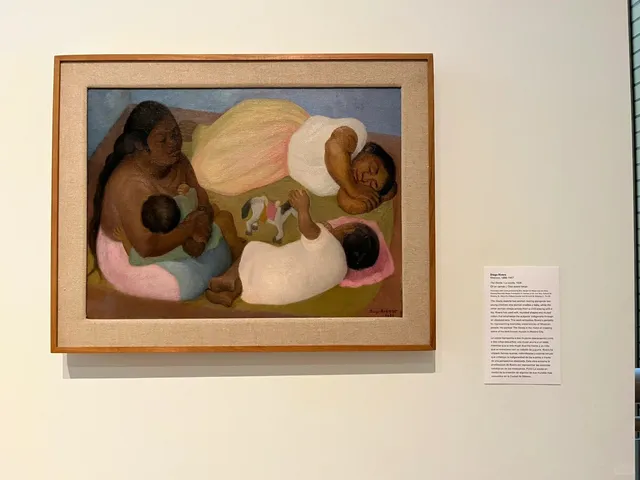
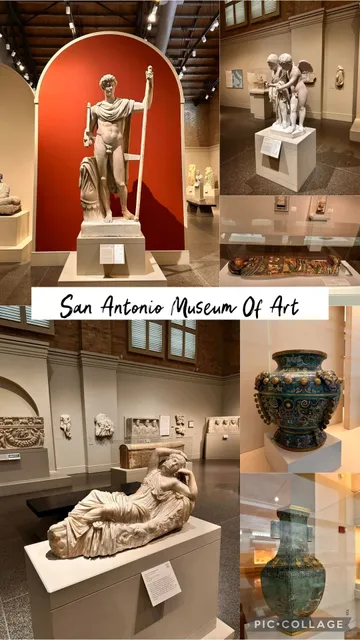
The West Tower is a great experience and the Sky bridge is a hidden gem. Unfortunately it falls so flat past a certain point in the East Tower that it destroys the experience.
The Ancient Egyptian section is 5/5 and never gets old.
The Greek section is great if it's your first time. Personally I felt it was lacking though since the Egyptian section bleeds into it and it used to be more fleshed out. Now it's mainly fragmentary vases.
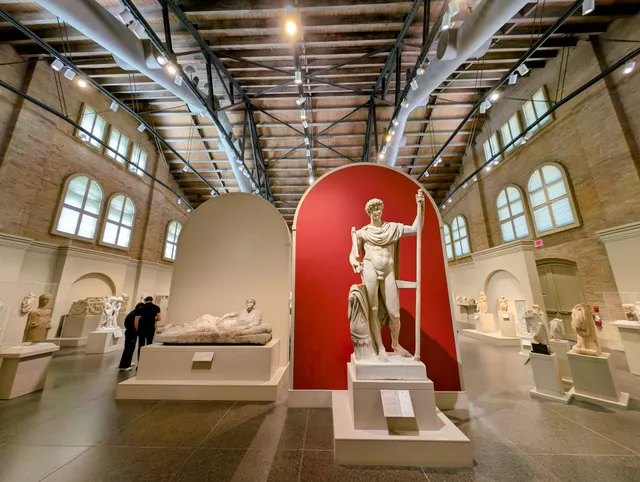
The Roman exhibition was closed for years and I never got to see it on my first or second time here but now I finally did. I guess it's been curated by a Mark Antony fanboy because once more we see Egypt all over the place. And while the Egyptian exhibit is full of things perfectly preserved the Roman section is largely bland, fragmentary and repetitive.
The biggest disservice to the Greco-Roman exhibit is once again that the curator obviously sees the floor as the Egyptology section and not the Classical World section. This can be seen in the amount of funeral art and tomb reliefs that litter it. While most of Egyptian culture and art and the entire religion itself revolved around the afterlife this is not true for the Greco Roman world. Apparently a director misunderstood the mission statement of the floor (Classical World Art) and deduced it was a Egyptological Funeral Art floor. Because that's basically what it is.
The Southern and Far Eastern Asian art sections are pretty good but it excels once more at the Oceanic art section.
The European section used to be better but it's not the same anymore. There used to be classical music playing at all times. And considering it's largely a Renaissance painting exhibition followed by neo classical ceramics and luxury goods from the great empires it really immersed you in the experience. Now? That experience is gone.
Below this it just falls apart completely.
The "Texan Art" floor resembles an estate sale and is literally just furniture that doesn't even look special but is a few decades old.
The contemporary art section looks like a tax write off money laundering scheme and resembles a meme mocking the art industry more than anything else.
You will then turn the corner and be greeted with the sight of a giant carved wooden butt&testes jutting out of the ground. I snapped a photo of it declared it for what it obviously is -a triple asterisk- and sent it to my group chat informing them that that is what the contemporary art section is. With thundering guffaws they agreed.
I'm not sure if I can share photos of that section in the review but I am sure that I cant show photos of the only hyper realistic paintings to be found in the modern section. Which are of morbidly obese nude females.
After walking out the back door I was greeted with the only Texan art to be found which is the old Lone Star Brewery Stone Relief. Turning the corner I saw an amazing courtyard flanked by the river and a magnificent and giant Oak tree. Only this was ruined by yet another example of lazy "modern art"
It's free on certain days and for college students always. The Egyptian and Oceanic sections and the skybridge are amazing experiences and must sees but everything else is okay. The Eastern Tower is such a monumental disappointment however that it just leaves me feeling sick and honestly ruins the whole experience. I met 3 other people who felt the exact same way outside the gift shop.
If you like oil paintings (and bronze sculpture) you'll do well to visit the McNay. Pre Colombian America? The Witte.
And the reports of the guards being busybodies is true. They obviously get in trouble if they stand still because they waddle around aimlessly but on occasion they will target spot some random poor soul and follow them around to maintain the appearance of guarding.
This is cheap, imposing and a nuisance. I totally get why some people will leave after feeling harassed. I saw the guards stalking a single father around and giving radio commentary to each other on what his kid was currently doing at the moment. He was following his dad...
Read moreWhile San Antonio may conjure visions of the Alamo and festive River Walks, its Museum of Art stands as the city's most intoxicating cultural conversion. The former Lone Star Brewery, with its commanding crenelated towers and buff brick façade, now serves up heady collections spanning millennia instead of lagers and ales. Who knew beer fermentation tanks could so brilliantly ferment cultural appreciation?
The 1981 transformation by Cambridge Seven Associates might deserve its own exhibition label. The brewery's soaring spaces and industrial bones remain gloriously intact, creating galleries where the roughness of manufacturing meets the refinement of curated art. Light streams through arched windows that once illuminated brewing kettles, now casting gentle beams onto ancient artifacts and contemporary canvases alike.
Those cavernous volumes prove particularly sublime in the Ancient Mediterranean wing, where classical marbles strike dramatic poses against deep crimson backdrops. A monumental statue surveying its domain might have visitors wondering if the figure approves of its second life in a brewery. The space breathes with historical gravitas, allowing these millennia old treasures room for their stories to unfold without whispering in visitors' ears.
Venture into the contemporary galleries and encounter James Surls' "Dragon Lady" (1975), a kinetic wooden explosion resembling something between a sea urchin and a cosmic event. This Texan maestro of wood creates organic forms that seem to defy their material, the pinewood spikes radiating outward with such energy they might continue growing while no one is looking.
The museum's Latin American collection demonstrates curatorial vision beyond the expected. Ángel Rodríguez Díaz's recently reunited "Goddess Triptych" celebrates bodies typically marginalized in Western art traditions with baroque vigor and unapologetic presence. The paintings have inspired dance performances in collaboration with local companies, proving that even static canvases can set bodies in motion and ideas awhirl.
Architectural surprises await around many corners, none more enchanting than Dale Chihuly's "Persian Ceiling" (2003). This riot of glass forms transforms an otherwise prosaic passage into a kaleidoscopic underwater fantasy. Standing beneath it feels like discovering an exotic coral reef in what should be an air shaft, the translucent colors shifting with each step and glance upward.
The outdoor sculpture garden provides Texas sunshine its due opportunity to play artistic collaborator. Here, the former brewery's industrial campus atmosphere persists, with contemporary sculptures claiming territory amid drought resistant plantings. David Deming's lowly "Colorado Tripod" (1976) stands like an abstract sentinel, its weathered patina a testament to the dialogue between art and elements.
Recent acquisitions reveal an institution with an acquisitive appetite and discriminating taste. In 2023 alone, SAMA welcomed 325 new works to its already substantial family of nearly 30,000 objects. Particularly notable are pre Columbian pieces from the Oppenheimer collection featuring Aztec, Maya, and Olmec artifacts that create conversations across centuries with contemporary works by Latino artists.
What lingers after visiting isn't just the memory of individual masterpieces but the brilliant alchemy of the place itself. Few cultural institutions have so successfully transmuted industrial function into artistic form without sacrificing either authenticity or accessibility. In SAMA's galleries, fermentation tanks have given way to contemplation spaces, creating a cultural complex where the city's industrial heritage and artistic ambitions coexist in spirited harmony.
The museum proves definitively that the most intoxicating brew created in this historic complex isn't beer at all, but rather the potent mixture of preservation, innovation, and cultural celebration that continues to ferment within its...
Read moreI visited the Age of Armor exhibit at the museum and it was generally pretty lovely.
When I got there, it was free for all San Antonio residents, and I simply needed to give my zip code to the desk attendant. I asked if I would still have been allowed to visit the special exhibit, and I was allowed.
The exhibit had been set in a space which I had previously seen one called Roman Landscapes - a quaint, circular area able to accommodate various pieces such as those needing to be mounted to the wall, or situated upright such as with the suits of armor.
Besides the comparison to modern-day superhero designs which I felt was a bit forced for the exhibit, I enjoyed myself despite the fact that I was having a sort of serious conversation with my mom at the time over the phone.
She was subsequently telling me about two closely-timed deaths in our semi-immediate family, both of which were, in equal measure, sudden and shocking.
This, while looking upon the suits of armor recreated faithfully was a shocking juxtaposition, and there were no buzzing groups nor tours about me drowning out any noise, so I was afforded a special clarity of focus. I would recall the experience as ‘transcendental’ for what it was.
In the lobby, the people beginning to gather and even explore the other exhibits (like the Egyptian right to the left of the front entrance) seemed of a quality stock, that, of all places, on a Sunday morning near downtown San Antonio, this was the place these people had wanted to be - saturating themselves in the distance cultures of the past from different parts across the globe and across time.
I visited the other sections: the American room of paintings, the Hispanic arts sections, and even a sort of obscene, maybe experimental room that dedicated itself entirely to the display of large rubenesque-like paintings of nude African women. Surely some experimentation in the modern arts, I felt a drowning of the cultural depths from this particular showing, and so I did not stay - I suppose SAMA should, arguably allow for new trends and new forms of experimentation. That will only contrast with the peculiar care and quality of those relics from the past - the display of something beautiful against something so wretched and deliberately odious to look at. Though I hope they are not...
Read more