⚠️ Worth visiting, but prepare for extreme crowds, long waits, and mixed organization.
So, about the Vatican Museum – my feelings are a bit double-sided. On one hand, it’s definitely worth it, on the other, there are some serious downsides.
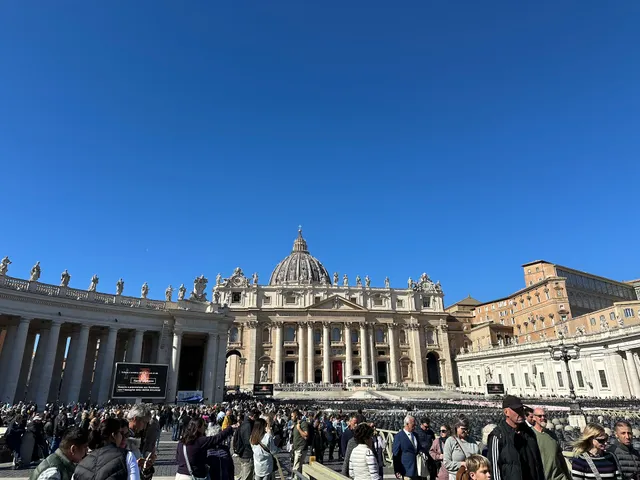
Tickets & Entry: As with all the big spots in Rome: pre-book your tickets, and the earlier the better. We booked for 10:00, arrived 10 minutes early, but they don’t let you in before your slot – had to step aside and wait. Line for pre-booked tickets moved quite fast (10 minutes or so), but for those without tickets it already looked like 30+ minutes. When we left later, the line was absolutely insane – really, don’t risk it without pre-booking.
Vatican Gardens Tour: We had also booked the bus trip through the gardens before entering the museum itself. That part was well organized: after checking in at the counter, we were guided to the bus, had an audio guide, and did the round. You can’t leave the bus, but honestly, I was happy to just sit and relax after so much walking in Rome. Interesting, educational, not mind-blowing, but I’d recommend it.
Museum & Audio Guide: Once inside the museum, we picked up the audio guide (8€). It’s useful, since there’s very little written explanation. Either that or take a guided tour. Without anything, I wouldn’t recommend it, unless you really just want to walk through. (I recommend cable headphones for the device if you have them)
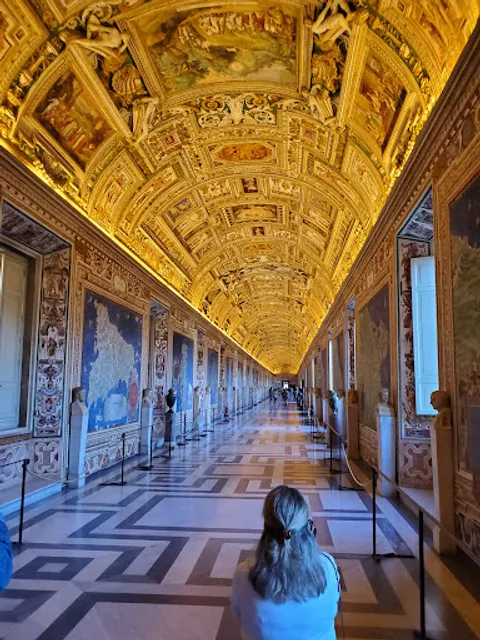
The Crowds (biggest downside): The museum is huge, and you’ll spend at least 2 hours – but the main issue is the insane overcrowding. It honestly felt partially like Disneyland with free entry. Tickets are clearly oversold. At times, the crowd just pushes you forward; in other spots, everything gets stuck and you stand there waiting. People bumping into you, pushing through, guided groups blocking the way. For anyone sensitive to crowds or less physically fit, this could be a nightmare. Personally, it was exhausting, not really enjoyable.
Climate & Comfort: Add to that the climate control – or lack of it. Some rooms super hot, some cooled, some just random fans, some open windows. You go from sweating to relief to sweating again. If you’re sensitive, prepare to leave with a sneeze. Restaurants and restrooms inside are okay, but nothing special compared to other museums in big cities.
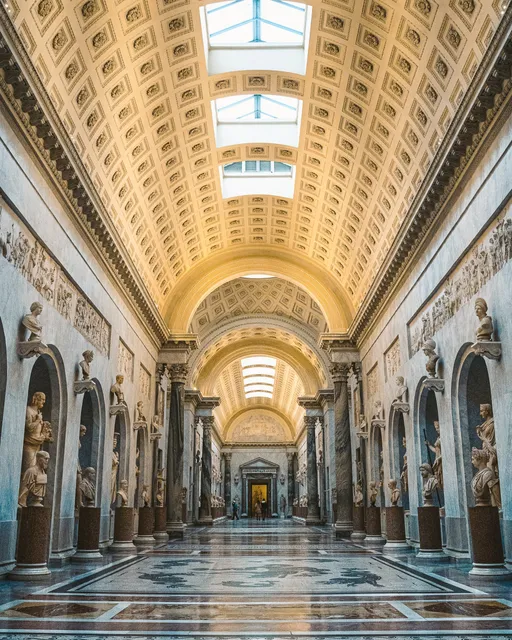
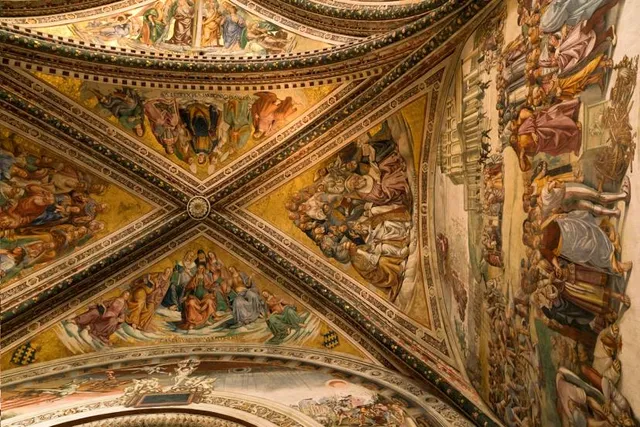
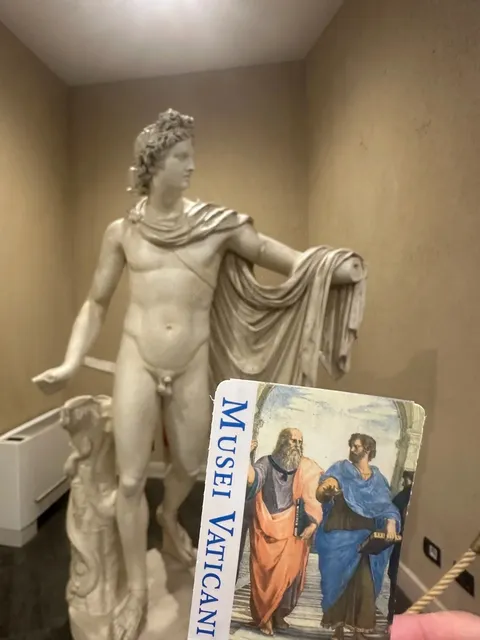
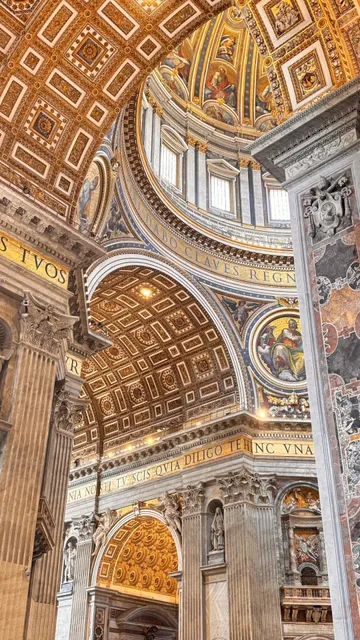
Exhibition & Atmosphere: Content-wise, it’s very rich: Roman artifacts, Egyptian, African, paintings, statues, stunning ceilings, amazing rooms – you see a lot. But at the same time, it’s also kind of a big display of the former power of the Church, which makes you reflect. Souvenir shops were another surprise: there are many, selling everything from cups to jigsaw puzzles, almost a Vatican “sellout.”
Staff: I’d read reviews saying staff were rude – I can’t confirm that. They were doing their job. If people ignore “no photo” signs or block the way, of course staff will push or shout sometimes. From what I saw, it was always justified and professional.
Summary: So, my conclusion: worth seeing once in your life, but be aware of what you’re going into – extreme mass tourism, long waits, overcrowding, and mixed organization. Definitely pre-book, get the audio guide or a tour, and prepare for an exhausting but unique experience. For me it was a 4...
Read moreThe Vatican Museums, located within Vatican City, are among the most extraordinary and vast cultural institutions in the world, offering an unparalleled journey through centuries of art, history, and religious heritage. Established in the early 16th century by Pope Julius II, these museums house an immense and diverse collection amassed by the Roman Catholic Church over hundreds of years, making it a must-visit destination for art lovers, historians, and travelers alike.
Visitors enter a sprawling complex of galleries, chapels, and courtyards, each rich with masterpieces spanning from classical antiquity to the Renaissance and beyond. The Museums’ layout is extensive, featuring famous sections such as the Gregorian Egyptian and Etruscan Museums, the Raphael Rooms, and, of course, the Sistine Chapel — the jewel in the crown of the Vatican collections.
The Sistine Chapel itself is renowned worldwide for Michelangelo’s breathtaking ceiling frescoes, painted between 1508 and 1512, depicting scenes from Genesis, and The Last Judgment on the altar wall, completed later in the 1530s. These works are not only remarkable for their artistic mastery but also for their profound religious symbolism and cultural significance, drawing millions of visitors each year eager to witness this iconic masterpiece in person.
Beyond the Sistine Chapel, the Raphael Rooms offer a stunning display of Renaissance frescoes by Raphael and his workshop, portraying intricate biblical scenes and the lives of popes, blending theological insight with exceptional artistry. The galleries also include vast collections of sculptures, tapestries, maps, and religious artifacts, such as the Laocoön and His Sons sculpture, a quintessential example of Hellenistic art, and numerous Renaissance paintings by masters like Caravaggio and Leonardo da Vinci.
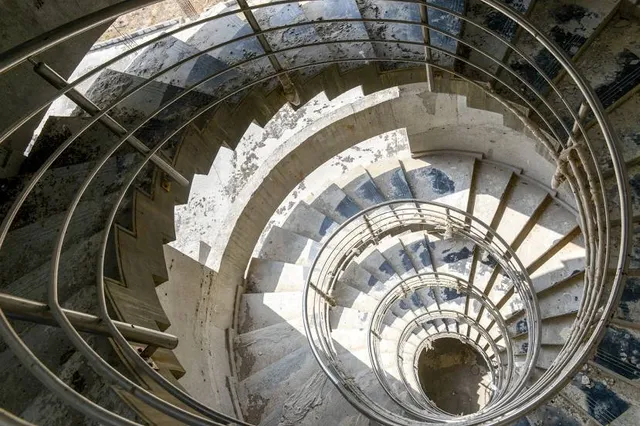
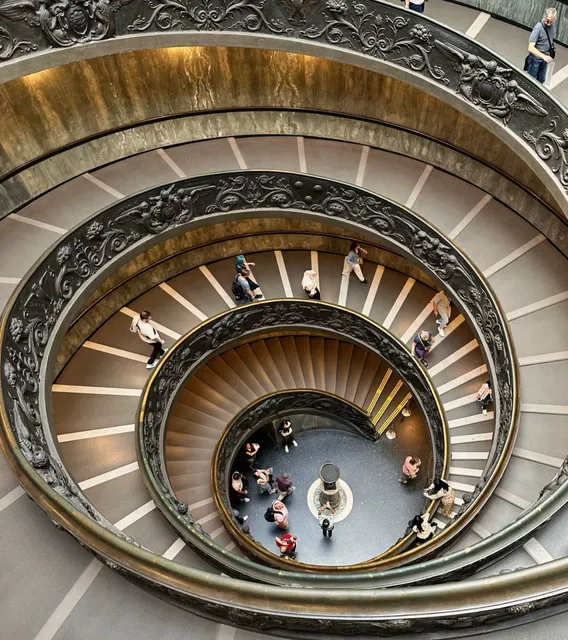
The museums’ architecture itself is an attraction — a harmonious blend of classical, baroque, and modern elements, featuring grand staircases, ornate ceilings, and serene courtyards that provide natural light and space to reflect on the artworks. The Pinecone Courtyard (Cortile della Pigna) is especially beloved for its peaceful ambiance and the giant bronze pinecone sculpture that gives it its name.
For photographers and art enthusiasts, the Vatican Museums present a unique challenge and opportunity. While photography is generally permitted in many areas without flash, the Sistine Chapel prohibits any photography to preserve the delicate frescoes. Nonetheless, the museum’s diverse collections and beautiful spaces offer endless inspiration for capturing the interplay of light, detail, and historic grandeur.
Navigating the Vatican Museums can be overwhelming due to their size and popularity, so guided tours or audio guides are highly recommended to fully appreciate the rich history and stories behind the masterpieces. The museums also host temporary exhibitions and educational programs, continually enriching the visitor experience.
In sum, the Vatican Museums are not merely a repository of art but a profound testament to human creativity, faith, and history. Visiting them provides a once-in-a-lifetime chance to walk through the corridors where art and spirituality converge, making it an essential stop for anyone...
Read moreThe museum has incredible collection of art, no doubts here. But unfortunately the visit process is managed extremely poorly. There is 30C-35C inside, no a/c in 99% of the area. I saw several people getting sick because of overheating. The layout they came with is probably based of labyrinth of minotaur. The put the ropes the way you have to go through all the hyperlong overheated maze without posibility to take shortcut to what you prefer to see more. The maps provided are useless (both paper and online) as the made more like a leaflet showing museum rooms in chaotic sequence. If you use it, you will get lost even faster. Sestine Chappel is an amazine masterpiece, but unfortunately it is agressively used by museum as a marketing product. You will see at each pointer that there are just 2 rooms more to the chappel. Then 2 more, and more, and more. They put it at the end of each pointer, like a carrot for donkey to move forward with a maze of heat. It is located in the end, the last, after hours of wandering, number of stairs up and down. Then you get to the chappel, where you are either forced to move further to the exit or to stand sticked to the crowd, as there is no place to walk and look, everyone is pressed together like sardines in a can. And you can't film and take pics there so other people will go to the maze and marketing will roll. There is no accessibility if you are a parent with a stroller. Some staff gives you shortcut, but mostly you follow the maze and carry your stroller with stairs in 30+ heat. After you got to the exhibition rooms there are no elevators or escalators or they are not accompanied with staff, so you can't use it. Accessibility map they advertise is a lie. Now here are the tips: If you can't hold on with such heat, make a personal must see list must-see. Ask staff along the way how to get to your next point or take an audioguide, looks like it goes in a correct sequence. If you see another room with people behind the rope and sign/pointer to your point of interest, ask to let you through as you are exhausted and overheated. If there is no staff, just pass the rope (if there are other tourists behind it of course). If you took a stroller, you have even more ground to do that. Also insist to a staff member to provide you an elevator to the floor when you are near egypt/hercules sections. To get to Sestine Chappel immediately, from main itersection where you have greek section to your right, pinecone yard to your left, follow to the pine yard and turn right last moment before the door to the yeard. There you will see a back side of stairs, ropes, a staff member and a long corridor behind. Do what is explained at advise 3 above, insist to pass, it is a direct short corridor to the chappel where all the wheelchair and eldery people are led to.
Again, the museum has really unique and beautiful collection, everyone will find something to be amazed, but it is managed with disrespect to the guests, although most of the staff along the maze is friendly...
Read more