Millions of years ago, a celestial marble slab slumbered deep within the quarries of Carrara, Italy. Its destiny awaited, hidden within its intrinsic beauty.
Then, like a divine awakening, #Michelangelo discovered the marble block. With passion and artistry, he chiseled away, transforming the stone into a masterpiece: the #Pieta.
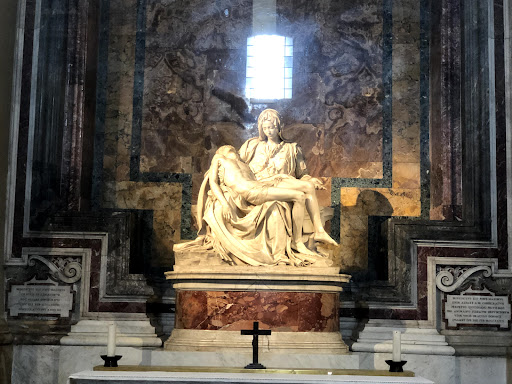
Michelangelo broke tradition by signing this work of art, a testament to its unparalleled emotional and anatomical detail. The Pieta depicts Mary cradling the lifeless body of Jesus, her #grief palpable in every curve and line.
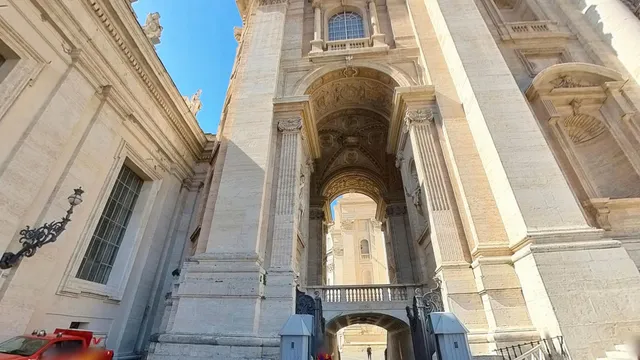
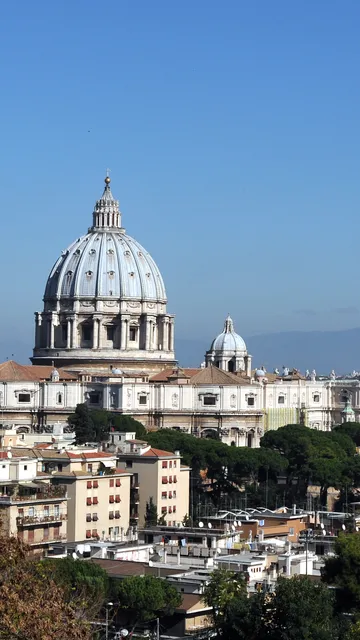
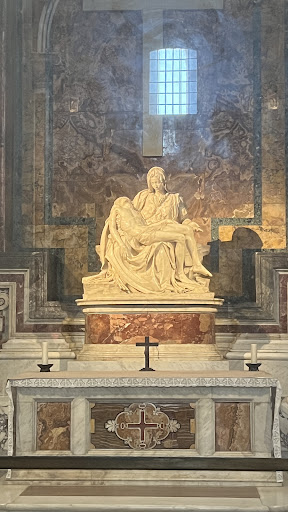
For centuries, the Pieta has captivated the hearts and souls of millions, serving as an epitome of divine love and human suffering. It has found its permanent home in St. Peter's Basilica, Vatican City, where it continues to inspire and resonate with visitors from all over the world.
On May 21, 1972, the Pieta's journey was marred by a senseless act of #vandalism. A man named Laszlo Toth, proclaiming himself to be Jesus Christ, defaced the sculpture with a hammer. Mary's arm and face were damaged, but the Pieta underwent meticulous restoration and now stands as a resilient symbol of eternal beauty and divine grace.
Its scars add a new layer to its rich history, reminding us that even the most exquisite works of art can be wounded, but they can also heal. The Pieta transcends time, continuing to draw people into a confluence of art, spirituality, and human resilience.
When I gaze upon the Pieta, I feel a deep sense of awe and wonder. I am amazed by Michelangelo's #artistry and #skill, and I am moved by the raw emotion that he captured in the marble. The Pieta is a reminder of the power of #art to evoke the deepest human emotions. It is also a reminder of our own resilience in the face...
Read moreMy absolute favorite creation of art from my childhood. And finally I saw it with my own eyes! Of course, it is protected by a special transparent sarcophagus and it is impossible to get close, but my camera has a good optical zoom and I was able to photograph this unsurpassed creation well and I am very pleased with it. La Pietà is a stunning and moving representation of the sorrow and love of Mary for her son Jesus. It is a work of incredible beauty and realism, carved from a single block of marble by Michelangelo when he was only 24 years old. The sculpture captures the moment when Mary receives the lifeless body of Jesus from the cross, and expresses her grief and compassion with grace and dignity. The sculpture is remarkable for its balance, harmony, and proportion. The figures of Mary and Jesus are perfectly aligned in a pyramidal shape, creating a sense of stability and symmetry. The drapery of Mary's dress flows elegantly and naturally, contrasting with the smooth and delicate skin of Jesus. The details of the sculpture are astonishing, such as the veins, muscles, wounds, and hair of Jesus, and the folds, wrinkles, and buttons of Mary's dress. The sculpture also conveys a powerful emotional message, as Mary looks down at her son with a serene and tender expression. She does not show any signs of despair or anger, but rather a calm acceptance of God's will. She holds Jesus gently in her lap, as if he were still a child, and offers him to the viewer as a symbol of sacrifice and salvation. La Pietà is a masterpiece that transcends time and space, and truly touches the hearts and minds of anyone who sees it. It is a testament to...
Read moreLa Pietà von Michelangelo, das weltberühmte Meisterwerk, befindet sich im rechten Seitenschiff des Petersdoms im Vatikan und gehört zu den größten Schätzen der Renaissance. Diese Skulptur, vollendet um das Jahr 1499, ist Michelangelos einzige signierte Arbeit und gilt als eines der vollkommensten Werke der Kunstgeschichte. Schon beim ersten Blick zieht sie in ihren Bann: Die zarte, fast überirdische Darstellung der Jungfrau Maria, die ihren toten Sohn, Jesus Christus, auf dem Schoß hält, strahlt eine ruhige und tiefgründige Trauer aus.
Michelangelo, der erst 24 Jahre alt war, als er die Skulptur anfertigte, schnitzte sie aus einem einzigen Block aus Carrara-Marmor. Die Präzision, mit der er das weiche Fleisch Christi, die feinen Falten des Gewandes Marias und die Details wie Adern und Muskeln ausgearbeitet hat, ist atemberaubend. Die Proportionen sind einzigartig gelöst: Während Maria auf den ersten Blick zierlich und anmutig wirkt, hält sie den erwachsenen Christus mühelos – eine Lösung, die den Schmerz und die Erhabenheit der Szene ohne Einschränkung transportiert.
Was die Pietà besonders macht, ist die kontrastreiche Darstellung von Marias jungem, fast mädchenhaftem Gesicht, das keinen Altersmakel zeigt und dennoch eine tiefe Reife und Stille verkörpert. Michelangelo entschied sich bewusst für eine verjüngte Darstellung Marias, da er meinte, Reinheit und Jungfräulichkeit sollten in ihrer Gestalt symbolisch für die Ewigkeit stehen.
Interessant ist auch die Position der Figuren: Der Körper Christi ist in einer diagonalen Linie angeordnet, was ihn leicht von Marias Körper abhebt und ihm so einen schwebenden, beinahe losgelösten Charakter verleiht. Maria selbst scheint in einer stillen, würdevollen Akzeptanz zu verweilen, fast in einer Gebetshaltung, als halte sie ihren Sohn zum letzten Mal und überlasse ihn schließlich Gott.
Die Signatur Michelangelos auf dem Band, das über Marias Brust verläuft, ist ebenfalls eine Besonderheit, da Michelangelo später bedauerte, dass er überhaupt signiert hatte. Die Geschichte sagt, dass er diese Signatur einfügte, nachdem Gerüchte aufkamen, dass das Werk einem anderen Künstler zugeschrieben wurde. Aus Wut und Stolz gravierte er „MICHAELA[N]GELUS BONAROTUS FLORENT[INUS] FACIEBAT“ (Michelangelo Buonarroti aus Florenz machte dies) in das Werk ein.
Die Pietà von Michelangelo erlitt 1972 einen schweren Schaden, als ein geistesgestörter Mann namens Laszlo Toth sie mit einem Hammer angriff. Der Vorfall ereignete sich am 21. Mai 1972, als Toth, ein ungarisch-australischer Geologe, in die Basilika des Petersdoms eintrat und plötzlich begann, mit einem Hammer auf die Skulptur einzuschlagen. Dabei schrie er „Ich bin Jesus Christus, der von den Toten auferstanden ist!“ und schlug insgesamt 15 Mal zu, bevor er von anwesenden Besuchern überwältigt werden konnte.
Durch den Angriff wurden Marias linker Arm, das Nasenbein und ein Teil des Augenlids schwer beschädigt. Marmorfragmente flogen durch die Luft und wurden von entsetzten Besuchern teilweise eingesammelt. Die Restauratoren mussten daraufhin viele kleine Stücke wieder zusammensetzen, während einige Splitter nie wieder gefunden wurden. Es war eine der ersten Restaurierungen dieser Art und erforderte eine intensive Planung und eine vorsichtige, innovative Herangehensweise.
Seitdem steht die Pietà hinter kugelsicherem Glas, um weitere Angriffe oder Beschädigungen zu verhindern und ihren Zustand langfristig zu sichern. Der Vorfall unterstrich, wie kostbar und zugleich gefährdet bedeutende Kunstwerke sein können, und führte zu verschärften Sicherheitsmaßnahmen für viele Meisterwerke weltweit. La Pietà ist ein Symbol der unerschütterlichen Liebe und der tiefen Trauer und verbindet meisterhaft das Göttliche mit dem Menschlichen. Die ruhige Traurigkeit von Maria und die Sanftheit des toten Christus sind so intensiv dargestellt, dass die Skulptur den Betrachter unwillkürlich in eine stille Ehrfurcht und Bewunderung versetzt.
Stand : 14.08.2018
Leb schnell, stirb jung und hinterlasse eine gut...
Read more