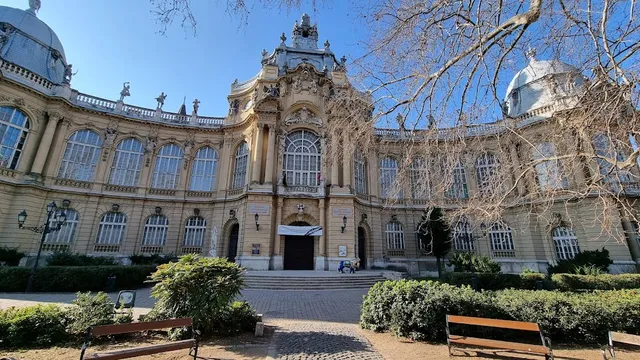
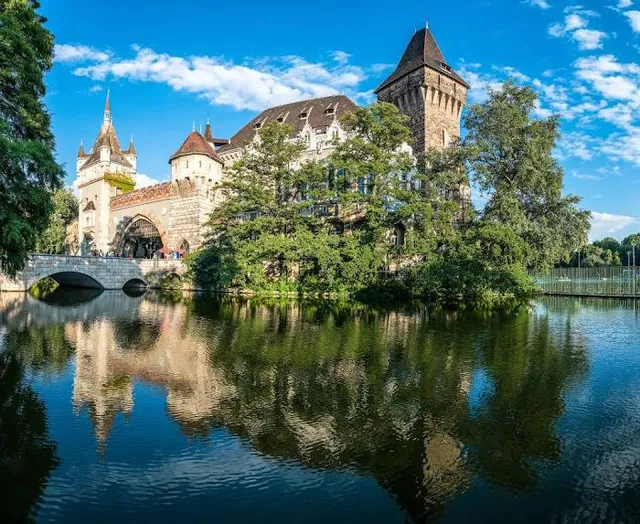
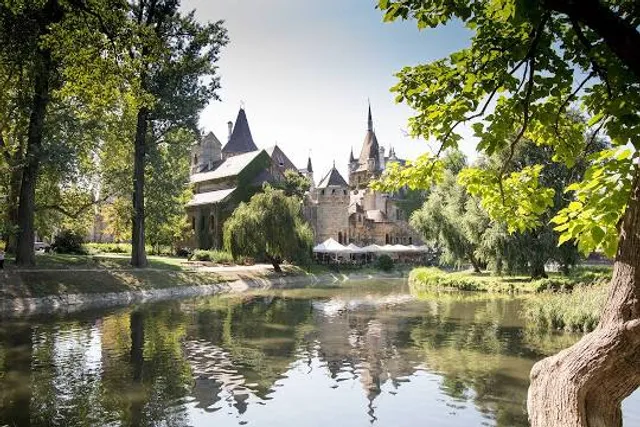
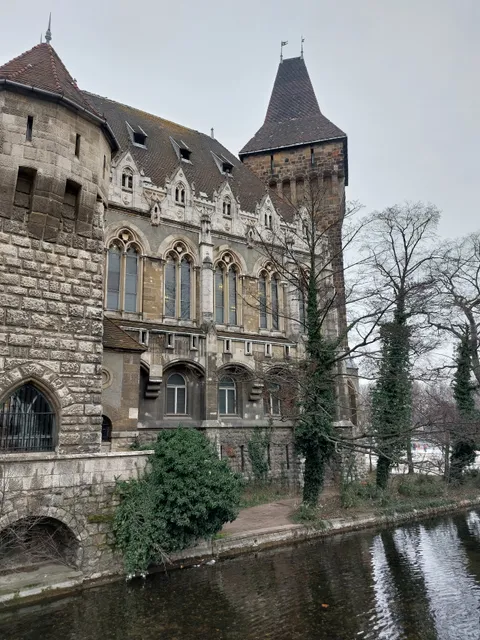
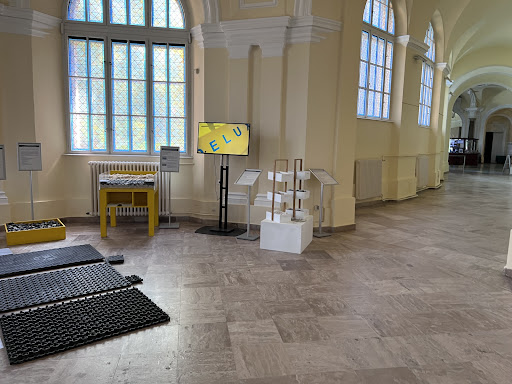
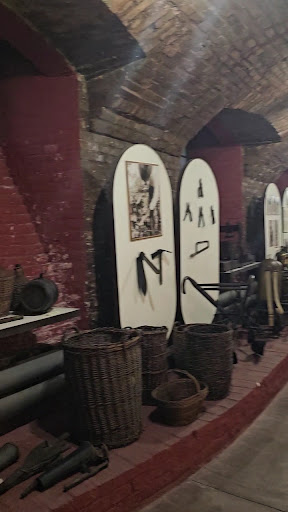
The Vajdahunyad Castle (Hungarian Vajdahunyad vára) is a historicized castle in the city park in the Hungarian capital Budapest. However, it is not quite as historic as it seems. It was built in 1896 as part of the Budapest Millennium Exhibition, initially as a temporary structure, and was not built in its present form until 1901-1907. Since 1907 it has been home to the Hungarian Agricultural Museum. Please do not be surprised, there is a castle in Transylvania known by the same name. It is the family castle of the Hunyadi family, Hunedoara Castle. So it is a reminiscence to Hungary's probably most famous king that the artificial castle in the city forest has got such a famous name. Vajdahunyad Castle is located near Heroes' Square in the centre of the Budapest City Park. The castle is located on the island of Széchenyi-sziget within the artificial lake (Városligeti-tó), which is used as an ice rink in winter, among other things. It is accessible via four bridges. On the occasion of the millennium celebration of the Hungarian land grab under Árpád, the main wing of the medieval castle of Hunedoara (ung. Vajdahunyadi vár) in Transylvania was reconstructed as the central pavilion for the millennium exhibition. The name Vajdahunyad Castle quickly became established for the entire building complex, even though it is a wild mix of different architectural styles and building snippets. You can see parts of Romanesque, Gothic and Renaissance or Baroque buildings from d4m of the whole Hungarian territory. Among the models were the portal of the abbey church of St. George in Ják, the chapel of Csütörtökhely (today Spišský Štvrtok, Slovakia) and the Catherine Gate in Brassó (today Brașov, Romania). Several buildings in Upper Hungary inspired Renaissance and Baroque elements. During the Second World War the building was hit by six bombs in 1944/45, damaging the Renaissance and Baroque wings. The restoration was completed in 1948. During the battles of the Hungarian National Uprising the castle suffered damage again and was only completely rebuilt between 1978 and 1985. Since 1991 Vajdahunyad Castle has been a protected monument. Today Vajdahunyad Castle is considered an important representative of Hungarian historicism. In the building complex there are numerous architectural styles in a narrow space, from Romanesque, Gothic and Renaissance to Baroque. The Hungarian Agricultural Museum (Magyar Mezőgazdasági Múzeum) occupies the largest part of the building wings to the right of the castle gate. The permanent exhibition consists of nine parts, and there are also changing special exhibitions. It displays farm tools, agricultural machinery and other objects of Hungarian agriculture and forestry, as well as a large selection of animal preparations. In addition, the exhibition gives an overview of traditional fishing, viticulture and animal husbandry and the Hungarian flora. The neo-Romanesque chapel, which is modelled on the abbey church of Ják, is a magnet for bridal couples and visitors alike. From the tower of the Castle Gate and the Apostle's Tower (modelled on the clock tower of Sighișoara/Segesvár) there is a beautiful view over the town woods.
Die Burg Vajdahunyad (ungarisch Vajdahunyad vára) ist eine historisierte Burg im Stadtwäldchen in der ungarischen Hauptstadt Budapest. Allerdings nicht ganz so historisch wie sie den Anschein macht. Sie entstand 1896 im Rahmen der Budapester Millenniumsausstellung zunächst als temporärer Bau und wurde erst von 1901 bis 1907 in ihrer heutigen Form erbaut. Seit 1907 beherbergt sie das Ungarische Landwirtschaftsmuseum. Bitte nicht wundern, es gibt eine Burg in Siebenbürgen, die unter dem gleichen Namen bekannt ist. Es handelt sich um die Stammburg der Familie Hunyadi, Burg Hunedoara. Es ist also eine Reminiszenz an Ungarns wohl bekanntesten König, dass die künstliche Burg im Stadtwäldchen einen so bekannten Namen erhalten hat.
Die Burg Vajdahunyad befindet sich in der Nähe des Heldenplatzes im Zentrum des Budapester Stadtwäldchens. Die Burg liegt auf der Insel Széchenyi-sziget...
Read moreThis is a truly unique museum in a beautiful location – we visited as a family and had a wonderful time! Vajdahunyad Castle is stunning and worth seeing on its own, but many tourists don’t realize that it houses a museum of agriculture, hunting, forestry, and viticulture. It’s good to know what to expect beforehand – those looking for medieval knights and weapons might be disappointed. But if you come for the right reasons, it’s a memorable experience.
The building is gorgeous, both inside and out – clean, well-maintained, and impressive. Among the permanent exhibitions, the hunting section stood out with its fascinating trophies, a massive brown bear, and the famous Danube fish – it made the same impact on me now as it did when I visited as a child. It’s great to see that kids today enjoy it just as much. There are interactive elements too, like a cow that children can “milk” into a bucket – they loved it. The tower visit requires a separate guided tour and ticket, but it’s very popular.
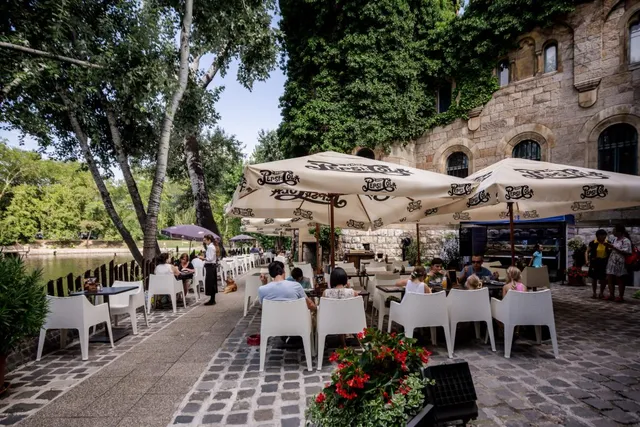
The staff were polite and helpful, and the whole visit was well-organized, including ticketing and information. Once a month, admission is free, which is fantastic – and it’s not even crowded on those days. The café was a pleasant surprise: quiet, cozy, with fresh and tasty sandwiches. Restrooms are clean and bright, and there’s a cloakroom and luggage storage available.
Highly recommended, especially for families with children. It’s a place worth returning to every year – and we definitely will, even just...
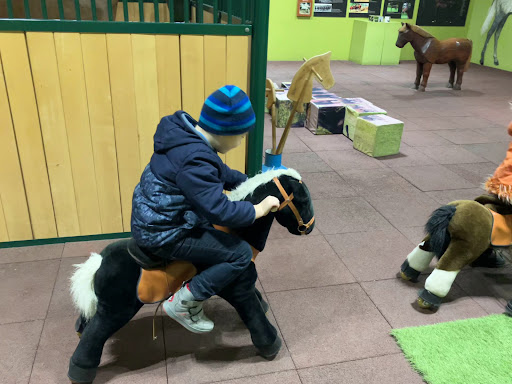
Read moreA budapesti Vajdahunyadvárban (Városliget) lévő Magyar Mezőgazdasági Múzeum és Könyvtár Európa szerte egyedülálló módon mutatja be a mezőgazdaság történetét. Kilenc állandó és számtalan időszaki kiállítása van, negyven gyűjteményen keresztül mutatja be a hazai mezőgazdaság, erdészet, vadászat, halászat, a szőlő és a bor, a domesztikáció, az erdők és növények, a lótartás fejlődését, történetét. Időrendbe állítva láthatók a látogatók a világrekordnak számító szarvas-, dámvad-, őz- és vaddisznótrófeák. A Magyar Mezőgazdasági Múzeum és Könyvtár a több mint száz éves fennállása alatt túlélte a történelmi viharokat, a világháborúk alatt elszenvedett bombatalálatokat, és ma is elhivatottan őrzi és reprezentálja a mezőgazdaság értékeit, kincseit. Mi a gyerekekkel az ingyenes hétvégi napon mentünk. Sajnos a hátizsák lerakással gond adódott rögtön az elején, ugyanis a szekrényt, amibe beletettem, másik szekrény kulcsa kinyitotta. Furcsa volt, ahogy bezáráskor körbefordult a zár s így kipróbáltam. Szóvá tettem, a hölgy mondta, hogy igen, ez már volt ma probléma, de a biztonsági őr megnyugtatott, hogy figyelnek, azért van ott. Hát nem voltam nyugodt, de ott hagytam a táskámat egy másik szekrényben. Mi a tornyokba nem mentünk fel, de minden mást végigjártunk a 3 gyerekkel meg a férjemmel. Most halászati kiállítás van, mely bemutatja azt a honfoglalástól a napjainkig tartó folyamatot, mely a Kárpát-medence halban gazdag vizeiben játszódott le. A kiállításban régi idők halászati eszközei, írásos és tárgyi emlékek, halászati módszerek és a vízi élővilág látható. Az emeleti lókiállítás tetszett a leginkább a gyerekeknek, mert a hátsó részen lovagolni lehetett játék pónilovakon illetve mindannyian felülhettünk egy nyeregbe is egy fantomlóra. Hazai versenylovak csontvázai is ki vannak állítva sok más érdekesség mellett, mint a lótenyésztés, lovassportok, a huszárságról, a városi tömegközlekedés kezdeteiről, amikor az még lóvontatású járművekkel működött. Megismerkedhetnek a gyerekek a ló testtájaival, a különböző színváltozataival, azzal is, hogy hány részből áll pontosan a lábuk. Választ kaphatnak arra a kérdésre is, hogy mit eszik a ló, vagy miért kell őket patkolni. Kézbe vehetik a lóápolás és az istállótakarítás szerszámait. Az emeleten olyan gyűjteményi anyag látható, amelyeket ritkán állítanak ki eredetiben, részben anyaguk értéke (arany, ezüst, gyöngy) részben óvandó állapotuk miatt. A földszinten balra mezőgazdasági erő- és munkagépgyűjtemény látható, ahol a hölgy nagyon kedves volt, jót beszélgettünk. Maga a Vajdahunyadvár csodás, ám pereg a vakolat sok helyen, egy felújítás ráférne. Rengeteget lehetne írni még, de inkább nézzétek meg! Szívvel ajánlom a kiállítást...
Read more