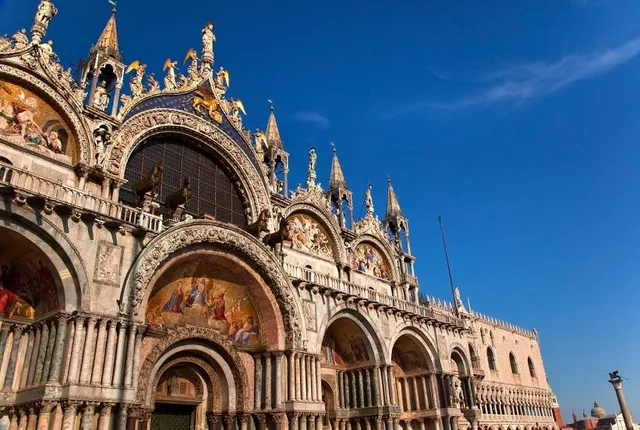
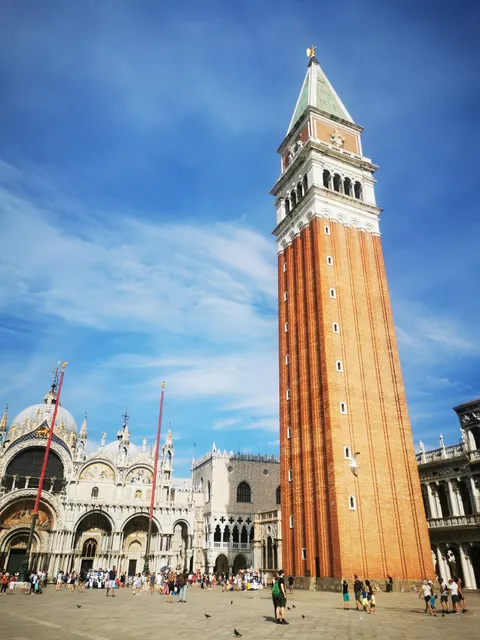
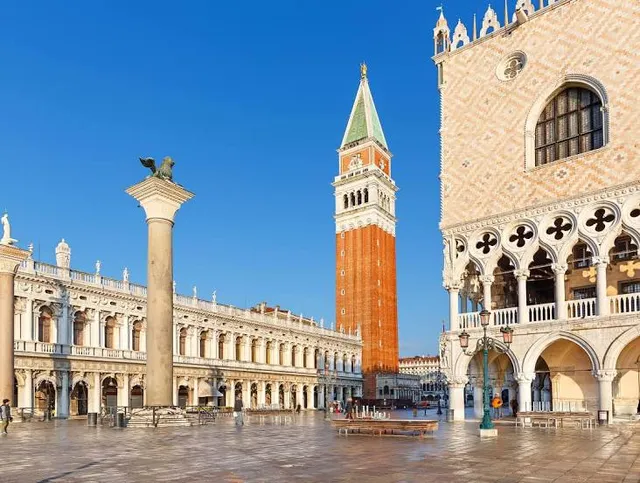
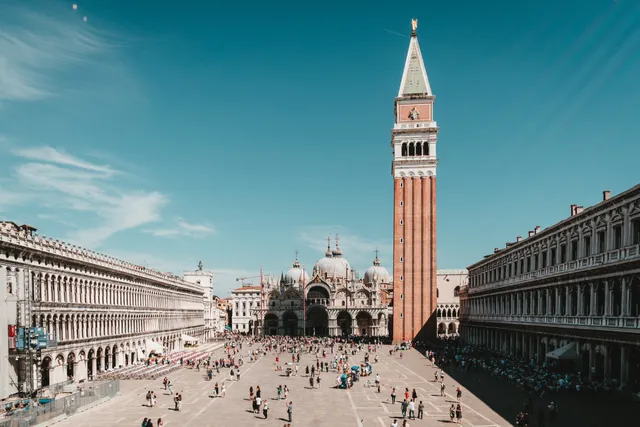
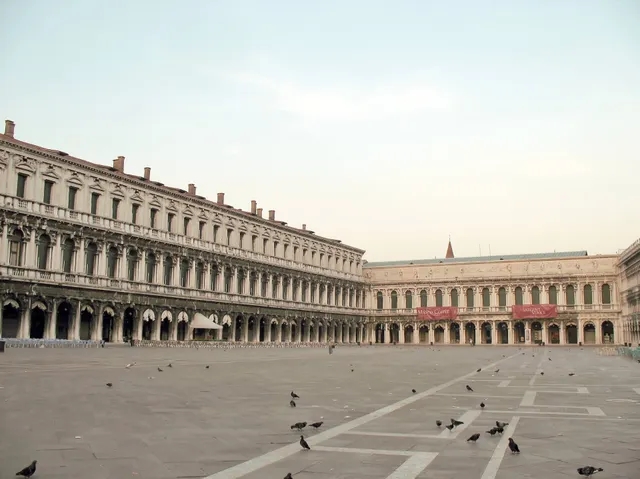
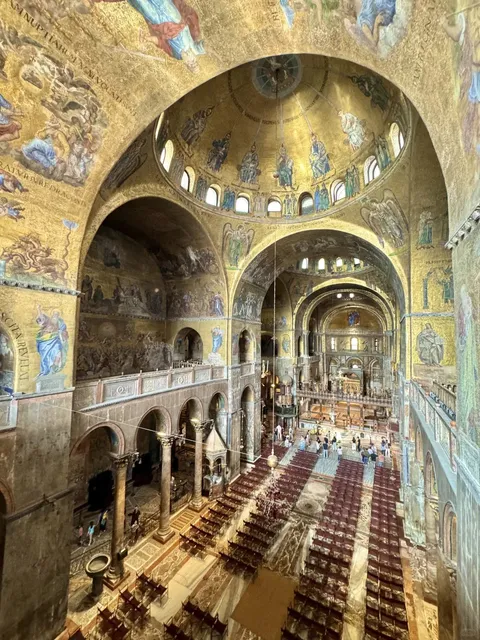
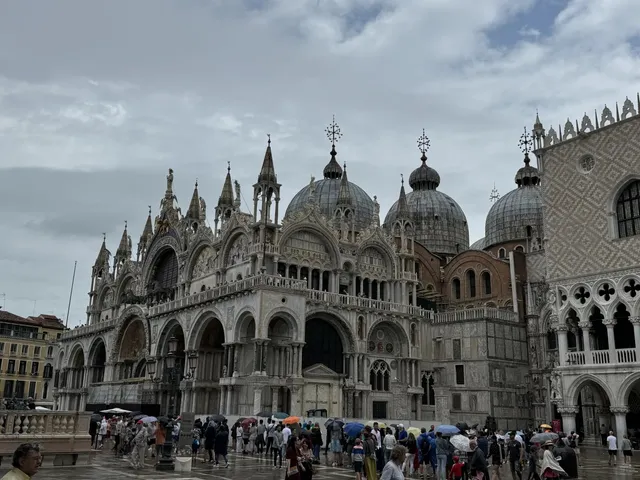
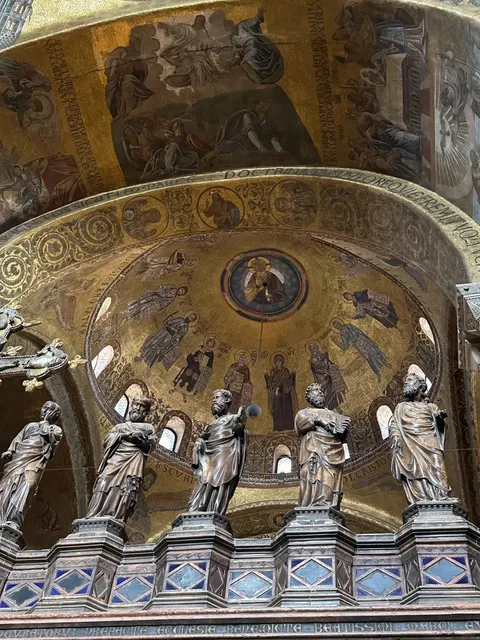
This iconic basilica, the cathedral church of Venice, is a key landmark in the city's history and religious life, and was certainly a central place in Marco Polo's Venice. Here's a description of St. Mark's Basilica, highlighting its significance and any indirect connections to Marco Polo: St. Mark's Basilica: A Golden Symbol of Venice St. Mark's Basilica is one of the most famous and breathtaking churches in the world, located in the Piazza San Marco, the heart of Venetian public and religious life. History and Construction: Its construction began in 828 AD to house the relics of Saint Mark, which were famously smuggled out of Alexandria. While the current structure dates largely from the 11th century, it has been continuously renovated and adorned over the centuries, reflecting Venice's growing wealth and power. It became the city's official cathedral in 1807. Architectural Style: The Basilica is a magnificent example of Italo-Byzantine architecture, showcasing Venice's historical links with the East. It's built in the shape of a Latin cross with five domes, giving it a distinctive and exotic appearance. Much of its marble cladding, friezes, and statues, including the famous four bronze horses (originals now housed inside), were plundered from Constantinople during the Fourth Crusade in 1204, further solidifying its Byzantine influence. "Chiesa d'Oro" (Golden Church): The interior of St. Mark's Basilica is overwhelmingly adorned with over 8,000 square meters of glittering gold mosaics. These mosaics, some dating back to the 13th century (Marco Polo's era), depict scenes from the Old and New Testaments, contributing to its nickname, "Chiesa d'Oro." The main dome, the Ascension Dome, is particularly renowned for its early 13th-century mosaics. Treasures and Relics: The Basilica is a repository of immense treasures. St. Mark's relics are held in the high altar. The Pala d'Oro, an ornate, jeweled altarpiece commissioned as early as 976, is a masterpiece of Byzantine enamel art, lavishly decorated with pearls, emeralds, sapphires, and other precious stones. The Treasury also holds a vast collection of priceless artifacts, many of which were brought back from the looting of Constantinople. Marco Polo Connection (Indirect): While Marco Polo didn't build or directly fund the basilica, it was undoubtedly a central part of his life and the Venice he knew. Historical Context: He lived in Venice during the 13th and early 14th centuries, a time when the Basilica was being extensively embellished with its golden mosaics and treasures, many of which were a result of Venice's trade and conquests in the East – the very regions Marco Polo explored. Symbol of Wealth and Power: The Basilica, with its opulent decorations and plundered riches, served as a powerful symbol of Venice's immense wealth, its connections with the Orient, and its dominion, something Marco Polo's travels further enhanced. Possible Burial Place: While his exact burial place is somewhat debated, the Chiesa di San Lorenzo in Venice is believed to be the church where Marco Polo was buried in 1324. However, his remains were reportedly "lost" during later rebuilds of the church. In essence, St. Mark's Basilica is not "Marco Polo's Basilica" in the sense of a dedicated monument to him, but it is an unparalleled architectural and artistic marvel that was at the very heart of the Venetian Republic during Marco Polo's lifetime, reflecting the city's power, wealth, and unique blend of East and West, much like Marco...
Read moreOh. My. Goodness! Where do I even BEGIN to describe the sheer, breathtaking, jaw-dropping spectacle that is the Basilica di San Marco in Venice?! From the moment you step into Piazza San Marco, your eyes are immediately drawn to this architectural marvel, this testament to centuries of artistry and devotion, and let me tell you, the reality exceeds every single expectation!
But it's not just the grand facade, with its intricate details and stories etched in stone, that steals your breath away. It's the GOLD! Oh, the glorious, shimmering, dazzling gold! Inside, it feels like you've stepped into a treasure chest, a Byzantine dream brought to life. Every surface seems to gleam, reflecting the light in a thousand dancing patterns. The mosaics… the mosaics! They are not just decorations; they are living, breathing stories told in tiny, glittering tesserae of gold. You look up, and you are surrounded by biblical scenes, by saints and prophets, all rendered in this opulent, heavenly material. It's like the very air hums with a golden light!
And then there are the couples – the iconic bronze horses of Saint Mark! Perched high above the loggia, they stand proud and majestic, their gilded surfaces catching the Venetian sun. These aren't just statues; they are symbols of power, of history, of the very spirit of this incredible city. To think of their journey through time, witnessing the rise and fall of empires, and now standing guard over this magnificent basilica… it sends shivers down your spine! Everywhere you look, there's another detail to marvel at – the intricate marble floors, the soaring arches, the delicate carvings. It's a feast for the eyes, a symphony of textures and colors, all culminating in this overwhelming sense of beauty and grandeur. You can feel the weight of history in every stone, the echoes of countless prayers and celebrations that have filled this sacred space over the centuries.
Walking through the Basilica di San Marco is not just a sightseeing experience; it's an emotional one. It's a feeling of awe, of wonder, of being transported to another time and place. It's the kind of beauty that stays with you long after you've left, a golden memory etched forever in your mind. If you are even thinking about visiting Venice, let me tell you, the Basilica di San Marco is an absolute MUST-SEE! Prepare to be amazed, prepare to be dazzled, prepare to have your breath completely stolen away by its golden glory and unparalleled beauty. It is, without a doubt, one of the most spectacular and unforgettable places I have ever had the privilege to witness. Go! Just GO! You won't regret a single...
Read moreSaint Mark’s Basilica, or Basilica di San Marco, is one of the most awe-inspiring landmarks in Venice and a true testament to the city’s historic wealth, power, and artistic legacy. Located in the heart of Piazza San Marco, the basilica dominates the square with its majestic domes, golden mosaics, and ornate façade that seamlessly blends Byzantine, Romanesque, and Gothic influences.
Visiting the basilica is a deeply atmospheric experience. The interior is nothing short of breathtaking, with over 8,000 square metres of golden mosaics depicting biblical scenes, saints, and intricate geometric patterns. The shimmering light within the space gives a spiritual and timeless quality to the visit. The Pala d’Oro, a jewel-encrusted altarpiece made of gold and precious stones, is an extraordinary work of craftsmanship and worth the small extra fee to view up close.
The basilica’s unique architectural style reflects Venice’s position as a crossroads of East and West. Its domes and arches feel more akin to a Byzantine church than a Western cathedral, offering a glimpse into the city’s complex cultural and trading history. Every detail, from the inlaid marble floors to the elaborate iconography, speaks of centuries of devotion and civic pride.
I would advise going early in the morning to avoid the largest crowds, especially in the high season. Entry to the main basilica is 3€, and access to the museum, upper levels, and the Pala d’Oro requires an additional fee. These extras are well worth it, particularly the museum, which gives access to the upper gallery with views over the nave and out onto the square.
It’s also worth noting that large bags and backpacks aren’t permitted inside, but there is a nearby cloakroom where you can leave items at no cost. Dress modestly as a sign of respect, as this remains an active place of worship.
Saint Mark’s Basilica is far more than just a beautiful building—it’s a deeply layered monument that encapsulates Venice’s religious, political, and artistic history. Whether you're drawn by faith, history, or architecture, this is a place that leaves a...
Read more