Tour Guide Presentation Summary: St. Michael’s Church, Cluj-Napoca by Ati Gereb @ Cabins and Castles Travel Adventures (Vancouver-Canada / Brasov-Transylvania)
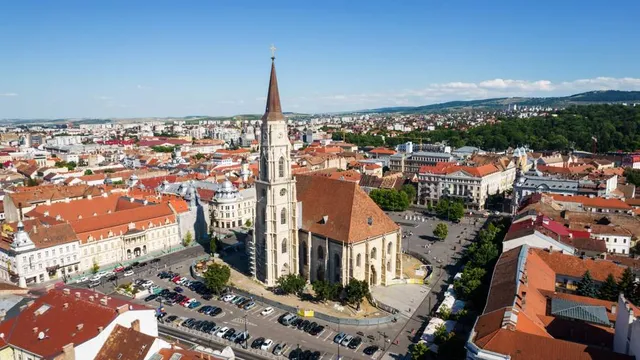
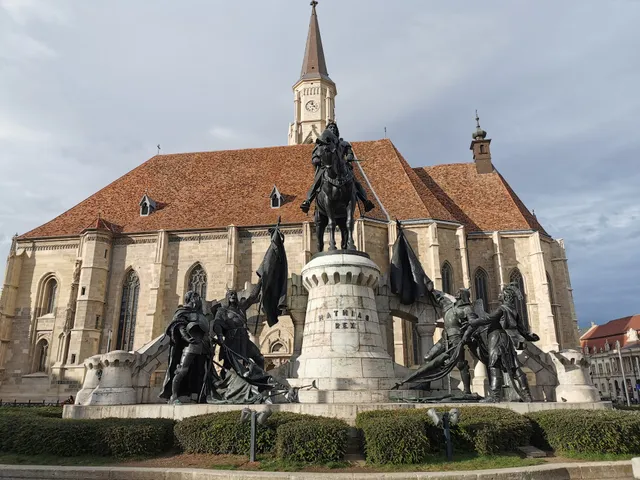
Introduction & Naming: St. Michael’s Church is one of the most iconic landmarks of Cluj-Napoca, dominating the city’s central square. Named after Archangel Michael, the patron saint of the city, it reflects Cluj’s medieval past and its historical importance in Transylvania. The church stands as a symbol of faith, resilience, and architectural grandeur, drawing visitors from around the world.
Historical Background: Construction of St. Michael’s Church began in the late 14th century and continued for over a century, finally being completed in the 15th century. Built during the reign of Sigismund of Luxembourg, the church has witnessed key historical events, including royal ceremonies and political gatherings. Over time, it has served both Catholic and Protestant congregations, reflecting the region’s shifting religious landscape.
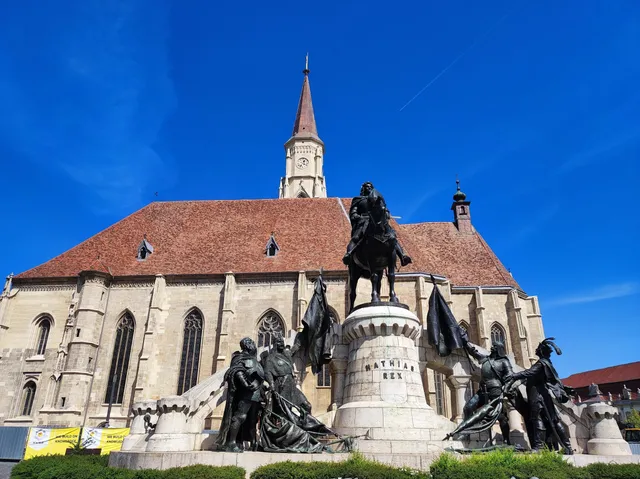
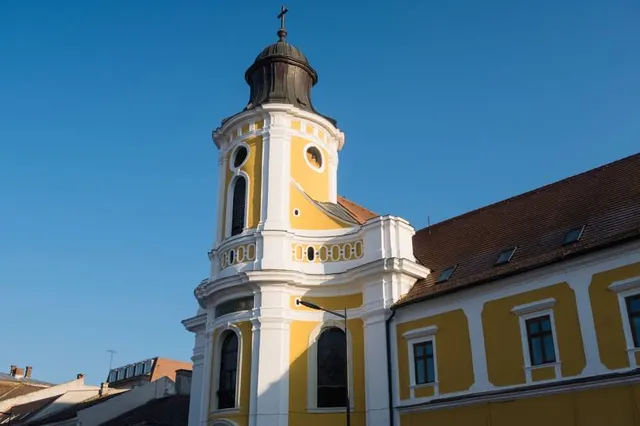
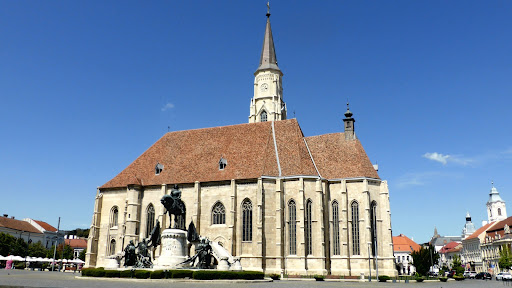
Architectural Style: The church is a masterpiece of Gothic architecture, characterized by pointed arches, ribbed vaults, and tall stained-glass windows. Its impressive bell tower, a later addition from the 19th century, stands at 80 meters, making it one of the tallest structures in Transylvania. The structure follows the classic hall-church design, with three naves of equal height, enhancing its grandeur.
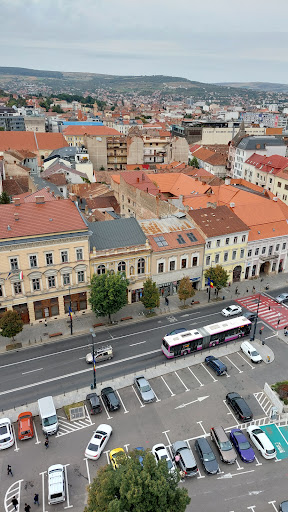
Cultural & Religious Significance: As a spiritual and cultural hub, St. Michael’s Church has played a vital role in Cluj-Napoca’s identity. It has hosted coronations, royal gatherings, and significant historical proclamations. Today, it continues to serve as a place of worship and an important site for cultural events, concerts, and art exhibitions. Its presence in Union Square makes it a focal point for both locals and tourists.
Size and Structural Features: St. Michael’s Church is one of the largest medieval churches in Transylvania, measuring approximately 70 meters in length and 24 meters in width. Its impressive bell tower, added in 1837, contributes to its striking silhouette. The church’s massive buttresses support the high Gothic vaults, ensuring stability while adding to its aesthetic appeal.
Interior & Artistic Elements: Inside, the church boasts remarkable frescoes, elaborate altars, and intricate wood carvings. Some of the original medieval paintings remain preserved, providing a glimpse into the artistic heritage of the time. The baroque organ, installed in the 18th century, is still in use today, filling the church with majestic music during religious services and concerts.
Restoration & Modern Role: Despite suffering damage from historical conflicts and natural wear, St. Michael’s Church has undergone multiple restoration projects. The most recent efforts aim to preserve its medieval charm while reinforcing its structure. Today, it remains a functioning church, an important tourist attraction, and a site for historical and cultural education.
Conclusion & Visitor Information: Visitors to St. Michael’s Church can explore its breathtaking Gothic architecture, admire its artistic details, and even climb the tower for a panoramic view of Cluj-Napoca. Guided tours and occasional concerts offer deeper insight into its rich history. Whether for religious, cultural, or architectural interest, the church is a must-visit landmark in the heart of the city.
Legends: •The Curse of the Bell Tower – A local legend claims that the church’s bell tower brings bad luck to those who climb it with ill intentions. Some believe that its height symbolizes spiritual ascension, and only those with a pure heart can fully appreciate its beauty. •The Royal Decree – In 1541, Queen Isabella of Hungary issued a decree inside the church, handing over Transylvania to Ottoman rule. This moment marked a turning point in...
Read moreUsually I find it strange to review a church, because it is the house of God and I go there mostly for praying. However, this is filled with history, I'm sure I didn't hear all of it, but I will share with you what I know. The ornaments from the entrance which sustain the vessels with the holy water are actually rose stumps from 700 years ago. One has an acorn carved at the top (right) and the other has a bird without its beak unfortunately and a squirrel. Jesus Christ on a cross when you enter on the left it's also a representation since 700 years ago along with the paintings - what could be saved of them on the walls of the church. The trees with the red fruits in the garden of the church are old almonds. Also, Wednesday, Saturday and Sunday you can visit the tower, entrance free. As I know from a friend, some years ago you could've gone higher than the tower bell, but now we stopped at it's level. It's a splendid view which made me dizzy, especially when looking at the abrupt roof top of the church. It was worth every second there, even for prayer. There were monks (I think) there singing acapella. It was a reverent space they created through their voice and...
Read moreBiserica romano-catolică Sfântul Mihail construită în stil gotic în secolul XIV, împreună cu monumentul alăturat lui Matia Corvin înălțat în 1902, sunt monumente emblematice ale istoriei Clujului, amplasate în Piața Unirii. Biserica a fost construită pe locul unui vechi cimitir și a unei capele în perioada 1316-1390 și completată în anii 1442-1447. Finanțarea a fost în principal prin subscripție publică, prin cumpărarea de „indulgențe” care iartă păcatele făcute. De-a lungul secolelor, biserica a trecut prin numeroase renovări, refaceri, completări. În plan, biserica are o formă simplă, de hală, extinsă la est cu apsa (sanctuarul). Pe latura nordică a sanctuarului este sacristia, iar lipit de latura nordică a naosului, în exterior, este turnul cu ceas construit mult mai târziu. În interior, naosul sub formă de hală având dimensiunile 50 x 24 m este împărțit în trei nave prin două șiruri de coloane. În prelungirea naosului central, desigur, se află sanctuarul (corul și altarul central realizat în stil gotic) având dimensiunile 20 x 10 m. Lateral altarului central sunt două altare secundare realizate în stil baroc, la sud „Cei trei crai de la Răsărit”, iar la nord cel al Sfintei Ecaterina. Conform proiectului inițial, colțurile vestice erau prevăzute cu două turnuri mari. Turnul sudic nu s-a mai făcut, iar cel nordic a fost distrus de trei ori din cauze naturale, așa că a fost abandonat, acoperișul fiind refăcut. În această situație biserica a avut mult timp o clopotniță improvizată, până când în anii 1837-1860 s-a înălțat, atașat laturii nordice a bisericii, un turn clopotniță cu ceas, în stil neogotic și având o înălțime de 80m. În prezent, la baza celor două foste turnuri vestice sunt capele și, de asemenea, încă o capelă la baza turnului cu ceas. În zona centrală a fațadei vestice este portalul principal de intrare, decorat cu basorelieful Sfântului Mihail și cu trei steme (a Sfântului Imperiu Roman, a Regatului Ungar și a Regatului Boemiei) reprezentative pentru împăratul Sigismund de Luxemburg, în timpul domniei căruia (1387-1437) s-a finalizat edificiul. Astfel putem deduce de ce Sfântul Mihail a fost ales patronul bisericii. Mihail este un arhanghel (înger de rang superior) care conduce armatele lui Dumnezeu împotriva forțelor lui Satan, învingându-l. Este venerat în iudaism, în vechi biserici orientale, în creștinism și în islamism. Printre multe altele, este considerat protectorul evreilor, al Bisericii Catolice, a Sfântului Imperiu Roman, iar apoi patron al Germaniei. Biserica Sfântul Mihail a jucat un important rol în istoria Transilvaniei și a Ungariei, fiind locul unde s-a desfășurat un lung șir de mari evenimente. Considerată situație unică, biserica Sf. Mihail a servit pe rând patru culte creștine: 1390-1545 catolic, 1545-1558 reformat luteran, 1558-1566 reformat calvin, 1566-1716 reformat unitarian, iar din 1716 a redevenit catolică. În perioada cultelor reformate, iconoclaste, statuile și icoanele au fost distruse sau acoperite, în prezent fiind recuperate mici fragmente. Întervenția Imperiului Habsburgic care a ocupat Transilvania, a readus cu forța catolicismul în această biserică ca urmare a „Contrareformei”, urmată fiind de redecorarea fastuoasă a ei în stil baroc (altare, amvon, vitralii, orgă etc.), așa cum o vedem astăzi. Dintre statuile bisericii m-a impresionat aceea a lui Iisus Hristos care își deschide pieptul oferindu-și inima, probabil o parabolă a pelicanului din creștinismul medieval, cel care își hrănește puii cu propriul sânge, simbol regăsit și pe tocul ușii de...
Read more