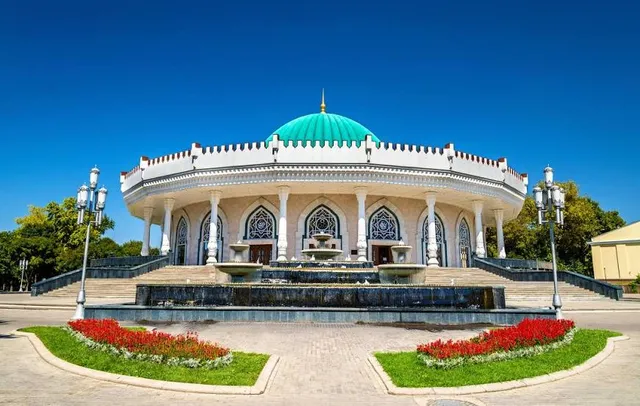
The Amir Temur Museum in Tashkent, Uzbekistan, is a grand institution dedicated to the life, legacy, and achievements of Amir Temur (Tamerlane), one of the most significant historical figures in Central Asia. Established in 1996 to commemorate the 660th anniversary of Amir Temur’s birth, the museum stands as a testament to Uzbekistan’s rich cultural and historical heritage.
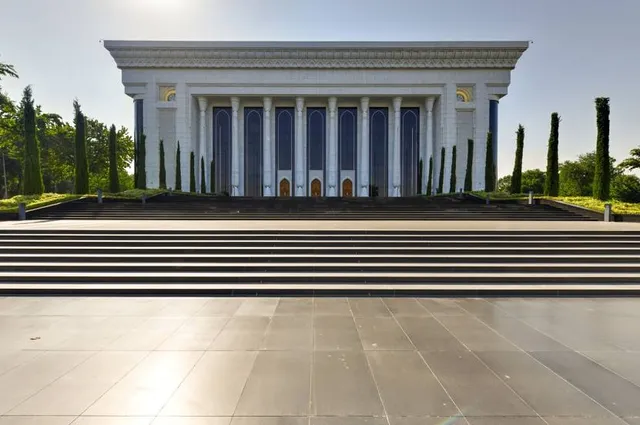
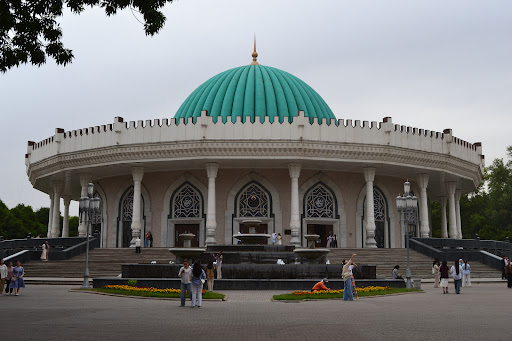
Location and Architecture: The museum is located near Amir Temur Square, in the heart of Tashkent, making it a focal point for cultural and historical tourism. Its stunning architectural design reflects traditional Uzbek motifs combined with modern elements. The structure features a large central dome, symbolizing the Timurid architectural style, and is adorned with intricate tile work, geometric patterns, and calligraphy. The turquoise dome, reminiscent of Samarkand’s iconic monuments, adds to its grandeur.
Exhibitions and Collections: The museum houses over 5,000 artifacts that provide a comprehensive look into Amir Temur’s reign and the Timurid dynasty's cultural, political, and scientific achievements. Key exhibits include:
Maps and Documents: Historical maps detailing the vast Timurid Empire, which stretched from modern-day Turkey to India. Artifacts: Swords, armor, coins, and manuscripts from the Timurid era, showcasing the craftsmanship and military prowess of the time. Artworks: Paintings and miniatures depicting scenes from Amir Temur’s life, including his campaigns, court life, and contributions to science and art. Astronomical Instruments: Replicas of instruments used in the Ulugh Beg Observatory in Samarkand, reflecting the scientific advancements of the Timurid era. Genealogical Charts: Displays tracing Amir Temur’s lineage and the legacy of his descendants. Themes and Historical Significance: The museum is divided into thematic sections that cover various aspects of Amir Temur’s life and legacy, including:
His military campaigns and strategies that established him as one of history’s most successful conquerors. His patronage of art, science, and architecture, which led to a cultural renaissance in Central Asia. His role in the development of cities like Samarkand, Shahrisabz, and Herat into centers of learning and culture. Interactive Features: Modern technology enhances the museum experience, with interactive displays, audiovisual presentations, and multilingual guides available to assist visitors in understanding the exhibits. Virtual tours and digital reconstructions of Timurid monuments bring history to life for guests.
Educational and Cultural Role: The Amir Temur Museum serves as an educational hub, hosting lectures, workshops, and cultural events aimed at deepening the understanding of the Timurid era. Scholars, students, and history enthusiasts frequently visit to study its extensive collection and learn about one of the most influential periods in Central Asian history.
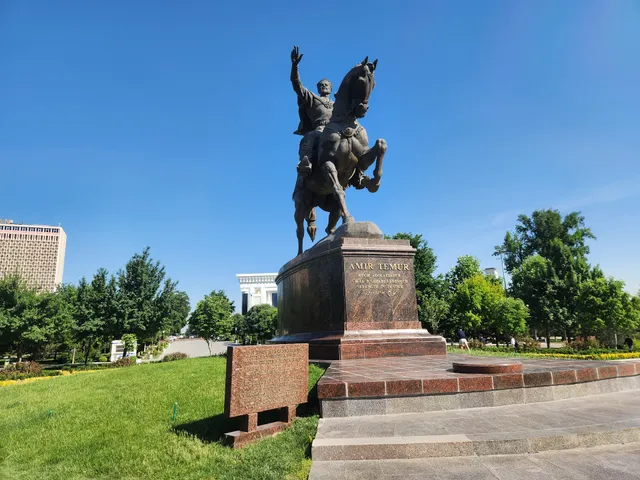
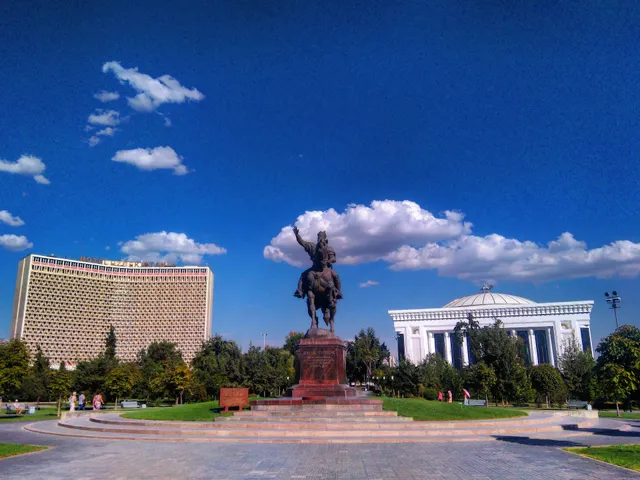
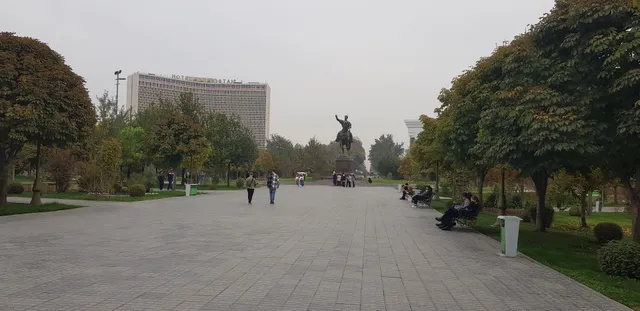
Gardens and Surroundings: The museum is surrounded by beautifully landscaped gardens and fountains, providing a serene setting for visitors. Statues of Amir Temur on horseback, a symbol of strength and leadership, are prominently displayed near the museum, further emphasizing its connection to his legacy.
Popularity and Accessibility: As one of Tashkent’s top attractions, the museum draws both local visitors and international tourists. It is easily accessible by public transport and offers amenities such as gift shops, cafes, and guided tours in multiple languages.
Symbolism: The establishment of the Amir Temur Museum underscores Uzbekistan’s pride in its historical and cultural roots. It serves as a reminder of the enduring influence of Amir Temur on the region and beyond, celebrating his contributions to statecraft, culture, and the arts.
In conclusion, The Amir Temur Museum in Tashkent is a treasure trove of history and culture. It offers visitors an immersive experience into the life of one of Central Asia’s most iconic leaders and provides a deeper understanding of the Timurid dynasty's pivotal role in shaping the...
Read moreThe Amir Timur Museum is located in Tashkent, the capital of Uzbekistan. It opened in 1996, and is dedicated to the warlord Amir Timur. The ceremonial opening of the round museum tructure was held on October 18, 1996 in the presence of Uzbek people and foreign guests. President Karimov stated that, 'The State Museum of the History of the Temurids which is opening in such a holiday conditions is the real result of the fact that in our country the historical justice towards the personality of Sahibkiran has triumphed'. He compared Amir Temur Square with a ring, saying "the Museum is a precious stone decorating it”. President Islam Karimov said, "Every man visiting this museum can make sure to my words, that this museum like a great mirror, reflects both our past and present and our great future". The museum's blue cupola resembles that of the Gur-i Amir mausoleum in Samarkand. Though the museum was built according to the traditions of medieval architecture, it satisfies modern requirements. There are more than 5000 artifacts in the museum collection, with more than 2,000 displayed in museum exhibition halls. In particular, the museum displays focus on the genealogy of Amir Temur, his coming to power, military campaigns of Sahibkiran, diplomatic and trade relations, workmanship, city improvement and landscaping, science and education development. There are also exhibits related to representatives of Temurids' dynasty (including maps, weaponries, copper and silver coins, miniatures, rare manuscripts, potteries, and jewelry). Models of architectural works from the Amir Temur and Temurids' era include Ak - Saray, Ahmad Yassavi`s mausoleum, Bibi - Khanum mosque, Ulughbek’s madrasah and observatory, Gur-i Amir and Taj Mahal mausoleums. An exhibition called «Gifts» shows images of Amir Temur's, a gift of the Louvre Museum of France, and examples of correspondence between the Amir Temur and Temurids dynasty with neighboring countries, including the embassy of Iran, Pakistan, China, Malaysia, Kazakhstan, Russia, Georgia,...
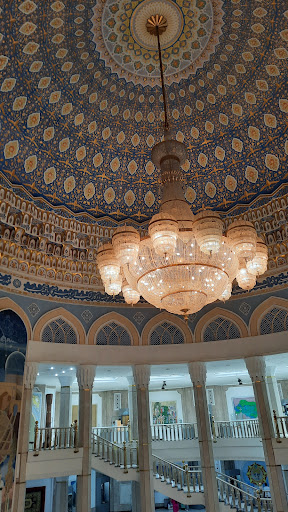
Read moreTemuriylar tarixi davlat muzeyi — Toshkentdagi Amir Temur xiyoboni yaqinida bunyod etilgan tarix muzeyi (1996). Muzey binosi oʻrta asr meʼmorligi anʼanalari asosida aylana tarxli, tomi gumbazli qilib, maxsus temirbetondan yaxlit supa ustiga qurilgan. Bino 3 qavatli, bal. 31 m (diametri — tashqi tomoni 70 m, ichkisi 50 m), uni qurishda temir ustun, gʻisht, turli beton blok va yengil tayyorlangan sunʼiy qurilish uskunalari qoʻllanilgan. Devor yuzasini pardozlashda ganch, marmar va sopol koshinlarishlatilgan. Qurilishda Toshkent sh. hokimiyati, "Turon" firmasi, Toshkent aviatsiya ishlab chiqarish. birlashmasi, "Oniks" korxonasi (30 dan ortiq kattakichik hajmdagibillur qandillar, 500 ta yoritgichli, ogʻirligi 2 t, bal. 8 m "Zumrad" qandil ishlab bergan), "Us to" birlashmasi qatnashgan. Muzeyga marmar zinalar orqali bosh tarzi (Amir Temur xiyobonidan)dagi 3 eshikdan kiriladi. 14 ta yogʻoch oʻymakorligidagi eshik oʻziga xos. Atrofi peshayvonli, qator ustunli (20 ta, bal. 10 m, muqarnas boshali, poyustuni kulrang marmardan ishlangan), turunjlari sirkori sopol bilan bezatilgan, binoning tashqi devori yuzasida "suls" uslubida insonni yaxshilikka undovchi soʻzlar bitilgan. Bino asosida foye, magazinlar, maʼmuriyat, vestibyul, kassa, axborotmaʼruza zali va boshqa texnik xizmat xonalarijoylashgan. 1qavatda koʻrgazma va kinoleksiya zali (200 oʻrindiqli) bor. 2qavatdagi koʻrgazma zali 8 boʻlimdan iborat. Koʻrgazma zalidagi Temuriylar tarixiga oid noyob eksponatlar Oʻzbekiston viloyatlaridagi yirik muzeylardan keltirilgan, shuningdek, 1996 yilda Parijda Amir Temur tavalludining 660 yilligiga bagʻishlab oʻtkazilgan koʻrgazmadagi eksponatlar ham muzeyga oʻtkazilgan. Muzeyda arxeologiya, etn., numizmatika yodgorliklari, qoʻlyozmalar, tasviriy sanʼat namunalari bor. Shuningdek, I. Karimovning Amir Temurga boʻlgan hurmatini ifodalovchi dil soʻzlari va "Temur tuzuklari"dan keltirilgan iboralar eksponatlarni mazmunan boyitgan. Koʻrgazma zalining markazidagi devoriy tasvirdan "Buyuk Sohibqiron — buyuk bunyodkor" nomli 3 qismdan iborat asar oʻrin olgan. Birinchisi — "Tugʻilish" qismida Sohibqironning tugʻilishi bilan bogʻliq urfodatlar ramziy tasvirlarda ifodalangan. Ikkinchisi — "Yuksalish"da "Rosti—rasti" ("Toʻgʻrilik najotdir") degan shior oltin harflar bilan bitilgan. Bu qismning markazida taxtda oʻtirgan Sohibqironning vazir, ulamo, harbiy aʼyonlar davrasidagi mashvaratlari aks ettirilgan. Pastroqda esa Sohibqironning nabira va abiralari (Muhammad Sulton, Ulugʻbek, Husayn Boyqaro, Zahiriddin Muhammad Bobur) bobolaridan meros qolgan tuzuklarni mutolaa qilayotganlari va Amir Temur yaratgan meʼmoriy obidalar tasvirlangan. Uchinchisi — "Faxrlanish" boʻlimida merosning avloddanavlodga oʻtib kelayotganlik gʻoyasi oʻz aksini topgan. Muzeyga har yili 100 mingdan ziyod tomoshabin kiradi. Amir Temurning yoshligi Keshda kechdi. Yetti yoshga toʻlgach, otasi uni oʻqishga berdi. Amir Temur yoshlik chogʻlaridanoq maxsus murabbiylar nazorati ostida chavandozlik, ovchilik, kamondan nishonga oʻq uzish, boshqa turli mashq va harbiy oʻyinlar bilan mashgʻul boʻlgan. Shu asnoda Amir Temur tulporlarni saralab ajrata oladigan mohir chavandoz va dovyurak bahodir boʻlib voyaga yetgan. Amir Temur tabiatan ogʻir, bosiq, teran fikrli va idrokli hamda nihoyatda ziyrak, kishilardagi qobiliyat, fazilat, ayniqsa, samimiyatni tezda fahmlab oladigan inson boʻlgan. Shu tufayli oʻspirinlik chogʻlaridayoq atrofiga tengqurlari orasidan sadoqatli doʻstlarni jalb qila olgan. Uning atrofiga bolalikdagi doʻstlari va maktabdoshlari (Abbos bahodur, Jahonshohbek, Qimori inoq, Sulaymonshohbek, Idiku Temur, Sayfuddinbek, Hindushoh, Qarqara va boshqalar) toʻplanishib, birgalikda mashq qilar, musobaqalarda ishtirok etishar, astasekin navkar boʻlishib va harbiy guruhga birlashib, harbiy boʻlinma sifatida shakllana borgan. Keyinchalik ular Amir Temur qoʻshinida lashkarboshilik darajasigacha...
Read more