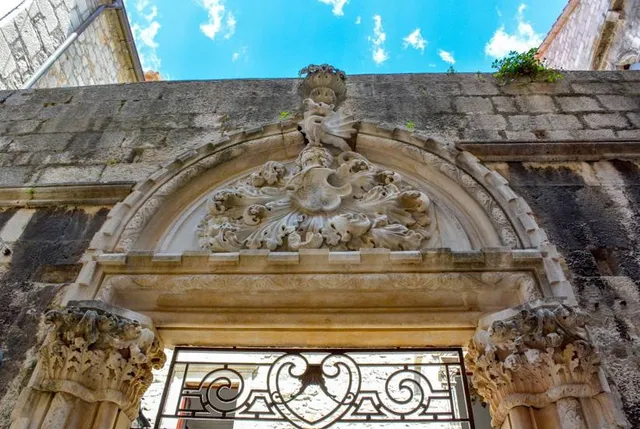
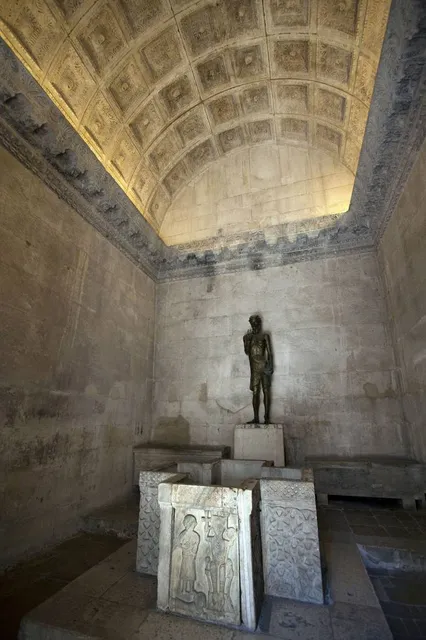
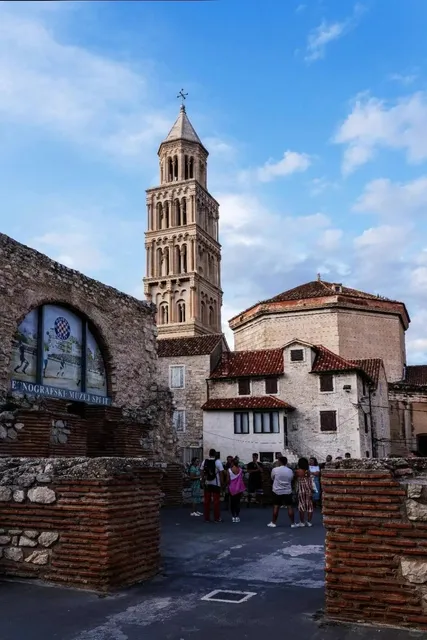
Diocletian's Palace (Croatian: Dioklecijanova palača, Latin: Palatium Diocletiani) is the remains of an ancient Roman palace located in Split. Today, it is an integral part of Split's old town. Diocletian ordered the construction of this heavily fortified compound in preparation for his retirement in 305 AD. The complex was constructed on a peninsula about six kilometers southwest of Salona, the former capital of Dalmatia and Diocletian's birthplace. The palace was modeled after Roman forts from the 3rd century. It features a rectangular structure with two stories, facing the sea. Diocletian's quarters occupied about half of the palace, emphasizing its dual purpose as both a residence and a military stronghold. UNESCO recognized the historic core of Split, including the remains of Diocletian's Palace, as a World Heritage Site in 1979.
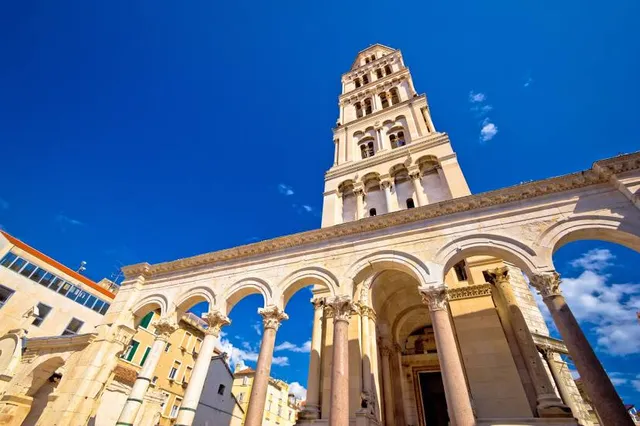
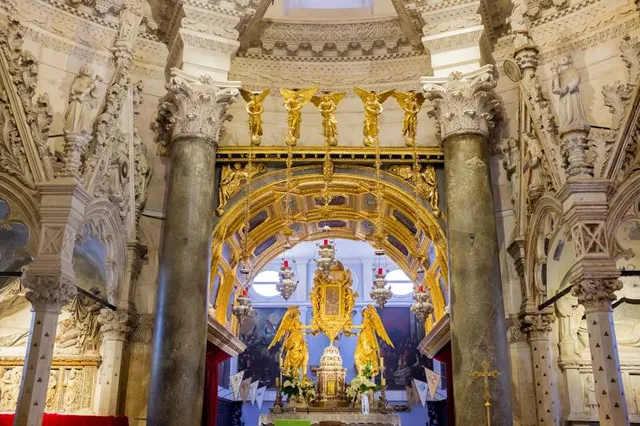
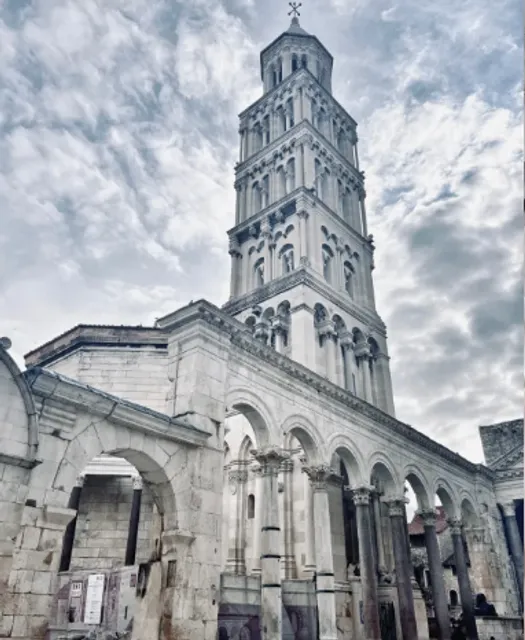
Diocletian's Palace has remarkably endured the test of time, and its preservation is a testament to both its original construction and subsequent adaptations. The palace was built using high-quality limestone and marble quarried from nearby islands, ensuring its durability. The Roman engineers employed time enduring techniques, including vaulted ceilings, arches, and sturdy walls. After the fall of the Western Roman Empire, the palace was repurposed. Medieval builders used its walls as foundations for new structures, incorporating Roman elements into their designs. The Bell Tower and St. Domnius Cathedral were added during this period. In the Venetian era, the palace underwent further modifications. Venetian rulers reinforced the walls and added defensive towers. They also built palatial residences within the existing walls. During the Ottoman occupation, the palace continued to serve as a hub for daily life.
The Austrians made repairs and preserved its architectural features.
Conservation efforts intensified in the 20th century. Restoration projects focused on maintaining the original Roman structures. Ongoing maintenance includes cleaning, structural repairs, and archaeological research.
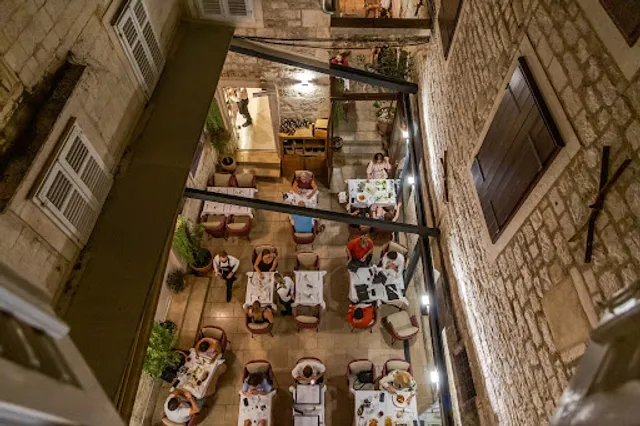
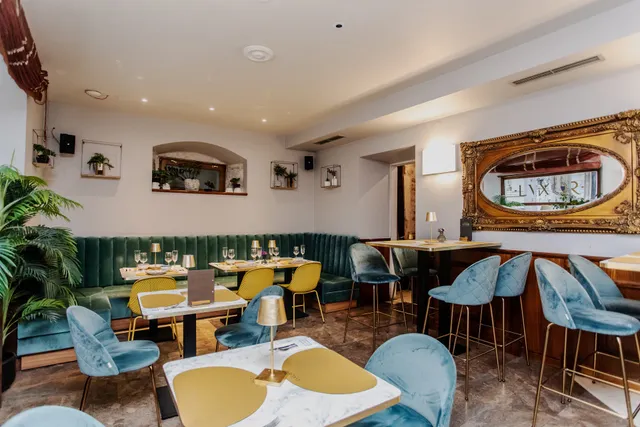
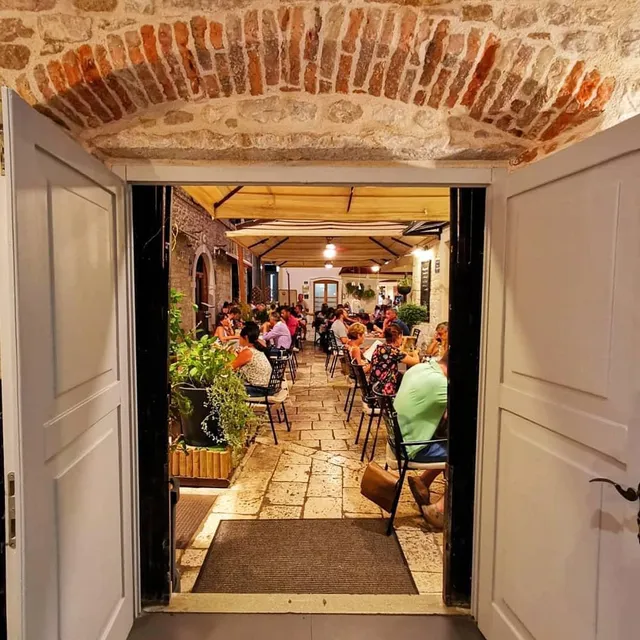
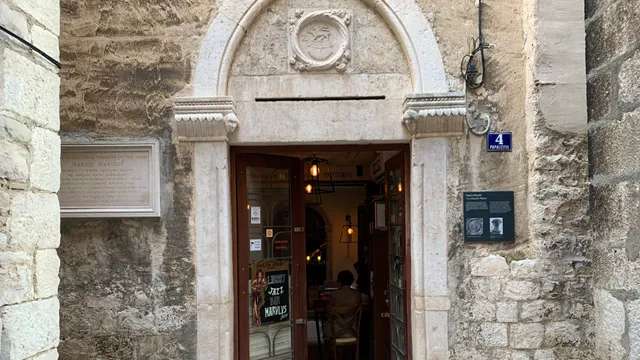
The palace became a residential area, with shops, cafes, and apartments. The palace remains a vibrant part of Split's cultural life, hosting events, concerts, and markets.
Diocletian's Palace is steeped in history and legends. Here are a few intriguing stories associated with this ancient marvel:
Diocletian's Escape Tunnel: According to local lore, Diocletian ordered the construction of a secret underground tunnel leading from the palace to the nearby Marjan Hill. The purpose of this tunnel remains a mystery. Some believe it was an escape route for the emperor during times of danger, while others think it served as a water supply conduit. Visitors can explore parts of the tunnel today, adding an air of mystery to the palace.
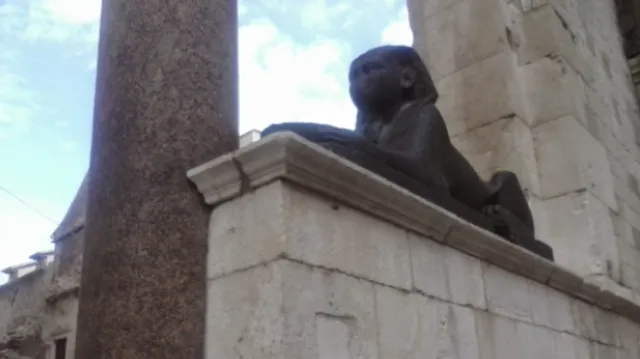
The Sphinxes: Four Egyptian sphinxes guard the entrance to the palace's Peristyle Square. These ancient statues were brought from Egypt during Diocletian's reign, symbolizing the emperor's power and connection to the divine. Their presence in Split adds an exotic touch to the Roman architecture.
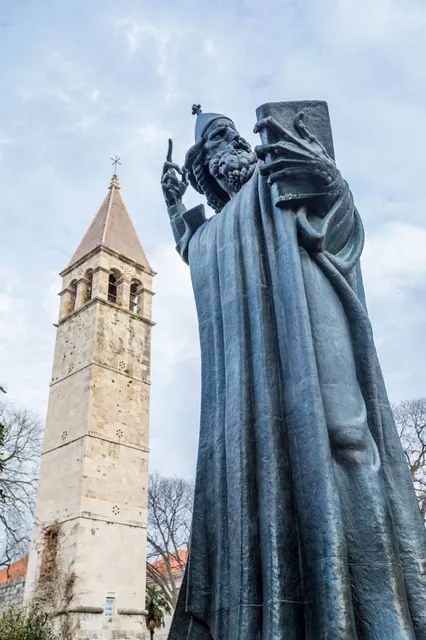
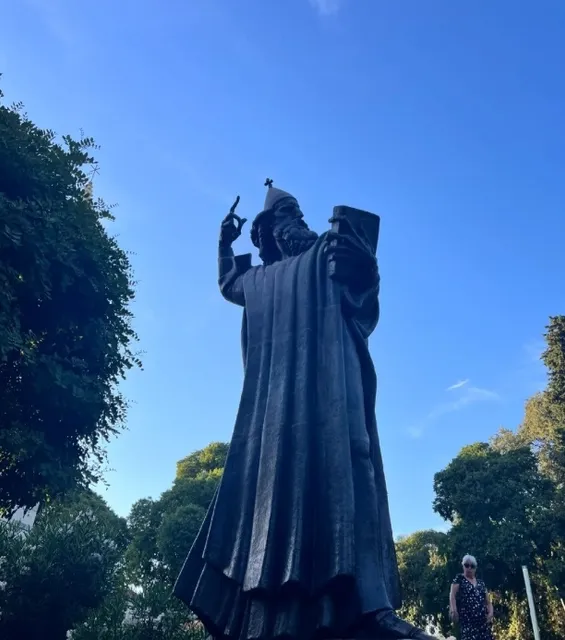
The Legend of Gregory of Nin: A bronze statue of Gregory of Nin (a medieval Croatian bishop) stands near the palace's Golden Gate. Rubbing the statue's big toe is said to bring good luck and fulfill wishes. Visitors often stop by to give the toe a friendly polish!
The Basement Halls: The palace's basement halls are a maze of vaulted chambers. In the Middle Ages, they were used for storage, workshops, and even as a prison.
Game of Thrones Connection: Diocletian's Palace served as a filming location for the popular TV series Game of Thrones. Scenes set in the city of Meereen were shot here, using the palace's grand architecture...
Read moreDiocletian was famous, among other things, as a zealous builder of extensive and costly buildings, among which stands out his palace, which he had built with all the splendour he could muster in Aspalath (today's Split) as a residence after his abdication (in 305). The palace, which is a work of late antique style, already incorporating newer architectural elements as well as oriental ones, was built of limestone blocks from the quarries on the island of Brac, and the emperor lived in it in a truly splendid manner while resting. The palace, which has the plan of a regular quadrangle 215 metres long and 180 metres wide, was built as a sumptuous residence and a fortress, surrounded on all sides by walls reinforced with towers at the corners.
The palace complex, behind whose walls around three thousand inhabitants live in 250 houses, continues to live its own life. It can be entered through three gates in the walls; on the north side, where the walls are the most massive (up to 24 m high and 2 m wide), the Golden Gate (Porta Aurea-Golden Gate) leads into the palace, on the east side the Silver Gate (Porta Argentea-Silver Gate) and on the west side the Iron Gate (Porta Ferrea-Gate of Knots).
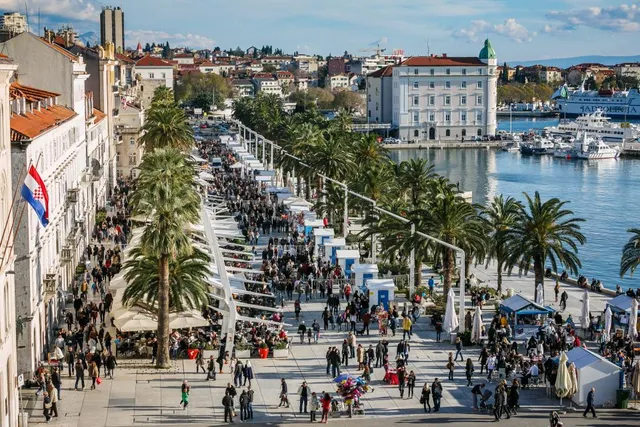
The Bronze or Copper Gate ( Porta Aenea-Bronzana or Mjedena Gate) was built in the southern part of the wall, which at that time rose out of the sea, allowing the emperor's galleys to reach the palace itself, leading to the imperial part of the palace. However, this has not survived, just as the sea no longer reaches the palace walls, in front of which today stretches Split's lively promenade, the waterfront of the Croatian National Revival (Obala Hrvatskog narodnog preporoda). Next to it, there is also a paid parking lot that visitors to the palace can use. There is no admission fee to visit the palace; from the promenade you can now enter through the palace cellar. So let us enter this interesting palace complex, and let the distant history breathe upon us from its walls and monuments.
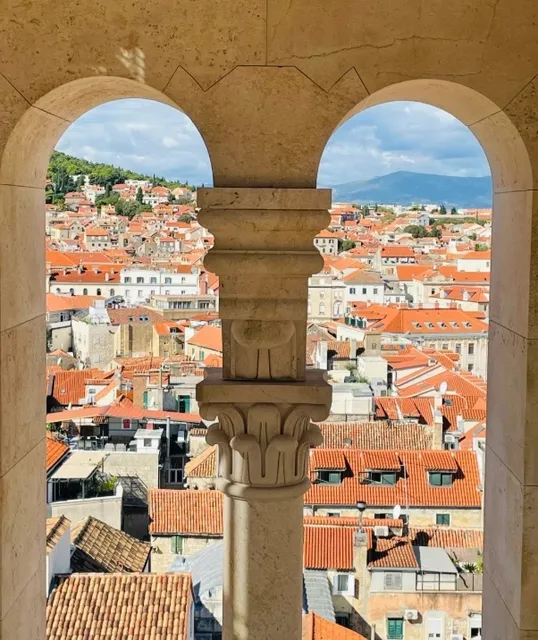
In the first half of the 13th century, the construction of the 60-metre high bell tower of the cathedral was started, which was completed after 300 years and thus bears Romanesque, Gothic and Renaissance parts. It is one of the most beautiful bell towers on the eastern Adriatic coast and is open to the public. After paying a symbolic entrance fee (7 Eur) from the top of the bell tower we can enjoy a wonderful panoramic view of Split with the Kozjak Mountains in the background, from which we can also get a complete picture of the entire Diocletian's Palace.
The palace area is divided into four regular parts by Roman city roads - cardo and decumanus, which intersect in the middle. Heading east from the peristyle, we walk along the decumanus, now King Tomislav Square (Pojlana kralja Tomislava), to the Silver Gate. The outer side of the walls behind the gate is "besieged" by the many stalls of Split's...
Read moreDiocletian's Palace is a massive ancient Roman complex built between the 3rd and 4th centuries AD. Rather than being simply the retirement residence of Roman Emperor Diocletian, it resembles a fortified complex, with one half serving as Diocletian's residence and temples, and the other half designed as a typical Roman military camp. Today, Diocletian’s Palace occupies half of the old town in Split, Croatia, and because it is the largest and best-preserved Roman palace still standing, it has been listed as a UNESCO World Heritage Site.
Diocletian was born into a commoner family and later rose through the ranks of the military to become the emperor of the Roman Empire. By the time he took control, the once-great Roman Empire was on the brink of collapse, having endured decades of internal strife, power struggles, military fragmentation, barbarian invasions, plagues, and famines. After eliminating his rivals and taking complete control, Diocletian reformed the empire: he deified the emperor, moved the capital, and marginalized the Senate to establish autocratic rule. He also carried out massive reforms to address the decaying state of the empire, including changes in taxation, law, and politics. Externally, although he engaged in numerous military campaigns, he resolved long-standing threats from Persia, Egypt, and the Germanic tribes. Perhaps most famously, he established the Tetrarchy, a system of shared rule by four emperors, aimed at solving the empire’s vast territorial expanse and succession issues. Under his leadership, this system worked smoothly, but after his retirement, the Tetrarchy quickly collapsed. Nevertheless, his other reforms laid a strong foundation for the later revival of the Roman Empire.
Emerging from the chaos of his time, Diocletian reached the peak of his power, and then unexpectedly chose to abdicate, renouncing all power and status, making him one of the few Roman emperors to voluntarily step down. After abdicating, Diocletian returned to his homeland in Dalmatia and built Diocletian’s Palace near his birthplace in Split as his retirement residence. There, he led a quiet rural life, experiencing the transformation from soldier to emperor and eventually to farmer.
When visiting Split, it’s impossible to ignore the presence of Diocletian’s Palace. One could say that Split is built upon the foundations of this palace, with residences and businesses seemingly embedded within the ancient ruins. Pieces of history are casually encountered at street corners and alleys, and the blend of the old and new creates a fascinating fusion. It feels as if one might accidentally slip through a crack in time and find themselves transported back to...
Read more