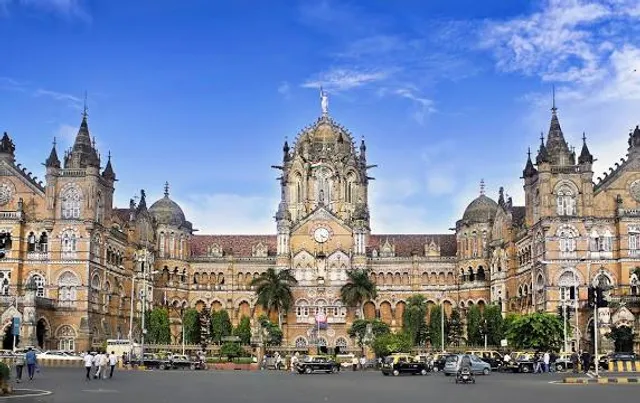
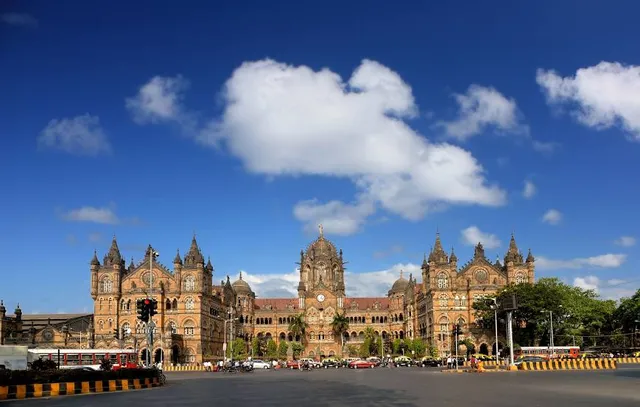
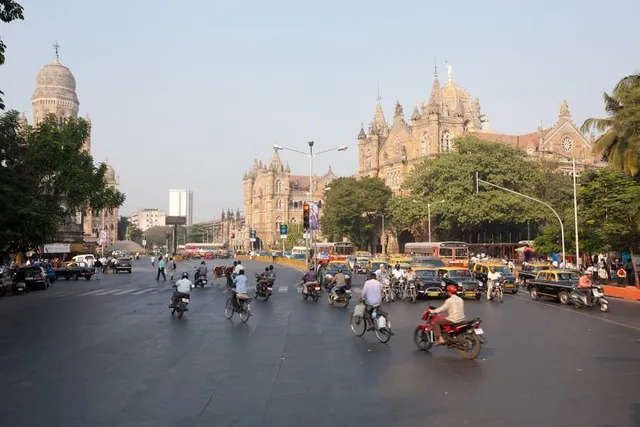
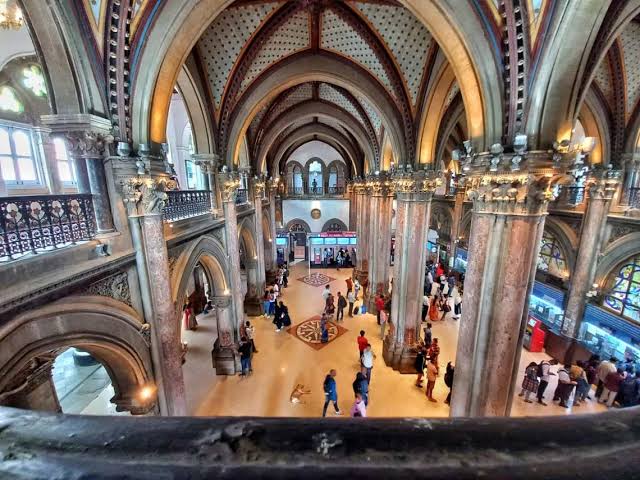
Chhatrapati Shivaji Maharaj Terminus (CSMT), formerly known as Victoria Terminus (VT), is one of the most iconic railway stations in India. Located in Mumbai, Maharashtra, it serves as a major hub for both suburban and long-distance trains. Recognized as a UNESCO World Heritage Site, CSMT is a blend of Victorian Gothic architecture and Indian influences, making it a significant landmark in Mumbai. Architecture & Design CSMT is a stunning example of Indo-Saracenic and Victorian Gothic Revival architecture. Designed by British architect Frederick William Stevens, it was completed in 1887. The station features:
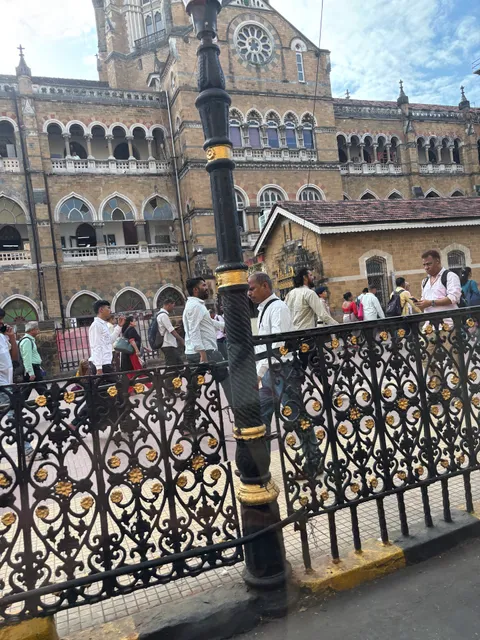
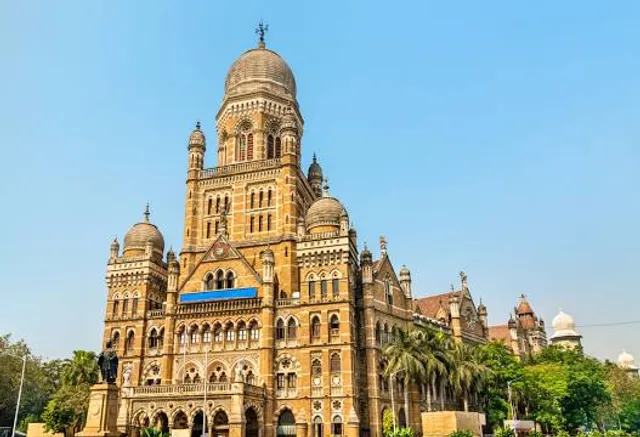
Grand Facade – The building boasts intricate stone carvings, turrets, pointed arches, and a central dome.
Beautiful Interiors – The high ceilings, grand staircases, and stained glass windows add to the station’s grandeur.
Majestic Clock Tower – A 12-foot clock has been ticking since the late 19th century.
Carved Pillars & Statues – Representing Indian and European cultures.
The night-time illumination of the station enhances its beauty, making it a photographer’s delight. Connectivity & Transport Services
CSMT is one of the busiest railway stations in India, serving:
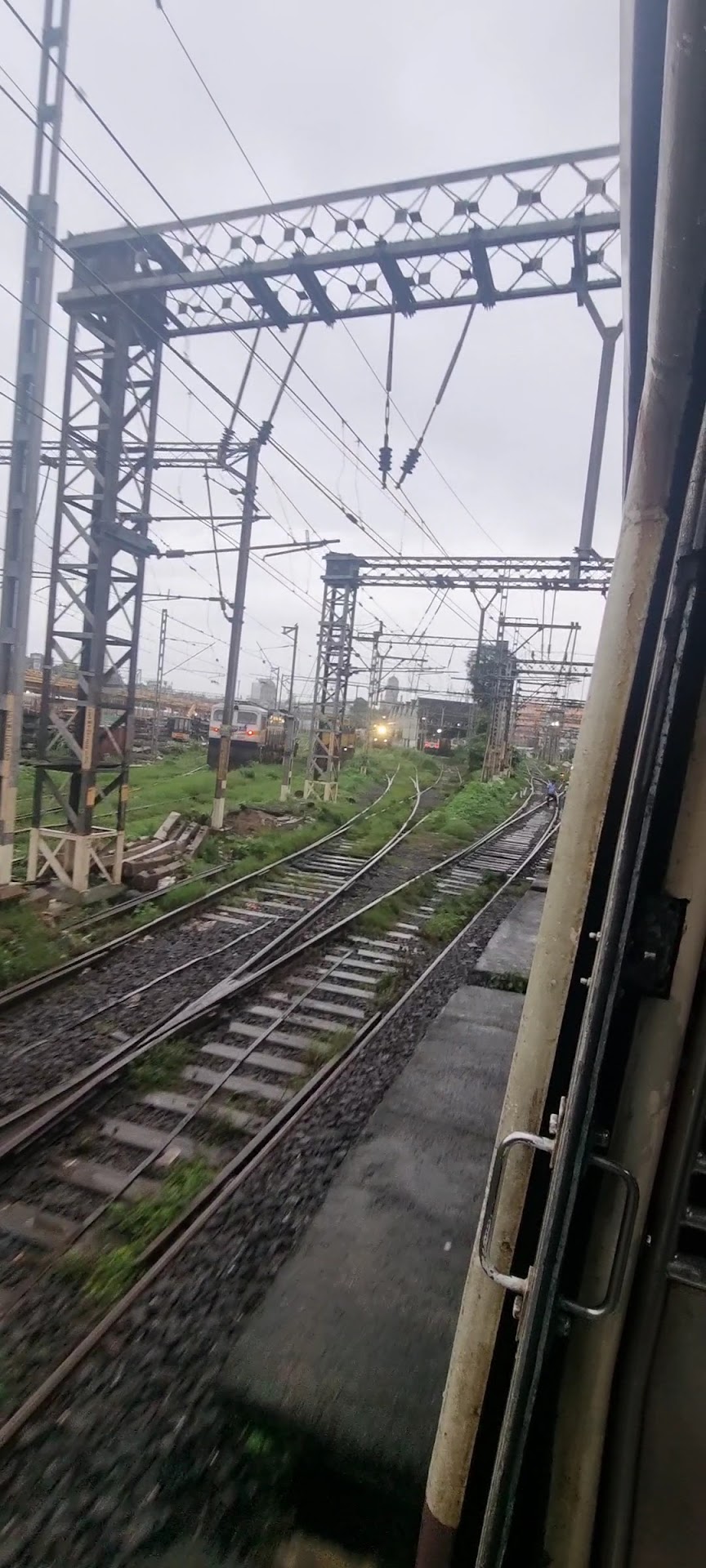
Suburban Railway (Mumbai Local Trains) – It is the starting point for the Central Line, Harbor Line, and Trans-Harbor Line of Mumbai’s local train network.
Long-Distance Trains – Connects Mumbai to major Indian cities like Delhi, Chennai, Kolkata, and Hyderabad.
Metro & Bus Connectivity – Well-connected by BEST buses, taxis, and the upcoming Mumbai Metro.
The station is strategically located near important commercial hubs like Fort, Marine Lines, and Colaba, making it a crucial transit point. Facilities & Amenities
CSMT offers a range of facilities for passengers, including:
✅ Waiting Rooms & Retiring Rooms – Comfortable spaces for passengers waiting for trains. ✅ Food & Refreshments – Multiple food stalls, restaurants, and vending machines serving vegetarian and non-vegetarian options. ✅ Clean Restrooms – Well-maintained, though sometimes crowded. ✅ Ticketing Counters & ATMs – Adequate facilities for ticket bookings and cash withdrawals. ✅ Escalators & Elevators – Installed for the convenience of elderly and differently-abled passengers. ✅ Luggage & Cloakroom Services – Secure storage available for passengers with layovers. Cleanliness & Maintenance
The station is generally well-maintained, with daily cleaning efforts. However, during peak hours, the platforms can become crowded, leading to litter accumulation. Authorities have taken initiatives like Swachh Bharat Abhiyan to improve cleanliness. Safety & Security
Being a major transport hub, CSMT has robust security measures in place:
CCTV Surveillance – Monitored 24/7 by railway police.
RPF (Railway Protection Force) Presence – Ensures passenger safety.
Baggage Scanners & Metal Detectors – Installed at entry points for security screening.
Emergency Helplines – Available for medical assistance and security concerns.
Despite these measures, petty thefts (like pickpocketing) can occur during rush hours, so passengers should remain cautious.
Passenger Experience & Crowd Management
CSMT is extremely busy, especially during peak hours (8 AM–11 AM & 5 PM–9 PM). While the infrastructure is robust, managing such a large crowd can be challenging. The station authorities have improved:
✔ Signage & Announcements – Digital boards and audio announcements guide passengers effectively. ✔ Separate Entry & Exit Gates – Helps in managing foot traffic. ✔ Special Assistance for Senior Citizens & Disabled – Wheelchairs and assistance services are available.
However, passengers may still experience rush and delays during festive seasons or railway strikes.
Nearby Attractions
Being in the heart of Mumbai, CSMT is close to several famous attractions:
Gateway of India (3 km) – Iconic monument by the...
Read moreOne Of The Busiest Railway Station in India . This is a historic terminal train station.
The railway station was built to replace the Bori Bunder railway station, in the Bori Bunder area of Bombay, a prominent port and warehouse area known for its imports and exports. Since Bombay became a major port city at the time, a bigger station was built to meet its demands, and was named Victoria Terminus, after the then reigning Empress of India, Queen Victoria. The station was designed by Frederick William Stevens, a British born engineer architect, attached to the Bombay office of the Indian colonial Public Works Department. Work began in 1878. He received ₹1,614,000 (US$21,000) as the payment for his services. Stevens earned the commission to construct the station after a masterpiece watercolour sketch by draughtsman Axel Haig. The design has been compared to George Gilbert Scott's 1873 St Pancras railway station in London, also in an exuberant Italian Gothic style, but it is far closer to Scott's second prize winning entry for Berlin's parliament building, exhibited in London in 1875, which featured numerous towers and turrets, and a large central ribbed dome.[16] The style of the station is also similar to other public buildings of the 1870s in Bombay, such as the Elphinstone College but especially the buildings of Bombay University, also designed by G G Scott.
CSMT has a total of 18 platforms—seven platforms are for suburban EMU trains and eleven platforms (Platform 8 to Platform 18) are for long-distance trains. Rajdhani, Duronto, Garib Rath and Tejas Express leave from Platform No. 18. Air-conditioned dormitories were inaugurated at CST on 16 April 2013. The facility has 58 beds for men and 20 for women. 2008 Mumbai attacks On 26 November 2008, two terrorists entered the passenger hall of the CST, opened fire and threw grenades at people. The terrorists were armed with AK-47 rifles. One of the terrorists, Ajmal Kasab, was later caught alive by the police and identified by eyewitnesses. The others did not survive. The attacks began around 21:30 when the two men entered the passenger hall and opened fire. The attackers killed 58 people and injured 104 others their assault ending at about 22:45 after they exited the station via the North FOB towards the west to Cama hospital back entrance. The CCTV evidence was used to identify and indict Kasab.[23] In 2010, Kasab was sentenced to death for his role in the attack, and in 2012 he was hanged.
The station building is designed in the High Victorian Gothic style of architecture. The building exhibits a fusion of influences from Victorian Italianate Gothic Revival architecture and classical Indian architecture. The skyline, turrets, pointed arches, and eccentric ground plan are close to classical Indian palace architecture. Externally, the wood carving, tiles, ornamental iron and brass railings, grills for the ticket offices, the balustrades for the grand staircases and other ornaments were the work of students at the Sir Jamsetjee Jeejebhoy School of Art. The station stands as an example of 19th-century railway architectural marvels for its advanced structural and technical solutions. The CSMT was constructed using a high level of engineering both in terms of railway and civil engineering. It is one of the first and finest products of the use of industrial technology, merged with the Gothic Revival style in India. The centrally domed office structure has a 330-foot-long platform connected to a 1,200-foot-long train shed, and its outline provides the skeleton plan for the building. CSMT's dome of dovetailed ribs, built without centering, was considered as a novel...
Read moreChhatrapati Shivaji Maharaj Terminus (CSMT), formerly known as Victoria Terminus, is one of India’s most iconic and historically significant railway stations. Here’s an in-depth look at this architectural marvel:
Historical Overview
Inception & Evolution: Built between 1878 and 1887 to commemorate Queen Victoria’s golden jubilee, the station was originally named Victoria Terminus. It was later renamed in honor of the great Maratha king, Chhatrapati Shivaji Maharaj.
UNESCO World Heritage Site: In 2004, CSMT was declared a UNESCO World Heritage Site for its outstanding architectural design and its role in the history of the Indian Railways.
Architectural Significance
Architectural Style: CSMT is a striking example of Victorian Gothic Revival architecture combined with traditional Indian architectural elements. The building features:
Intricate Stone Carvings: Detailed motifs, sculptures, and ornamental detailing.
Domes and Turrets: Large, sweeping domes and spires that add to its majestic profile.
Arched Windows and Facades: Elegant arches and expansive facades that create a sense of grandeur.
Design Influence: The design was crafted by British architects, notably Frederick William Stevens, who infused the structure with elements reminiscent of medieval European architecture while adapting them to the Indian context.
Operational Aspects
Railway Hub:
Platform Count: The station boasts around 18 platforms, efficiently managing a mix of long-distance and suburban commuter trains.
Central Railway Headquarters: CSMT serves as a pivotal hub for the Central Railway network, connecting Mumbai to various regions across India.
Daily Footfall: As one of Mumbai’s busiest railway stations, CSMT handles hundreds of thousands of passengers daily, making it a critical node in the city’s transport infrastructure.
Passenger Amenities & Facilities
Waiting Areas & Retiring Rooms: Spacious waiting lounges and retiring rooms are available to accommodate travelers.
Modern Conveniences: Despite its historical façade, CSMT has been updated with modern amenities such as digital display boards, improved signage, and efficient ticketing systems.
Food & Retail: The station offers a range of food stalls, cafes, and retail outlets, providing passengers with a variety of dining and shopping options.
Connectivity: Located in the heart of South Mumbai, it is well-connected via local bus services, auto-rickshaws, and other forms of public transportation, easing the transfer between local and long-distance travel.
Cultural & Urban Impact
Symbol of Mumbai: Beyond its functional role, CSMT stands as a symbol of Mumbai’s rich history and its evolution as a modern metropolis. Its distinctive silhouette is a familiar sight in the cityscape and a source of local pride.
Tourist Attraction: The station’s architectural grandeur attracts architecture enthusiasts and tourists, who come to admire its historical significance and beauty.
Modern Developments
Infrastructure Upgrades: In recent years, there have been ongoing efforts to modernize facilities and improve passenger services without compromising its heritage value.
Balancing Heritage and Modernity: The challenge remains to preserve the station’s architectural integrity while incorporating contemporary features to cater to today’s high passenger volumes and security standards.
Chhatrapati Shivaji Maharaj Terminus is not just a railway station but a living monument that encapsulates the historical, cultural, and architectural evolution of...
Read more