HTML SitemapExplore
logo
Find Things to DoFind The Best Restaurants

Museo dell'Ara Pacis — Attraction in Rome

Name
Museo dell'Ara Pacis
Description
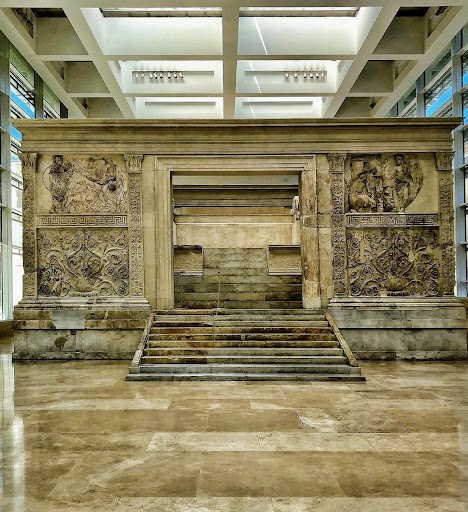
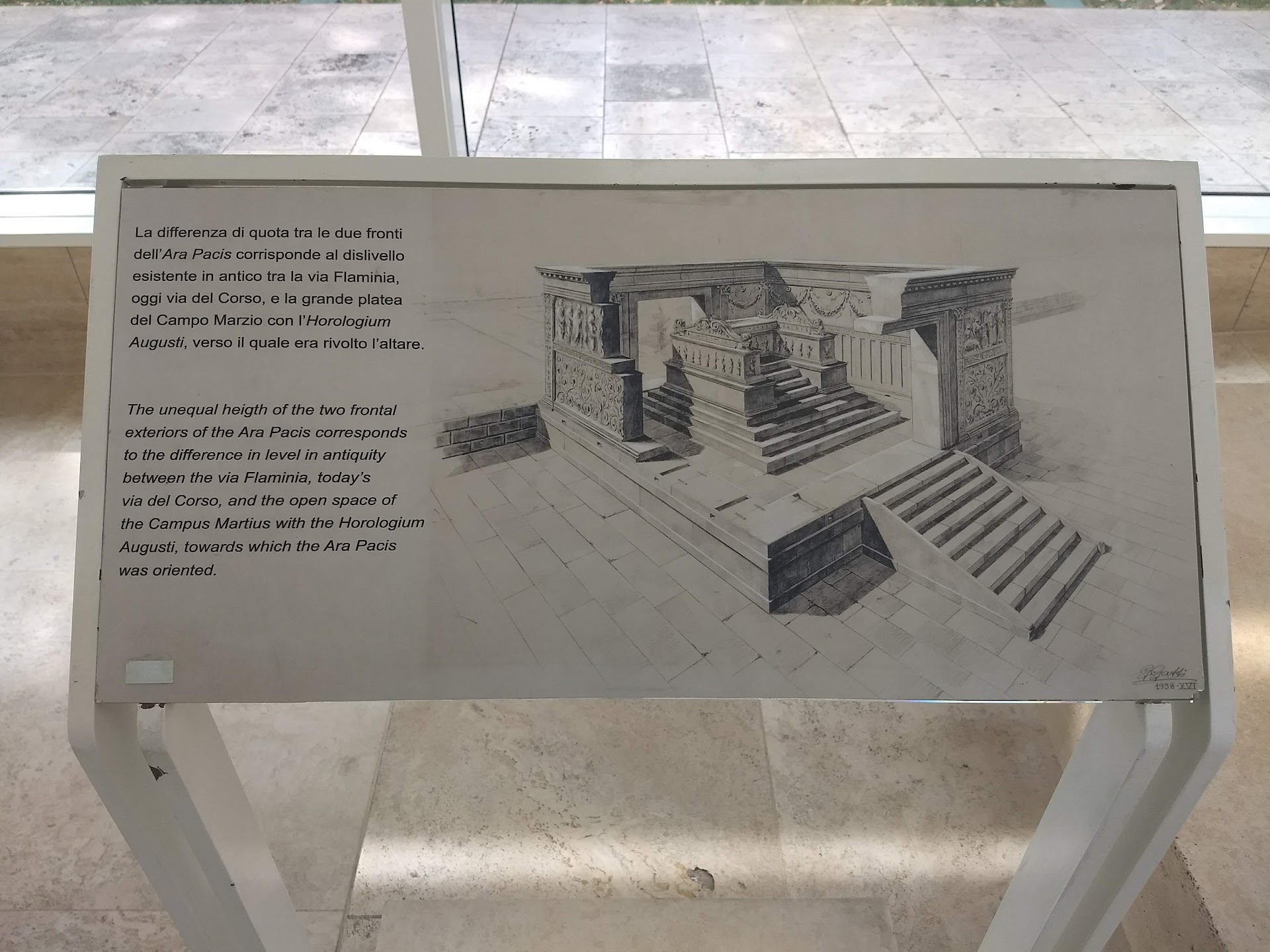
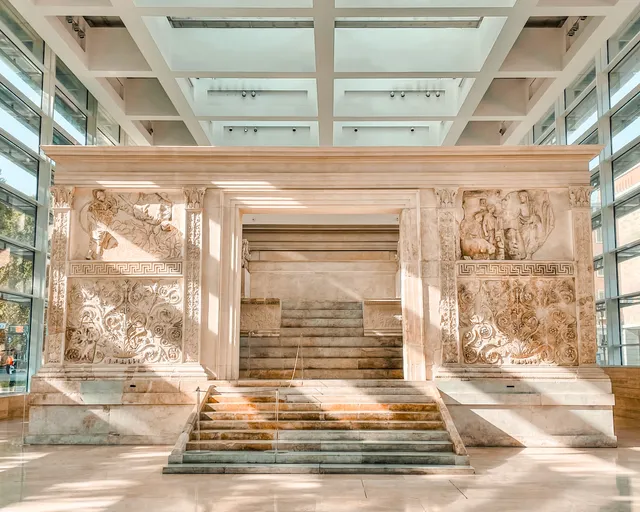
The Museum of the Ara Pacis belongs to the Sistema dei Musei in Comune of Rome; it houses the Ara Pacis of Augustus, an ancient monument that was initially inaugurated on 30 January 9 B.C.
Nearby attractions
Mausoleum of Augustus
Piazza Augusto Imperatore, 00186 Roma RM, Italy
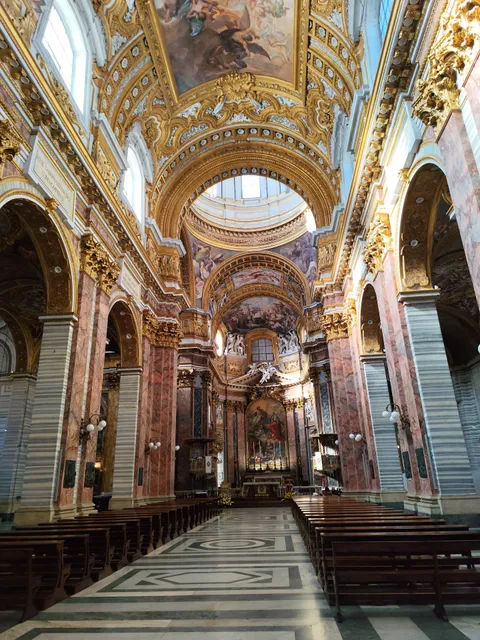
Basilica of SS. Ambrose and Charles on the Corso
Via del Corso, 437, 00186 Roma RM, Italy
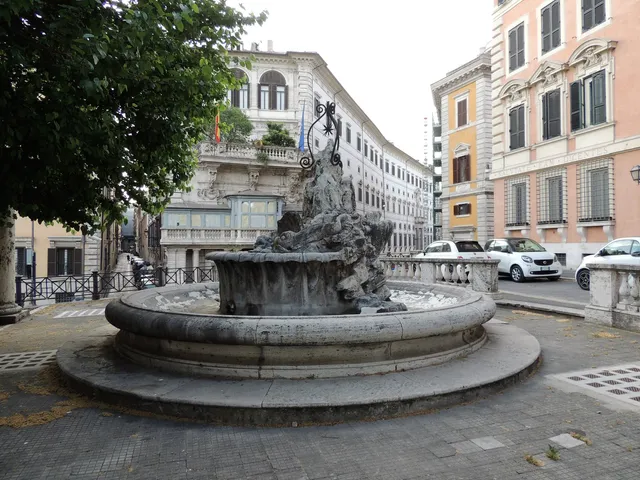
Fontana del Porto di Ripetta
Lungotevere Marzio, 00186 Roma RM, Italy
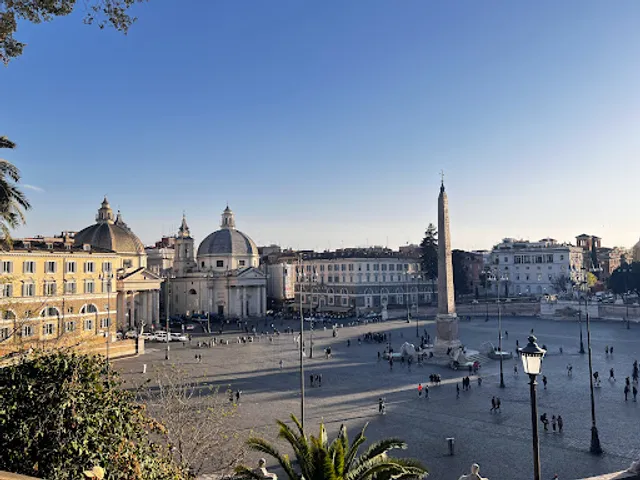
Piazza del Popolo
Piazza del Popolo, 00187 Roma RM, Italy
Piazza di Spagna
Piazza di Spagna, 00187 Roma RM, Italy
Spanish Steps
Piazza di Spagna, 00187 Roma RM, Italy
Basilica of Saint Lawrence in Lucina
Piazza di S. Lorenzo in Lucina, 6, 00186 Roma RM, Italy
Museo Delle Anime Del Purgatorio
Lungotevere Prati, 12, 00193 Roma RM, Italy
Piazza Navona
Piazza Navona, 00186 Roma RM, Italy
Pantheon
Piazza della Rotonda, 00186 Roma RM, Italy
Nearby restaurants
Lian Club
Lungotevere dei Mellini, 7, 00193 Roma RM, Italy
Sorbillo Roma
Piazza Augusto Imperatore, 46, 00186 Roma RM, Italy
Il Vero Alfredo
Piazza Augusto Imperatore, 30, 00186 Roma RM, Italy
Il Marchese - Osteria Mercato Liquori
Via di Ripetta, 162, 00186 Roma RM, Italy
Frezza - Cucina De Coccio
Via della Frezza, 64/65,66, 00186 Roma RM, Italy
Caffè Ripetta
Via di Ripetta, 72, 00186 Roma RM, Italy
Zuma Rome
Via della Fontanella di Borghese, 48, 00186 Roma RM, Italy
Art Cibò Ristorante dai Pupi
Via Leccosa, 59, 00186 Roma RM, Italy
Taverna Ripetta
Via di Ripetta, 158, 00186 Roma RM, Italy
La Bottega di Cesare
Via dell'Arancio, 60, 00186 Roma RM, Italy
Related posts
Keywords
Museo dell'Ara Pacis tourism.Museo dell'Ara Pacis hotels.Museo dell'Ara Pacis bed and breakfast. flights to Museo dell'Ara Pacis.Museo dell'Ara Pacis attractions.Museo dell'Ara Pacis restaurants.Museo dell'Ara Pacis travel.Museo dell'Ara Pacis travel guide.Museo dell'Ara Pacis travel blog.Museo dell'Ara Pacis pictures.Museo dell'Ara Pacis photos.Museo dell'Ara Pacis travel tips.Museo dell'Ara Pacis maps.Museo dell'Ara Pacis things to do.
Museo dell'Ara Pacis things to do, attractions, restaurants, events info and trip planning
Museo dell'Ara Pacis
ItalyLazioRomeMuseo dell'Ara Pacis

Basic Info

Museo dell'Ara Pacis

Lungotevere in Augusta, 00186 Roma RM, Italy
4.5(3.9K)
Closed
Save
spot

Ratings & Description

Info

The Museum of the Ara Pacis belongs to the Sistema dei Musei in Comune of Rome; it houses the Ara Pacis of Augustus, an ancient monument that was initially inaugurated on 30 January 9 B.C.

Cultural
Accessibility
attractions: Mausoleum of Augustus, Basilica of SS. Ambrose and Charles on the Corso, Fontana del Porto di Ripetta, Piazza del Popolo, Piazza di Spagna, Spanish Steps, Basilica of Saint Lawrence in Lucina, Museo Delle Anime Del Purgatorio, Piazza Navona, Pantheon, restaurants: Lian Club, Sorbillo Roma, Il Vero Alfredo, Il Marchese - Osteria Mercato Liquori, Frezza - Cucina De Coccio, Caffè Ripetta, Zuma Rome, Art Cibò Ristorante dai Pupi, Taverna Ripetta, La Bottega di Cesare
logoLearn more insights from Wanderboat AI.
Phone
+39 06 0608
Website
arapacis.it
Open hoursSee all hours
Fri9:30 AM - 7:30 PMClosed

Plan your stay

hotel
Pet-friendly Hotels in Rome
Find a cozy hotel nearby and make it a full experience.

hotel
Affordable Hotels in Rome
Find a cozy hotel nearby and make it a full experience.

hotel
The Coolest Hotels You Haven't Heard Of (Yet)
Find a cozy hotel nearby and make it a full experience.

hotel
Trending Stays Worth the Hype in Rome
Find a cozy hotel nearby and make it a full experience.

Reviews

Nearby attractions of Museo dell'Ara Pacis

Mausoleum of Augustus

Basilica of SS. Ambrose and Charles on the Corso

Fontana del Porto di Ripetta

Piazza del Popolo

Piazza di Spagna

Spanish Steps

Basilica of Saint Lawrence in Lucina

Museo Delle Anime Del Purgatorio

Piazza Navona
Pantheon

Mausoleum of Augustus

Mausoleum of Augustus

4.2

(1.2K)

Open 24 hours
Click for details
Basilica of SS. Ambrose and Charles on the Corso

Basilica of SS. Ambrose and Charles on the Corso

4.7

(1.1K)

Closed
Click for details
Fontana del Porto di Ripetta

Fontana del Porto di Ripetta

4.3

(145)

Open 24 hours
Click for details
Piazza del Popolo

Piazza del Popolo

4.7

(39.1K)

Open 24 hours
Click for details

Things to do nearby

Catacombs: The Coolest Underground Tour in Rome
Thu, Dec 4 • 3:00 PM
00147, Rome, Lazio, Italy
View details
Pasta and Pizza cooking class with wine and more
Sun, Dec 7 • 10:30 AM
00142, Rome, Lazio, Italy
View details
Visit a 16th-century boutique winery
Sat, Dec 6 • 10:00 AM
00044, Frascati, Lazio, Italy
View details

Nearby restaurants of Museo dell'Ara Pacis

Lian Club

Sorbillo Roma

Il Vero Alfredo

Il Marchese - Osteria Mercato Liquori

Frezza - Cucina De Coccio

Caffè Ripetta

Zuma Rome

Art Cibò Ristorante dai Pupi

Taverna Ripetta

La Bottega di Cesare

Lian Club

Lian Club

3.9

(1.1K)

$$

Closed
Click for details

Sorbillo Roma

Sorbillo Roma

3.8

(2.1K)

Click for details
Il Vero Alfredo

Il Vero Alfredo

4.1

(1.2K)

$$$

Click for details
Il Marchese - Osteria Mercato Liquori

Il Marchese - Osteria Mercato Liquori

4.3

(959)

$$

Click for details
Get the Appoverlay
Get the AppOne tap to find yournext favorite spots!

The hit list

restaurant
Best 10 Restaurants to Visit in Rome
February 12 · 5 min read
attraction
Best 10 Attractions to Visit in Rome
February 12 · 5 min read
Rome

Plan your trip with Wanderboat

Welcome to Wanderboat AI, your AI search for local Eats and Fun, designed to help you explore your city and the world with ease.

Powered by Wanderboat AI trip planner.
Wanderboat LogoWanderboat

Your everyday Al companion for getaway ideas

CompanyAbout Us
InformationAI Trip PlannerSitemap
SocialXInstagramTiktokLinkedin
LegalTerms of ServicePrivacy Policy

Get the app

© 2025 Wanderboat. All rights reserved.
logo

Reviews of Museo dell'Ara Pacis

4.5
(3,904)
avatar
4.0
42w

During our recent visit to Rome, we had the incredible opportunity to explore the Museo dell’Ara Pacis, home to the iconic Ara Pacis Augustae (Altar of Augustan Peace). This ancient monument, commissioned in 13 BC by the Roman Senate to celebrate Emperor Augustus’s return from his victories in Gaul and Spain, is a stunning representation of Roman art, peace, and prosperity. The intricate reliefs on the altar not only depict mythological stories but also provide a unique glimpse into the historical events of the time, offering visitors a rare look at Roman culture and power.

The museum itself, designed by renowned architect Richard Meier, is a striking blend of modern and ancient elements. Its glass walls allow natural light to pour in, casting beautiful reflections on the altar, creating an almost ethereal atmosphere that enhances the monument’s intricate details. We were particularly impressed by how the museum’s design preserves the altar while allowing visitors to engage with it in such an immersive way.

For those interested in history, art, or architecture, we found that about an hour is sufficient to tour the museum and appreciate the displays. The informative plaques and video guides in multiple languages were helpful in enriching our understanding of the altar’s significance. The museum also offers a great educational experience with its exhibits that provide context about the Augustan era and the peace ushered in by Augustus’s reign.

The Museo dell’Ara Pacis is open daily from 9:30 AM to 7:30 PM, with the last admission at 6:30 PM. Admission is €14 for adults and €8.50 for concessions. If you’re planning to visit multiple museums in Rome, the MIC card provides free entry for 12 months for just €5, which we thought was a great deal.

We were truly impressed by our visit and would highly recommend this museum to anyone visiting Rome. It’s a must-see for history buffs and anyone interested in the legacy of...

   Read more
avatar
4.0
44w

Worth paying the ticket if you want to see the Ara Pacis from every angle and learn about its history. The details still preserved are marvelous.

One thing I didn't like in this museum was the staff! The lady at the ticket office was lovely, however, once inside, the gallery attendants were less than pleasant. The museum itself is very quiet, a peaceful space in the heart of a busy city. However, you'll not enjoy that peace for long because the gallery attendants are always talking to each other. It's so annoying but they never ever stop. And to make things even worse, while in front of the beautiful Ara Pacis, the audio-guide will tell you "for conservation reasons staying inside is prohibited" and you'll be advised to listen to the explanation while on the outside and only pass through the Ara Pacis afterwards to quickly admire its interior. Well... While you are not allowed to stay inside it, the gallery attendants stand in it pacing back and forth while chatting. During my visit 3 of them were inside at the same time while 2 stayed in there for over 10 minutes pacing and chatting. Should I also mention that there was no visitor on the inside and they were definitely not supervising anyone? Yes, you got that right, you as a visitor who pays a lot of money to go in can't stop inside the beautiful monument for long because the gallery attendants are already creating more noise than needed they walk inside it more than needed and they definitely make sure your visit will be a lot less peaceful than it should! These arrogant people who don't care about the monuments they are paid to protect should not be allowed to work as gallery attendants, they are a pest...

   Read more
avatar
4.0
7y

The Ara Pacis Augustae is a small museum where they have placed the altar dedicated to Pax, the Roman goddess of Peace. The altar dates back to 13 b.C. and it was built to honor the return of Augustus to Rome. Inside the museum you'll have access to the reassembled altar and descriptions of its friezes. There's also a video in Italian and English that summarizes the story behind Ara Pacis. I recommend reading all information available at the museum and getting a book about it (there's a bookshop in the museum) so you can enjoy every little detail to the most. At present, there's also a photographic exhibition on the ground floor called Walls, Le Mura di Roma di Andrea Jemolo. An exquisite work of art that takes you on a ride along the wall that surrounds the city (ends October 2018). A downside to the place is that there weren't many visitors at the museum, may be because the entrance fee is a bit pricey. If they made it more accessible for the general public, many more would be able to know this pearl in the history of Rome. In my case, I have the MIC card for being a resident so I can visit the place for free, but being it such a lovely place, I'd like to see a price that many more people can afford. Art and culture should be accessible to all. I work with tourists most of the time and I love visiting these places so then I can recommend them, but some tourists would skip it because of...

   Read more
Page 1 of 7
Previous
Next

Posts

I. MorganI. Morgan
During our recent visit to Rome, we had the incredible opportunity to explore the Museo dell’Ara Pacis, home to the iconic Ara Pacis Augustae (Altar of Augustan Peace). This ancient monument, commissioned in 13 BC by the Roman Senate to celebrate Emperor Augustus’s return from his victories in Gaul and Spain, is a stunning representation of Roman art, peace, and prosperity. The intricate reliefs on the altar not only depict mythological stories but also provide a unique glimpse into the historical events of the time, offering visitors a rare look at Roman culture and power. The museum itself, designed by renowned architect Richard Meier, is a striking blend of modern and ancient elements. Its glass walls allow natural light to pour in, casting beautiful reflections on the altar, creating an almost ethereal atmosphere that enhances the monument’s intricate details. We were particularly impressed by how the museum’s design preserves the altar while allowing visitors to engage with it in such an immersive way. For those interested in history, art, or architecture, we found that about an hour is sufficient to tour the museum and appreciate the displays. The informative plaques and video guides in multiple languages were helpful in enriching our understanding of the altar’s significance. The museum also offers a great educational experience with its exhibits that provide context about the Augustan era and the peace ushered in by Augustus’s reign. The Museo dell’Ara Pacis is open daily from 9:30 AM to 7:30 PM, with the last admission at 6:30 PM. Admission is €14 for adults and €8.50 for concessions. If you’re planning to visit multiple museums in Rome, the MIC card provides free entry for 12 months for just €5, which we thought was a great deal. We were truly impressed by our visit and would highly recommend this museum to anyone visiting Rome. It’s a must-see for history buffs and anyone interested in the legacy of Ancient Rome!
Alina StiefelAlina Stiefel
The Ara Pacis Augustae is a small museum where they have placed the altar dedicated to Pax, the Roman goddess of Peace. The altar dates back to 13 b.C. and it was built to honor the return of Augustus to Rome. Inside the museum you'll have access to the reassembled altar and descriptions of its friezes. There's also a video in Italian and English that summarizes the story behind Ara Pacis. I recommend reading all information available at the museum and getting a book about it (there's a bookshop in the museum) so you can enjoy every little detail to the most. At present, there's also a photographic exhibition on the ground floor called Walls, Le Mura di Roma di Andrea Jemolo. An exquisite work of art that takes you on a ride along the wall that surrounds the city (ends October 2018). A downside to the place is that there weren't many visitors at the museum, may be because the entrance fee is a bit pricey. If they made it more accessible for the general public, many more would be able to know this pearl in the history of Rome. In my case, I have the MIC card for being a resident so I can visit the place for free, but being it such a lovely place, I'd like to see a price that many more people can afford. Art and culture should be accessible to all. I work with tourists most of the time and I love visiting these places so then I can recommend them, but some tourists would skip it because of its price. No
Simone PorrelliSimone Porrelli
Dallo stesso imperatore: "Quando tornai a Roma dalla Spagna e dalla Gallia, compiute felicemente le imprese in quelle province, nell'anno del consolato di Tiberio Nerone e Publio Quintilio, il Senato decretò che in onore del mio ritorno venisse cosacrata l'Ara della Pace Augusta presso il Campo Marzio e dispose che i magistrati, i sacerdoti e le vergini Vestali vi compissero ogni anno un sacrificio" (Res Gestae 12,2). L'altare è dedicato a Pax, una divinità valorizzata dalla politica augustea, che l'altare intende esaltare nel suo aspetto universale, garantito dalla figura dell'imperatore, come indica l'aggettivo; il decreto che sancisce la costruzione dell'Ara viene emesso nel 13 a.C.; l'occasione storica è il ritorno di Augusto d'oltralpe, dopo tre lunghi anni trascorsi lontano da Roma per amministrare due regioni d'importanza fondamentale per la sicurezza e la prosperità dell'impero; il dedicante è il Senato, ormai devoto all'uomo uscito vincitore da decenni di lotte civili; designati a celebrare il culto della Pax Augusta sono i principali rappresentanti dell'apparato statale e religioso romano; infine il luogo di realizzazione è il Campo Marzio, che nella sua parte settentrionale consisteva allora in un'ampia e verde pianura da poco urbanizzata da Agrippa e dallo stesso Augusto. Qui l'Ara Pacis venne inaugurata nel 9 a.C. Il fregio a girali, un bassorilievo a soggetto vegetale tra i più grnadi mai realizzati nel mondo classico, rappresenta su ogni lato dell'altare lo sviluppo di un'unica pianta che trae origine da un ceppo di acanto centrale. L'unica pianta è tuttavia costituita da decine di differenti specie vegetali, in continua e reciproca metamorfosi, che oggi costituiscono solo una parte di quelle che animavano il fregio integro. Ciò ben si accorda sia all'osservazione della natura, in cui questa logica è ricorrente, che al messaggio generale, di ricchezza e varietà, ma anche di ordine, veicolato nel suo insieme dal fregio. Il fregio venne ricomposto nel 1938 a partire da una quantità di lastre e frammenti di ogni forma e dimensione, che risultarono coprire circa la metà della superficie realizzata in antico. ENGLISH: The altar is dedicated to Pax, a divinity valued by the Augustan policy, which the altar intends to exalt in its universal aspect, guaranteed by the figure of the emperor, as the adjective indicates; the decree sanctioning the construction of the altar is issued in 13 BC; the historic occasion is the return of Augustus from beyond the Alps, after three long years spent away from Rome to administer two regions of fundamental importance for the security and prosperity of the empire; the dedicateer is the Senate, now devoted to the man who emerged victorious from decades of civil strife; designated to celebrate the cult of the Pax Augusta are the main representatives of the Roman state and religious apparatus; finally, the place of realization is the Campo Marzio, which in its northern part consisted at the time of a wide and green plain recently urbanized by Agrippa and by Augustus himself. Here the Ara Pacis was inaugurated in 9 BC. The spiral frieze, a bas-relief with a plant subject among the largest ever made in the classical world, represents on each side of the altar the development of a single plant that originates from a central acanthus stock. However, the single plant is made up of dozens of different species plants, in continuous and reciprocal metamorphosis, which today constitute only a part of those that animated the intact frieze. This accords well both with the observation of nature, in which this logic is recurrent, and with the general message of richness and variety, but also of order, conveyed in its together from the frieze. The frieze was reassembled in 1938 starting from a quantity of slabs and fragments of all shapes and sizes, which turned out to cover about half of the surface created in antiquity.
See more posts
See more posts
hotel
Find your stay

Pet-friendly Hotels in Rome

Find a cozy hotel nearby and make it a full experience.

During our recent visit to Rome, we had the incredible opportunity to explore the Museo dell’Ara Pacis, home to the iconic Ara Pacis Augustae (Altar of Augustan Peace). This ancient monument, commissioned in 13 BC by the Roman Senate to celebrate Emperor Augustus’s return from his victories in Gaul and Spain, is a stunning representation of Roman art, peace, and prosperity. The intricate reliefs on the altar not only depict mythological stories but also provide a unique glimpse into the historical events of the time, offering visitors a rare look at Roman culture and power. The museum itself, designed by renowned architect Richard Meier, is a striking blend of modern and ancient elements. Its glass walls allow natural light to pour in, casting beautiful reflections on the altar, creating an almost ethereal atmosphere that enhances the monument’s intricate details. We were particularly impressed by how the museum’s design preserves the altar while allowing visitors to engage with it in such an immersive way. For those interested in history, art, or architecture, we found that about an hour is sufficient to tour the museum and appreciate the displays. The informative plaques and video guides in multiple languages were helpful in enriching our understanding of the altar’s significance. The museum also offers a great educational experience with its exhibits that provide context about the Augustan era and the peace ushered in by Augustus’s reign. The Museo dell’Ara Pacis is open daily from 9:30 AM to 7:30 PM, with the last admission at 6:30 PM. Admission is €14 for adults and €8.50 for concessions. If you’re planning to visit multiple museums in Rome, the MIC card provides free entry for 12 months for just €5, which we thought was a great deal. We were truly impressed by our visit and would highly recommend this museum to anyone visiting Rome. It’s a must-see for history buffs and anyone interested in the legacy of Ancient Rome!
I. Morgan

I. Morgan

hotel
Find your stay

Affordable Hotels in Rome

Find a cozy hotel nearby and make it a full experience.

Get the Appoverlay
Get the AppOne tap to find yournext favorite spots!
The Ara Pacis Augustae is a small museum where they have placed the altar dedicated to Pax, the Roman goddess of Peace. The altar dates back to 13 b.C. and it was built to honor the return of Augustus to Rome. Inside the museum you'll have access to the reassembled altar and descriptions of its friezes. There's also a video in Italian and English that summarizes the story behind Ara Pacis. I recommend reading all information available at the museum and getting a book about it (there's a bookshop in the museum) so you can enjoy every little detail to the most. At present, there's also a photographic exhibition on the ground floor called Walls, Le Mura di Roma di Andrea Jemolo. An exquisite work of art that takes you on a ride along the wall that surrounds the city (ends October 2018). A downside to the place is that there weren't many visitors at the museum, may be because the entrance fee is a bit pricey. If they made it more accessible for the general public, many more would be able to know this pearl in the history of Rome. In my case, I have the MIC card for being a resident so I can visit the place for free, but being it such a lovely place, I'd like to see a price that many more people can afford. Art and culture should be accessible to all. I work with tourists most of the time and I love visiting these places so then I can recommend them, but some tourists would skip it because of its price. No
Alina Stiefel

Alina Stiefel

hotel
Find your stay

The Coolest Hotels You Haven't Heard Of (Yet)

Find a cozy hotel nearby and make it a full experience.

hotel
Find your stay

Trending Stays Worth the Hype in Rome

Find a cozy hotel nearby and make it a full experience.

Dallo stesso imperatore: "Quando tornai a Roma dalla Spagna e dalla Gallia, compiute felicemente le imprese in quelle province, nell'anno del consolato di Tiberio Nerone e Publio Quintilio, il Senato decretò che in onore del mio ritorno venisse cosacrata l'Ara della Pace Augusta presso il Campo Marzio e dispose che i magistrati, i sacerdoti e le vergini Vestali vi compissero ogni anno un sacrificio" (Res Gestae 12,2). L'altare è dedicato a Pax, una divinità valorizzata dalla politica augustea, che l'altare intende esaltare nel suo aspetto universale, garantito dalla figura dell'imperatore, come indica l'aggettivo; il decreto che sancisce la costruzione dell'Ara viene emesso nel 13 a.C.; l'occasione storica è il ritorno di Augusto d'oltralpe, dopo tre lunghi anni trascorsi lontano da Roma per amministrare due regioni d'importanza fondamentale per la sicurezza e la prosperità dell'impero; il dedicante è il Senato, ormai devoto all'uomo uscito vincitore da decenni di lotte civili; designati a celebrare il culto della Pax Augusta sono i principali rappresentanti dell'apparato statale e religioso romano; infine il luogo di realizzazione è il Campo Marzio, che nella sua parte settentrionale consisteva allora in un'ampia e verde pianura da poco urbanizzata da Agrippa e dallo stesso Augusto. Qui l'Ara Pacis venne inaugurata nel 9 a.C. Il fregio a girali, un bassorilievo a soggetto vegetale tra i più grnadi mai realizzati nel mondo classico, rappresenta su ogni lato dell'altare lo sviluppo di un'unica pianta che trae origine da un ceppo di acanto centrale. L'unica pianta è tuttavia costituita da decine di differenti specie vegetali, in continua e reciproca metamorfosi, che oggi costituiscono solo una parte di quelle che animavano il fregio integro. Ciò ben si accorda sia all'osservazione della natura, in cui questa logica è ricorrente, che al messaggio generale, di ricchezza e varietà, ma anche di ordine, veicolato nel suo insieme dal fregio. Il fregio venne ricomposto nel 1938 a partire da una quantità di lastre e frammenti di ogni forma e dimensione, che risultarono coprire circa la metà della superficie realizzata in antico. ENGLISH: The altar is dedicated to Pax, a divinity valued by the Augustan policy, which the altar intends to exalt in its universal aspect, guaranteed by the figure of the emperor, as the adjective indicates; the decree sanctioning the construction of the altar is issued in 13 BC; the historic occasion is the return of Augustus from beyond the Alps, after three long years spent away from Rome to administer two regions of fundamental importance for the security and prosperity of the empire; the dedicateer is the Senate, now devoted to the man who emerged victorious from decades of civil strife; designated to celebrate the cult of the Pax Augusta are the main representatives of the Roman state and religious apparatus; finally, the place of realization is the Campo Marzio, which in its northern part consisted at the time of a wide and green plain recently urbanized by Agrippa and by Augustus himself. Here the Ara Pacis was inaugurated in 9 BC. The spiral frieze, a bas-relief with a plant subject among the largest ever made in the classical world, represents on each side of the altar the development of a single plant that originates from a central acanthus stock. However, the single plant is made up of dozens of different species plants, in continuous and reciprocal metamorphosis, which today constitute only a part of those that animated the intact frieze. This accords well both with the observation of nature, in which this logic is recurrent, and with the general message of richness and variety, but also of order, conveyed in its together from the frieze. The frieze was reassembled in 1938 starting from a quantity of slabs and fragments of all shapes and sizes, which turned out to cover about half of the surface created in antiquity.
Simone Porrelli

Simone Porrelli

See more posts
See more posts