HTML SitemapExplore
logo
Find Things to DoFind The Best Restaurants

The Lewis & Clark Salt Works — Attraction in Seaside

Name
The Lewis & Clark Salt Works
Description
Nearby attractions
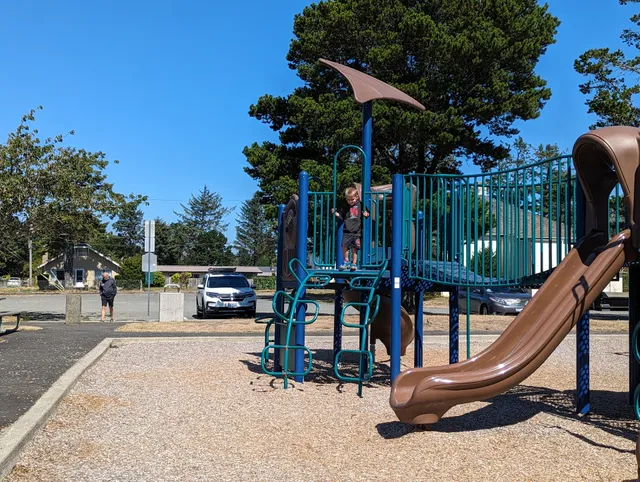
Cartwright Park
1942 S Franklin St, Seaside, OR 97138, United States
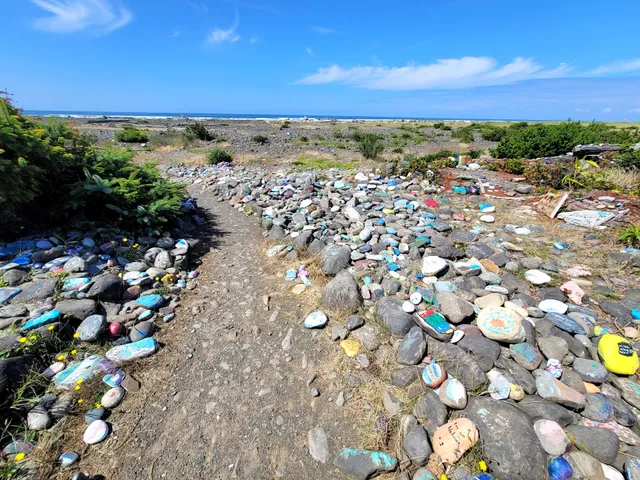
Painted Rock Beach
Seaside, OR 97138
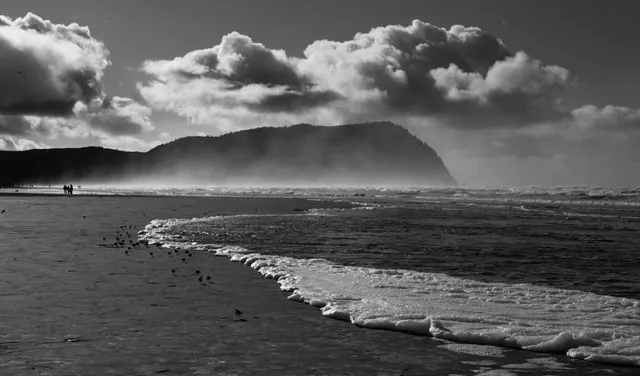
Seaside Beach Oregon
229-299 S Promenade, Seaside, OR 97138
Funland Entertainment Center
201 Broadway St, Seaside, OR 97138
End of Lewis & Clark National Historical Trail
1806 Broadway St, Seaside, OR 97138
As Above So Below (formerly Inverted Experience)
111 Broadway St # 11, Seaside, OR 97138
Seaside Shootout
111 Broadway St, Seaside, OR 97138
Nearby restaurants
Osprey Café
2281 Beach Dr #5117, Seaside, OR 97138
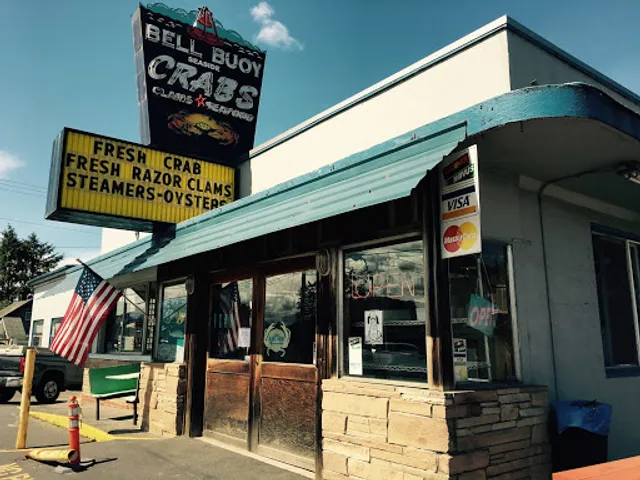
Bell Buoy of Seaside
1800 S Roosevelt Dr, Seaside, OR 97138
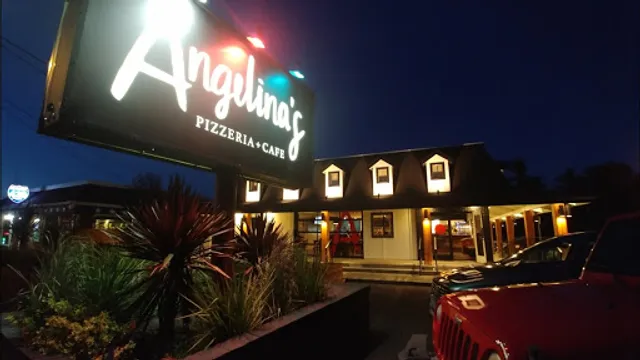
Angelina's Pizzeria & Cafe
1815 S Roosevelt Dr, Seaside, OR 97138
Thai Me Up by Mink
1480 S Roosevelt Dr, Seaside, OR 97138
Gray's Comfort Q BBQ & Coffee
1803 S Roosevelt Dr Unit A, Seaside, OR 97138
Taqueria Pelayos Seaside
1313 S Roosevelt Dr, Seaside, OR 97138
Riley's Restaurant & Lounge
1104 S Holladay Dr, Seaside, OR 97138
MARIVEL'S KITCHEN
1575 S Roosevelt Dr, Seaside, OR 97138
Ruby's Roadside Grill
2323 S Roosevelt Dr, Seaside, OR 97138
Thai us up
1480 S Roosevelt Dr, Seaside, OR 97138
Related posts
Keywords
The Lewis & Clark Salt Works tourism.The Lewis & Clark Salt Works hotels.The Lewis & Clark Salt Works bed and breakfast. flights to The Lewis & Clark Salt Works.The Lewis & Clark Salt Works attractions.The Lewis & Clark Salt Works restaurants.The Lewis & Clark Salt Works travel.The Lewis & Clark Salt Works travel guide.The Lewis & Clark Salt Works travel blog.The Lewis & Clark Salt Works pictures.The Lewis & Clark Salt Works photos.The Lewis & Clark Salt Works travel tips.The Lewis & Clark Salt Works maps.The Lewis & Clark Salt Works things to do.
The Lewis & Clark Salt Works things to do, attractions, restaurants, events info and trip planning
The Lewis & Clark Salt Works
United StatesOregonSeasideThe Lewis & Clark Salt Works

Basic Info

The Lewis & Clark Salt Works

Seaside, OR 97138
4.4(111)
Open 24 hours
Save
spot

Ratings & Description

Info

Cultural
Outdoor
Family friendly
attractions: Cartwright Park, Painted Rock Beach, Seaside Beach Oregon, Funland Entertainment Center, End of Lewis & Clark National Historical Trail, As Above So Below (formerly Inverted Experience), Seaside Shootout, restaurants: Osprey Café, Bell Buoy of Seaside, Angelina's Pizzeria & Cafe, Thai Me Up by Mink, Gray's Comfort Q BBQ & Coffee, Taqueria Pelayos Seaside, Riley's Restaurant & Lounge, MARIVEL'S KITCHEN, Ruby's Roadside Grill, Thai us up
logoLearn more insights from Wanderboat AI.
Website
nps.gov

Plan your stay

hotel
Pet-friendly Hotels in Seaside
Find a cozy hotel nearby and make it a full experience.

hotel
Affordable Hotels in Seaside
Find a cozy hotel nearby and make it a full experience.

hotel
The Coolest Hotels You Haven't Heard Of (Yet)
Find a cozy hotel nearby and make it a full experience.

hotel
Trending Stays Worth the Hype in Seaside
Find a cozy hotel nearby and make it a full experience.

Reviews

Nearby attractions of The Lewis & Clark Salt Works

Cartwright Park

Painted Rock Beach

Seaside Beach Oregon

Funland Entertainment Center

End of Lewis & Clark National Historical Trail

As Above So Below (formerly Inverted Experience)

Seaside Shootout

Cartwright Park

Cartwright Park

4.4

(132)

Open 24 hours
Click for details
Painted Rock Beach

Painted Rock Beach

4.6

(200)

Open 24 hours
Click for details
Seaside Beach Oregon

Seaside Beach Oregon

4.7

(2.2K)

Open 24 hours
Click for details
Funland Entertainment Center

Funland Entertainment Center

4.4

(1.0K)

Closed
Click for details

Things to do nearby

Astoria, OR Murder Mystery: Solve the case!
Mon, Dec 1 • 12:00 AM
1618 Exchange St, Astoria, 97103
View details
Ultimate Scavenger Astoria
Wed, Dec 3 • 10:00 AM
Astoria, Astoria, OR 97103
View details
English Connect Lessons
Wed, Dec 3 • 7:00 PM
1403 South Wahanna Road, Seaside, OR 97138
View details

Nearby restaurants of The Lewis & Clark Salt Works

Osprey Café

Bell Buoy of Seaside

Angelina's Pizzeria & Cafe

Thai Me Up by Mink

Gray's Comfort Q BBQ & Coffee

Taqueria Pelayos Seaside

Riley's Restaurant & Lounge

MARIVEL'S KITCHEN

Ruby's Roadside Grill

Thai us up

Osprey Café

Osprey Café

4.5

(618)

Click for details
Bell Buoy of Seaside

Bell Buoy of Seaside

4.4

(613)

Click for details
Angelina's Pizzeria & Cafe

Angelina's Pizzeria & Cafe

4.5

(870)

Click for details
Thai Me Up by Mink

Thai Me Up by Mink

4.2

(323)

Click for details
Get the Appoverlay
Get the AppOne tap to find yournext favorite spots!
Wanderboat LogoWanderboat

Your everyday Al companion for getaway ideas

CompanyAbout Us
InformationAI Trip PlannerSitemap
SocialXInstagramTiktokLinkedin
LegalTerms of ServicePrivacy Policy

Get the app

© 2025 Wanderboat. All rights reserved.
logo

Posts

Barbara O'BrienBarbara O'Brien
Worth checking out if you're already in the area and have a moment to stop by. This nice little outdoor history exhibit marks the approximate location where salt was extracted from seawater for the Lewis and Clark expedition’s journey back to Missouri. The first information sign reads: Four Bushels of Salt In early 1806, members of the Lewis and Clark Expedition camped near several Clatsop and Tillamook plankhouses. Their goal was to produce salt for preserving meat and improving their bland diet. They traveled down the coast from Fort Clatsop to find salt water not diluted by the Columbia River. They continued south and established a camp with wood to burn, fresh water to drink, and elk to hunt. Five men built the camp and began boiling salt water. After seven weeks of effort they produced 28 gallons of salt that Captain Lewis found to be "excellent, fine, strong & white; this was a great treat to myself and most of the party.” The second information sign reads: A Convenient Place for Making Salt The Corps of Discovery, under the command of Meriwether Lewis and William Clark, established their winter quarters at Fort Clatsop on 7 December 1805. "We haveing fixed on this situation," Clark noted, "I deturmin'd to go as direct a Course as I could to the Sea Coast...to look out a place to make salt." Although Clark was indifferent to salt, the rest of the expedition wanted it to season their bland diet of fish, elk, and dog. On 28 December 1805, the expedition's commanders sent five men "with 5 of the largest Kittles" to establish a saltmaking camp on this beach. Two men from this party returned to Fort Clatsop eight days later with a salt sample that pleased everyone. The expedition's saltmaking camp operated until 21 February 1806, and produced 3½ bushels of salt (nearly 28 gallons). Although personnel varied, three men were usually occupied boiling sea water to make salt. "With the means we have," wrote Meriwether Lewis, "we find it a very tedious operation... we keep the kettles boiling day and night." "Willard and Wiser.... informed us that it was not untill the fifth day after leaving the Fort that they could find a convenient place for making salt; that they had at length established themselves... near the lodge of some Killamuck families; that the Indians were very friendly and had given them a considerable quantity of the blubber of a whale which perished on the coast.... These lads also informed us that [the salt makers] ...commenced the making of salt and found that they could obtain from 3 quarts to a gallon a day; they brought with them a specemine of the salt of about a gallon, we found it excellent, fine, strong, & white; this was a great treat to myself and most of the party," Meriwether Lewis, January 5, 1806 To get to the Salt Cairn walk North along the Promenade three blocks to Lewis and Clark Way. The Salt Cairn is on Lewis and Clark Way 100 feet East of the Promenade. The plaque reads: Lewis & Clark Salt Cairn On January 2, 1806, the salt works was established by the three "salt makers" of the Lewis & Clark expedition Joseph Fields, William Bratten and George Gibson, who remained here until February 20, 1806. These men, assisted at times by hunters and packers, were able during this period to tediously extract approximately four bushels of salt by boiling seawater day and night in five metal "kittles". The expedition had run out of salt before arrival at their winter camp at Fort Clatsop, 10 miles to the northeast and it was very necessary for curing meat and preparing for the return trip to civilization. This actual site was established by a committee of the Oregon Historical Society in 1900, on the testimony of Jenny Michel of Seaside, whose Clatsop Indian father remembered seeing the white men boiling water, and had pointed out this place to her when she was a young girl. She was born in this vicinity about 1816 and died in 1905. Erected by Seaside Lions Club 1995
James MJames M
Wonderful historical marker that is part of the Lewis and Clark National Historic Park. Visited here in the autumn. If you're interested in learning about the Lewis and Clark expedition this place is definitely worth a stop, it preserves the site were the Lewis and Clark expedition set up camp to make salt after their long journey to the Pacific Ocean. It explains the reason they came down this far as well (they had to get far enough away from the area where the fresh water or the Columbia mixes into the Pacific). The signs are old but they are still readable, and the whole area is viewable from beyond since that surrounds the whole thing. Overall a nice little stop with a good historical lesson.
craig silbermancraig silberman
The historic significance of the Lewis and Clark expedition is greater than most textbooks convey. As challenging as the trip west was, the intrepid captains chose to repeat the adventure on the eastbound return journey. But before they could do that, they needed salt. While we can buy salt for next to nothing in the supermarket, they had to dispatch several men to boil sea water to make that necessary mineral.
See more posts
See more posts
hotel
Find your stay

Pet-friendly Hotels in Seaside

Find a cozy hotel nearby and make it a full experience.

Worth checking out if you're already in the area and have a moment to stop by. This nice little outdoor history exhibit marks the approximate location where salt was extracted from seawater for the Lewis and Clark expedition’s journey back to Missouri. The first information sign reads: Four Bushels of Salt In early 1806, members of the Lewis and Clark Expedition camped near several Clatsop and Tillamook plankhouses. Their goal was to produce salt for preserving meat and improving their bland diet. They traveled down the coast from Fort Clatsop to find salt water not diluted by the Columbia River. They continued south and established a camp with wood to burn, fresh water to drink, and elk to hunt. Five men built the camp and began boiling salt water. After seven weeks of effort they produced 28 gallons of salt that Captain Lewis found to be "excellent, fine, strong & white; this was a great treat to myself and most of the party.” The second information sign reads: A Convenient Place for Making Salt The Corps of Discovery, under the command of Meriwether Lewis and William Clark, established their winter quarters at Fort Clatsop on 7 December 1805. "We haveing fixed on this situation," Clark noted, "I deturmin'd to go as direct a Course as I could to the Sea Coast...to look out a place to make salt." Although Clark was indifferent to salt, the rest of the expedition wanted it to season their bland diet of fish, elk, and dog. On 28 December 1805, the expedition's commanders sent five men "with 5 of the largest Kittles" to establish a saltmaking camp on this beach. Two men from this party returned to Fort Clatsop eight days later with a salt sample that pleased everyone. The expedition's saltmaking camp operated until 21 February 1806, and produced 3½ bushels of salt (nearly 28 gallons). Although personnel varied, three men were usually occupied boiling sea water to make salt. "With the means we have," wrote Meriwether Lewis, "we find it a very tedious operation... we keep the kettles boiling day and night." "Willard and Wiser.... informed us that it was not untill the fifth day after leaving the Fort that they could find a convenient place for making salt; that they had at length established themselves... near the lodge of some Killamuck families; that the Indians were very friendly and had given them a considerable quantity of the blubber of a whale which perished on the coast.... These lads also informed us that [the salt makers] ...commenced the making of salt and found that they could obtain from 3 quarts to a gallon a day; they brought with them a specemine of the salt of about a gallon, we found it excellent, fine, strong, & white; this was a great treat to myself and most of the party," Meriwether Lewis, January 5, 1806 To get to the Salt Cairn walk North along the Promenade three blocks to Lewis and Clark Way. The Salt Cairn is on Lewis and Clark Way 100 feet East of the Promenade. The plaque reads: Lewis & Clark Salt Cairn On January 2, 1806, the salt works was established by the three "salt makers" of the Lewis & Clark expedition Joseph Fields, William Bratten and George Gibson, who remained here until February 20, 1806. These men, assisted at times by hunters and packers, were able during this period to tediously extract approximately four bushels of salt by boiling seawater day and night in five metal "kittles". The expedition had run out of salt before arrival at their winter camp at Fort Clatsop, 10 miles to the northeast and it was very necessary for curing meat and preparing for the return trip to civilization. This actual site was established by a committee of the Oregon Historical Society in 1900, on the testimony of Jenny Michel of Seaside, whose Clatsop Indian father remembered seeing the white men boiling water, and had pointed out this place to her when she was a young girl. She was born in this vicinity about 1816 and died in 1905. Erected by Seaside Lions Club 1995
Barbara O'Brien

Barbara O'Brien

hotel
Find your stay

Affordable Hotels in Seaside

Find a cozy hotel nearby and make it a full experience.

Get the Appoverlay
Get the AppOne tap to find yournext favorite spots!
Wonderful historical marker that is part of the Lewis and Clark National Historic Park. Visited here in the autumn. If you're interested in learning about the Lewis and Clark expedition this place is definitely worth a stop, it preserves the site were the Lewis and Clark expedition set up camp to make salt after their long journey to the Pacific Ocean. It explains the reason they came down this far as well (they had to get far enough away from the area where the fresh water or the Columbia mixes into the Pacific). The signs are old but they are still readable, and the whole area is viewable from beyond since that surrounds the whole thing. Overall a nice little stop with a good historical lesson.
James M

James M

hotel
Find your stay

The Coolest Hotels You Haven't Heard Of (Yet)

Find a cozy hotel nearby and make it a full experience.

hotel
Find your stay

Trending Stays Worth the Hype in Seaside

Find a cozy hotel nearby and make it a full experience.

The historic significance of the Lewis and Clark expedition is greater than most textbooks convey. As challenging as the trip west was, the intrepid captains chose to repeat the adventure on the eastbound return journey. But before they could do that, they needed salt. While we can buy salt for next to nothing in the supermarket, they had to dispatch several men to boil sea water to make that necessary mineral.
craig silberman

craig silberman

See more posts
See more posts

Reviews of The Lewis & Clark Salt Works

4.4
(111)
avatar
5.0
1y

Worth checking out if you're already in the area and have a moment to stop by.

This nice little outdoor history exhibit marks the approximate location where salt was extracted from seawater for the Lewis and Clark expedition’s journey back to Missouri.

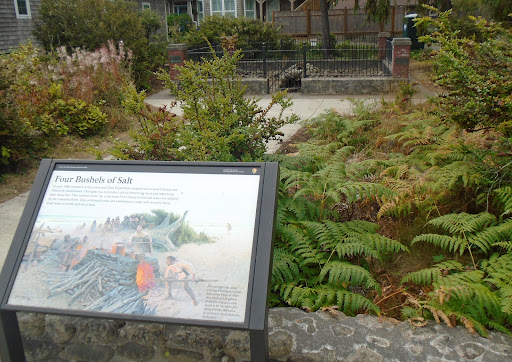
The first information sign reads:

Four Bushels of Salt

In early 1806, members of the Lewis and Clark Expedition camped near several Clatsop and Tillamook plankhouses. Their goal was to produce salt for preserving meat and improving their bland diet. They traveled down the coast from Fort Clatsop to find salt water not diluted by the Columbia River. They continued south and established a camp with wood to burn, fresh water to drink, and elk to hunt.

Five men built the camp and began boiling salt water. After seven weeks of effort they produced 28 gallons of salt that Captain Lewis found to be "excellent, fine, strong & white; this was a great treat to myself and most of the party.”

The second information sign reads:

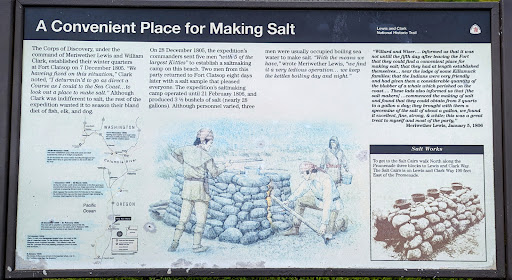
A Convenient Place for Making Salt

The Corps of Discovery, under the command of Meriwether Lewis and William Clark, established their winter quarters at Fort Clatsop on 7 December 1805. "We haveing fixed on this situation," Clark noted, "I deturmin'd to go as direct a Course as I could to the Sea Coast...to look out a place to make salt." Although Clark was indifferent to salt, the rest of the expedition wanted it to season their bland diet of fish, elk, and dog.

On 28 December 1805, the expedition's commanders sent five men "with 5 of the largest Kittles" to establish a saltmaking camp on this beach. Two men from this party returned to Fort Clatsop eight days later with a salt sample that pleased everyone. The expedition's saltmaking camp operated until 21 February 1806, and produced 3½ bushels of salt (nearly 28 gallons). Although personnel varied, three men were usually occupied boiling sea water to make salt. "With the means we have," wrote Meriwether Lewis, "we find it a very tedious operation... we keep the kettles boiling day and night."

"Willard and Wiser.... informed us that it was not untill the fifth day after leaving the Fort that they could find a convenient place for making salt; that they had at length established themselves... near the lodge of some Killamuck families; that the Indians were very friendly and had given them a considerable quantity of the blubber of a whale which perished on the coast.... These lads also informed us that [the salt makers] ...commenced the making of salt and found that they could obtain from 3 quarts to a gallon a day; they brought with them a specemine of the salt of about a gallon, we found it excellent, fine, strong, & white; this was a great treat to myself and most of the party," Meriwether Lewis, January 5, 1806

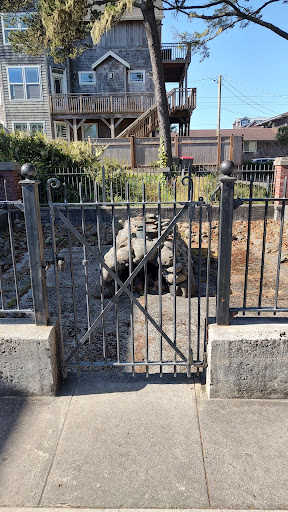
To get to the Salt Cairn walk North along the Promenade three blocks to Lewis and Clark Way. The Salt Cairn is on Lewis and Clark Way 100 feet East of the Promenade.

The plaque reads:

Lewis & Clark Salt Cairn

On January 2, 1806, the salt works was established by the three "salt makers" of the Lewis & Clark expedition Joseph Fields, William Bratten and George Gibson, who remained here until February 20, 1806. These men, assisted at times by hunters and packers, were able during this period to tediously extract approximately four bushels of salt by boiling seawater day and night in five metal "kittles".

The expedition had run out of salt before arrival at their winter camp at Fort Clatsop, 10 miles to the northeast and it was very necessary for curing meat and preparing for the return trip to civilization.

This actual site was established by a committee of the Oregon Historical Society in 1900, on the testimony of Jenny Michel of Seaside, whose Clatsop Indian father remembered seeing the white men boiling water, and had pointed out this place to her when she was a young girl. She was born in this vicinity about 1816 and died in 1905.

Erected by Seaside...

   Read more
avatar
5.0
3y

Wonderful historical marker that is part of the Lewis and Clark National Historic Park. Visited here in the autumn. If you're interested in learning about the Lewis and Clark expedition this place is definitely worth a stop, it preserves the site were the Lewis and Clark expedition set up camp to make salt after their long journey to the Pacific Ocean. It explains the reason they came down this far as well (they had to get far enough away from the area where the fresh water or the Columbia mixes into the Pacific). The signs are old but they are still readable, and the whole area is viewable from beyond since that surrounds the whole thing. Overall a nice little stop with a good...

   Read more
avatar
4.0
7y

We found this thinking it was a Lewis and Clark monument that is actually a few blocks away. There's not much to see here, but it a neat spot to stop to see for a historical perspective on what they had to do for something we take for granted, like salt. Reading comments on other sites, people are saying it's a recreation. Well of course it is. I'm seriously doubt they built the salt works to be a permanent fixture. It's still a worthwhile stop if you're...

   Read more
Page 1 of 7
Previous
Next