(I’m reviewing the 12-Week Full Time Data Science Bootcamp)
Background: I received a PhD in chemistry from a great university in 2016 and worked as a postdoc for 2 years. In grad school I learned to code and analyze data extensively with MATLAB and during my postdoc I learned very basic Python. When I reached the end of my contract I realized that I was not enjoying other parts of scientific research as much as programming and data analysis, so I decided to apply to do software engineering at science-adjacent companies but I didn’t get any positive responses. After stumbling across an article about transitioning from scientific research to software engineering, I soon started reading about data science which sits at the intersection of my professional experience and my ideal workday schedule.
Choosing a bootcamp: I did some research online into free data science courses and bootcamps by reading reviews and talking to a friend who was a hiring manager in software engineering. To save the money, I had considered “rolling my own” bootcamp using open and available courses online, but my friend warned me against this, saying I needed to focus more on building a code portfolio for companies to see and focus less on taking courses. Looking back, I realize she was right. Without any guidance it would have taken me 9 months or more to do what I did in 3 months at the boot camp. I focused my applications on the top-rated programs as well as ones that guaranteed jobs or provided scholarships. After being accepted into two programs (the other offering me a significant scholarship) I based my decision on the reviews of previous students- and NYCDSA had the better reviews. Deciding to change fields after a PhD felt so risky (and even foolish) that I wanted to have no regrets even if I failed.
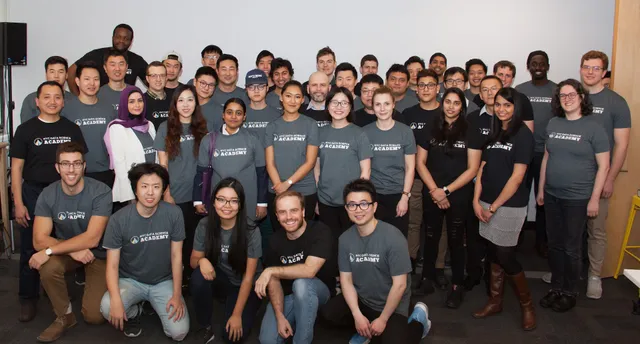
The bootcamp: The bootcamp is as hard as it should be. If it weren’t hard, employers wouldn’t take the experience seriously. I treated it like a hiatus in the rest of my life to pursue this singular goal. Sometimes you’re drinking out of a firehose, attending 3-6 hours of lecture a day while working on a project and completing the lecture homework. Even after doing a PhD, this was one of the hardest things I’ve ever done. The course material is good as well- most of the lectures are well-polished and the instructors know the material deeply. Occasionally lectures are hard to follow because not all of the instructors are native English speakers, but the material is improved with every cohort because they collect constant (anonymous) feedback from the students. The instructors are constantly available and asking questions in class is highly encouraged due to the shrinking class sizes. The curriculum is set up well, as the first 4-5 weeks are primarily learning to code, the next 5 weeks focus on machine learning, and the last 2 are divided into data engineering tools and deep learning.
The result: The most important thing you do at NYCDSA is build a 4-project portfolio in the form of a GitHub account and blog posts describing your work These projects cover a range of skills and demonstrate your experience to potential employers. At the end of the day, there would only one thing that would make this bootcamp worthwhile... Whenever anyone asked me if I liked the bootcamp I would respond, “I’ll let you know when I get a job.” The last several weeks of the program focus on helping you practice interviews and communicate what you already know. I don’t consider myself a confident person, but by the end of this program I felt prepared enough to appear confident to potential employers, and this led to my obtaining 2 competing job offers within 4 weeks of leaving the boot camp and still daily phone calls from recruiters (even having left NYC for a much smaller data science market). In the end, no program will be perfect, but the NYCDSA is so committed to transforming itself with every cohort I’m confident that it’s at least as good as any other...
Read moreFor the better part of the past decade, I worked as a medical researcher both in an academic setting and professionally for a company. While I had a strong foundation in mathematics and statistics, I lacked the rigorous coding, experience with relational databases, and machine learning knowledge to pivot towards a career in Data Science and business analytics.
Before the Bootcamp, I tried teaching myself R through an impersonal, distant online course with limited success. While the experience convinced me that I wanted to make the career leap, the online course did not allow me to ask questions to further my understanding. In Dec 2019, I quit my job, moved to NYC, and enrolled in the NYC Data Science Academy (NYC-DSA).
My reason for choosing NYC-DSA was rather easy. While some boot camps offer the option to study data science among other UX, software, or cybersecurity career routes, it was important for me to know that my entire tuition would fund my data science education - that the resources would only support the recruiting of college professors and Ph.D. lecturers, career development professions, and teaching assistants. Secondly, NYC-DSA was one of the only boot camps to provide analytics on previous student cohorts, emphasizing the program's accountability to find the best jobs, not just take my money. Additionally, NYC-DSA had a rigorous but fair selection process to ensure that the cohort had a capable background in mathematics, coding, statistics, and a wide array of professional and educational experiences. The cohort's diversity made the experience particularly valuable as each person could provide insight into how data science is applied in their respective field. Lastly, I chose NYC-DSA because they were the only boot camp that taught both Python and R, in addition to SQL. The ability to learn both languages ensures that students are not limited to certain industries because they only know one language - in fact, my current job frequently requires that I code in both languages.
After the 1st day at NYC-DSA, I was not disappointed in my decision to attend NYC-DSA. The instructors were beyond impressive, many with PhDs in Mathematics, Physics, or Statistics, and with professional backgrounds in Biology, Finance, and Marketing. Unlike my previous engineering or college courses, the professors were engaging, frequently made jokes to lighten the mood, and were immediately relatable. The boot camp made an effort on Fridays to provide food and drinks at the end of the day and emphasizes socializing with other students and the instructors themselves (come to find out, they are also people, haha).
I decided to attend a coding boot camp because I wanted to educate myself and ultimately change careers. Finishing the boot camp in April 2020, at the beginning of COVID-19, when NYC and the economy shut down, was not easy. In fact, it wasn't easy - NYC-DSA would send out monthly job reports of NYC/SF/etc., showing 50-70% fewer job postings from the year before. Despite that, the career development team at NYC-DSA could not have been more helpful in ensuring that I had the best possible resume, cover letter, and application package for each job listing. For nearly a year, I would meet 1-2x a month with someone at the boot camp to go over my applications and how I could better utilize LinkedIn to network and reach out to recruiters. Several of my job interviews resulted from the lecturers recommending me for a job they heard about. If the boot camp knew I had an interview at a company coming up, they would get me in touch with a current or former employee to better prepare myself for the interview process. After nearly a year and hundreds of job applications, I landed two job offers on the same day for nearly $40k/yr more than my previous salary - largely through the networking I did through...
Read moreGetting straight to the point, this bootcamp is for people who actually want to learn data science, not for people who are looking to get paid more money. If you don't have the passion and grit to handle an intensive bootcamp as NYCDSA teaches, don't bother coming. I am coming from a B.S. in Biology and worked for 3 years at a large company and this is my advice to those who have NO CODING experience.
Advice: -DO ALL THE PREWORK. This is not a joke, do all the prework as much as you can to be prepared for what's to come during the bootcamp. Yes, it will be disappointing failing over and over again but you need to be okay and comfortable failing in order to be learning the material that is given to you -SUPPLEMENTAL COURSES. Along with the pre-work, they recommend you take Andrew Ng's Machine Learning course and brush up on your linear algebra because you'll need it for the end of the course and you won't have time to do that during the time of the course -TRY, FAIL, REPEAT. In order for you to get comfortable with coding, you're gonna need to repeat the same line of code over and over again until you get it in your head. I know, because I had to do this myself throughout the whole course. -ASK YOUR NEIGHBOR. The first day is always awkward meeting new people, but with how much work you have to do, you'll get over it fast and want someone else's view on a particular matter. The teachers there are great, but sometimes you'll need someone to explain in a new way or you have to explain it to someone else so you can solidify your own knowledge. So do yourself a favor and ask a neighbor before asking the teacher first. -PREPARE. This course can be a breeze, or this course can be a challenging experiencing. It is so easy for anyone to come and just breeze through all the material they give you, but it is really up to you to make it harder for yourself and learn topics and implementing them right away. If you want to make the most out of it then you need to COME EARLY, STAY LATE, ASK QUESTIONS.
Many think this course starts off slow, but take this time to grab a strong foundation in your coding skills in R and Python because after the first weeks are gone, you're gonna miss it. The course becomes relentless in terms of the material they give you and how much time you have to get it done.
PROS: This bootcamp helps those who have no coding experience but does require you to have some knowledge in statistics and linear algebra (if you don't have any of that under your belt, brush up) -Materials given to learn and understand the material is a great learning experience -Super friendly and willing to help you -Upfront about hiring and what you need to do to get hired -Hiring event was an amazing opportunity to get you started with interviews
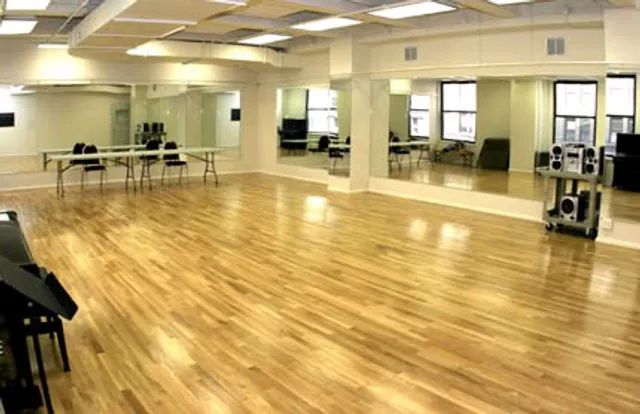
CONS: -Some of the teaching staff know English as a second language, so it may be difficult for some to understand clearly what they are trying to explain. Be patient and ask questions when appropriate if you are confused. -Space is rather small and does not provide the most optimal space to do group projects. -Although the hiring event was absolutely amazing, some of the requirements do ask a pretty demanding qualification and a majority of job postings are not entry level/associate positions (keep this in mind)
CONCLUSION I recommend this course to anyone who is planning to take data science as a new career path. Keep in mind that this field is interdisciplinary and allows for people of all range of backgrounds to be in data science. The teacher, staff, and fellows were amazing and glad I got to learn as much as I did, however, after this bootcamp, it is actually just the beginning of how much you actually can learn of what's out there in the...
Read more